Buyer Fit Snapshot
| Best fit | printed pallet boxes for displays branding for packaging buyers comparing material specs, print proof, MOQ, unit cost, freight, and repeat-order risk where brand print, material, artwork control, and repeat-order consistency matter. |
|---|---|
| Quote inputs | Share finished size, material target, print colors, finish, packing count, annual reorder estimate, and delivery region. |
| Proofing check | Approve dieline scale, logo placement, barcode or warning zones, color tolerance, and any recyclable or compostable wording before bulk production. |
| Main risk | Vague material claims, crowded artwork, or missing packing details can create delays even when the unit price looks attractive. |
Fast answer: Printed Pallet Boxes for Displays Branding: Dieline, Finish, Proof, and Buyer Review should be specified like a repeatable production item. The safest quote includes material, print method, finish, artwork proof, carton packing, and reorder notes in one written spec.
What to confirm before approving the packaging proof
Check the product dimensions against the actual filled item, not only the sales mockup. Ask for tolerance on folds, seals, hang holes, label areas, and retail display edges. If the package carries a logo, QR code, warning copy, or legal claim, reserve that space before decorative graphics fill the panel.
How to compare quotes without losing quality
Compare board or film grade, print process, finish, sampling route, tooling charges, carton quantity, and freight assumptions side by side. A lower quote is only useful if the supplier can repeat the same color, closure quality, and packing count on the next order.
Printed Pallet Boxes for displays do more than move product through a supply chain. They turn a full pallet into a retail statement that has to survive freight, warehouse handling, store setup, and the blunt reality of an aisle where most shoppers decide in a few seconds whether to stop or keep walking. The box is carrying weight, but it is also carrying a message. If either side fails, the display loses value fast.
That is why printed pallet boxes for displays deserve more scrutiny than they usually get. A plain pallet load, a stretch-wrapped shipment, and a purpose-built printed display box may hold the same units, yet they behave very differently on the sales floor. One disappears into the background. One protects the product but adds little presence. The right format can protect, organize, and sell at the same time.
Brands, distributors, and retail teams face the same practical test before the first shopper ever sees the unit. Will the carton hold up in transit? Will the print remain readable under fluorescent store lighting? Will the display still look intentional after a forklift moves it, a stock associate opens it, and customers pull product from the front row? Those are not abstract design questions. They decide whether the display earns its place in the store.
Printed Pallet Boxes for Displays: What They Are and Why They Stand Out
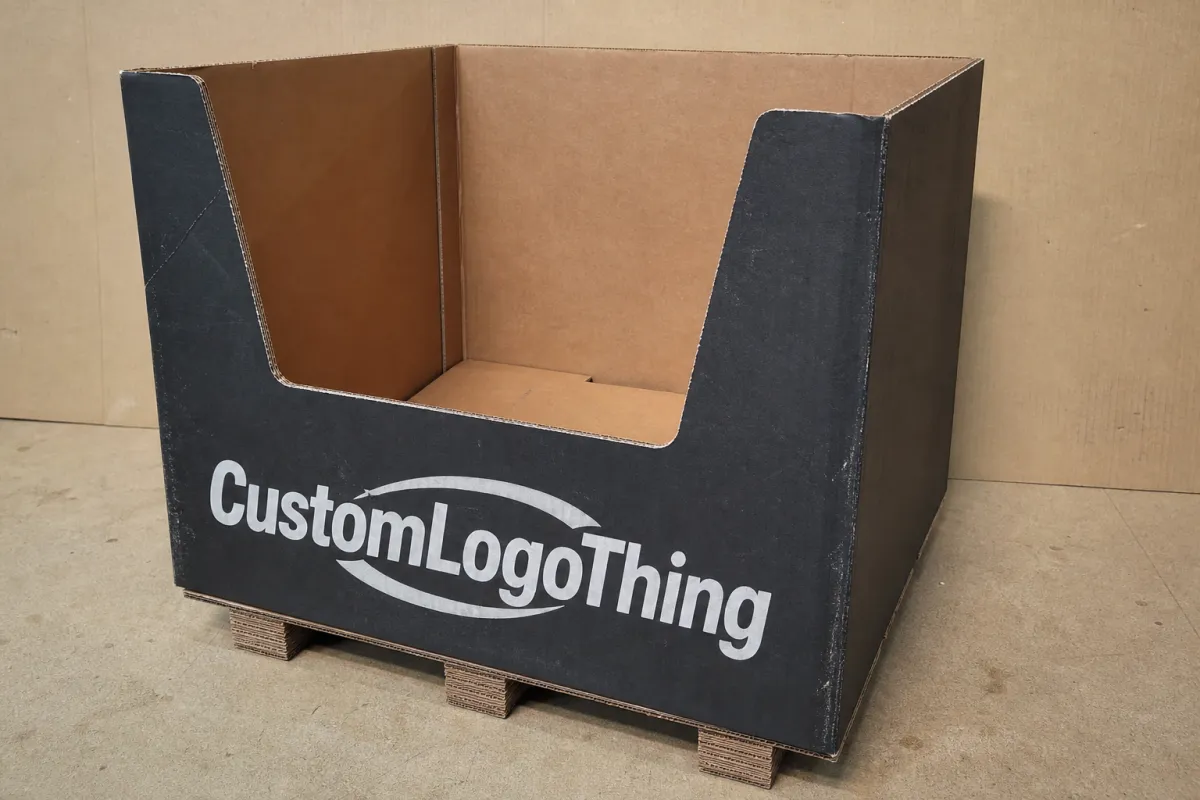
At the simplest level, printed pallet boxes for displays are corrugated, pallet-sized outer packages built to sit on a standard pallet footprint while presenting a finished branded surface in retail. They can function as shipper, merchandiser, or both. The important distinction is that the outer surface is part of the selling job, not a leftover from the logistics process.
That matters more than many buyers expect. A display can carry sharp artwork and a strong promotion, yet still feel temporary if the outer shell resembles a shipping carton. Once the box is designed for display, the face panels, corners, access points, and print zones work together. The unit feels planned. Not improvised. Not patched together at the last minute.
From a packaging buyer’s perspective, the difference shows up the moment the pallet leaves receiving. A wrapped pallet usually depends on film and perhaps a header card or top sign. That can be enough for movement, but it rarely delivers the same branded presence as a printed corrugated enclosure. A purpose-built display box gives the unit a stronger front-facing impact, better edge protection, and a cleaner place to show product details such as flavor, size, count, or promotion.
Structure brings another advantage. Corrugated board can be engineered around compression, stack height, and pallet stability. That matters when the load is heavy, when the pallet will be handled several times, or when the display needs to sit on the floor for a longer selling cycle. Fiber-based packaging does not just look more polished; it can be designed to perform a demanding physical job under real-world pressure.
If you are comparing formats, it helps to review Custom Packaging Products for display and shipping applications, because the same product family can often be built in more than one way depending on freight risk, retail rules, and print goals. For a brand team, that flexibility usually matters more than chasing the lowest carton price on paper.
Scope matters too. This discussion focuses on the practical side of the decision: structure, printability, visibility, and tradeoffs. Not every pallet display needs premium graphics. Not every product needs a fully enclosed box. Some promotions work with a simpler unit. Yet if the goal is to make the pallet do more selling, the printed box format is often the best place to start.
How Printed Pallet Boxes for Displays Work on the Floor
A printed pallet box begins with the pallet footprint and the product arrangement. Units are packed in layers, the corrugated structure surrounds or caps the load, and the visible panels become the retail-facing surface once the pallet reaches the sales floor. The shopper rarely sees the shipping side of the process. They only see the result. That means the box has to be designed with the last mile in mind, not just the first.
The front panel usually carries the strongest visual weight, while side walls and the top edge add support. Some formats use an open face so shoppers can reach product directly. Others keep a closed or partially closed exterior with tear-away sections. Those openings are more than convenience features. They affect how the brand message is framed, how much product is visible, and how quickly a store associate can set the unit in place without damaging it.
Structure matters as much as graphics. If the pallet box is too light for the load, the corners can crush, the walls can bow, and the display begins to look tired before it ever reaches the floor. If the board is too heavy for the product, freight cost climbs and assembly becomes harder than it should be. Good design sits between those problems: enough strength to survive handling, enough print quality to look retail-ready, and enough practical detail to keep labor low.
The retail journey deserves real attention. The box may be built at the converter, stacked in a warehouse, loaded onto a trailer, unloaded at the store, staged in backroom space, opened or positioned in place, and then left on the floor for days or weeks. Each step can mark the packaging. A print surface that looks excellent in a proof can fail under fluorescent lighting, forklift scuffs, or stockroom abrasion. The environment changes the design faster than many teams expect.
For brands that need a cleaner handoff from warehouse to retail, it helps to think about the unit as a display system rather than a container. Some teams compare options across display-ready packaging options before choosing a format, because the right structure can make the store team’s work easier and protect the presentation longer.
A pallet display should not ask the store team to "make it look nice." It should arrive already doing most of that work.
That changes the design brief. Instead of asking only, "Will it hold the product?" the better question becomes, "Will it still read clearly after transit, setup, and a week on the floor?" Printed pallet boxes for displays earn their value only if the answer stays yes across all three.
Key Factors That Shape Performance and Print Quality
Material selection usually comes first. Single-wall corrugated works well for lighter loads, shorter runs, and displays that do not need extreme compression strength. Double-wall board becomes more attractive as product weight rises, stack height increases, or the display will be handled several times before it reaches the selling position. Flute choice matters too. Finer flutes can support sharper print detail, while larger flutes can improve cushioning and strength depending on the structure.
Print quality is not only a pressroom issue. It is also a scaling issue. Artwork that looks strong on a small proof can collapse at pallet size if contrast is weak or typography is too delicate. In a warehouse-to-retail setting, shoppers often view the box from several feet away while walking past it. Large type, simple hierarchy, and high contrast usually outperform dense copy or layered visuals. The eye prefers clarity when the body is moving.
Color accuracy deserves its own conversation. Corrugated surfaces can absorb ink differently depending on liner grade and print process, so the same brand color may read warmer, duller, or flatter than expected. If color fidelity matters, especially for a strong brand system or licensed product, ask for proofing on the actual board and print method. A digital mockup and a production sample can differ enough to change the whole effect.
Physical constraints set the outer limits. Pallet footprint, product weight per layer, total stack height, and fork entry all affect what is possible. A display that is just a little too tall can become unstable in transit or difficult to store. A box that closes too tightly around the load can create pressure points and raise the risk of board failure. Good design respects the dimensions of the product and the way equipment actually moves it.
Retail conditions make the final call even more practical. Humidity can soften board performance. Cold storage can affect adhesives and handling. Bright store lighting can wash out weak color choices. High-traffic aisles can scuff printed surfaces quickly, especially when the display sits near carts, pallets, or restocking routes. If the unit will face a rough environment, ask whether a coating, stronger liner, or different board grade will improve the outcome.
To judge quality properly, I prefer to think in terms of the whole package system:
- Board strength for the load and dwell time.
- Print legibility from aisle distance.
- Edge durability during handling and storage.
- Moisture resistance if the display faces humidity or chill.
- Assembly speed for store staff and warehouse teams.
If the design has to ship through multiple legs, ask for testing aligned to recognized methods such as those published by the International Safe Transit Association. For fiber sourcing and sustainability claims, the Forest Stewardship Council remains a familiar reference point for many buyers. Standards do not replace judgment, but they give the conversation a useful baseline.
Process, Timeline, and Lead Time for Printed Pallet Boxes for Displays
Good results start with complete input. Before production begins, the supplier needs product dimensions, pallet pattern, unit count per layer, total weight, retail environment, and the branding goal for the display. If the item will sit in a warehouse before floor placement, or if the retailer has a strict height limit, that should be known early. The more accurate the information, the fewer surprises later.
The proofing path usually moves in stages. First comes the dieline or structural concept, which establishes fold lines, panel sizes, cutouts, and load relationship. Then comes a structural sample or mockup if the box is new or unusually large. After that, print proofing confirms artwork placement, color expectations, and legibility. Physical validation matters because a box can look correct on a screen and still fail once it is folded, filled, or stacked.
Production itself is fairly straightforward: printing, die-cutting, scoring, gluing, folding, packing, and shipment coordination. Each step can add time if the design is complex. Special coatings, heavy board, unusual dimensions, or tight color control may require extra setup. The more custom the display, the more important it becomes to plan around a realistic schedule instead of a hopeful one.
A common mistake is underestimating artwork revisions. Small changes to product claims, compliance text, or retailer logos can trigger new proofs. That may be minor on a one-off carton, but a pallet display covers more surface area and often touches more panels. If approval passes through brand, sales, operations, and retail teams, the calendar can stretch faster than expected. One late change can ripple across the whole launch.
Lead time is also shaped by board availability and freight. During busy periods, paperboard supply can tighten and schedules can shift. Seasonal demand, promotional launches, and warehouse congestion all affect when a run can start and when finished goods can ship. For that reason, it pays to start earlier than you think you need to.
When a brand is choosing between display formats or needs several structural directions, it makes sense to compare options against custom corrugated solutions before settling on one version. The right box is not always the most elaborate one; it is the one that fits the product, the store, and the timing without creating labor problems.
Cost, Pricing, and MOQ: What Changes the Quote
Pricing for printed pallet boxes for displays depends on more variables than most buyers expect. Board grade is one major factor. Print coverage is another. A simple one-color logo on a basic corrugated surface will price very differently from a full-coverage display with multiple panels and a coated finish. Oversized dimensions, reinforced corners, and special openings add cost too, because they increase material use and manufacturing complexity.
MOQ, or minimum order quantity, changes the economics as well. Larger runs usually reduce unit cost because setup, tooling, and prepress work are spread across more pieces. Smaller custom orders can still make sense for pilot launches, regional tests, or high-value products, but the per-unit price is usually higher. That is normal. The real question is whether the display earns enough shelf impact or labor savings to justify the spend.
For budgeting, ask for multiple quote tiers instead of one all-or-nothing number. A supplier can often show a value version, a stronger retail version, and a premium display version, each with different board specs and print treatments. That makes it easier to compare cost against performance rather than comparing only the cheapest line item. The cheapest box is not always the least expensive choice once floor performance enters the picture.
| Option | Typical Structure | Branding Level | Common Use | Approx. Unit Cost at 5,000 pcs |
|---|---|---|---|---|
| Plain pallet wrap with header | Film wrap, minimal corrugated support | Low | Basic shipping and simple promo placement | $0.08-$0.25 |
| Printed pallet box for displays | Single-wall corrugated with printed panels | Medium to high | Retail-ready display with branded surface | $0.65-$1.40 |
| Reinforced printed display box | Double-wall corrugated, stronger corners, better load support | High | Heavier products, longer dwell time, tougher handling | $1.10-$2.25 |
Those figures are directional rather than universal. Print coverage, board market conditions, special coatings, and freight can all shift the final number. The table still helps because it shows how the display is not just a graphic choice. It is a packaging engineering decision with real budget impact. If a launch needs extra sturdiness, that cost is easier to accept when the shopper-facing value is obvious.
Step-by-Step Guide to Planning a Better Display Box
A better display starts with the product and the store, not the artwork. Measure the pallet footprint first, then confirm how many units fit per layer and how high the stack should go. Check the product weight, because a lightweight carton holding snacks behaves very differently from a display carrying glass jars, bottled goods, or boxed hardware. If the retailer has shelf or height restrictions, build those in from the start rather than trying to force them later.
Next, decide what the box has to do. Is it mainly a shipper? A selling display? A temporary promo unit? Each answer changes the structure. A closed-face design can protect the contents better in transit, while an open-face format can increase product visibility and shopper access. Some brands prefer a tear-away panel so the same box moves from shipping mode to display mode with one clean action. Others need a more rigid retail presence because the unit will sit on a power aisle or near the front of the store.
Then map the artwork against the structure. Strong branding can be lost if it lands on a fold, seam, or cut line. Product names should sit where they can be read at walking distance. Key claims should not disappear around a corner panel. QR codes, when used, need enough quiet space around them to scan cleanly. If the display includes pricing or promotional dates, those elements should be easy to update without rebuilding the entire design.
Mockups pay for themselves at this stage. A plain white sample, a digital comp, or a short-run printed prototype can reveal problems that are hard to catch in a file. Maybe the opening is too small for restocking. Maybe the front panel prints too low because the pallet deckboard hides part of the message. Maybe the top panel looks crowded once the box is stacked. A sample gives you the chance to fix those issues before production is locked in.
Here is a practical planning sequence that usually keeps projects on track:
- Confirm product size, weight, and pallet pattern.
- Define the store environment and handling path.
- Select the board grade and structural style.
- Place artwork around folds, seams, and access points.
- Request a sample or mockup and review it under real conditions.
- Approve production only after load, print, and setup checks are complete.
- Coordinate shipping windows, receiving instructions, and store disposal details.
If you are still early in the planning stage, use the supplier conversation as a design review rather than only a quote request. The better question is not just "How much will this cost?" It is also "What will make this display easier to ship, easier to open, and easier to sell?" That shift in focus usually leads to better packaging decisions.
For brands building a broader line, a quick review of Custom Packaging Products can help connect pallet displays with matching cartons, shippers, or retail packs so the presentation stays consistent across the supply chain.
Common Mistakes That Hurt Display Performance
The first mistake is treating the box like shipping packaging only. That almost always creates a weak retail presence. The display may protect the product, but if the exterior lacks hierarchy, contrast, or a strong offer, the pallet can fade into the background. Buyers and shoppers respond to clarity. If the message is buried, the package has to work harder than it should.
A second mistake is overfilling the surface. It is tempting to use every panel for claims, features, logos, legal copy, and decorative graphics, but busy artwork becomes harder to read from aisle distance. On a pallet-sized surface, less clutter usually performs better. A strong brand mark, one clear product statement, and one main shopper reason to care can do more than a wall of tiny text ever will.
Another failure point is underestimating handling stress. Boxes that look fine during proofing can crush at the corners, bulge under load, or scuff badly in transit if the board is too light or the stack pattern is unstable. This becomes more likely when the display crosses multiple touchpoints: plant floor, warehouse, trailer, distribution center, store receiving, and sales floor. A package that survives one move may not survive five.
Retail and warehouse requirements are easy to miss when the design is approved too early. Pallet height limits, forklift entry, easy-open features, and whether the unit must remain refillable all shape the structure. If the store team cannot place the display without cutting into the artwork or damaging the corners, the presentation suffers. If replenishment is awkward, the display may be retired before the promotion ends.
The most expensive display is not always the one with the higher quote. It is the one that fails in the store and has to be replaced early.
That is why testing matters. A compression check, a transit trial, or even a simple warehouse mockup can reveal where the display will fail. Standards such as ASTM methods and ISTA-style distribution testing help give the evaluation discipline, but practical handling feedback is just as valuable. Packaging that looks good and performs well usually earns both by design, not by luck.
Expert Tips and Practical Next Steps
Use a clear message hierarchy. Brand first. Product second. The main shopper reason third. That order helps a pallet display communicate quickly, which is exactly what it needs to do in a store aisle. A shopper usually gives a display only a brief glance before moving on, so the box should not make them work to understand it.
Keep safe zones around folds, seams, tape lines, and fork entry points. Those areas are poor places for critical graphics because they are the first to get interrupted during assembly and handling. If a logo crosses a seam or a key instruction lands near a fold, the finished display may look uneven even if the print itself is excellent. A little discipline in artwork placement protects both readability and structure.
Ask about surface protection if the display will be touched often or sit in a rougher environment. Coatings, scuff-resistant finishes, and moisture-aware board choices can help the unit hold up in high-traffic retail. Not every job needs a premium finish, but if the display will spend time near coolers, entryways, or busy endcaps, those details can extend the life of the presentation.
It also helps to prepare the request like a real production brief. Gather the product dimensions, pallet pattern, target quantity, freight expectations, and store conditions before asking for a quote. Add artwork files, retailer rules, and photos of the display location if you have them. The more complete the brief, the better the structural and print recommendation will be. That is especially true for printed pallet boxes for displays, where the package has to perform as both shipping protection and floor presence.
For teams that need to move quickly without sacrificing the display, the smartest next step is usually to compare the structure against the launch plan, not just the artwork. Once the box fits the product, the pallet, and the store, the branding has a much better chance of doing its job. If the project needs a broader packaging review, the team can work from the current line of custom corrugated solutions to align display boxes with the rest of the program.
Before placing the order, lock the specs, review the store photos, request a dieline, approve a sample, and compare production options side by side. That is the clearest path to printed pallet boxes for displays that look intentional, ship safely, and give the product a fair chance to sell from the floor.
FAQ
What are printed pallet boxes for displays used for?
They turn a pallet load into a branded retail presentation that protects product while promoting the offer at the same time. They are especially useful when the display needs to travel through a warehouse and land on the sales floor with minimal extra setup.
How do printed pallet boxes for displays differ from standard pallet wraps?
A printed pallet box is a structural corrugated package with defined panels, while a wrap is mainly a covering layer with limited rigidity. The box can carry stronger branding, better edge protection, and more controlled presentation than a basic wrap.
What should I have ready before asking for a quote?
Have product dimensions, total weight, pallet footprint, unit count, artwork files, and the retail environment in hand. If you can share photos of the store setup or the warehouse handling path, the supplier can quote a more accurate structure and print plan.
Can printed pallet boxes for displays hold heavy products?
Yes, as long as the board grade, flute style, and structural design are matched to the load and stacking requirements. Heavy products often need stronger corrugated construction, smarter internal stacking, and careful testing before approval.
How far in advance should I order printed pallet boxes for displays?
Plan ahead enough to allow for structural development, proofing, and production, especially if the design is new or the quantity is large. If you have a fixed launch date, build extra time for revisions and freight so printed pallet boxes for displays arrive ready for the store schedule.


