Buyer Fit Snapshot
| Best fit | Printed Pallet Labels with Logo projects where brand print, material claims, artwork control, MOQ, and repeat-order consistency need to be specified before quoting. |
|---|---|
| Quote inputs | Share finished size, material target, print colors, finish, packing count, annual reorder estimate, ship-to region, and any compliance wording. |
| Proofing check | Approve dieline scale, logo placement, barcode or warning zones, color tolerance, closure strength, and carton packing before bulk production. |
| Main risk | Vague material claims, crowded artwork, missing packing details, or unclear freight terms can make a low unit price expensive after revisions. |
Fast answer: Printed Pallet Labels with Logo: Uses, Cost, and Setup should be specified like a repeatable production item. The safest quote records material, print method, finish, artwork proof, packing count, and reorder notes in one written spec.
Production checks before approval
Compare the actual filled-product size with the drawing, then confirm tolerance on folds, seals, hang holes, label areas, and retail display edges. Reserve space for logos, QR codes, warning copy, and material claims before decorative graphics fill the panel.
Quote comparison points
Review material grade, print process, finish, sampling route, tooling charges, carton quantity, and freight assumptions side by side. A quote is only useful when the supplier can repeat the same color, closure quality, and packing count on the next order.
Printed Pallet Labels With Logo: Uses, Cost, and Setup
On a busy dock, the expensive mistake is rarely a torn carton. It is usually a missed scan, a pallet sent to the wrong door, or a load that looks fine until someone notices the data does not match the shipment. That is where printed pallet labels with logo earn their keep: they put the right information in front of the right person fast, while giving the pallet a clear brand mark That Stands Out across a staging lane.
For a packaging program that has to do more than just look neat, the useful part is not the logo by itself. It is the way printed pallet labels with logo combine identity and operations in one object. They carry SKU data, lot numbers, destinations, barcodes, handling instructions, and a recognizable mark that helps teams sort pallets without squinting at a half-covered corner. In practice, that mix saves minutes per pallet, and those minutes pile up fast on high-volume shifts.
What Are Printed Pallet Labels with Logo?
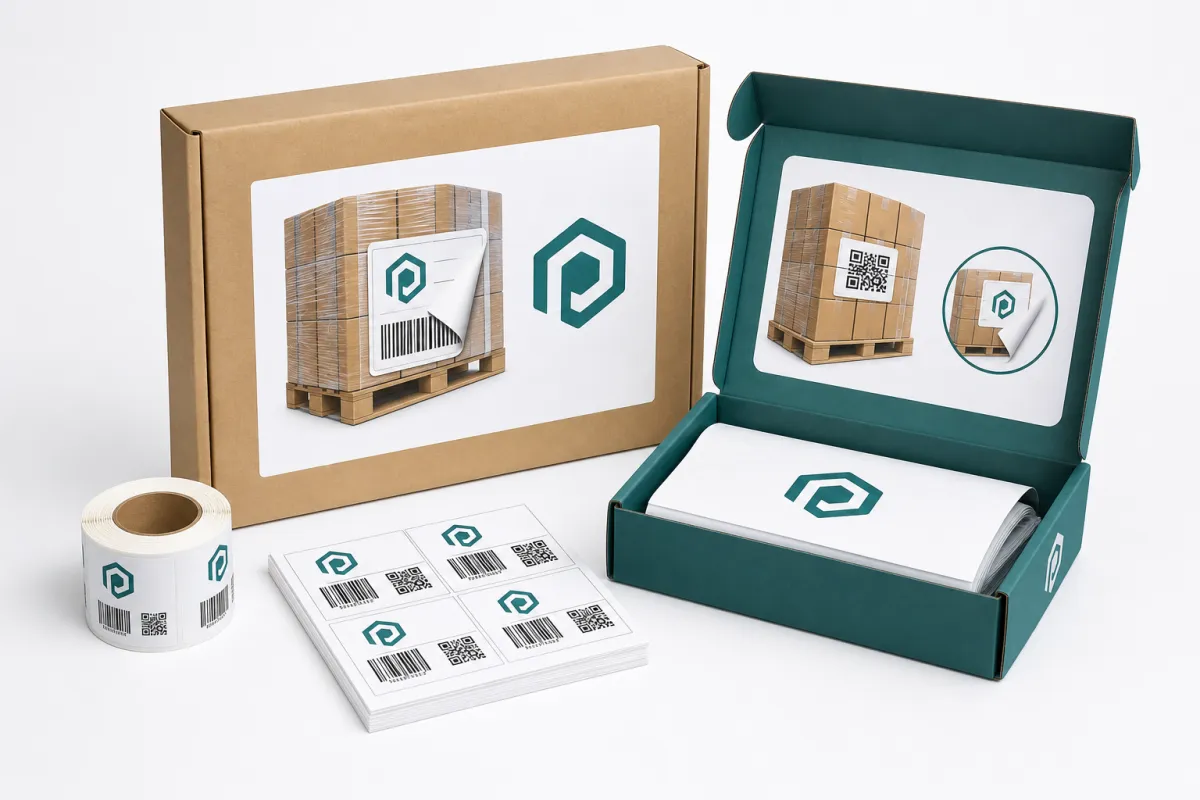
Printed pallet labels with logo are pallet identifiers that combine operational data with a brand element. A practical label usually includes a pallet ID, barcode or QR code, destination, lot or batch code, and basic handling instructions. The logo is not decoration for decoration’s sake. It makes the pallet instantly recognizable in receiving, staging, cross-docking, outbound shipping, and sometimes returns or internal transfers.
The best warehouse labels do two jobs at once. First, they tell the system what the pallet is. Second, they tell the human what it belongs to. That second part matters more than people think. In a mixed dock environment, two suppliers may ship similar carton sizes, and two product lines may share similar packaging colors. A clear logo cuts through that similarity. It gives the eye a faster anchor point than a line of text does.
From a packaging buyer’s point of view, printed pallet labels with logo are a control tool. They reduce the chance that a pallet is routed to the wrong truck, the wrong client, or the wrong internal zone. They also support brand consistency on the warehouse floor, which matters even more when the dock is visible to customers, auditors, or retail partners. A clean label can make the whole operation feel more disciplined than a generic white tag ever will.
That does not mean the logo should dominate the layout. Quite the opposite. The operational fields come first. A pallet label that hides the barcode behind a large mark has missed the point. Good printed pallet labels with logo use the logo as a visual cue, not as a billboard. The layout has to respect scan speed, label placement, and the way labor actually works under pressure.
These labels also sit in a larger traceability chain. Many warehouses now expect the pallet label to match the WMS or ERP record, so the printed data, variable information, and print quality all matter. If your operation also uses carton or case identifiers, it often helps to align them with broader Custom Labels & Tags programs so the same artwork logic and approval flow applies across the site.
A pallet label is not a sign. It is a transaction point. If it does not scan, route, and survive handling, the design has failed no matter how polished it looks.
So when people ask what printed pallet labels with logo really are, the honest answer is simple: they are logistics labels with a brand signature. They help a warehouse move faster, but only if the format respects the job in front of it.
How Printed Pallet Labels with Logo Work in the Warehouse
A strong pallet label lives or dies by the scan chain. The data is generated, printed, applied, scanned, and then matched against the warehouse system. If any step breaks, the whole label loses value. That is why printed pallet labels with logo need more than a nice layout. They need a clean handoff between printing, application, and read performance.
The anatomy is usually straightforward. You have human-readable text, a barcode or QR code, pallet ID, destination, handling notes, and the logo. But the spacing around each element changes how the label behaves in the field. A crowded layout can make the barcode harder to isolate. Too little contrast can reduce read rate. A logo placed too close to the quiet zone can create a tiny problem that turns into repeated rescans all shift long.
What the scanner sees first
Scanners are less forgiving than people. They want contrast, clean edges, and enough white space around the code to separate it from the rest of the layout. Printed pallet labels with logo often work best when the logo sits high, low, or to the side, leaving the barcode with a clear visual corridor. On a pallet wrapped tightly in stretch film, that corridor matters even more because glare can reduce the effective contrast of the code.
Where the stress shows up
Warehouse conditions are harsher than most artwork reviews suggest. Shrink wrap glare can hide small text. Cold-room condensation can weaken adhesive grip. Dust can collect at the edges of rough wood pallets. Vibration from forklifts can loosen labels that were not pressed down correctly. In that environment, printed pallet labels with logo have to stay legible after handling, not just look good on a screen.
The most common use cases are 3PL operations, food and beverage distribution, retail replenishment, and manufacturing transfer pallets. Those are the lanes where label speed and label consistency show up in measurable ways. A 3PL may need to identify dozens of customer formats. A food distributor may care about lot visibility and cold performance. A manufacturer may need internal movement labels that keep components from drifting into the wrong queue. In all four cases, printed pallet labels with logo reduce ambiguity.
Another practical detail is placement. One label on one side may be enough for a small internal move, but two adjacent sides are often safer when pallets are block-stacked, rotated, or wrapped heavily. Some operations use three or four labels on larger loads so a forklift driver can capture the scan from almost any angle. That is not wasteful if the load is moving through a high-speed process. It is insurance against a second pass.
When a site uses both human inspection and barcode capture, the logo helps create immediate recognition. A receiving associate may not read every line on every pallet. But they will recognize a logo pattern in a fraction of a second. That visual recognition is one reason printed pallet labels with logo can feel more organized than generic thermal tags, especially where multiple customers or brands share the same dock.
I have watched more than one warehouse chase what looked like a scanner problem, only to find the label was the issue. A slightly bad placement, a little glare, a low-contrast code, and suddenly the whole team is doing manual rescans like that is normal. It is not. A label that supports first-pass readability helps the whole flow. That is the real warehouse benefit of printed pallet labels with logo.
Printed Pallet Labels with Logo: Key Factors That Matter
Most buyers start with appearance and end with performance. It is better to do the opposite. The first question is durability. Paper, thermal transfer, synthetic film, and topcoat options behave differently under humidity, abrasion, freezer storage, and outdoor exposure. If the pallet sits on a dock for only a few hours, paper may be enough. If it spends time in cold storage or gets handled outdoors, you may need a synthetic face stock and an adhesive formulated for tougher conditions.
That is where printed pallet labels with logo become more of a materials decision than a design decision. The wrong stock can peel, smear, or curl. The wrong adhesive can fail on dusty wood or under condensation. A better material often costs more per label, but that increase can be cheaper than rework, relabeling, and missed scans across an entire shift.
Readability is also a design problem. Barcode contrast, quiet zones, font size, and logo placement all affect scan reliability. If the barcode is too small, the operator compensates by moving closer, which slows the process. If the logo is too large, it crowds the operational fields. If the text is too light, it disappears once the label gets wrapped. Good printed pallet labels with logo are designed with the scanner, the forklift driver, and the receiving clerk in mind at the same time.
Compliance can enter the picture too. Some buyers need GS1-compliant formats, customer-specific shipping labels, carrier routing rules, or handling symbols for fragile, temperature-sensitive, or orientation-sensitive loads. In those cases, the logo has to fit around the standard, not overwrite it. Operations usually care less about whether the label looks branded and more about whether it reads correctly every time. If the label is shipping through retail channels, the SSCC or equivalent logistics identifier is usually the field that earns its keep.
For packaging buyers who want to compare label materials more clearly, the table below is a useful starting point. The exact price changes with quantity, coverage, and print method, but the relative behavior stays fairly consistent.
| Material option | Best fit | Strengths | Typical unit cost at 5,000 labels |
|---|---|---|---|
| Direct thermal paper | Short dwell times, dry warehouses | Simple, fast, economical | $0.08-$0.16 |
| Thermal transfer paper | General warehouse use | Better durability than direct thermal, good print clarity | $0.10-$0.20 |
| Synthetic film | Cold storage, moisture, abrasion | Stronger against tearing, humidity, and scuffing | $0.18-$0.35 |
| Topcoated premium stock | High scan reliability, mixed conditions | Improved print contrast and surface protection | $0.20-$0.42 |
Printer compatibility matters too. Some operations already run Zebra, SATO, or similar thermal printers, which means the label roll size, core size, and gap sensing have to match existing equipment. If the roll format is wrong, the warehouse ends up changing hardware settings or hand-feeding labels during a shift. That is a small friction point that becomes a major annoyance very quickly. A good label program keeps printed pallet labels with logo aligned with equipment already on the floor.
Brand consistency also matters, but only after function. A logo should be sized for recognition, not prestige. It should stay clear under low light and not compete with the pallet ID. When teams overcorrect and design for aesthetics only, they often create a label that looks impressive in a proof but underperforms in the dock. That is a classic tradeoff in printed pallet labels with logo projects.
If sustainability is part of the brief, paper sourcing can be reviewed against FSC-style procurement requirements. The mark itself does not make a label better or worse in the warehouse, but paper origin may matter to procurement teams or retailer scorecards. For a broader view of packaging materials and industry expectations, the resources at Packaging School and Packaging Education Foundation can be useful reference points, especially when a project touches both labeling and material selection.
The best takeaway here is simple. Printed pallet labels with logo are not chosen by appearance alone. They should be specified by use case, handling environment, scanner distance, and the equipment already in the building. That sequence avoids a lot of expensive guessing.
Printed Pallet Labels with Logo: Cost, Pricing, and Timeline
Cost is where many projects get fuzzy. A buyer sees one quote and assumes the price is the whole story. It is not. The real decision is between visible unit price and total cost of ownership. Printed pallet labels with logo may cost more than blank stock at first glance, but they can lower labor, reprint, and error costs in a way that makes the total program cheaper.
The biggest cost drivers are quantity, substrate, adhesive strength, color count, variable data, proofing rounds, and rush production. A straightforward black-and-white label on paper at 10,000-plus pieces will usually price very differently from a synthetic label with a full-color logo and custom variable fields. If the art needs multiple revisions, the setup work rises as well. That is why printed pallet labels with logo should always be quoted with complete specs, not just a size request.
There are two common buying models. One is blank stock printed in-house. The other is fully printed labels supplied by a vendor. In-house printing can work well if the team already owns the equipment, has stable artwork, and changes data frequently. Fully printed labels can make sense when brand consistency matters, labor is tight, or the label format is reused at volume. A lot of buyers discover that printed pallet labels with logo reduce the hidden costs of manual handling enough to justify the supplier-printed route.
Here is a practical comparison that buyers often find useful:
| Buying model | Upfront cost | Flexibility | Operational impact | Best for |
|---|---|---|---|---|
| Blank stock, printed in-house | Lower per roll or sheet | High for variable data | Requires printer upkeep and operator time | Frequent data changes, internal use |
| Fully printed supplier labels | Higher setup, often lower labor | Moderate | Cleaner brand control and fewer manual steps | Stable formats, customer-facing docks |
Typical pricing for printed pallet labels with logo might sit around $0.08-$0.16 per label for simple paper runs, $0.10-$0.20 for thermal transfer paper, and $0.18-$0.35 or higher for synthetic stock at medium quantities. Small orders can be much more expensive per piece because setup gets spread over fewer labels. A rush job can also push pricing upward if production has to be moved ahead of standard schedules. That is normal, and buyers should expect it.
Now the hidden costs. Reprints are the obvious one, but they are only part of it. A misread label can create manual entry, a delayed dock move, or a customer chargeback if the pallet arrives misrouted or untraceable. One mislabeled pallet can cost far more in labor than the label itself. That is why the “cheap” version of printed pallet labels with logo is not always the least expensive path.
Timelines are usually shaped by artwork readiness, proof approval, testing speed, and shipping method. If the files are ready and the format is simple, a standard run may move from proof to production in roughly 7-15 business days. If the label needs variable data rules, special adhesives, or repeated proof changes, the timeline stretches. A pilot also adds time up front. That extra time usually pays for itself by preventing avoidable mistakes later.
For operations that want a broader labeling system, it often helps to align pallet formats with other packaging labels under one approval process. That is where a coordinated program for Custom Labels & Tags can reduce artwork confusion, duplicate approvals, and last-minute redesigns across carton and pallet levels.
One industry resource worth consulting during a pilot is the International Safe Transit Association. Their testing framework is not a label buying guide, but it helps teams think about distribution stress in a more disciplined way. See ISTA for background on transit test methods and why durability should be validated against real handling conditions, not assumptions.
When a buyer asks for a budget recommendation, the answer is usually this: quote the label by spec, then compare it against labor savings, error reduction, and the cost of a failed scan. That is the fair way to judge printed pallet labels with logo.
Step-by-Step Guide to Ordering Printed Pallet Labels with Logo
The cleanest ordering process starts with a problem statement. What is the label supposed to fix? Scan failures? Slow handling? Inconsistent branding? Customer compliance? When the team agrees on the problem first, it becomes easier to define the right version of printed pallet labels with logo.
Step one is a workflow audit. Look at where pallets are created, where they are scanned, who applies the label, and where the label can be covered by wrap or tape. That audit often reveals the real bottleneck. Sometimes the problem is not print quality at all. It is label placement. Sometimes it is not the barcode. It is the habit of applying the label before the final wrap pass. Good printed pallet labels with logo start with the process, not the artwork.
Step two is gathering the technical specs. You need label dimensions, barcode type, variable data fields, logo file format, quantity, finish, adhesive type, and any compliance notes. If the label has to fit a particular printer, include core size and roll direction. If the label must hold up in cold storage, say so explicitly. The more complete the brief, the fewer surprises in the proof. That is true for almost every printed pallet labels with logo order.
Step three is proofing in real conditions. A screen proof can confirm color placement and text layout, but it cannot tell you how the label behaves on a wrapped pallet under warehouse light. Test it on the actual substrate. Scan it from the typical operating distance. Check whether the logo crowds the code. Check whether the adhesive grips after the pallet sits for a few hours. This is the point where a lot of teams save themselves from rework.
Pilot before full rollout
A small pilot is worth the time. Pick one shipping lane, one customer profile, or one high-volume SKU and run the new label format on that stream only. Then measure scan success rate, application time, and reprint count. If the label is good, those numbers should improve or at least stay stable while the team gains a clearer brand presentation. If they do not, you still have time to adjust printed pallet labels with logo before full deployment.
Step four is documenting the final SOP. Someone needs to own artwork changes. Someone else needs to know where labels are stored and when to reorder. The production team should know exactly where the label goes on the pallet, and the customer service team should know what version ships to which account. Without that control, even good printed pallet labels with logo can drift into inconsistency.
Step five is considering storage and inventory discipline. Labels should not be left where heat, dust, or moisture can distort them before use. Finished rolls need protection from warehouse rough treatment. A label that was perfect on day one can become troublesome if the stock is stored near a dock door with temperature swings. Small controls like that protect the quality of printed pallet labels with logo over the long run.
Step six is setting the re-order trigger. Some operations reorder when stock hits a two-week supply. Others use a minimum based on average daily usage plus a safety buffer. The right number depends on lead time and variability, but the principle is the same: do not let the label program run dry mid-cycle. When that happens, the warehouse falls back to whatever is easiest, and consistency gets weaker. That is how good printed pallet labels with logo programs unravel.
If the business uses other package-level identifiers, consider aligning artwork approvals across related formats. One vendor can handle a wider mix of Custom Labels & Tags so the site does not maintain multiple spec libraries for nearly identical data structures.
Common Mistakes That Turn Good Labels into Rework
The first mistake is letting the logo grow too large. It sounds harmless, but it can crowd the barcode, force the human-readable text into a narrow space, and create a label that is harder to use than it should be. A label needs hierarchy. Operational data comes first. Brand comes second. That balance matters even more in printed pallet labels with logo because the design has to satisfy both marketing and warehouse users.
The second mistake is choosing the wrong adhesive. Cold storage, rough wood, dusty pallets, and long dwell times all challenge label adhesion in different ways. A label that sticks beautifully in a clean room may peel badly on a dock. The wrong adhesive creates a slow-motion failure: a corner lifts, the wrap catches it, then the barcode becomes impossible to scan. That is a common way printed pallet labels with logo turn into labor waste.
The third mistake is treating barcode quality as an afterthought. Poor contrast, low resolution, or incorrect quiet zones can make a code fail even when the design looks fine to the eye. People are often surprised by this because the label appears legible in a proof. But scanners do not care how readable it feels. They care about exact structure. If the code is not built correctly, printed pallet labels with logo will disappoint at the point of use.
The fourth mistake is selecting colors or finishes that look polished but perform badly under wrap glare or low light. Glossy surfaces can reflect overhead fixtures. Light text can disappear on some backgrounds. Metallic accents can be visually attractive and operationally inconvenient. A label that works in a design mockup is not automatically a good warehouse label. The physical environment decides that, not the artwork software.
The fifth mistake is skipping field tests. This is probably the fastest path to waste. A team can approve a proof, send it to production, and still discover that the label fails when the pallet is wrapped tightly or pushed through a freezer. That is why a small test run matters so much. A few sample pallets can expose problems that would otherwise be multiplied across a full shipment cycle of printed pallet labels with logo.
There is also a broader testing mindset here. Operations that care about label performance often think in terms similar to transit testing, where the point is not just “does it look right?” but “does it survive the journey?” That logic lines up well with resources from ISTA, which is useful when a label needs to remain intact through handling, temperature changes, and repeated movement.
Another common issue is version control. Someone changes the logo file, shifts the barcode slightly, or updates the destination field and forgets to tell the rest of the team. The result is mixed label versions in circulation. That may not sound serious, but one mixed batch can create confusion at the dock. Strong control over artwork and approvals keeps printed pallet labels with logo from drifting into inconsistency.
Finally, some teams underorder because they focus on unit cost alone. They get a slightly lower price but lose money on expedited freight, reprints, and manual correction. That is a false economy. The better question is whether printed pallet labels with logo lower the full cost of getting the pallet to the right place with the right scan history attached.
Actionable Next Steps for Printed Pallet Labels with Logo
The most useful rollout plan is usually the simplest one. Start with one high-volume SKU, one shipping lane, or one customer-specific pallet stream. That gives the team a clean baseline. It also keeps the risk low while you compare the current format against the new printed pallet labels with logo.
Measure three numbers during the pilot: scan success rate, application time, and reprint count. If the scan rate rises, the application time stays flat or improves, and reprints fall, the label is doing its job. If one of those numbers gets worse, adjust the placement, substrate, or barcode size before expanding the rollout. That data-driven approach is far better than guessing.
Build a one-page label spec sheet. Keep it tight, but complete. Include artwork files, dimensions, barcode rules, placement instructions, adhesive, print method, and approval ownership. That document becomes the guardrail for every future reorder. It also helps new staff avoid accidental changes. In a busy operation, that kind of control is worth real money, especially when printed pallet labels with logo are part of a larger labeling program.
Assign reorder responsibility clearly. Operations may notice stock usage first, but purchasing usually handles vendors, and customer service may know when account-specific changes are coming. If those groups are not aligned, labels run short at the worst possible time. A short supply can force the warehouse into stopgap printing and inconsistent application. That is how even good printed pallet labels with logo programs slip backward.
Think about the dock as a communication surface. The label should tell the forklift driver what to do, tell the scanner what to read, and tell the customer that the shipment belongs to the right brand. That is a lot to ask from one printed piece, which is why the setup work matters. The more disciplined the layout, material choice, and workflow, the more valuable printed pallet labels with logo become.
If the program is likely to expand into cartons, internal moves, or secondary packaging, it is smart to align the label family early. That is where a broader Custom Labels & Tags strategy keeps the same logic moving across multiple packaging stages without rewriting the rules each time.
Review the dock failures that cost the most time right now, then choose the next controlled shipment stream and specify printed pallet labels with logo for that lane first. Start small, test on wrapped pallets, and make the barcode the boss of the layout. That is the move that keeps the program practical instead of pretty, and it is usually the difference between labels people trust and labels they work around.
What are printed pallet labels with logo used for?
They identify pallets at receiving, staging, and shipping while also reinforcing company branding. In practical terms, printed pallet labels with logo help reduce misroutes, missed scans, and confusion when multiple SKUs or customers move through the same dock.
How much do printed pallet labels with logo usually cost?
Price depends on material, adhesive, quantity, print coverage, and whether variable data or proofing is included. For many programs, printed pallet labels with logo can range from under $0.10 for simple paper runs to $0.35 or more for synthetic stock at medium quantities. The better comparison is total cost of ownership, not just unit price.
What size should printed pallet labels with logo be?
The label should be large enough to hold the barcode, human-readable data, and logo without crowding the layout. Bigger pallets or longer scan distances usually need larger text and more open space around the barcode. Testing on a wrapped pallet is the safest way to confirm that printed pallet labels with logo work in real conditions.
How long does it take to order printed pallet labels with logo?
Simple reorders can move quickly, but new artwork usually needs proofing, sample checks, and approval time. A standard run often takes about 7-15 business days after proof approval, depending on complexity. Pilot testing adds time up front, but it usually prevents more expensive production mistakes later, especially with printed pallet labels with logo.
Do printed pallet labels with logo work in cold storage?
Yes, if the material and adhesive are rated for low temperatures and condensation. Cold storage labels should be tested for surface grip, scan quality, and durability after thaw cycles. Placement matters too, because wrap, frost, and rough handling can reduce readability. In that setting, printed pallet labels with logo need the right stock, not just the right design.


