Buyer Fit Snapshot
| Best fit | Branded Shipping Labels with Logo projects where brand print, material claims, artwork control, MOQ, and repeat-order consistency need to be specified before quoting. |
|---|---|
| Quote inputs | Share finished size, material target, print colors, finish, packing count, annual reorder estimate, ship-to region, and any compliance wording. |
| Proofing check | Approve dieline scale, logo placement, barcode or warning zones, color tolerance, closure strength, and carton packing before bulk production. |
| Main risk | Vague material claims, crowded artwork, missing packing details, or unclear freight terms can make a low unit price expensive after revisions. |
Fast answer: Branded Shipping Labels with Logo: Material, Adhesive, Artwork, and MOQ should be specified like a repeatable production item. The safest quote records material, print method, finish, artwork proof, packing count, and reorder notes in one written spec.
Production checks before approval
Compare the actual filled-product size with the drawing, then confirm tolerance on folds, seals, hang holes, label areas, and retail display edges. Reserve space for logos, QR codes, warning copy, and material claims before decorative graphics fill the panel.
Quote comparison points
Review material grade, print process, finish, sampling route, tooling charges, carton quantity, and freight assumptions side by side. A quote is only useful when the supplier can repeat the same color, closure quality, and packing count on the next order.
Branded Shipping Labels With Logo: A Practical Guide
The first branded surface a customer sees is often not the box, the tape, or the insert. It is the shipping label. That is why branded shipping labels with logo can punch far above their size: they sit right between first impression, order fulfillment, and the very unglamorous machinery that gets a parcel out the door. Done well, branded shipping labels with logo make a package look intentional before the customer even touches it.
From a packaging buyer’s point of view, that matters because the label is not just decoration. It carries the address, barcode, routing code, and tracking data that keep ecommerce shipping moving. It also signals who sent the parcel, how much care went into the shipment, and whether the brand pays attention to the details. A plain label says, “this is going somewhere.” Branded shipping labels with logo say, “someone thought this through.”
There is a practical side too. Better recognition can reduce mix-ups in multi-brand operations, help warehouse teams spot the right carton faster, and give every shipment a little more identity without adding inserts, stickers, or extra packaging layers. For brands comparing shipping materials, that is a useful tradeoff. You get branding and operational clarity in one printed surface. Not bad for a rectangle.
Here is the breakdown on how branded shipping labels with logo work, what shapes their quality and cost, and how to roll them out without slowing down transit packaging or creating scanner headaches. If you are also looking at related pieces, it helps to compare label decisions with Custom Labels & Tags, broader Custom Packaging Products, and shipping cartons such as Custom Shipping Boxes.
Branded shipping labels with logo: what they are and why they matter
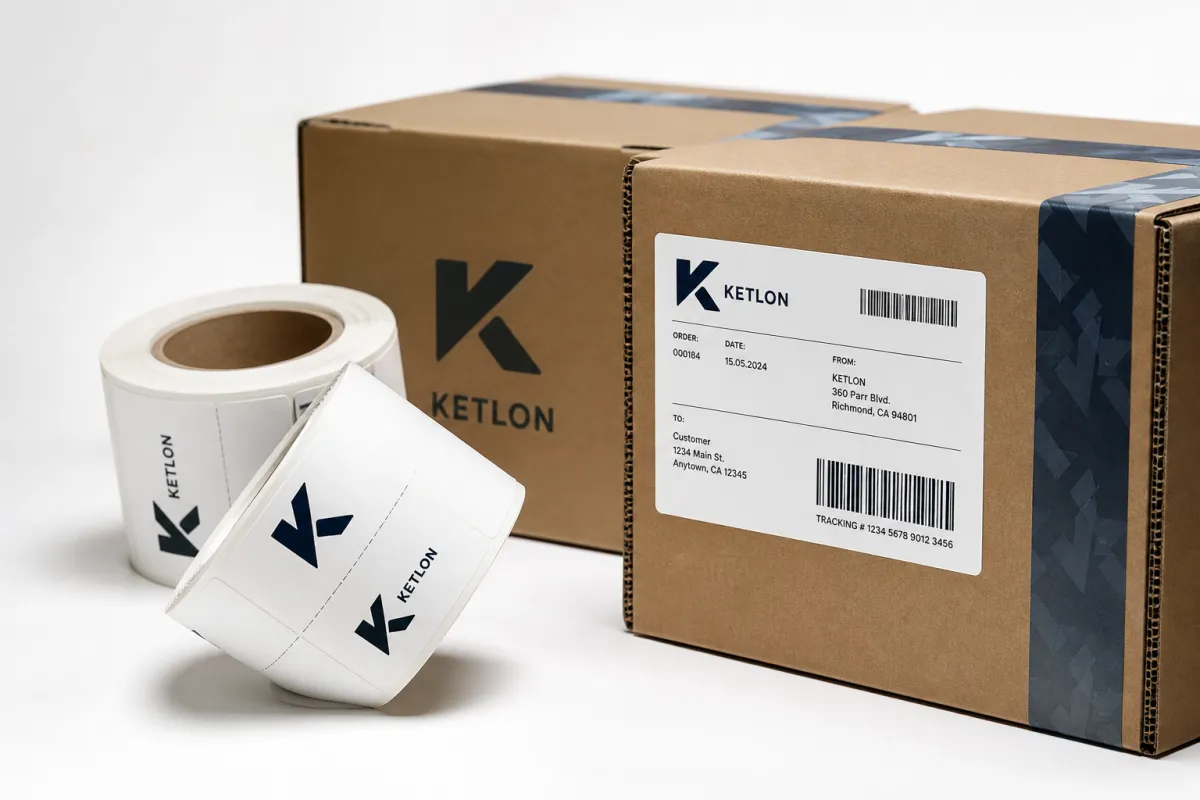
Branded shipping labels with logo are shipping labels that combine operational data with brand elements such as a logo, a distinctive color block, custom typography, or a recognizable layout. The goal is straightforward: keep the shipment readable and scannable while making the outer face of the parcel look like it belongs to your company, not a generic carrier workflow.
That small change can have a bigger effect than many teams expect. A shipping label sits at eye level when a parcel is picked up, sorted, stacked, loaded, and delivered. It may be seen more often than the box itself. In practice, that means branded shipping labels with logo can act like a tiny moving ad across the whole transit packaging journey. They also make unboxing feel less anonymous, which matters in categories where customer retention depends on memory as much as utility.
There is also a trust angle. People notice consistency. If the box, the label, and the checkout confirmation all feel like they came from the same brand system, the shipment reads as more professional. That does not mean every label needs a full-color masterpiece. It means the brand mark, type choice, and layout should work together instead of fighting the address panel or barcode zone.
Honestly, this is where many teams underinvest. They spend heavily on the carton and ignore the label, even though the label is the one element guaranteed to cross hands inside the parcel network. Branded shipping labels with logo can fill that gap at relatively low cost, especially when they replace one-off promo stickers or separate inserts that do not survive rough handling.
“If the label reads beautifully but peels at the depot, the design failed.” That is the right lens for branded shipping labels with logo: the branding has to survive real shipping conditions, not just look good in a mockup.
There is another reason they matter. In multi-SKU environments, a consistent label design can help staff spot the right order lane faster. That sounds minor until you are shipping hundreds or thousands of parcels a day and every second saved in order fulfillment compounds. Small friction points become real labor costs. Strong label systems reduce that drag.
For brands that want to build a more recognizable shipping experience without overcomplicating the process, branded shipping labels with logo sit in a sweet spot: visible, practical, and easy to standardize across product lines.
How branded shipping labels with logo fit into the shipping process
The lifecycle of branded shipping labels with logo starts long before the label reaches a carton. It usually begins with artwork setup, moves through proofing, and then connects to whatever system prints the variable data. That could be a warehouse management system, shipping software, or a batch workflow tied to a single station on the packing line.
From there, the label needs to balance two jobs at once. The first is brand presentation. The second is machine readability. A logo may sit in the top left or on one side of the label, while the address block, barcode, and carrier routing codes occupy a protected area with enough whitespace to scan cleanly. If that spacing is off, the design becomes a liability. If it is right, branded shipping labels with logo support both brand and operations without drama.
Template setup matters more than most people think. Once a label format is approved, the layout should stay consistent across print runs so the logo appears in the same place every time. That consistency helps with visual checks at the packing bench and lowers the chance of a misaligned print shifting critical data into the wrong zone. For ecommerce shipping teams, especially those printing in batches, that predictability is worth real money.
Timeline also matters. A repeat order using existing artwork and approved stock can move quickly. A custom run that adds a specialty adhesive, synthetic stock, or security feature will usually need more time for proofing and production. A simple label order may turn in a few business days; a more specialized spec can take longer, especially if the printer needs to test compatibility with direct thermal or thermal transfer equipment.
Integration matters too. Branded shipping labels with logo should fit the software stack, not fight it. If your team prints from shipping software, the layout needs to leave room for dynamic fields like recipient address, tracking number, return code, and any carrier-required routing marks. If your operation uses multiple printers, the design should survive across devices without changing contrast or position. In plain terms, the label should be operationally boring and visually memorable at the same time.
For higher-volume brands, I usually recommend thinking of the label as part of the full shipping materials system rather than as a standalone purchase. That means reviewing it alongside cartons, poly mailers, tape, and inserts so the outer package feels coordinated. If the shipment travels in a box, the box and label should speak the same language. Otherwise, the whole setup starts feeling a little half-baked.
Key factors that shape branded shipping labels with logo
Material choice is the first major decision. Paper labels are usually the lowest-cost route and work well for dry, short-cycle shipments. Synthetic stocks such as polypropylene or polyester cost more, but they hold up better against moisture, abrasion, and temperature swings. If you ship from a humid dock, run a cold-chain operation, or deal with rough carrier handling, the extra durability can be the difference between a label that stays put and one that curls at the edges like it wants to leave the building.
Adhesive strength is just as important. A label that looks fine on the roll can fail on kraft cartons, textured surfaces, glossy mailers, or refrigerated packaging. The right adhesive depends on the package surface, the dwell time before shipment, and the environment the parcel will pass through. For branded shipping labels with logo, a label lift is not only a branding problem. It can delay scans, confuse sortation, and create avoidable reprints.
Visual hierarchy is the next piece. A logo needs to be visible, but not so dominant that it competes with the address panel or barcode. Good designs use contrast, whitespace, and placement to guide the eye. That is especially important when labels are scanned quickly or viewed under warehouse lighting that is less flattering than any design file ever is. Strong contrast tends to outperform clever styling in real-world ecommerce shipping.
Printing method compatibility also Shapes the Final result. Direct thermal printing is common for short-life labels and high-speed environments. Thermal transfer gives you more durability and works better when you need the print to resist smudging or exposure. Some branded systems also use pre-printed stock with variable overprinting, which can be helpful when a logo or color block needs to stay fixed while the shipping data changes. The right setup depends on your volume, printer fleet, and required package protection performance.
Color can help or hurt. A bold accent band can make branded shipping labels with logo more recognizable, but too many colors can slow production, complicate inventory, and raise cost. A clean one- or two-color design often delivers better consistency than a crowded layout. I have seen brands save more by simplifying the label system than by chasing a slightly fancier aesthetic. Fancy is nice. Consistent is better.
If sustainability is part of your buying criteria, ask about FSC-certified paper and the recycled content of the stock. You can review standards and sourcing guidance through FSC, and if you are validating shipping performance, the test mindset used in ISTA protocols is a useful reference point. Not every label needs a full lab program, but the standards mindset helps separate marketing claims from real performance.
One more factor gets overlooked: dimensional weight. Labels do not change dim weight, of course, but the broader package design does. If your shipping system already uses cartons sized tightly to the product, the label should not force a switch to a larger surface or awkward application method. That is one more reason to think of branded shipping labels with logo as part of the full transit packaging specification, not a decorative afterthought.
Cost and pricing for branded shipping labels with logo
Pricing depends on more variables than many buyers expect. Size, material, adhesive, number of colors, quantity, variable data, and special finishes all influence the quote. The easiest way to think about branded shipping labels with logo is to separate base label cost from production complexity. A small, one-color label on paper stock will usually sit at the low end. A synthetic, multi-color format with custom adhesive and variable data lands higher.
For a practical budget, quantity matters a lot. Smaller runs generally cost more per label because setup time is spread across fewer pieces. Larger orders lower unit cost, but they also require more confidence in design, volume forecast, and SKU stability. If your team is still changing box dimensions or shipping lanes, it is often smarter to avoid over-ordering until the workflow is settled.
There is also a hidden-cost conversation. The cheapest label quote is not always the cheapest label program. Reprints from poor proofing can erase savings quickly. So can label failure caused by the wrong adhesive, or downtime caused by printer incompatibility. When a warehouse stops to troubleshoot a label stock issue, the cost is not just the label itself. It is labor, delays, and sometimes customer-facing service pressure.
For many brands, the best approach is to standardize. Keep the label size consistent, limit the number of label SKUs, and build one clean design system that can adapt across order types. That keeps branded shipping labels with logo manageable while still allowing enough flexibility for different cartons or mailers.
Here is a simple comparison to frame the economics. The figures below are illustrative for mid-volume custom orders and can vary by supplier, artwork, finish, and printer compatibility.
| Label option | Typical use | Approx. unit cost | Strengths | Tradeoffs |
|---|---|---|---|---|
| Direct thermal paper | Short-life ecommerce shipping labels | $0.03-$0.08 | Fast print speed, simple setup, low cost | Less durable, can fade with heat and abrasion |
| Thermal transfer paper | Labels needing better rub resistance | $0.05-$0.11 | Cleaner print, better longevity | Requires ribbon, slightly more process complexity |
| Synthetic BOPP/poly | Moisture-prone or rough-handling shipments | $0.08-$0.18 | Strong package protection, moisture resistance | Higher unit cost, sometimes more inventory planning |
| FSC paper with custom branding | Brands balancing presentation and sourcing goals | $0.10-$0.22 | Better brand story, cleaner look, responsible sourcing options | Can require tighter quality control and proofing |
One way to judge value is to compare the label against other branding touches. If a custom insert costs more than the incremental price of branded shipping labels with logo, and the label already reaches every customer, the label may be the stronger investment. That does not mean inserts or mailers are unnecessary. It means the label often has better reach per dollar.
For teams exploring broader packaging improvements, compare the label budget with box print, tape, and mailer branding through Case Studies and the rest of the Custom Packaging Products range. The strongest decisions usually come from seeing the whole system instead of buying each item in isolation.
Step-by-step guide to launching branded shipping labels with logo
Start with the use case. Retail parcel shipping, subscription orders, wholesale cartons, cold-chain shipments, and promotional mailers do not all need the same label spec. A label that works for high-speed standard order fulfillment may not be right for refrigerated transit packaging or a premium gift shipment. The job comes first; the visual system follows.
Next, choose the structure. Decide where the logo will sit, how much room the address block requires, and whether the barcode will live on a separate clear zone or inside the same frame as the brand mark. Branded shipping labels with logo work best when every element has a defined job. If one area is trying to do too much, the label becomes cluttered fast.
Then prepare the artwork and data paths. This is where teams should be meticulous. The logo file should be clean, the typography should stay readable at the actual print size, and the variable data should be mapped correctly. Ask for a proof that shows the label in real scale, not just on a screen mockup. A good proof catches spacing problems, contrast issues, and barcode crowding before production starts.
Test on actual packaging. This is the step that saves people the most regret. Apply the label to the same box or mailer you ship every day, then check scanability, adhesion, durability, and visual balance under warehouse lighting. If you can, test one sample in a more stressful condition too: refrigerated hold, rough bagging, or extended handling. ISTA-style thinking is useful here because it focuses attention on what the package experiences, not just what the artwork looks like.
After that, launch in a controlled way. One SKU, one lane, or one fulfillment center is a safer starting point than a full network rollout. That gives your team room to catch printer issues, adhesive problems, or template errors without putting the whole operation at risk. Once the label performs cleanly, expand it to additional order flows.
Finally, document the system. A short style guide should define label size, logo placement, font choice, barcode margin, stock type, and when alternate versions are allowed. That kind of documentation keeps branded shipping labels with logo consistent across teams, shifts, and future reorder cycles.
- Use case first: match the label to parcel type, environment, and volume.
- Proof carefully: verify logo position, address legibility, and barcode contrast.
- Test physically: check on the real carton or mailer, not only a digital file.
- Roll out gradually: start with a limited lane, then scale once performance is proven.
That sequence may sound conservative, but it is faster in the long run. A rushed rollout with branded shipping labels with logo can trigger reprints, carrier scans that fail on first pass, and frustrated warehouse staff. Controlled launch plans are usually cheaper than emergency fixes. I have seen more teams waste money on hurried rework than on the label itself.
Common mistakes with branded shipping labels with logo
The most common mistake is simple: making the logo too large. A label still has to do operational work, and if the brand mark crowds the address block or barcode, scanning becomes less reliable. That slows shipping, creates avoidable manual checks, and can lead to rework. A label can look bold and still be disciplined. The trick is hierarchy.
Another frequent error is choosing stock or adhesive by appearance alone. A satin paper label may look elegant on a desk, but if it lifts from a textured mailer or smears in damp conditions, it is not the right choice. Branded shipping labels with logo should be selected against the actual shipping environment, not against a sales sample in perfect lighting.
Overly busy artwork is another trap. Too many colors, borders, callouts, and icons can make the label look exciting in a proof and messy in production. Simplicity usually wins in real ecommerce shipping because it stays readable at speed. One strong logo, one clear typeface, and one well-defined data area often outperform a crowded design by a wide margin.
Weather and handling conditions matter too. If parcels sit in warm trucks, cold storage, or wet receiving areas, ordinary paper stocks can struggle. Smudging, peeling, and edge lift are not just cosmetic issues. They undermine package protection by making the parcel harder to identify and the tracking data harder to scan. If your shipping route is rough, ask for label stock that can take rough treatment.
Inventory mistakes are also common. Some teams order too many labels before testing printer compatibility, and then discover the roll core, liner, or print face does not fit the equipment. Others underestimate how many versions they need and end up with mismatched SKUs. With branded shipping labels with logo, a little more planning beats a lot more stock sitting in the wrong box.
One more issue deserves attention: ignoring the full packaging system. A label may be excellent, but if it is applied to a box that is too large, the brand can still feel disconnected from the product. That is why label planning often works best alongside carton and mailer decisions. Compare label changes with box format, insert strategy, and carrier profile at the same time. The result is cleaner, more efficient transit packaging.
Branded shipping labels with logo fail most often when teams treat them like a graphic project instead of an operational component. If you remember that they live on the front line of order fulfillment, the decision making gets much better.
Expert tips for branded shipping labels with logo and next steps
Build a label style guide. Even a simple one-page document can save repeated confusion. Define the logo size, the safe area around the barcode, approved colors, and the allowed label sizes. If multiple teams or facilities print the same format, this becomes even more valuable. Consistency is what turns branded shipping labels with logo into a system rather than a one-off project.
Use contrast like a tool, not an afterthought. A dark logo on a light field usually scans and photographs better than a heavily textured or low-contrast design. If your parcels are photographed by customers, drivers, or internal quality teams, a crisp label helps the brand appear more deliberate. Strong contrast also improves readability at arm’s length, which matters in busy warehouse aisles.
Track performance after launch. The best label programs are reviewed after they go live. Look at reprint counts, scan failures, customer complaints, carrier damage reports, and how often staff have to stop to correct alignment. Those numbers tell you whether the label is helping or creating friction. A good result is boring in the best possible way: low reprints, few complaints, and no surprises.
Connect the label to the rest of the packaging story. If the label is branded but the carton, tape, and inserts are generic, the experience can feel incomplete. If you are already investing in custom boxes or mailers, the shipping label should support that work, not sit apart from it. For many brands, branded shipping labels with logo are the easiest way to make the outer package feel unified without adding much cost.
Here is the practical path forward: choose one order type, request samples from two or three material options, test them on real packages, and then roll out the best performer across the workflow. That method keeps the decision grounded in performance instead of opinion. It also reduces the risk of paying for a design that looks good only in theory.
If you want a fast way to think about it, ask three questions. Does the label scan reliably? Does it survive the shipment route? Does it reinforce the brand in a way customers will actually notice? If the answer is yes to all three, branded shipping labels with logo are doing their job.
For brands that care about a polished shipping experience, that small rectangle matters more than it looks. Branded shipping labels with logo sit right on the fault line between brand presentation and logistics, which is exactly why they deserve the same attention you would give any other piece of packaging. Get the format right, test it on the real package, and then keep the system simple enough that your team can use it without thinking twice. That is usually where the win is.
Frequently asked questions
What size works best for branded shipping labels with logo?
Most brands choose a size that leaves room for the logo, address block, barcode, and any routing data without crowding the layout. Common formats include 4 x 6 inches for parcel shipping and smaller custom sizes for mailers or compact cartons, but the best answer depends on your box dimensions, printer setup, and how much variable data you need to print. Test the label on the actual package rather than guessing from a digital template. Guessing is cheap; reprints are not.
Are branded shipping labels with logo more expensive than plain labels?
Usually yes on a per-label basis, because custom artwork, print complexity, and specialty materials can add cost. The difference is often modest compared with the branding value, especially if the label replaces separate stickers or inserts. In many ecommerce shipping programs, branded shipping labels with logo are one of the most cost-efficient ways to put the brand directly onto the outbound package.
Can branded shipping labels with logo work with thermal printers?
Yes, as long as the label stock and adhesive match the printer type and the artwork is set up correctly. Direct thermal and thermal transfer both work well in the right conditions. Thermal workflows usually perform best with simplified layouts, strong contrast, and a proof that has been tested before full production. If your team prints at speed, make sure the logo does not crowd the barcode area.
How long does it take to produce branded shipping labels with logo?
Timing depends on proofing, stock availability, quantity, and whether the order uses standard or custom materials. A repeat order with approved artwork can move quickly, while a custom spec or larger run may need more time for setup and production. If you are launching branded shipping labels with logo for the first time, allow extra time for sample review and live-package testing. That extra round usually saves time later.
What information should stay on a branded shipping label with logo?
Keep the recipient address, barcode or tracking data, and any required carrier information fully readable and unobstructed. Treat the logo as a supporting brand element, not the main event. The best branded shipping labels with logo look polished, but they still put the operational data first so the shipment moves cleanly through the carrier network.


