Buyer Fit Snapshot
| Best fit | Printed Parcel Boxes with Logo projects where brand print, material claims, artwork control, MOQ, and repeat-order consistency need to be specified before quoting. |
|---|---|
| Quote inputs | Share finished size, material target, print colors, finish, packing count, annual reorder estimate, ship-to region, and any compliance wording. |
| Proofing check | Approve dieline scale, logo placement, barcode or warning zones, color tolerance, closure strength, and carton packing before bulk production. |
| Main risk | Vague material claims, crowded artwork, missing packing details, or unclear freight terms can make a low unit price expensive after revisions. |
Fast answer: Printed Parcel Boxes with Logo: What They Do and Cost should be specified like a repeatable production item. The safest quote records material, print method, finish, artwork proof, packing count, and reorder notes in one written spec.
Production checks before approval
Compare the actual filled-product size with the drawing, then confirm tolerance on folds, seals, hang holes, label areas, and retail display edges. Reserve space for logos, QR codes, warning copy, and material claims before decorative graphics fill the panel.
Quote comparison points
Review material grade, print process, finish, sampling route, tooling charges, carton quantity, and freight assumptions side by side. A quote is only useful when the supplier can repeat the same color, closure quality, and packing count on the next order.
Printed parcel Boxes with Logo do more than carry a product from a fulfillment center to a doorstep. They set a tone before the customer sees the item inside, and they also make a practical promise: this carton belongs to a system that was planned, not improvised. That promise matters. A box still has to survive compression, vibration, moisture, rough handling, and the occasional careless drop from a conveyor edge.
The branding question is only half of the story. The better question is whether printed parcel Boxes with Logo can support shipping performance, packing speed, and inventory control without adding friction. If the answer is yes, the carton becomes a working part of the operation, not a decorative afterthought. If the answer is no, the box may look sharp in a mockup and still create trouble in production.
That is why experienced buyers usually treat branded cartons as part of a broader packaging system. They sit beside labels, tape specs, inserts, and shipper rules rather than outside the process as one-off marketing pieces. For brands already managing a wider packaging line, printed parcel boxes with logo often fit naturally alongside other Custom Packaging Products.
What Printed Parcel Boxes with Logo Really Change
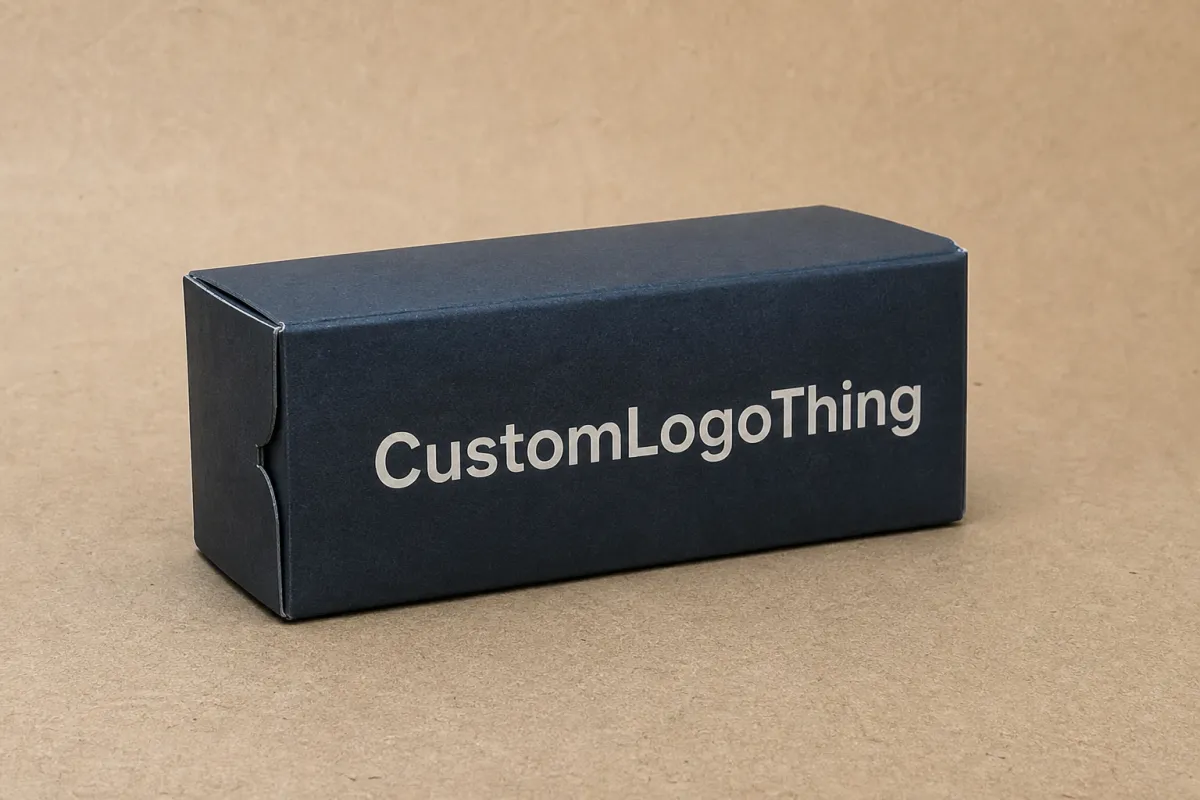
The first thing printed parcel boxes with logo change is perception. The second is behavior. Warehouse teams recognize them faster, pickers make fewer carton mix-ups, and customers often read the branded outer shell as a sign that the shipment was handled with care. None of that replaces good structure or sound logistics, but it does shape how the carton is experienced at every touchpoint.
In packaging terms, printed parcel boxes with logo are Corrugated Shipping Cartons with branding applied to the outside, and sometimes to the inside as well. The artwork may be a single logo, a repeating pattern, a color field, or a short line of copy. Some brands keep the outside quiet and use the interior for the reveal. Others want a bold front panel because the box may sit on warehouse shelving, in photo backdrops, or in a mixed fulfillment environment where fast recognition matters.
I once watched a team switch from plain cartons with adhesive labels to printed parcel boxes with logo across a subscription launch. The change did not magically improve shipping damage. It did something more useful: it reduced pack-line confusion. The workers stopped hesitating over whether they were grabbing the right shipper, and that alone shaved minutes off each batch. Small efficiencies sound modest until they repeat across thousands of orders.
There is also a meaningful contrast between printed cartons and plain cartons paired with stickers or labels. Labels can lift at the edge, wrinkle over a flute line, or sit unevenly on recycled board. They may be fine for a short seasonal run, but they often look provisional once the box has traveled through a few hands. Integrated print usually reads as a permanent decision. That difference is visible before the tape is cut, and it still holds after transit.
A parcel box has to earn trust in the warehouse before it earns attention from the customer. If the branding slows packing or forces rework, the design is charging you twice.
Printed parcel boxes with logo can also tighten internal standards. Once a carton is branded, people tend to treat it as a defined asset rather than loose packaging inventory. That helps with reorder discipline, carton identification, and pack-station training. It can also reduce the tendency to substitute the wrong size box just to keep the line moving.
There is a sustainability angle, but it should be handled honestly. A logo does not make a carton greener. Recycled fiber content, board grade, and right-sizing matter far more. Still, the box can reinforce a packaging story that already exists: FSC-certified board, reduced material use, or the elimination of secondary wraps and inserts. For teams comparing transport and material guidance, the EPA and testing bodies such as ISTA are useful reference points. Printed parcel boxes with logo should support a responsible spec, not disguise a weak one.
One more practical benefit is consistency across channels. A carton that looks clearly branded in a direct-to-consumer order can also reinforce identity in wholesale replenishment, gifting, and subscription shipments. That matters because packaging often carries more memory than the product does. The box arrives first. It sets the expectation.
How Printed Parcel Boxes with Logo Work in Production
Production starts with structure, not artwork. That order saves money and embarrassment. Before anyone opens a design file, the team should lock down dimensions, board grade, flute type, closure method, product weight, and packing environment. Printed parcel boxes with logo can only perform well if the carton geometry already makes sense for the route it will take.
There are three jobs the carton must do at once. It has to fit the product cleanly, survive handling, and move through the line without slowing staff down. A design that looks polished on a screen can still fail if a flap interferes with a tape head, a barcode lands on a seam, or the opening orientation clashes with the pack station layout. The branding is visible. The constraints are not. That is where mistakes begin.
Print method matters more than many buyers expect. Flexographic printing is common for larger runs and stable designs because the economics improve as quantity rises. Digital printing makes more sense for short runs, pilots, and artwork changes that would be expensive to set up with plates. Litho wrap or premium paper wrap can create a more refined face, but it introduces additional steps, more coordination, and usually higher costs.
The board substrate changes the visual result too. Kraft board has a more natural look, but it absorbs ink differently and can mute delicate colors. White-lined board usually produces stronger contrast and cleaner reproduction. On corrugated surfaces, bold marks and solid shapes tend to perform better than thin strokes or pale gradients. The flute texture can swallow detail if the artwork is too fine.
That is why physical samples are not optional. A dieline can look precise on a monitor and still fail once it is translated onto corrugated stock. Real samples expose the things software hides: a logo that feels too small from arm’s length, a fold that cuts through a mark, a panel that turns muddy under warehouse lighting, or a barcode zone that leaves no breathing room. If your team already sources other Custom Packaging Products, the same standard should apply here.
Printed parcel boxes with logo also need to be judged in context. They do not sit in a vacuum. They move through pick lines, stretch-wrap stations, scanners, trucks, loading docks, and sometimes retail back rooms before they reach the customer. The best design is the one that still looks deliberate after that journey.
In practice, the logo is only the visible layer. The real product is the carton specification. When the spec is built around print zones, board behavior, and line constraints, printed parcel boxes with logo become far easier to scale without creating bottlenecks.
Process and Timeline for Printed Parcel Boxes with Logo
The timeline usually moves in stages rather than one clean handoff. It starts with dimensions and quantity, then artwork setup, then proofing, then sampling, then manufacturing, then freight. Each step seems manageable. The delay often comes from the details that nobody wrote down the first time.
Approval typically takes longer than the press run itself. Marketing wants brand color accuracy and a finish that feels intentional. Operations wants a carton that stacks, seals, and scans without friction. Those priorities are not in conflict, but they are different. Printed parcel boxes with logo sit at the intersection, so alignment takes more than a pretty render.
The most common delays are familiar if you have spent any time buying packaging. A last-minute logo tweak triggers a new proof. A missing dimension holds up the dieline. An unclear forecast pauses the supplier because no one wants to commit capacity to a moving target. Color revisions can take another round if the brand guide is vague or the artwork file is not built cleanly. None of this is dramatic. It is just expensive when it happens late.
Lead time and rush time are not the same thing. A supplier may be able to speed up the press work, but sample approval, freight, and customs still set real limits. In many custom carton programs, production may land around 10-15 business days after proof approval, but that is only a portion of the calendar. Sampling, transit, and peak-season congestion add their own weight. A launch date is not a suggestion. Plan backward from it.
Seasonality complicates the picture further. Holiday peaks, limited releases, subscription launches, and B2B campaign windows all create moments when stockouts are costly. Printed parcel boxes with logo should be ordered with buffer stock in mind, especially if cartons are moving through multiple fulfillment nodes or crossing borders before they land in inventory.
Freight deserves more respect than it usually gets. A box order is not just a print job; it is finished packaging inventory. Transit can add days or weeks, and international sourcing can add customs friction. A disciplined planner counts backward from the first ship date, then adds margin for the variables no one fully controls. That is not pessimism. It is logistics.
There is also a sequencing issue that gets overlooked. If the team approves the artwork before the structure, the entire schedule becomes fragile. If the structure is approved first, the artwork can be adjusted to fit real production conditions. That order is slower at the beginning and faster everywhere else.
Cost, Pricing, and MOQ for Printed Parcel Boxes with Logo
Cost for printed parcel boxes with logo is driven by size, board grade, print coverage, number of colors, finishing, inserts, and total order quantity. The basic levers are familiar, but the way they interact is where people get surprised. Change the board and the print result shifts. Add a second color and the setup grows. Increase coverage and the unit cost can climb faster than expected.
MOQ, or minimum order quantity, is not a random number. It reflects setup, prepress, plates, press time, and in some cases tooling or die work. Smaller runs carry those costs on fewer units, which is why the per-box price rises quickly at low volume. Larger runs spread those fixed costs over more cartons, so the price per unit generally improves as order size increases.
Print method changes the economics as well. Digital printing often wins on flexibility and lower setup burden for small runs. Flexographic printing becomes more competitive at scale, especially when the artwork stays stable. Premium wrap solutions live in a different tier because they add visual polish and more production steps. Each option has a place. The mistake is assuming that the most polished look is automatically the smartest buy.
| Print Method | Typical Quantity Fit | Approx. Unit Cost | Strengths | Watch Outs |
|---|---|---|---|---|
| Digital print | 200-2,000 units | $0.95-$2.40 each | Good for short runs, pilot launches, and frequent artwork changes | Higher unit cost at scale; color behavior can vary by substrate |
| Flexographic print | 2,000-20,000+ units | $0.28-$0.85 each | Efficient for repeat orders and simple logo or color-block designs | Plate/setup cost; performs best when artwork stays stable |
| Litho wrap or premium paper wrap | 500-10,000 units | $0.80-$1.80 each | Sharp presentation and stronger shelf appeal | More process steps; can increase freight and lead time |
Those numbers are broad, but they help explain the shape of the price curve. A small carton with heavy coverage can cost more per unit than a larger carton with a single, clean logo. That is why printed parcel boxes with logo should be budgeted by use case, not by instinct. A subscription brand shipping thousands of units can justify a more refined spec than a campaign that only needs a few hundred cartons.
Hidden costs are where quotes get misleading. Samples may be billed separately. Freight may not be included. Storage can matter if the order arrives too early and sits too long. Reprints can happen when approval is rushed and someone misses a typo or a measurement mismatch. If the artwork changes after plates or file prep, the correction can erase the margin you thought you had.
Good quote review means asking for the assumptions behind the numbers. Is the price based on one color or four? Does it include board? Are sample charges refundable? Is the supplier pricing exactly to the requested count, or do they include overages? Is freight delivered or ex-works? These are not administrative footnotes. They are the difference between a useful comparison and a misleading one.
It also helps to avoid overbuilding the carton. Extra board strength can be justified if the route is rough or the product is fragile, but unnecessary weight and thickness cost money every time the box is made, stored, and shipped. Printed parcel boxes with logo should earn their material use. They do not need to feel luxurious if the job is transportation.
For brands comparing several packaging categories at once, it often makes sense to review branded shippers alongside other Custom Packaging Products in the same sourcing cycle. That makes the cost difference easier to see and can prevent a packaging spec from becoming too ambitious in one place and too cheap in another.
Step-by-Step Guide to Ordering the Right Box
Start with a packaging audit. Measure the product, any insert, accessory pack, literature, and void-fill needed to keep movement under control. Note the weight, fragility, and stacking conditions. If the shipment includes returns material or a pouch, include that too. Printed parcel boxes with logo only perform well if the dimensions are built around the actual packed unit, not the product alone.
Then define the business goal. Is the carton meant to improve the unboxing experience, reduce damage claims, keep warehouse sorting cleaner, support sustainability targets, or hold brand consistency across channels? The goal changes the spec. A box intended for a premium customer experience can look very different from one designed to survive a high-volume shipping lane with rough handling.
Next, narrow the box style and print area. Decide whether the logo should sit on one panel, repeat as a pattern, or remain small and restrained. For some products, a single bold face is enough. For others, an inside reveal adds interest without increasing exterior clutter. Printed parcel boxes with logo do not need to shout to be effective; clarity is often stronger than excess.
Ask for both structural samples and printed proofs. The pairing matters. A structure sample shows fit, closure, and rigidity. A printed proof shows contrast, sharpness, and how the design reads at distance. If the board feels too soft or the print looks dull, you want to know before production fills a pallet. A sample that only exists on a screen is a promise, not evidence.
Test the carton under real conditions. Simulate packing-line handling, carrier vibration, stack pressure, and label application. If the operation uses tape machines, check that the tape zone does not fight the artwork. If a barcode is required, verify that the print panel leaves enough clean space around it. Printed parcel boxes with logo still need to act like shipping cartons. Branding should not compromise the basics.
Finally, place the order with written specs, approved artwork, tolerance limits, and reorder thresholds. That last piece is easy to ignore until the first run sells through. A clean re-order spec protects the second run from drifting away from the first. If the carton belongs to a broader packaging family, it may also help to align it with other Custom Packaging Products that share board grade or warehouse footprint.
Here is a simple sequence many teams follow:
- Gather measurements, product weight, and shipping conditions.
- Choose the box style and board grade.
- Match the print method to quantity and artwork stability.
- Request at least two quote tiers so unit economics are visible.
- Approve samples only after real packing tests.
- Lock the artwork, sign off the proof, and release production.
That sequence sounds ordinary, but it prevents the kind of packaging problems that are expensive to discover late. A carton that is 2 mm too tight on a flat edge or 5 mm too loose on a product insert can ripple through the whole packing process. In packaging, small dimensions are rarely small for long.
Common Mistakes With Printed Parcel Boxes with Logo
The first mistake is designing artwork before the box size is confirmed. A logo cannot rescue a carton that fits badly. If the box is oversized, freight rises and void-fill increases. If it is undersized, packing slows and the risk of product damage climbs. Printed parcel boxes with logo should begin with the product and the shipping route, not with the artwork file.
The second mistake is assuming screen color equals print color. A warm gray on a monitor can turn muddy on corrugated stock. Kraft board absorbs ink differently than white-lined board. Digital and flexo also behave differently. If the brand palette is delicate, a proof on actual board is essential because the substrate can shift the result more than the RGB file ever will.
The third mistake is ignoring the route. Humidity, compression, abrasion, and rough handling can all weaken a carton that looked perfect in a clean sample room. A box going through a short local route does not need the same board spec as one crossing climates, carriers, and warehouses. Some brands learn that too late, after corners crush or panels scuff during linehaul.
The fourth mistake is over-ordering before the spec is frozen. Too little stock creates pressure and often leads to rushed reprints. Too much stock before the design is final locks cash into cartons that may never be used. Printed parcel boxes with logo should be ordered with realistic demand and a modest safety cushion, not a hopeful forecast that has not met the warehouse yet.
The fifth mistake is forgetting the operational details that packaging touches every day. Barcode placement, label zones, tape adhesion, and automated packing-line compatibility all matter. A carton that looks elegant but blocks the scanner or conflicts with a label applicator can cost more in labor than it saves in branding. That is why the best printed parcel boxes with logo are engineered for throughput as much as appearance.
Written approval matters too. Proofs should show artwork position, color assumptions, and any tolerance around trimming or registration. If a supplier offers an approval stage, use it carefully and document the sign-off. Fixing a layout on paper is cheap. Fixing it after a press run is not.
The last mistake is treating the box as a standalone asset. If the company is refreshing inserts, mailers, or retail packaging at the same time, the same standards should apply across formats. A coordinated approach saves time and gives the packaging line a consistent logic, especially if the sourcing mix includes multiple Custom Packaging Products.
Expert Tips and Next Steps for Better Orders
One of the clearest ways to reduce complexity is to use one box family across multiple SKUs wherever the product sizes allow it. Standardization lowers storage chaos, reduces the number of specs buyers need to manage, and can improve pricing because the same die and print setup gets used more often. Printed parcel boxes with logo are easier to reorder when the structure is shared.
Ask for a plain sample and a printed sample side by side. That comparison is brutally informative. The plain version shows strength and fit. The printed version shows how the brand actually reads on the substrate. Sometimes the smaller logo feels more confident. Sometimes the bold panel looks better in theory than in a warehouse aisle. Printed parcel boxes with logo reward restraint more often than decoration.
Build a reorder calendar around sales peaks and shipping cycles. If a launch or holiday surge is approaching, do not wait until stock is nearly gone. Production delays always feel longer when the warehouse is empty. A calendar with buffer stock gives the team room to absorb freight delays, proof revisions, and replenishment planning without panic.
Keep the branding simple if the goal is recognition and efficient production. One strong logo placement usually works better than multiple graphic panels that add cost without adding clarity. High-contrast designs are easier to reproduce, easier to spot in a warehouse, and easier for customers to recognize during unboxing. Printed parcel boxes with logo should feel deliberate, not crowded.
From a sourcing standpoint, the next steps are practical rather than glamorous:
- Gather exact measurements and product weights.
- Estimate monthly volume and reorder frequency.
- Choose the print method that fits the run length.
- Request two quote tiers so unit economics are visible.
- Approve samples only after a real packing test.
- Confirm the final artwork, tolerances, and replenishment trigger.
There is a useful comparison that keeps coming back: packaging that looks expensive is not always the packaging that performs best. The right spec is the one that moves through fulfillment without friction, survives transport, and still looks like your brand when it arrives. That is the standard I would use for printed parcel boxes with logo, whether the run is short and digital or larger and flexo-based.
If you want the box to do real work, treat it as a logistics asset first and a branding surface second. Measure carefully, test with actual samples, and write the reorder rules down before the first pallet ships. That is the most reliable way to keep printed parcel boxes with logo consistent from the first order to the fifth.
Are printed parcel boxes with logo better than stickers?
Usually, yes, if the goal is durability and a more integrated look. Printed branding does not peel, wrinkle, or shift the way a label can after rubbing against other cartons or traveling through transit. Stickers still make sense for very small runs, seasonal promotions, or artwork that changes often, but printed parcel boxes with logo are usually the stronger choice for repeat shipments.
What is the minimum order for printed parcel boxes with logo?
There is no single minimum because it depends on the print method, box size, and supplier setup. Digital printing often supports smaller runs, while flexographic production usually becomes more efficient at higher volumes. The best way to compare is to ask for tiered quotes so you can see how unit cost changes across order levels.
How long does it take to produce branded parcel boxes?
The schedule depends on artwork readiness, proof approval, sample requests, and factory capacity. The press run itself is only one part of the timeline. Printed parcel boxes with logo often take longer to approve than to print because the packaging has to satisfy both marketing and operations before production starts. Add extra buffer if freight, customs, or seasonal congestion is part of the route.
Which print method is best for custom parcel boxes with logo?
Digital printing is often best for shorter runs or frequent artwork updates. Flexographic printing is usually stronger on price at higher volumes and works well when the design stays consistent. The best choice depends on quantity, color count, lead time, and how much coverage the logo needs.
How do I keep printed parcel boxes with logo from causing damage?
Match board strength and flute type to product weight, stacking pressure, and the shipping route. Test the box with real packing materials, closures, and transit conditions before approving the run. Avoid placing print, tape, or design elements where they interfere with sealing, labeling, or compression strength. Printed parcel boxes with logo should support the shipment, not fight it.


