Buyer Fit Snapshot
| Best fit | Printed Poly Bags Wholesale projects where brand print, material claims, artwork control, MOQ, and repeat-order consistency need to be specified before quoting. |
|---|---|
| Quote inputs | Share finished size, material target, print colors, finish, packing count, annual reorder estimate, ship-to region, and any compliance wording. |
| Proofing check | Approve dieline scale, logo placement, barcode or warning zones, color tolerance, closure strength, and carton packing before bulk production. |
| Main risk | Vague material claims, crowded artwork, missing packing details, or unclear freight terms can make a low unit price expensive after revisions. |
Fast answer: Printed Poly Bags Wholesale: Specs, Pricing, and Lead Times should be specified like a repeatable production item. The safest quote records material, print method, finish, artwork proof, packing count, and reorder notes in one written spec.
Production checks before approval
Compare the actual filled-product size with the drawing, then confirm tolerance on folds, seals, hang holes, label areas, and retail display edges. Reserve space for logos, QR codes, warning copy, and material claims before decorative graphics fill the panel.
Quote comparison points
Review material grade, print process, finish, sampling route, tooling charges, carton quantity, and freight assumptions side by side. A quote is only useful when the supplier can repeat the same color, closure quality, and packing count on the next order.
Printed Poly Bags Wholesale: Specs, Pricing, and Lead Times
Light product. Soft edges. A surface that gets scuffed if someone so much as looks at it wrong. Packaging like that does not need drama. It needs the right bag. Printed poly bags wholesale gives buyers a cost-effective way to protect the product, keep branding consistent, and stop small handling problems from turning into avoidable returns. The bag is not just a wrapper. It is part of how the order gets packed, shipped, and judged by the customer.
A lot of packaging problems start with bad assumptions. Wrong film thickness. Wrong seal style. A bag size that leaves the product swimming around like it paid rent. That is why printed poly bags wholesale should be treated as a packaging spec, not a quick art buy. A good setup can speed packout, cut damage, and keep freight cube under control. That matters for apparel, soft goods, kits, inserts, and anything else that hates being scuffed.
Buyers usually want the same three things: lower unit cost, consistent print, and a reorder process that does not turn into a scavenger hunt. printed poly bags wholesale checks those boxes when the spec is locked early. If you are comparing options for retail, e-commerce, or fulfillment, the details below are the ones that separate a clean program from a mess.
Printed Poly Bags Wholesale: What They Solve in Shipping
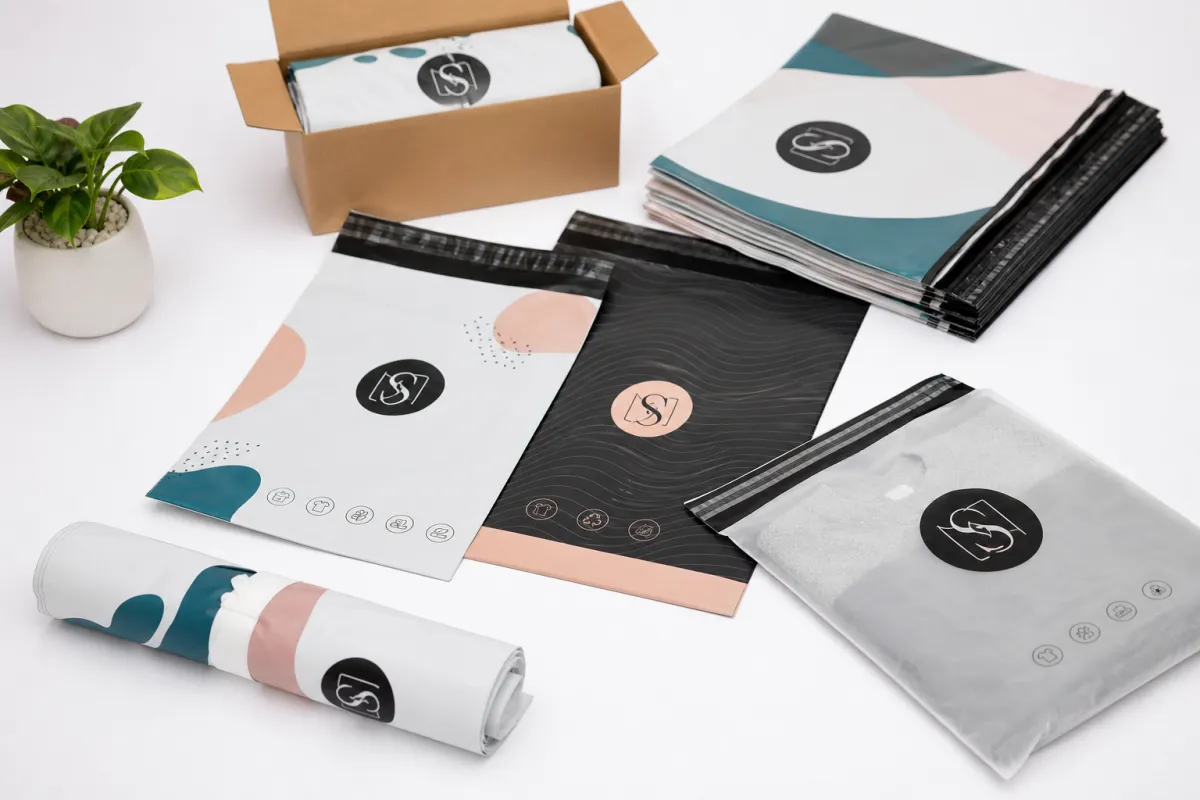
A well-sized bag saves time. Not in a dramatic way. In the boring, expensive way that actually matters. On a busy packing line, a good bag helps the order move faster, keeps the product looking right, and gives the package a branded finish before it reaches the customer. printed poly bags wholesale solves those problems without adding much cost.
The real win is not usually brute-force protection. It is the smaller stuff: less scuffing, fewer wrinkles, fewer complaints from customers who received something that looked used before they ever opened the box. A folded shirt, towel, cable kit, or promo item can arrive looking cleaner when the gauge and seal match the product instead of being guessed from a photo. With printed poly bags wholesale, the bag becomes part of the handling plan.
Warehouses care about this too, even if they do not say it out loud. Easy-open bags, predictable dimensions, and repeatable closure behavior reduce rework and mispacks. Labor costs more than film. That is the part people forget when they shop only on bag price. printed poly bags wholesale fits programs that need speed, repeatability, and a finish that does not look slapped together.
I have seen buyers approve a beautiful bag that failed on the line because the opening was awkward and the product kept catching on the seal. Pretty is nice. Packable is nicer. Sometimes the nicest thing a bag can do is stay out of the way.
Common use cases include:
- Apparel and folded textiles that need dust protection and a tidy first impression
- Accessory kits, cables, and small hardware packs that need grouping and labeling
- Promotional items and event giveaways where the package has to look branded, not random
- Subscription inserts and bundled direct-to-consumer orders where the unboxing moment matters
- Light fulfillment items that need a low-cost barrier against scuffs and handling marks
Bulk buying also steadies the program. The unit cost tends to drop, sure, but the bigger value is consistency. printed poly bags wholesale keeps size, artwork, and material the same across runs, so operations teams are not forced to rework the bag every time inventory gets tight. For Brands That Ship on a steady schedule, that kind of stability is worth more than a tiny discount.
The best bag is usually the least annoying one. It fits the product, prints cleanly, seals properly, and does not slow the line down.
Printed Poly Bags Wholesale Product Details and Use Cases
printed poly bags wholesale covers more than one style, and the right style depends on how the product is packed and where the bag will be seen. Flat bags work for low-profile items. Side-gusset bags add room for thicker or folded goods. Resealable options make sense when the item may be opened and packed again. Lip-and-tape closures help when hand packing speed matters and a tamper-evident close is useful.
Film choice matters just as much as the bag shape. Clear film shows the product and can help with retail presentation. Opaque or tinted film gives more privacy and a cleaner branded surface. Gauge, usually measured in mils, changes how much abuse the bag can take. A thinner film may be fine for a soft tee in a mailer. A heavier gauge makes more sense for boxed goods, sharper edges, or items that get handled a lot before shipment. That is why printed poly bags wholesale is never only about the logo.
Print placement is a practical decision too. One-side print is clean and efficient for simple branding. Two-side print can improve shelf visibility and make the package look finished from every angle. Buyers often ask for size marks, handling notes, barcode zones, or warning text as well. When those pieces are planned early, printed poly bags wholesale can support both branding and operations without turning the layout into a cluttered mess.
Different use cases push the spec in different directions:
- Retail shelf presentation: Clarity, gloss, and print quality matter because the bag is part of the display.
- Fulfillment speed: Openability, seal style, and packout flow matter more than decorative extras.
- Product grouping: Fit, closure choice, and label placement matter because the bag is organizing multiple pieces.
- Protective bundling: Gauge, puncture resistance, and seal integrity matter because the bag is doing real protection work.
Machine packing and hand packing do not ask for the same bag. A format that runs well on a semi-automatic line may feel awkward in a manual operation if the opening is tight or the closure sits in the wrong place. A hand-packed order does not need every technical detail a high-speed line needs either. That is why printed poly bags wholesale turns into a technical conversation instead of a simple price quote.
Carton efficiency matters too. Bag dimensions affect how many units fit in a master case, how much warehouse space gets burned, and how much air gets shipped with each order. A slightly narrower bag can improve cube efficiency more than buyers expect, especially in high-volume fulfillment. For that reason, printed poly bags wholesale is often reviewed alongside storage, shipping weight, and carton pack counts rather than as a standalone item.
Specifications to Compare Before You Buy
Before approving printed poly bags wholesale, buyers should confirm the core specification set: width, length, gusset depth, film gauge, seal type, print area, and closure method. Those details decide whether the bag fits the product cleanly and runs well in production. If even one of them is vague, the quote may look fine and still fail in the warehouse. I have watched that movie more than once. It never ends well.
Gauge deserves special attention. A 1.5 mil bag may work for a soft, low-edge item, but it can feel too light for a heavier insert or something with corners that rub in transit. A 2 mil or 3 mil build usually adds confidence for handling and puncture resistance, but it also changes cost. With printed poly bags wholesale, the goal is not the thickest film available. It is the film that matches the actual risk.
Print requirements should be discussed in practical terms, not just visual ones. Color count affects setup. Ink coverage affects appearance and drying. Registration tolerance matters if the artwork has tight type, thin lines, or repeated logos. Artwork often needs trapped margins so text does not disappear into the seal or sit too close to the edge. A clean proof now saves rework later, and that matters even more with printed poly bags wholesale because repeat ordering is the whole point.
Depending on the product, other checkpoints may apply:
- Food contact needs: Some applications call for materials and inks that are suitable for the intended contact type, so the supplier should confirm the exact use case instead of guessing.
- Recycling expectations: If the program uses recyclable film, the claim needs to match the actual material structure and local guidelines. The EPA recycling guidance is a useful reference for broader waste handling context.
- Static control: Electronics accessories or dust-sensitive items may need anti-static treatment.
- Tamper evidence: Some fulfillment programs need a closure or seal that shows if the package has been opened.
- Shipping environment: Temperature swings, humidity, and stacking pressure can affect film performance and seal consistency.
There is a standards side to this too. Packaging performance often gets tested for handling and transit, and groups like ISTA are useful when the order needs to survive more than a quick shelf move. For buyers comparing printed poly bags wholesale across suppliers, that language helps separate a cosmetic quote from a production-ready spec.
One more practical point: if your product slides around inside the bag, ask for a tighter width or a better closure location before jumping to a thicker film. Thickness alone does not fix every issue. In many cases, printed poly bags wholesale works better when the bag size is tightened first and the gauge is adjusted second.
Pricing, MOQ, and What Changes the Unit Cost
Pricing for printed poly bags wholesale usually comes down to five variables: bag size, film gauge, print colors, bag style, and total quantity. Change one of those and the quote can move more than expected. A larger flat bag in a standard gauge with one-color print will usually price lower than a custom gusseted bag with two-sided graphics and a specialty closure. Normal. Packaging likes to pretend it is simple. It is not.
Setup costs are a big reason unit price falls as quantity rises. Printing plates, film setup, color matching, and prepress all take time before the first usable bag gets made. Once those costs are spread across a larger run, printed poly bags wholesale becomes more economical. A buyer ordering 1,000 pieces may see a very different unit cost than a buyer ordering 10,000 pieces, even if the finished bag looks almost identical.
Minimum order quantity, or MOQ, usually ties back to material yield and production setup. Some sizes are easy to run in lower volumes. Others need a higher starting point because the film width or print layout wastes more material. If your program is small but steady, ask whether the supplier can build around a stock-size base or simplify the print so printed poly bags wholesale is more reachable at a lower entry quantity.
Here is a practical comparison of common buying paths:
| Bag Style | Typical Use | Common Unit Cost Range | What Drives Cost |
|---|---|---|---|
| Flat printed bag | Apparel, inserts, light soft goods | $0.08-$0.16 at 5,000 pieces | Size, gauge, one-color or two-color print |
| Side-gusset bag | Bulkier folded products, kits, accessories | $0.12-$0.24 at 5,000 pieces | Extra film usage, wider print area, packout fit |
| Resealable bag | Products that may be reopened or repacked | $0.15-$0.30 at 5,000 pieces | Closure system, seal complexity, handling needs |
| Lip-and-tape closure bag | Hand packing, e-commerce, tamper-sensitive items | $0.14-$0.28 at 5,000 pieces | Closure strip, print placement, labor savings |
Those ranges are illustrative, not fixed. Print coverage, freight, and material market changes can move the final number. Still, they give buyers a sane way to sanity-check a quote. With printed poly bags wholesale, the cheapest-looking option is not always the best deal if it creates higher freight costs, more storage pressure, or a reprint because the bag does not fit properly.
Buyers can often lower cost without hurting performance by standardizing sizes, limiting color count, and ordering closer to actual usage. If one size covers most of the line, that is usually better than splitting demand across three nearly identical dimensions. The same goes for print. A simple logo in the right place usually beats a crowded design trying too hard. That is one reason printed poly bags wholesale works best when the spec stays disciplined.
Do not stop at unit price. Ask about freight assumptions, overrun or underrun tolerances, storage needs, and reprint risk. A slightly higher quote with better proofing and steadier production may cost less over the life of the program than a bargain order that misses the mark. In plain terms, printed poly bags wholesale should be reviewed as total landed packaging cost, not just bag price.
Order Process and Lead Times for Printed Poly Bags Wholesale
The best orders move through a simple sequence. Quote. Artwork review. Spec confirmation. Proofing. Production scheduling. printed poly bags wholesale moves faster when the buyer has the key details ready before asking for pricing: exact dimensions, quantity range, color count, closure style, and intended use.
What Slows Orders Down most often is not the press schedule. It is missing information. Artwork arrives without a dieline. The color reference is vague. The bag size is based on a product description instead of a measured sample. Or the buyer changes the layout after proof approval. Any of those can add days. In a tight launch window, that matters more than a tiny price difference. For printed poly bags wholesale, clean input usually gets a clean result.
Proofing is where the technical details get locked. This is the time to confirm print placement, artwork orientation, bleed, safe areas, and any warning text or labels. If a sample is available, even better. It helps verify how the product sits in the bag and whether the closure lands where it should. A good supplier will make sure the proof matches the bag that will actually be produced, not just the ideal version of it. That is a major part of ordering printed poly bags wholesale without drama.
Lead times vary by build complexity:
- Simple flat bag: Often faster if the artwork is final and the size is standard.
- Gusseted or resealable bag: Usually needs more setup and inspection time.
- High-color or full-coverage print: May need extra prepress and ink matching.
- Large volume run: Can take longer simply because production and packing take time.
- Custom film build: Usually adds lead time because material has to be sourced or staged for the order.
A realistic fulfillment path often looks like this: quote approval, proof review, prepress adjustments, final signoff, production, inspection, packing, then shipping. On many programs, that means planning around lead time in business days, not calendar days, and leaving room for freight transit. For launches and seasonal inventory, printed poly bags wholesale should be ordered with enough buffer to absorb a proof correction without blowing up the schedule.
There is one more reason to stay organized: repeat orders are only fast if the supplier can match the prior run accurately. Keep the approved proof, final artwork, and order notes on file. That makes it much easier to reorder printed poly bags wholesale without rehashing the basics every time. A little documentation up front saves a lot of back-and-forth later.
Why Buyers Choose Custom Logo Things
Packaging buyers do not just want ink on plastic. They want the order to fit the product, the workflow, and the budget without creating new problems. That is why printed poly bags wholesale needs a supplier that understands both the print side and the shipping side. Custom Logo Things focuses on the practical pieces that matter in real production: fit, clarity, closure, cost, and repeatability.
A good supplier relationship starts with clear spec guidance. If a buyer is not sure whether a 2 mil film is enough or whether a resealable build is worth the extra spend, the right answer should come from the product and the handling method, not a guess pulled out of thin air. That kind of support helps prevent undersized bags, weak seals, print that lands too close to the edge, and artwork that gets compromised when the bag is folded or packed. For printed poly bags wholesale, those details decide whether the rollout is smooth or annoying.
Communication matters too. When tolerances are clear and proofing is handled carefully, repeat production becomes much easier. Purchasing teams like that because it cuts down on surprise. Operations teams like it because the bag behaves the same way every time it is packed. Finance teams like it because consistent printed poly bags wholesale keeps reprint risk and rush freight under control.
Buyers often compare suppliers on price alone, but the better question is: who will help the order arrive right the first time? That means looking for straight answers on MOQ, print method, freight assumptions, and timelines. It also means having access to a broader packaging resource, whether that is Wholesale Programs for recurring orders, Custom Packaging Products for related packaging formats, or Custom Poly Mailers if the shipping program needs a different outer package. A supplier that knows the full packaging range can steer printed poly bags wholesale into the right lane instead of forcing every project into the same template.
That is the kind of help buyers actually want. Not hype. Not vague promises. Clear guidance, stable production, and a quote that reflects the real job the bag has to do. In that sense, printed poly bags wholesale is less about selling plastic and more about keeping a packaging program from tripping over itself.
Next Steps to Quote and Approve Your Order
If you are ready to ask for pricing, gather the basics first: target bag size, estimated quantity, artwork files, color count, closure type, and intended use. If you have a sample package, send that too. A physical sample makes the spec discussion easier because it shows how the product sits, how much slack exists, and whether the structure actually makes sense. That prep work makes printed poly bags wholesale much easier to quote accurately.
When the quote comes back, read it line by line. Confirm the gauge, print method, MOQ, lead time, freight assumptions, and proofing process. Check whether overruns are included, whether artwork is priced as one-side or two-side print, and whether any special handling is required. A clean quote should answer the same questions a production supervisor would ask before putting the order on the floor. That is the standard printed poly bags wholesale should meet.
Before issuing a purchase order, do one last internal check on storage space, inventory timing, and compliance requirements. If the bags need to support a recycling claim, a food-related use, or a specific transit test, get that in writing. If the line is seasonal, place the order early enough to avoid rush charges or freight delays. The more complete the spec, the less likely printed poly bags wholesale is to drift off course during production.
For most buyers, the next step is straightforward: lock the size, confirm the structure, and approve the artwork only after the proof matches the real product. That is how printed poly bags wholesale turns from a quote into a dependable packaging part number. Once those details are set, reordering gets simple, and the packaging program runs with a lot less friction.
Gather the sample, define the size, and request a quote built around the actual product. If the spec is right, printed poly bags wholesale becomes the easy part of the job. If the spec is fuzzy, everything else gets messy. That is the whole trick, and it is not exactly a mystery.
What is the minimum order for printed poly bags wholesale?
MOQ depends on bag size, gauge, print colors, and whether the film is standard or fully custom. Larger runs usually lower unit price because setup and press costs get spread across more bags. If your volume is lower, ask whether a stock-size program or simplified print build can reduce the entry quantity for printed poly bags wholesale.
How do I choose the right gauge for printed poly bags wholesale?
Match gauge to product weight, edge sharpness, and how much handling the bag will see in transit. Lighter soft goods can often use a thinner film, while boxed or irregular items usually need a heavier gauge. If you are unsure, compare one standard gauge against a heavier option and review seal strength, clarity, and cost before finalizing printed poly bags wholesale.
How long do printed poly bags wholesale orders usually take?
Lead time depends on artwork readiness, proof approval speed, print complexity, quantity, and bag construction. Orders move fastest when artwork is final and the spec sheet is complete before quoting. Build in extra time for revisions, sample review, and freight transit if the bags are needed for a launch or seasonal printed poly bags wholesale program.
Can I print my logo on both sides of the poly bag?
Yes, many builds support one-side or two-side printing, depending on the bag style and print area. Two-sided print can improve shelf visibility and unboxing presentation, but it may increase setup and unit cost. Confirm artwork orientation, ink coverage, and any registration limits before approving the proof for printed poly bags wholesale.
What files do I need to order printed poly bags wholesale?
A vector logo file is best, along with exact bag dimensions, color references, and quantity targets. If you have a dieline or previous bag sample, include it so the print area and placement can be verified. Clear notes on use case, closure type, and shipping environment help avoid spec changes later in the printed poly bags wholesale process.


