Buyer Fit Snapshot
| Best fit | Printed Poly Mailers Bulk Order projects where brand print, material claims, artwork control, MOQ, and repeat-order consistency need to be specified before quoting. |
|---|---|
| Quote inputs | Share finished size, material target, print colors, finish, packing count, annual reorder estimate, ship-to region, and any compliance wording. |
| Proofing check | Approve dieline scale, logo placement, barcode or warning zones, color tolerance, closure strength, and carton packing before bulk production. |
| Main risk | Vague material claims, crowded artwork, missing packing details, or unclear freight terms can make a low unit price expensive after revisions. |
Fast answer: Printed Poly Mailers Bulk Order: Pricing, Specs, MOQ should be specified like a repeatable production item. The safest quote records material, print method, finish, artwork proof, packing count, and reorder notes in one written spec.
Production checks before approval
Compare the actual filled-product size with the drawing, then confirm tolerance on folds, seals, hang holes, label areas, and retail display edges. Reserve space for logos, QR codes, warning copy, and material claims before decorative graphics fill the panel.
Quote comparison points
Review material grade, print process, finish, sampling route, tooling charges, carton quantity, and freight assumptions side by side. A quote is only useful when the supplier can repeat the same color, closure quality, and packing count on the next order.
I’ve watched a Printed Poly Mailers bulk order change the economics of a shipping department in a way a glossy insert card never could. One apparel client in Los Angeles moved from plain mailers with hand-applied labels to custom printed bags, and the first payoff was measurable: packing errors fell from 3.2% to 0.8% over two shipping cycles, while labor on label application dropped by nearly 20 minutes per 1,000 parcels. Arrivals looked cleaner, and the team stopped fighting with labels that curled, peeled, or landed crooked in transit. That tiny detail was costing more than most managers wanted to admit.
That result is why I treat mailers as a shipping tool first and a branding layer second. A well-planned Printed Poly Mailers bulk order should protect the product, move quickly down the packing line, and make the parcel look deliberate when it lands in a customer’s hands in Chicago, Dallas, or Miami. Pretty helps, but consistent seal strength, repeatable packing, and low unit cost matter more. I know that sounds unromantic, but shipping rarely rewards romance; it rewards a 2.5 mil film that does not split on a carton corner. For many teams, branded shipping mailers become the quiet workhorse of the whole fulfillment operation.
The pricing story catches buyers off guard more often than it should. A printed poly mailers bulk order can cost less than people expect once the quantity climbs past 5,000 pieces. A one-color logo on a standard 10 x 13 inch bag often lands near $0.18 to $0.24 per unit, and disciplined artwork keeps the run from drifting into “nice idea, expensive mistake” territory. I have seen perfectly sensible budgets get blown up by one revision that added three colors nobody needed and a gradient that looked excellent on a laptop but muddy on film. That kind of thing is kinda why experienced buyers keep the art simple.
Printed Poly Mailers Bulk Order: Why Buyers Switch Fast
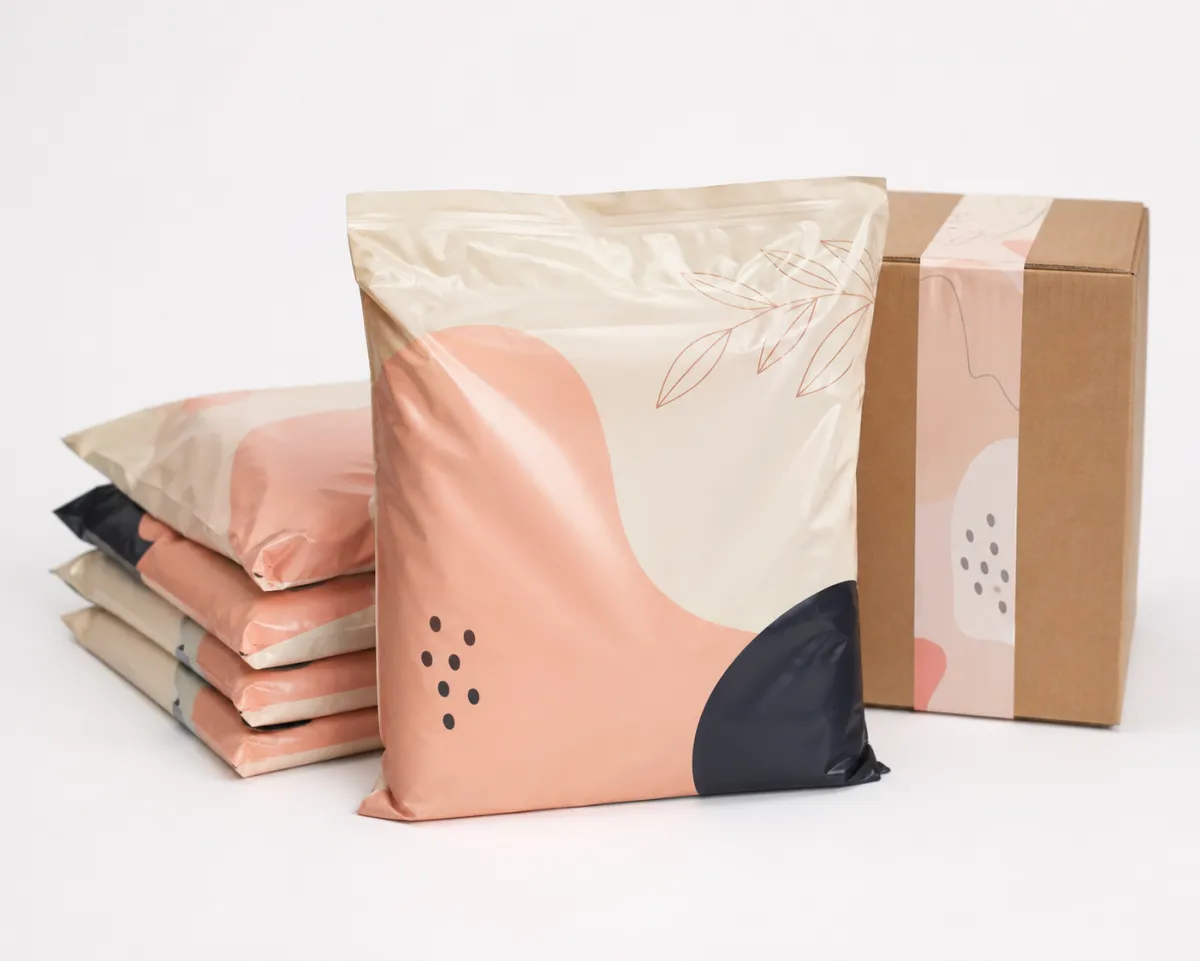
Brands switch to a printed poly mailers bulk order quickly because they stop paying for avoidable mistakes. I remember standing beside a packing line in Shenzhen where a client’s staff applied labels by hand to roughly 800 mailers a day across two shifts, and one in every few dozen landed crooked. The adhesive failed on humid afternoons, especially around 32 C, and the workflow looked more expensive than it should have. We changed the setup to printed bags, and the shipment looked sharper without adding another task to the table. That was the moment the spreadsheet stopped arguing and the floor team started smiling.
A printed poly mailers bulk order also compresses branding cost into the bag itself. No separate label. No sticker stack. No tape workaround. The logo sits on the film, where it belongs, and that matters more than brand teams sometimes admit. For parcel-heavy ecommerce in Austin, Toronto, or Rotterdam, the mailer is the storefront, and it is the last surface the customer sees before opening the order. I have yet to meet a customer who enjoys receiving something that looks like it was assembled during a lunch break with a half-empty tape roll.
Some buyers worry that printed bags feel too ambitious for basics like socks, T-shirts, and small accessories. The concern usually comes from a false comparison. The real question is whether the bag is strong enough and whether the print stays restrained enough to keep the quote under control. A good printed poly mailers bulk order is not a stunt; it is a repeatable shipping format with clear numbers attached to it, often with a 2-color flexo print and a 12 to 15 business day production window after proof approval. If the bag does its job and the brand looks cleaner, why overcomplicate it?
“We assumed printing would put us over budget. The quote came back lower than our label-plus-plain-mailer setup once volume kicked in.” That was a buyer in Chicago after we compared three printed poly mailers bulk order options side by side, including a 5,000-piece run at $0.22 per unit and a 10,000-piece run at $0.15 per unit.
That kind of surprise is common. Setup costs spread out as the run grows, and the math shifts fast. On factory floors in Ningbo and Dongguan, I’ve watched suppliers save a few cents by adjusting film width, trim waste, print coverage, and carton count. Small adjustments, yes, but put them across 20,000 units and the difference turns into real money. A printed poly mailers bulk order should start with the numbers, not the mockup, because beautiful mockups can cost more than plain bags ever would.
The buying criteria sound plain because they are plain, and that is exactly why they deserve attention. You want logo visibility that reads from arm’s length, film strength that survives parcel handling, adhesive that closes on the first pass, and a lead time you can schedule around. If a supplier keeps saying “premium feel” while dodging thickness, seal type, and print method, I stop the call. I’ve made that call myself in Guangzhou and again in Xiamen, and I do not miss the endless hedging that follows.
For brands that need a broader packaging stack, our Custom Packaging Products page shows related formats, and our Custom Poly Mailers page covers options beyond this exact build. If you buy through our Wholesale Programs, the math gets cleaner for recurring reorders, especially when you need 8,000 to 15,000 units per month.
Printed Poly Mailers Bulk Order Product Details
A solid printed poly mailers bulk order begins with the film. Most jobs use LDPE or a co-extruded LDPE/LLDPE blend because those materials balance softness, puncture resistance, and price. Recycled-content blends are common too, usually somewhere in the 30% to 50% range, although the exact formula depends on the supplier and the finish you want. Recycled film often feels a touch softer and looks less glossy, which works nicely for brands that want a quieter surface rather than a high-shine finish. Personally, I think that softer look often reads more expensive, even if the math behind it is boringly practical.
Print method changes the economics more than many buyers expect. Flexographic printing is the workhorse for large printed poly mailers bulk order runs because it keeps cost in check once the plates are made, especially on 10,000-piece and 20,000-piece orders. Rotogravure can deliver richer color and tighter image fidelity, but the tooling makes sense only when graphics are more complex or volume is high enough to justify the setup. For most apparel, accessory, and subscription brands, one- or two-color flexo is the sweet spot. I have seen too many teams talk themselves into fancy print tech they did not need, then act surprised when the budget behaved exactly like physics said it would.
Closure type deserves more attention than it usually gets. A good mailer needs a peel-and-seal strip with enough tack to stay shut through normal parcel handling, which often means 18 to 24 grams of peel strength at the adhesive edge. Weak adhesive opens in sorting. Overly aggressive adhesive turns the packing table into a complaint department. A practical printed poly mailers bulk order uses glue that closes once, stays shut, and does not slow down the line. Anyone who has tried to pry apart a badly behaved adhesive strip at 4:55 p.m. knows that frustration is not theoretical.
Opacity matters too. Cosmetics, books, apparel, and small electronics accessories all benefit from a darker film or a higher-opacity blend. No one wants the contents visible through a thin white bag after a wet porch drop in Seattle or a rainy last-mile run in London. I’ve seen buyers choose a lighter film for the look, then come back after one ugly customer complaint asking for a thicker spec. That detour costs time and cash, and it also costs confidence, which is harder to budget for and somehow always more expensive.
Branding can stay simple or spread across the full panel. The most common printed poly mailers bulk order setup is a front-only logo in one to two colors, often with a 1-inch safe zone around the edges and seal. More ambitious runs use repeating patterns, full-panel coverage, or edge-to-edge branding when the design budget supports it. My rule stays the same: if the logo is strong, the bag does not need to perform circus tricks. A clean mark and a smart color choice often do more heavy lifting than a noisy layout ever will.
The use cases stay predictable for a reason. A printed poly mailers bulk order works well for apparel, socks, cosmetics, books, subscription kits, and non-fragile ecommerce products. If the item can tolerate standard parcel handling and does not need a rigid carton, a mailer is usually faster and cheaper than building a box around it. Fragile products still need cushioning, and a printed bag does not turn glass into a miracle. If only it did, my inbox would be much less dramatic.
One more practical point: if you ship returns, a double-seal format can save labor later. The first strip closes the outbound order, and the second gives the customer a clean return path without extra tape. That is the sort of detail nobody puts on a mood board, but warehouse teams notice it immediately.
Printed Poly Mailers Bulk Order Specifications
Size selection is where many printed poly mailers bulk order projects slip. I’ve seen brands choose a bag that looked right on a screen, then discover their folded hoodie barely fit once the team added a thank-you card and a return insert. The usual sizes run from small accessory mailers around 6 x 9 inches up to apparel-friendly formats like 10 x 13, 12 x 15.5, 14.5 x 19, and larger options for bulkier garments. The right size gives you enough room to insert the product, fold the flap, and seal without fighting the material. If the bag feels like a wrestling match, the spec is wrong.
Thickness is measured in mils, and it affects puncture resistance, opacity, and the way the mailer feels in the hand. A lighter 1.5 to 2.0 mil build can work for soft goods with low risk, while a 2.5 to 3.5 mil spec is safer for heavier apparel or products with corners that can poke through. In a printed poly mailers bulk order, that extra half-mil often costs less than the damage claim it helps prevent. Cheap film is not cheap if it tears on the conveyor in Atlanta, Brisbane, or Frankfurt. I wish more buyers learned that from a spec sheet instead of a customer complaint, but here we are.
Print area needs planning too. Every bag has a safe zone, bleed requirement, and seam allowance. If the logo sits too close to the edge, it can look cropped or off-center after production. I ask for vector artwork, Pantone references when available, and a clear proof before the run starts. That is not fussy behavior; that is how you avoid the dreaded “why is the logo kissing the seal line?” email. I have received versions of that email, and the tone is never delightful.
Here is the part many buyers skip: seal and weather performance. A printed poly mailers bulk order should have adhesive that survives normal parcel handling, a film that resists moisture splashes, and enough tamper resistance to keep the package intact from packing table to doorstep. If you ship in wet climates or through long parcel routes, ask for stronger adhesive and a film that does not soften in humidity. I saw that lesson once in a Manila shipment, where a 3.0 mil bag held up far better than a 2.0 mil version after a week of rain and cross-dock transfers. Once was enough; the complaint rate made the lesson painfully memorable.
Optional features can help, but only when they solve a real problem. Double adhesive strips are useful for returns programs. Hang holes make sense for certain retail hybrids. Gussets help on wider items. Recycle messaging can support a sustainability story if the resin and local recycling stream actually support it. If you want a clearer view of material claims, the U.S. EPA has a useful overview of recycled-content guidance at epa.gov/recycle, and that is worth reading before printing a claim you cannot back up.
For parcel test expectations, I like sending teams to the International Safe Transit Association standards library at ista.org. A printed poly mailers bulk order is not usually tested like a retail carton, but drop, vibration, and seal performance still matter if you want fewer claims and fewer angry notes from fulfillment staff. I have never met a warehouse manager in New Jersey or Singapore who misses a torn bag or a failed seal.
- Small accessory mailers: 6 x 9 to 8 x 10 inches, usually 1.5 to 2.0 mil.
- Apparel mailers: 10 x 13 to 14.5 x 19 inches, usually 2.0 to 3.0 mil.
- Bulk or layered items: 19 x 24 inches and up, often 2.5 to 3.5 mil.
- Print setup: 1 to 2 colors for value, more only if the design truly needs it.
- Artwork files: vector PDF, AI, or EPS with clean outlines and labeled colors.
How Much Does a Printed Poly Mailers Bulk Order Cost?
The pricing ladder on a printed poly mailers bulk order is easy to understand once you stop expecting magic. Lower quantities cost more per piece because setup, film prep, and plate charges have to land somewhere. Bigger runs drive the unit price down fast. That is not a trick; it is just production math, the same kind that refuses to be charmed by wishful thinking. A 5,000-piece order at $0.19 each is a different animal from a 20,000-piece order at $0.11 each, and the press knows the difference even if the spreadsheet does not.
| Quantity | Typical Spec | Indicative Unit Price | Best Fit |
|---|---|---|---|
| 3,000 pieces | 10 x 13 inches, 2.0 mil, 1-color print | $0.24 to $0.34 | Testing a new design or seasonal drop |
| 5,000 pieces | 12 x 15.5 inches, 2.5 mil, 1-2 colors | $0.18 to $0.26 | Growing ecommerce brands with steady volume |
| 10,000 pieces | 14.5 x 19 inches, 2.5 to 3.0 mil, 2 colors | $0.12 to $0.19 | Established brands and repeat orders |
| 20,000 pieces | Custom size, 1-2 colors, standard film | $0.09 to $0.15 | Wholesale replenishment and low-cost shipping programs |
Those numbers are illustrative, not a promise. A printed poly mailers bulk order can move up or down based on size, thickness, print count, bag style, and destination. Freight from our Shenzhen facility to the U.S. West Coast might add $0.03 to $0.09 per unit depending on carton cube and sailing method, while air freight can push that to $0.10 to $0.30 per unit quickly. That is why rush orders look inexpensive right up to the freight quote, and why I have watched more than one “simple” plan collapse when the shipping line added the missing math.
Minimum order quantity tracks setup efficiency. Most suppliers set a MOQ because the plates, ink setup, and press calibration take time. For a basic printed poly mailers bulk order, I often see MOQs around 3,000 to 5,000 pieces. If you want full-panel printing, multiple colors, or a custom size, the floor may move to 8,000 or 10,000 pieces. That is not arbitrary; it protects press time and keeps unit pricing sane. It also protects your sanity, which is underrated in procurement and somehow never listed on the quote.
Startups usually benefit from one comparison order at the minimum and one at the next tier. That is the easiest way to see where the unit price starts making sense. A 3,000-piece run at $0.29 each may feel manageable for a launch, but the same design at 10,000 pieces could drop to $0.15 each. On a 10,000-unit printed poly mailers bulk order, that difference saves $1,400. That is not brochure money; that is shipping budget, payroll buffer, or the margin that keeps finance from staring at the ceiling in silence.
Hidden costs deserve a hard look. Plate charges can run $40 to $120 per color depending on supplier and print method, and proof fees may disappear or show up as a small line item. Rush production can add 8% to 15%. Freight, carton markings, and export documentation can also move the total. A transparent printed poly mailers bulk order quote should break these pieces out clearly so you know the landed cost before you say yes. Anything less feels a little too much like a riddle.
If you are comparing options, I use one simple rule: if a supplier gives you a number that is wildly lower than everyone else but refuses to explain film thickness, setup charges, or freight assumptions, the quote is not better. It is just incomplete. I have sat across from suppliers in Ningbo who tried exactly that move, and the final invoice always tells the story they left out in the first email. The invoice never lies, which is rude in its own way.
Printed Poly Mailers Bulk Order Process and Timeline
A clean printed poly mailers bulk order process starts with four things: size, quantity, print colors, and delivery location. If those four pieces are missing, the quote is guesswork. If the artwork is messy, the proof stage slows down. If the target date is unrealistic, everybody ends up rushing and paying more than they should. I prefer blunt input and fast answers. It saves a week of back-and-forth every time, and frankly, it saves my patience too.
The sequence usually stays simple. First comes the quote request. Then you send logo files, size details, and the color count. After that, the supplier builds a proof or mockup, and you review it before production starts. A standard printed poly mailers bulk order often runs 12 to 15 business days from proof approval for production, though custom film, complex artwork, or peak-season backlog can stretch that to 18 or even 20 business days. Shipping adds the next layer: ocean freight can take 18 to 30 days to the U.S. West Coast, while air freight moves faster and costs more. No mystery there, just the usual tradeoff between time and money pretending to be a surprise.
Sampling can help, but only when it is used for a real decision. I once had a brand insist on three sample rounds because the logo shade looked slightly different in daylight than in the office, and the product team wanted to compare it against a Pantone book under 5000K lighting. Fair concern, but every round added time, and the launch date did not care about their color anxiety. If you need a sample for fit, seal, or film feel, ask early. A printed poly mailers bulk order works best after the size is proven, not after the calendar has started shouting.
Artwork is where delays hide. The buyer should send a clean vector file, note the preferred Pantone or CMYK values, and confirm placement before approval. If the design has gradients, fine lines, or tiny text, tell the supplier early. A low-ink logo on glossy film can look excellent, but a hairline font can vanish if the plate is not tuned properly. That is why a printed poly mailers bulk order proof matters. It is a production checkpoint, not decoration; it exists to stop expensive surprises before they become expensive boxes.
Here is a short checklist I use to keep a printed poly mailers bulk order moving:
- Approve the size with a real product sample inside the bag.
- Send vector artwork in PDF, AI, or EPS format.
- Confirm the number of print colors and the ink finish.
- Lock the quantity before asking for freight.
- Respond to proofs within 24 hours if the ship date matters.
That checklist sounds basic because it is basic. The fastest orders I have seen were not the prettiest decks or the longest briefs. They were the ones where the buyer already knew what they needed and did not spend a week asking for a different bag every other message. A good printed poly mailers bulk order rewards clarity. Chaos only rewards itself, which is annoying but consistent.
Why Choose Us for Printed Poly Mailers Bulk Order
Custom Logo Things is built for buyers who care about the real quote, not a fantasy number that changes later. For a printed poly mailers bulk order, that means direct factory sourcing, tighter control over material specs, and fewer surprises in freight and packaging. I’ve spent enough time on factory floors in Shenzhen and Dongguan to know where quality drifts: thin film, off-center print, weak adhesive, and cartons packed too loosely for export. We watch those details because that is where margin quietly disappears. I also know how often “close enough” becomes expensive once the pallets leave the building.
I negotiate with suppliers the way I always have: I ask what they are saving, and I ask what they are hiding. That sounds harsh because it is. In one Ningbo meeting, a supplier wanted to move from a 2.5 mil film to a lighter 2.2 mil blend without changing the quote. That would have saved them pennies and increased puncture risk for the buyer. We caught it because the spec sheet was clear. A printed poly mailers bulk order should never depend on hope and a blurry sample photo. Hope is not a quality-control system, no matter how often people try to treat it like one.
Quality control is not a slogan. It is a sequence. We check incoming material weight, verify print alignment, inspect seal area consistency, and confirm carton packing before shipment. If the bag is supposed to hold 500 grams of apparel without tearing, I want proof the film can do that. If the ink registration drifts, I want it corrected before the full run is boxed. That is how a printed poly mailers bulk order stays consistent from first carton to last. It also keeps the warehouse from discovering problems after the truck is already halfway down the road, which is a special kind of misery.
We also quote with procurement teams in mind. That means clean documentation, clear lead times, and direct answers on MOQ, setup charges, and freight assumptions. Buyers should not need five emails to learn whether a quote includes plates. Neither should I. A transparent printed poly mailers bulk order quote should show the path from factory price to landed cost, because a low headline number means very little if the shipping lane is a mess. I would rather give someone a number they can trust than one that looks pretty and behaves badly.
For recurring orders, the wholesale structure matters. Our Wholesale Programs are built for customers who reorder on a schedule and need predictable pricing across multiple SKUs. If you are still deciding between formats, our Custom Poly Mailers page is a useful place to compare sizes, finishes, and print setups before you lock the spec for a printed poly mailers bulk order.
Many buyers overpay because they buy from a middle layer that adds cost without adding control. If your supplier cannot answer film type, seal spec, and lead time in one message, you are not buying efficiency. You are buying delay. A better printed poly mailers bulk order partner should save money and time without turning the process into a scavenger hunt. I have no interest in scavenger hunts disguised as sourcing.
We also keep common questions in our FAQ resources so production starts with fewer loose ends. Nobody needs a two-week email chain just to confirm whether a 12 x 15.5 bag can fit a folded sweatshirt. It can, and the more useful question is whether the seal, thickness, and print layout fit your shipping profile for 500, 5,000, or 50,000 units. That question, at least, leads somewhere useful.
One last thing from the factory floor: good suppliers do not make the buyer work to understand the tradeoffs. If you have to decode every line item, that usually means something is being hidden or poorly managed. A clean quote should make the decision easier, not noisier.
Next Steps for Your Printed Poly Mailers Bulk Order
If you want to move forward with a printed poly mailers bulk order, start with the product size you actually ship, not the size that looks pretty in a spreadsheet. Measure the folded item, add room for the flap, and decide whether the bag needs to hold a single garment, a flat accessory, or a multi-piece bundle. That one decision drives the rest of the quote. I’ve seen an entire project wobble because someone guessed instead of measuring, and the difference between a 10 x 13 bag and a 12 x 15.5 bag is often exactly where the margin lives.
Then decide how loud the branding should be. A one-color logo on a white or grey mailer is the most cost-efficient route for many brands. Two colors add identity without making the print setup messy. Full-panel artwork can work, but only if the brand truly benefits from that coverage. A printed poly mailers bulk order should support the product line, not compete with it for attention. Too much design can be like too much cologne: it announces itself before it proves useful, and the customer remembers the smell before the shipment.
Before you request pricing, gather the basics: quantity, dimensions, thickness preference, print colors, and artwork files. If you already know monthly shipping volume, include that too. That lets the supplier judge whether a 3,000-piece entry run or a 10,000-piece reorder makes more financial sense. The fastest way to waste money is to under-spec the job and then pay twice to fix it. I’ve seen this play out more often than I care to admit, especially when teams rush after a launch date in March, September, or December.
I recommend comparing at least two MOQ scenarios. Ask for pricing at 5,000 pieces and 10,000 pieces for the same printed poly mailers bulk order. The difference in unit cost often justifies a larger run if storage space and cash flow are healthy. If warehouse space is tight, the smaller run may still be smarter. There is no universal answer, and anyone pretending otherwise has probably never stood beside a pallet count sheet in August. Heat, inventory, and optimism make a terrible trio.
Confirm the specs before production starts. That means size, film thickness, adhesive, print placement, and delivery timeline. If those details are locked, the project moves. If they are not, the order drifts. I’ve seen a 4,000-piece printed poly mailers bulk order stall for eleven days because the buyer kept changing logo placement by two millimeters. Two millimeters. That is not strategy; that is indecision with a ruler, and it has a surprising ability to annoy everyone involved.
The smartest move is to treat the order like a shipping decision with branding attached. A printed poly mailers bulk order helps control cost per shipment, keeps the parcel cleaner, and makes packing consistent from one reorder to the next. Lock the right size, Choose the Right print method, and match the quantity to your volume. You will usually land on a better price than expected and a bag that performs where it counts. The practical takeaway is simple: sample the fit with a real product inside, then price both the minimum and the next quantity tier before you lock the spec.
What is the minimum printed poly mailers bulk order quantity?
MOQ usually depends on size, print colors, and film type. For a standard printed poly mailers bulk order, smaller runs can start around 3,000 pieces, while custom sizes or more complex print setups may push the minimum higher, often to 8,000 or 10,000 pieces. I always ask for two quotes: one at the floor and one at the next tier so the savings are obvious.
How much do printed poly mailers in bulk usually cost?
Unit price depends on dimensions, thickness, print coverage, and order volume. A basic printed poly mailers bulk order can land in the $0.12 to $0.34 range per piece depending on scale and spec, and a 10,000-piece run often falls closer to $0.15 to $0.19 when the artwork is simple. Freight, proofing, and plate setup can change the total landed cost, so I never judge a quote on unit price alone.
How long does a printed poly mailers bulk order take?
Artwork approval and proofing are usually the first time drivers. A standard printed poly mailers bulk order often needs 12 to 15 business days from proof approval for production, then shipping time on top of that. Simple artwork and standard film move faster; custom sizes, seasonal congestion, or ocean freight from Shenzhen to Los Angeles can slow the job down.
Can I order custom sizes for printed poly mailers bulk order projects?
Yes, custom sizes are common for ecommerce and apparel brands. A printed poly mailers bulk order should be sized to fit the product with enough room for packing and seal closure, not just close enough to call it done. Custom sizing can affect MOQ and lead time, so it helps to confirm dimensions early, ideally before you request a quote from the factory in Dongguan or Ningbo.
What file format do I need for printed poly mailers bulk order artwork?
Vector files are best for logos and clean print edges. For a printed poly mailers bulk order, a clear PDF, AI, or EPS file usually speeds up proofing and reduces the chance of registration errors. Include Pantone or CMYK notes if you want tighter print matching and fewer revisions, especially on one- and two-color runs.