Buyer Fit Snapshot
| Best fit | Custom Printed Paper Bags Wholesale projects where brand print, material claims, artwork control, MOQ, and repeat-order consistency need to be specified before quoting. |
|---|---|
| Quote inputs | Share finished size, material target, print colors, finish, packing count, annual reorder estimate, ship-to region, and any compliance wording. |
| Proofing check | Approve dieline scale, logo placement, barcode or warning zones, color tolerance, closure strength, and carton packing before bulk production. |
| Main risk | Vague material claims, crowded artwork, missing packing details, or unclear freight terms can make a low unit price expensive after revisions. |
Fast answer: Custom Printed Paper Bags Wholesale: Pricing and MOQ should be specified like a repeatable production item. The safest quote records material, print method, finish, artwork proof, packing count, and reorder notes in one written spec.
Production checks before approval
Compare the actual filled-product size with the drawing, then confirm tolerance on folds, seals, hang holes, label areas, and retail display edges. Reserve space for logos, QR codes, warning copy, and material claims before decorative graphics fill the panel.
Quote comparison points
Review material grade, print process, finish, sampling route, tooling charges, carton quantity, and freight assumptions side by side. A quote is only useful when the supplier can repeat the same color, closure quality, and packing count on the next order.
Custom Printed Paper Bags Wholesale: Pricing and MOQ is one of those purchases that looks neat on a spreadsheet and turns a lot messier once the cartons arrive and the receiving team starts opening pallets. I remember standing in a stockroom with a buyer who had approved a “simple” 5,000-piece paper bag order, only to realize the 4 mm twisted handles were too slim for the boxed candles inside. The unit price looked fine at $0.14. The bag itself, under pressure, did not. That is the quiet advantage of Custom Printed Paper Bags wholesale: the cost stays low enough to scale, while the logo keeps working long after the receipt is forgotten.
Buyers who do well with these orders rarely chase the lowest sticker price. They compare 120gsm kraft, 150gsm white board, handle strength, print fidelity, and a 12-15 business day production window against the job the bag actually has to do. A cafe chain in Chicago needs clean takeaway presentation. A boutique in Austin needs retail Packaging That Feels polished at the door. An ecommerce brand shipping from Los Angeles wants product packaging that survives the handoff at the curb, the ride in transit, and sometimes a customer photo online. That last part matters more than most teams admit. Custom Printed Paper Bags wholesale earns its keep in all three settings.
Why Custom Printed Paper Bags Wholesale Beats Small Orders
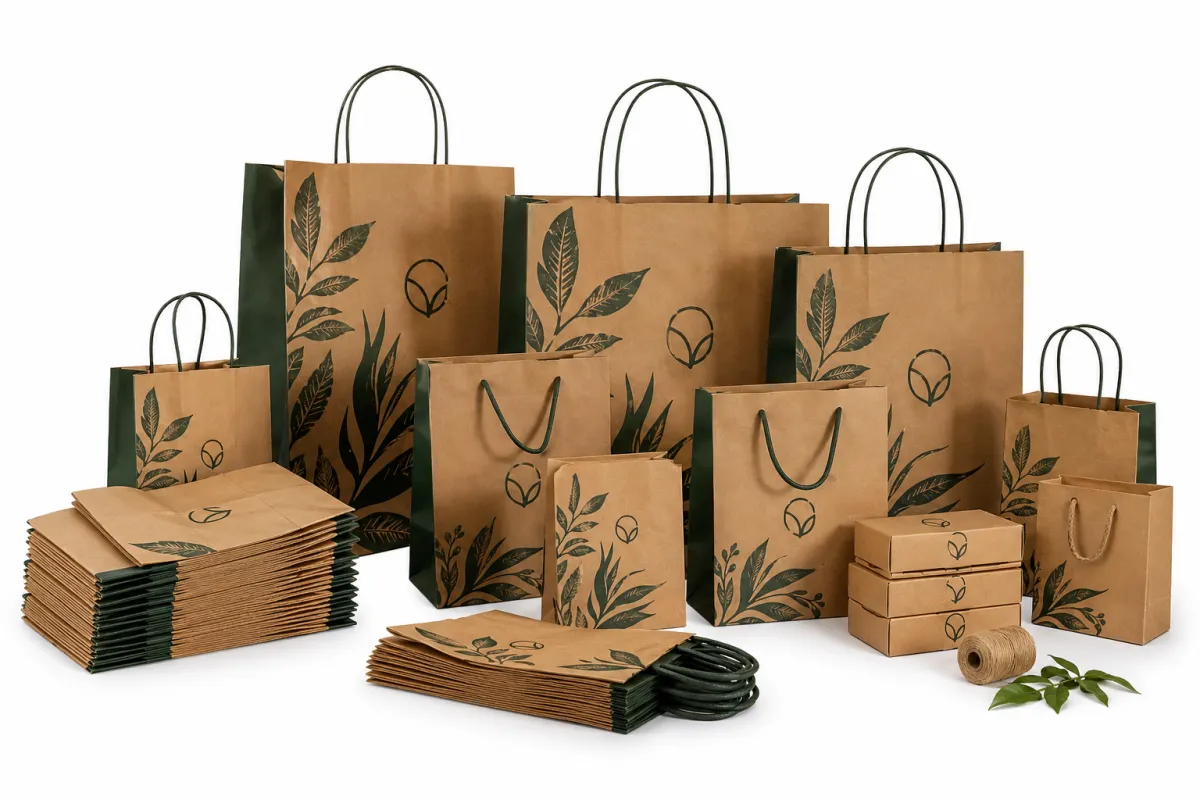
One bag can outlast a flyer, a receipt, and a shelf talker. I learned that on a retail floor in Seattle where a customer kept reusing the same 130gsm kraft tote for four days because it held up better than the usual paper sack. The hidden value of Custom Printed Paper Bags wholesale sits right there: the bag becomes repeated ad space, not a one-time handout. A 500-piece order may feel safer, but it rarely delivers the same unit economics or the same brand exposure as a 5,000-piece run from a factory in Guangdong or Zhejiang.
Wholesale pricing changes the math in a way that actually matters. If a plain generic bag costs $0.02 to $0.04 less, the real question is whether those cents buy anything useful. Most of the time they do not. A custom logo, a clean print line, and the right matte finish can turn a simple carrier into branded packaging that keeps working after checkout. I have seen a bakery in Portland switch from unprinted sacks to Custom Printed Paper Bags Wholesale and then notice that every delivery tote became a visible reminder of the store name, the address, and the menu style. Small change. Odd result. Big impact.
Buyers choose custom printed paper bags Wholesale for Retail, food service, events, and ecommerce fulfillment for one practical reason: consistency. A chain with 18 locations in California cannot afford one store using a 90gsm bag and another store using a 150gsm bag that feels like it belongs to a different brand. A trade-show exhibitor in Las Vegas cannot hand out weak bags that tear in the parking lot. An online seller needs package branding that feels intentional from the packing bench all the way to the front door. In those cases, the bag is not decoration. It is part of the customer experience.
Most people compare price per thousand and stop there. That misses the useful question. What does the bag need to survive? How sharp does the print need to look after handling? How many impressions can the brand squeeze out of one customer trip? A custom printed paper bags wholesale order that costs $0.15 per unit for 5,000 pieces and lasts five uses can be smarter than a cheaper bag that collapses once. The difference is visible at retail, where the bag leaves with the receipt exposed, the logo facing out, and the customer already walking past other shoppers.
“We stopped treating bags as an expense line and started treating them as part of the product,” a client told me after we swapped a flimsy stock bag for custom printed paper bags wholesale in a 24-store rollout across Texas and Arizona. “The checkout felt more polished, and returns at the counter looked more professional.”
The strongest wholesale deal is the one that fits the use case, not the one that sounds cheapest in a subject line. A trial run can still make sense if the design is new or the volume is uncertain. Repeat ordering across seasons usually favors custom printed paper bags wholesale, because the design stays fixed, the unit cost drops, and the brand stops looking improvised.
Product Details: Styles, Materials, and Print Options
Custom printed paper bags wholesale covers more than one bag type, and that matters when you are quoting. The structure changes the feel, the print area, and the way the customer carries the bag. In one sourcing meeting, a buyer in New York asked for “just a paper bag,” then changed their mind once they handled three samples side by side. The 80gsm flat bag folded down neatly and saved storage, but the 120gsm twisted-handle version carried a better presence at the counter. Small details like that shape branded packaging more than most teams expect.
Common bag styles buyers request
SOS paper bags are the practical workhorses. They stack well, ship efficiently, and fit grocery carryouts, deli items, or pharmacy orders. Twisted-handle shopping bags feel sturdier and are often the default for custom printed paper bags wholesale in boutiques and apparel shops in Miami and Toronto. Flat-handle bags cost less and still work for takeaway counters, bakeries, and quick-service restaurants. Merchandise bags handle lightweight items like cosmetics, accessories, and gift cards. Luxury boutique options use heavier stock, cleaner folds, and handles that look more like a finished retail presentation than a utility carrier.
Paper choices that change the look and load rating
Kraft paper is the most familiar option because it signals durability and recyclability, and it holds print well with one or two colors. White paper reads cleaner and can make logos appear sharper, especially with dark PMS 186 C or Pantone Black 6 C ink. Recycled content paper appeals to brands that want sustainability claims they can stand behind, while premium stocks in the 150gsm to 200gsm range add stiffness for high-end retail packaging. I have seen projects where a 120gsm kraft sheet was enough for lightweight apparel, but the same buyer moved to a 300gsm coated board-style paper bag for candles because the bag had to support glass, inserts, and a more polished shelf appeal. Packaging is funny like that: one category is “easy,” then a candle enters the room and suddenly everyone gets cautious.
Print and finish options that affect cost
Spot color printing is efficient for simple logos and one-color marks. Full-color process becomes the better choice when the artwork includes gradients, photos, or a detailed pattern. One-side printing keeps costs down; two-side printing adds visibility at checkout and in transit. Finishes like matte coating, gloss varnish, hot stamping, embossing, and reinforced handles all add value, but each one changes the production steps. That means the order needs clear artwork and a clear finish decision before you ask for an exact quote. If you are comparing bags to custom printed boxes, the same rule applies: the more intricate the finish, the more the price responds to setup and run time.
For teams building a broader branded packaging program, I often suggest comparing paper bags with other Custom Packaging Products at the same time. A bag and a box are not interchangeable, but they do need to feel like they belong to the same brand family. That is packaging design in practice, not theory.
There is also a production side that buyers rarely see. On one run for a mid-market apparel chain, I stood beside a folder-gluer operator in our Shenzhen facility while we checked a twisted-handle attachment that was drifting by about 1.5 mm. It looked minor on the line. On the finished bag, it would have been obvious. We stopped the machine, corrected the fold, and saved the buyer from a pallet of bags that would have looked uneven at the counter. That kind of detail is why the process matters as much as the print.
Specifications That Decide Performance and Shelf Appeal
Size is the first spec I check. A bag that is too large wastes paper and raises freight. A bag that is too small can tear at the fold or make the contents look squeezed, which hurts shelf appeal before the customer even leaves the store. Custom printed paper bags wholesale works best when the dimensions fit the product closely: a 200 x 260 x 80 mm bag can suit smaller accessories, while a 320 x 420 x 120 mm format is more realistic for apparel, boxed gifts, or bundled orders. For bottle carriers, I usually ask for at least a 100 mm gusset so the base does not buckle at the corners.
Paper weight matters just as much. GSM, or grams per square meter, tells you how much substance the sheet has. Lower GSM can work for light takeaway items, but heavier goods need more structure. A 90gsm bag may be fine for a sandwich shop in Philadelphia. A 150gsm bag feels more rigid and supports better retail packaging performance for branded paper carrier bags. The buyer feels that difference immediately. So does the cashier, especially when handling hundreds of bags a day. I have watched a weekend crew quietly appreciate a better bag because it simply did not fight back during a rush.
Handle construction is another spec that decides whether the bag feels cheap or deliberate. Twisted paper handles are common for shopping bags because they balance cost and strength. Flat handles reduce cost for food service. Rope handles, while less common, suit premium boutiques and gift packaging in Beverly Hills or Vancouver. Bottom reinforcement, gusset width, and fold quality all affect the way the bag sits on a counter and the way it survives a walk through a parking lot. These are not abstract details. They determine whether the bag holds a bottle, a stack of apparel, or a boxed set without sagging.
Artwork files that prevent avoidable delays
For a wholesale paper bag order, the quote is only as accurate as the artwork brief. I always ask for dielines, bleed, safe area, logo placement, and whether PMS matching is required. A vector file keeps the logo sharp when scaled across a large print area. If the brand color matters, send PMS references, not just a loose description like “deep blue.” I have watched one buyer lose three days because the artwork arrived as a low-resolution JPG and the printer had to rebuild the file before proofing. Three days. For a JPG. I still wince when I think about it.
Sustainability details also matter, but they should be handled carefully. Many buyers ask for recycled content, FSC-style sourcing, or water-based inks, and those are sensible requests. The exact availability depends on the paper mill, the print method, and the finish. If certification is part of the purchase decision, ask for documentation and do not assume every recycled claim is identical. For guidance on responsible sourcing, the FSC site is a useful reference point, and the EPA sustainable materials pages explain how waste and material choices affect procurement decisions.
When buyers treat these bags as part of the full product packaging system, not a standalone item, the outcome improves. The bag, the box, the tissue, and the label all start speaking the same visual language. That is the difference between a random carrier and package branding that feels planned.
What affects custom printed paper bags wholesale pricing?
Price for Custom printed paper bags wholesale comes down to a short list of variables, and none of them are mysterious. Bag size, paper weight, handle style, print complexity, color count, finishing, and shipping destination drive most quotes. If a supplier gives you a number without asking those seven things, the quote is probably not useful yet. I have seen buyers compare two numbers that looked close, then discover one supplier included freight, proofs, and cartons while the other did not. That mismatch is where budgets go to sulk.
MOQ exists because setup costs do not disappear at low quantity. Plates, ink setup, cut-and-glue machine changes, and material waste all need to be absorbed across the run. That is why a 1,000-piece order can cost disproportionately more per unit than a 10,000-piece order. The best way to think about the purchase is to ask where the real breakpoints are. Some runs drop sharply at 3,000 units. Others get better only when you move to case quantities or full pallet quantities out of Ningbo, Dongguan, or Wenzhou.
Here is a practical pricing snapshot I use as a starting point. These numbers are illustrative, not a promise, but they are useful for comparing proposals on the same spec. Freight, taxes, and special artwork are not included.
| Bag Spec | Typical MOQ | Indicative Unit Price | Best Use Case |
|---|---|---|---|
| 200 x 260 x 80 mm, 120gsm kraft, 1-color print, twisted handle | 5,000 pcs | $0.15/unit | Boutiques, gift shops, light apparel |
| 250 x 320 x 100 mm, 130gsm white paper, 2-color print, flat handle | 10,000 pcs | $0.12/unit | Cafes, takeaway, mid-volume retail |
| 320 x 420 x 120 mm, 180gsm premium stock, full-color print, rope handle, matte finish | 3,000 pcs | $0.58/unit | Luxury retail, premium gifting, launch events |
| 180 x 230 x 90 mm, recycled kraft, 1-side print, no coating | 8,000 pcs | $0.10/unit | Fast-moving food service, eco-forward brands |
That table shows the simple truth about custom printed Paper Bags Wholesale: larger volumes usually lower the unit cost, but not evenly. A jump from 3,000 to 5,000 may save more than the jump from 10,000 to 15,000, because the setup costs are already spread thin. Special finishes can move the price quickly. Hot stamping can add $0.03 to $0.08 per unit. Embossing can add more if the artwork is large. A full-color run with a matte lamination will cost more than a one-color kraft bag, but it may also support a premium retail placement that a plain bag cannot.
Sample orders and rush production can change the quote even when the base spec stays fixed. If you need a proof shipped by air from Shenzhen to Los Angeles, expect a different number than a standard sea-freight program through Long Beach. If your artwork changes after the plates are made, that costs time and money. If you want packaging that matches a store opening or a holiday launch, build that deadline into the pricing conversation from the start. I once watched a supplier shave 6% off the bag price, only for the buyer to lose that saving because the freight terms and carton spec were never clarified. The line item looked better. The landed cost did not.
Compare quotes on the same basis: artwork support, digital proof, tooling, freight, carton count, and whether the bags ship flat or pre-packed. That is how you protect the economics of custom printed paper bags wholesale instead of chasing a number that sounds good but behaves badly.
Process and Timeline: From Artwork to Delivery
The cleanest orders move in a straight line: inquiry, spec confirmation, artwork submission, proof approval, production, inspection, packing, and freight booking. That sounds obvious, but I have seen paper bag jobs stall because nobody agreed on the final bag size or the ship-to address. A good supplier will not just take the order. They will force the missing details into the open before the run begins.
Proofing is usually the fastest step. Manufacturing takes longer. If the bag is simple, one to two rounds of digital proofing may be enough. The print setup and machine scheduling are what drive the calendar. A straightforward custom printed paper bags wholesale order with one-color print and no coating may be ready in 12-15 business days from proof approval, while a premium boutique run with embossing, rope handles, and matte varnish may need 18-25 business days. That does not make the premium option a problem. It means the buyer should plan for it honestly.
Most delays come from avoidable issues. Files arrive in the wrong format. The logo is sent as a screenshot. The buyer wants a copy change after proof approval. Someone in marketing asks for a color adjustment while operations has already signed off. A purchase order that looked final suddenly becomes a moving target. Experienced buyers keep the order moving by sending dimensions, quantity, delivery ZIP or port, target in-hand date, and final artwork in one package. Fewer back-and-forth emails usually mean a cleaner production line.
If the bags support a store opening, a seasonal promotion, or an event launch, work backward from the in-hand date. Do not plan forward from the quote date. If the bags need to land before a grand opening, add time for proofing, correction, transit, and one buffer week. When a client in a supplier meeting asked for a four-day turnaround on a 10,000-piece run with two-side print, the room went quiet for a reason. The order was possible only if the buyer accepted a simpler spec and signed the proof the same day. That is the real rhythm of wholesale packaging: the schedule decides the options, not the other way around.
For buyers who care about transit testing, it is worth asking whether the cartons and bag strength were evaluated against common shipping expectations. Packaging industry groups such as ISTA publish standards that help teams think beyond the print image and into the realities of distribution. That matters if your bags travel long distances from Guangzhou or sit in humid storage in Houston before use.
Why Choose Us for Custom Printed Paper Bags Wholesale
What I tell buyers, plainly, is this: the supplier matters because consistency matters. A custom printed paper bags wholesale program lives or dies on repeatability. If the print registration drifts, the handles vary in pull strength, or the size tolerance slips by a few millimeters, the bags stop looking like a system and start looking like leftovers. Good manufacturing is not flashy. It is steady.
At Custom Logo Things, the value is not only in the order form. It is in the way the spec is checked before production starts and how the run is monitored once the job is in motion. I care about stable color control, repeatable sizing, and carton inspection because those are the items that protect a buyer from a pallet of avoidable problems. A beautiful mockup does not help if the bags arrive with uneven folding or a handle attachment that fails under a normal retail load of 2 to 4 pounds.
Wholesale buyers also need flexibility. One store may want a 220 x 280 mm bag, while another needs a taller format for boxed merchandise. One promotion may call for a one-color logo, and the next may need an updated seasonal panel. Custom printed paper bags wholesale should be able to support that kind of variation without turning each order into a new project from scratch. That is where program management matters more than slogans.
“We needed one bag spec for four store formats in Florida, plus a separate line for event kits in Denver,” a retail operations manager told me during a review. “The supplier who asked the right questions early saved us two weeks of back-and-forth.”
Service matters in wholesale because the calendar is always real. Quoting speed, technical file support, packaging guidance, and clear communication on lead times can save more money than a tiny unit-price difference. A supplier that knows branded packaging, custom printed boxes, and broader product packaging can help align the full brand presentation. That alignment is what makes packaging design feel deliberate instead of patched together.
If you want to compare programs, our Wholesale Programs page is a practical place to start. It is built for buyers who need volumes, timing, and repeat ordering to line up without guesswork. That is where the commercial value sits.
Next Steps for Ordering Custom Printed Paper Bags Wholesale
The easiest quote request is the one that answers the supplier’s questions before they are asked. For custom printed paper bags wholesale, send bag dimensions, quantity, paper preference, handle type, print colors, and the delivery ZIP or port. If you already know the bag must hold 2 to 3 pounds, say so. If the contents are boxed cosmetics, mention that too. The more exact the use case, the better the quote will reflect reality.
Artwork should go out in a print-ready format whenever possible. Vector files are ideal. Include PMS colors if exact matching matters, and ask for a digital proof before production starts. If there is a retail launch date in San Diego or Miami, make that visible in the first email. I have seen teams save days simply by attaching the dieline, the logo file, the brand guide, and a single contact name for approval. That is a much better setup than a vague note that says, “Need something branded.”
Use a comparison checklist before you place the order. Price is only one factor. MOQ, sample policy, lead time, materials, and proofing process deserve equal attention. Ask whether the quote includes artwork support or if that is billed separately. Ask whether the cartons are packed for retail shelf entry or bulk shipping. Ask whether the bags ship flat, nested, or pre-packed by carton. Those answers change your real landed cost and your internal handling time.
A low-risk first order is usually the smartest way to begin. Test one size or one design, check the print quality on arrival, and then roll into a replenishment plan once the finish and feel are confirmed. I have seen this approach work especially well for brands adding custom printed paper bags wholesale to an existing branded packaging system. They start with a pilot run, confirm the bag performs, and then scale into recurring replenishment once the numbers are proven.
If you are building a broader sourcing list, browse Custom Packaging Products alongside your paper bag quote. In many cases, the paper bag, the box, and the label need to be priced together so the final product packaging looks coherent across channels. That is not a luxury. It is brand discipline.
The most useful takeaway is simple: request the spec sheet, compare like-for-like quotes, and only approve custom printed paper bags wholesale after the bag is matched to the actual load, the actual print needs, and the actual delivery window. The right bag is not the prettiest sample on the table. It is the one that protects the product, supports the brand, and lands at a cost that still makes sense after freight, cartons, and handling are added back in.
FAQ
What is the usual MOQ for custom printed paper bags wholesale?
MOQ depends on bag size, paper weight, and print complexity. For a simple one-color kraft bag, 3,000 to 5,000 pieces is common, while premium constructions can start at a lower or higher threshold depending on tooling and finishing. Larger runs usually cost less per bag because setup is spread across more units. Ask whether the quote is based on cartons, cases, or pallet quantities so you can compare suppliers correctly.
Which paper weight is best for custom printed paper bags wholesale orders?
Light retail bags can work with lower GSM paper, while heavier goods need thicker stock and reinforced bottoms. A 90gsm option can be fine for takeaway items, but a 120gsm to 150gsm sheet usually feels better for apparel and boutique retail packaging. Premium boutiques often choose a stiffer paper around 300gsm coated board-style construction for a more upscale hand feel. Match the paper weight to the item weight and the brand experience you want customers to feel.
How long does production usually take after proof approval?
Lead time depends on order size, print method, finishing, and current factory load. Straightforward custom printed paper bags wholesale orders can move in 12-15 business days from proof approval, while jobs with hot stamping, embossing, or multiple artwork revisions may need 18-25 business days. Proofing is often quick, but the real schedule is driven by machine time, packing, and freight booking. Build in extra time if the bags are needed for an opening, promotion, or seasonal rush.
Can custom printed paper bags wholesale be made with recycled materials?
Yes, many buyers request recycled paper or responsibly sourced stock. Ink and finish choices can also affect sustainability, so ask about water-based or soy-based options where available. If certifications matter, request documentation before confirming the order. FSC-style sourcing can be part of a broader procurement policy, but the exact paper and finish combination still needs to be checked on a case-by-case basis.
What artwork file should I send for a wholesale paper bag print order?
Vector files are usually best because they keep logos and text crisp at scale. Include PMS colors if exact brand matching matters. Ask for dielines and a proof so you can confirm placement before production. If the design includes gradients, fine lines, or small legal text, mention that early so the supplier can flag any risk before the print run begins.

