Buyer Fit Snapshot
| Best fit | Printed Poly Mailers for Retail projects where brand print, material claims, artwork control, MOQ, and repeat-order consistency need to be specified before quoting. |
|---|---|
| Quote inputs | Share finished size, material target, print colors, finish, packing count, annual reorder estimate, ship-to region, and any compliance wording. |
| Proofing check | Approve dieline scale, logo placement, barcode or warning zones, color tolerance, closure strength, and carton packing before bulk production. |
| Main risk | Vague material claims, crowded artwork, missing packing details, or unclear freight terms can make a low unit price expensive after revisions. |
Fast answer: Printed Poly Mailers for Retail: Film, Print, MOQ, and Carton Packing should be specified like a repeatable production item. The safest quote records material, print method, finish, artwork proof, packing count, and reorder notes in one written spec.
Production checks before approval
Compare the actual filled-product size with the drawing, then confirm tolerance on folds, seals, hang holes, label areas, and retail display edges. Reserve space for logos, QR codes, warning copy, and material claims before decorative graphics fill the panel.
Quote comparison points
Review material grade, print process, finish, sampling route, tooling charges, carton quantity, and freight assumptions side by side. A quote is only useful when the supplier can repeat the same color, closure quality, and packing count on the next order.
Printed Poly Mailers for Retail: What to Know First
Printed Poly Mailers for retail do more selling than most teams give them credit for. The customer sees the bag before they touch the product. That first impression can feel polished and deliberate, or it can feel like somebody grabbed the cheapest option five minutes before the truck left. The difference usually comes down to the material, the print, and whether the pack line actually likes handling the bag.
Apparel, accessories, soft goods, subscription kits, and other lightweight retail shipments are a natural fit for printed poly mailers for retail. They are light in transit, quick to close, and easy to brand with color, logos, and handling notes. If your products are heavier, rigid, or better protected in cartons, compare them against Custom Packaging Products. If the items are flat, flexible, or soft, Custom Poly Mailers are often the cleaner choice.
The value is not decoration for decoration's sake. Printed poly mailers for retail work best when protection, throughput, and presentation all match the fulfillment process. A bag that looks great but slows the pack line is just expensive friction. Good packaging should be easy for the warehouse and sharp for the customer. Wild concept, I know.
A good retail mailer should pack fast, travel light, and still look intentional when the customer opens the package.
Printed Poly Mailers for Retail: What They Are and Why Brands Use Them
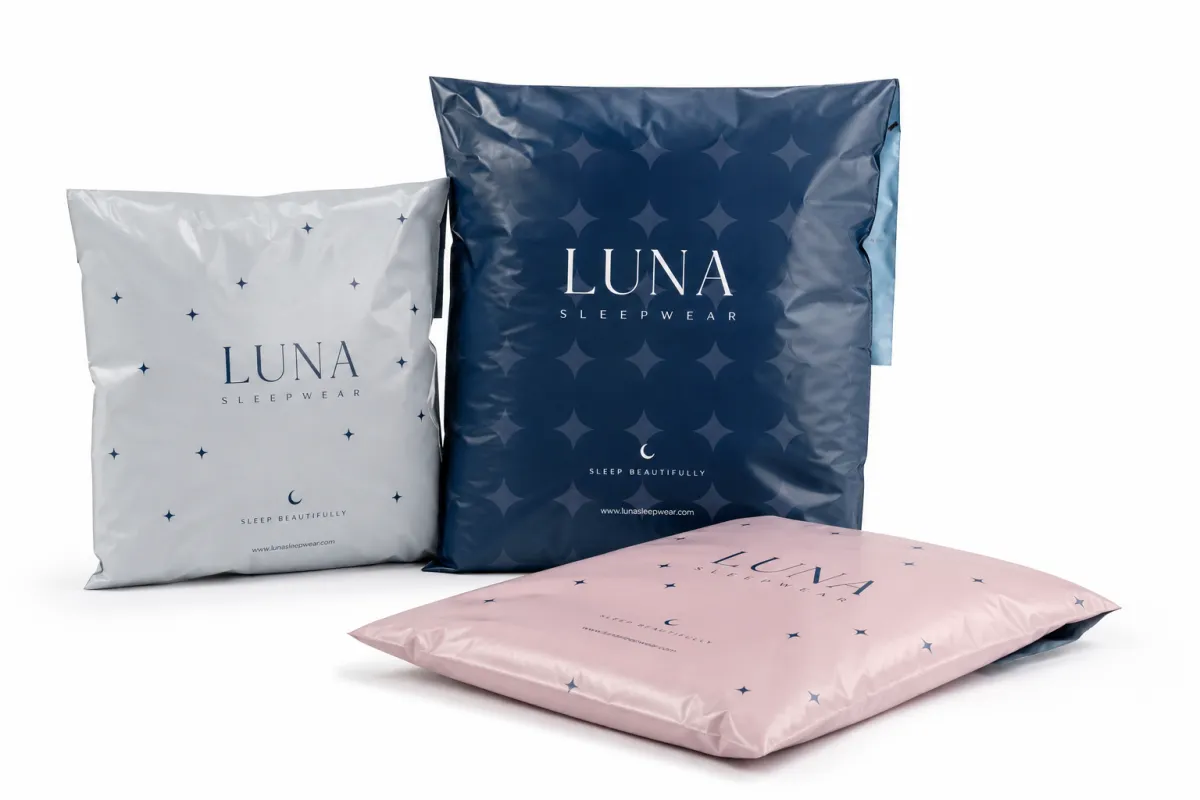
Printed poly mailers for retail are lightweight shipping bags made from polyethylene film, usually with a heat-sealed seam and a peel-and-seal closure strip. In plain language, they are flexible outer packages that protect soft or foldable goods without the weight and bulk of a rigid carton. For ecommerce retail operations that watch every ounce, that matters.
Brands use printed poly mailers for retail for the same reason warehouse teams like them: they pack quickly and store easily. A stack of mailers takes far less room than cartons, and sealing one is usually a peel, fold, and press move instead of taping, stuffing, and cursing at void fill. That saves labor, and labor savings matter just as much as the unit price on the quote.
There is also a branding benefit that should not be brushed aside. Printed poly mailers for retail create a consistent outside look, which helps a small brand feel more established and helps a larger one keep shipments visually aligned across locations, shifts, and fulfillment partners. Customers notice that. They may not say it out loud, but they notice when the package arrives looking like it belongs to the brand instead of looking borrowed from a warehouse bargain bin.
For many retail programs, printed poly mailers for retail sit in the middle ground between a plain shipping sack and a fully custom carton. They can carry a logo, a tagline, a return message, or a bold color field without adding much weight or pack complexity. That makes them a strong fit for apparel, athleisure, swimwear, small home goods, and other soft-goods categories.
People sometimes assume the mailer is just a pretty shell. Not quite. Printed poly mailers for retail are a system choice. The material, seam quality, size, opacity, and print coverage all affect how the bag survives handling and how it feels at delivery. If the goal is a better retail experience without overbuilding the package, this format deserves a serious look.
For a better read on performance and shipping stress, the broader test language from ISTA test methods is useful because it focuses on transit conditions rather than appearance alone. If you are planning any customer-facing recycling claim, EPA recycling guidance is a lot safer than guessing based on what another brand printed on its bag.
How Printed Poly Mailers for Retail Work from Artwork to Shipment
The build of printed poly mailers for retail is simple enough on paper. The outer film gets printed, the film is formed into a bag with side seals and a bottom seal, and a closure strip is added so the packer can seal the mailer in one motion. If the size is right, the product sits in the bag without fighting the closure or bulging into the seams.
Artwork gets the attention, but it is not the whole job. Printed poly mailers for retail need proper bleed, safe zones, and enough margin around logos or text so nothing gets clipped or swallowed by the seal area. Critical graphics should stay clear of fold lines. Small type should stay readable after the film has been handled, stacked, and dragged across a warehouse cart by somebody who has better things to do.
The production path usually moves from approved art to plate or print setup, then to film printing, bag conversion, inspection, and carton packing. That sequence matters because every stage can stall if a detail is fuzzy. The print team needs final artwork files. The conversion team needs the bag size and seal spec. The receiving team needs carton counts that match the order. Printed poly mailers for retail run smoother when those pieces are locked before the press starts.
Good custom printing keeps retail brands consistent even when multiple people touch the order. One team may pack in-house, another may use a fulfillment partner, and another may split volume across two facilities. Printed poly mailers for retail keep the outside presentation aligned even when the back-end workflow changes. That is a quiet advantage, but it is a real one, because customers see the package before they know anything about the route it took.
The rule I keep coming back to is simple: a bold print only helps if the closure works, the film holds up, and the bag fits the actual packed product. Printed poly mailers for retail should act like an operational tool first and a branding surface second. Keep those roles balanced and the package usually behaves itself in the warehouse and at the doorstep.
Choosing Materials, Sizes, and Finishes for Retail Packaging
Material choice is where printed poly mailers for retail either make sense or become a headache. Film thickness, opacity, and surface finish all affect durability and appearance. A thinner bag can be perfect for a lightweight tee or scarf. A heavier-gauge mailer makes more sense for denim, boxed sets, or products with sharper edges that can stress the film during transit.
Most buyers think about print first, but the film should come first. If the material is too thin, printed poly mailers for retail may scuff, tear, or stretch at the seam. If it is too heavy for the product, the package can feel overbuilt and shipping costs creep up. A common range is roughly 2.5 mil to 3 mil for lighter retail use and 3 mil to 4 mil for programs that need more body and puncture resistance, though the right spec always depends on the item inside.
Size matters just as much. Measure the product in its packed form, not just its flat dimensions. Folded garments, tissue, inserts, and return paperwork all take up space. A mailer that is too tight slows packing down, while a bag that is too large looks sloppy and wastes material. Printed poly mailers for retail should fit snugly enough to stay tidy, but not so tight that the closure strip is wrestling the product into submission.
Finish affects feel and usability. Glossy film makes color pop. Matte film reads calmer and tends to hide scuffs better. Soft-touch effects can create a more premium feel if the budget allows. None of that matters much if the bag looks great only in a photo booth. Some finishes show handling marks faster. Some dark colors reveal dust or creasing under warehouse lights. Printed poly mailers for retail should still look good after they have been touched by half a dozen pairs of hands.
In material review meetings, I like to ask three blunt questions: what has to survive, what has to look good, and what has to stay affordable? Once those are answered, the spec gets easier. Printed poly mailers for retail are not one-size-fits-all, and the best choice depends on product mix, shipping distance, storage conditions, and whether the brand wants a premium feel or a more workhorse-style packout.
Here is a simple comparison that helps buyers think through the options before requesting samples.
| Option | Best For | Typical Film / Finish | Approx. Price at 5,000 Pieces | Notes |
|---|---|---|---|---|
| Stock white mailer | Basic apparel and low-complexity orders | 2.5 mil, standard glossy | $0.10-$0.16 per unit | Fastest path, lowest setup burden, limited branding |
| Custom one-color print | Retail basics, startup launches, repeat programs | 2.5-3 mil, glossy or matte | $0.14-$0.22 per unit | Good balance of brand impact and cost control |
| Full-coverage custom print | Fashion, beauty, and premium retail presentation | 3-4 mil, glossy or matte | $0.22-$0.40 per unit | More ink coverage, more setup, stronger visual presence |
| Premium matte or soft-touch | Higher-end unboxing and strong shelf feel on arrival | 3-4 mil, specialty finish | $0.26-$0.45 per unit | Feels richer, but usually costs more and may need tighter handling controls |
One detail that gets overlooked all the time: printed poly mailers for retail are still shipping packaging, so transit behavior matters. If you want to pressure-test a program, fill samples with the real product and run a few real-world checks, such as drop handling, stack pressure, and conveyor movement. The packaging industry uses formal methods for a reason. A flat empty sample tells you almost nothing.
Printed Poly Mailers for Retail: Cost, Pricing, and Lead Times
Pricing for printed poly mailers for retail comes down to a handful of variables, and they affect each other more than buyers expect. Quantity matters first because higher volumes spread setup costs across more pieces. Then come size, film thickness, print coverage, number of colors, finish, and whether the bag is a stock format or a fully custom build. Change two or three of those at once and the unit cost moves fast.
Small runs usually carry a higher per-unit price because the setup is being absorbed by fewer bags. Larger runs lower the price, sometimes enough to justify a better spec if the retail program is steady and predictable. A simple one-color mailer in a common size can be fairly modest, while a wide-format bag with dense artwork, a matte finish, and a heavier gauge can move into a much higher range. Printed poly mailers for retail often land somewhere around $0.10 to $0.45 per unit, depending on spec and volume, but the quote should always be checked against the real artwork and bag dimensions.
Lead time usually depends on artwork approval, sampling, print setup, production queue, and freight. For many printed poly mailers for retail programs, a realistic timeline is often 12 to 20 business days from final proof approval. That can stretch if the art needs revisions or if the order lands during a busy production window. Rush work can happen, but compressed timelines often limit finish choices, color complexity, or bag size options.
Think in landed cost instead of unit cost alone. Freight, receiving, storage, and the labor saved by packing a lighter package all affect the real budget picture. A mailer that costs a few cents more per unit may still be the smarter move if it drops shipping weight, cuts carton usage, or speeds up the pack line. Printed poly mailers for retail are a cost decision, yes, but they are also a workflow decision.
Another practical point: if your order volume is split across multiple SKUs, ask for tiered pricing. Sometimes a brand can standardize two or three sizes and avoid paying for a dozen low-volume variants. That kind of simplification matters more than many teams expect, because stock control and pack-line familiarity save time long after the first shipment arrives.
Before you compare quotes, it helps to understand how different build choices affect the budget. Printed poly mailers for retail can be economical, but only if the quote is based on the actual bag spec rather than a rough guess from a web form.
Common Cost Drivers
Order quantity, number of print colors, gauge, size, coverage area, and finish are the major drivers. Add a larger bag, heavier film, and full-coverage artwork at the same time and printed poly mailers for retail will almost always cost more than a smaller one-color program. That is normal, not a surprise.
What the Quote Should Include
A useful quote should show the bag dimensions, film thickness, print method, closure style, carton count, setup charges if any, freight terms, and estimated ship date. If one of those pieces is missing, ask for it. Printed poly mailers for retail are too spec-sensitive to leave much to assumption.
Step-by-Step Ordering Process for Printed Poly Mailers for Retail
The cleanest way to order printed poly mailers for retail is to treat the project like a packaging specification, not just a branding exercise. Start with the product itself. Measure the item in its packed state, note the weight, note whether it is fragile or compressible, and decide whether it will ship alone or with tissue, inserts, or return paperwork. That baseline tells you more than a mockup ever will.
Next, gather branding assets. The print team will need logo files, color references, layout preferences, and any mandatory messaging such as handling instructions or return details. If you have a QR code, barcode, or website line that must be readable, include that early. Printed poly mailers for retail can carry these elements well, but only if the artwork is prepared correctly and the print area is sized for it.
- Measure the product as it ships, not just as it sits on a table.
- Collect vector artwork, print references, and any compliance text.
- Request a spec-based quote so size, film, and print complexity are all accounted for.
- Review proofs for placement, spelling, color balance, and safe zones.
- Ask for a sample or press proof if the color or finish is critical.
- Confirm carton counts, storage space, and the receiving timeline.
- Plan how the mailers will enter the packing line so adoption is smooth.
That last step matters more than people expect. Printed poly mailers for retail should fit naturally into the actual fulfillment process. If the bag is hard to grab, hard to store, or awkward to close, the warehouse team will feel it every day. A beautiful bag that slows packing is not a good bag. A simpler bag that keeps the line moving often wins in the real world.
It also helps to map the order against the rest of the package system. If the outer mailer needs a branded insert, a thank-you card, or a paper return slip, those components should be reviewed together. That broader packaging conversation with Custom Packaging Products can save time because the outer mailer, paper components, and ship-ready format can be planned as one package rather than three separate purchases.
Once proofing is complete, keep one final checkpoint for receiving. Printed poly mailers for retail usually arrive carton-packed, so confirm the storage area, the label location, and whether the team needs a partial release or the full lot at once. The order goes easier when the packaging is ready to use the moment it lands.
Common Mistakes When Ordering Printed Poly Mailers for Retail
The first mistake is choosing a bag that is too large. Oversized printed poly mailers for retail can make a packout look loose and less polished, and they can waste film and freight at the same time. A little extra room helps. Too much empty space usually hurts presentation and makes the mailer feel less intentional in the customer's hand.
The second mistake is trying to make the artwork do everything at once. Tiny type, crowded badges, multiple slogans, and too many color shifts can turn printed poly mailers for retail into a cluttered surface instead of a clear brand signal. Strong packaging design is usually cleaner, not busier. If the logo cannot be read from a normal viewing distance, the package is trying too hard.
The third mistake is weak file prep. Low-resolution logos, missing fonts, unflattened layers, or color guesses are some of the fastest ways to create delays. The print team needs production-ready files. Printed poly mailers for retail are flexible material, which means color can behave differently than on coated paper or a monitor. Good files reduce surprises.
The fourth mistake is ignoring the fulfillment team. A polished mockup is not enough if the bag is hard to open, awkward to store, or too slick to handle with gloved hands. Printed poly mailers for retail need to work under actual warehouse conditions, not just under studio lights. If the team packing orders finds the bag annoying, the order loses value every day it is used.
The fifth mistake is forgetting about returns, customer instructions, or compliance details. Some brands need a return message. Others need a care note. Some want the outer mailer to carry a scannable code that directs the customer to support or returns information. Printed poly mailers for retail can handle those needs, but the requirement should be planned before artwork gets locked.
- Too large: creates sloppy packouts and extra shipping bulk.
- Too busy: makes the design harder to read and more expensive to print.
- Poor files: cause proof delays and avoidable color issues.
- No warehouse input: creates a pretty bag that slows the line.
- Missing return info: leaves customers guessing when they need help.
Expert Tips and Next Steps for Printed Poly Mailers for Retail
If you are starting a new packaging program, begin with your strongest SKUs first. Printed poly mailers for retail do not need to cover every possible size on day one. It is usually smarter to test the hero items, confirm the fit, and measure packout speed before adding specialty sizes or fancier print treatments. That keeps risk down and gives you useful feedback from the floor.
Balance ink coverage with usability. A dramatic design can work well, but printed poly mailers for retail still need room for shipping labels, barcodes, and any handling marks the carrier needs. If the artwork fills every inch, the team may have to fight the bag during packing or cover important branding with a label. A cleaner design often holds up better in the real workflow.
Compare samples under actual warehouse lighting, not just in a showroom or on a desktop. Color can shift under cooler industrial lights, and film texture can look different once the bag is filled. Printed poly mailers for retail should be judged with the real product inside, because a flat empty sample tells you very little about the finished shipment.
I have sat in packaging reviews where everybody loved the render and then the pack line hated the actual bag. That is not a design failure so much as a process failure, and it happens more than people admit. The fix is boring but effective: test the real product, with the real people, in the real space. Not glamorous, but it saves headaches.
If you are still building the spec, this is the checklist I would use before requesting final pricing:
- Measure the product as it packs.
- Decide on the size range you really need.
- Choose film thickness based on product weight and handling risk.
- Define the print area, logo placement, and any required messaging.
- Request pricing at several volumes so you can see the break points.
- Confirm the estimated delivery window before approval.
For brands comparing options, printed poly mailers for retail usually sit in a practical spot between cost, speed, and presentation. They are not right for everything, and I would never pretend they are, but for soft goods and many everyday retail shipments they can be a smart packaging choice. If your business needs a package that ships light, closes quickly, and still looks branded on arrival, this format deserves a close look.
The cleanest takeaway is simple: choose the bag from the product backward, not from the logo forward. Measure the packed item, test the closure, check the artwork against the usable print area, and make sure the warehouse can actually run the mailer without fuss. Do that, and printed poly mailers for retail stop being just packaging. They become part of the selling experience.
What size should I choose for printed poly mailers for retail?
Measure the product in its packed form, not just its flat size, so the mailer has enough room for folds, inserts, or tissue. Choose a bag that fits snugly without forcing the closure seam, because excess empty space can make shipments look less polished. If you sell multiple SKUs, standardize around the most common packout sizes first, then add specialty sizes only where needed.
How much do printed poly mailers for retail cost?
Pricing usually depends on quantity, dimensions, film thickness, print complexity, and finish, so two similar-looking mailers can have different costs. Higher volumes generally lower the per-unit price, while small runs, extra colors, and premium finishes usually raise it. Ask for a quote that includes freight and any setup fees so you can compare the true landed cost.
Are printed poly mailers for retail recyclable?
Many are made from polyethylene, which may be recyclable in the right collection stream, but local programs vary a lot. If recyclability matters to your brand, confirm the exact material structure and ask whether the mailer is designed for store drop-off or another accepted stream. Clear disposal language on the package can help customers use the mailer correctly instead of guessing.
How long does production take for printed poly mailers for retail?
Timeline depends on artwork approval, sampling, print setup, production queue, and shipping distance. Simple jobs with approved artwork can move faster than jobs with multiple revisions or special finishes. Build in time for proofing and receiving so the packaging arrives before the fulfillment schedule needs it.
What artwork file is best for printed poly mailers for retail?
Vector files are usually best for logos and line art because they hold clean edges at production size. Provide color references, bleed, and placement notes so the print team can position the design accurately. High-resolution images can work for photographic elements, but they should be large enough to print sharply on film. That is usually the cleanest way to keep printed poly mailers for retail sharp, readable, and production-friendly.


