Buyer Fit Snapshot
| Best fit | Printed Recycled Sticker Labels Wholesale for Brands projects where brand print, material claims, artwork control, MOQ, and repeat-order consistency need to be specified before quoting. |
|---|---|
| Quote inputs | Share finished size, material target, print colors, finish, packing count, annual reorder estimate, ship-to region, and any compliance wording. |
| Proofing check | Approve dieline scale, logo placement, barcode or warning zones, color tolerance, closure strength, and carton packing before bulk production. |
| Main risk | Vague material claims, crowded artwork, missing packing details, or unclear freight terms can make a low unit price expensive after revisions. |
Fast answer: Printed Recycled Sticker Labels Wholesale for Brands should be specified like a repeatable production item. The safest quote records material, print method, finish, artwork proof, packing count, and reorder notes in one written spec.
Production checks before approval
Compare the actual filled-product size with the drawing, then confirm tolerance on folds, seals, hang holes, label areas, and retail display edges. Reserve space for logos, QR codes, warning copy, and material claims before decorative graphics fill the panel.
Quote comparison points
Review material grade, print process, finish, sampling route, tooling charges, carton quantity, and freight assumptions side by side. A quote is only useful when the supplier can repeat the same color, closure quality, and packing count on the next order.
Printed recycled Sticker Labels Wholesale often get judged too quickly. A lot of buyers still picture a rough, brownish label that feels more like packing filler than brand packaging, and that assumption is pretty far off now. Recycled label stocks have improved a lot in print quality, surface control, and adhesive performance. The better options balance appearance, adhesion, and cost in a way that supports real production work instead of adding another decorative layer nobody asked for.
For a packaging team that orders at scale, printed Recycled Sticker Labels wholesale are not just a sustainability signal. They are a repeatable supply choice with fewer variables, cleaner reorder paths, and less time spent chasing down materials that do not match from one run to the next. One spec, one approval, one reliable route back to press; that kind of consistency matters once a product line starts growing and the label count stops feeling manageable by hand. I have seen teams save more time from standardizing the label build than from chasing a slightly lower per-label price.
The practical questions usually come first: does it stick, does it print cleanly, and does it hold up while the product moves through packing, shipping, and storage. Sustainability belongs in that conversation too, but it does not rescue a label that curls on a jar or smears in a damp warehouse. A recycled label that fails in use is still waste, only with a nicer explanation attached. That is the part people skip when they are in a hurry.
Why printed recycled sticker labels wholesale make sense for real packaging
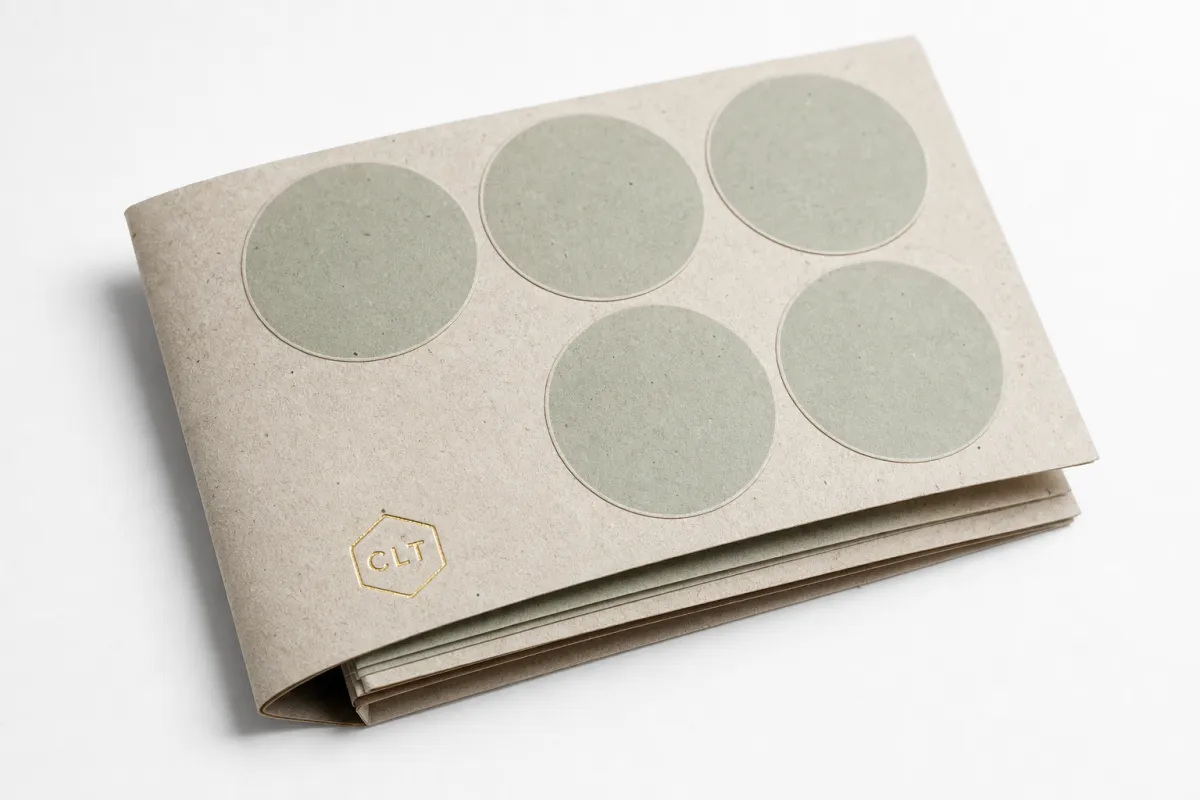
Many brands start with a straightforward brief: they want a greener label, but they do not want something that looks underfinished or flimsy. That is a fair request. Printed recycled sticker labels wholesale handle that balance well when the packaging needs a clean shelf presence and a dependable supply stream. The point is not to impress other packaging people with theory. The point is to ship products that look right, stick right, and reorder without a mess.
Cost control is another reason buyers move toward printed recycled sticker labels wholesale sooner than they usually admit. Recycled stock is often chosen because it helps standardize packaging, avoid over-ordering, and cut down on inventory that sits untouched for months. A box of labels in storage is not a savings strategy; it is a reminder that forecasting sounded better than it performed. I have watched more than one brand discover that smaller, cleaner reorders beat a giant once-a-quarter purchase that ties up cash and shelf space.
Wholesale ordering helps lock in the same face stock, adhesive, and print standard across multiple SKUs. That consistency matters whether the label is going onto jars, folding cartons, pouch seals, or mailer boxes. A brand can build a cleaner packaging system when the spec stays steady instead of shifting every time a new flavor, scent, or size enters the line.
Some buyers still treat recycled stock as if it cannot look polished. That assumption does not hold up. The right recycled paper prints crisply, carries ink well, and gives a brand a composed shelf read without pretending to be something it is not. The mistake is treating every recycled stock as interchangeable. A textured recycled paper that looks beautiful on a dry carton may behave very differently on a chilled glass jar. Same label family, different outcome.
Surface conditions matter more than mood boards. Printed recycled sticker labels wholesale only make sense when the label spec matches the package environment. A label inside a retail box has an easier life than one exposed to refrigeration, condensation, or rough handling. That may sound obvious, yet plenty of orders still start with color choices and end with adhesive complaints. Packaging usually goes wrong in the boring places, not the flashy ones.
If a label cannot survive shipping and handling, it is decoration, not packaging.
Brands with growing SKU counts also benefit from fewer reorder headaches. A steady wholesale spec means less artwork duplication, fewer approvals, and less time spent explaining to a new supplier what the old one already knew. Anyone who has untangled five nearly identical label versions knows how valuable that kind of simplicity is.
For buyers comparing label families and wholesale ordering structure, a useful starting point is the product mix at Custom Labels & Tags and the ordering setup inside our Wholesale Programs. Both pages help show how wholesale label buying is usually organized before a production run gets locked in.
Printed recycled sticker labels wholesale product details and material options
The material choice is where printed recycled sticker labels wholesale either perform well or create trouble later. Not the logo. Not the brand story. The stock. Recycled label paper comes in a few useful forms, and each one reacts differently once ink, pressure, storage, and handling enter the picture.
Uncoated recycled paper has the most natural look. It feels softer and less polished, which works well for artisan food, handmade goods, and packaging that benefits from a tactile surface. It prints cleanly enough for most branding, though it is not the best route for deep blacks, tiny legal copy, or the sharpest possible detail. Practical, yes. Magical, no.
Recycled matte paper is the middle ground that fits many printed recycled sticker labels wholesale orders. It usually offers cleaner color, better readability, and a finish that feels controlled without looking glossy. Brands that want a restrained, polished label often end up here first.
Textured recycled stock adds more character. It can look strong on premium pantry goods, candles, skincare, and private-label packaging. The tradeoff is detail loss. Fine lines, thin fonts, and small barcode elements need testing, because texture can soften them in ways a designer may not notice on screen.
Coated recycled options are worth a look too. They can improve color saturation and scuff resistance, which is useful for shipping labels and products that get handled often. Recycled does not have to mean raw or unfinished. For printed recycled sticker labels wholesale, a coated recycled stock may be the better choice if the label has to hold its own in transit or on busy retail shelves.
| Stock type | Best use | Typical print result | Tradeoff |
|---|---|---|---|
| Uncoated recycled paper | Dry goods, cartons, handmade packaging | Soft, natural, low-glare | Less protection against scuffing and moisture |
| Recycled matte paper | Most retail packaging and jars | Clean, balanced, easy to read | Not as tactile as textured stock |
| Textured recycled stock | Premium brands, artisan products | Warm, crafted, distinctive | Small text and barcodes need testing |
| Coated recycled paper | Shipping labels, high-handling packs | Sharper color and stronger detail | Usually costs more than basic recycled paper |
Print method matters almost as much as stock. Digital printing is often the better fit for short to mid-size printed recycled sticker labels wholesale runs because it handles variable artwork and smaller quantities without forcing high setup costs. Flexographic printing becomes more attractive at larger volumes, especially when the design stays fixed. Either way, color consistency deserves attention. Buyers notice drift faster than most suppliers would like, and they usually notice it right after the labels are already on product.
Barcode readability needs the same care. If a label must scan through inventory, distribution, or retail checkout, background contrast, ink density, and layout all need to be planned properly. Recycled stock can support crisp barcodes, but not if the artwork is crowded onto a textured surface with thin reversed type. That kind of layout looks clever right up until it slows the line down.
Food, wellness, and skincare brands usually do best with matte or lightly textured stock and a finish that stays restrained. That combination keeps the label premium without making it feel overly plastic or shiny. It also fits the packaging preference of buyers who want cleaner materials and still expect a label that reads clearly from a shelf.
If you want a broader view of recycled paper claims and packaging standards, the FSC site is useful for recycled and chain-of-custody context, while the EPA recycling guidance gives a practical look at how material choices fit into the wider waste stream. Neither replaces a packaging spec sheet, though both help keep claims grounded in something real.
Specifications that matter: size, adhesive, finish, and compliance
Specs are where most weak label orders start to fall apart. Not because people do not care, but because they guess. They guess the adhesive will be fine. They guess the finish will protect the print. They guess the size will fit once the package is filled. The first shipment arrives, and the guesswork becomes visible on every pallet. Printed recycled sticker labels wholesale only work well when the spec is treated like production information, not a mood board.
Size comes first. Measure the actual package face, not the designer's version of it. A label for a 250 ml jar behaves differently from one for a 500 ml jar because curvature changes the usable surface. Cartons call for a different check entirely: panel width, seam position, barcode placement, ingredient space, and the amount of visible margin left after the product is packed. A few millimeters can matter a lot when the order is large.
Adhesive choice deserves equal attention. Permanent adhesive is the default for most retail packaging because it stays in place and avoids peel-back on shelf. Removable adhesive is better for temporary labeling, promotional work, or secondary packaging that should not leave residue. Cold storage, refrigerated goods, and rough surfaces may require a specialty adhesive, and that is not a luxury item. That is the difference between a label that stays down and one that starts lifting as soon as conditions change.
Finish should be reviewed with the same level of care. Matte is common because it gives a calm, modern look and usually protects readability without pushing cost too high. Soft-touch can feel premium, though it is not always the best choice for high-handling wholesale orders. A light protective varnish or laminate may improve scuff resistance, yet it can add cost and change the feel of the label. For printed recycled sticker labels wholesale, the best finish is usually the one that protects the print without turning the label into overbuilt packaging theater.
There are also format details that should not be skipped:
- Roll direction matters for applicators and hand application.
- Core size affects machine compatibility.
- Gap spacing changes how easily labels peel from the liner.
- Sheet format can suit manual packing lines and smaller batches.
- Corner shape influences edge durability and visual finish.
Compliance is less glamorous, but it is where trust starts. If your brand makes recycled content claims, the supplier should be able to support the wording with real material information. Food-adjacent packaging needs extra care around front and back panel claims. Accuracy matters. Packaging buyers do not need a legal problem because a label overstated what the material actually is. Honest claims are usually the strongest ones anyway.
Testing is worth more than hope, especially for shipping- and transit-sensitive products. Industry references like ISTA help frame a better testing mindset for labels that need to survive transport, compression, and handling. A recycled label may not need full transit qualification every time, but the principle stays the same: test the real package, not only the sample on a desk.
Good printed recycled sticker labels wholesale specs usually read like this: label size confirmed on the final package, adhesive matched to surface and storage, finish chosen for handling needs, and artwork built around the actual production method. Not glamorous, but that is how useful packaging gets made.
Pricing and MOQ: what drives unit cost and where savings show up
People ask for price first because it feels efficient. Sometimes it is. Sometimes it hides the real question. With printed recycled sticker labels wholesale, the unit cost only makes sense once the material, print coverage, finishing, and quantity are all known. A one-color label on recycled matte stock belongs in a different cost band than a full-color textured label with protective finishing and Custom Die Cutting. Treating those as similar is how quotes become arguments.
The cost drivers are straightforward once they are laid out. Material grade changes the number. A basic recycled paper stock will usually cost less than a specialty textured or coated recycled option. Print method changes it too. Digital runs can work well for smaller wholesale orders, while higher volumes may fit another process better. More colors, more coverage, and more precise finishing all push the price upward. A custom contour cut with tight tolerances will cost more than a simple rectangle. That is not a trick; it is just production reality.
For many buyers, a practical budget range for printed recycled sticker labels wholesale on simple recycled matte paper might sit around $0.08-$0.22 per label at moderate quantities, depending on size and print coverage. Smaller orders can land higher. Larger orders usually move lower. Add specialty adhesives, extra finishing, or complex die cuts, and the cost can climb quickly. There is nothing mysterious about it; the materials and steps simply add time and handling. If a quote looks unusually low, there is usually a reason hiding in the spec.
MOQ deserves the same honest treatment. Lower minimums reduce risk for new products and short-run launches, which is useful when you are testing a scent, flavor, or seasonal pack. Larger runs can lower the unit price enough to matter once a product is established. Savings show up in fewer setup charges, lower freight per label, and less time lost to repeated tiny reorder cycles. A brand that orders 1,000 labels twelve times usually pays more than a brand that orders 12,000 once.
Here is where savings tend to appear with printed recycled sticker labels wholesale:
- Standardize label sizes across related SKUs to reduce artwork and tooling variation.
- Simplify the finish if the label does not need extra scuff protection.
- Plan repeat demand before the first order so you do not overpay for multiple small runs.
- Match the stock to the job instead of choosing a premium material just because it sounds nicer.
- Ask for pricing ladders so 3,000, 5,000, and 10,000 piece pricing can be compared side by side.
The cheapest quote is not always the cheapest result. If a supplier underprices the job and then ships uneven color, labels that do not peel properly, or stock that changes between reorders, the real cost rises fast. Operations teams understand that well. A lower line item does not mean lower total spend.
For brands with ongoing packaging programs, the safer approach is to compare printed recycled sticker labels wholesale options by spec, not just by unit price. If two quotes differ by a few cents and one includes better adhesive, cleaner print, and repeatable ordering, that usually wins on value. Packaging teams do not get extra credit for buying the loudest bargain.
Process and timeline: quote, proof, production steps, and turnaround
Ordering should feel straightforward. If it does not, something is off in the process. For printed recycled sticker labels wholesale, the smoothest path starts with a precise inquiry and ends with a proof that can be reviewed with confidence. That sounds basic because it is, yet vague requests remain one of the main reasons label projects stall.
To get a useful quote quickly, send these details up front:
- Label size or dieline
- Quantity
- Stock preference
- Adhesive type
- Finish
- Artwork file
- Application surface
- Shipping destination
The application surface matters a great deal. A label for smooth glass is not the same as one for kraft board, chilled plastic, or a lightly textured carton. Leave that detail out and the quote may still be technically correct while being practically unhelpful. Storage conditions matter too. Room temperature, chilled, frozen, oil-heavy, or humid environments all change how printed recycled sticker labels wholesale should be specified.
Once the quote is approved, the proof stage becomes the critical checkpoint. A digital proof should show layout, dimensions, copy placement, and any color notes that affect the final run. That is the moment to catch barcode issues, legal copy mistakes, and die-line problems before they become expensive inventory. If the artwork is not press-ready, say so early. Pretending a weak file is production-ready only creates delays later.
Production timing depends on complexity. A repeat printed recycled sticker labels wholesale order with confirmed artwork and standard materials can move faster than a new custom run with specialty finishing. Simple jobs may take around 5-10 business days after approval. More complex orders often need 10-15 business days or more, depending on stock availability, finishing, and queue length. Rush service may be possible, though it usually costs more because labor, machine time, and scheduling do not become free on command.
First-time orders and repeat runs behave differently. A repeat order usually moves more smoothly because the spec is already locked. First runs need more back-and-forth, and that is normal. The smart move is to build that into the timeline instead of pretending the whole process will wrap up by lunch.
Some teams try to skip proof review to move faster. That urge is understandable. It also tends to produce reprint invoices. A ten-minute proof check can save days of rework. In packaging, that is one of the few habits that pays off exactly as advertised.
Why choose us for recycled wholesale label orders
Buyers stay with a supplier for the same reason they stay with any packaging partner: the process works, the results stay consistent, and no one has to start from zero every time. That matters a lot with printed recycled sticker labels wholesale because repeat orders should get easier, not more irritating. If every reorder feels like a fresh puzzle, the supplier is creating work instead of removing it.
Consistency comes first. A good wholesale label partner should deliver stable print quality, predictable stock performance, and repeatable adhesive behavior. The second run should look like the first run, not like a distant relative of it. Color matching matters. Trim accuracy matters. Pack-out matters too, because labels that arrive damaged or badly wound create waste before they ever reach the packing line.
Communication matters just as much. If there is a material issue, a file problem, or a production constraint, you want to hear about it early. Not after the schedule slips. Not when half the job is already done. Clear communication is boring in the best possible way. It keeps the order moving and keeps everyone out of avoidable trouble.
Quality control runs through the whole order flow, from artwork review to press setup, finishing inspection, and final packing checks before shipment. For printed recycled sticker labels wholesale, those checkpoints matter because recycled stock can vary slightly by batch and finish. The goal is not to pretend every sheet is identical. The goal is to manage the differences so they do not show up as customer complaints.
There is real value in recommending the right material instead of pushing the most expensive one. Some applications need a coated recycled stock. Others are fine on a simpler matte paper. A supplier worth keeping will say that plainly. A weaker one will sell the higher-priced option and call it service. Buyers remember the difference.
We also think about the label inside the larger packaging program. If your brand runs multiple SKUs, seasonal editions, and retail plus e-commerce versions, printed recycled sticker labels wholesale should support that structure without forcing constant redesigns. That is where operational reliability meets the sustainability story. The label needs to look responsible, yes, but it also needs to apply cleanly, ship safely, and reorder without a headache.
If you want a broader view of how we organize packaging production and reorder support, the Wholesale Programs page is a useful starting point. If your project needs a wider label family beyond recycled sticker stock, Custom Labels & Tags is the faster route to compare formats.
How to order printed recycled sticker labels wholesale next
The easiest way to start is simple: pick the package first, then choose the label. That keeps people from designing a label in isolation and later discovering that the die line misses the bottle neck, carton seam, or product wrap. For printed recycled sticker labels wholesale, the strongest orders are built from the actual packaging surface outward.
Use this checklist before requesting a quote:
- Confirm the exact label size or dieline.
- Choose the recycled stock that fits the product environment.
- Define the adhesive based on surface and storage.
- Pick the finish based on handling and shelf needs.
- Prepare artwork in the correct file format.
- Decide whether you need rolls or sheets.
Packaging photos speed things up. A sample is even better, or a clear photo of the exact surface the label will touch. That cuts down on guessing and helps the supplier recommend the right adhesive for printed recycled sticker labels wholesale instead of sending back a generic answer that may not hold up in use.
Once the proof arrives, test it against the real package if possible. Apply it to a sample jar, carton, pouch, or box and leave it alone for a while. Watch for edge lift, curling, and scanability. The test does not need to be fancy; it only needs to reflect how the product will live in the market. A label that looks great only under perfect lighting is not doing much useful work.
For brands with internal approval chains, keep the sign-off process tight. One decision-maker for print and one for packaging is usually enough. Too many voices slow everything down and create version confusion. If a recycled label is supporting a cleaner brand story, the packaging team should still treat it like a production purchase, not a design debate that drifts for days.
The last step is straightforward: compare the quote, the material spec, and the production timing side by side. The right printed recycled sticker labels wholesale order is the one that balances cost, appearance, and performance without forcing a correction after delivery. That is the whole point. Buy the label that fits the package the first time. Your operations team will notice. So will your budget.
When you are ready, ask for a quote, check the spec against the package, and choose the printed recycled sticker labels wholesale setup that fits the job instead of the one that just sounds nice in a meeting. Packaging already has enough empty promises.
FAQs
Are printed recycled sticker labels wholesale suitable for food jars and pantry items?
Yes, as long as the adhesive matches the surface and the stock can handle handling, moisture, and storage conditions. Chilled or humid environments usually need a stronger adhesive, and a sample should be tested on the actual jar before the full order goes in. If the label must stay readable around oils or condensation, ask for a finish that protects print clarity without complicating the build. Printed recycled sticker labels wholesale can work very well here, but the spec has to match the job.
What is the usual MOQ for printed recycled sticker labels wholesale?
MOQ changes based on size, print complexity, and whether the labels are ordered on rolls or sheets. Smaller wholesale runs are possible, though unit cost usually drops once the order moves past the setup-heavy threshold. If repeat orders are likely, ask for a pricing ladder so you can compare low MOQ flexibility against larger-run savings. That is the practical way to buy printed recycled sticker labels wholesale without guessing at the long-term cost.
How long does it take to produce recycled sticker labels after approval?
Turnaround depends on artwork readiness, stock availability, finishing, and order size. A clean repeat order moves faster than a new custom run with special die cuts or extra finishing. The fastest way to avoid delays is to send the correct dieline, final artwork, and complete spec details with the first inquiry. That keeps printed recycled sticker labels wholesale on schedule and cuts down on avoidable back-and-forth.
Will printed recycled sticker labels wholesale still look premium?
Yes, if the stock, print method, and finish are matched to the brand aesthetic instead of chosen at random. Matte and textured recycled stocks often look more premium than buyers expect because they create a cleaner, less plastic feel. Good color control matters more than flashy claims. A well-printed recycled label usually beats an overdesigned label on the wrong material. That is especially true for printed recycled sticker labels wholesale used on shelf-facing packaging.
What should I send to get an accurate quote for printed recycled sticker labels wholesale?
Send the label size, quantity, material preference, adhesive needs, finish, artwork file, and the surface it will be applied to. If you have packaging photos or a sample, include them so the supplier can avoid guessing about fit and adhesion. The more precise the spec, the faster the quote and the fewer surprises in production. That is the simplest way to buy printed recycled sticker labels wholesale without wasting time on revisions.
The most reliable next move is to lock the real package details first: surface, size, storage condition, and application method. Once those are set, the rest of the printed recycled sticker labels wholesale spec falls into place much more cleanly, and you are far less likely to end up paying for a reprint that should never have happened.

