Buyer Fit Snapshot
| Best fit | Recycled Sticker Labels with Logo projects where brand print, material claims, artwork control, MOQ, and repeat-order consistency need to be specified before quoting. |
|---|---|
| Quote inputs | Share finished size, material target, print colors, finish, packing count, annual reorder estimate, ship-to region, and any compliance wording. |
| Proofing check | Approve dieline scale, logo placement, barcode or warning zones, color tolerance, closure strength, and carton packing before bulk production. |
| Main risk | Vague material claims, crowded artwork, missing packing details, or unclear freight terms can make a low unit price expensive after revisions. |
Fast answer: Recycled Sticker Labels with Logo: Material, Adhesive, Artwork, and MOQ should be specified like a repeatable production item. The safest quote records material, print method, finish, artwork proof, packing count, and reorder notes in one written spec.
Production checks before approval
Compare the actual filled-product size with the drawing, then confirm tolerance on folds, seals, hang holes, label areas, and retail display edges. Reserve space for logos, QR codes, warning copy, and material claims before decorative graphics fill the panel.
Quote comparison points
Review material grade, print process, finish, sampling route, tooling charges, carton quantity, and freight assumptions side by side. A quote is only useful when the supplier can repeat the same color, closure quality, and packing count on the next order.
Recycled Sticker Labels with Logo: Sustainable Guide
Recycled Sticker Labels with logo do more than carry a mark. They shape first impressions before a customer ever opens a jar, lifts a bottle, or tears into a mailer. A well-made label can make a package feel considered, grounded, and honest, which matters because buyers are reading packaging more carefully now. That is part of why recycled sticker Labels with Logo have become such a practical choice for brands that want their material choices to be visible, not just claimed in a sentence on a website.
The details matter more than the headline. A label is not automatically better for the environment because the face stock includes recycled content. The adhesive, liner, finish, ink load, and end-use conditions all affect whether the label performs in the real world. A label that lifts in the fridge, scuffs in transit, or softens the logo on a rough recycled surface does not support the brand story. It weakens it. That is why recycled sticker Labels with Logo need a spec-first approach, not a broad sustainability claim with no material backing.
From a production standpoint, this kind of label sits right at the intersection of packaging design and material science. That sounds a little formal, but it is the truth. The stock has to look right, stick right, print right, and still survive whatever the product will face after it leaves the press room. If one of those pieces is off, the whole job starts to feel compromised.
Recycled sticker labels with logo: what they are and why brands use them
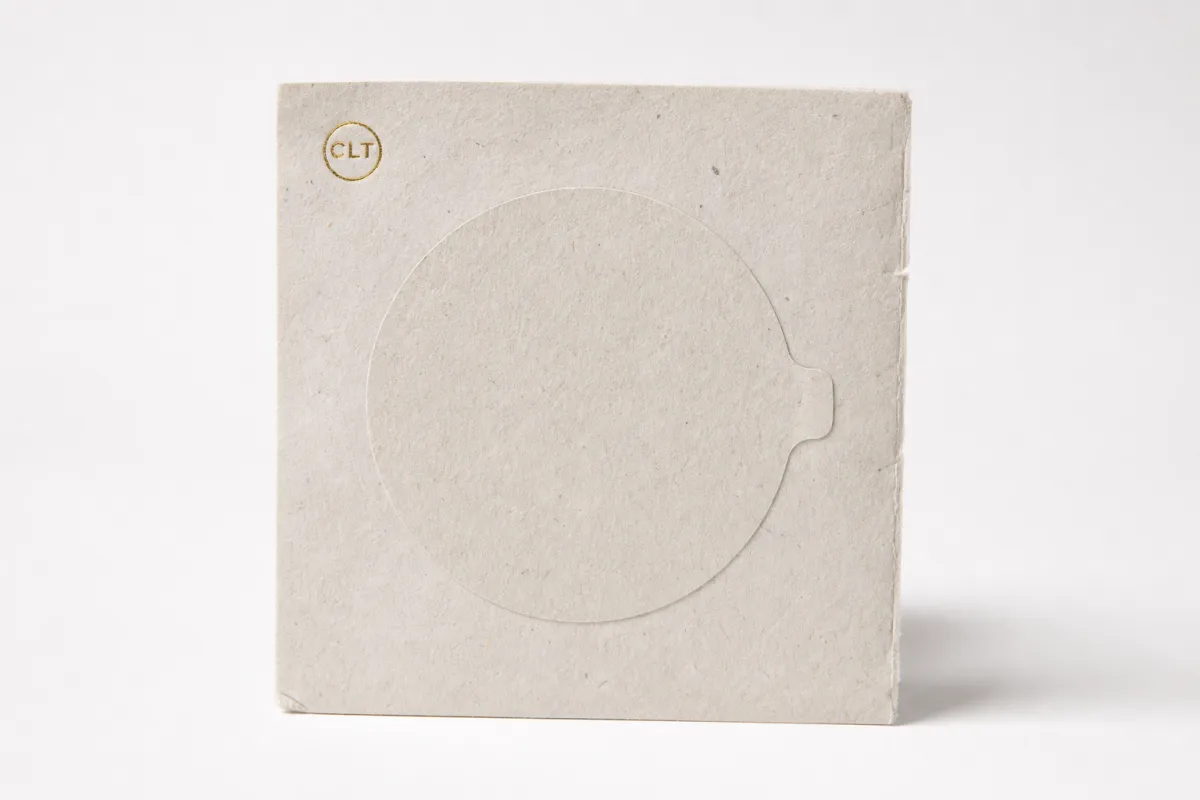
At the simplest level, recycled sticker labels with logo are pressure-sensitive labels made from recycled paper or recycled-content film, printed with a brand logo, and paired with an adhesive matched to the container. They can go on glass jars, HDPE bottles, corrugated mailers, kraft pouches, or PET packaging. The idea sounds straightforward, yet the label is doing several jobs at once. It identifies the product, carries the visual identity, and lets the brand make a more responsible material choice without changing the whole package.
Many brands are paying attention because packaging buyers have become more skeptical of claims that sound green but do not hold up under scrutiny. A clean logo on a recycled substrate can communicate restraint and care. For some businesses, that is enough reason to move. For others, recycled sticker labels with logo offer a practical step toward reducing virgin material use while keeping the existing pack format, line setup, and customer experience in place.
There is a production advantage too. Sticker labels are often easier to adopt than a full packaging redesign. They work well for short runs, seasonal products, launch tests, and limited editions. That flexibility makes them useful for brands that need movement now rather than waiting for a larger structural packaging project. If a company wants a visible refresh without rebuilding the pack from scratch, recycled sticker labels with logo are often one of the fastest places to start.
Texture also plays a real role in perception. A matte recycled paper label on a glass jar can feel more deliberate than a glossy label, even when the print budget is smaller. That is not a universal rule, and some categories still need shine, contrast, or a premium coated look. Still, in food, beauty, wellness, and home care, recycled textures often read as calmer and more material-led. The logo benefits from that restraint when the design does not try to overwork the stock.
Sustainability is never just the face stock. If a supplier sells recycled sticker labels with logo but cannot explain the liner material, the adhesive chemistry, or whether the recycled content is post-consumer or post-industrial, the claim is too thin to trust. Buyers should ask exactly what component is recycled, what percentage it represents, and whether documentation exists. The EPA's recycling guidance is a useful reference for how materials are handled after use, while the FSC system helps clarify chain-of-custody options for paper-based inputs: EPA recycling guidance and FSC certification information.
That distinction matters because end users rarely see the liner or adhesive, yet those parts influence the real footprint. A label made with recycled content can still be a poor choice if it interferes with recycling downstream. The opposite can happen too: a recyclable package can be undermined by a label that leaves residue or does not separate cleanly. Good recycled sticker labels with logo should fit the package, the production line, and the disposal path as one system.
Package environment matters as much as material choice. A dry goods mailer and a refrigerated bottle do not ask the same thing of a label. A recycled paper label that performs beautifully on a carton may fail on condensation-prone glass. Brands that respect that difference usually waste less time, less material, and less money during approvals. That part is not glamorous, but it is where better outcomes usually start.
How recycled sticker labels with logo are made
The build of recycled sticker labels with logo begins with the substrate. For paper labels, suppliers may use recycled fiber stocks with a matte, uncoated, or lightly coated face. These stocks often feel warmer in hand and tend to hide small handling marks better than bright white alternatives. For more demanding environments, recycled-content film can be considered, although the final environmental story depends on the polymer blend, the recycled content percentage, and the recovery system in the market where the package will be used. Hybrid constructions are also common when a brand wants a recycled face stock but still needs a certain level of performance.
Adhesive selection is where a lot of projects either come together or fall apart. A permanent adhesive that works on corrugate may not behave the same way on cold glass. A removable adhesive may be right for a promotional item but wrong for a product expected to sit in chilled retail conditions. For recycled sticker labels with logo, the adhesive should be chosen for the surface, the storage temperature, and the application method. Curved containers, oily surfaces, wet environments, and high-touch packaging all make that choice more sensitive.
The print workflow is more detailed than many buyers expect. Artwork is prepared in vector form, colors are checked, proofs are reviewed, the press is set up, the labels are printed, and then the job is die cut, stripped, and finished. Depending on the supplier, finishing can include varnish, lamination, slitting, roll rewinding, or sheet cutting. At each stage, the logo needs to stay crisp and aligned with the brand standard. If you are ordering recycled sticker labels with logo, the artwork is not just a visual file. It is a production input.
Logo handling deserves care. Recycled substrates usually have more surface texture than virgin-coated stocks, and that can slightly soften fine detail or small type. That does not mean the label will look bad. It means the design should be built for the stock instead of being pasted onto it without adjustment. Strong line weights, clear spacing, and moderate color coverage usually print more predictably than delicate gradients or hairline strokes. In practice, some of the best-looking recycled sticker labels with logo are the simplest ones.
There is a tradeoff worth saying out loud. A label with a lighter footprint still has to survive shipping, storage, handling, and consumer use. If the material tears too easily, the ink rubs off, or the edges curl after application, the package may look responsible but behave poorly. Buyers should ask for sample swatches, real proofs, or a short production test before approving a full run of recycled sticker labels with logo. That step often saves money later, especially when the package is already in market.
The stronger suppliers build performance checks into their process. They may test adhesion after 24 hours, verify ink cure time, or run scuff resistance checks before release. If the labels are headed into shipping, it is reasonable to ask whether the job has been evaluated against a transport standard such as ISTA methods for distribution testing: ISTA testing resources. Not every order needs formal certification, but the logic still applies. Labels should survive the trip they are about to take.
At a practical level, recycled sticker labels with logo are not just a print purchase. They are a material decision, a chemistry decision, and a branding decision all at once. That is why the specification stage carries so much weight. When the label is built correctly, the result looks intentional. When it is not, the sustainability story becomes harder to defend.
Cost and pricing factors for recycled sticker labels with logo
Pricing for recycled sticker labels with logo usually comes down to five variables: material, size, print colors, finish, and quantity. Those sound simple, but the exact mix changes the quote more than most buyers expect. A 2-inch square recycled paper label with one-color print and no special finish is a very different job from a custom die-cut logo label on recycled-content film with white ink, matte lamination, and tight registration.
Short runs cost more per label because setup is spread across fewer pieces. That pattern is standard across packaging, not just labels. A run of 500 pieces may feel expensive on a unit basis. A run of 10,000 can drop sharply because press time, plate setup, and material waste are distributed across more labels. The same logic applies to recycled sticker labels with logo, whether they are for a product launch or a replenishment order.
Material availability can also move the quote. Recycled stocks are sometimes sourced in smaller runs than mainstream white stocks, and that can affect both price and lead time. Post-consumer recycled content may have a different cost structure from post-industrial content. If a supplier stays vague about the recycled stream, ask directly. That distinction matters for cost, for claim accuracy, and for how the label is described in sales or regulatory copy. Brands buying recycled sticker labels with logo should know whether the substrate is recycled content, recyclable in the local system, or both, since those are different claims.
The adhesive can change the economics as well. A general-purpose permanent adhesive is often the base case, but freezer-rated, moisture-resistant, removable, or high-tack formulas can add cost. If the label will sit on chilled glass, standard adhesive may not be enough. The less expensive option can become the expensive one if the labels lift, wrinkle, or trigger rework on the line.
Finishes affect price too. A simple uncoated recycled paper label can be economical, especially at moderate volumes. Add a soft-touch lamination, metallic ink, or a multi-pass varnish and the quote will move upward. That does not mean the finish is wrong. It means the finish should be chosen with purpose. For many brands, recycled sticker labels with logo look strongest with less embellishment because the stock itself carries part of the visual story.
Here is a practical comparison that buyers can use as a budgeting frame:
| Option | Typical use | Relative unit cost | Performance notes |
|---|---|---|---|
| Recycled paper label | Dry goods, mailers, cartons, some retail jars | Lower to moderate | Good print feel; less resistant to moisture and abrasion |
| Recycled-content film label | Bottles, chilled products, higher-touch packaging | Moderate | Better moisture resistance; confirm end-of-life claims carefully |
| Recycled paper with special finish | Premium dry goods or gift packaging | Moderate to higher | Better shelf impact; finish can raise cost and extend lead time |
| Custom die-cut, specialty adhesive | Curved, cold, or challenging surfaces | Higher | Best fit for difficult applications; more setup and testing |
If you are comparing quotes, make sure every supplier is pricing the same dimensions, the same core size, the same adhesive, and the same finish. A quote for 3 x 4 inch labels on recycled paper is not comparable to a quote for 3 x 4 inch labels on recycled-content film if the adhesive and finishing stack are different. That sounds obvious, yet it is one of the most common reasons buyers think they found a bargain when they did not. For a fair comparison, use a consistent spec sheet and request equivalent build details for each version of recycled sticker labels with logo.
As a rough planning range, many custom runs land in the low cents per label at volume, while smaller runs can sit much higher. The exact number depends on quantity, print coverage, material market conditions, and whether the label has one setup or several. A buyer asking for 5,000 pieces might see a quote around $0.18 to $0.28 per unit on a simpler recycled paper job, while a more complex die-cut or specialty film label can run higher. Those are planning ranges, not fixed prices, but they help when budgeting recycled sticker labels with logo before artwork is final.
Application method affects cost in a quieter way. Hand application can work for a small brand, but if the product is scaling, machine compatibility should be part of the quote. A label that looks inexpensive can become costly if it jams applicators or creates enough waste to slow the line. The true cost is not only what you pay the printer. It is also what you spend to get the label onto the package cleanly.
Production process and timeline for recycled sticker labels with logo
The production path for recycled sticker labels with logo usually begins with a project brief. The supplier needs dimensions, substrate preference, package type, adhesive direction, quantity, and the conditions the label will face. After that, artwork gets checked for bleed, safe area, contrast, and logo reproduction. If the design needs changes, this is the time to make them. Once the file is approved, proofing begins.
Proofing is where many schedules slip. A buyer may want the logo a little larger, the recycled paper a little warmer, or the text shifted to fit a new dieline. Those edits are normal, but each revision adds time. For first-time recycled sticker labels with logo, plan for at least one proof cycle, and often two if the package is new. Repeat orders move faster because the supplier already has the setup history.
After proof approval, the timeline depends on material sourcing and press scheduling. If the substrate is in stock, the job can move quickly. If the recycled face stock needs to be ordered, the schedule stretches. Custom Die Cutting adds time too because the knife setup must be built and checked. A simple roll label may be ready faster than a complex shape with multiple cut points. For many brands, the print time is not the bottleneck. The planning around it is.
Here is a realistic production sequence:
- Project brief and specification review
- Artwork preparation and dieline check
- Digital proof or press proof review
- Material confirmation and scheduling
- Printing and curing
- Die cutting, stripping, slitting, or sheet finishing
- Inspection, packing, and shipment
Simple repeat orders may ship in a shorter window once the proof is locked. First-time custom jobs usually need more time, especially if the label has to fit an existing line. A practical planning range for recycled sticker labels with logo is often 12 to 15 business days from proof approval for straightforward runs, while more complex jobs can take longer if the stock is special order or the label needs extra finishing. That varies by supplier, but it is a useful benchmark for scheduling.
Brands shipping into cold-chain or high-touch channels should add a buffer. Labels for refrigerated products should be sampled under real conditions, not only approved on a screen. If the package will face condensation, rubbing, or stacking pressure, give yourself time for a short test cycle. That might mean receiving a few dozen labels, applying them to actual packs, and watching them through storage and transit before you release the full order. It is a small delay compared with a full reprint.
Application equipment matters as well. Manual application can hide some problems because a person can adjust pressure and placement in the moment. Automated application is less forgiving. If the labels will be applied by machine, tell the supplier up front. That lets them check roll direction, spacing, core size, and unwind orientation. The best recycled sticker labels with logo are the ones that work in production, not just in approval meetings.
A quick internal note from many packaging teams I have worked with: the fastest jobs are almost never the ones with the fanciest art direction. They are the ones where the team locked the spec early and gave the printer one clean target. Not glamorous, I know, but it keeps the job moving.
Common mistakes when ordering recycled sticker labels with logo
The biggest mistake is assuming a recycled face stock guarantees performance. It does not. A label can be made from recycled paper and still fail if the adhesive is wrong for the surface. Glass, plastic, cardboard, powder-coated surfaces, and chilled containers all behave differently. If the adhesive does not match, the label may lift at the corners, wrinkle during application, or leave residue later. That is a weak result for any label, and especially for recycled sticker labels with logo meant to support brand credibility.
Design choices create problems too. Tiny type, thin rules, and low-contrast logos often print less cleanly on textured recycled surfaces. The texture is part of the appeal, but it also changes the way ink sits on the stock. A pale gray logo on warm recycled paper may look tasteful on a screen and faint in hand. Stronger contrast usually wins. If the brand guidelines are rigid, it may be worth preparing a recycled-label version of the logo that keeps the identity intact while simplifying the print execution.
Another common error is vague sustainability language. Buyers should ask what part of the label is recycled, whether the claim refers to post-consumer or post-industrial content, and whether the liner is included in the statement. They should also ask whether the label can be separated from the package cleanly at end of life. That sounds technical because it is. It is also the level of detail required if a brand wants recycled sticker labels with logo to stand up to scrutiny.
Specification drift causes quiet budget damage. Change the size by half an inch, switch from sheeted to rolled labels, or add a finish, and the quote may move more than expected. One small tweak can trigger a new die, new setup, and new press assumptions. That is why it helps to freeze the spec before asking for final pricing. If you want multiple options, keep the comparison tight. Otherwise, the numbers do not tell you much.
A recycled label is only as credible as its weakest component. If the face stock is recycled but the adhesive fails in cold storage, the package does not feel sustainable. It feels under-specified.
Brands also underestimate handling. Mailers get rubbed. Jars get stacked. Bottles get misted, chilled, and touched. A label that passes a desk review can still fail in use. That is why it is smart to test recycled sticker labels with logo on the actual package, not only on the dieline. If the container shape, coating, or storage environment is unusual, ask for a sample run before ordering full volume.
Finally, some buyers focus so tightly on sustainability language that they forget the business result. A label still needs to sell the product. It should be legible, easy to apply, and consistent from batch to batch. If the eco message is compelling but the logo is hard to read, the packaging is not doing its job. Good recycled sticker labels with logo balance material responsibility with commercial clarity.
Expert tips for better performance and cleaner branding
If you want recycled sticker labels with logo to work harder, start by testing two substrate options on the actual package. Paper and film may both include recycled content, but their behavior can differ sharply. Paper usually feels warmer and more natural, while recycled-content film may give you better moisture resistance. The right choice depends on the package environment, not on habit.
Logo treatment matters more on recycled materials than many brands expect. Bold geometry, solid color blocks, and strong contrast usually print more cleanly than fine gradients or delicate script. That does not mean the brand identity should be flattened into something generic. It means the execution should fit the stock. In many cases, recycled sticker labels with logo are stronger when the design is edited for the material instead of treated as a one-size-fits-all asset.
Ask for a press-ready proof on the actual label stock. Screen proofs are helpful, but they do not show ink absorption, texture, or finish behavior. A white logo on kraft-style recycled paper can shift visually because the substrate tone changes the perceived contrast. The proof should show what the customer will actually receive, not an idealized mockup. That matters most for premium packaging, where color accuracy and logo spacing carry real weight.
Durability testing should be specific. Will the package face refrigeration, condensation, hand oil, or shipping rub? A label that handles one of those conditions may still fail another. If the project is sensitive, build a small checklist: adhesion after 24 hours, edge lift after chilling, ink rub after handling, and package appearance after transit. The same checklist works well for most recycled sticker labels with logo programs, whether they are for beverage, food, wellness, or e-commerce.
One useful habit is to tie label selection back to the recovery path. If the package is paper-based, a recycled paper label may be easier to justify than a film label. If the package is plastic, the decision gets more nuanced. Brands should understand local recycling guidance, and if they make end-of-life claims, they should be ready to support them. That is where standards and outside guidance help, whether from material programs, transport testing bodies, or the wider packaging community.
From a packaging buyer's point of view, the smartest question is often the simplest one: what does this label need to survive? Once that is clear, the rest of the spec gets easier. You can trade off finish, adhesive, and substrate with intention instead of guessing. That is how recycled sticker labels with logo move from a nice idea to a dependable packaging component.
For brands comparing label families, it can also help to review options alongside other formats such as Custom Labels & Tags. Sometimes a hang tag, swing tag, or alternate label build fits the packaging system better than a direct-to-surface sticker. A second look often reveals a simpler answer.
Another practical move is to ask for a short run on the exact roll size or sheet format you plan to use. If the supplier can match the application method early, you lower the chance of surprises at launch. That is especially useful for recycled sticker labels with logo on automated lines, where unwind direction, core size, and spacing can cause avoidable delays if they are not specified clearly.
A clean brand system usually starts to show itself here. When the label material, ink coverage, and application method agree with one another, the package looks calmer and more confident. That kind of restraint is hard to fake, and it often reads as quality even when the budget is practical rather than lavish.
Next steps before you order recycled sticker labels with logo
The fastest way to improve the result is to build a one-page spec sheet before you request quotes. Include label size, shape, package material, adhesive preference, finish, quantity, application method, and delivery target. If the label is for a jar, bottle, pouch, or mailer, say so. If the product will be chilled, handled, or shipped long distance, note that too. Clear inputs make recycled sticker labels with logo easier to quote and easier to approve.
Request two or three quotes using identical specifications. Do not let one supplier quote a recycled paper option while another quotes a recycled-content film option unless you are intentionally comparing materials. The point is to compare real alternatives, not fuzzy estimates. When the specs match, the price difference becomes more meaningful, and so does the timing difference.
Ask for a sample swatch or a short test run if the label will face moisture, abrasion, or cold storage. That step matters more than many brands admit. A label can look excellent on a proof and still behave poorly after a day in refrigeration or a trip through parcel shipping. Test the label on the real package. That one move can save a reprint and protect the launch calendar.
If you are still narrowing the design, use the label as a brand filter. A good recycled stock often rewards a cleaner layout. The logo can breathe. The typography can be simpler. The package can feel more confident because it is not hiding behind extra effects. That is one reason recycled sticker labels with logo have become a practical choice for brands that want a credible sustainability cue without redesigning the whole pack.
Lock the order only after the sample passes in the real world. Not a mockup. Not a screen. The actual container, actual adhesive, actual handling. Once that test is complete, the rest is straightforward: finalize artwork, approve the material, confirm the timeline, and release production. That is the cleanest way to buy recycled sticker labels with logo with confidence.
For many packaging programs, the difference between a label that merely looks sustainable and one that performs well comes down to a handful of early decisions. Get the substrate right. Match the adhesive. Keep the artwork disciplined. Verify the proof. If those pieces are in place, recycled sticker labels with logo can deliver the right mix of shelf presence, production reliability, and material responsibility.
If you want the shortest possible path to a good result, start with the package itself, not the artwork. Pick the container, confirm the conditions it will face, and then choose the stock and adhesive that can actually survive that job. That approach keeps recycled sticker labels with logo honest, and it keeps the brand from having to fix preventable issues after launch.
Are recycled sticker labels with logo good for jars and bottles?
Yes, if the adhesive matches the surface and the label stock can handle the environment. For glass, plastic, and chilled products, test moisture resistance and edge lift before placing a full order. recycled sticker labels with logo can work well on jars and bottles, but the label needs to be specified for the package conditions, not just the artwork.
What materials work best for recycled sticker labels with logo?
Recycled paper is a strong choice for dry goods, mailers, and some retail packaging. For higher moisture or scuff resistance, ask about recycled-content film options and whether they fit your sustainability goals. The best material for recycled sticker labels with logo depends on the package surface, handling, and storage conditions.
How much do recycled sticker labels with logo cost?
Price depends on size, quantity, material, adhesive, print colors, and finish. Short runs usually carry a higher unit cost, while larger orders often improve pricing significantly. If you compare recycled sticker labels with logo quotes, make sure every supplier is pricing the same dimensions and the same build.
How long does production take for recycled sticker labels with logo?
Timelines vary by artwork readiness, sample approval, and material availability. Simple repeat orders may move quickly, while first-time custom runs need extra time for proofing and setup. For recycled sticker labels with logo, plan for proof review, material confirmation, and any die-cutting or finishing steps before release.
What file do I need for recycled sticker labels with logo artwork?
Vector files are best because they keep logos crisp at any size. Include outline fonts, color specs, and a clear dieline so production can verify placement before print. Clean artwork helps recycled sticker labels with logo reproduce predictably and reduces avoidable proof changes.

