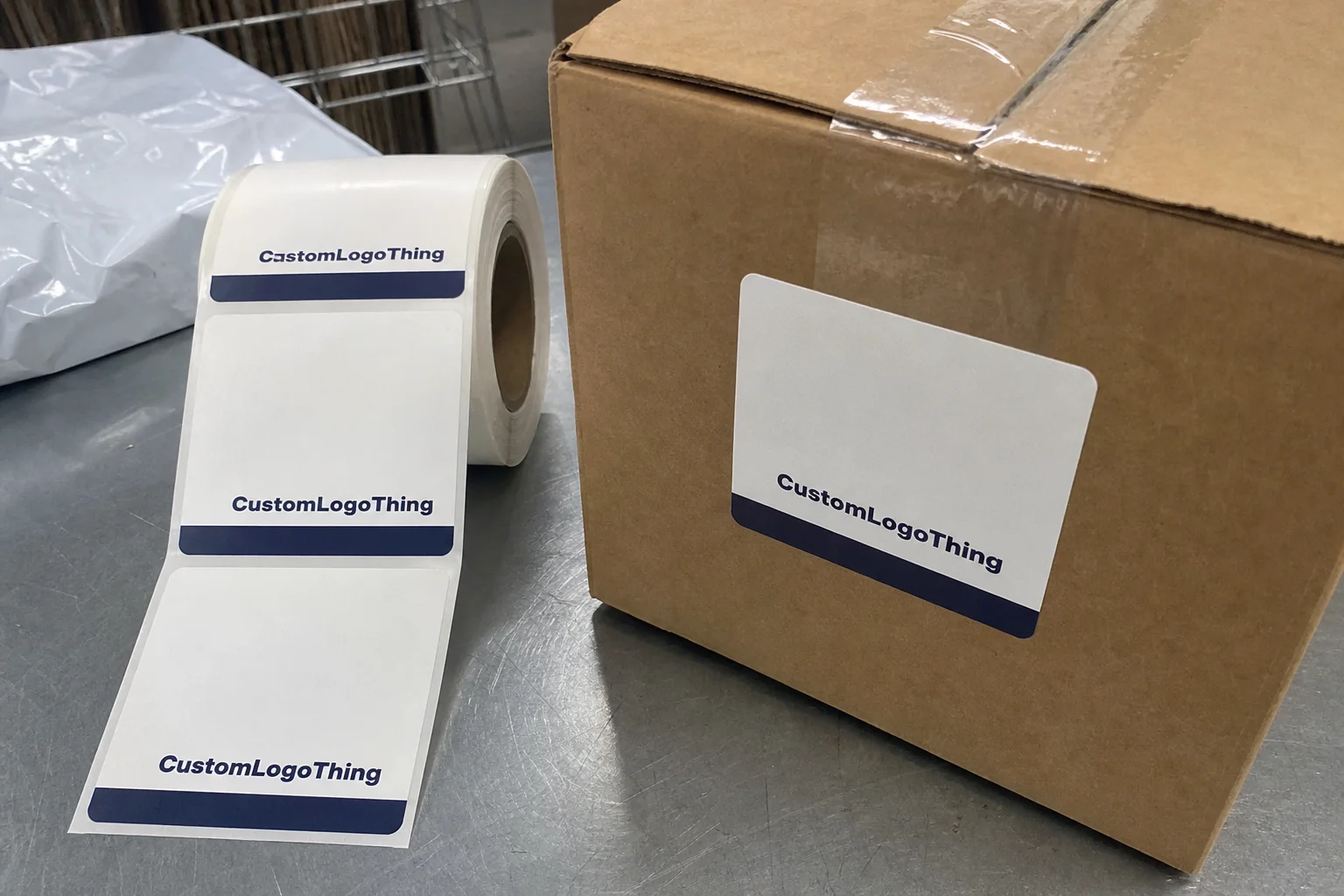
Most return problems are not customer-service failures. They are process failures that show up later, after the parcel has already left the warehouse and someone has to fix the mess. Printed Return Labels solve part of that problem by giving a clothing brand a prebuilt return path instead of asking the customer to improvise with a blank insert, a web form, or a handwritten address.
That matters more in apparel than in many other categories. Clothing returns are frequent, size swaps are common, and the item often has to move back through inspection, restocking, or resale grading before any refund is finalized. A small label can influence all of it. If the routing is wrong, the barcode will not scan, or the adhesive fails on a poly mailer, the delay is rarely small.
For buyers, the appeal is practical. Better control over return flow, fewer manual corrections, fewer support tickets, and less friction between the customer, the 3PL, and the warehouse floor. The label is not decorative. It is part of the operating system.
The brands that get this right usually think about the label the way they think about carton strength or packing slip layout: as a component that has to fit the process. A return label should match the return policy, warehouse software, and package surface. If it only looks clean on a mockup, it is not ready.
“A good return label reduces interpretation. If staff have to guess, the label is already underperforming.”
For brands that want consistency across packaging components, it often makes sense to align return labeling with Custom Labels & Tags so outbound and return touchpoints feel like one system instead of two disconnected jobs.
Printed Return Labels for Clothing Brands: What They Fix
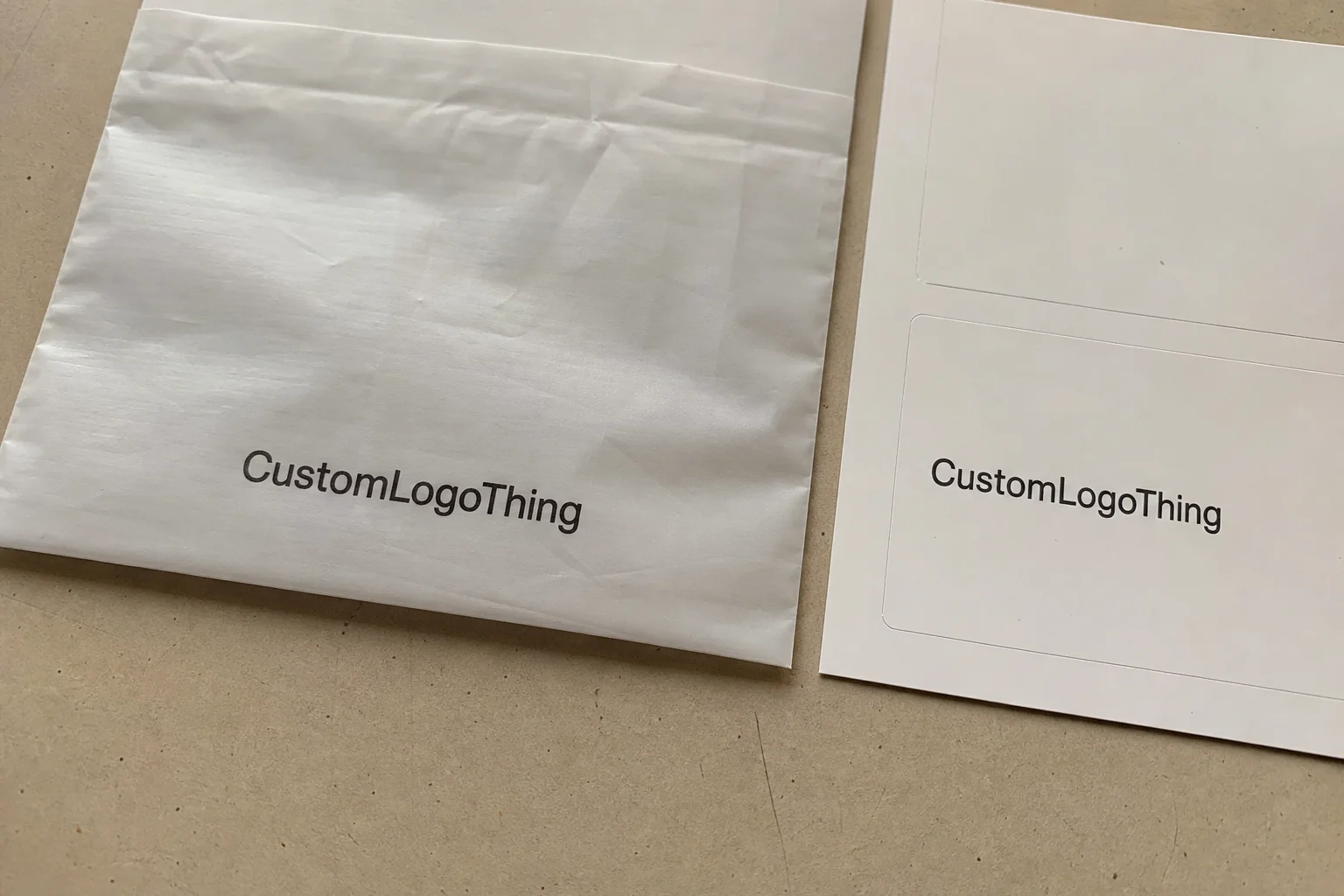
Printed return labels are preformatted labels that carry the information a warehouse or customer needs to move a return correctly: return address, routing details, barcodes, QR codes, SKU identifiers, short instructions, and sometimes policy notes. In apparel, they show up in ecommerce orders, subscription boxes, and DTC fashion shipments where the return path needs to stay consistent across multiple styles, size runs, or fulfillment locations.
The main benefit is not glamorous. It is fewer failure points. A customer should not have to search for a return address, print a separate sheet, or interpret a loosely worded instruction card after a purchase has already been made. Every extra step invites mistakes. Those mistakes become delayed refunds, misrouted parcels, or extra labor at intake.
The same logic applies internally. If the warehouse scans returns at receiving, the label needs to support that scan. If returns are sorted by category, region, or condition, the label should carry that logic clearly. If a 3PL works with tight scan windows, contrast and code placement matter more than brand styling. A beautiful label that slows processing is still a bad label.
There is also a customer experience angle that gets missed. A well-structured return label communicates order and competence. It does not need to say much. It just needs to work without forcing the customer to think too hard. In apparel, that calmness matters because returns often happen after a disappointing fit, not an exciting purchase.
One practical detail: the return label is usually more useful when it is paired with the rest of the package flow. If the brand already uses standardized outbound labels, pick slips, or inserts, keeping the return label visually and operationally aligned reduces mistakes at both ends of the order.
For broader packaging context, barcode readability standards and transit testing matter. The ISTA site is useful if you want to compare packaging choices against rough handling, and the EPA recycling pages are worth checking when substrate and liner choices affect disposal or material recovery.
Process and Turnaround
The production path is simple on paper and less simple in practice. It usually starts with a spec request: dimensions, quantity, surface type, adhesive, print method, and whether the design is static or variable. From there, the supplier prepares a proof, the brand reviews it, and production starts only after approval. If the order includes serial numbers, SKU-level routing, or variable barcodes, setup takes longer because the data needs a more careful check.
Delays tend to cluster in familiar places. Missing return addresses. Barcode data that does not match the warehouse system. A last-minute art change after proof approval. Unclear numbering rules. People often treat return labels like throwaway inserts, but they sit inside a workflow that depends on precision. One wrong digit can misroute an entire batch.
Static labels are usually the fastest to produce. Once the file is locked and the spec stays unchanged, a reorder can move quickly because the setup already exists. Variable-data labels require more control, more proofing, and more quality checks. That is normal. The mistake is assuming every reorder should behave like the first. It only does that if the data, layout, and material remain identical.
For planning, ask for the timeline in separate pieces rather than one broad estimate:
- File review and proofing window
- Revision time, if the proof needs changes
- Production time
- Finishing and packing
- Transit time
That breakdown makes scheduling far more realistic. For a first run, proofing is usually where the clock slips. Reorders are faster, but only if the supplier can match the original spec exactly and nobody sneaks in a “small” update that creates a new job.
Typical lead times vary by complexity. Simple static orders can move in a few business days after approval. More demanding jobs, especially those with variable data or specialty materials, often need a week or more before they are ready to ship. Freight and customs can add another layer if the order crosses regions. A quote that skips those details is not fully scoped.
Cost and Pricing
Pricing is driven by the same variables that affect most print work: quantity, size, substrate, print method, color count, adhesive type, serialization, finishing, and packing format. If a quote looks unusually low, one of those variables is probably being simplified or ignored.
Minimum order quantity matters because setup cost has to go somewhere. Small runs usually carry a higher unit price because the press setup, proofing, and handling are spread across fewer labels. Larger runs reduce the per-piece cost quickly. That is why a quote for 1,000 labels and a quote for 10,000 labels can feel like different products. The machine did not get cheaper. The setup just stopped hurting as much.
Buyers also miss the quiet costs. Proofing. Plate or setup fees. Variable-data handling. Die cutting. Special adhesive formulations. Packing style. Storage if the whole run is not used immediately. Freight. Reprint risk. A cheap unit price can still be the expensive option if the labels fail on the surface they were meant to stick to.
In practical terms, small simple runs often land in the low tens of cents per label once setup is included. Large static runs can drop into the low single-digit cents, before freight and any custom finishing are added. Variable-data work, specialty adhesives, or film stocks usually push the number up. The exact spread depends on the supplier and the job mix, but the direction is predictable.
| Option | Typical Use | Relative Unit Cost | Operational Notes |
|---|---|---|---|
| Paper static labels | Short-life return inserts for standard apparel parcels | Lowest | Good for dry handling and straightforward routing; easy to reorder and easy to inspect |
| Synthetic or film labels | Returns exposed to abrasion, moisture, or rough handling | Medium | Better durability; useful when labels travel loosely in the box or touch slick packaging |
| Variable-data labels | SKU-level routing, serial numbers, or warehouse scan logic | Higher | More setup, more checks, and tighter file control are required |
| Specialty adhesive builds | Poly bags, tissue, coated cartons, or difficult return surfaces | Higher | Worth paying for if peel failures are common; the cost of rework is usually worse |
A sound buying habit is to request pricing at two or three volumes. That shows where the real savings begin. If the difference between 5,000 and 10,000 labels is small, inventory planning gets easier. If the gap is wide, the supplier is probably carrying a lot of setup cost in the smaller run.
For a first order, the cheapest quote is not always the smartest choice. Better proofing, better adhesive selection, and cleaner scannability often save more than they cost because they reduce reprints and handling delays.
Materials, Adhesive, and Finish Choices
Paper labels work well for short-life use and standard apparel returns. Film or synthetic labels are a better fit when moisture, friction, or repeated handling are expected. Specialty stocks make sense when the label has to survive rough transit, cold storage, or a package that sits in a hot vehicle long enough to stress the adhesive.
Adhesive choice depends on the surface. Corrugated mailers, poly bags, garment tissue, and retail cartons do not behave the same way. That sounds obvious until a label peels off a slick poly surface and the warehouse has to reconcile it manually. One adhesive does not solve every substrate.
Finish affects more than appearance. Matte tends to help with readability and scan speed. Gloss can make the label look sharper, but it can also add glare, especially under warehouse lighting. If the return label needs to be scanned quickly, function should lead the finish decision. Branding can sit second.
Barcode and QR code performance deserve real attention. Contrast, quiet zones, symbol size, and ink durability matter more than decorative layout choices. If a warehouse operator has to rescan because the code is muddy, too dense, or too close to a fold line, labor cost rises. Packaging often gets treated as branding first and logistics second. Return labels reverse that order.
Material and performance tradeoffs
The useful shorthand looks like this:
- Paper is the lowest-cost option and works well for clean, dry handling.
- Film costs more but stays intact better when the label sees moisture or abrasion.
- Strong adhesive helps on textured cartons and inconsistent surfaces, but can be unnecessary on smooth mailers.
- Matte finish usually improves legibility and scanning.
- Protective coating matters when labels are stacked, rubbed, or handled repeatedly.
Sustainability is part of the decision, but it should be tied to actual performance. A recyclable liner, lower material usage, and fewer reprints can matter more than a polished environmental claim if the label fails in use and has to be reproduced. If the brand is selecting paper inputs with chain-of-custody requirements, the FSC certification system is the clearest reference point for responsibly sourced fiber.
There is no universal best material. The right choice depends on package surface, handling conditions, expected dwell time, and whether the return label is meant to remain attached through multiple touchpoints. A label that survives the trip but scans poorly still creates work. A label that scans beautifully but falls off the package is worse.
Step-by-Step Setup for a Clean First Order
Start with a label spec sheet. Keep it specific: dimensions, print content, quantity by SKU, routing rules, barcode or QR requirements, and any compliance text that must appear. The more a supplier has to infer, the more room there is for errors that could have been avoided.
Build the file for the warehouse, not for the marketing deck. That means readable type sizes, strong contrast, and a layout that lets staff scan or read the label without searching for the important part. Pretty is fine. Readable is better. If the design is crowded, decorative, or buried in visual noise, someone in operations will eventually have to slow down because of it.
Review the proof line by line. Check the return address, field order, numbering sequence, barcode content, and any brand-specific instructions. A proof is not a checkbox. It is the lowest-cost chance to catch an error before a full run becomes unusable stock.
If the format is new, run a pilot batch. Even a small test can reveal scanner issues, adhesive failures, or packaging mistakes that are hard to see on screen. Treat that pilot like a controlled test, not a ceremonial sample. If the label has to survive warehouse handling, test it under warehouse conditions.
Train the people who touch the label. Fulfillment staff, support teams, and the 3PL should know where it goes, what it means, and how the process changes if it is missing. A strong spec can still fail if the team using it does not understand the flow.
What to lock before production
- Final dimensions
- Static or variable data
- Return address and routing logic
- Barcode or QR format
- Adhesive selection by package surface
- Reorder rules and approval owner
If the brand already has outbound labeling, keeping the same design language across all packaging components usually reduces confusion. That is one of the more defensible reasons to use Custom Labels & Tags as part of a broader packaging system rather than treating each item as a separate one-off order.
Common Mistakes That Make Returns Slower and More Expensive
The first mistake is choosing the wrong adhesive for the package surface. A label that peels during transit is not a finished product. It is a support ticket with postage attached. If the package material varies, test more than one adhesive before committing to a full run.
The second mistake is cramming too much information into a small format. If the text is too tiny or the barcode is too dense, warehouse staff will slow down or re-enter information manually. Either way, the label has turned into labor cost. That is expensive in a way most buyers underestimate.
The third mistake is ignoring policy details. If the return label does not match the brand’s exchange window, destination address, or routing rule, the label and the policy stop agreeing with each other. The result is friction at the exact point the brand wanted speed.
Version control is another quiet failure point. One outdated file can send returns to the wrong facility. The waste is not just the print run. It is the delay, the misrouted parcel, the extra handling, and the customer frustration that follows.
Packing flow matters too. If the label is tucked where the customer cannot find it, buried under tissue, or left without a clear instruction, the return gets harder even if the print quality is excellent. A well-made label still needs to be usable in the actual package it lives in.
Finally, do not overestimate visual polish. A glossy finish, a larger logo, or a decorative border does not help if the code fails or the adhesive gives out. Return labels are judged by performance first. Everything else is secondary.
A return label is a process object. Treat it like decoration and it will behave like decoration.
Next Steps Before You Request a Quote
Gather the basics first: label size, monthly volume, return address structure, barcode or QR requirements, and whether the data is static or variable. If you cannot answer those questions yet, comparing suppliers will not tell you much because the job is still underspecified.
Ask for two numbers every time: the production timeline and the price at a second volume tier. That is the fastest way to see whether the offer scales well or only looks attractive at one quantity. A quote without volume context is only half a quote.
Request a physical sample or press proof before placing the full order, especially if the label has to scan inside a warehouse or survive rough handling. Screen mockups are useful, but they do not show adhesive behavior, ink durability, or whether the code reads cleanly under real lighting.
Confirm reorder rules now, not later. You want to know what stays on file, what gets re-approved, and how quickly a repeat order can move. If the supplier treats every reorder like a new job, that affects planning more than most buyers expect.
Printed return labels make sense when the current process creates confusion, delays, or extra handling. That is usually the cheapest place to clean up the return flow. Not flashy. Just effective.
FAQ
How do printed return labels work for clothing returns?
They pre-build the return routing information so customers or warehouse staff do not have to type addresses or decide where the parcel goes. They can include barcodes, QR codes, SKU identifiers, or plain return instructions depending on how the brand processes exchanges and refunds. For clothing brands, they are most useful when returns are frequent and the team wants fewer manual touchpoints.
Are printed return labels better than blank inserts?
Usually yes if the brand wants consistency, faster processing, and fewer customer mistakes. Blank inserts give more flexibility, but they also depend on handwriting or separate printing, which slows returns down. Printed labels are the stronger choice when the process should be repeatable across many orders or warehouse locations.
What should be on a printed return label for apparel orders?
At minimum: the correct return address, a clear identifier for the order or SKU, and readable instructions if the customer needs to do anything else. If the warehouse scans labels, include a barcode or QR code with enough contrast and quiet space around it. If multiple facilities handle returns, the label should route to the right one without extra interpretation.
What is a typical MOQ for printed return labels?
MOQ depends on size, print method, and whether the label uses variable data, but smaller runs usually cost more per label. Brands should ask for pricing at multiple quantities because the best unit price often appears only after setup is spread across a larger run. If the supplier cannot explain the MOQ logic clearly, keep asking.
How long does it take to produce printed return labels?
Simple static orders move faster because the proofing and setup are straightforward. Variable-data labels, special adhesives, or custom finishing add time because they need more review before production starts. The practical answer is to ask for proof time, production time, and shipping time separately so the total timeline is clear.