Buyer Fit Snapshot
| Best fit | Printed Sticker Sheets for Boxes projects where brand print, material claims, artwork control, MOQ, and repeat-order consistency need to be specified before quoting. |
|---|---|
| Quote inputs | Share finished size, material target, print colors, finish, packing count, annual reorder estimate, ship-to region, and any compliance wording. |
| Proofing check | Approve dieline scale, logo placement, barcode or warning zones, color tolerance, closure strength, and carton packing before bulk production. |
| Main risk | Vague material claims, crowded artwork, missing packing details, or unclear freight terms can make a low unit price expensive after revisions. |
Fast answer: Printed Sticker Sheets for Boxes: Design, Print, and Apply should be specified like a repeatable production item. The safest quote records material, print method, finish, artwork proof, packing count, and reorder notes in one written spec.
Production checks before approval
Compare the actual filled-product size with the drawing, then confirm tolerance on folds, seals, hang holes, label areas, and retail display edges. Reserve space for logos, QR codes, warning copy, and material claims before decorative graphics fill the panel.
Quote comparison points
Review material grade, print process, finish, sampling route, tooling charges, carton quantity, and freight assumptions side by side. A quote is only useful when the supplier can repeat the same color, closure quality, and packing count on the next order.
Printed Sticker Sheets for Boxes: Design, Print, and Apply
Printed sticker sheets for boxes can change the feel of a carton faster than almost any other packaging detail. A plain kraft mailer, a corrugated shipper, or a straightforward folding carton looks more intentional once printed sticker sheets for boxes are used for seals, product IDs, promo labels, or a small thank-you note on the top flap. The box stays simple. The impression does not.
For many brands, printed sticker sheets for boxes solve a practical problem as much as a visual one. They make short runs, seasonal sets, and multi-SKU orders easier to manage without committing to a new carton for every variation. They also help keep branding steady across Custom Packaging Products that may differ in size, finish, or board grade. That consistency matters more than people usually admit. A customer may not study the construction of the box, but they do notice whether the package looks like it belongs to the same brand family.
From a buyer's perspective, the value is pretty plain. One sheet can carry many labels, which makes picking and packing more orderly and reduces loose pieces on the bench. It also gives the packaging team a repeatable format from the first unit to the last. Printed sticker sheets for boxes do more than decorate. They can support routing, compliance, inventory labeling, unboxing flow, and the visual hierarchy that helps a customer read a package in seconds rather than minutes.
Printed Sticker Sheets for Boxes: What They Are and Why They Matter
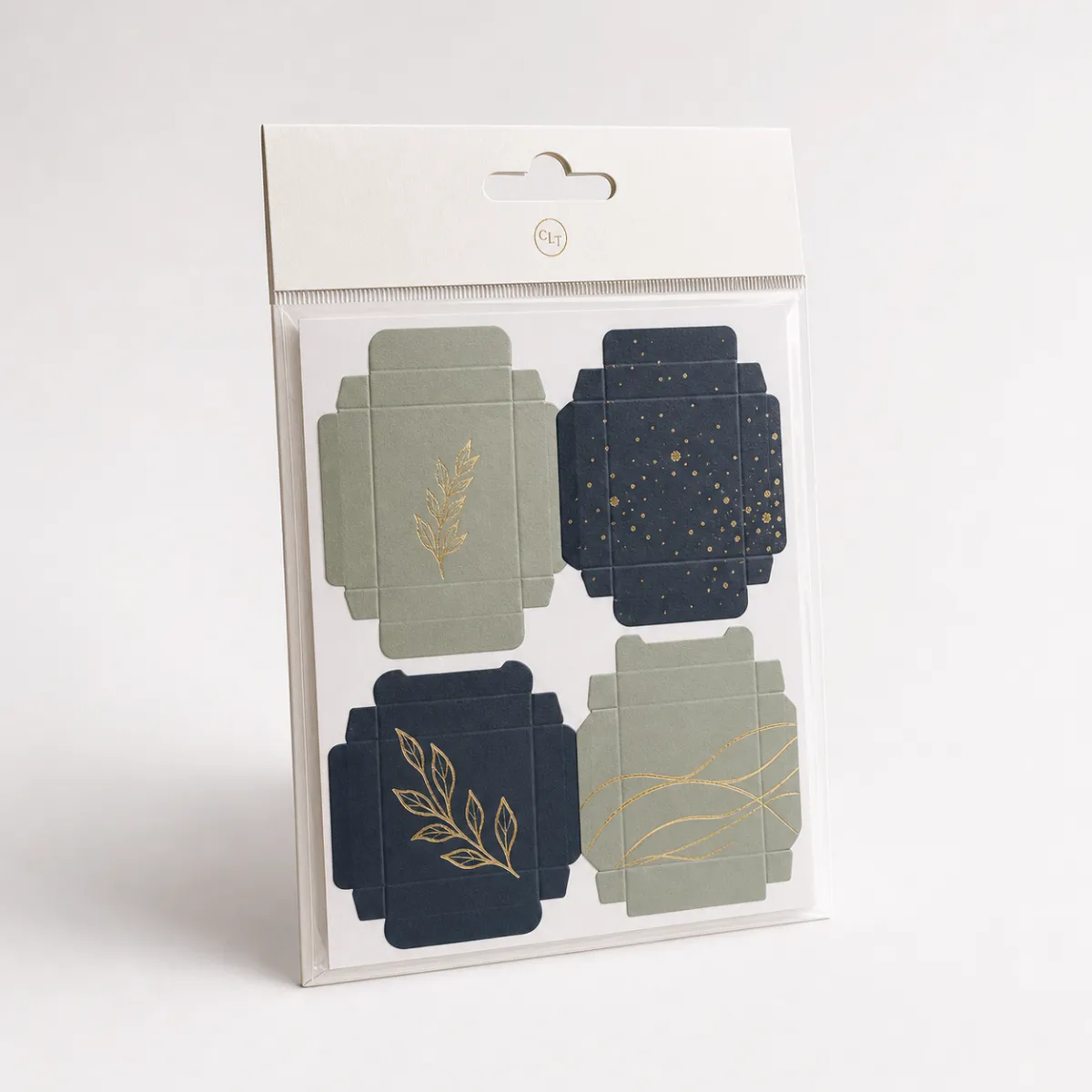
At the simplest level, printed sticker sheets for boxes are multiple pressure-sensitive labels arranged on one carrier sheet so they can be printed, cut, stored, and applied efficiently. Instead of handing packers a stack of individual labels or feeding a roll through a dispenser, you give them a flat sheet with repeatable placement. It sounds modest. In a real packing room, that small shift can save time, reduce handling errors, and cut down on the low-grade chaos that slows every table.
The sheet format helps most when a box line needs different messages on the same base carton. One sheet might hold a logo seal, a size or SKU label, an ingredients label, and a small seasonal sticker. Another sheet might center on one repeating design for a subscription shipper that goes out every month. That flexibility is why printed sticker sheets for boxes show up so often in short-run packaging, startup launches, limited editions, and programs that change too often for full carton printing to make sense.
The visual case is strong too. A label can bring in color, contrast, foil, texture, or a matte finish while leaving the box itself plain. That is useful if the carton is kraft or recycled board and the brand wants to preserve that natural feel. Printed sticker sheets for boxes can add a premium note at the touch points that matter most, such as the top flap, front panel, or side seam, without making the entire package more complex to print.
In day-to-day packaging work, the biggest advantage is control. You keep the carton structure stable and change the graphics as often as the campaign requires. That matters when the box size stays fixed but the artwork shifts for holidays, flavors, bundle sets, or region-specific compliance details. It also matters for businesses testing a design before scaling into a larger carton program. Printed sticker sheets for boxes make that kind of testing less expensive and far easier to manage.
A label should do more than look polished on a screen. It should peel cleanly, land where it belongs, and still read clearly after the box has been handled a few times.
I have watched good packaging teams lose time over labels that looked fine in mockups but behaved badly on the line. The peel was sticky, the cut was off by a millimeter, or the adhesive lifted on textured kraft. Printed sticker sheets for boxes can solve several of those problems at once when they are specified with the actual carton and handling route in mind.
How Printed Sticker Sheets for Boxes Are Made
The production flow for printed sticker sheets for boxes starts well before ink touches the sheet. Artwork needs to be prepared with the actual label count, trim sizes, bleed, safe zones, and any notes for the cutter. If a sheet carries four different labels, those four layouts need enough spacing for clean cutting and easy peeling. If it carries one repeated label, the layout still has to respect the final sheet size so the packing team can work with it comfortably. Strong prepress work saves time later and cuts down on the back-and-forth that can stall a launch.
Most buyers will encounter digital printing first. Digital presses are a strong fit for printed sticker sheets for boxes because they handle shorter runs, variable artwork, and quick changeovers without the setup burden that comes with older long-run methods. That makes them practical for brands ordering 100 sheets, 500 sheets, or a few thousand sheets across several SKUs. For larger, highly standardized jobs, other print methods may be more economical, but the sheet format still depends on the same basics: clean artwork, predictable cutting, and a clear application workflow.
Cutting, peeling, and finishing
After printing, the sheets are cut. In many jobs that means kiss cutting, where the label face material is cut but the backing liner stays intact. That is what lets the label peel away cleanly while the rest of the sheet remains stable. For more complex shapes, a full die may be used to create a specific outer silhouette, rounded corners, or a custom seal shape that fits a box flap better than a generic rectangle. A sloppy cut line is easy to spot, and it can turn a finishing touch into a frustrating manual step.
Finishing changes the result in a very visible way. Matte finishes feel quieter and more natural on kraft boxes, gloss makes color pop, and soft-touch gives the label a more tactile, premium feel. If the sheets will be stacked, stored, or handled often, finish also affects scuff resistance. Printed sticker sheets for boxes are often judged by appearance first, but in a packing room, durability and peel behavior matter just as much.
Why the sheet format helps the line
One of the less glamorous benefits of printed sticker sheets for boxes is how they reduce handling. A packer can pick up one sheet, apply multiple labels, and keep moving. That is a cleaner workflow than sorting through loose stickers in separate piles, and it becomes even more helpful when a line has repeating patterns, such as a brand seal on every box and a different product label on only some units. The format also makes it easier to count inventory and spot missing pieces before they become shipping mistakes.
For brands that want to match labels with other branded touchpoints, the sheet format works well alongside Custom Labels & Tags. It gives the team another way to build a consistent packaging system without forcing every item into the same production method. Printed sticker sheets for boxes sit in that useful middle ground between branding and operations.
Material, Adhesive, and Finish Choices That Change the Result
Material choice is where printed sticker sheets for boxes become either a smart fit or a headache. Paper stocks are common because they are economical, easy to print, and friendly to kraft or coated cartons. Film materials such as polypropylene or vinyl are better when moisture, abrasion, or refrigerated handling is part of the job. Specialty papers can create a higher-end feel, but they may cost more and behave differently on rough box surfaces. The box itself matters too. A smooth coated carton and a fibrous recycled kraft surface do not accept the same label in the same way.
For adhesive, the main split is between permanent and removable. Permanent adhesive is the usual choice when a label must stay put through shipping, shelf handling, or customer opening. Removable adhesive can be useful for temporary messages, internal routing, or promotion labels that should come off cleanly. Removable does not mean universal, though. On dusty corrugated, highly textured kraft, or cold surfaces, a removable adhesive may not behave the way the spec sheet suggests. Real-world testing still matters.
If the package will see cold storage, condensation, or damp warehouses, ask about the adhesive's temperature range and whether the stock is rated for the conditions you expect. Printed sticker sheets for boxes can be ordered in materials that perform well at room temperature but struggle in a chilled or humid environment. It is much easier to catch that during sample testing than after a production run has already been packed.
Finish is both look and function
Finish choices are often treated like pure style decisions, but on printed sticker sheets for boxes they affect handling too. Gloss can brighten colors and sharpen contrast, yet it may reveal scuffs more quickly. Matte feels softer and often pairs better with earthy kraft cartons, though it can mute some saturated colors more than expected. Soft-touch can create a rich tactile impression, but it is not always the best choice if the package will be rubbed, stacked, or handled repeatedly in transit. A finish needs to match the job, not just the mood board.
For brands that care about paper sourcing, this is also a good moment to ask about FSC-certified materials and chain-of-custody documentation. Not every order needs that level of sourcing detail, but when sustainability claims matter on the carton, the paperwork should match the message. Printed sticker sheets for boxes can support a cleaner sourcing story if the substrate, adhesive, and print process are chosen carefully.
Practical combinations that work well
In practice, a coated paper stock with a matte finish is a safe starting point for many retail and e-commerce box programs. A film label is better if the box may face condensation, chilled storage, or longer transit abrasion. If a brand wants a tactile premium effect, soft-touch can work well on short-run gift packaging, but it should be tested against the actual carton and the actual hand-feel of the packout team. Printed sticker sheets for boxes are only as good as the combination of stock, adhesive, and finish behind them.
That is why I usually advise buyers to think in terms of use case first, not appearance first. If the package must survive long shipping lanes, ask how the label performs under abrasion and moisture. If the package is more of a retail display piece, think more about color depth and tactile feel. For shipping-heavy cartons, it can also help to look at transit evaluation practices such as those used by ISTA, especially when the outer package will be judged as much for durability as for looks.
And if the carton surface is rough or dusty, do not assume the prettiest finish will behave the best. A sample run on the real substrate usually tells the truth faster than any spec sheet.
Printed Sticker Sheets for Boxes Cost: Pricing Factors and MOQ
Cost is where buyers start asking practical questions, and that is the right move. The price of printed sticker sheets for boxes depends on sheet size, label count per sheet, total quantity, material, finish, adhesive, die complexity, and whether every sheet is identical or part of a multi-version job. A simple one-color seal on a paper stock is usually very different from a multi-shape sheet with metallic accents, precision cutting, and several artwork versions on one run.
MOQ, or minimum order quantity, often shows up in quote conversations, but it should be treated as a planning tool rather than a wall. Smaller quantities usually cost more per sheet because the setup work is spread across fewer pieces. Larger orders bring the unit cost down by improving material use and press efficiency. If a brand is testing a new box program, a lower MOQ can be worth the higher unit price because it reduces risk. If the design is already proven, larger runs usually make more financial sense.
Here is a practical comparison that can help a buyer understand the tradeoffs. The numbers below are ballpark figures for common packaging programs, and they shift with quantity, artwork complexity, and supplier setup. Even so, they give a useful starting point when comparing printed sticker sheets for boxes quotes.
| Option | Typical Use | Approx. Price Range | Strengths | Watchouts |
|---|---|---|---|---|
| Matte paper sheet labels | Dry goods, seals, inserts, light retail use | $0.10-$0.24 per sheet at mid-volume | Low cost, easy print quality, natural look | Less durable under moisture or heavy abrasion |
| Gloss-coated paper labels | Color-rich branding, shelf-facing boxes | $0.14-$0.30 per sheet at mid-volume | Bright color, stronger visual pop | Shows scuffs more easily than matte in some runs |
| Film labels | Cold storage, shipping abrasion, humidity | $0.18-$0.40 per sheet at mid-volume | Better moisture resistance and tear strength | Higher cost, different print feel on kraft boxes |
| Soft-touch or specialty finish | Gift packaging, premium unboxing, limited editions | $0.25-$0.70 per sheet at mid-volume | Tactile finish, premium presentation | Can raise cost and may need closer handling checks |
A quote is only useful if it is specific. Ask whether the price includes proofing, cutting, setup, shipping, and any version changes. Printed sticker sheets for boxes can look inexpensive at the headline number, then grow quickly if each design needs a separate die or if the artwork has to be adjusted several times before approval. If you compare suppliers only on the cheapest line item, you can miss the cost of the extra work that is not visible up front.
For brands that are still choosing among packaging add-ons, it can help to compare printed sticker sheets for boxes against other options in the same order, including custom cartons, inserts, and branded tags. A small label program may be enough for one line, while another line may need more complete packaging support from Custom Packaging Products. The right answer depends on the box, the channel, and the budget.
Common cost drivers to review before approving a quote:
- Sheet size and how many labels fit on each sheet without crowding the cutter.
- Quantity, since larger runs usually bring the per-sheet cost down.
- Material choice, especially if film or specialty paper is involved.
- Finish and laminate, which can add both visual appeal and protection.
- Cut complexity, including rounded corners, custom shapes, or multiple die paths.
- Version count, because multiple artwork changes can add setup and proofing time.
Process and Timeline: From Artwork to Delivery
The production timeline for printed sticker sheets for boxes usually starts with a quote request and ends with a shipped, counted, packed order, but the real work sits in the middle. After specifications are confirmed, artwork goes to prepress, then proofing, then print approval, then cutting and packing. If everything is ready and the file is clean, many sheet-label jobs move through in roughly 5-10 business days after proof approval. If the order needs a special adhesive, a custom shape, multiple versions, or a more involved finish, the timeline can stretch to 10-15 business days or more. That is not unusual; it is simply the cost of getting details right.
Delays usually come from artwork issues. Missing bleed, low-resolution logos, fonts that were not outlined, or a cut line that does not match the final shape can stall a job quickly. The same is true if label counts or dimensions change after the proof has already been prepared. Printed sticker sheets for boxes are efficient when the information is final. They are less efficient when the design keeps moving.
How to keep the schedule under control
The cleanest way to protect the schedule is to treat box labels like any other packaging component with a real lead time. Give yourself room for internal review, especially if the label needs legal copy, ingredient information, or retailer-specific markings. Then add a small buffer before the cartons arrive for fulfillment. That buffer is where a lot of stress disappears. When labels are ready early, the box line can start on time instead of waiting for one missing item to show up from the printer.
If your box supplier and label supplier are separate, coordination matters. The cartons may be finished before the labels arrive, or the labels may be ready while the cartons are still on the water. Printed sticker sheets for boxes work best when the delivery plan lines up with the packout date. If the team applies labels by hand, it also helps to know how many sheets a packer can comfortably process per hour, because that labor rate affects the real cost of the project just as much as the print quote does.
A simple production checklist can prevent most delays:
- Confirm exact box dimensions and label placement.
- Send final vector artwork with bleed and safe zones.
- Approve a proof only after reviewing text, color, and cut lines.
- Ask for a sample if the surface is textured, recycled, or premium coated.
- Align shipping dates with carton arrival and packing labor availability.
That order of operations is not fancy, but it works. Printed sticker sheets for boxes are best treated as part of the production plan, not a last-minute accessory.
I have seen teams get tripped up by one-day assumptions, especially when cartons are shipping from a separate vendor. A label that lands two days late can push the whole launch. If the schedule is tight, build in buffer time and confirm who is holding each component before the order is placed. That small bit of paperwork can save a lot of kind of ugly scrambling later.
Common Mistakes When Ordering Sticker Sheets for Boxes
One of the most common mistakes is designing for the screen instead of designing for the carton. A sticker that looks bold on a bright monitor may become too small once it is applied to a real box, especially if the carton is large or the label sits beside other graphics. Printed sticker sheets for boxes need enough contrast, enough type size, and enough breathing room to stay readable after they are applied. If a shipping team has to squint to read the label, the design has already missed part of its job.
Another mistake is choosing a finish because it looks nice in the mockup. Gloss can look rich, but it may show scuffs if the box is stacked or rubbed in transit. Matte can look elegant, but it may mute a bright brand color more than expected. The safest move is to test the finish against the actual box surface and the actual handling path. If the carton will live in a warehouse, get handled by a fulfillment team, and travel through carriers, the label has to survive that route, not just the photo shoot.
Adhesion mistakes are just as common. Kraft texture, recycled fibers, dust, and coating chemistry all influence how a label lands. Printed sticker sheets for boxes that look great on a clean sample board may peel at the corners if the carton surface is rough or contaminated. That is why sample testing matters, especially for premium mailers or Recycled Corrugated Boxes with a visible natural texture.
File and planning errors that slow the job
File setup problems are easy to prevent, yet they still show up often. Missing bleed can leave a white edge around the label. A low-resolution logo can blur on press. A cut line that sits too close to the art can make the trim feel cramped. And when a project has several versions, it is surprisingly easy to lose track of which sheet carries which SKU or language version. Printed sticker sheets for boxes are efficient only when the file architecture is organized.
Planning mistakes can hurt just as much. Some buyers underestimate quantity and have to rush a second order later. Others forget to account for promotional versions, holiday messages, or region-specific labels. Then there is the classic timing issue: the box launch is scheduled, but the labels are ordered too late. A small test run can expose these problems before the full shipment goes out. That is often cheaper than fixing a missed launch.
What to double-check before placing the order:
- Final box size, panel orientation, and where the label will sit.
- Label dimensions, safe zone, and bleed.
- Whether the stock is paper or film, and whether the adhesive matches the surface.
- How many versions are being printed and how they will be separated or packed.
- Whether the label needs to survive humidity, cold storage, or shipping abrasion.
The good news is that most of these issues are easy to avoid once the team slows down long enough to ask the right questions. Printed sticker sheets for boxes reward that kind of discipline.
Expert Tips and Next Steps for a Smoother Order
If I were setting up a new box program, I would start with three things: the exact carton dimensions, the number of label designs needed, and the real application method. Hand application, semi-automatic application, and bench placement all behave differently, and the sheet layout should support the way the team actually works. Printed sticker sheets for boxes are most efficient when the layout matches the people applying them.
It also helps to think in systems, not one-off jobs. A brand can use one label structure for seals, another for seasonal notes, and another for product ID, then keep the colors or type treatment consistent across the set. That gives the packaging a clear family resemblance without forcing every sheet to look identical. Printed sticker sheets for boxes do a lot of useful work when the design language stays flexible enough to adapt from one launch to the next.
For a premium carton, a textured kraft box, or a package that must look identical across a large batch, ask for a printed proof or a real sample. A digital mockup is helpful, but it does not tell you how a matte label lands on a fibrous board or whether a small logo still reads after the box is taped and handled. Printed sticker sheets for boxes are tactile products, so the real sample is often worth the extra step.
If the project is new, a small pilot run is usually smart. It gives you a chance to test adhesion, label count, peel speed, and visual balance before committing to a larger order. It also lets the team confirm that the box, the label, and the packing motion all work together. That kind of test often reveals practical issues that no spec sheet can predict.
For brands building out a wider packaging lineup, it can be useful to pair the sheet-label order with other branded components from Custom Packaging Products or a focused label program through Custom Labels & Tags. The more the pieces fit together, the easier it is to keep the presentation steady from product launch to repeat order.
Before you place the order, measure the carton, map the label placement, confirm the budget, request a quote, review the proof carefully, and place a test order if the packaging line is still new. That sequence sounds simple because it is. Printed sticker sheets for boxes work best when the process is deliberate, the artwork is final, and the application is built around real packaging conditions instead of guesswork.
When those pieces line up, printed sticker sheets for boxes become one of the most useful tools a packaging team can keep on hand. They are flexible, economical, and easy to adapt, and they give a box the kind of branded finish that customers notice the moment the carton lands in their hands.
What are printed sticker sheets for boxes used for?
They are commonly used for box seals, branding labels, product IDs, thank-you notes, and limited-run promotional packaging. Printed sticker sheets for boxes are especially useful when one box style needs several label versions or when a brand wants flexible branding without printing every carton.
How many labels can fit on a printed sticker sheet for boxes?
The count depends on label size, sheet size, and the spacing needed for clean cutting and easy peeling. A good layout should be planned around the actual application workflow, not just the maximum number of labels that can be squeezed onto the page.
What affects the cost of printed sticker sheets for boxes?
Quantity, sheet size, material, adhesive, finish, and cutting complexity are the biggest pricing factors. Multi-version jobs and specialty finishes usually raise cost, while larger volumes often reduce the unit price of printed sticker sheets for boxes.
How long does turnaround take for printed sticker sheets for boxes?
Turnaround depends on proof approval speed, material availability, quantity, and the complexity of the cut line or finish. The fastest jobs are usually the ones with final artwork ready and clear specifications before production starts.
What file format is best for printed sticker sheets for boxes?
Vector files with outlined fonts are ideal for logos, shapes, and clean cut lines, while linked images should be high resolution. A production-ready file should include bleed, safe zones, and clear layers or notes for each label version used on printed sticker sheets for boxes.

