Buyer Fit Snapshot
| Best fit | Printed Tube Boxes with Logo projects where brand print, material claims, artwork control, MOQ, and repeat-order consistency need to be specified before quoting. |
|---|---|
| Quote inputs | Share finished size, material target, print colors, finish, packing count, annual reorder estimate, ship-to region, and any compliance wording. |
| Proofing check | Approve dieline scale, logo placement, barcode or warning zones, color tolerance, closure strength, and carton packing before bulk production. |
| Main risk | Vague material claims, crowded artwork, missing packing details, or unclear freight terms can make a low unit price expensive after revisions. |
Fast answer: Printed Tube Boxes with Logo: Board, Finish, Dieline, and Unit Cost should be specified like a repeatable production item. The safest quote records material, print method, finish, artwork proof, packing count, and reorder notes in one written spec.
Production checks before approval
Compare the actual filled-product size with the drawing, then confirm tolerance on folds, seals, hang holes, label areas, and retail display edges. Reserve space for logos, QR codes, warning copy, and material claims before decorative graphics fill the panel.
Quote comparison points
Review material grade, print process, finish, sampling route, tooling charges, carton quantity, and freight assumptions side by side. A quote is only useful when the supplier can repeat the same color, closure quality, and packing count on the next order.
Printed tube Boxes with Logo do a lot of work before anyone opens the package. The round, rigid shape has a bit of stage presence built into it, which is useful if you are selling something that needs to feel considered: candles, tea, fragrance accessories, cosmetics, gift sets, premium snacks, or apparel details that sit just a little above everyday retail. The format gives the product height and weight in the customer’s mind, even when the actual item is light. That visual cue matters more than most buyers admit.
I have seen brands spend heavily on artwork and then underinvest in the structure, which is backward. The best printed tube Boxes With Logo are not just decorated cylinders; they are small branding systems. A tube can make a logo feel more established, but only if the board, wrap stock, closure, and print method all support the same message. If you are comparing formats, the broader range of Custom Packaging Products is a practical place to benchmark tubes against cartons, rigid boxes, and mailers before you lock in a direction.
There is also a commercial reason these boxes keep showing up. A tube often supports a higher perceived value without becoming hard to ship, provided the dimensions are planned correctly. That is a nice balance, and not as common as it should be. The structure can hide irregular items better than a folding carton, which helps with delicate products or bundles with awkward proportions. Printed tube boxes with logo work especially well when the package needs to sell the idea of quality before the product is even touched.
The logo is only one part of the story. Board thickness, lid style, seam placement, and finish decide whether the box feels premium or just dressed up. Two packages can carry the same artwork and still feel completely different in the hand. One uses a tight wrap with a matte finish and a clean seam; the other uses a lighter board and a gloss film that scuffs if you breathe on it wrong. Buyers who treat structure, print, and logistics as one decision usually end up with better packaging and fewer headaches.
Printed Tube Boxes With Logo: What They Are and Why They Stand Out
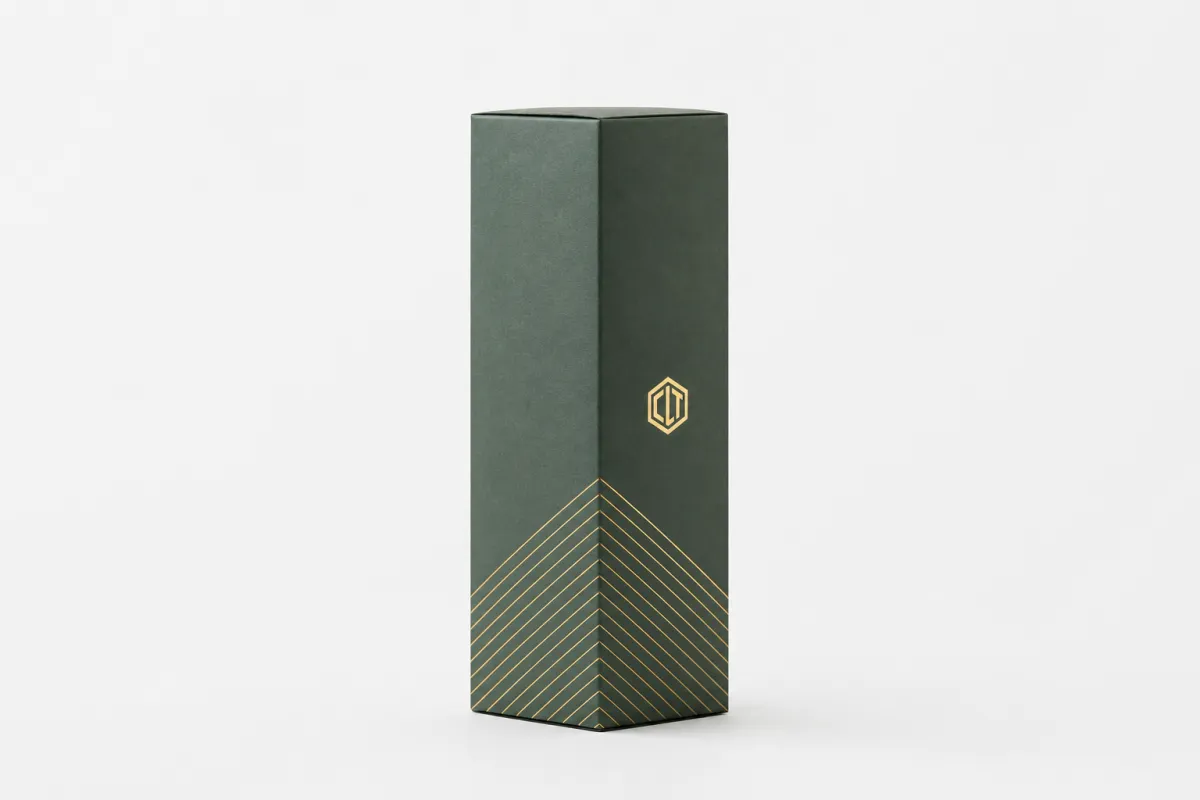
Printed tube boxes with logo are rigid cylindrical or oval packages built around a paperboard core, then wrapped with printed paper, specialty stock, or directly decorated board depending on the production route. Most are made from spiral-wound or straight-wound paperboard cores with a lid, base, or shoulder assembly. Some are simple friction-fit tubes. Others use a telescoping lid or a shoulder-neck construction that feels more refined and gives the closure a tighter, more deliberate finish.
The format stands out because it breaks from the flat-front logic of a carton. A folding box gives you one or two useful panels, which is efficient for information, but a tube creates a full 360-degree brand surface. That shape catches the eye in categories where the customer already expects a premium experience. Before the logo is even read, the silhouette suggests more care, more material, and usually more value. That suggestion is powerful, even when the product inside is modest.
For packaging buyers, that perceived value can support pricing. Candles are a good example. Put a clean logo on a matte or soft-touch tube and the product suddenly feels giftable instead of ordinary. The same idea holds for skincare kits, loose-leaf tea, fragrance accessories, and curated bundles. Printed tube boxes with logo can also hide irregular shapes better than a carton, which is handy when the product has edges, inserts, or a shape that refuses to behave.
Another reason brands choose this format is that the package does more of the selling on shelf and in transit. The logo can be bold and centered, or restrained and used as one element among texture, color, and finish. Both can work. What usually fails is a design that tries to shout from every surface at once. A tube with one strong brand mark, a quiet background, and one or two thoughtful finishes often feels more expensive than the budget behind it. That is kinda the magic trick.
In practice, the best outcome comes from matching the tube to the channel. A direct-to-consumer candle line may need a different finish than a retail tea gift set or a seasonal promotion. Printed tube boxes with logo are strongest when the logo placement, board feel, and closure style all point in the same direction. If one of those elements is off, the whole thing feels slightly unconvincing, even if nobody can explain why in plain language.
A tube only earns its shelf space when structure, print, and finish all pull the same way; a good logo on the wrong build is still the wrong build.
If you are deciding between materials, start with the first touch. A glossy wrap says one thing, a matte or soft-touch surface says another, and an uncoated or kraft paper says something more natural and less polished. Printed tube boxes with logo can be tuned for luxury, minimalism, or earthy retail styling, but the choice has to happen early. Paper selection affects print behavior, scuff resistance, seam visibility, and how cleanly the logo appears once the wrap is formed around the tube.
How Printed Tube Boxes With Logo Are Made
The production flow for printed tube boxes with logo looks simple from a distance, but each step leaves a mark on the final package. The body starts with paperboard, often in the 1.5 mm to 3 mm range depending on size, product weight, and the level of rigidity the brand expects in hand. That board is formed into a tube or sleeve core. After that, the outer wrap is prepared, whether it is printed art paper, specialty stock, or directly printed board. Once the decoration is ready, it gets wrapped around the core, pressed flat, and aligned so the seam lands where it will not interrupt the logo or key graphics.
The decoration stage matters more than many buyers expect. Some printed tube boxes with logo use direct printing on the outer stock, which is efficient for simpler artwork and flatter graphic programs. Others use a printed wrap that is laminated first and then glued to the tube, giving more freedom with texture and finish. A wrapped surface usually opens the door to tactile treatments, while direct print can be a better fit for certain paper types and shorter runs. Neither method is automatically better; the right one depends on the design, the finish target, and how much handling the package will see.
Common decoration options include CMYK process printing, spot colors, metallic foil stamping, embossing, debossing, matte lamination, gloss lamination, and soft-touch coating. Each one changes the result in a different way. Foil can make the logo pop, but it adds tooling and alignment sensitivity. Embossing gives the mark physical relief, which feels premium in hand, though it needs a stronger paper build and careful artwork setup. Soft-touch creates a refined surface, but it can show wear differently than a harder gloss finish. Printed tube boxes with logo tend to perform best when the finish supports the brand story instead of trying to carry the whole thing alone.
Logo placement deserves more attention than it usually gets. A flat proof can show relative position, but it cannot fully show the curve of the tube, the seam location, or the way the top edge wraps around the lid. A logo that looks centered on screen can shift once the wrap is formed. That is why printed tube boxes with logo should always be checked against a working dieline and, whenever possible, a physical sample or pre-production prototype. I have watched otherwise clean designs go slightly sideways here, and once the wrap is glued, there is no easy rescue.
The lid and base affect the look as much as the print does. A friction-fit lid gives a clean, quick open, but the fit has to be tuned so it feels secure without being annoying. A shoulder design, where the inner neck and outer cap meet, often gives a more polished close and a stronger sense of rigidity. Some printed tube boxes with logo also include inserts, foam, molded pulp, or paperboard cradles for protection. Others stay open inside because the product itself fills the cavity. The more structural pieces you add, the more important it becomes to lock dimensions early and hold them steady through sampling.
For sustainability-minded buyers, material choice may include FSC-certified board or paper with documented chain of custody. That matters if the brand wants a verifiable forestry claim, and it is one reason many teams check suppliers against standards from organizations such as FSC instead of relying on vague “eco-friendly” language. Printed tube boxes with logo can support a more responsible packaging story, but only if the paper source and the paperwork line up.
One detail that separates a good tube from an average one is seam management. On a round or oval package, the seam should sit where it does not cut through the logo or create a visible mismatch in a critical design area. If the artwork depends on a continuous pattern, the seam has to be planned even more carefully. Printed tube boxes with logo work best when the artwork team, packaging engineer, and production partner review the same dieline before print starts. Waiting until after approval is where little problems become expensive ones.
Cost, Pricing, MOQ, and Quote Factors for Printed Tube Boxes With Logo
Pricing for printed tube boxes with logo is driven by a handful of variables that look small on paper but add up quickly in production. Board thickness is one of the biggest factors, because a heavier rigid wall costs more and raises forming difficulty. Diameter and height matter too, since larger tubes use more wrap stock and more board. Closure style changes the build cost as well; a simple slip lid is usually less expensive than a shoulder-neck tube or a more complex insert system.
Logo treatment can move the number more than buyers expect. A simple one-color logo on kraft paper may keep the cost comparatively lean, especially on a standard structure. Add full-coverage CMYK print, a foil logo, and embossing, and the price rises because you now have extra setup, extra handling, and more quality-control risk. Printed tube boxes with logo that use multiple print passes or specialty finishing usually require more make-ready time, and that shows up in the quote whether the supplier spells it out or not.
Quantity changes the math in a very predictable way. Small minimum orders work well for launches, seasonal runs, and test markets, but the per-unit cost is higher because tooling, setup, and press preparation are spread across fewer boxes. Larger orders usually improve the unit price, sometimes sharply, because the fixed costs are diluted over more pieces. In practical terms, a run of 1,000 printed tube boxes with logo might fall in a range such as $0.85 to $2.50 per unit depending on size and finish, while 5,000 pieces may move lower, often into a range like $0.35 to $1.20 per unit. Those are working ranges, not promises, and the real number depends on diameter, insert needs, and decoration complexity.
Quote comparisons can be misleading if suppliers are not pricing the same build. One quote might include tooling, sampling, freight, and finishing, while another leaves those out and shows only the factory price. That is how the lowest number on paper becomes the most expensive landed cost. If you are sourcing printed tube boxes with logo, ask every supplier to quote the same spec: dimensions, board thickness, wrap stock, print method, finish, insert, ship method, and destination.
| Option | Typical Unit Cost Impact | MOQ Behavior | Best Use Case |
|---|---|---|---|
| Simple printed wrap, no special finish | Lowest; often the leanest build for printed tube boxes with logo | Friendlier at small and mid-size runs | Launches, product testing, and budget-conscious premium packaging |
| Soft-touch or matte lamination | Moderate increase over basic print | Still workable at medium volumes | Candles, cosmetics, and gift packaging with a softer hand feel |
| Foil stamping plus embossing | Higher due to tooling and alignment steps | More efficient at larger runs | Luxury retail, holiday sets, and high-visibility branding |
| Custom insert or molded support | Higher because of extra material and assembly | Can raise minimums if tooling is custom | Fragile products, kits, and items that must stay centered |
Another factor shaping the final number is print coverage. A tube with a large solid background can require more ink and tighter color control than one with a restrained logo on a natural stock. Printed tube boxes with logo that use metallic ink, rich blacks, or full-wrap artwork may also need more proofing and waste allowance, especially if the design has to line up across the seam. Buyers often focus on the decoration price, but the hidden cost sits in the setup burden and the amount of scrap needed to get the press dialed in.
For teams that want a cleaner sourcing process, start with a spec sheet instead of a product name. A supplier can quote printed tube boxes with logo much more accurately if they know the exact diameter, height, product weight, finish target, and whether the box needs a functional insert. That is also where Custom Packaging Products become useful, because comparing multiple packaging formats side by side often reveals where a tube is worth the premium and where a simpler structure will do the job just as well.
Production Steps, Timeline, and Lead Time
The typical project path for printed tube boxes with logo starts with a brief and a measurement check. That sounds basic, but it is the stage where many delays begin. If the internal product dimensions are wrong, or if the buyer does not state whether the measurement should include a cap, shoulder, or insert, the dieline will need revision later. That revision can set the project back more than a week if the artwork is already in motion.
Once measurements are confirmed, the supplier prepares the dieline and artwork setup. The artwork team should place the logo, seam, fold lines, and any safety or product copy onto the actual print template. Printed tube boxes with logo either start to feel straightforward at this stage or they reveal design risks fast. If the logo is too close to the seam, if the type is too small, or if the color build is not prepared for the chosen stock, the proof needs another round before production can safely begin.
The next step is proof approval or sampling. For many projects, a digital proof is enough to verify copy and layout, but a physical sample is the better choice when the tube has a special finish, a metallic logo, or a precise lid fit. Printed tube boxes with logo often behave differently once the wrap is curved, glued, and capped, so a flat proof cannot tell you everything. If the product is expensive or fragile, a pre-production sample pays for itself by catching a fit issue early.
Production time depends on quantity and complexity. A simple run may move through printing, wrapping, forming, and final packing in roughly 12 to 15 business days after proof approval, while more complex builds can run longer, especially if they involve inserts, foil, or custom structural testing. Transit time is a separate piece of the schedule. Domestic freight may be measured in days; international freight may add a week or more, plus customs clearance if applicable. That is why printed tube boxes with logo should be planned backward from the launch date, not forward from the day the quote is approved.
Seasonality matters too. Packaging plants do not operate in a vacuum, and lead times stretch when demand spikes around gifting seasons or retail resets. If your brand needs printed tube boxes with logo for a holiday drop, a subscription kit, or a retail launch tied to a fixed shipment window, build in buffer time for rework risk, transit, and internal sign-off. A few extra days on the front end is far cheaper than a missed sell-through window.
Quality checks are another part of the schedule that should not be rushed. A sensible factory process includes inspection for print alignment, color consistency, glue performance, lid fit, tube roundness, and surface scuffing. For shipping durability, many buyers also ask for testing based on transit conditions, including compression and drop considerations. If the package has to survive parcel networks, consult standards and protocols from ISTA or related methods that simulate real handling. Printed tube boxes with logo look best only if they arrive in that condition.
A realistic timeline is usually the safest timeline. From a buyer’s perspective, a smooth order might look like this: 2 to 4 days for briefing and dieline confirmation, 2 to 5 days for proofing, 10 to 20 business days for production depending on quantity and finish, then the transit window. Add more time if the order includes compliance labeling, custom inserts, or extra approval layers. Printed tube boxes with logo can move quickly, but only when the spec is already clean and the art is ready to print without major correction.
Key Sourcing Factors That Change the Final Result
Material quality is the first factor I would check if I were buying printed tube boxes with logo for a brand that cares about feel. Paperboard strength influences whether the tube holds its shape in the hand, resists denting, and protects the product during packing. The wrap stock affects surface texture and print sharpness. A bright white art paper will show color differently than a natural kraft sheet, and an uncoated stock will give a warmer, more tactile result than a coated one. None of those choices is automatically better; the right one depends on the brand voice and the product category.
Sizing is the second factor, and it is often underestimated. The tube has to fit the product with just enough room for the insert, the lid, and any headspace the design needs. Too much empty space and the package feels sloppy. Too little space and the product can scuff, compress, or fail to close cleanly. Printed tube boxes with logo also have to look proportionate on shelf, which means the diameter and height should support the logo area instead of fighting it. A wide tube may give the logo more breathing room, while a tall tube can create a stronger vertical brand line.
Artwork readiness affects both cost and timeline. Vector logos are the easiest to work with because they stay sharp at any size and separate cleanly for foil or spot-color work. Image files with low resolution can create fuzzy edges, while badly built colors can shift once they hit the selected stock. Printed tube boxes with logo are far less forgiving of sloppy files than many buyers expect, especially if the design has small type or a tight placement near the seam. That is why the proof stage should include not just visual review but also a practical review of copy size, registration, and color consistency.
Sustainability requests can change the sourcing decision in several ways. FSC-certified board is one option when the brand wants documented forest stewardship. Water-based inks may be preferred in some programs, and simpler finishes can reduce the number of coating layers or mixed materials. The trade-off is that some premium looks are harder to achieve in a simplified build. Printed tube boxes with logo can still be elegant and responsible, but the package should be designed with that goal from the start instead of trying to force it afterward.
Brand consistency is another factor that gets overlooked. The tube should not look like it came from a different product family than the rest of the line. Logo color, typography, and finish should echo the carton, mailer, label, or bottle if those items sit in the same range. Many brands use Custom Packaging Products to build a consistent system, and that is usually the right approach because the packaging set feels more intentional across channels. Printed tube boxes with logo work best when they are part of that system, not an isolated design exercise.
One more practical point: packaging for the retail shelf is not the same as packaging for transit. If the box has to survive e-commerce, distribution, or pallet pressure, consider how the tube will be packed inside a shipper and whether the outer shipper needs its own testing. A beautiful tube can still fail if the secondary packaging is too soft. Buyers who think through the full path usually get better results, and they usually spend less fixing damage later.
Common Mistakes When Ordering Printed Tube Boxes With Logo
The first common mistake is approving artwork before the dieline is final. A logo may look centered on a screen, but once the seam, top wrap, and lid overlap are introduced, the visible balance changes. That is especially true on printed tube boxes with logo that use a prominent foil mark or a large wordmark. If the final dieline is still moving, every artwork adjustment after approval adds time and creates a new chance for misalignment.
The second mistake is judging samples only by appearance. A tube can look excellent on the outside and still fail in the hand if the board is too light, the lid is loose, or the finish scuffs during normal handling. Printed tube boxes with logo should be checked for rigidity, closure fit, print rub resistance, and how the surface responds to packing and unpacking. If the product is going into retail, it should also be checked for shelf handling, because repeated touching is where weak finishes show up fast.
The third mistake is giving a vague brief. “Premium tube box” is not a spec. It is a feeling. A useful brief should include exact dimensions, target quantity, logo files, finish preference, insert needs, and any regulatory or label copy requirements. Printed tube boxes with logo quote better and move faster when the buyer gives clear instructions. That does not just help the supplier; it protects the buyer from paying for assumptions that were never discussed.
The fourth mistake is underestimating transit. A rigid tube protects the product better than many soft structures, but it still needs to be packed correctly for shipping. If the outer carton is too loose, if the void fill is poor, or if the pallets are stacked badly, the tube can scuff, crush, or pop open. Printed tube boxes with logo often look premium enough that damage is especially visible, which makes shipping discipline even more important.
The fifth mistake is treating changes as harmless once a quote is in motion. A late change to logo placement, foil color, copy, or finish can affect plates, tooling, press setup, and the approval chain. Printed tube boxes with logo are not impossible to change after the fact, but every late edit costs time and usually money. The safest habit is to freeze the core variables before the order is released, then hold those variables steady until the first production samples are approved.
If the spec is fuzzy, the outcome will be fuzzy. Clear measurements and final artwork save more money than any negotiation over the unit price.
Expert Tips and Next Steps for Your Order
Start with a clean spec sheet. That is the single best way to keep printed tube boxes with logo on track. Include the product dimensions, target quantity, logo files, preferred material, finish preference, and delivery date. If the product has a fragile edge, a heavy base, or a closure that needs a snug fit, mention that too. The more the supplier understands upfront, the less likely the project is to drift into revision cycles that eat up time and budget.
Ask for a sample or at least a pre-production proof before you commit to the full run. This matters even more when the logo must land near a seam, a lid edge, or a special finish like foil. Printed tube boxes with logo often look fine on a computer but reveal small shifts once they are wrapped into a real cylinder. A sample gives you a chance to check color, surface feel, and structural fit before the entire lot is made.
Compare suppliers on more than price. Communication speed, clarity on setup fees, proof accuracy, and willingness to explain the print path matter a great deal. If a supplier is vague about tooling, freight, reprint policy, or material substitutions, that vagueness tends to show up later. Printed tube boxes with logo are a branding asset, so the supplier should be able to talk through the build in practical terms, not just offer a low quote and hope the details sort themselves out.
It also helps to plan the reorder before the first order is finished. That may sound early, but stockouts are expensive, and tube packaging often supports product launches that move faster than expected. If the first run of printed tube boxes with logo performs well, having the next quantity and lead time discussion ready keeps the line moving. For recurring programs, many buyers set a reorder trigger based on on-hand inventory and the current production window rather than waiting until the shelf is empty.
Keep the packaging system simple where you can. A strong logo, a stable structure, and one or two well-chosen finishes often outperform a box that tries to do everything at once. Printed tube boxes with logo should feel purposeful, not overloaded. If the design stays clear, the supplier has a better chance of reproducing it cleanly, and the customer has a better chance of remembering it for the right reasons.
For teams building out a broader line, browsing Custom Packaging Products can make the next round of packaging decisions easier because you can compare tube boxes, cartons, and other formats on one page instead of choosing in isolation. That comparison is often where the best value appears. Printed tube boxes with logo can be the right answer, but only if the structure, decoration, and logistics all support the same goal.
When you are ready to request quotes, send two or three suppliers the same spec, ask for an itemized breakdown, and confirm whether the price includes sampling, tooling, freight, and finish. Then approve one physical sample, check the fit and the logo placement, and lock the reorder trigger point. That is the simplest way to keep printed tube boxes with logo in stock, on budget, and consistent from run to run.
Frequently Asked Questions
How much do printed tube boxes with logo usually cost?
Pricing depends heavily on size, board thickness, finish, and quantity. Smaller runs usually carry a higher per-unit cost because setup and tooling are spread across fewer boxes, while larger runs lower the unit cost. Foil, embossing, full-wrap print coverage, and custom inserts usually raise the price more than a simple one-color logo treatment on a standard structure.
What is the usual lead time for printed tube boxes with logo?
Lead time usually includes artwork approval, sampling, production, finishing, and shipping, so the full schedule is longer than the press run alone. A straightforward order may move in roughly 12 to 15 business days after proof approval, while more complex builds can take longer. Changes after approval, custom inserts, and seasonal demand can add time.
What files do I need for a quote on printed tube boxes with logo?
Provide the product dimensions, target quantity, logo artwork, preferred finish, and any insert or closure requirements. Vector files are best for logos because they stay sharp and are easier to separate for print or foil. Color references and inspiration images also help the supplier understand the visual target before quoting.
Can I order a small MOQ for printed tube boxes with logo?
Yes, but small minimums usually come with a higher per-box price because setup costs are divided across fewer units. If budget is tight, simplify the finish, reduce print coverage, or choose a standard structure to keep the MOQ more manageable. That approach often keeps printed tube boxes with logo commercially viable for launches and test runs.
What should I check before approving a sample of printed tube boxes with logo?
Check logo placement, color accuracy, lid fit, tube rigidity, and whether the finish feels right in hand. Also test product fit and shipping durability so the final box performs well after packing, transit, and retail handling. A sample that looks good but handles poorly is not ready for production.
If you are comparing packaging options for a premium product, printed tube boxes with logo can be a strong choice because they combine shelf presence, tactile appeal, and efficient shipping when the structure is planned well. The best results come from clear specs, honest timing, and careful material selection, not from trying to force a fancy look onto a weak build. Keep the logo clean, keep the measurements exact, and keep the finish aligned with the product story, and the box will do its job every time it is picked up.
The practical takeaway is simple: before placing the order, freeze five things — dimensions, board thickness, finish, logo placement, and quantity — then get one physical sample in hand before production starts. That one step catches most of the expensive mistakes.


