Buyer Fit Snapshot
| Best fit | Recycled Pallet Boxes With Logo for Sustainable Branding projects where brand print, material claims, artwork control, MOQ, and repeat-order consistency need to be specified before quoting. |
|---|---|
| Quote inputs | Share finished size, material target, print colors, finish, packing count, annual reorder estimate, ship-to region, and any compliance wording. |
| Proofing check | Approve dieline scale, logo placement, barcode or warning zones, color tolerance, closure strength, and carton packing before bulk production. |
| Main risk | Vague material claims, crowded artwork, missing packing details, or unclear freight terms can make a low unit price expensive after revisions. |
Fast answer: Recycled Pallet Boxes With Logo for Sustainable Branding should be specified like a repeatable production item. The safest quote records material, print method, finish, artwork proof, packing count, and reorder notes in one written spec.
Production checks before approval
Compare the actual filled-product size with the drawing, then confirm tolerance on folds, seals, hang holes, label areas, and retail display edges. Reserve space for logos, QR codes, warning copy, and material claims before decorative graphics fill the panel.
Quote comparison points
Review material grade, print process, finish, sampling route, tooling charges, carton quantity, and freight assumptions side by side. A quote is only useful when the supplier can repeat the same color, closure quality, and packing count on the next order.
A pallet box is often the first physical object a buyer notices when a shipment lands on the dock, and that first impression carries more brand weight than many teams expect. I have watched receiving crews identify a load by the carton face before they ever read a purchase order number. That is one reason recycled pallet Boxes with Logo deserve serious attention: they protect bulk goods, reduce material waste where the spec allows it, and still give the shipment a clean, recognizable face for the warehouse crew, the distributor, or the customer taking delivery.
For packaging buyers, the appeal is practical as much as visual. The box needs to stack well, hold up under compression, and move through the supply chain without turning into a problem, yet the brand still needs to be visible the moment the pallet is wrapped, staged, or opened. With the right build, Recycled Pallet Boxes with logo act as both a transit pack and a quiet branding tool. If you are comparing structural options, it can help to review the broader range of Custom Packaging Products before settling on one format.
Sustainability matters here, but it should be described honestly. Recycled-content board can reduce dependence on virgin fiber, and that matters, though the real performance still comes down to board grade, box design, moisture exposure, and the route the shipment takes. A recycled box is not automatically the best choice in every case. A good box is the one that performs in your actual shipping environment and still carries the logo clearly enough to support traceability and presentation.
The sections below cover what these boxes are, how they are made, what shapes price, and what buyers should ask before they place an order. That usually makes the difference between packaging that looks right on a spec sheet and Packaging That Actually holds up on the dock.
Recycled Pallet Boxes With Logo: Why They Stand Out
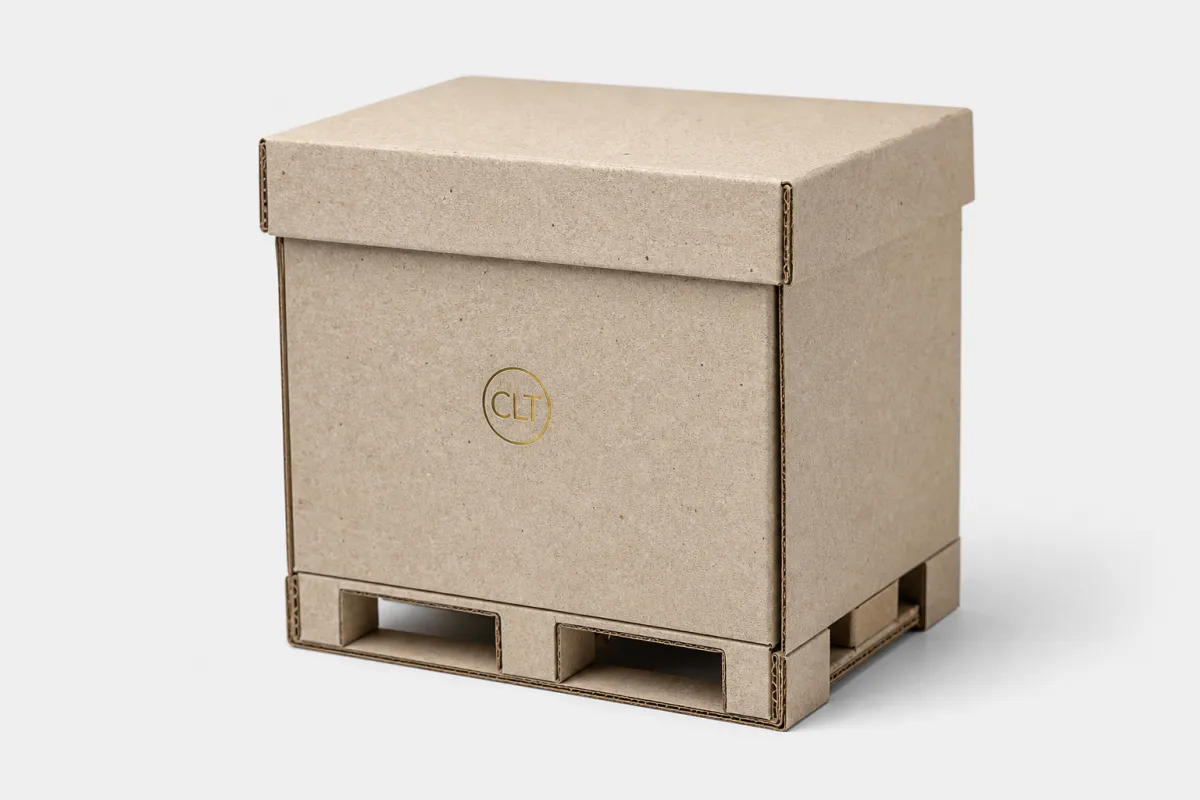
Recycled pallet boxes with logo stand out because they do two jobs at once. They protect bulk product during transport, storage, and transfer between facilities. They also turn a plain freight unit into a branded touchpoint that can be recognized quickly in a warehouse, on a receiving floor, or in a retail replenishment flow. That combination carries real value in B2B packaging, where identification and efficiency matter just as much as appearance.
In practical terms, these are sturdy transit boxes or palletized containers made from recycled fiberboard, corrugated structures, or reclaimed-content materials, then customized with a logo or brand mark. The format can vary. Some are sleeve-and-base systems. Some are full pallet Boxes with Die-cut panels. Others are reinforced shippers with top closures and fork access points. The common thread is that the printed brand element helps the box do more than carry weight; it also communicates ownership, origin, and a level of care.
From a buyer’s point of view, that brand signal has operational value. A printed logo can improve traceability in multi-client warehouses, support product segregation, and make internal handling easier when several similar-looking palletized shipments are moving through the same building. It can also shape customer perception. A load that arrives in recycled pallet boxes with logo usually feels more intentional than one that turns up in a blank brown container, even if the packaging structure underneath is identical.
People sometimes assume freight packaging disappears once the truck door closes. It does not. On the warehouse floor, the box is the first label most people actually notice, and that makes the print treatment more important than it sounds at first glance. That is one reason recycled pallet boxes with logo work so well for brands that ship in volume. They carry identity without requiring a separate label system for every pallet.
A strong pallet box does not need to shout. It needs to be readable, stackable, and consistent. If the logo is clear and the structure is right, the packaging does a lot of quiet work.
The sustainability benefit is real, though it should stay grounded. Recycled-content packaging can help reduce demand for virgin material and can fit better into waste-recovery goals, especially when the design uses recyclable adhesives and avoids unnecessary mixed materials. Recycled content alone does not guarantee a greener result, though. If the box fails early, breaks down in damp storage, or needs extra protective packaging to make up for weak construction, the environmental math gets weaker. Good design is what makes the sustainability story credible.
For brands that move bulk goods, seasonal merchandise, industrial parts, or e-commerce replenishment pallets, the value is straightforward. recycled pallet boxes with logo can protect the shipment, support the brand, and reduce the need for secondary labeling. That is why they show up so often in distribution programs where efficiency and presentation need to work together.
How Recycled Pallet Boxes With Logo Are Made
The manufacturing path usually starts with recycled paper fibers or recovered corrugated stock, which are pulped, formed into sheets, and converted into board with the right caliper and strength profile for the job. Those sheets are then cut, scored, stitched, glued, or die-cut into the structural components that become the finished container. Depending on the design, that may mean side panels, a pallet base, a telescoping sleeve, a lid, or internal support pieces. That is the mechanical side of recycled pallet boxes with logo, and it matters because the print is only useful if the structure underneath it can do the job.
The logo can be applied in several ways. Flexographic printing is common for efficient runs, especially when the artwork is simple and the repeat volume is high. Digital printing fits shorter runs or projects that need more visual flexibility. Some buyers use label-based branding when they want to keep the box structure simple and change graphics without changing tooling. Each method has trade-offs in cost, detail, and repeatability, so the right choice depends on how often the artwork changes and how large the print area needs to be.
Construction details matter just as much as print method. A single-wall corrugated structure can work for lighter palletized loads, while double-wall board is often a better option for heavier goods or higher stacking. Seam choice matters too. A stitched seam can be useful in some heavy-duty applications, while glued seams may suit other builds better. Corner posts, inserts, and pallet integration can improve compression performance, which is especially helpful when the box is going to be stacked or shipped through more aggressive handling conditions. When teams order recycled pallet boxes with logo, they should look at the full structure, not only the print surface.
Recycled content usually comes from post-consumer or post-industrial fiber, though the exact mix varies by mill and by board specification. That content is valuable, but it still has to pass the usual performance checks. Moisture resistance, edge crush rating, and compression strength all remain critical. A recycled board that looks fine on the spec sheet can still underperform if it sits in a damp staging area, meets condensation, or takes repeated fork-truck contact. That is why buyers should ask for realistic test data, not just a sustainability claim.
For teams shipping into retail networks, export channels, or central distribution hubs, the production process often includes an approval loop that covers structure, print placement, and load assumptions. The best recycled pallet boxes with logo are usually the ones designed around the shipment first, then printed cleanly as part of the build. That order of operations avoids a lot of trouble compared with forcing a graphic concept onto a weak box.
If testing is part of your process, standards matter. The ISTA test methods are widely recognized for distribution simulation, and compression testing often follows ASTM-style procedures such as ASTM D642. Those references do not guarantee success, but they do give you a more disciplined way to compare one structure against another.
Key Factors That Affect Recycled Pallet Boxes With Logo
The first thing I look at is fit. Oversized packaging wastes material and can create load instability, while a box that is too small can stress corners, crush product, or make packing slower than it should be. With recycled pallet boxes with logo, the footprint has to match the pallet and the product load in a way that keeps the stack tight without over-compressing it. A sloppy fit can ruin an otherwise good design.
Weight and route conditions come next. A box moving across town on a clean, short route does not need the same margin of safety as one traveling long distance, passing through humid docks, or being handled by multiple carriers. Stacking height also matters. If the unit is going to support another palletized load, you need to know whether the board grade and structure can handle that compression over time, not just at the moment it leaves the plant. Many problems with recycled pallet boxes with logo start with unrealistic assumptions about the journey.
Print quality is another real factor. Large panels give a logo plenty of room, but they also expose every weakness in the artwork. Thin lines can disappear. Low-contrast colors can wash out on recycled substrates. Small type can get lost when the board surface absorbs ink unevenly. One-color print is often cleaner and more economical than multi-color art, especially when the pallet box is mostly a transit pack and not a display piece. If the logo has fine detail, ask whether it will still read clearly once it is printed on a recycled surface.
Sustainability and compliance also show up in smaller choices. Recyclable adhesives, fewer mixed materials, and clear documentation of recycled content can support a cleaner waste stream and easier internal reporting. Some buyers need FSC or chain-of-custody documentation, especially when their customers ask for proof that the fiber came from responsibly managed sources. If that matters to your program, the FSC site is a useful reference point for what the certification actually covers.
There are operational details that get overlooked until the boxes are on the floor. Can a forklift get clean access? Does the design fold quickly, or does it need too much hand labor? Is the pack meant to be returned, reused, or discarded after one trip? Does the pallet footprint align with your racking and trailer loading pattern? These are not minor questions. They decide whether recycled pallet boxes with logo fit into the warehouse process or slow it down.
Common performance checks worth asking for
- Compression strength for stackability and pallet load stability.
- Edge crush resistance for sidewall durability during handling.
- Distribution testing to mirror your actual shipping route.
- Moisture exposure tolerance if the boxes sit in humid docks or cold-chain transfers.
- Logo legibility at distance, on a warehouse floor, and under mixed lighting.
If the packaging will be visible to a customer or retail partner, make the logo placement deliberate. Put the mark where the load naturally presents itself, not where it only looks good in a design mockup. That difference sounds small, but it is often the line between packaging that feels premium and packaging that feels improvised. Good recycled pallet boxes with logo are usually designed around how the box will be read in motion, not just how it looks in a render.
Cost, Pricing, MOQ, and Quote Basics
Pricing for recycled pallet boxes with logo usually comes down to a few predictable drivers: board grade, recycled content level, size, print colors, structural reinforcements, and order quantity. Large boxes use a lot of material, so even small changes in dimensions can move the unit cost more than people expect. A half-inch reduction in footprint, or a smarter panel layout, can sometimes save a meaningful amount over a full production run.
MOQ matters because custom pallet packaging often has setup costs attached to it. Print plates, die tooling, structural engineering, and sample development all take time and money. If you spread those costs across a small order, the unit price rises quickly. That does not mean a small run is impossible; it just means the economics are different. For recycled pallet boxes with logo, the best price usually comes from balancing order size with the amount of custom work required.
Comparing quotes fairly is where many buyers get tripped up. One supplier may include design support, samples, and freight. Another may show only the packaging price and leave the rest for later. A third may quote a lower unit cost but require extra payment for tooling or palletization. The cleanest way to compare is to ask what is included line by line. That makes it much easier to judge the real value of recycled pallet boxes with logo, instead of reacting to the lowest number on the page.
| Option | Typical Use | Approx. MOQ | Typical Unit Price | Notes |
|---|---|---|---|---|
| Single-wall printed pallet box | Light-to-midweight goods, shorter routes | 500-1,000 units | $1.10-$1.90 | Lower material cost, good for simple one-color branding |
| Double-wall printed pallet box | Heavier loads, more stacking, longer shipping lanes | 500-1,000 units | $1.60-$2.80 | Stronger compression and better durability, usually worth it for demanding freight |
| Sleeve-and-base system | Reusable or semi-reusable pallet programs | 300-800 units | $2.10-$4.25 | Higher structure cost, but often faster to load and better for presentation |
Those numbers are only directional, because box size and print coverage can change everything. Still, they help set expectations. A larger recycled box with a heavier board grade and a more involved print treatment will naturally cost more than a simple transit sleeve. If your team is trying to control spend, one of the easiest ways is to simplify the art. A clean one-color logo on recycled pallet boxes with logo often looks stronger than busy graphics that add cost without improving clarity.
It also pays to think beyond the sticker price. A box that reduces product damage, speeds up warehouse handling, or improves identification can save money in ways that do not appear on the packaging quote. I have seen teams focus so hard on per-unit cost that they miss the labor time spent wrestling with awkward packaging. In that setting, a slightly better-designed pallet box is often the cheaper choice overall. That is not glamorous, but it is how the numbers usually work out.
If you are building out more than one packaging format, it can help to compare custom packaging options at the same time. That lets you see whether a pallet box, a tray, or a different transit structure gives you a better balance of cost and performance. The right answer is not always the prettiest or the most rigid one; it is the one that fits the shipment and the warehouse process without adding avoidable expense.
Production Steps, Timeline, and Lead Time
The usual workflow begins with a clear brief. The supplier needs dimensions, load weight, pallet footprint, storage conditions, print needs, and your target ship date. After that comes structural review, artwork placement, and a round of proofing. For recycled pallet boxes with logo, I like to see the box size and the handling assumptions confirmed before anyone gets too deep into graphics. That keeps the job grounded in the actual use case.
Then the samples or prototypes come into play. If the box is simple, you may be able to move from drawing to production fairly quickly. If the structure is fully custom, or if the logo coverage is large and detailed, the process takes more time. Material sourcing can also slow things down if the recycled board spec is hard to match or if the supplier needs a particular flute combination. Seasonal demand matters too. When warehouse activity is high, lead times tend to stretch.
There are a few approval points that keep the project on schedule. Dieline confirmation is one. Load expectations are another. Logo placement and color expectations need to be settled before production starts. Shipping method matters as well, because the box can be designed differently if it is going by truckload, mixed freight, or export channel. Each of those choices affects how recycled pallet boxes with logo should be built and how much time the supplier needs.
Simple stock-style conversions can move faster than fully custom builds, while special finishes, multiple board types, or complex graphics require more back-and-forth. That is not a problem if the timeline is planned honestly. It becomes a problem when a team assumes packaging can be finalized in a few days without sample review. In practice, that is rarely how responsible custom work happens. The job needs enough time to catch the small issues before they become warehouse problems.
A practical schedule usually includes extra margin before the shipment date. Order earlier than you think you need to. Build in time for samples, revisions, and transit. Coordinate with receiving so the boxes arrive before pack-out begins. If the materials are meant to support a production run or a seasonal campaign, the worst-case scenario is having product ready before the packaging is. recycled pallet boxes with logo are easy to order badly if the schedule is too tight, and hard to fix once the line is waiting.
For buyers who want a higher level of proof, it is reasonable to ask for compression data, transit simulation references, or a run against an appropriate test profile. That is where standards become useful, not as decoration, but as a way to reduce argument later. A box that has been thought through against the right test conditions is usually a safer buy than one chosen only from a PDF image.
Recycled Pallet Boxes With Logo: Common Mistakes to Avoid
The biggest mistake is choosing based on appearance alone. A sharp logo cannot rescue weak board strength, poor sizing, or a design that absorbs too much moisture in storage. recycled pallet boxes with logo should look good, of course, but the real job is containment and protection. If the packaging fails during handling, the brand message gets damaged along with the product.
Artwork problems are another common issue. Tiny logo details, thin outlines, and low-contrast color combinations often disappear on recycled substrates or print unevenly across large panels. File quality matters more than many teams expect. A clean vector logo, good spacing, and simple color relationships usually print better than an overworked design that looks good on a monitor but struggles on corrugated board. When the box is large, small graphic mistakes become very visible.
Handling conditions should never be treated as an afterthought. If the boxes are going to be stacked high, moved often, or stored in damp areas, the structure needs to be specified for that reality. Recycled board can perform very well, but not under every set of conditions. That is why moisture, dwell time, and warehouse temperature deserve attention before the order is released. A smart packaging buyer treats recycled pallet boxes with logo like part of the distribution system, not just a print job.
Budget surprises are another risk. Setup costs, tooling, sampling, and freight can change the total more than the unit quote suggests. If the team has not looked at MOQ carefully, it is easy to assume the order will be cheaper than it really is. That can lead to rushed compromises on board grade or print complexity later. Better to see the full picture early and make the right trade-off before the run starts.
Testing gets skipped too often, and that is a mistake. A short compression check or a drop simulation can reveal issues before a full production order is committed. If the box is meant for a retailer, a warehouse network, or a repeat shipment cycle, a prototype is worth the time. Standards such as ASTM D642 for compression and common distribution testing profiles can give you a cleaner basis for approval. A short test run costs far less than a pallet of damaged goods.
The most expensive packaging problem is the one you discover after the shipment leaves the dock.
That is especially true for recycled pallet boxes with logo, because the package is both a container and a brand carrier. If one side is weak, the other side suffers too. The best way to avoid trouble is to specify the structure first, proof the artwork carefully, and confirm the handling conditions before production begins.
Expert Tips and Next Steps for Ordering Recycled Pallet Boxes With Logo
Start with the shipment requirements, not the artwork. That is the simplest advice, and still the one most often ignored. If you know the load weight, pallet size, storage conditions, and handling route, you can choose the lightest structure that still meets the job. That is usually the best path for recycled pallet boxes with logo, because it keeps the design efficient instead of overbuilt.
Ask for two or three quote scenarios if you can. A basic printed version, a reinforced version, and a higher-finish version will show you where the money really goes. That comparison is often more useful than a single quote. It helps the team see the trade-off between cost and performance instead of guessing. If the logo will be seen by customers, distributors, or retail partners, the added polish may be worth it. If the box is purely internal, a simpler option might be enough.
Request a sample or prototype when the application is heavy-duty or the box will be reused. That step is especially worthwhile for recycled pallet boxes with logo that need to survive multiple touch points, repeated stack pressure, or a mixed freight route. A small test order can save a much larger headache later. It also gives you a chance to check print clarity, panel alignment, and how the box actually behaves once it is assembled.
Warehouse operations should sit in the same conversation as branding. A box that is easy to fold, quick to stack, and simple to label may be worth more to the business than a more elaborate structure with a slightly lower board cost. Labor adds up. If the packaging saves a minute per pallet and the line runs all week, that is real money. With recycled pallet boxes with logo, function and presentation should pull in the same direction.
If you are building a broader packaging program, it may help to review printed packaging solutions alongside the pallet format so the brand stays consistent across shipping, display, and storage. That does not mean every package has to look identical. It means the visual language should feel deliberate, from the smallest carton to the largest freight unit.
Before you contact a supplier, gather the basics in one place: dimensions, load weight, stacking expectations, storage conditions, artwork files, target ship date, and any compliance notes from your customer. That makes the conversation faster and usually gets you a better quote. It also helps the supplier recommend a structure that fits the actual job instead of forcing a generic answer onto a custom need. For recycled pallet boxes with logo, a clear brief is half the work.
One more practical point. If sustainability reporting matters to your team, ask what documentation is available for recycled content, FSC chain of custody, and end-of-life recyclability. That paperwork does not make the box perform better on its own, but it does make the packaging story easier to defend internally and externally. When the structure, print, and documentation all line up, the result feels much more credible.
From a packaging buyer’s point of view, the best programs are rarely the most complicated. They are the ones that fit the load, protect the product, and present the brand without unnecessary cost or waste. That is the real promise of recycled pallet boxes with logo. They keep freight practical, they make the shipment recognizable, and they give the business a cleaner, more thoughtful way to move product through the chain.
So if you are planning a new shipment format, start with the use case, then move to structure, then print. That sequence keeps the project honest. It is also the safest way to make sure recycled pallet boxes with logo do more than look good on a quote sheet. And if the first sample is close but not quite there, do not rush it; a small change in board grade or logo placement can make the whole pack work better.
FAQ
What are recycled pallet boxes with logo used for?
They are used to move bulk goods, protect palletized shipments, and present a branded look in warehouses, distribution centers, and retail replenishment flows. They work well for products that need stronger containment than a standard carton but still benefit from fiber-based packaging. In many operations, recycled pallet boxes with logo also help with identification and sorting because the printed mark is visible during handling.
Are recycled pallet boxes with logo strong enough for heavy loads?
Yes, if the board grade, structure, and pallet design are matched to the load weight and stacking conditions. Strength depends on compression resistance, edge performance, seam construction, and whether the box will face moisture or repeated handling. For heavier applications, ask for test data or a prototype before placing a full order. That is especially true for recycled pallet boxes with logo that will travel through more than one facility.
How does pricing work for recycled pallet boxes with logo?
Pricing usually depends on size, board grade, print method, custom tooling, and the number of boxes ordered. Higher quantities often reduce unit cost because setup expenses are spread across more pieces. It helps to compare quotes that include samples, freight, and other service costs so the total picture is clear. When you price recycled pallet boxes with logo, it is smart to compare the whole job, not just the print side.
What is the typical lead time for custom recycled pallet boxes?
Lead time depends on artwork approval, material availability, tooling needs, and production capacity. Simple jobs can move faster than fully custom structures with complex graphics or specialty materials. Build in extra time for sample review and shipping so the boxes arrive before your packing window starts. That buffer matters even more for recycled pallet boxes with logo that are tied to a shipment date or a retail launch.
How can I make recycled pallet boxes with logo look more premium?
Use clean, high-contrast artwork and keep the logo placement intentional so it reads well on large panels. Choose a structural style that looks neat in transit, because dented or poorly fitted packaging can undermine the brand message. A premium feel often comes from consistency, good print alignment, and a box that performs well under real warehouse conditions. With recycled pallet boxes with logo, premium usually means controlled, not complicated.


