Buyer Fit Snapshot
| Best fit | printed tuck end cartons wholesale for packaging buyers comparing material specs, print proof, MOQ, unit cost, freight, and repeat-order risk where brand print, material, artwork control, and repeat-order consistency matter. |
|---|---|
| Quote inputs | Share finished size, material target, print colors, finish, packing count, annual reorder estimate, and delivery region. |
| Proofing check | Approve dieline scale, logo placement, barcode or warning zones, color tolerance, and any recyclable or compostable wording before bulk production. |
| Main risk | Vague material claims, crowded artwork, or missing packing details can create delays even when the unit price looks attractive. |
Fast answer: Printed Tuck End Cartons Wholesale: Specs, Pricing, Process should be specified like a repeatable production item. The safest quote includes material, print method, finish, artwork proof, carton packing, and reorder notes in one written spec.
What to confirm before approving the packaging proof
Check the product dimensions against the actual filled item, not only the sales mockup. Ask for tolerance on folds, seals, hang holes, label areas, and retail display edges. If the package carries a logo, QR code, warning copy, or legal claim, reserve that space before decorative graphics fill the panel.
How to compare quotes without losing quality
Compare board or film grade, print process, finish, sampling route, tooling charges, carton quantity, and freight assumptions side by side. A lower quote is only useful if the supplier can repeat the same color, closure quality, and packing count on the next order.
Most packaging waste starts with a box that is just a little too large, and Printed Tuck End cartons wholesale is one of the cleanest ways to fix that without making the pack line miserable. Fit the carton to the product and the effects show up fast: less void fill, fewer transit dents, fewer repacks, and more predictable freight. That is the real payoff. Not pretty packaging for its own sake. Better shipping math, sharper shelf presentation, fewer interruptions for the people moving product every day.
For buyers managing repeat SKUs, printed tuck end cartons wholesale matters because tiny spec mistakes multiply fast. A carton that is 1/8 inch too loose on 20 sample kits is annoying. The same mistake on 20,000 units turns into a budget line with teeth. Shipping, operations, and brand teams all care about the same carton for different reasons. Logistics first. Branding surface second. That order sounds plain because it is plain, and plain is often what saves money.
Why Printed Tuck End Cartons Wholesale Cut Shipping Waste
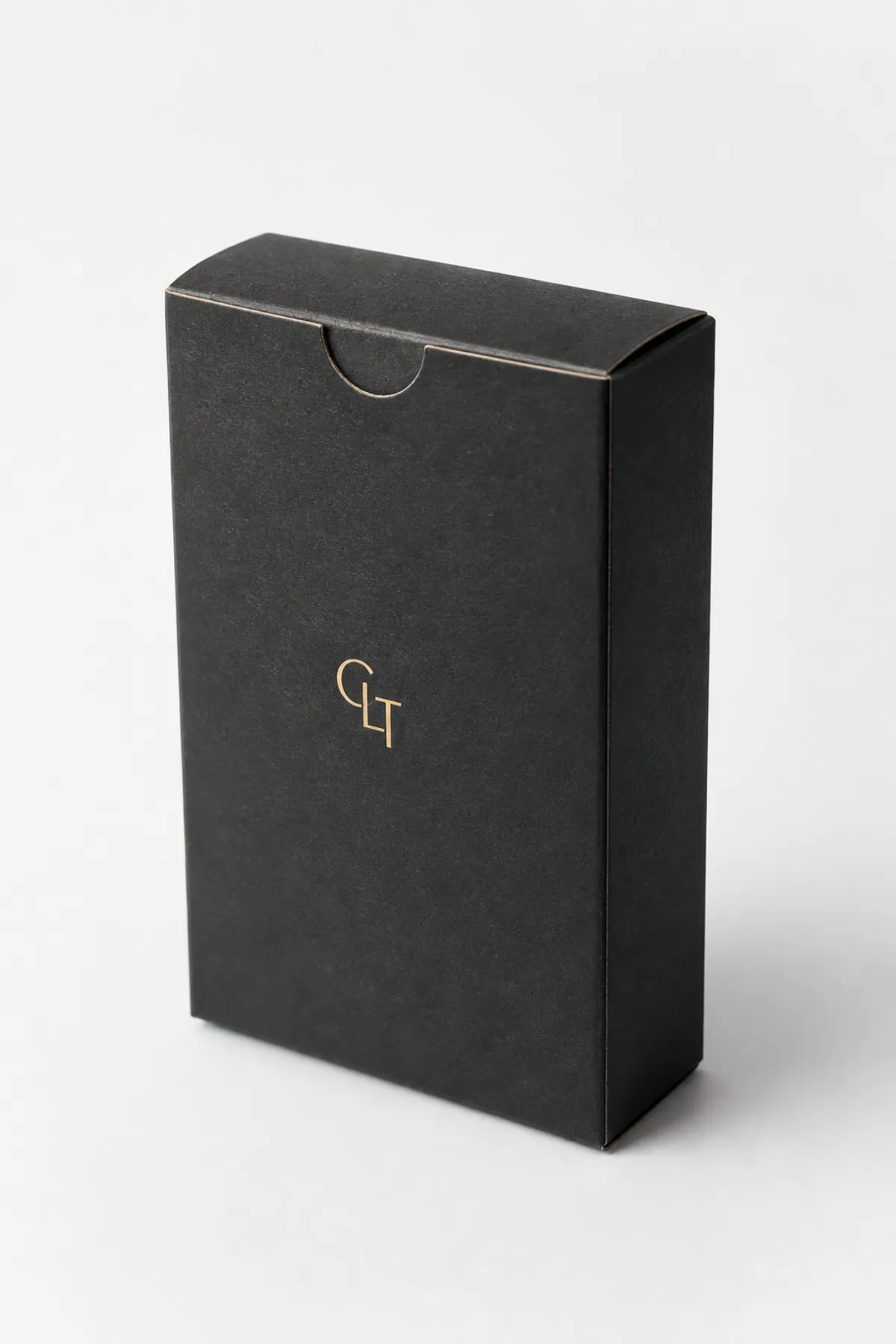
Printed tuck end cartons wholesale cut waste because they let you size the outer carton around the product instead of stuffing a small item into a big box and pretending dunnage is a cure-all. It is not. Void fill costs money. Extra board costs money. Extra freight cube costs money. Labor spent crumpling paper or loading air pillows is money too, even if it hides inside a warehouse routine. A properly sized tuck carton reduces dead space and usually creates a cleaner pack sequence, especially for light retail goods and secondary packaging.
From a packaging buyer's point of view, printed tuck end cartons wholesale also helps standardize warehouse behavior. If one SKU uses a carton that fits consistently, packers do not waste time guessing how much filler to add or whether the flap will press into the product. Consistency matters. One oversized box may look harmless on a quote. Across thousands of orders, the extra cube space becomes a freight bill with a very sharp edge.
There is a straightforward damage argument too. Better fit means less internal movement. Less movement means fewer scuffed corners, fewer cracked closures, and fewer returns that should never have existed. I have seen buyers spend money on labels, inserts, and coatings while ignoring carton sizing. That is backwards. With printed tuck end cartons wholesale, the box size itself often gives you more protection than a costly finish ever will.
Wholesale buying matters because repeat runs let you lock in a spec and keep it steady. A one-off carton can survive a little slop. A repeated carton cannot. If the run is 5,000 or 15,000 pieces, even a tiny spec drift can create repacking, slowdowns, or product fit complaints. That is why printed tuck end cartons wholesale usually makes sense for ongoing programs, not only for pricing but for consistency across reorders.
Practical rule: if the product rattles, the carton is already too large. If the carton needs excessive force to close, it is too tight. That sounds obvious because it is obvious.
Another reason buyers choose printed tuck end cartons wholesale is shelf readiness. A carton that arrives flat, builds quickly, and closes cleanly can move from receiving to packing to retail presentation without extra steps. That is how labor stays under control. EPA source reduction guidance makes the same basic point in a less tactile way: less material in the wrong place is still less material, and the EPA source reduction guidance is a useful reminder that prevention usually costs less than cleanup.
Printed Tuck End Cartons Wholesale: Product Details That Matter
Printed tuck end cartons wholesale is a simple structure, but buyers still get tripped up by the details. The carton ships flat, folds quickly, and closes with tuck flaps instead of complicated gluing or machine-heavy assembly. That makes it efficient for short-to-mid production runs and for teams that need a carton they can build by hand without drama. If the line values speed and repeatability, this structure earns its keep.
Two closure styles show up most often: straight tuck and reverse tuck. Straight tuck usually gives a cleaner front face and tends to be favored when shelf appearance matters more than lock strength. Reverse tuck is often easier to run and can be practical for everyday folding and filling. Neither one is magic. The right choice depends on product weight, display needs, and how the carton is handled before it reaches the end customer. That is the part people skip, then act surprised when the carton looks fine in a mockup and annoying on the line.
Printed tuck end cartons wholesale can be specified with CMYK print, spot colors, or a mix of both. For most buyers, CMYK handles brand graphics well enough if the design is not overcomplicated. Spot colors matter more when a brand needs exact matching on logos or recurring panels. Coatings matter too. Matte, gloss, aqueous, soft-touch, and spot UV all have tradeoffs. If the box will be handled a lot, stacked often, or moved through multiple touchpoints, a simpler coating often holds up better than a fancy finish that photographs well and scuffs fast in the warehouse.
Common product fits include light retail goods, cosmetics, samples, supplements, small electronics accessories, subscription inserts, and promotional kits. For heavier or fragile products, printed tuck end cartons wholesale can still be the right outer presentation box, but it should be paired with a corrugated shipper, tray, or insert. The printed tuck carton is not a substitute for physics. If the item needs real crush protection, give it real crush protection.
Here is the practical split I give buyers:
- Best fit: lightweight, retail-ready products that need clean presentation and repeatable packing.
- Good fit: kits, accessories, and sample packs that benefit from organized internal layout.
- Needs support: glass, metal components, high-value items, or anything with fragile corners.
Packaging guidance from groups like the Fibre Box Association and ISTA keeps pointing back to the same principle: packaging has to match the shipping environment, not just the artwork brief. That sounds dull because it is dull. It is also how expensive mistakes get avoided. The ISTA test methods are useful for buyers who want to understand the abuse cartons actually see in transit, while packaging industry resources can help frame board selection and distribution performance in more practical terms.
One more thing: printed tuck end cartons wholesale should be chosen for how the carton behaves after it leaves the designer's screen. If the printed area rubs against adjacent boxes, a soft-touch finish may look great and wear poorly. If the carton opens and closes repeatedly, a weak fold line becomes a problem fast. I would rather see a plainer carton that survives production than a beautiful one that looks tired after the first pallet move. That is not cynical. It is just what happens in real warehouses.
Specifications for Fit, Strength, and Shelf Readiness
Good printed tuck end cartons wholesale starts with board stock. Common choices include 14pt, 16pt, 18pt, and related SBS or C1S paperboard options depending on product weight and finish target. Thicker board gives more visual stiffness and better crush resistance, but it can also make folding tighter and raise unit cost. Thin board may save money up front, but if the carton bows, warps, or crushes during handling, the savings vanish. You just bought a cheaper problem.
Dieline accuracy matters more than most buyers realize. If the dimensions are off by even a small amount, automated packing can slow down, and hand packing gets clumsy. With printed tuck end cartons wholesale, dimensional tolerance should be reviewed early, especially when the product has inserts, nested components, or a tight closure. A carton that is 1 to 2 mm out of spec may still close, but it can create a production-line nuisance that repeats every day until someone finally complains loudly enough to fix it. I have watched that happen, and nobody enjoys being the person who discovers it on pallet day.
Print specs also deserve discipline. Barcode placement should leave a quiet zone with clean contrast, and batch code areas should be planned before the artwork is locked. If your team scans at receiving, retail, or fulfillment, the barcode cannot sit across a fold or disappear under a coating. That is not a design preference. It is a warehouse requirement. Printed tuck end cartons wholesale works best when print, operations, and compliance are aligned before production starts.
Finish selection should be tied to handling, not just appearance. Matte usually hides minor scuffs better. Gloss can look sharper on shelf, but it often shows fingerprints and rub marks more quickly. Aqueous coatings are common because they offer decent protection without making the carton feel overworked. Soft-touch has a premium feel, but it is not always the best choice for cartons that travel through many hands. Spot UV can help with focal branding, but I would not use it as a substitute for a thoughtful structural spec. That kind of shortcut usually comes back to bite somebody.
Warehouse compatibility is another spec that gets ignored until it becomes a headache. Ask about flat pack count, case pack, pallet layout, and how the cartons will be banded or wrapped for transit. If the receiving team has to re-stack loose cartons by hand, somebody already missed the point. Printed tuck end cartons wholesale should arrive in a format that supports the next step in the workflow, not one that creates an extra cleanup job.
| Spec Choice | Typical Use | Pros | Tradeoff |
|---|---|---|---|
| 14pt board | Light items, samples, low-crush environments | Lower cost, easier folding | Less stiffness and protection |
| 16pt board | Retail goods, kits, accessories | Balanced look and performance | Not ideal for heavier contents |
| 18pt board | Premium presentation or slightly heavier items | Better stiffness and structure | Higher cost, tighter folds |
| Spot UV or soft-touch | Premium branding programs | Stronger shelf impact | More cost, more handling sensitivity |
For transit testing, it helps to reference ISTA packaging test methods or ASTM-based distribution testing where appropriate. You do not need every carton to become a lab science project, but you do need enough validation to know whether the carton survives the actual journey. Printed tuck end cartons wholesale is cheaper to fix on paper than after 8,000 units are already in circulation.
Printed Tuck End Cartons Wholesale Pricing, MOQ, and Quote Basics
Printed tuck end cartons wholesale pricing is driven by a few predictable levers: size, board grade, print coverage, finish, inserts, tooling, and whether the dieline is standard or fully custom. Bigger cartons consume more board. Heavier print coverage adds press time and ink cost. Fancy finishes add more operations. Inserts add material and assembly. None of that is mysterious. The problem is usually that buyers ask for "a quote" without giving the information needed to calculate one accurately.
For MOQ, simple structures with repeatable specs usually price best once you move into the low-thousand range. In practice, many buyers see the cleanest value somewhere around 3,000 to 5,000 units, though some jobs make sense above or below that depending on carton size and setup work. Printed tuck end cartons wholesale gets cheaper per unit as the run spreads setup over more boxes, but larger runs should only happen if you can actually use or store the inventory. Cheap cartons are not cheap if they sit in a corner for a year.
Here is the information that produces a real quote instead of a rough guess:
- Exact carton dimensions, including inside and outside measurements if available.
- Quantity target and any alternate quantities you want priced.
- Artwork files, logo usage, and whether the print is one-color, two-color, or full coverage.
- Finish preference, insert requirements, barcode needs, and any special labeling.
- Ship-to location and target delivery window.
Unit cost usually drops when you standardize sizes, reduce artwork complexity, and avoid piling on unnecessary finishes. A buyer who combines similar SKUs into one carton family will often get better economics than a buyer who insists every product needs its own unique box. That is why printed tuck end cartons wholesale often becomes part of a broader packaging rationalization project, not just a single box purchase.
Below is the realistic way I would compare options for budgeting:
| Run Type | Typical Price Behavior | Best Use | Notes |
|---|---|---|---|
| Basic print, standard size | Often around $0.18-$0.32 per unit at 5,000 pieces | Simple retail or kit packaging | Good value if artwork is straightforward |
| Moderate coverage, custom size | Often around $0.25-$0.45 per unit | Multiple SKUs or branded programs | Common sweet spot for many buyers |
| Premium finish, heavier board | Often around $0.35-$0.75 per unit or more | High-visibility retail presentation | Worth it only if the product and channel justify the cost |
Those ranges are not a promise. They are a practical starting point. Printed tuck end cartons wholesale can move outside those numbers quickly if the board is specialty stock, the artwork is complex, or the order needs secondary operations. Freight also matters. A carton price that looks attractive can be less attractive once shipping is added, so total landed cost should always be part of the comparison.
One more blunt point: a slightly larger order can sometimes be cheaper overall. If setup charges, freight, and reorder risk are spread across a longer run, the unit math can improve enough to matter. That does not mean you should overbuy. It means the quote should be viewed as a landed-cost decision, not a vanity metric. That is the grown-up way to handle printed tuck end cartons wholesale.
Printed Tuck End Cartons Wholesale Process and Lead Time
The order flow for printed tuck end cartons wholesale should be simple, but only if the buyer sends the right information early. It usually starts with intake: dimensions, quantity, finish, artwork, product weight, and delivery target. Then the quote is built. If the vendor has to chase missing measurements or guess at the closure style, the entire process slows down and the final number becomes less useful. Good packaging work rewards preparation. Lazy briefs punish everyone.
The proof stage is where many programs are won or lost. First comes dieline confirmation. Then redline review for copy, barcode placement, and panel content. After that, fit checks matter, especially on new SKUs or cartons with inserts. Printed tuck end cartons wholesale is much safer when the proof is treated as a production tool rather than a formality. If the dieline looks wrong, stop there. Fix it before ink, not after regret.
Sample options depend on the project. For a first-time carton, a physical sample can be worth the delay because it confirms fit, closure behavior, and panel layout. For a reorder, you may only need a digital proof if nothing has changed. That said, if product dimensions shifted or artwork changed materially, do not assume the old spec will still be fine. Printed tuck end cartons wholesale saves time on repeat work, but only if the repeat really is a repeat.
Production usually follows this sequence:
- Print the board stock.
- Apply coating or finish if required.
- Die-cut the carton shape.
- Fold, glue, and form the blanks.
- Inspect for print accuracy, registration, and cut quality.
- Pack flat for freight and palletize for shipment.
Lead times vary, but honest planning helps. Repeat jobs often move in about 12 to 15 business days after proof approval when the spec is already established and the finish is standard. New tooling, specialty finishes, complex artwork, or added insert work can push that closer to 18 to 30 business days. Freight time is separate. Printed tuck end cartons wholesale is not slow by default, but it is also not instant when the job includes custom elements and several approval steps.
That lead time discipline matters for inventory planning. If your cartons arrive late, the product either sits waiting or ships in a temporary box that nobody wants to admit was the backup plan. Both outcomes are expensive. Buyers who build their schedule around proof approval, production, and freight can avoid the scramble. Buyers who assume every carton can be rushed end up paying for it one way or another.
Why Choose Us for Shipping & Logistics Packaging
At Custom Logo Things, the value is not just in printing a box. It is in thinking about printed tuck end cartons wholesale from a shipping and logistics angle, because that is where the costs show up. A carton that looks polished but packs badly is still a bad carton. I would rather help a buyer reduce overboxing, tighten the fit, and standardize the spec than push a decorative upgrade that does nothing for operations.
We help catch the mistakes that usually create reprint loops: dimensions that do not match the product, barcode zones that are too cramped, finishes that scuff too easily, or carton structures that look fine on screen and annoying in real use. Printed tuck end cartons wholesale should be checked before production starts, not after a warehouse crew discovers the issue at 4 p.m. on a Thursday. That is the difference between a controlled program and a messy one.
Consistency on reorder matters too. Color control, registration accuracy, and dimensional repeatability are not glamorous topics, but they are what keep a packaging program stable across multiple runs. If you are managing several SKUs, we can also help with packaging standardization so you are not drowning in a pile of near-identical box sizes that all cost money to store and confusion to manage. For buyers who want broader purchasing support, our Wholesale Programs page is a useful place to start.
Here is the honest part. If a simpler carton will ship better and cost less, I will say that. Not every product needs the premium treatment. Some products need a clean, economical carton that closes well and survives the route. That is still good packaging. In fact, it is often better packaging than the overpriced option nobody asked for. Printed tuck end cartons wholesale works best when the decision is grounded in use case, not ego.
Packaging buyers who want to stay close to industry standards usually ask about transit risk, stacking load, print durability, and material sourcing. That is the right instinct. FSC-certified board may matter for your brand story or retailer requirements. Transit testing may matter if the carton faces rough handling. These are not add-ons for a sales pitch. They are part of responsible specification. If you want a supplier who understands that, the process gets a lot easier.
Next Steps Before You Order
Before you place an order for printed tuck end cartons wholesale, gather the basics: exact product dimensions, product weight, finish preference, quantity target, target ship date, and whether you need inserts or extra protection. If you already have a current carton, send photos of it. If you have artwork, send that too. The more reality you provide, the less guessing happens in the quote. Guessing is expensive. Guessing is also how people end up redoing work that should have been right the first time.
Ask for pricing at multiple quantities so you can see where unit cost actually drops. A quote that only shows one number is incomplete. You want to understand the breakpoints, setup charges, freight, and any special operations separately. Printed tuck end cartons wholesale should be evaluated on total landed cost, not on a single unit line item that looks pretty on a spreadsheet.
Then review the proof with a real checklist:
- Carton dimensions match the product and any insert.
- Barcode placement has enough quiet space for scanning.
- Print coverage is consistent with the brand brief.
- Finish choice fits handling conditions, not just design preference.
- Artwork, copy, and batch code areas are clearly separated.
Approve the proof only after those checks are done. If the carton is for a live program, lock the schedule before inventory gets tight. The fastest way to create a packaging problem is to wait until the last possible week to confirm basic specs. Printed tuck end cartons wholesale works best when the details are settled early and nobody is trying to invent a solution under pressure.
If you want a carton that protects the product, supports packing speed, and still looks professional on shelf, this is a solid format. Keep the structure simple, the spec honest, and the artwork aligned with how the box will actually be used. That is how printed tuck end cartons wholesale delivers value instead of just noise. And yes, the boring version is usually the profitable one.
Frequently Asked Questions
What is the minimum order for printed tuck end cartons wholesale?
MOQ depends on box size, print complexity, and whether the dieline is already set up. Simple repeat runs often make sense in the low-thousand range, while custom structures can need more. Ask for price breaks at multiple quantities so you can see where unit cost actually drops. With printed tuck end cartons wholesale, the lowest per-unit price is not always the best buying decision if it leaves you with too much inventory.
How do I choose the right board for printed tuck end cartons wholesale?
Match board thickness to product weight, handling, and how much crush resistance the carton needs. Lighter items can use a simpler spec, while fragile or higher-value goods usually need a sturdier board or outer shipper. If the carton will be handled a lot, prioritize durability over fancy finishing. That approach keeps printed tuck end cartons wholesale useful in the real world instead of just looking nice in a sample photo.
Can printed tuck end cartons wholesale include barcodes or batch codes?
Yes, but the barcode zone needs a quiet area with enough contrast and no coating issues. Confirm exact placement on the proof so scanning works in the warehouse and at retail. Batch codes and lot numbers should be planned before print, not added as an afterthought. In printed tuck end cartons wholesale, barcode mistakes are easy to avoid and annoying to fix, which is exactly why they deserve attention early.
What affects lead time for printed tuck end cartons wholesale?
New dielines, special finishes, and first-time approvals add time fast. Repeat orders are usually quicker because the art and tooling are already approved. Freight destination can also affect the delivery date, so quote that early. For printed tuck end cartons wholesale, the fastest projects are the ones with clear specs and a buyer who is not discovering requirements halfway through production.
How do I get an accurate quote for printed tuck end cartons wholesale?
Send exact dimensions, quantity, artwork, finish, and ship-to location. Include your target delivery date and any insert, barcode, or coating requirements. Without those details, the quote is just a polite estimate, which is not the same thing. The more complete your brief is, the more useful the printed tuck end cartons wholesale pricing will be when you compare options.