Buyer Fit Snapshot
| Best fit | Printed Wraparound Labels for Bottles projects where brand print, material claims, artwork control, MOQ, and repeat-order consistency need to be specified before quoting. |
|---|---|
| Quote inputs | Share finished size, material target, print colors, finish, packing count, annual reorder estimate, ship-to region, and any compliance wording. |
| Proofing check | Approve dieline scale, logo placement, barcode or warning zones, color tolerance, closure strength, and carton packing before bulk production. |
| Main risk | Vague material claims, crowded artwork, missing packing details, or unclear freight terms can make a low unit price expensive after revisions. |
Fast answer: Printed Wraparound Labels for Bottles: Design & Fit should be specified like a repeatable production item. The safest quote records material, print method, finish, artwork proof, packing count, and reorder notes in one written spec.
Production checks before approval
Compare the actual filled-product size with the drawing, then confirm tolerance on folds, seals, hang holes, label areas, and retail display edges. Reserve space for logos, QR codes, warning copy, and material claims before decorative graphics fill the panel.
Quote comparison points
Review material grade, print process, finish, sampling route, tooling charges, carton quantity, and freight assumptions side by side. A quote is only useful when the supplier can repeat the same color, closure quality, and packing count on the next order.
Printed Wraparound Labels for Bottles: Design & Fit starts as a packaging topic, but it quickly turns into a conversation about millimeters, bottle geometry, adhesive behavior, and how a package reads from arm's length on a crowded shelf. Printed wraparound labels for bottles can make a small container look cleaner, more organized, and more intentional, yet even a slight mismatch in width, seam placement, or panel height can cause wrinkles, crowd the copy, or make the bottle feel a little off before anyone has even picked it up.
Why Printed Wraparound Labels for Bottles Stand Out on Shelf
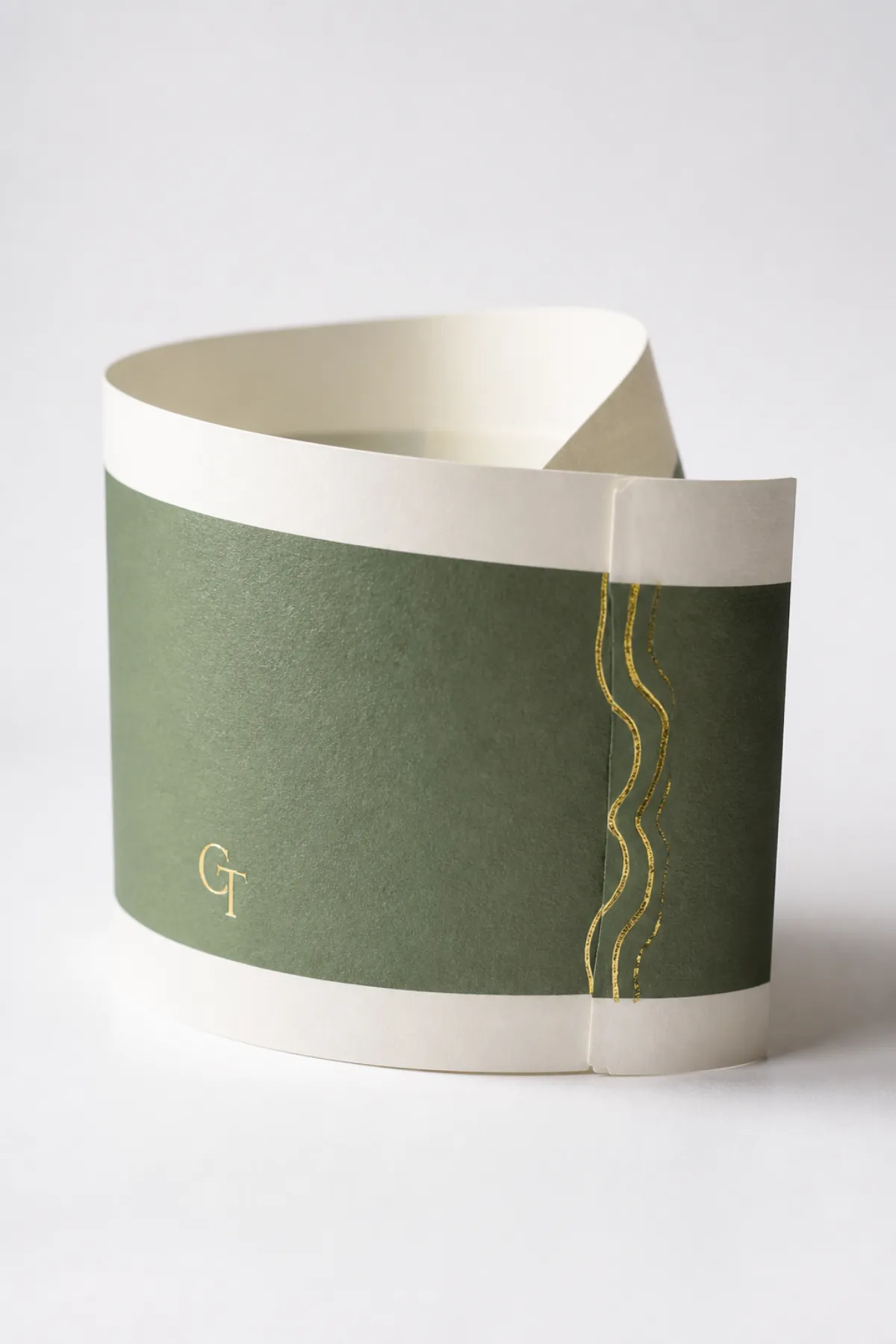
On a busy shelf, printed wraparound labels for bottles do a lot more than hold ingredients and a barcode. They turn the full body of the container into a communication surface, which is a real advantage when the package is small and every square inch has to earn its place. A round bottle with only a tiny front panel can look undersized or unfinished if the label is broken into too many sections or squeezed into a layout that never really had enough room to breathe.
A wrap label gives the eye one continuous read. That sounds simple, but it changes how the bottle feels in the hand and how it sits in a lineup. The brand appears more deliberate, the product name is easier to spot, and the design can move around the bottle without forcing everything into one cramped rectangle. I have seen plenty of otherwise solid packaging lose polish because the label was treated as an afterthought. The bottle was fine. The art was fine. The fit was not, and that was enough to make the package look kinda tired.
These labels are especially useful for beverage bottles, sauces, wellness tinctures, beauty serums, and personal care products, since those categories often need strong shelf impact in a tight footprint. A well-planned wrap label can hold the logo, product name, flavor or variant, legal copy, barcode, and a short brand story without splitting the design into isolated front and back panels. For many buyers, that cleaner layout is the main reason printed wraparound labels for bottles keep getting the nod.
From a branding standpoint, the format gives you more visual space and more control over hierarchy. Compared with separate front-and-back labels, the wrap style often feels more unified because the artwork can move across the body of the bottle with fewer interruptions. If you are early in the buying process, it helps to think about substrate and finish alongside the broader label program, including Custom Labels & Tags, so the material supports the container instead of fighting it.
Printed wraparound labels for bottles also help with storytelling. The front face can carry the hero message, while the rest of the wrap can hold ingredients, usage directions, certifications, or a short brand note. That extra structure matters in retail because shoppers usually read packages at a glance, not like they are sitting down with a proof on a desk. A tidy wraparound design can be the difference between a bottle that feels finished and one that feels rushed.
How Printed Wraparound Labels for Bottles Work
Printed wraparound labels for bottles are usually produced as pressure-sensitive labels. The material is printed, converted into rolls, and then applied around the bottle body with a controlled seam or a small gap, depending on the design and the labeling equipment. In practical terms, the label has to be cut to the right wrap length, or very close to it, so the artwork lands where it is supposed to once the bottle is filled, handled, and shipped.
The process sounds straightforward until the bottle shape enters the picture. Straight-sided containers are the easiest because the circumference stays consistent from top to bottom. Tapered bottles, curved shoulders, recessed panels, ribs, and squeeze zones add complexity fast. On those containers, printed wraparound labels for bottles need careful measurement because even a strong layout can distort if the bottle narrows or bulges where the label sits.
Adhesive, liner, and finish all matter
The adhesive has to match the environment. A label that behaves perfectly on dry glass at room temperature can lift, haze, or wrinkle in a cold case or a damp restroom display. If the product moves through refrigeration, ice buckets, or humid storage, a weak adhesive may peel at the edges, trap bubbles, or leave a cloudy look on the bottle. That is why label testing should happen on the actual container, filled with the actual product, before full production of printed wraparound labels for bottles. Skipping that step is one of those shortcuts that feels efficient right up until it costs you a reprint.
Release liner choice affects production too. A smooth liner helps with high-speed application, while a less stable liner can cause feed issues on automatic lines. Finish changes the final appearance as well. Gloss film gives sharp color and a bright shelf look. Matte feels quieter and more restrained on certain products. Soft-touch creates a distinct tactile effect, though it is not the right choice for every bottle because the coating and outer surface still need to hold up under handling. Clear film, metallic accents, and varnish all change both the look and the durability of printed wraparound labels for bottles.
"A wrap label only looks simple until the seam lands on the front panel or the shoulder curve pulls the copy out of register."
Proofing matters for exactly that reason. A digital proof can confirm content and layout, but a physical sample shows how the label behaves in the real world. If your line speed is high, your bottle is slippery, or the container shape is unforgiving, printed wraparound labels for bottles deserve more than a screen review.
Key Factors That Affect Fit, Durability, and Shelf Appeal
Printed wraparound labels for bottles succeed or fail on fit. The bottle has to be measured carefully before artwork is finalized, and that means more than grabbing the diameter once and calling it good. A proper spec should include circumference, label panel height, shoulder transition, any taper, embossed marks, and whether the bottle has a slight oval condition instead of a true round profile. Those details affect how the label lays down and whether the design stays readable around the full wrap.
Material selection is the next major decision. Paper can work well on dry, low-abrasion applications and may suit some short-life or indoor products. Film materials such as BOPP and PET are usually stronger choices for condensation, refrigeration, oils, and shipping wear. For products that live in wet coolers or pass through frequent handling, film often keeps printed wraparound labels for bottles looking cleaner for longer. If sustainability is part of the brief, FSC-certified paper can support sourcing goals, and organizations like FSC provide useful guidance on responsible forestry and certification.
Readability is another point that gets underestimated. A wrap label gives you more space, but that does not mean every millimeter should be filled. The hero message, logo, and variant name need a strong visual zone, usually in the front third of the bottle. Fine print, barcodes, and compliance copy can live farther around the wrap, where they are accessible but do not compete with the brand face. The strongest printed wraparound labels for bottles usually feel balanced because the layout respects how people actually look at the package.
Application method matters too. Hand-applied labels can tolerate more variation in roll setup, but they rely on the operator to keep alignment consistent. Semi-automatic equipment improves repeatability on medium runs. High-speed labelers need predictable roll direction, stiffness, and adhesive performance so the label feeds cleanly and lands without wrinkling. If your line is monitored against distribution performance requirements, shipping validation often draws on standards and test methods used by groups like ISTA, especially when the packed bottle has to survive vibration, drops, and carton compression on the way to market.
One practical way to compare material choices is to think about the environment first and the appearance second. The nicest mockup is not always the best production label. For printed wraparound labels for bottles, the right combination is the one that still looks good after cooling, shipping, storage, and repeated handling.
| Material | Best For | Typical Strengths | Typical Risks | Relative Cost |
|---|---|---|---|---|
| Paper | Dry environments, short-run products, pantry items | Natural look, easy printability, often lower entry cost | Scuffing, moisture sensitivity, reduced durability | Low to moderate |
| BOPP film | Food, beverage, personal care, refrigerated products | Good moisture resistance, strong shelf appearance, flexible | Can show application defects if handling is rough | Moderate |
| PET film | Higher-durability labels, premium cosmetic bottles | Excellent clarity and toughness, stable finish | Usually higher cost, can be less forgiving on application settings | Moderate to high |
| Specialty film or metallized stock | Premium launches, strong visual impact, limited editions | Eye-catching, high perceived value, strong brand presence | Higher unit cost, more proofing, greater production sensitivity | High |
That table does not replace testing, but it does show the trade-offs clearly. In many cases, the smarter buying decision is not the cheapest label on paper; it is the label that survives the actual bottle environment while still looking refined on shelf. That is the real job of printed wraparound labels for bottles.
Printed Wraparound Labels for Bottles: Process and Timeline
The cleanest projects begin with discovery. Before quoting printed wraparound labels for bottles, a supplier should know the bottle sample, target quantity, fill conditions, print colors, desired finish, and any compliance text that must fit on the label. If the product is going into chilled storage, has an oily formula, or will be handled on a retail line, those details shape the recommendation right away.
After discovery, the next step is confirming the dieline. That file is more than a template; it is the map that shows where the seam lands, where the safe zones live, and how much overlap or gap the label needs. If the dieline is wrong, the artwork may still look polished on screen while failing on the bottle. The exact wrap length is a critical part of printed wraparound labels for bottles, because a design that is even slightly off can shift the barcode, crowd the text, or cut off a graphic at the seam.
Proofing usually happens in two layers. Digital proofs catch text errors, logo placement, color breaks, and copy issues. Physical samples or a short preproduction run reveal the actual behavior of the label on the container. That second step matters because pressure-sensitive stock can behave differently on glass, PET, and HDPE, and a bottle that looks fine in a flat lay can behave differently once it curves. A label that checks out on a PDF can still get weird around a shoulder, and nobody wants to discover that after the order is boxed.
What production usually looks like
The production sequence is fairly consistent: prepress, print, convert, inspect, package, and ship. Prepress checks the artwork file and prepares the print layout. Print lays down the inks or digital imaging. Converting cuts the shape, rewinds the rolls, and makes sure the labels feed correctly. Inspection catches defects before the rolls leave the plant. Packaging and shipping are the final steps, but they still affect lead time, especially if the order needs special carton protection or staged freight.
For standard materials and straightforward artwork, printed wraparound labels for bottles can move quickly after proof approval. More complex work takes longer. Specialty film, metallic decoration, multiple rounds of proofing, or a custom adhesive spec can add days or weeks depending on the supplier's schedule and material availability. A simple project may be ready in roughly 12 to 15 business days after approval, while more involved jobs can stretch beyond that if samples or testing are required.
Packaging buyers often miss one thing: production time is only part of the schedule. Sampling, bottle receiving, artwork cleanup, and internal sign-off all take time too. If the launch date is fixed, build in margin for the unexpected. That matters with printed wraparound labels for bottles because label fit is tied so closely to the physical bottle and the real fill condition, not just the art file.
If you are comparing options across formats, the broader Custom Labels & Tags range can help you see whether a wraparound label, a front-and-back set, or another construction gives you the best balance of cost and speed. The lowest quote is not always the smartest schedule choice, especially if you are trying to avoid reprints and the awkward scramble that comes with them.
Cost and Pricing for Printed Wraparound Labels for Bottles
Pricing for printed wraparound labels for bottles comes down to a handful of variables that buyers can actually control. Label size matters because larger labels use more material and often require more press coverage. Material choice matters because paper, BOPP, PET, and specialty films do not cost the same. Finish matters too, especially if you want gloss, matte, soft-touch, metallic ink, or a varnish pattern. Quantity is one of the biggest levers because setup cost gets spread across more pieces as the order size grows.
Artwork complexity changes price as well. A one-color design with simple copy is easier to print than a label with four process colors, fine gradients, white ink, spot varnish, and a special seam treatment. Die shape can create cost differences too. Standard rectangular wrap labels are usually easier to run than odd shapes with tight radii or unusual cut lines. For printed wraparound labels for bottles, the less exotic the construction, the easier it is to keep the budget in check.
Small orders usually cost more per label because setup is spread over fewer pieces. Larger orders lower the unit price, but only if the design is stable and the product demand supports the inventory. That is a familiar trade-off for packaging buyers. A 5,000-piece run might sit in a very different cost band than a 25,000-piece run, even when the artwork is identical. The point is not to memorize one number; it is to understand where the cost pressure is coming from.
Typical pricing drivers at a glance
| Cost Driver | How It Affects Price | Buyer Consideration |
|---|---|---|
| Label size | More material and more print area increase cost | Trim unused space if the bottle allows it |
| Material | Paper is often lower, film and specialty stocks cost more | Match the material to moisture, abrasion, and shelf life |
| Finish | Extra coatings, metallics, and premium textures raise cost | Use premium finishes where they improve retail impact |
| Quantity | Higher volume usually lowers unit cost | Balance storage space against unit economics |
| Proofing and setup | More review rounds and custom tooling add expense | Lock artwork early to avoid avoidable rework |
On many projects, a reasonable budget expectation for printed wraparound labels for bottles at moderate volume might fall somewhere around $0.10 to $0.30 per label depending on size, material, print coverage, and finish, with premium structures moving beyond that. That is a working range, not a promise, and it can shift quickly with order quantity or special decoration. The smartest way to compare quotes is to compare the same spec line by line: material, adhesive, finish, quantity, proofing, freight, and whether artwork support is included.
Watch for hidden costs too. Artwork cleanup, die charges if applicable, rush service, extra sample rounds, and shipping can all change the final number. A quote that looks lower on the first page may not stay lower after the details are added. For printed wraparound labels for bottles, the cheapest proposal is only useful if the final label fits, applies cleanly, and survives the actual product environment.
If your product line is expanding, it can make sense to compare multiple bottle formats together and order the labels that share the same material and finish profile. That kind of planning often improves consistency and can reduce waste. It also makes the broader Custom Labels & Tags program easier to manage because you are standardizing around what actually works, not just what looks good in a mockup.
Common Mistakes with Printed Wraparound Labels for Bottles
The most common mistake with printed wraparound labels for bottles is measuring only the front area and forgetting the full circumference. That leads to labels that stop short, overlap awkwardly, or place the seam in an unattractive location. A bottle is a three-dimensional object, so the label has to be designed for the whole surface, not just the face that shows up in a digital mockup.
Another frequent problem is ignoring taper and shoulder movement. A cylindrical bottle may look straightforward, but the moment the label climbs toward a sloped shoulder, the artwork can distort. Text that looked clear in the layout can compress at the edge, and fine details can feel crowded. Good printed wraparound labels for bottles account for those transitions before print, not after the first carton comes off the line.
Finish choice can cause trouble too. A paper stock might look attractive in a presentation and still scuff badly in production. A glossy film may show every bubble if the application is uneven. Soft-touch can feel refined but may be the wrong answer for a bottle that will move through refrigeration, packing, and retail handling. The right answer depends on the use case, not just the visual style.
Design clutter is another issue that shows up often. Too many claims, icons, badges, and legal lines can make the wrap feel heavy instead of refined. The label starts to look like a bulletin board instead of a brand story. The strongest printed wraparound labels for bottles usually keep the hierarchy tight: logo, product name, variant, then supporting information arranged with real breathing room.
Better labeling often comes from subtraction, not addition. If a detail does not help the buyer identify, trust, or choose the product, it probably does not belong in the strongest visual zone.
One last mistake is skipping real-world tests. A filled bottle in a box, a chilled bottle pulled from a cooler, and a bottle that has gone through carton packing can all behave differently. The label might adhere perfectly in the sample room and then fail in a wet cooler or on a fast line. If you are buying printed wraparound labels for bottles, ask for tests that reflect the actual use conditions, not just the ideal ones.
Expert Tips and Next Steps for Printed Wraparound Labels for Bottles
The seam should be treated like a design decision, not an afterthought. On strong packaging, the seam is hidden on the back panel, aligned with a neutral area, or tucked where the eye does not immediately land. That simple move can make printed wraparound labels for bottles look far more polished, because the front face stays clean and the bottle reads as one continuous branded object.
Keep the hierarchy simple enough to read in a few seconds. The logo should be visible fast, the product name should be unmistakable, and the variant should not require guesswork. Secondary copy can live farther around the wrap where it is still available but no longer competing for prime attention. Brands often overdo this stage. They try to say everything at once, and the result is weaker than a tighter, more deliberate layout.
Ask for substrate recommendations based on your container material. Glass, PET, HDPE, and textured bottles all respond differently to pressure-sensitive labels. A label that feels comfortable on a smooth glass bottle may not behave the same way on a squeezable plastic container. That is why printed wraparound labels for bottles should always be discussed together with the container spec, not as a separate purchase.
Before placing a full order, gather the bottle measurements, artwork, quantity, storage conditions, and any line speed details you can share. Then request a proof or sample and test the finished label on the actual bottle. If possible, move that sample through the same conditions the final product will face: cold storage, cartoning, shipping, and retail handling. That kind of practical check catches problems early, and early mistakes are far cheaper than a reprint of printed wraparound labels for bottles.
If you are building a new product launch, do not think only about the label. Think about the bottle, the fill, the cap, the carton, the shelf, and the route to market as one package system. That wider view is what turns a good label into a reliable package. For many teams, the next step is to compare a few material and finish options through a controlled quote request on Custom Labels & Tags, then confirm the choice with a real sample before production.
Printed wraparound labels for bottles can do a lot of heavy lifting, but only if the fit is right, the material matches the environment, and the design respects the bottle's shape. Get those three pieces aligned, and the package usually looks more expensive, more intentional, and easier to buy. If you need a practical starting point, begin with the bottle in hand, measure the full wrap carefully, and test the label on the real container before you approve the run. That one habit saves a lot of trouble later.
Frequently Asked Questions
How do I size printed wraparound labels for bottles correctly?
Measure the full bottle circumference first, then account for the seam allowance your supplier recommends so the label closes cleanly without overlapping awkwardly. You also need to account for taper, shoulders, ribs, and embossing, because those features can change how printed wraparound labels for bottles sit on the container. A dieline should always come before final artwork, since that is the best way to keep safe zones, barcode placement, and seam position aligned.
What material works best for printed wraparound labels for bottles in cold or wet conditions?
Film materials such as BOPP or PET usually perform better than paper when bottles are chilled, wet, or handled often. The adhesive matters just as much as the face stock, so ask for a formula rated for condensation and refrigeration if the product will live in coolers, ice buckets, or damp environments. The only reliable answer is to test the exact combination on a filled bottle, because finish and adhesive behavior can change once moisture and temperature enter the picture for printed wraparound labels for bottles.
How long do printed wraparound labels for bottles usually take to produce?
Timing depends on proof approval, material availability, run length, and whether the job needs a custom die or specialty finish. Simple labels can move quickly once artwork is approved, while specialty materials or multiple proof rounds add lead time. If your launch date is fixed, build in extra time for sampling and real bottle testing, because printed wraparound labels for bottles tend to reveal fit issues only when they are on the actual container.
Are printed wraparound labels for bottles more expensive than front-and-back labels?
Not always. The cost depends on label size, material, finish, and how much setup the design requires. A single wrap label can sometimes reduce handling and simplify application, which helps offset cost in production. Larger coverage areas, premium films, and special finishes can raise unit price, especially on smaller orders, so the answer for printed wraparound labels for bottles depends on the spec rather than the label style alone.
Can printed wraparound labels for bottles be applied by hand?
Yes, many short runs can be hand-applied if the label size and release liner are manageable. Hand application works best when seam placement is forgiving and the material is not overly stiff or slippery. For higher volumes, a label applicator usually improves consistency, speed, and seam alignment, which is why many buyers move to equipment once printed wraparound labels for bottles become a recurring production item.