Buyer Fit Snapshot
| Best fit | Custom Wraparound Labels for Bottles projects where brand print, material claims, artwork control, MOQ, and repeat-order consistency need to be specified before quoting. |
|---|---|
| Quote inputs | Share finished size, material target, print colors, finish, packing count, annual reorder estimate, ship-to region, and any compliance wording. |
| Proofing check | Approve dieline scale, logo placement, barcode or warning zones, color tolerance, closure strength, and carton packing before bulk production. |
| Main risk | Vague material claims, crowded artwork, missing packing details, or unclear freight terms can make a low unit price expensive after revisions. |
Fast answer: Custom Wraparound Labels for Bottles: Design, Cost, Fit should be specified like a repeatable production item. The safest quote records material, print method, finish, artwork proof, packing count, and reorder notes in one written spec.
Production checks before approval
Compare the actual filled-product size with the drawing, then confirm tolerance on folds, seals, hang holes, label areas, and retail display edges. Reserve space for logos, QR codes, warning copy, and material claims before decorative graphics fill the panel.
Quote comparison points
Review material grade, print process, finish, sampling route, tooling charges, carton quantity, and freight assumptions side by side. A quote is only useful when the supplier can repeat the same color, closure quality, and packing count on the next order.
Custom wraparound labels for bottles can turn a plain container into packaging that feels deliberate, finished, and ready for a shelf instead of a worktable. They open up more room for branding, ingredients, warnings, directions, and barcodes without forcing everything onto one crowded front panel.
That extra surface area matters on beverage bottles, skincare, sauces, supplements, and any product package with more curve than flat space. The decision is never just about the artwork. Fit, adhesive, stock, and the way the label will be applied on the line all shape the result, and those details decide whether the bottle looks polished or only half-finished.
In my experience, the jobs that look simplest on a screen are often the ones that need the most practical checking once they move onto a real bottle. A layout can be clean, elegant, and technically complete, and still fail if the seam lands in the wrong place or the stock reacts badly to cold storage. That is why this format deserves a little more respect than a quick mockup usually gives it.
Why custom wraparound labels for bottles beat front-only labels
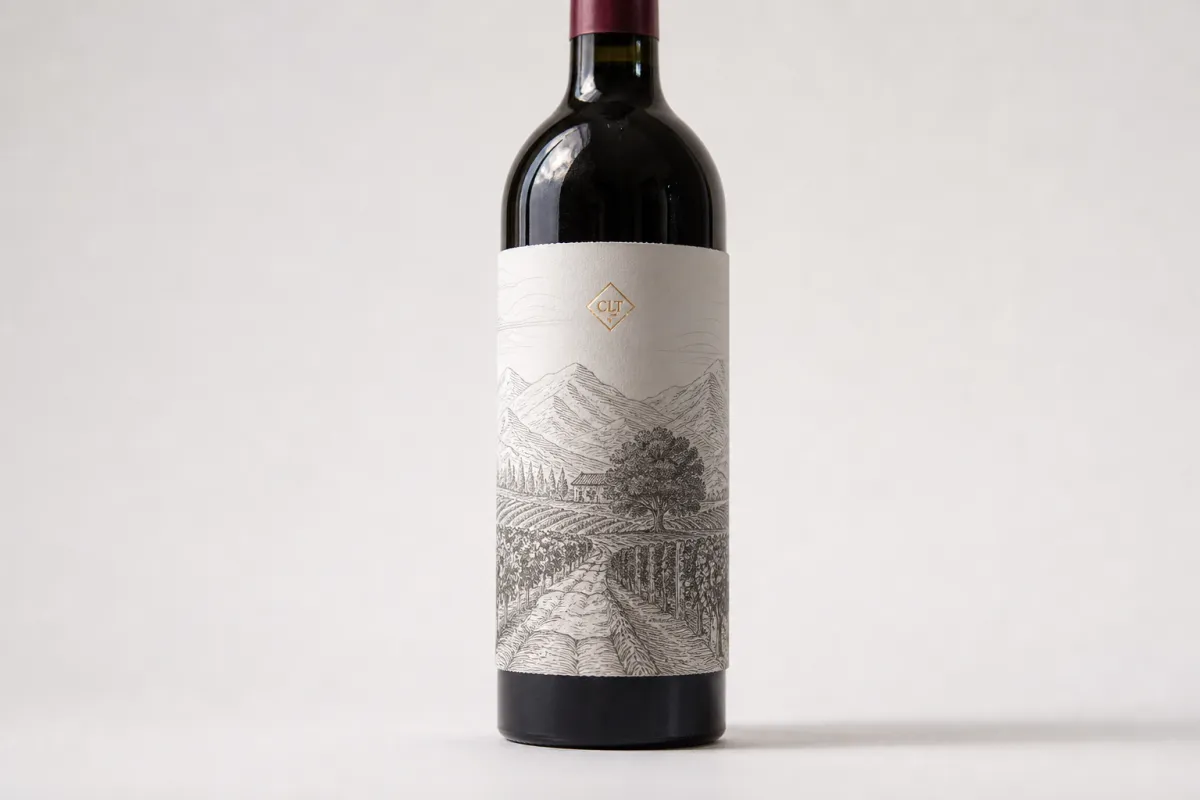
A bottle does not need an aggressive design to look premium. Custom wraparound labels for bottles use the full circumference, which gives branded packaging a steadier, more complete look than a single front-only sticker with nowhere else to carry the story.
That matters most when the front panel has too much to say. One area can hold the product name and the core message, while the back or side panels handle ingredients, directions, claims, batch codes, and barcode placement. No one wants legal copy pushed into the margins like it was squeezed in at the last second and told to behave.
Round and oval containers benefit the most, since the label follows the body instead of fighting it. For a line that also uses Custom Labels & Tags or Custom Packaging Products, keeping the label, carton, and shipper in the same visual family can sharpen package branding quickly. The same idea applies when Custom Printed Boxes are part of the mix; if the bottle and carton look unrelated, retail packaging loses some of its authority.
Front-only labels still make sense in a few situations. Small bottles, restrained luxury products, and items with very little compliance copy can work well with a single panel. If a wraparound format only adds cost and clutter, it is not the better choice. Good packaging design respects the product instead of trying to cover every inch just because it can.
A visible seam makes the bottle look cheaper. Most of the time, that is the whole problem.
For many buyers, the question comes down to value: do custom wraparound labels for bottles give you more than they cost? They usually do when the bottle has enough body space and the SKU needs more than a logo and one short line. If the product is small or the copy is minimal, a smaller front label can look cleaner and cost less.
There is also a practical benefit that gets overlooked. Wraparound labels can hide technical clutter better than a front-only label, which helps on products that need compliance language, recycle marks, or batch codes without making the main panel feel overloaded. That extra room makes the packaging feel calmer, and calmer packaging often reads as more trustworthy on shelf.
How custom wraparound labels for bottles work
The structure is straightforward: the printed panel wraps around the bottle body, with either a small gap or a light overlap at the seam. Custom wraparound labels for bottles are sized by panel width, label height, and the usable flat area on the container, not by the way the layout happens to look on a screen.
Diameter matters more than most people expect. A bottle that measures 2.5 inches across has a circumference of about 7.85 inches, but print space does not usually go right to the edge. Leave room for the seam, the curve near the shoulder, and whatever clamps or applicators the line uses. On a tapered bottle, the wrap that seems easy on paper can change noticeably from top to bottom.
Paper stock works well for dry shelf products, while BOPP or PP film is usually the safer pick for cold drinks, soaps, or anything that may be exposed to moisture. Matte gives a softer brand feel, gloss catches retail lighting with more force, metallic adds sharper shelf presence, and clear film can create a no-label effect when the bottle itself is worth showing. That is why custom wraparound labels for bottles are as much a material choice as a design choice.
Application changes the setup too. Hand-applied labels are common for small runs, semi-automatic systems suit mid-volume bottling, and automatic applicators want tighter tolerances and a dieline that is clean in every way. Clean labels run better. Fancy artwork cannot rescue a crooked seam or a label that shifts during application.
The layout should be built around the seam, not against it. Keep the least critical copy near the back edge, leave important text away from the join, and avoid placing logos or barcodes where the wrap may drift as it goes around the bottle. That is one of the easiest ways to make custom wraparound labels for bottles look precise on shelf instead of slightly off-center and impossible to unsee.
One thing I always push for is a physical check against the actual container, not just a PDF proof. A flat file can hide little problems in the shoulder curve, seam drift, and label height, and you are not gonna catch that after 2,000 bottles are already packed.
Key factors that affect fit, adhesion, and print quality
Start with the container. Glass, PET, and HDPE all behave differently, and coated and uncoated surfaces do not respond the same way either. Custom wraparound labels for bottles that hold perfectly on a smooth glass flask can fail on a flexible plastic bottle if the adhesive is too weak or the surface energy is low.
Temperature is the quiet troublemaker. Chilled drinks, refrigerated skincare, and humid storage can trigger edge lift or bubbling if the adhesive is not rated for moisture and cold. Ask for a real adhesion test instead of a promise and a grin. If the label will live in refrigeration, frozen storage, or an ice bucket, the stock and adhesive should be chosen for those conditions from the start.
Shape matters as well. Straight-sided bottles are forgiving. Tapered shoulders, oval bodies, and heavy curvature need a tighter dieline and more careful seam placement so the label does not skew or wrinkle after application. Plenty of label problems are really geometry causing trouble.
Readability cannot be an afterthought. Keep barcodes in a quiet area with enough white space, and leave ingredient panels, warning text, and batch code zones open and easy to scan. For regulated goods, use the rules that apply to your category and follow the standards that fit the job. For transport and handling, many teams look at ISTA test methods as a useful reference point, especially if the bottle will move through cases or packs before it ever reaches retail.
Finish choices affect durability too. Moisture-resistant laminate helps if the bottle sweats, scratch resistance matters on retail shelves where cases get handled, and oil-resistant film is smart for sauces or body products. If the label needs to survive refrigeration or condensation, choose the stock for the abuse, not the brochure photo. That simple rule gets ignored more often than it should.
There is also a sourcing side to the decision. If the brand wants paper stock with chain-of-custody support, ask whether the material can be FSC-certified. That does not solve fit or adhesion, but it does help when sustainability has to mean more than a line on a page.
Custom wraparound labels for bottles should be tested on the real bottle under real conditions. A flat proof cannot show whether condensation, curved shoulders, or oily hands will cause the corner to lift after a week on shelf.
On smaller production runs, I also like to check how the label behaves after a few minutes in the same room where the product will actually be packed. Humidity, table temperature, and the way someone handles the bottle can change the outcome more than people expect. It sounds minor, but these are the small variables that tell the truth.
Custom wraparound labels for bottles: cost, MOQ, and quote basics
Pricing for custom wraparound labels for bottles is a math problem with a few stubborn variables: stock, size, color coverage, finish, quantity, and whether the job needs a custom die or extra proofing. A quote that lands without asking about bottle diameter or application method is guessing, not quoting. That is optimism wearing a spreadsheet.
MOQ matters because setup costs have to live somewhere. Smaller quantities are easier on cash flow, but unit cost climbs because setup gets divided across fewer labels. Once the order moves from a few hundred to a few thousand, the price gap starts to flatten, and larger runs make more sense for stable SKUs. If the product is still changing every month, a shorter run keeps risk lower until the details settle down.
| Material | Typical unit cost range | Best use | Main tradeoff |
|---|---|---|---|
| Matte paper | $0.08-$0.16 | Dry shelf goods, short promo runs, simple retail packaging | Less moisture resistance |
| White BOPP / PP film | $0.10-$0.22 | Beverage bottles, soaps, chilled products, general-purpose branding | Slightly higher cost than paper |
| Clear film | $0.14-$0.28 | Premium cosmetic bottles, "no-label" looks, modern package branding | Needs cleaner application and surface matching |
| Metallic or specialty film | $0.18-$0.35 | Premium launches, accent panels, shelf standout | More expensive and not always necessary |
Those ranges are practical, not magical. A 5,000-piece run with modest coverage and a standard die usually lands near the lower end of the range, while a small run with heavy ink, specialty finish, or variable data climbs fast. Custom wraparound labels for bottles often cost less per unit at higher quantities, but the upfront spend rises, so the cash flow decision matters just as much as the unit price.
Ask for quotes in tiers. That makes it easier to compare 500, 1,000, 5,000, and 10,000 units without pretending each order size behaves the same. Good quotes should spell out material, finish, proofing, setup, shipping, and any plate or die charge if those apply. When those pieces are hidden inside one vague number, the landed cost tends to surprise you later, and not in a pleasant way.
A simple rule helps here: if the bottle will get wet, chilled, or handled often, paying a little more for the right stock and adhesive usually avoids a reprint. Reprinting labels is one of those expenses nobody plans for and everyone hates paying.
Custom wraparound labels for bottles are not the place to gamble on the cheapest quote. A low price can become the most expensive option once labels peel, wrinkle, or fail inspection after bottling.
I have seen brands save a few cents per thousand labels and then lose far more in labor because someone had to hand-fix a poor roll run on the packing table. The unit price looked great on paper. The final job did not.
Production process and timeline
The workflow is usually straightforward: artwork submission, dieline review, proof approval, print production, finishing, and packing. Custom wraparound labels for bottles fail most often during proofing, not on press, because that is where bottle measurements and seam placement get overlooked.
Proofing can take a day or two if the file is clean. Production often runs several business days, and freight adds its own schedule. If the job needs a custom die, specialty film, or extra color matching, build in more time instead of less. A rushed label order is how people end up making poor decisions because the launch date has started sounding like a threat.
Rush orders exist, though they are not magic. Faster service can narrow material choices, reduce finishing options, and push the unit price up. That tradeoff is usually obvious once the quote arrives. If a supplier says yes to everything without asking questions, the answer is probably incomplete.
The cleanest way to schedule custom wraparound labels for bottles is to work backward from the bottling date, not the launch event. Leave time to check adhesion on actual inventory, because a label that looks perfect in a proof can still fail after the product gets iced, boxed, or stacked.
If your product packaging line includes cartons or shippers, get approvals lined up early so the label and the outer pack stay in sync. That keeps the packaging design from drifting in three directions while everyone insists it is "basically final."
- Day 1-2: Send measurements, dieline notes, and artwork.
- Day 2-4: Review proof and confirm seam placement.
- Day 5-10: Print and finish the labels, depending on stock and quantity.
- Day 1-5 after production: Freight or expedited shipping, depending on service level.
For small batches, the timeline can shrink if the art is ready and the bottle shape is simple. For larger runs or specialty finishes, add buffer time. Custom wraparound labels for bottles are easiest to manage when the schedule includes one real test before the full run is locked in.
Common mistakes that ruin custom wraparound labels for bottles
The failure modes are plain, which is why they keep repeating. Most bad print jobs are not caused by bad art; they are caused by wrong measurements, wrong materials, or a seam nobody bothered to think through. Custom wraparound labels for bottles are not complicated, but they do punish sloppy setup.
- Guessing the bottle size: Measure the actual bottle, not the catalog drawing or a memory from last quarter.
- Ignoring the seam: Do not place barcodes, logos, or key claims where the wrap will split the design.
- Picking the wrong stock: Paper on a refrigerated bottle is a gamble; film is usually safer.
- Skipping bleed and safe area: Tiny type near the edge can clip once the label wraps.
- Approving color on screen only: Film and paper can shift color differently under the same artwork.
- Forgetting the environment: Wet hands, condensation, oils, and rough handling all matter.
Custom wraparound labels for bottles also go wrong when buyers chase the lowest price and ignore the cost of relabeling. If the labels peel after bottling, the cheap quote turns into labor, downtime, freight, and maybe a delayed launch. That is not savings. That is a bill with better branding.
A label is easier to fix on a screen than on a pallet.
Another common mistake is building a beautiful front panel and then forgetting the back or side copy. With wraparound bottle labels, the front side should carry the brand and the hero message, while the remaining panels should handle the functional details. If the whole bottle is treated like a poster, the layout usually ends up crowded and uneven.
Alignment matters too. If the label sits a few millimeters off, the whole package can feel sloppy. That is why custom wraparound labels for bottles should be tested under real application conditions before the full order ships.
There is a difference between looking good and staying good. A label that stays put through condensation, delivery, and shelf handling is doing its real job; anything else is just temporary decoration.
Expert tips and next steps before you order custom wraparound labels for bottles
Start with a simple spec sheet: bottle material, exact body diameter, label panel height, application method, storage temperature, and order quantity. Custom wraparound labels for bottles are much easier to price and approve when those numbers are written down instead of guessed.
Request a dieline before artwork starts. That gives the design team a real wrap area, a real seam, and real no-print zones to work around, instead of trying to rescue a crowded layout after it has already been approved. Good packaging design feels easy because somebody did the measuring before the illustration got fancy.
If the launch matters, order a short run or sample print before full production. That is especially useful for curved bottles, refrigerated products, or premium lines where the label has to look as clean as the bottle itself. One test bottle costs less than a truckload of regret.
Before you sign off, check the label on the real bottle under real conditions:
- Does the seam sit where you expected?
- Does the edge lift after condensation?
- Does the barcode scan after application?
- Does the label line up with the front panel?
- Does the finish still fit the rest of the package branding?
If you are also sorting the rest of the pack, compare Custom Labels & Tags with broader Custom Packaging Products so the label, carton, and shipper share the same visual logic. That matters even more when retail packaging has to work alongside custom printed boxes and still feel like one connected system.
For sustainability, ask whether the paper option is FSC-certified and whether the film choice still meets your durability needs. It is possible to make a responsible material choice without giving up fit, but the questions need to happen early. Late-stage sustainability decisions usually cost more and solve less.
Custom wraparound labels for bottles work best when the order starts with measurements, not mood boards. If you line up the bottle spec, adhesive, stock, finish, and application method first, the rest of the job gets much easier.
The practical takeaway is simple: measure the real bottle, choose stock for the actual storage environment, and test the seam before you print the full quantity. If those three steps are handled with care, the label usually behaves. Skip them, and the bottle will tell on the package pretty quickly.
What size should custom wraparound labels for bottles be?
Measure the bottle body circumference where the label will sit, then subtract a small gap or overlap based on the seam style. Allow for bleed and safe margins so artwork does not get clipped when the label wraps around the curve. Test the dieline on the actual bottle before approving a full run, because diameter and shoulder shape can change the final fit.
Do custom wraparound labels for bottles work on chilled or wet bottles?
Yes, but only if you Choose the Right stock and adhesive for moisture, condensation, and cold storage. Film labels usually hold up better than basic paper when bottles will be refrigerated, iced, or wiped down often. Ask for a real-world adhesion test on the finished bottle instead of assuming the label will behave the same in every environment.
How much do custom wraparound labels for bottles cost?
Price depends on label size, material, print method, quantity, and any finishing like matte, gloss, or moisture resistance. Smaller runs usually cost more per label, while larger quantities lower unit cost but raise the upfront spend. The cheapest quote is not always the best deal if the label peels, wrinkles, or forces a reprint.
Can custom wraparound labels for bottles include front and back information?
Yes, that is one of the main benefits of a wraparound format: you get more space without adding a second separate label. Use the front for branding and the back or side panels for ingredients, directions, warnings, or barcode placement. Keep critical content away from the seam so the most important information stays readable after application.
What files do I need for custom wraparound labels for bottles?
A print-ready vector file and the supplier's dieline are the best starting point for a clean, accurate layout. Include logos, fonts, barcode art, and any required compliance text at full resolution and in the correct color mode. Send bottle measurements, application method, and finish preferences so the printer can verify fit before production starts.
Custom wraparound labels for bottles are not difficult, but they do demand care with measurement, adhesive choice, and application method. Get those three right and the bottle looks intentional; get them wrong and the shelf tells on you.
If you are ordering for a beverage, skincare, sauce, or supplement line, start with the bottle in your hand, not the mockup on your monitor. Then gather measurements, pick the right stock, confirm the seam, and approve a proof that reflects the real container. That is how custom wraparound labels for bottles stay useful instead of turning into a reprint story.

