The private label Caps Unit Cost Breakdown is easy to misread from a product photo. Two caps can look nearly identical and still price very differently once crown construction, stitch count, closure type, decoration, packaging, and freight are included. For a large order, even small per-piece differences can change margin enough to affect the retail plan.
The best sourcing decisions start with one question: what is actually included in the quote? A plain six-panel dad cap, a structured flat-brim snapback, and a foam trucker are not interchangeable just because they are all caps. Each one uses different fabric, sewing steps, inserts, and finishing. If the build is defined before sampling starts, the quote becomes useful. If not, the first price is often only a rough estimate.
A low unit number can look attractive until it turns out to exclude embroidery setup, labels, or shipping. A slightly higher quote can be the better buy if it already includes the pieces that reach the shelf. The goal is not to chase the cheapest cap. The goal is to compare the same cap on the same terms.
Why private label caps can swing in unit cost even when they look alike
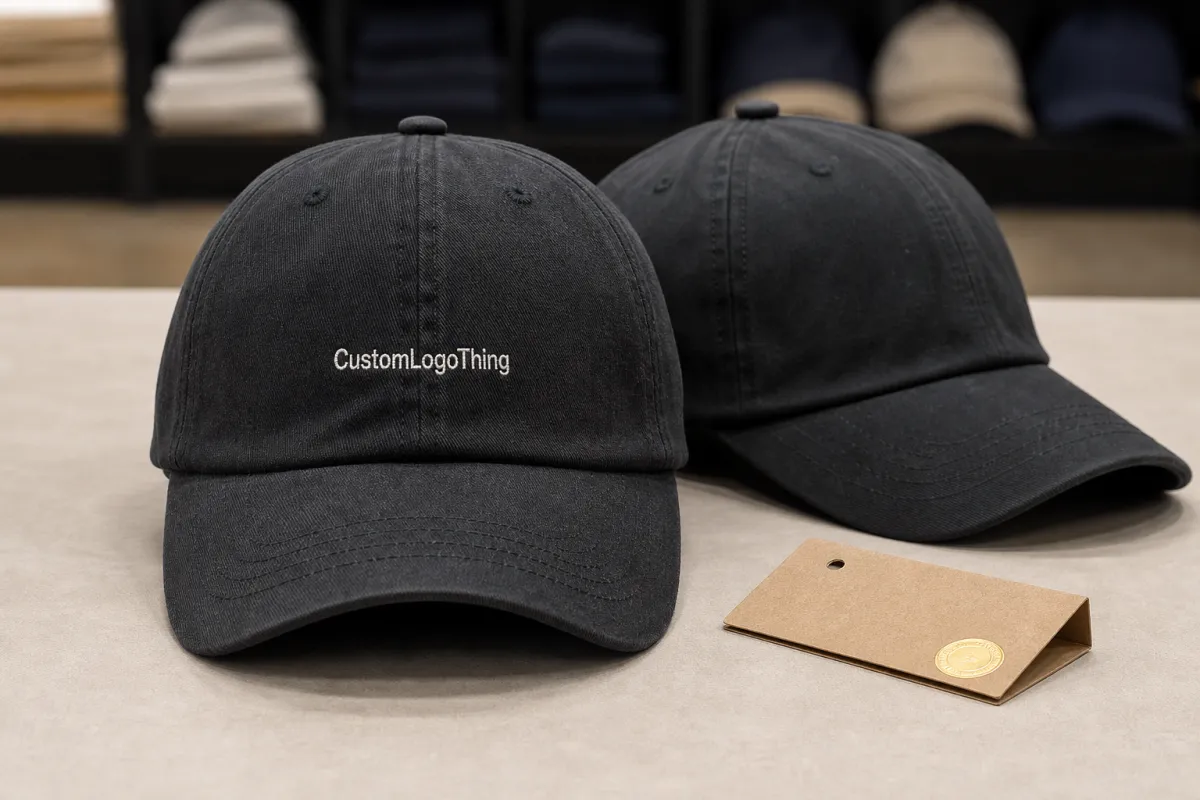
Unit cost changes because construction changes. A structured crown needs more support than an unstructured one. A flat brim may need firmer inserts and more shaping time. A mesh-back trucker uses different material and sewing steps than a brushed cotton dad cap. Even a small increase in stitch count adds labor, and labor is part of the bill whether the buyer sees it or not.
Decoration adds another layer. A woven label on the sweatband is not the same as front embroidery, and neither behaves like a printed patch. Inside seam tape, underbrim printing, and individual polybagging each add small charges that are easy to overlook in an early quote. By themselves these charges look minor; across a bulk order, they stop being minor quickly.
Buyers sometimes compare dad caps, snapbacks, and foam truckers as if they were just three finishes on one body. They are not. A dad cap is usually softer and simpler. A snapback often needs a firmer front and a more defined silhouette. Foam truckers have their own front-panel behavior and decoration limits. The build changes the price, and the price changes the margin.
The cheapest quote only matters if the cap body, decoration, and pack-out match line for line.
That is why spec-matching matters more than brand impressions during sourcing. If one supplier includes custom labels, retail packaging, and carton marks while another is quoting a blank cap in a loose polybag, the numbers are not competing. They are describing different products. Comparing them as if they were equal is how buyers end up with surprise costs later.
Cap styles, materials, and finishing details that change the order
Cap style sets the tone before decoration starts. Dad caps are usually soft, low-profile, and easier to place into lower-risk programs. Snapbacks need a firmer shape and suit stronger branding. Five-panel caps are common in streetwear because they give a clean front surface. Performance caps are built for moisture management and active use. Trucker styles trade some body for breathability.
Fabric choice matters just as much. Cotton twill is familiar, printable, and friendly to embroidery. Polyester is often chosen for color stability and performance positioning. Nylon feels slicker and more technical. Acrylic blends appear in some vintage-inspired builds, especially where hand feel and color pop matter more than natural fiber content. None is automatically better; the right choice is the one that fits shelf price, decoration, and brand story.
Finishing details are where many buyers underestimate cost. Structured versus unstructured crowns affect how the front panel holds shape. Curved versus flat brims change inserts and finishing time. Stitched eyelets, sandwich brims, contrast underbrims, and closure style all add material or labor. A self-fabric strap with buckle is not priced the same as a snap closure or hook-and-loop back.
Branding choices also deserve a line item. Woven labels, inside prints, patch applications, and custom seam tape can lift perceived value without changing the silhouette. For programs that need a tighter presentation, buyers often pair cap orders with Custom Labels & Tags, sometimes with embroidered patches or retail hang tags when the shelf story needs more structure.
If the packaging includes paper inserts or hang tags, ask about paper stock and sourcing claims early. FSC-certified stock is not a price reducer, but it can matter for retail compliance or internal sourcing rules. A small packaging choice can create a paperwork problem if it is handled late.
Specifications buyers should lock before requesting quotes
A clean quote starts with a clean spec sheet. Before pricing begins, confirm the style, panel count, fabric weight, closure type, logo method, logo size, color count, and packaging format. If those fields are not fixed, suppliers fill in the blanks in different ways. That is how one price looks aggressive on paper and another turns out to be the only realistic one once the build is fully defined.
- Style: dad cap, snapback, five-panel, trucker, performance, or hybrid build.
- Construction: structured or unstructured, panel count, brim shape, and eyelet count.
- Decoration: embroidery, woven patch, printed patch, woven label, or inside print.
- Packaging: bulk packed, individual polybag, barcode sticker, insert card, or retail-ready fold.
- Artwork: logo size, placement, thread count, and PMS color matching requirements.
Incomplete specs create noisy quotes because every supplier makes different assumptions. One vendor may price a standard blank with one embroidery location. Another may include digitizing, a woven label, and a folded retail pack. Those differences are easy to miss unless the line items are read carefully.
A standardized tech pack solves most of that. It also gives room for alternate pricing later. The same cap can be quoted as a basic build, a mid-tier build, and a premium build without changing the brief. That side-by-side view is usually more useful than chasing a single number. Sourcing works better when the assumptions are explicit.
Artwork placement can move both setup charges and timing. A large front embroidery with several thread colors often needs more digitizing than a small side mark. PMS matching can slow approvals if the supplier needs testing or color confirmation. These steps are normal parts of the pricing breakdown, not hidden extras. Buyers who treat them as normal tend to get fewer surprises.
Private label caps unit cost breakdown: pricing, MOQ, and sample strategy
The private label caps Unit Cost Breakdown usually has five parts: the base cap, decoration, setup charges, packaging, and freight. On a simple stock-based order, the cap body carries most of the cost. On a more branded retail program, tooling, digitizing, label work, and packaging can take a meaningful share. That is why unit cost is never just the factory sewing price.
For planning, buyers often see rough ranges like these for bulk programs, depending on build and decoration count:
| Build type | Typical factory unit price | Common MOQ | Sample path | Best fit |
|---|---|---|---|---|
| Stock blank dad cap with simple embroidery | $1.80-$3.20 | 300-1,000 pcs | Photo proof or stock sample | Fast-moving promotions and entry retail |
| Semi-custom snapback with woven label and one embroidery zone | $2.80-$4.80 | 500-1,000 pcs | Pre-production sample | Private label launches with moderate branding |
| Fully custom structured cap with patch, custom taping, and retail packaging | $4.25-$7.50 | 1,000 pcs and up | Pre-production sample plus final approval | Higher-margin retail and brand programs |
Those numbers are planning ranges, not promises. Fabric grade, trim selection, stitching density, origin, and packaging all move the final price. Still, they help buyers spot whether a quote is in the right zone before negotiations become detailed.
MOQ shapes the final number because setup costs are spread across the quantity. If digitizing costs $40 and a woven label tool is another $80, those fees are easy to absorb on 1,000 caps and much harder on 200 caps. The same logic applies to samples. A pre-production sample might run $30-$90. A stock blank or photo proof can cost less.
There are three numbers worth comparing, and they should not be mixed up:
- Factory unit cost: the cap before freight and duties.
- Packed unit cost: the cap once labels and packaging are added.
- Landed unit cost: the cap after shipping, duties, and clearance.
The landed number is the one that matters for margin. A quote that looks 20 cents cheaper at the factory can become more expensive once freight, carton charges, or retail-ready packaging are added. Buyers who keep track of the breakdown usually ask for all three numbers before a decision is made.
Good pricing conversations include setup charges, sample cost, and freight before the order is released.
Sample strategy depends on the complexity of the build. If the cap uses a standard shape and known materials, a photo proof may be enough to verify layout. If the design introduces a new patch, custom underbrim print, or brand-specific closure, a pre-production sample is the safer route. It costs more up front, but it often saves more by catching placement or trim issues before bulk production begins.
For buyers trying to lower cost without hurting retail quality, the fastest wins are usually simple: keep the cap body proven, limit color changes, and skip packaging extras that do not help sell the item. The best cost reductions are usually boring. That is a good sign.
Process, timeline, and production steps from approval to delivery
The production flow is familiar, but every step costs time. It starts with spec confirmation and artwork review, then moves to sampling, approval, bulk manufacturing, quality checks, packing, and shipment. If one step is unclear, the rest of the schedule usually slips. That is why disciplined approvals matter more than most buyers expect.
Timing depends on the build. A stock-based cap with simple embroidery may move faster than a fully custom cap with new trims. As a broad planning range, artwork review can take 1-2 business days, sample production 5-10 business days, and bulk production 12-20 business days after approval. Freight adds its own clock. Air shipping is faster but more expensive; ocean shipping is slower but usually better for larger orders and tighter landed cost targets.
Delays tend to come from the same places: late artwork files, repeated revision cycles, material shortages, and last-minute packaging changes. Those are common production problems, not rare exceptions. Buyers who send clean files, confirm color standards early, and lock packaging before production starts usually get a better result and a more reliable calendar.
Quality control should not be limited to the final carton check. Stitch balance, logo placement, seam alignment, closure function, brim shape, and panel symmetry all need attention before goods leave the line. Packaging matters too. Carton strength, inner packing method, and handling tests become important if the order will travel through long routes or multiple handoffs. For reference, many packaging teams use guidance from Packaging.org, and shipment validation resources from ISTA are useful when cartons need to survive parcel or mixed-mode freight.
A simple approval rule helps keep the process clean: approve one stage fully before asking for the next. That limits rework, keeps the order moving, and makes the cost breakdown more trustworthy because each sign-off locks a real production choice instead of a moving target.
How to compare cap suppliers and move from quote to order
Supplier comparison should begin with transparency. The better partners quote from a spec sheet, provide clear sample photos, answer artwork questions quickly, and give a documented timeline from order to ship. If a supplier cannot explain what is included in the quote, the buyer often ends up reconstructing the cost later.
Use a short checklist before choosing a vendor:
- Does the quote match the same cap style, decoration method, and packaging format?
- Are tooling fees, digitizing, and setup charges shown clearly?
- Is the MOQ realistic for your forecast and storage plan?
- Does the sample path match the complexity of the build?
- Has the supplier stated freight assumptions and lead time in writing?
After that, ask for a landed quote, not only a factory quote. Landed cost gives the clearest answer on unit economics, especially if the order is going into a warehouse or retail program with fixed margin targets. If the supplier can also provide alternate pricing for different decoration levels, even better. That makes it easier to see how much the market can bear without reopening the brief from scratch.
The cleanest quote-to-order path is straightforward: send one complete spec sheet, request landed pricing, confirm the sample path, review artwork, approve the production calendar, then release the order. It works because it keeps assumptions visible. That alone makes the unit breakdown easier to read before money is committed.
For brands that want a stronger retail presentation, the best suppliers are the ones who can connect the cap build to the rest of the package. That may mean matching the cap with Custom Labels & Tags, suggesting a better closure option, or adjusting pack-out so the carton count makes sense for distribution.
How do you calculate private label cap unit cost for a first order?
Start with the base cap price, then add decoration, labeling, packaging, and freight to get landed unit cost. Spread setup charges and sample fees across the order quantity so you can see the true cost per piece. Use the same spec sheet for every supplier so the comparison stays apples to apples.
What MOQ gives the best private label cap pricing?
The best MOQ is usually the one that absorbs setup cost without creating excess inventory risk. Larger runs often reduce unit cost, but only if the design and color plan are stable. Ask for tiered pricing so you can compare 300, 500, and 1,000 piece scenarios before committing.
Which cap details add the most to unit cost?
Custom embroidery, woven labels, specialty closures, and premium fabrics usually move price the fastest. Packaging upgrades such as inserts, hangtags, or polybags also add cost in small but real increments. Higher stitch counts and more complex artwork can increase both setup cost and production time.
How long does private label cap production usually take?
Simple stock-based orders can move faster than fully custom builds with new artwork or trim details. Sampling, approval, and freight booking often matter as much as sewing time in the overall schedule. The safest timeline is the one confirmed after artwork, materials, and order quantity are locked.
How can I lower my cap quote without hurting retail quality?
Keep the design focused by limiting color changes, extra trims, and unnecessary packaging upgrades. Choose a proven cap body and decoration method that fits your target retail price. Ask for alternate quotes so you can compare standard, mid-tier, and premium builds side by side.

