Custom Fabric Labels do more than carry a logo. In private label apparel, they shape how a shirt is perceived before the hanger comes off the rack and after the first wash cycle is over. A tiny trim can make a garment feel finished, credible, and worth the price. That is why buyers keep asking for custom fabric labels for shirts private label programs that balance comfort, compliance, and brand presence without creating avoidable production issues.
The label is one of the few parts of a shirt that is handled directly by the customer. They feel it at the neck, read it for care instructions, and judge the quality in a second. If it scratches, curls, fades, or looks generic, the shirt seems cheaper than it should. If it is soft, legible, and consistent with the brand, the inside of the garment supports the outside impression.
That matters because shirts are judged twice: once visually, and once after laundering. The second test is less forgiving. A beautiful neck label that dissolves, frays, or peels after a few washes can undo a lot of work. On the other hand, a well-specified label often adds perceived value for only a small fraction of the total garment cost.
Why shirt labels matter in private label apparel
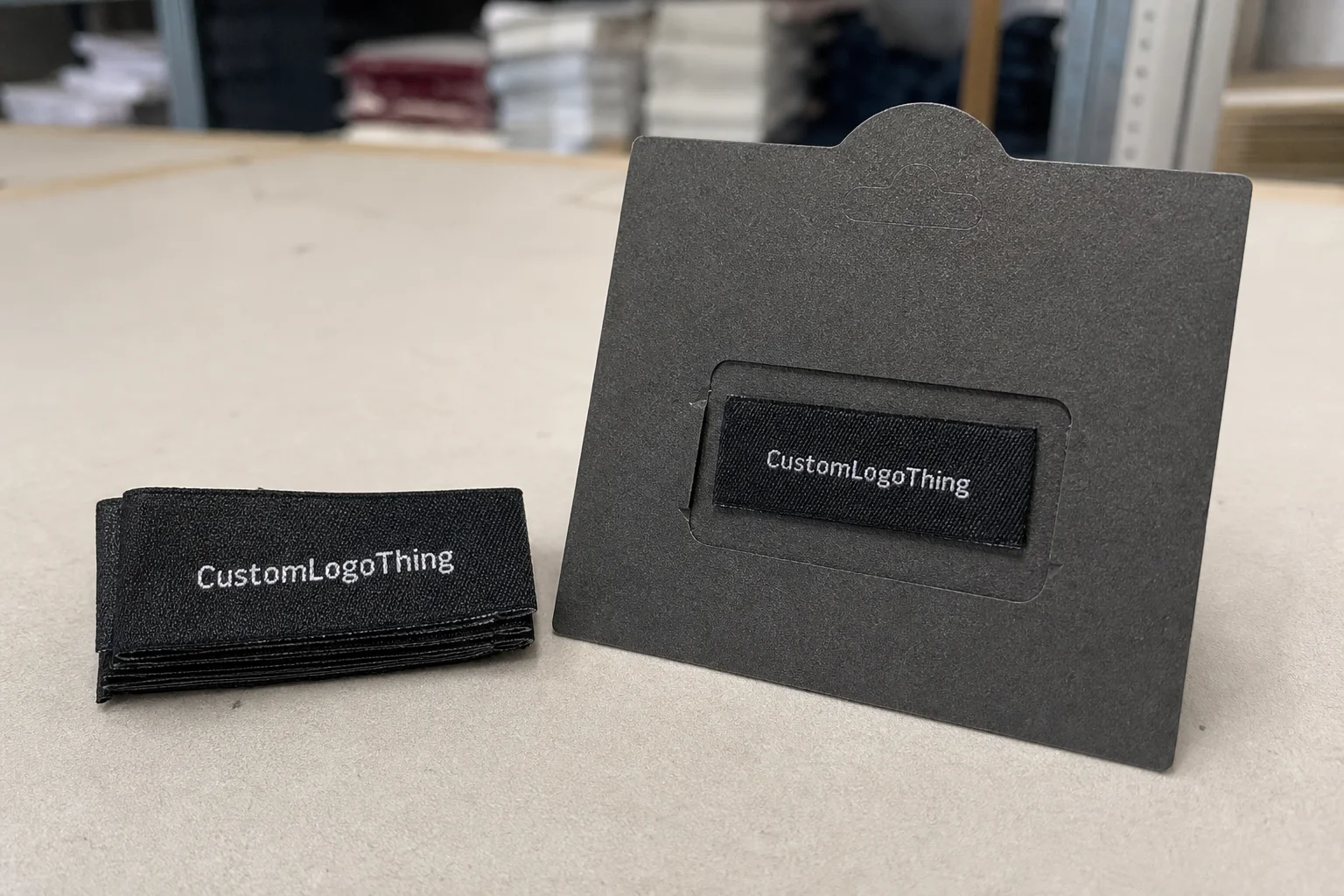
Private label means the garment is produced by a third party but sold under your brand name. In apparel, that usually includes the neck label, size label, care label, hang tag, and sometimes a packaging system that keeps the brand presentation consistent. The shirt may be cut and sewn elsewhere, but the buyer experiences one brand story.
From a packaging and trim perspective, the label functions like the signature on the inside of the product. It is not the most expensive part of the shirt, yet it often signals whether the garment was specified carefully or assembled in a hurry. Buyers tend to obsess over GSM, stitch count, and wash testing, which is fair. Still, consumers notice the label almost immediately once they try the shirt on.
Premium positioning usually calls for a woven neck label, a soft fold, and print or thread choices that match the garment’s price point. Basics programs often prefer a tagless print because the target customer values comfort more than visible texture. Workwear and athletic shirts usually need labels that survive repeated laundering and abrasion. The best option depends on the fabric, fit, and retail role of the shirt, not just the logo.
The core decisions usually come down to:
- Fabric: woven polyester, satin, cotton, or printed materials
- Format: sewn-in neck label, side seam label, care label, or tagless heat transfer
- Placement: center back neck, side seam, hem, or inside yoke
- Compliance text: fiber content, care instructions, size, and country of origin
There is no universal answer here. A label that fits an elevated casual shirt may be wrong for a boxy utility style or a performance tee. For Private Label Buyers, the right sequence is simple: define the garment first, then choose the label that supports it.
Types of custom fabric labels for shirts
The most common options for shirts are woven labels, printed satin labels, cotton labels, and heat-transfer labels. Each has a different feel, different production behavior, and different failure mode. That last part matters more than most buyers expect. The downside of a label type usually shows up only after a sample is washed, rubbed, folded, and worn for a few hours.
Woven labels are still the standard for brands that want texture, durability, and a more premium finish. The design is built into the fabric structure, so the logo, size, and brand details become part of the weave rather than sitting on top of it. High-density damask constructions can handle fine detail well, though there is a limit. Tiny type, thin lines, and crowded elements still blur if the weave is too loose or the artwork is overcomplicated.
Printed satin labels feel smoother and lighter against the skin. They work well for comfort-first basics, lighter shirts, and programs where the inside neckline needs to stay soft. The tradeoff is durability. Print adhesion, ink quality, and wash resistance vary more than many first-time buyers realize. A sample that looks clean on day one is not proof of long-term performance.
Cotton labels create a natural, matte look that can suit heritage brands, eco-positioned lines, or textured garments. They can look excellent in the right shirt. They can also fray or soften in ways that make the label less crisp after laundering if the edges and weave are not well controlled. Buyers often like the look first and evaluate the wear characteristics later, which is backward.
Heat-transfer labels are the tagless option most consumers either love or forget until they feel a bad one. Done properly, they remove the itch and reduce bulk at the neck. They are common in athletic shirts and soft basics because they support a cleaner interior feel. Their weakness is application control. Temperature, pressure, dwell time, and shirt fabric all influence adhesion. If any of those variables drift, the print can crack, fade, or peel sooner than expected.
| Label type | Typical feel | Durability | Best use case | Relative cost |
|---|---|---|---|---|
| Woven damask | Soft to moderate | High | Premium private label shirts | Medium |
| Printed satin | Very soft | Medium | Comfort-focused basics | Low to medium |
| Cotton woven | Natural, matte | Medium | Heritage or eco-positioned lines | Medium |
| Heat-transfer | Tagless, smooth | Medium to high | Athletic and comfort-first shirts | Low to medium |
For many buyers, the real question is sewn-in versus tagless. Sewn-in labels read as traditional retail. Tagless labels reduce irritation and simplify the neck area. A $22 basics tee and a $68 woven shirt should not use the same logic. One is selling comfort and scale; the other is selling finish and margin.
Sample approval matters here. A screen proof cannot show edge hand feel, stitch tension, or how white text disappears on a pale background. Real samples do. If the label is too stiff, too glossy, or too busy once it is cut and folded, the issue usually appears before production if the buyer actually tests it.
How private label shirt labels are produced
The production flow is straightforward, but each step can add time if the brief is incomplete. Most orders start with artwork submission. Clean vector files are the safest choice: AI, EPS, or editable PDF with outlined fonts. Low-resolution JPGs are a common source of delays because the supplier may need to rebuild the artwork before quoting or sampling.
After the quote, the supplier prepares a proof. That proof should be checked for spelling, dimensions, color placement, text orientation, and finishing method. Then comes the sample or strike-off. For woven labels, the sample shows how the weave resolves fine detail. For printed labels, it shows color density, edge behavior, and whether the print remains readable after the chosen finishing process.
Production then moves into weaving or printing, followed by cutting, folding, finishing, and packing. A damask label may be woven on narrow looms and then cut into rolls or pieces. Printed labels may come off in rolls and be heat-sealed, folded, or sewn into shape depending on the garment plan. The finishing method matters more than many first-time buyers expect. A rough edge or weak fold can create irritation, curling, or a cheap-looking inside finish.
Placement also needs to be settled early. Center back neck is the most familiar location. Side seam placement works well for minimalist shirts and some modern cuts. Size and care information may live on a separate label or be combined into one panel. The more information you try to compress into a small space, the more likely the label becomes hard to read.
A good label does its job quietly. It fits the garment, survives the wash cycle, and never gives the customer a reason to think about it twice.
When reviewing approval files, check four details before signing off: size, color, text accuracy, and edge finish. Those four items account for a large share of preventable label errors. If you are coordinating hang tags or retail packaging too, keep the typography and visual language aligned with your wider Custom Labels & Tags strategy so the shirt, insert card, and outer presentation feel like one brand system.
Specs that affect quality, compliance, and comfort
Specification choices decide whether the label feels premium or problematic. The biggest drivers are material, weave density, size, finish, fold style, and the number of colors in the design. Dense woven construction usually supports sharper detail. Looser constructions can look fine in a mockup and still blur in production, especially if the logo includes small text or thin rules.
Comfort starts with the skin-facing surface. A smooth satin finish or fine damask weave is usually easier to live with than a coarse label, particularly in a fitted shirt where the neck area sits close to the skin. Softness, however, should not come at the expense of readability. A consumer still needs to identify brand, size, and care instructions without squinting.
Wash durability is the other major issue. Labels on shirts should survive repeated laundering, especially if the garment is intended for everyday wear. Buyers should ask how the label behaves after multiple wash cycles, not just after the first inspection. Printing method, thread choice, edge sealing, and stitch quality all matter. So does the compatibility between label and garment fabric. A label attached to brushed cotton may behave differently than one attached to a slick synthetic blend.
Compliance requirements vary by market, but the usual details include fiber content, size identification, country of origin, and care instructions. In the U.S., apparel labeling expectations are shaped by FTC rules. Brands that make sustainability claims need to be disciplined about documentation, because vague environmental language creates more risk than value. If a supplier says a material is recycled, organic, or certified, ask for support before approving the claim.
Design also has to match the shirt’s positioning. An understated premium shirt may call for a small woven label in muted tones. A visible lifestyle brand may want a bolder logo or contrast border. A performance shirt may need tagless printing because comfort matters more than visible texture. These are trim decisions, but they function like package branding at a small scale. The label contributes to the retail signal just as packaging does.
For buyers comparing programs, the material choice is not just aesthetic. It can affect the sewing line, the customer’s first impression, and the return rate. If you already coordinate Custom Packaging Products across apparel and retail goods, keep the label spec aligned with the same brand standards used for boxes, inserts, and other packaging elements. Consistency reduces the chance that the product feels pieced together from separate suppliers.
For shipment and handling, thinking like a packaging engineer can help. The labels themselves are not shipping products, but they still move through folding, cartonizing, storage, and transit. If a design is prone to curling, cracking, or abrasion, that risk can show up before the garment reaches the customer. The same logic used for outer packaging protection applies here: protect appearance, reduce damage, verify behavior under handling.
Cost, pricing, and MOQ for custom fabric labels for shirts private label
Cost depends on a few predictable variables. Material choice is one. Dimensions matter too. So does the number of colors, the level of detail, the fold style, and whether the label needs special finishing or a tagless adhesive process. A simple one-color woven label is easier to price than a multi-color design with a custom fold, extra text, and tight tolerance requirements.
For planning purposes, sample charges often fall in the $20-$60 range depending on complexity and freight, though simple samples can be less and highly customized ones can cost more. Production pricing becomes far more efficient at volume. As a rough reference, small runs may land around $0.10-$0.30 per label, while lower-cost printed versions can sometimes sit below that at higher quantities. Premium woven constructions with tighter detail, special folds, or multiple colors can move higher.
MOQ, or minimum order quantity, comes down to setup efficiency. If a supplier has to program weaving machines, prepare print plates, or set up special finishing equipment, they need enough volume to spread those fixed costs. That is why one style might have a 1,000-piece minimum while another is closer to 5,000 or more. It is not arbitrary. It is the economics of production.
Useful budgeting splits the quote into a few parts:
- Base cost: material and production method
- Setup cost: artwork prep, loom programming, or print setup
- Finishing cost: cutting, folding, heat sealing, or sewing prep
- Service cost: revisions, extra proofs, or rush handling
- Logistics: freight, duties, and expedited shipping if needed
Extra charges can catch buyers off guard. Rush orders usually cost more. Revisions after proof approval can trigger rework fees. Special finishes such as metallic thread, embossed effects, or nonstandard folds can raise the unit price quickly. Freight deserves its own line item, especially on lower-value orders where shipping can become a meaningful share of the total spend.
The cheapest unit price is not always the best value. A label that frays, curls, or feels irritating can create complaints and returns that cost more than the trim savings. In private label apparel, consistency often matters more than shaving a fraction of a cent off the label budget.
Lead time and delivery: what the ordering process looks like
Most orders follow the same sequence: quote request, artwork proof, sample approval, production, quality check, and shipment. If the artwork is ready and the specifications are clear, the process moves quickly. If the care text is still changing or the label size is under debate, the calendar stretches.
First-time orders usually take longer than reorders because the supplier has to lock in the setup. A new program may need color confirmation, label placement sign-off, and compliance review. Reorders are faster because the approved structure already exists. Even so, a reorder can slow down if the shirt fabric changes or if the brand decides to switch from a sewn-in woven label to a tagless print.
As a planning range, many buyers should expect 12-20 business days from proof approval to shipment for standard runs. Complex constructions and highly customized finishes can take longer. Faster turnarounds are possible, but they depend on ready-to-use files, simple specs, and quick approvals. If multiple people need to sign off, add buffer. Approval bottlenecks are one of the most common causes of missed launch dates.
Three things tend to extend lead time:
- Artwork changes after proofing
- Missing compliance copy or inconsistent size text
- Peak-season demand that fills production capacity
Delivery planning should follow the product launch calendar, not the label calendar by itself. For a launch order, leave room for a sample round, final approvals, and freight delays. For replenishment, set the reorder trigger before inventory gets tight. A label shortage can stall an entire garment run, and that is an expensive mistake to discover late.
From a buyer’s point of view, the best ordering process feels almost boring: clean files, locked specs, written approvals, and no surprises. That level of discipline matters in apparel trims and in packaging. If the brand also relies on printed boxes, inserts, or hang tags, keep the timing aligned so the full presentation arrives in sequence instead of piecemeal.
Common mistakes private label buyers should avoid
The first mistake is choosing a label because it looks good in a mockup, then discovering it feels wrong on the actual shirt. A label can photograph beautifully and still create a comfort problem. That disconnect shows up often when decisions are made too early and tested too lightly.
Second, many brands send artwork that is too small, too detailed, or poorly formatted. Thin lines, tiny legal text, and crowded logos do not scale well in a fabric label. If the design needs a magnifying glass, it probably needs simplification. Labels are small. They reward restraint and punish decorative clutter.
Skipping wash testing is another common failure. So is ignoring edge finish. A rough cut edge or weak stitch can create fraying, curling, or irritation after only a few washes. Buyers sometimes assume the supplier will handle every quality risk automatically, but good results still require a written spec and a real sample check.
Compliance gaps are harder to ignore. Forgetting fiber content, country of origin, size, or care instructions can create rework or delays. Even when the label is mainly a branding component, it still has to satisfy practical labeling rules. That part is not optional.
Finally, some brands over-order too many label variants before demand is proven. One shirt style usually needs one label format and one care approach at the start. Test the program. Watch how the product is received. Then expand the line if the sales data supports it. That approach is slower, but it avoids filling storage with unused trims.
How to brief a supplier and move from sample to order
A good brief saves time, reduces quote variance, and improves sample accuracy. Start with a spec sheet. Include dimensions, placement, fold style, material preference, quantity, and approved color references. If the label will carry care content, provide the exact copy. Do not assume the supplier will infer the details from the logo alone.
Request samples in the exact configuration that will go into production. If you want a woven label with a center fold and soft edge finish, do not approve a flat sample and hope the final version will feel the same. It will not. The real configuration is the only one that matters.
For new programs, it usually makes sense to begin with one shirt style and one label format. That keeps variables under control. Once fit, wash performance, and brand response are confirmed, it becomes easier to expand into more colors or additional SKUs without introducing avoidable confusion.
It also helps to set reorder thresholds. Labels are a small item, but they can become a bottleneck quickly. If a shirt launch depends on one trim and that trim runs out, garment production can sit idle while everyone waits for an emergency reorder. That is a preventable problem.
Before requesting a quote, gather the following:
- Logo files in vector format
- Label dimensions and placement
- Material preference and fold style
- Care copy, fiber content, and origin text
- Target quantity and launch date
Then compare the label type against the shirt’s price point and wear expectations. That is the real sourcing decision. Not just what looks good on screen, but what supports the garment in the hand, on the body, and after repeated laundering. Approached that way, custom fabric labels for shirts private label sourcing becomes less about decoration and more about protecting product quality.
What custom fabric label types are best for private label shirts?
Woven and Printed Fabric Labels are the most common choices for private label shirts because they balance branding and durability. Woven labels usually feel more premium and hold up well in laundering. Printed labels are useful when softness and readability matter more than texture.
How much do custom fabric labels for shirts private label programs usually cost?
Pricing depends on label type, size, color count, finishing, and order quantity. Lower quantities usually cost more per label because setup costs are spread across fewer pieces. Rush orders, special folds, and unusual finishes can raise the final price.
What is a typical lead time for private label shirt labels?
Lead time usually includes proofing, sample approval, production, and shipping. First-time orders take longer than reorders because artwork and specifications must be finalized. Delays often happen when revisions are needed or approvals are slow.
What information should I send for an accurate quote?
Send your logo files, label size, material preference, fold style, quantity, and placement details. Include care copy, fiber content, and any required country-of-origin text. A complete spec sheet helps suppliers quote more accurately and quickly.
How can I make sure shirt labels feel comfortable on skin?
Choose softer materials such as satin, cotton, or finely woven labels when comfort is important. Ask for edge finishing that reduces fraying or scratching. Test the label on the actual shirt fabric before approving full production.


