A shopper often sees the pouch before the tee. That small detail changes the economics of apparel packaging more than most teams expect. A private label Zipper Pouches for Apparel supplier program is not just a protective layer in transit. It is the first branded surface many buyers touch, and that first touch shapes how the product is perceived before the hangtag is even read.
For socks, intimates, athleisure, tees, and accessory bundles, a zipper pouch can do three jobs at once: protect the garment, reduce warehouse mess, and make the item look intentional on shelf or in a shipment. The trick is not adding more packaging. It is choosing a pouch that supports the channel, the price point, and the labor behind it.
What private label zipper pouches change in apparel packaging
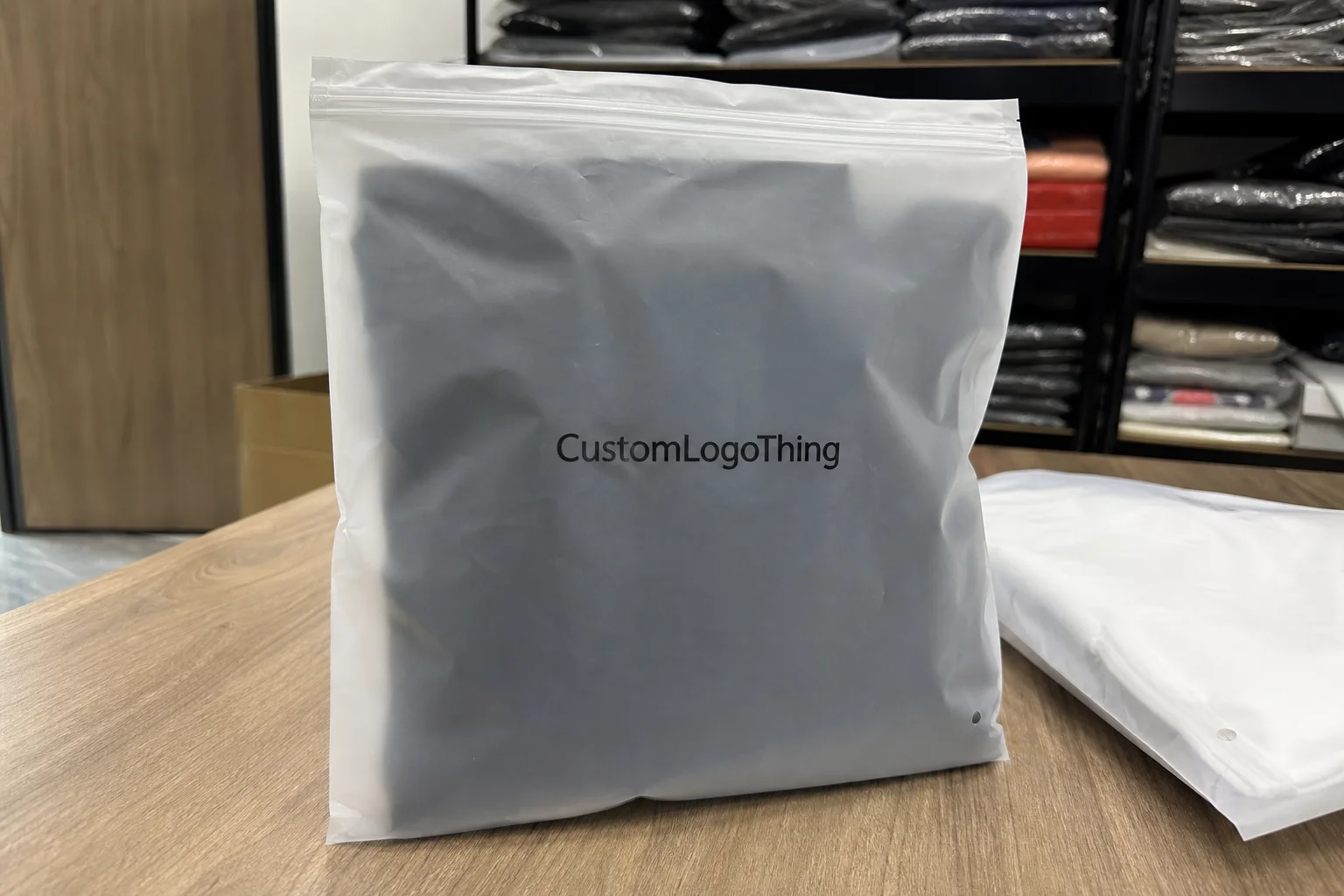
Most apparel buyers start with protection, which is reasonable. A pouch needs to keep dust, abrasion, and moisture from turning a clean garment into damaged inventory. The bigger change happens later, when the pouch stops behaving like generic transit packaging and starts acting like part of the product story.
That matters because apparel is sold visually long before it is judged by hand feel. A clear or frosted zipper pouch can make a simple basic feel more deliberate. It can also help a packer move faster if the product is folded consistently and the pouch dimensions are correct. In a warehouse, that second point matters as much as branding. Labor has a cost, and packaging that slows the line quietly increases it.
Private label zipper pouches for apparel supplier programs are especially useful in categories where repeated handling is normal. Reclosable packaging helps with returns, retail inspection, seasonal storage, and reissue after quality checks. A standard poly bag can do the job once. A zipper pouch can survive a little more friction.
Common use cases include:
- E-commerce packaging for folded garments
- Shelf-ready retail presentation for basics and accessories
- Secondary packaging for bundles and multipacks
- Subscription apparel kits and limited drops
- Return-friendly packaging for items likely to be opened again
Buyers usually narrow the decision to five variables: film thickness, transparency, finish, zipper style, and print method. Miss one of those, and the pouch can look cheap, feel flimsy, or create packing friction. Get them aligned, and the pouch does its job without drawing attention to itself.
How the private label zipper pouch process works
The smoothest programs usually begin with the clearest brief. A supplier needs more than artwork. It needs the folded garment dimensions, the target channel, the closure preference, the print area, and whether the pouch will be used in a warehouse, on a retail peg, or inside a mailer. A vague request tends to produce a vague sample.
The production flow is usually straightforward. A brand sends a brief and artwork. The supplier prepares a dieline or confirms a stock pouch size. Then comes proofing and sampling. A practical sequence is digital proof, material sample, pre-production sample, and final approval. Skipping one of those steps rarely saves time overall. It usually just moves the problem downstream.
Artwork needs real clearance, not just visual balance. Bleed, safe zones, zipper placement, barcode space, and seal margins all affect the final result. If the pouch has a clear window, the visible garment area needs to be considered in the layout. If the pouch is fully printed, the folds and zipper track still matter. A mockup can look polished and still fail the moment a real folded item goes inside.
Quality control should also be specific. Ask how the supplier checks seal integrity, zipper alignment, print registration, odor, and clarity. If those checks are described in vague terms, that is a warning sign. For shipment-bound packaging, it also helps to ask whether the pouch has been tested against parcel handling conditions similar to ISTA expectations. Packaging failure often starts in transit, not in the design file.
A good pouch is not the prettiest file in the deck. It is the one that still closes cleanly after packing thousands of units, survives shipment, and does not force the warehouse to invent workarounds.
Logistics should be settled before production starts. Carton pack counts, outer case labels, pallet configuration, and delivery windows all affect the final launch. If the packaging is tied to a marketing date, the schedule should be built backward from that date with room for a sample revision. The reprint that happens after a missed proof is usually more expensive than the proof that took an extra day.
Cost, pricing, and MOQ factors buyers should model
Pricing for private label zipper pouch programs usually comes down to four levers: material gauge, pouch size, closure type, and print complexity. Volume matters too, but not in a simple straight line. A 5,000-piece run may be materially more expensive per unit than 20,000 pieces, yet a poorly specified larger run can still cost more overall once freight, rework, and unusable inventory are counted.
For planning purposes, these are realistic starting ranges for typical apparel packaging with standard artwork complexity:
| Option | Typical MOQ | Approx. unit cost | Best fit |
|---|---|---|---|
| Plain clear PE zipper pouch, stock size | 1,000 to 3,000 | $0.08 to $0.16 | Basic folding, low design load, internal logistics |
| Custom-sized pouch with one-color print | 3,000 to 10,000 | $0.14 to $0.28 | Retail basics, e-commerce apparel, branded sets |
| Matte or frosted pouch with zipper upgrade | 5,000 to 20,000 | $0.22 to $0.48 | Premium basics, display packaging, stronger shelf signal |
Those figures move with print coverage, freight mode, and whether the supplier is converting stock material or ordering a fresh film spec. Setup fees, cylinders, plates, sample charges, and duties can change the landed cost more than the quote suggests. The lowest unit price is not always the lowest total cost.
One useful buying habit is to request three quote points in parallel: 5,000, 10,000, and 25,000 units. Then ask for two material options and one alternate print setup. That exposes the breakpoints clearly. It also shows whether a supplier is pricing the pouch itself or padding in assumptions that only make sense on a large order.
Category matters. Premium basics can support a slightly higher packaging cost because presentation contributes to perceived value. Mass-market basics usually cannot. If margins are tight, the answer is often not to strip out branding, but to simplify the finish or reduce the number of print passes. Identity should stay. Friction should go.
If the packaging program also includes paper inserts or hang tags, ask whether the supplier can coordinate them with FSC-aligned sourcing. For broader packaging vocabulary and material references, the Packaging Education Forum is a useful benchmark. It does not replace supplier diligence, but it helps buyers ask cleaner questions.
Material, size, and print specs that affect performance
Material choice affects both appearance and behavior. Polyethylene is common because it flexes well and resists cracking during routine handling. Thicker films usually feel more durable and hold shape better on shelf. Matte and frosted finishes can raise the perceived value, but they reduce clarity, which matters if the garment color is part of the selling story.
Size should always be based on the folded, packed garment, not the flat product spec. That distinction sounds trivial until a team approves a pouch from the garment’s unfolded dimensions and then discovers the folded item needs another 20 to 30 mm of clearance. Too small, and packing slows down. Too large, and the pouch looks underfilled and wastes film.
Zipper style is a practical choice, not a decorative one. A single-track zipper is usually cheaper and simpler. A double-track closure or slider can improve closing confidence, especially for items that are handled multiple times. Press-to-close styles are familiar, but they do not all feel the same in use. If the item may be opened and resealed, test the closure with real fingers, not a spec sheet.
Print method matters more than many non-packaging teams expect. Flexographic printing tends to fit larger runs and repeatable artwork. Digital print is often better for short runs, versioned packaging, or faster art changes. If brand color consistency matters more than photo-level detail, spot color control may matter more than image resolution. A supplier sample is a better judge than a screen render.
- Puncture resistance protects against hang tags, garment hardware, and carton friction.
- Seal width affects durability and the visual edge of the pouch.
- Transparency level changes how much of the product is visible on shelf.
- Hang hole or tab may be needed for peg display and retail fixtures.
- Odor and clarity are worth checking for customer-facing apparel.
Claims about sustainability need discipline. Recycled content, PCR percentages, and recyclability language should be backed by documentation from the material supplier and by the recycling conditions that actually exist in the destination market. For paper components, FSC is a useful reference point. For plastic film, the label should match reality, not just the marketing deck.
Timeline, lead time, and production steps to expect
Packaging timelines look short on paper and expand fast in practice. A first order often moves through briefing, proofing, sampling, revisions, production, and freight in a sequence that takes several weeks. The more custom the pouch, the more the calendar depends on approvals. Artwork delay remains one of the most common bottlenecks in apparel packaging.
The fastest steps are usually the least ambiguous: stock material selection, standard pouch sizing, and simple artwork placement. The slowest steps are the ones that invite opinions: color matching, zipper feel, window position, and whether the bag looks premium enough for the channel. Everyone wants speed. What most projects need is fewer decision loops.
Lead time also changes with seasonality and material availability. If the supplier stocks the right film and zipper style, the order can move faster. If it needs a new construction, a special finish, or a revised print setup, the schedule stretches. Fully custom private label zipper pouches for apparel supplier programs usually need more cushion on the first run than on a reorder.
A useful planning rule is simple: give the first order more time than it appears to need, then add buffer for freight and receiving. If the packaging supports a launch window, transit is not the final step. It is part of the production chain, and it can fail independently.
- Brief the supplier with packed garment size, artwork, and volume target.
- Approve the digital mockup and sample build.
- Confirm print, zipper, and film spec in writing.
- Release production only after a final proof check against the real packed item.
That last check is not busywork. It is the final chance to catch a size mismatch, a color shift, or a closure issue before the order becomes inventory. On a first program, two days spent in proofing are usually cheaper than two weeks spent cleaning up the fallout from a bad run.
Common mistakes apparel buyers make with zipper pouch sourcing
The first mistake is sizing from the garment spec instead of a folded packed sample. That is how buyers end up with pouches that are too tight to load efficiently or so oversized that the product floats inside. Both errors hurt. One slows the line, the other weakens presentation.
The second mistake is spending all the attention on the front panel and forgetting the barcode, SKU, or compliance information that operations needs. Packaging is not only a branding surface. It also has to work in the warehouse, in the store, and sometimes in returns processing. If the label area is wrong, the best-looking pouch still creates friction.
A third mistake is chasing the lowest unit price without checking failure risk. Weak seals, poor print registration, and thin film do not stay isolated. They show up later as damaged presentation, customer complaints, or labor spent reworking bad packs. The packaging cost was low. The actual cost was not.
Skipping zipper testing is another common miss, especially for apparel that gets opened and resealed repeatedly. Returns programs are unforgiving here. If the closure is weak, the pouch loses its second life fast. If it is stiff or misaligned, it frustrates packers and slows fulfillment. That is a hidden labor cost that rarely appears in the quote.
File control also matters. Inconsistent artwork versions, vague Pantone references, and unclear logo placement create avoidable disputes. The supplier can only print what it receives. The brand can only approve what it sees. If those two files are not the same thing, delays follow.
Do not assume every supplier understands apparel at the same level. Ask for relevant category examples, sample photos, and a plain explanation of how it handles folded dimensions. Good suppliers are specific. Generic ones speak in guesses.
If you already rely on Custom Labels & Tags for brand identification, think of the pouch as the larger canvas that frames those details. The label says what the item is. The pouch says how the brand wants it experienced.
Actionable next steps for a better supplier brief
Before you request quotes, gather three inputs: a folded product sample, the artwork files, and a budget range. Then add the delivery date, target order volume, and the role of the pouch in the channel. Is it meant to protect the apparel, help sell it, or do both? That answer changes the specification more than most teams expect.
Quotes should be compared on the same basis. Material thickness, zipper style, print method, MOQ, freight terms, sample charges, and lead time all need to sit in the same row. Otherwise the cheapest quote can hide the most expensive omission. A physical sample, or a close substitute, is worth asking for before the first full run, especially if the packaging program is new.
A clean brief for a private label zipper pouches for apparel supplier project should include:
- Packed garment dimensions and fold method
- Preferred pouch finish, zipper style, and transparency level
- Artwork files with logo placement and barcode requirements
- Target MOQ, reorder expectations, and launch date
- Any retail, e-commerce, or compliance constraints
One final proof against the real packed garment is rarely wasted effort. It catches size problems, print shifts, and closure issues before they become inventory. For apparel buyers who want cleaner shelf presentation and fewer damage issues, private label zipper pouches for apparel supplier programs can do more than they first appear to do, but only if the brief is specific and the sample is tested against reality.
What should I ask a private label zipper pouch supplier for apparel first?
Start with MOQ, sample options, material choices, print methods, and estimated lead time. Then ask for pricing at several volume levels so setup fees become visible. Share the packed garment size early, because pouch sizing is usually the main technical variable.
How do I choose the right size for private label zipper pouches for apparel?
Size the pouch to the folded, final-packed garment rather than the unfolded item. Leave enough clearance for easy insertion and zipper closure without excessive empty space. Test the fit with the exact apparel style you plan to ship or display.
What affects pricing the most on custom apparel zipper pouches?
Material thickness, pouch dimensions, zipper style, print complexity, and order volume usually drive pricing most. Rush production, freight, and custom tooling can add meaningful cost on first orders. Simpler designs and larger runs usually deliver the lowest unit cost.
How long does production usually take for custom apparel zipper pouches?
Production time depends on sampling, artwork approval, material availability, and order size. First orders usually take longer than reorders because more approvals and checks are required. Build extra time for freight and receiving if the packaging supports a product launch.
What mistakes reduce the value of private label zipper pouches for apparel?
Common mistakes include choosing the wrong size, skipping samples, and prioritizing the lowest quote without checking quality. Poor artwork setup can also cause print issues, barcode placement problems, and approval delays. The best results come from matching the pouch spec to the apparel, the channel, and the brand position.


