Buyer Fit Snapshot
| Best fit | Protective Shipping Inserts Price projects where brand print, material claims, artwork control, MOQ, and repeat-order consistency need to be specified before quoting. |
|---|---|
| Quote inputs | Share finished size, material target, print colors, finish, packing count, annual reorder estimate, ship-to region, and any compliance wording. |
| Proofing check | Approve dieline scale, logo placement, barcode or warning zones, color tolerance, closure strength, and carton packing before bulk production. |
| Main risk | Vague material claims, crowded artwork, missing packing details, or unclear freight terms can make a low unit price expensive after revisions. |
Fast answer: Protective Shipping Inserts Price: Specs, MOQ, Timeline should be specified like a repeatable production item. The safest quote records material, print method, finish, artwork proof, packing count, and reorder notes in one written spec.
Production checks before approval
Compare the actual filled-product size with the drawing, then confirm tolerance on folds, seals, hang holes, label areas, and retail display edges. Reserve space for logos, QR codes, warning copy, and material claims before decorative graphics fill the panel.
Quote comparison points
Review material grade, print process, finish, sampling route, tooling charges, carton quantity, and freight assumptions side by side. A quote is only useful when the supplier can repeat the same color, closure quality, and packing count on the next order.
Protective Shipping Inserts Price: Specs, MOQ, Timeline
Protective shipping inserts price tends to surprise buyers because the biggest swing usually comes from geometry, pack-out efficiency, and how many units fit in a master carton, not raw material alone. A molded pulp insert and a corrugated insert can look similar on a quote, then land in very different places once dimensional weight, labor, and breakage risk show up. The cheap quote is often the expensive program wearing a fake mustache.
I’ve watched teams chase the lowest unit number and then spend the next quarter cleaning up damage claims. That’s not a rare edge case. It happens a lot. If an insert protects better, cuts void fill, and reduces repacks, the higher unit cost can still be the smarter move. Protective shipping inserts price deserves a full-system review, not a quick glance at the line item.
The cheapest insert on paper can turn into the most expensive package in the building once you count repacks, claims, and customer service time.
Protective Shipping Inserts Price: What Actually Drives It
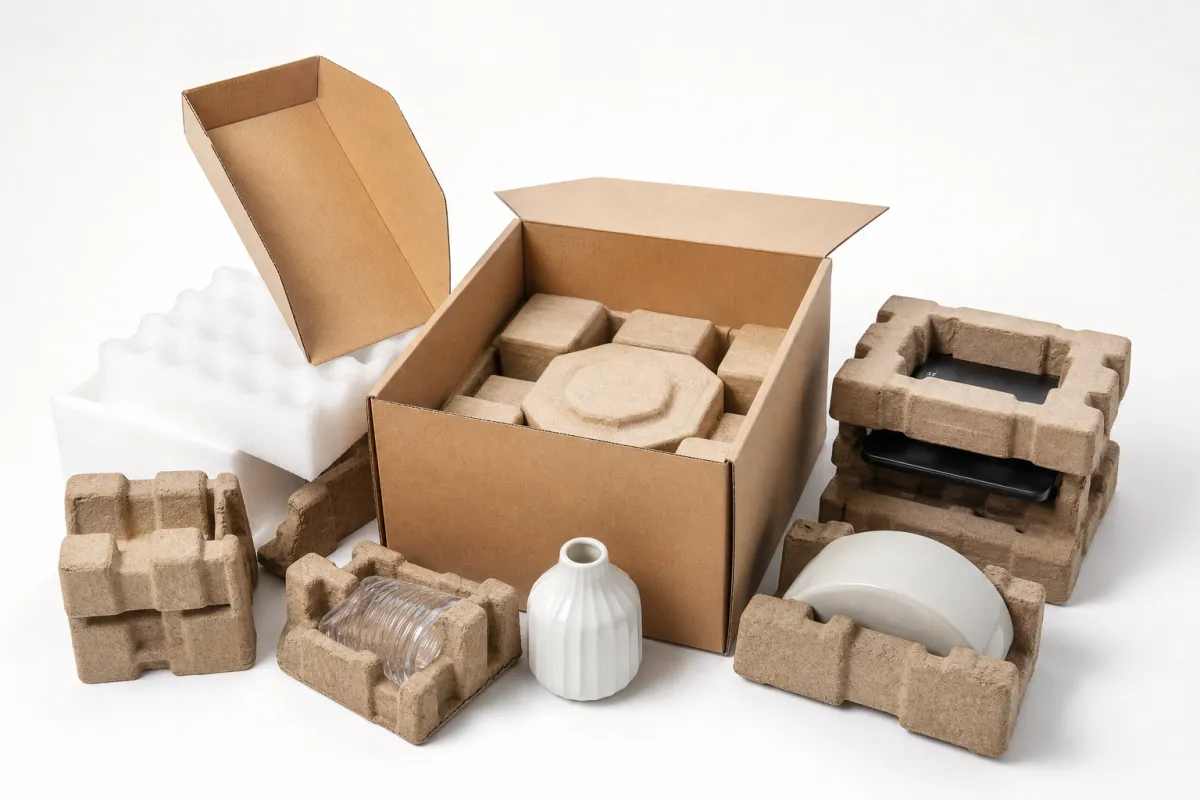
Protective shipping inserts price rarely follows a simple material formula. Thickness matters. So does board grade, foam density, and pulp wall structure. But the quote often moves more when the geometry gets complicated, when the insert has to nest around fragile points, or when the design wastes space inside the carton. A cleaner pack-out can be worth more than a cheaper substrate. Funny how that works.
For a packaging buyer, the real test is total landed cost. A unit that costs two cents more may still reduce outer carton size, lower dimensional weight, and cut void fill labor. That matters in ecommerce shipping, where carriers price by cube almost as much as by mass. If an insert lets you downsize the shipper, freight savings can wipe out the apparent premium fast. I’ve seen that math flip on a single SKU, and it usually makes people sit up straight.
Protective shipping inserts price also reflects the product's risk profile. Glass bottles, ceramic kits, premium gift sets, medical devices, and high-value electronics do not tolerate movement the same way. A cosmetic jar in a subscription box may need light restraint. A device with ports, screens, or accessories usually needs deeper cavity control and stiffer walls. The more the insert has to lock the product in place, the more engineering enters the quote.
Production efficiency changes the number too. An insert that runs cleanly on common tooling and stacks neatly in a master carton is cheaper to make and easier to ship. One that needs custom nesting, special cut depths, or extra hand finishing carries a different cost curve. Protective shipping inserts price is often a story about labor before the product ever reaches your dock.
Recurring shipments add another layer. A brand with stable SKUs can spread setup cost across multiple runs, which is why repeat orders often come back lower than the first quote. A one-off launch has to absorb more of the design and tooling cost up front. Ask about repeat pricing early. Waiting until after the first batch is approved is a classic way to waste time.
Package protection also lives inside fulfillment speed. If an insert is annoying to assemble or too fussy for line workers, labor costs creep up every day. Small differences matter. A 10-second increase in pack-out time across 20,000 units is not a rounding error. Protective shipping inserts price should be judged alongside order fulfillment speed, damage exposure, and the pressure to keep claims low.
Product Details: Insert Materials and Common Use Cases
Material choice is where the conversation gets real. Molded pulp, corrugated, foam, paperboard, and hybrid structures each solve a different problem, and each one moves protective shipping inserts price in its own direction. Buyers often ask for the lowest unit cost. That question is incomplete unless the product category, shipping mode, and unboxing standard are clear. Otherwise you’re just guessing with nicer spreadsheets.
Molded pulp and corrugated
Molded pulp is a strong fit when sustainability is visible to the buyer and the product needs moderate shock protection. It works well for cosmetics, small electronics, and glassware where the insert needs to cradle the item without looking industrial. Corrugated inserts are flexible, widely available, and fast to adapt to changing sizes. They show up a lot in subscription boxes, retail kits, and lighter ecommerce shipping programs. Both can keep protective shipping inserts price under control when the geometry is straightforward.
Corrugated usually becomes attractive when quick design changes matter more than premium appearance. A 1.5 mm to 3 mm flute structure can be enough for many product sets, especially when the outer box is already strong and the insert is mainly managing position and void fill. Molded pulp often wins when brands want a fiber-based story and can accept a more molded, organic look. If fiber sourcing is part of your messaging, look for FSC-certified options and ask how much of the fiber stream is recycled versus virgin.
Foam and paperboard
Foam still has a place for certain high-fragility or precision-fit applications. It absorbs shock well and holds tolerances tightly, which is why it remains common for sensitive electronics, instruments, and medical device components. The tradeoff is that foam can raise protective shipping inserts price because of material cost, environmental scrutiny, and narrower sourcing options. If your product is light but delicate, foam can still be the best technical answer. It just deserves a hard look at recycling goals and customer perception.
Paperboard inserts get underestimated all the time. They look simple, then a well-engineered structure supports retail-facing cosmetics, premium gifts, and accessory kits while keeping packaging materials compact. They usually score well on unboxing presentation, especially when the insert is visible and meant to feel intentional instead of purely functional. The design has to be right, though. Thin board without enough support can crush or crease, and then the low quote turns into a repair bill in the returns file.
Hybrid structures
Hybrid inserts combine materials to balance look, cost, and function. A paperboard outer with a pulp or corrugated core is common when a brand wants a cleaner presentation without giving up stability. Premium shippers land here a lot because the insert protects the product, stacks neatly, and still feels aligned with the unboxing moment. A good hybrid structure can improve protection without making the whole pack feel overbuilt.
The key question is not which material sounds best in theory. It is which structure matches the product's fragile points, the shipper carton, and the speed of your line. Protective shipping inserts price stays under control when the material does the minimum necessary work and nothing extra. That is especially true for brands balancing sustainability goals, order fulfillment speed, and a customer experience that has to hold up on camera as well as in transit.
- Cosmetics: molded pulp or paperboard when presentation matters and breakage risk is moderate.
- Electronics: foam or hybrid structures when shock absorption and restraint are critical.
- Glassware: molded pulp, corrugated, or hybrid forms with deep cavity support.
- Premium gifts: paperboard or hybrid inserts for a cleaner retail feel.
- Medical devices: foam or engineered fiber structures when fit and cleanliness matter more than decoration.
Specifications That Change Protective Shipping Inserts Price
Specifications do more damage to a quote than most buyers expect. Dimensions are the obvious starting point, but wall thickness, density, cavity count, die complexity, print requirements, and coatings all shift protective shipping inserts price. A simple flat insert with one cavity is a very different object from a nested, multi-pocket structure that has to hold several components in a fixed order.
Size matters twice. First, it affects material usage. Second, it affects how many pieces fit in a carton, pallet, or container. A larger insert can push up freight, and freight can cost more than the insert itself. Dimensional weight is the sneaky part. If a slightly smaller footprint lets you ship a more compact outer box, the quote may look higher while the total shipment cost drops.
Cut complexity is another major variable. Tight tolerances and odd contours increase tooling time and slow production speed. A product with rounded shoulders, side ports, or fragile corners usually needs more detailed cavity work than a simple rectangular accessory pack. Protective shipping inserts price reflects how hard the machine has to work and how much trimming or setup the job requires.
Testing expectations matter too. If you want data that speaks to parcel abuse, ask how the insert performs against ISTA methods or a similar simulation protocol. Many teams also reference ASTM D4169 for distribution testing. The point is not to collect certificates for decoration. The point is to turn package protection claims into measurable performance so you can compare options with fewer blind spots.
Humidity sensitivity can move the price as well. Some fiber structures hold up fine under normal storage but soften if they see moisture, while certain foams and board grades tolerate warehouse variation better. Compression resistance, stack strength, and edge crush are not glamorous terms. They decide whether the insert stays square under load. That matters if your transit packaging spends time in a warehouse, on a pallet, or in a multi-stop parcel network.
Print and finishing are easy to ignore until the insert sits inside the box and the brand team wants it to look intentional. If the insert is visible at unboxing, color, logo placement, or a coated surface may be part of the spec. Each addition adds handling steps and can raise protective shipping inserts price. Ask whether the design really needs decoration or whether structural performance is enough. Not every insert needs to act like a display piece.
What usually raises the quote first
- Custom cavity layouts with multiple product nests.
- Tighter tolerances around fragile corners, closures, or accessories.
- Coatings, print, or special finishes on visible surfaces.
- Carton dimensions that force inefficient pack-out or oversized freight.
- Testing requirements tied to specific distribution conditions.
What can lower the landed cost
Sometimes the smartest move is to redesign the insert so it uses less material while holding the product more securely. Cleaner geometry can reduce scrap and improve pack-out efficiency. In some cases, one well-placed fold or rib does more work than an extra millimeter of thickness. That is why experienced buyers ask for a landed-cost estimate, not just a unit quote. Protective shipping inserts price should answer a practical question: what does this do to the whole shipment?
Pricing and MOQ: Protective Shipping Inserts Price by Volume
MOQ is usually less arbitrary than it sounds. Minimum order quantity reflects machine setup, material waste, tooling amortization, and production efficiency. If a supplier has to prepare a die, calibrate a mold, or stage a custom run, they need enough volume to make the job economical. That is why protective shipping inserts price almost always improves as quantity rises. The setup cost gets spread over more units, and the per-piece number falls.
Here is the pattern most buyers see: sample or prototype costs are highest per unit, low-volume runs carry a noticeable premium, mid-volume orders start to normalize, and repeat orders often price best when tooling already exists. If you can forecast demand accurately, share that number early. A credible reorder path often matters more than a polished email. It tells the supplier where protective shipping inserts price is likely to settle over time.
| Insert type | Typical MOQ | Illustrative unit price | Best fit | Main watch-out |
|---|---|---|---|---|
| Molded pulp | 3,000-10,000 | $0.22-$0.42 | Cosmetics, glass, light electronics | Moisture sensitivity and tooling setup |
| Corrugated | 500-5,000 | $0.18-$0.35 | Subscription boxes, accessory kits | Bulkier geometry in some cartons |
| Paperboard | 1,000-10,000 | $0.16-$0.30 | Premium gifts, retail-facing packs | Less shock absorption without design work |
| Foam | 1,000-5,000 | $0.28-$0.60 | Fragile electronics, precision parts | Sustainability and sourcing limits |
| Hybrid | 2,000-8,000 | $0.25-$0.55 | Premium packs with mixed protection needs | Design time and tighter fit checks |
Those numbers are planning ranges, not a promise. Regional supply, material choice, and tooling scope can move them. Still, they help buyers think clearly. Protective shipping inserts price tends to stay lower when the structure is repeatable, the product footprint is simple, and the carton size is standard. It climbs when the insert needs more engineering or the supplier has to accommodate a small, awkward, or highly customized shape.
A fair quote should break out unit price, tooling or setup fees, packaging configuration, freight assumptions, and any lead-time impact tied to revision rounds. If those items are missing, the quote is incomplete. A buyer cannot compare offers properly if one supplier hides carton count or shipping method in the fine print. That is how protective shipping inserts price gets distorted.
Tiered pricing helps too. If a brand knows it will order 5,000 pieces now and likely 15,000 later, the supplier can usually show how the unit number changes by volume. That is the fastest way to see whether a design is actually expensive or just priced like a small run. The difference matters in transit packaging, especially for brands with seasonal launches or uneven demand.
Process and Timeline: From Quote to Production
A clean process keeps the quote honest. The usual workflow starts with product specs, carton dimensions, and photos of the item from multiple angles. Then the insert concept gets reviewed, a sample or prototype is made, approval is confirmed, and production gets scheduled. Protective shipping inserts price is easier to control when the early information is complete, because fewer assumptions have to be built into the estimate.
Simple timeline
For a straightforward design, a first quote can often come back in 1-3 business days once the buyer supplies complete measurements and volume data. A prototype or sample may take another 3-7 business days if the structure is simple and no new tooling is needed. Production is commonly 10-15 business days after approval for standard projects, though fully custom tooling or multiple revision cycles can extend that. Protective shipping inserts price and timeline rise together when the design gets more specific.
Where schedules usually slip
The delay is rarely one big problem. It is usually a stack of small ones: product dimensions that do not match the actual sample, missing weight data, unclear photos of fragile points, delayed feedback on fit, or carton dimensions that force the insert to be redesigned. If a buyer wants faster results, the best move is to send a complete data set the first time. That cuts back-and-forth and makes the protective shipping inserts price far easier to compare.
Another timing variable is whether the design behaves more like a standard structure or a true custom development. A corrugated insert with a familiar die line can move faster than a molded or hybrid design that needs new tooling and tighter physical testing. If a project must pass a specific parcel profile, the validation round can add time too. That is not a problem. It is part of doing package protection seriously.
The cleanest projects usually include one or two checkpoints before production. First comes the quote review. Then comes the sample check, where the product goes into the actual shipper carton and the team confirms fit, assembly speed, and empty-space control. If all of that looks right, the final run can proceed with fewer surprises. Protective shipping inserts price is most stable when approval happens against a real sample, not a sketch alone.
From an order fulfillment point of view, those checkpoints save more than time. They save labor, rework, and failed shipments later. A buyer who finds a fit problem after launch pays for it in returns and damage claims. A buyer who catches it during sample approval pays a much smaller bill. Packaging development works better when it is treated like a production decision, not a design mood board.
Why Choose Us for Protective Shipping Inserts
Buyers usually do not want a flashy sales line. They want a quote that tells the truth, a design that protects the product, and a supplier that understands how packaging behaves in the warehouse and on the truck. At Custom Logo Things, the focus is on clear specs, repeatable protection, and practical packaging guidance that fits real shipping conditions. Protective shipping inserts price should come with enough detail to let you make a clean decision.
The work starts with the pieces that move the needle: geometry, material choice, carton fit, and the path from sample to production. That matters because a small difference in insert cost is irrelevant if the alternative creates breakage. A 1% damage-rate improvement on 10,000 shipments can save far more than a modest unit premium, especially when each failure creates replacement freight, support time, and customer frustration. The right insert protects revenue, not just product.
For brands building a broader packaging system, the insert cannot live in a vacuum. It has to work with the shipper box, the outer mailer, and the fulfillment flow. If you are standardizing a line, start with our Custom Packaging Products page, then compare the structure against Custom Shipping Boxes and Custom Poly Mailers. That system view usually gives a more accurate picture of protective shipping inserts price than asking for a single component quote.
Another reason to work with a packaging partner instead of shopping insert cost in isolation is visibility into the tradeoffs. A lower number can hide a bigger freight bill. A slightly firmer insert can reduce dunnage. A cleaner cavity layout can cut assembly time. Good packaging is not just about material; it is about how the material behaves inside the shipment. That is the difference between a decent spec sheet and a useful transit packaging program.
Consistency matters too. Once a design is approved, the next order should look, fit, and perform the same way. That matters in ecommerce shipping, where small drifts in board thickness or cavity depth can create a real failure rate. Protective shipping inserts price only means something if the insert you order in month one still performs the same way in month six.
Presentation still counts, even if people pretend it does not. If the insert is visible, it becomes part of the brand story. In that case, the best solution usually balances package protection with a clean, professional look that does not make the box feel overengineered. That balance is where a good supplier earns the margin. The job is to remove risk without adding noise.
Next Steps: Get the Right Quote Fast
If you want an accurate quote, send the data that matters. That usually means product dimensions, product weight, photos of fragile points, carton size, annual volume, reorder expectations, preferred material, and target ship date. If you already have a current insert, share that too. Comparing the old structure against the new one can reveal where protective shipping inserts price should move up, where it should move down, and where the real savings sit.
Here is the simplest decision path:
- Request two material options so you can compare structure, appearance, and cost.
- Ask for a sample or prototype that fits the actual shipper carton.
- Review assembly time, not just fit, because labor changes the landed cost.
- Confirm the quote includes freight assumptions and tooling or setup fees.
- Check the final estimate against damage risk, dimensional weight, and repeat order potential.
Do not rely on drawings alone if the product is fragile. A carton can look fine on paper and still leave too much movement inside the box. Test the insert under realistic conditions: actual product weight, actual shipper carton, actual pack-out method, and, if possible, a basic drop or compression check. That is how you find out whether protective shipping inserts price is justified by performance or just inflated by complexity.
For many buyers, the best quote is the one that answers a practical question: how much protection do I get for the money, and how much fulfillment pain does it remove? That is the point. If you are ready to move from rough estimates to a spec-based quote, send the measurements and target volume first. Protective shipping inserts price gets much easier to manage once the design is tied to real shipping data instead of guesswork.
Protective shipping inserts price should never be a mystery line. It should reflect material, geometry, MOQ, test expectations, and the way the package actually travels. Get those details right, and the quote gets clearer, the risk gets lower, and the shipment becomes easier to scale. If you want the cleanest next step, build your request around product dimensions, carton size, shipment volume, and the level of protection you actually need. Everything else is decoration.
Frequently Asked Questions
What affects protective shipping inserts price the most?
Material choice is usually the first major swing, especially when comparing molded pulp, foam, corrugated, and paperboard. Design complexity matters almost as much because tight cavities, multiple nests, and custom cutouts increase setup time and production effort. Order volume changes the unit number quickly since tooling and waste get spread across more pieces at higher runs.
How does MOQ change the protective shipping inserts price per unit?
A lower MOQ usually means a higher unit price because there are fewer pieces to absorb setup and tooling costs. Once the order volume rises, the unit number often drops faster than buyers expect, especially for repeatable shapes with stable specs. If you can forecast repeat orders, tiered pricing is one of the fastest ways to improve protective shipping inserts price.
Can I lower cost without reducing protection?
Yes. Start by optimizing the insert geometry so it uses less material while still locking the product in place during transit. Then compare two materials and test which one meets the same drop and compression needs at a better total cost. Reducing void space inside the shipper often saves more money than shaving a small amount off the insert itself.
How long does a custom quote usually take?
A quote can move quickly when product dimensions, carton size, weight, and annual volume are provided in one clean package. Delays usually come from missing measurements, unclear photos, or the need to confirm whether the insert must pass a specific test. If a sample is needed first, expect extra time for design review and approval before production scheduling begins.
What should I send to get an accurate quote for protective shipping inserts price?
Send product dimensions, weight, fragile points, carton dimensions, and photos from multiple angles. Include target quantity, reorder expectations, preferred material, and any packaging or sustainability requirements. If possible, share the current insert or shipper so the supplier can compare the new option against what you already use and tighten the protective shipping inserts price estimate.


