Apparel Bucket Hats Reorder Plan: Pricing, Specs, Timeline
Use this apparel Bucket Hats Reorder Plan to keep the second run aligned with the first: same fit, same finish, same packaging, same margin assumptions. The main danger on a repeat order is not simply running out of stock. It is spec drift. A slightly taller crown, a different brim edge, or a label swap can turn a straightforward restock into a fresh approval cycle.
Repeat orders should protect sell-through, not reopen design debates. If the style already proved itself in market, the job now is to reproduce it cleanly, keep the calendar tight, and avoid hidden cost creep.
Why a Reorder Beats a Rushed Replacement Run
A reorder is usually the better commercial move because most of the decisions have already been made. The silhouette is approved, the decoration method is known, and the package format has already passed through receiving and sales. That matters on seasonal accessories, where a missed delivery window can erase the value of a lower unit price.
The real advantage of an Apparel Bucket Hats reorder plan is control. You are not re-creating the product from memory; you are matching a known reference. That shortens quote time, reduces sample loops, and lowers the chance that three departments each approve a slightly different version of the same hat.
Buyers often underestimate how much time a fresh approval cycle consumes. A factory can copy the general look and still miss the details that shape the customer experience. A 1 cm change in crown height changes the profile. A tighter stitch density changes drape. A different binding width changes how the brim sits after packing. None of those sounds dramatic on paper. In hand, they are noticeable.
That is why a reorder should be treated as a spec-control exercise. The goal is not novelty. The goal is a repeatable result that protects retail timing, returns performance, and margin.
Practical rule: start from the approved sample or last production reference, then list only the changes you actually want. Anything left vague will usually be interpreted, not preserved.
Bucket Hat Specs to Lock Before You Reorder
The smartest apparel bucket hats reorder plan starts with the physical build, not decoration. Fit and silhouette are what the customer notices first. Confirm crown height, brim width, panel count, seam allowance, stitch count, and any topstitch spacing. If the original style used a 6-panel build with a 5.5 cm brim and 7 to 8 stitches per inch, keep those numbers fixed unless the rework is intentional.
Material choice matters just as much. Cotton twill, washed canvas, nylon, and recycled polyester all wear differently and cost differently. A brushed 260 gsm cotton twill bucket hat feels softer and more casual than a crisp nylon style with a water-resistant coating. That is not a cosmetic distinction; it changes how the brim holds its shape, how the fabric packs, and how the hat photographs in product shots.
For repeat orders, buyers should pin down fit in measurable terms rather than relying on broad descriptions. “One size fits most” is fine for consumer copy, but it is weak production language. Ask for internal circumference, sweatband width, and adjustment type. If the hat uses an elastic band, cord lock, or toggle, specify the hardware and the finish. Small trim changes often create the biggest comfort complaints.
- Shape: crown height, brim width, panel count, seam allowance, and edge finish
- Fabric: exact composition, weight, weave, wash treatment, and coating if used
- Fit: internal circumference, sweatband width, and adjustment method
- Tolerance: what can vary and what must stay fixed, in writing
- Reference: approved sample, prior PO, and retained swatch or color standard
Color control should be documented, not described loosely. Pantone references, lab dips, or a retained physical swatch keep “black,” “navy,” or “stone” from drifting into three different versions of the same color. If the style depends on a washed look, keep that treatment noted too. A clean navy twill and a faded navy twill are not interchangeable, especially at retail where the rest of the assortment is visually tight.
Packaging materials deserve the same discipline. If the previous order used FSC-certified paper for insert cards or hang tags, keep that specification if the claim matters to procurement. The Forest Stewardship Council publishes its certification standards at fsc.org.
Branding and Packaging Details That Must Stay Consistent
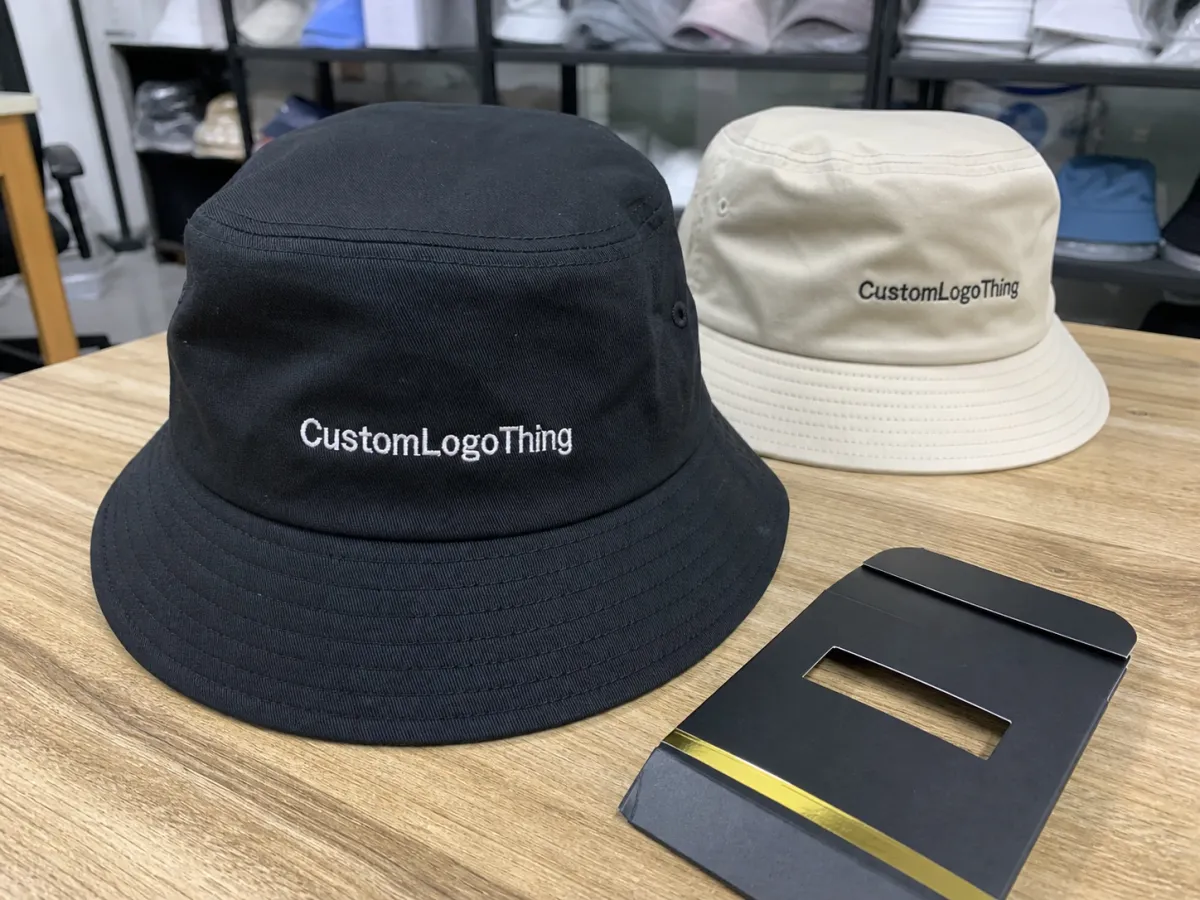
Decoration is where repeat orders quietly go off track. Embroidery behaves differently from woven patches, print, appliques, and mixed techniques. A dense embroidered logo may have looked crisp on the first run because the thread density, backing, and stitch angle were balanced for that exact fabric. Change the fabric or the size, and the same artwork can look crowded or loose.
Keep logo placement fixed. Document the distance from center front, seam, brim edge, or crown seam. Use a real measurement, not a visual estimate. Thread colors should be tied to a code, not a casual label like “dark green.” For patches, specify size, edge finish, stitch count, backing, and whether the patch is sewn, heat-applied, or combined with adhesive. A 65 mm woven patch with merrowed edges is not a detail to leave open to interpretation.
Packaging has its own failure points. Polybag type, insert card size, barcode format, carton marks, and master carton pack count all affect warehouse handling. If the first shipment was packed 50 pieces per carton with a specific inner arrangement, keep that format unless distribution has asked for a change. Altering pack-out can slow receiving, distort count checks, and create useless friction at the DC.
Shipping protection matters too. For bucket hats, carton shape and pack density can affect brim distortion. A hat stuffed too tightly may arrive with a bent edge or a flattened crown. Too much empty space and the carton crush risk rises. Testing groups such as ISTA publish transit-testing guidance that helps evaluate package durability; their standards are useful context for apparel shipped through parcel and freight networks. See ista.org.
A repeat order should match a known target. The supplier is not interpreting a mood board; they are reproducing a controlled product spec.
If the pack includes seasonal stickers, barcodes, or hang tags, version control matters. One stale carton label can stall a shipment after production is already complete. That kind of mistake is especially frustrating because it is avoidable and rarely obvious until the goods hit receiving.
Pricing, MOQ, and Unit Cost Drivers
The price on an apparel bucket hats reorder plan only improves if the spec stays stable. Buyers sometimes change the fabric, upgrade the label, and ask for new packaging, then expect the order to behave like a simple restock. It will not. Every new detail forces new labor, new materials, or both.
Unit cost is shaped by quantity, decoration method, fabric weight, finishing, labeling, pack-out, freight lane, and turnaround speed. A basic cotton twill hat with a small embroidered logo and standard polybag will not cost the same as a water-resistant nylon hat with woven labels, custom hang tags, and retail-ready packaging. The gap can be meaningful even when the silhouette is identical.
MOQ should be discussed by exact build, not as a single vague number. An embroidered style may have a different minimum than a print style. A version with custom trim, lining, or special labeling may require a larger run. The useful question is: what is the MOQ for this exact fabric, decoration method, and carton count?
| Reorder Type | Typical Quantity | Indicative Unit Price | Lead Time After Approval | Cost Risk |
|---|---|---|---|---|
| Basic cotton twill, embroidery, standard polybag | 500-1,000 pcs | $2.80-$4.75 | 12-18 business days | Low if specs stay unchanged |
| Washed canvas, woven patch, branded insert card | 1,000-3,000 pcs | $2.20-$3.90 | 14-20 business days | Medium if packaging changes |
| Nylon or water-resistant style, mixed decoration, custom label set | 1,500+ pcs | $3.10-$5.60 | 18-30 business days | Higher if fabric or trim is revised |
Those numbers are planning ranges, not promises. Freight, country of origin, trim availability, and decoration density all move the final landed cost. The cleanest quote separates unit price, setup fee, sample fee, carton charge, and freight. That way procurement can see where the money is going instead of discovering the real cost only after the shipment is booked.
Compare quotes on the same basis every time. If one supplier leaves out the hang tag, uses a different pack count, or assumes a slower ship mode, the low price is meaningless. The cheapest quote is not the safest quote. The safest quote is the one that matches the spec and the delivery window you actually need.
Process and Turnaround: From PO to Packed Cartons
A repeat order should move through a straight sequence: prior order review, tech pack confirmation, material check, artwork approval, production, inspection, packing, and shipment. If the supplier cannot describe that sequence cleanly, the job is probably not being managed tightly enough for a time-sensitive restock.
Lead time should be split into standard and rush paths. Standard repeat orders commonly run 12 to 20 business days after final approval, depending on decoration and packaging complexity. Rush orders are possible in some factories, but only if the spec remains stable and materials are already in hand. New fabric, revised trim, or a changed carton spec can reset the clock.
The delays are usually predictable. Color matching takes longer than expected. Photo approval stalls because three people are commenting on the same proof. Carton artwork gets revised after production has started. Payment release holds the shipment. None of those issues is rare; they simply become expensive when the sales calendar is fixed and the reserve inventory is thin.
That is why the production calendar should sit beside the sales calendar. If the hats need to land before a festival, a sports promotion, or a retail reset, count backward from the in-hand date, not from the PO date. Then add time for transit, customs, and final delivery. A good reorder plan is part timing discipline, part spec discipline.
Here is a practical sequence that keeps the order moving:
- Approve the previous spec before requesting pricing.
- Confirm every change to fabric, logo, labels, or packaging in one list.
- Request a sample only if something has changed.
- Release production after artwork and carton details are signed off.
- Track inspection, packing, and booking before the ship date starts to slip.
Small process mistakes have large timing effects. A single round of artwork revisions can add days. Waiting for internal sign-off can add more. On a low-margin accessory, a late shipment can cost more than the price difference between two suppliers.
How to Judge a Supplier for Repeat Order Accuracy
On a repeat order, the best supplier is not the one that quotes fastest. It is the one that can reproduce the prior job accurately. Strong vendors archive prior specs, approved artwork, sample photos, measurement notes, and QC records. That archive is worth more than a low opening price because it cuts the risk of hidden drift.
Ask for tolerances in real numbers. If the brim width target is 6.0 cm, what variation will they hold? If the crown height must match the previous run, what is acceptable? If the patch has to sit a fixed distance from center front, how will they measure placement batch to batch? A careful factory can answer these questions directly. A weak one will answer in generalities.
Communication matters even more on reorders than on first-time development. Progress photos, issue escalation, and QC updates show whether the supplier is monitoring the job or just moving it along. If a problem appears early, there is still time to correct it. If it appears after packing, the cost is already much higher.
Price comparisons should include risk, not just arithmetic. A quote that is $0.20 lower per unit can disappear quickly if the supplier misses the carton label, changes the sweatband, or ships late enough to miss the selling window. Returns, relabeling, and delayed promotions can cost far more than the quoted difference.
For packaging alignment across programs, many teams also reference standards used by groups such as packaging.org when they are comparing materials, pack formats, and shipping requirements.
Reorder Checklist for Approval
Before the next PO is released, gather the items that remove ambiguity. The goal is not more paperwork. It is fewer questions from the supplier and fewer surprises in production.
- Previous PO and approved sample reference
- Exact fabric composition, weight, and finish
- Logo file, placement dimensions, and color code
- Label copy, barcode, and carton mark version
- Quantity target, destination, and required-in-hand date
- Any non-negotiables on fit, pack-out, or outer packaging
If the order supports a core retail program, a modest buffer is usually sensible. A 15% to 25% safety stock can help when sell-through is steady and the style is not easy to replace. Increase the buffer if the item is tied to a seasonal window, event date, or promotion that cannot slip. Lead time should shape that decision as much as monthly sales volume does.
One more practical point: if a change is unavoidable, isolate it. Keep the fabric fixed and change the packaging, or keep the packaging fixed and change the logo technique. Changing three variables at once makes it harder to judge cost, quality, and timing. It also makes the next reorder harder to compare against this one.
FAQ
How much safety stock should I build into an apparel bucket hats reorder plan?
A 15% to 25% buffer is a reasonable planning range when sell-through is steady and the style is core to the assortment. Increase it for seasonal hats, event-driven drops, or promotions with fixed dates. Use lead time as the main input, not only monthly sales, because replenishment can take longer than the selling window allows.
Can I reorder bucket hats without reapproving the sample?
Yes, if the fabric, decoration, dimensions, fit, and packaging all stay the same. Ask the supplier to match the approved sample or previous production reference. Reapproval is wise if any part of the spec changes, even slightly, because a new label, new fabric finish, or new print method can alter the final result.
What changes raise the unit cost the most on a bucket hat reorder?
Lower quantities, new decoration methods, upgraded fabrics, and custom packaging usually move the price fastest. Rush shipping and new setup work can add more cost than buyers expect. If the change forces fresh materials or fresh approvals, the order is no longer a pure repeat.
How do I compare quotes from different bucket hat suppliers?
Compare landed cost, not only unit price. Make sure each quote uses the same fabric, decoration method, packaging, quantity, and QC scope. If one supplier assumes a different carton pack count or a slower ship method, the quotes are not directly comparable.
What information speeds up a reorder quote the most?
Send the previous PO, approved artwork, color references, target quantity, destination, and required-in-hand date in one message. Add photos of the last production run if you have them. The clearer the reference, the less time the supplier spends guessing at what “same as before” really means.