Buyer Fit Snapshot
| Best fit | Protective Shipping Inserts Price projects where brand print, material claims, artwork control, MOQ, and repeat-order consistency need to be specified before quoting. |
|---|---|
| Quote inputs | Share finished size, material target, print colors, finish, packing count, annual reorder estimate, ship-to region, and any compliance wording. |
| Proofing check | Approve dieline scale, logo placement, barcode or warning zones, color tolerance, closure strength, and carton packing before bulk production. |
| Main risk | Vague material claims, crowded artwork, missing packing details, or unclear freight terms can make a low unit price expensive after revisions. |
Fast answer: Protective Shipping Inserts Price: Material, Print, Proofing, and Reorder Risk should be specified like a repeatable production item. The safest quote records material, print method, finish, artwork proof, packing count, and reorder notes in one written spec.
Production checks before approval
Compare the actual filled-product size with the drawing, then confirm tolerance on folds, seals, hang holes, label areas, and retail display edges. Reserve space for logos, QR codes, warning copy, and material claims before decorative graphics fill the panel.
Quote comparison points
Review material grade, print process, finish, sampling route, tooling charges, carton quantity, and freight assumptions side by side. A quote is only useful when the supplier can repeat the same color, closure quality, and packing count on the next order.
Protective Shipping Inserts Price: What You Should Pay
The phrase protective shipping inserts price sounds simple until a carton lands on a customer’s doorstep and the product is shifting around inside like a loose part in a toolbox. The outer box can look perfect and still fail the moment the insert does not hold the item in place. That is why protective shipping inserts price should be measured against damage risk, not treated like a race to the lowest line item on a spreadsheet.
For packaging buyers, a good insert is not decoration and it is not an afterthought. It is package protection, it supports order fulfillment, and it keeps a fragile item from turning into a return, a refund, or a replacement shipment that costs far more than the insert ever did.
Protective Shipping Inserts Price: Start with the Real Use Case
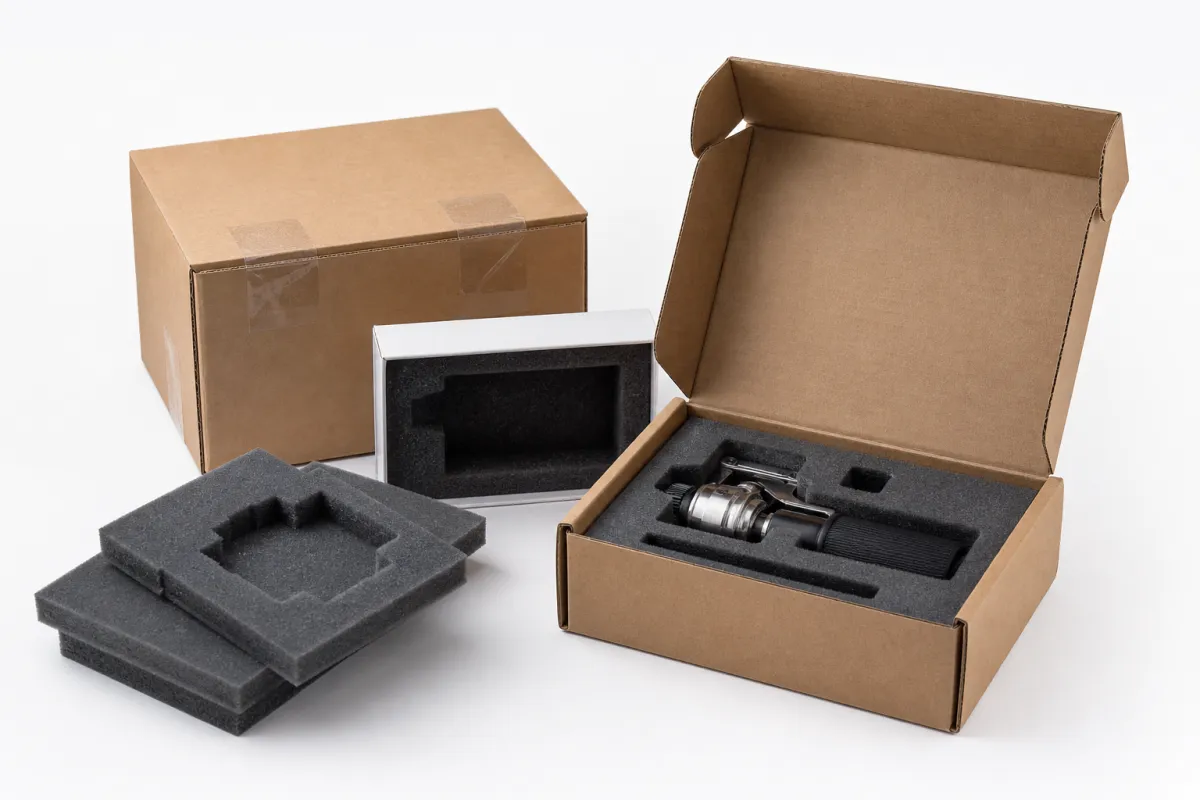
Protective shipping inserts price should begin with a simple question: what are you shipping, and what kind of abuse will it face before it reaches the buyer? A rigid perfume carton in a padded mailer faces a very different risk than a glass candle, an electronics kit, or a bottle set packed for ecommerce shipping. If the insert does not fit the product, the carton becomes a costume. Nice on the outside. Useless where it counts.
The same mistake shows up again and again. Buyers ask for a quote before they define product weight, void space, carton size, shipping method, or whether the package needs to survive parcel sortation, pallet movement, or both. Then protective shipping inserts price changes after the supplier asks for dimensions. That is not a trick. It is basic physics and basic packaging logic.
Cheap padding can look fine in a photo and still fail the first time the item shifts during transit packaging, hits a corner, or compresses under a heavier SKU above it. A well-fit insert reduces movement, protects edges, and keeps the presentation clean. That matters in retail, subscription boxes, and premium unboxing alike. Nobody pays extra for a broken first impression.
A carton that arrives intact but sloppy is still a loss. The customer sees the movement, not the money you saved on the insert.
There is a simple buying lesson here: protective shipping inserts price is often much lower than one damaged shipment, one replacement order, or one refund plus the customer service time that follows. If the insert prevents you from paying twice for the same unit, it has already earned its place. That is especially true for glass, cosmetics, small appliances, and other fragile products where even a minor defect can trigger a complaint.
For a broader mix of shipping materials, you can review our Custom Packaging Products. If the insert needs to work with the outer shipper, compare the structure of our Custom Shipping Boxes and the lighter-format options in Custom Poly Mailers. The outer pack and the insert need to work together, not fight each other.
In practice, the right insert also protects margin. It keeps the product from moving, cuts down on void fill, and lowers the chance that customer service has to process a claim. That is the kind of quiet math buyers should like. Nobody gets bonus points for choosing the cheapest insert if the return rate climbs the moment the cartons leave the warehouse.
I have seen teams spend weeks shaving pennies off the insert price, then lose that savings in a single week of preventable damage claims. That is a bad trade, and it usually starts with a quote that ignores the product’s actual behavior in transit. If the item rattles, tips, scuffs, or settles unevenly, the insert needs to deal with that, not just look good in the spec sheet.
Protective Shipping Inserts Price vs Return Costs
Protective shipping inserts price only makes sense when you compare it with the hidden cost of failure. The insert might cost $0.24. The broken item can cost $18. The reshipment might cost another $6 to $12 once you include labor, freight, and the time it takes someone to deal with the problem. That is not a bargain. That is a very expensive lesson in false savings.
Think through the full chain. A damaged product creates warehouse labor, customer service time, replacement shipping, and sometimes a refund that still leaves the original carton in circulation as waste. In ecommerce shipping, even one in fifty damaged units can erase the savings from trimming a few cents off the insert. Buyers often focus on piece price because it is easy to see. They should focus on total cost because it is harder to ignore.
The products that benefit most from stronger inserts are usually the obvious ones: glass, ceramics, cosmetics, electronics, subscription kits, premium bottles, and retail items that cannot arrive scuffed or loose. Then there is the second group people overlook. A product can be physically durable and still need presentation support. A luxury candle, for example, may survive the trip in plain paper wrap, but it will still look cheap. That weakens conversion and repeat purchase behavior.
Protection also changes the way a shipment feels in the hand. A tighter insert reduces movement, improves fit, and often lets you remove extra void fill. That can lower shipping weight, improve pack-out speed, and create a cleaner customer experience. It is common for a slightly better insert to pay for itself through fewer dunnage materials and fewer claims. That is the practical side of protective shipping inserts price that gets ignored when people chase the lowest quote.
If you want a rough rule, use this: if the item value is high enough to make a damage claim annoying, the insert is probably worth upgrading. If the product is fragile and the carton has a lot of dead space, it is worth upgrading again. If the shipment is moving through dense parcel networks, it is worth upgrading again after that. Carriers are not handling boxes like museum pieces.
And honestly, that’s the part people forget. The product may survive a hand carry from desk to desk, but real shipping is a different animal. Vibration, drops, compression, and side loading are all part of the trip. An insert that only works in calm conditions is not really doing the job.
| Insert Option | Typical Best Use | Approx. MOQ | Rough Unit Price at 5,000 | Main Tradeoff |
|---|---|---|---|---|
| Paperboard fold insert | Light retail items, kits, cosmetics | 500-1,000 | $0.12-$0.28 | Lower cost, less cushioning |
| Corrugated die-cut insert | Bottles, jars, electronics, ecommerce shipping | 1,000-2,000 | $0.18-$0.45 | Good strength, needs tighter fit |
| Molded pulp insert | Eco-forward packaging, moderate fragility | 3,000-10,000 | $0.22-$0.55 | Good sustainability story, mold cost |
| EPE or EVA foam | High-impact protection, premium electronics | 1,000-5,000 | $0.25-$0.75 | Excellent cushioning, less recycled appeal |
That table is not a promise. It is a practical starting point. Protective shipping inserts price still depends on structure, carton size, print, and how much abuse the shipment needs to survive. Even so, it is better than pretending every insert belongs in the same bucket. They do not.
Insert Types, Materials, and Fit Options
The best insert is the one that fits the product and the shipping method. Not the one with the most polished sales language. Corrugated die-cuts are common because they are easy to produce, printable, and dependable for many package protection jobs. Paperboard folds work well for lighter items and inner trays. Molded pulp can make sense when sustainability goals matter. EPE foam and EVA foam provide stronger cushioning for more fragile or precision-fit products.
Protective shipping inserts price moves differently across those options. A simple paperboard insert may be inexpensive to make but limited in crush resistance. A foam insert can handle impact better, yet it may bring a higher unit cost and more scrutiny from brands trying to cut plastic. Molded pulp often lands in the middle if the tooling is justified by enough volume. The point is not to choose the fanciest material. The point is to choose the one that protects the product without bloating the bill.
Custom fit beats generic padding almost every time. If your product has odd angles, accessories, cords, droppers, or a bottle neck that needs restraint, a custom insert reduces movement in a way loose filler cannot match. The buyer who says, “Can we just add more air pillows?” usually discovers quickly why those pillows do not stop side-to-side shifting.
There is also the branding side. Premium inserts make a product feel more expensive because the fit is controlled, the reveal is cleaner, and the buyer does not see a mess of loose shipping materials when the carton opens. That does not mean every insert needs a luxury treatment. It does mean the insert should support the product’s value. If the item sells at a premium, the pack-out should not look like the warehouse gave up halfway through lunch.
For brands that care about responsible sourcing, ask about FSC-certified paper and board, recycled fiber content, and whether the paper components can be recovered in the customer’s local recycling stream. The FSC site is a solid reference point if your team wants to understand certification basics before you lock in a spec. Sustainability claims should be accurate, not decorative.
Fit note: if the insert has to survive drop testing or vibration testing, bring that up early. A design that looks fine on a desk can fail under real carrier conditions. For fragile shipments, it is smart to ask whether the pack should align with common ISTA test logic such as ISTA methods. You do not need a lab certificate for every order, but you do need a design that respects transit packaging reality.
One more practical point. The insert and the outer shipper should be designed together whenever possible. That lets the team reduce dead space, improve fit, and manage dimensional weight more intelligently. If the carton is oversized because nobody matched the insert to the box, the shipping cost can rise even when the insert itself is cheap. That is a classic case of paying less for one line item and more for the total shipment.
When a package is right, the customer usually never thinks about the insert. That is fine. Packaging should be invisible when it works. It only gets attention when it fails, and by then the cost has already spread into freight, labor, and brand perception.
Protective Shipping Inserts Price: Specifications That Change the Quote
Protective shipping inserts price changes quickly when the spec gets more specific, and that is exactly why the first rough quote is often vague. The main drivers are simple: dimensions, thickness, density, print coverage, cut complexity, and whether the design needs new tooling or a mold. A flat paperboard pad and a multi-layer insert with locks, folds, or windows are not remotely the same job. Pretending they should cost the same is how bad estimates happen.
Material thickness matters because it affects both protection and convertibility. A 350gsm board may be fine for light cosmetics, while heavier products may need corrugated board with the right flute and caliper. Foam inserts add another layer of specification through density. Too soft, and the product shifts. Too firm, and the insert wastes material or creates pressure points. That is why product drawings and sample dimensions are worth more than a vague email that says, “Need a custom insert, can you quote?” Sure. For what, exactly?
Die-cut complexity can also move the number. Simple rectangles are inexpensive. Tabs, perforations, locking structures, nested layers, and irregular cutouts all take more setup time and more production care. If the insert includes print, embossing, foil, soft-touch lamination, or special finishing, expect the quote to move again. Decorative work is fine, but decorative work costs money. Packaging still obeys physics even when the brand team wants something more refined.
Compression strength and shipping test targets matter too. If the insert must pass a tighter drop standard, absorb a higher load, or hold product position with less movement, the structure needs to be tuned more carefully. That can mean thicker material, denser foam, more complex geometry, or a longer sample cycle. The same is true for products with accessories, refill packs, or multiple cavities. Every extra cavity adds cost, and every extra cavity should justify its space.
Here is the best advice I can give on protective shipping inserts price: send product dimensions, weight, photos, and the carton size together. If you have a dieline, send that too. If you do not, send a physical sample or a very clear sketch. It saves time, avoids guesswork, and usually gets you a cleaner quote. The fastest way to inflate pricing is to ask for precision after withholding the measurements that make precision possible.
A buyer also needs to ask whether the quote includes sample rounds, tooling, and final pack configuration. Some suppliers quote only the insert piece price and leave out setup or sample fees. Others fold those into the first order. Neither approach is wrong, but it should be clear. Surprises are great for birthdays, not for purchasing.
In my experience, the most accurate quotes come after the supplier sees how the product sits, not just how it measures on paper. A bottle with a narrow neck, a glossy finish, or an offset center of gravity can change the insert design more than a buyer expects. That extra context can save a whole round of revisions, which is nice because nobody wants to be chasing their tail on a packaging schedule.
Pricing, MOQ, and Volume Breaks
MOQ is where protective shipping inserts price becomes a real buying conversation. Simple die-cut or folded inserts can often start with lower minimums, sometimes in the 500 to 1,000 range depending on the material and the supplier’s setup. Molded pulp and fully custom builds usually push higher because the production setup has to be recovered across enough units. That is not greed. That is manufacturing math.
Volume breaks matter, but only once the design is locked. If the structure is still changing, the buyer is throwing good money after bad by chasing a lower piece price too early. A quote that drops from $0.34 to $0.26 per unit at a higher volume can be useful, but only if the insert is already approved and ready to run. Otherwise the real cost shows up in extra sampling, delayed launch dates, and warehouse headaches.
For clarity, a proper quote should spell out unit price, tooling, sample cost, packaging, freight, and any setup fees. That list sounds basic because it is basic. Yet it is surprising how often buyers get a partial number and then have to ask three follow-up questions before the quote makes sense. If the quote is only for the insert and not the full pack-out, say so up front.
Protective shipping inserts price should also be evaluated alongside dimensional weight. A slightly larger carton can raise freight cost faster than a more expensive insert ever will. So the cheapest insert is not always the cheapest total shipment. If a tighter insert lets you shrink the outer box, reduce void fill, and cut dead space, the overall shipping materials bill can improve even if the insert line item rises a little. That is the kind of tradeoff smart buyers watch closely.
Here is a practical range mindset. For straightforward runs, you may be negotiating pennies per unit. For more complex custom structures, a few cents can quickly turn into real money at scale. If you ship 50,000 units a quarter, a $0.06 difference is not pocket change. It is a budget line. That is why it pays to compare options with the real volume, the real protection target, and the real total landed cost.
For teams building a larger packaging stack, it helps to align inserts with outer cartons and mailers from the start. That way the protection, branding, and fulfillment workflow all point in the same direction. A clean insert inside a bad box is still a bad package. A good box with a sloppy insert is just as pointless. Buyers need both sides of the system to cooperate.
Once the order size gets serious, even a small material change can swing the budget by a surprising amount. That is why packaging teams should keep a close eye on actual run quantities instead of relying on a rough forecast. The math gets a lot less fuzzy once the purchase order is real.
Process, Sample Approval, and Production Timeline
The process should stay simple. First comes the brief, then the quote, then the sample, then approval, then production, then shipping. That is the order. If someone tries to skip three steps and go straight to mass production, the result is predictable: wrong fit, rushed revisions, and a delay nobody planned for. Protective shipping inserts price can look attractive right up until the team has to fix a preventable mistake.
Realistic timing helps everyone plan better. Quotes often come back in 1 to 2 business days once the supplier has dimensions, photos, and a clear scope. Samples may take about 3 to 7 business days depending on the complexity of the insert and whether tooling is needed. Production after approval can range from roughly 10 to 20 business days for many custom paper and corrugated jobs, while molded or heavily customized work may run longer. Freight time is still freight time, which means it needs to be added separately.
Delay usually shows up in the same places: missing dielines, late feedback, unclear sample notes, or design changes after cutting has started. Buyers sometimes treat the sample like a formality. That is a mistake. The sample is where you verify fit, compression, surface finish, and whether the product moves when the carton is shaken, tilted, or dropped. If the sample is off, it is cheaper to fix it now than to discover the problem after production is already in motion.
Testing discipline matters too. For fragile products, I like to see the buyer define the actual abuse case. Is the carton going through parcel shipping, palletized warehouse handling, or both? Is the product glass, rigid plastic, or something with a high center of gravity? Does the insert need to protect the product only, or protect presentation as well? Those answers shape the structure and help make protective shipping inserts price more predictable.
Here is a simple way to stay on schedule:
- Send product dimensions, product weight, and carton size in one message.
- Share photos or a physical sample so the supplier sees the real geometry.
- Confirm target quantity before asking for a final quote.
- Review the sample with the actual product inside the shipper, not on a desk by itself.
- Lock the design before asking production to start.
That list sounds almost too practical, which is probably why people skip it. Then they spend two weeks fixing a problem they created in ten minutes. The packaging buyer who keeps the process tight usually gets better cost control and fewer surprises on launch day.
One more thing: if the product is especially sensitive, ask for the sample to be checked under a little real pressure, not just a visual thumbs-up. A product can look centered and still shift once the box is handled roughly. That little bit of extra diligence is usually where the money gets saved.
Why Choose Us for Protective Shipping Inserts, and What to Do Next
We keep the conversation practical. That means fit checks, material guidance, sample discipline, and clear quoting. No fluff. No fake certainty. If the insert needs to protect a fragile item, support a premium presentation, or reduce damage claims in order fulfillment, we focus on the design that does the job without inflating protective shipping inserts price for no reason.
We also help buyers compare options instead of guessing. Sometimes corrugated is the right answer. Sometimes paperboard is enough. Sometimes foam is worth the higher cost because the product is too fragile for anything else. The point is to match the insert to the shipping reality, not to force every project into the same packaging materials bucket. That is how you protect margin Without Wasting Money.
If you are ready to move, send the product dimensions, a few photos, the target quantity, the shipper type, and any test or branding requirements. If you already have a sample deck or a rough dieline, even better. We can review the fit, confirm MOQ, and narrow the timeline before production starts. That is the kind of upfront work that saves a lot of back-and-forth later.
One last buying note: do not approve a production run until the insert is approved inside the actual box or mailer. A product can fit on paper and still fail in the real pack-out. Ask for the sample. Check the movement. Confirm the finish. Then lock the spec. That is how you keep protective shipping inserts price under control while still getting proper package protection.
If you want a clean next step, review the carton, choose the material, confirm the MOQ, and request a quote with the real product dimensions. Protective shipping inserts price is not just a number. It is the cost of keeping the product, the brand, and the shipment intact. Get that part right, and the rest of the launch gets easier.
The simplest takeaway is this: start with the product, not the price. Once you know how fragile it is, how it moves, and what the carton needs to survive, the insert choice gets a lot clearer. From there, the quote becomes a tool instead of a guessing game.
Frequently Asked Questions
What affects protective shipping inserts price the most?
The biggest drivers are size, material, thickness, die-cut complexity, and whether the design needs tooling or a mold. Print, finish, sample rounds, and tight tolerances can move the number more than buyers expect. Volume matters too, because the same insert can cost less per unit once setup costs are spread across a larger run. That is why protective shipping inserts price should always be quoted with real dimensions and quantity.
What is a normal MOQ for protective shipping inserts?
MOQ depends on material and production method, but simple die-cut or folded inserts can start lower than molded or fully custom builds. Custom tooling usually pushes MOQ up because the factory needs enough units to recover setup costs. If you only need a pilot run, ask for a sample or short-run option before you lock a bigger order. Protective shipping inserts price makes a lot more sense once the production method is clear.
How long does production take after sample approval?
Fast quotes can come back in 1 to 2 business days, and samples often take about 3 to 7 business days depending on complexity. Production usually starts after approval and can take longer if the insert needs tooling, printing, or a higher-volume run. Add freight time on top, because people love forgetting that part until the truck is late. Protective shipping inserts price is only useful if the timeline matches the launch plan.
Which material is usually the cheapest for shipping inserts?
Cheapest is usually the simplest material that still protects the product, not the fanciest one on the spec sheet. Corrugated and paper-based designs are often lower cost for straightforward protection, while precision foam or molded options can cost more. The right answer depends on fragility, branding, and how much damage the shipment can realistically take. Protective shipping inserts price should follow the job, not the trend.
Can I get a sample before placing a full order?
Yes, and you should ask for one before committing to a full production run. A sample lets you check fit, compression, product movement, and how the insert looks inside the carton. If the sample is off, it is cheaper to fix it now than to find out after 5,000 units are already in motion. Protective shipping inserts price is easier to justify once the sample proves the design works.
If you want the cleanest buying outcome, start with the product specs, choose the material, confirm the MOQ, and request a sample before release. That is how you keep protective shipping inserts price tied to real protection instead of guesswork. In packaging, guesswork is just an expensive hobby.

