Why florists use PVC bags for clean delivery and display
A bouquet can look finished in the cooler and look tired by the time it reaches the customer if the packaging scuffs the stems, shifts the ribbon, or traps condensation. That is the practical reason buyers search for a PVC Garment Bags for florists order guide: the bag is not just a carrier, it is part of the presentation. If it fails visually, the flowers often get blamed for a packaging problem.
Clear PVC gives florists something paper sleeves and open wraps cannot always deliver: visibility with protection. The customer can inspect the arrangement without opening anything, which matters for wedding bouquets, sympathy work, premium boutique orders, and boxed stem sets. The bag creates a cleaner handoff and makes the order feel deliberate rather than assembled in a rush.
The operational advantage is easy to miss until you watch a busy counter. Bags stack more neatly than loose wrap, staff can stage orders in advance, and pick-up mistakes are easier to catch because the contents remain visible. For delivery teams, that visibility helps with route checks and reduces the chance that one order gets swapped with another.
There is a second effect, and it is commercial rather than mechanical. A tidy sleeve, a straight top edge, and a controlled silhouette raise the perceived value of the arrangement even when the flower count stays the same. That is one reason many shops find they can hold a higher price point when the packaging looks intentional.
PVC is not perfect. It can stiffen in cold storage, pick up static, and show fingerprints under bright lighting. In hot vehicles or long storage cycles, odor and surface haze become more noticeable. Those are manageable issues, but only if the supplier understands how the bags will actually be used.
Bag construction and style options that change the result
Not all clear bags behave the same once they are filled. Thickness, film clarity, seam construction, and closure style all affect how the package looks in the hand and how it survives transport. A thin sleeve may photograph well, then wrinkle hard on a delivery run. A heavier bag may hold its shape, but if the opening is too tight it can scuff petals during loading.
For florist use, the main structure choices are simple, but they matter more than buyers expect.
- Flat sleeves work for straightforward bouquets and lighter retail handoffs.
- Gusseted bags create room for fuller arrangements, boxed stems, or wide ribbon treatments.
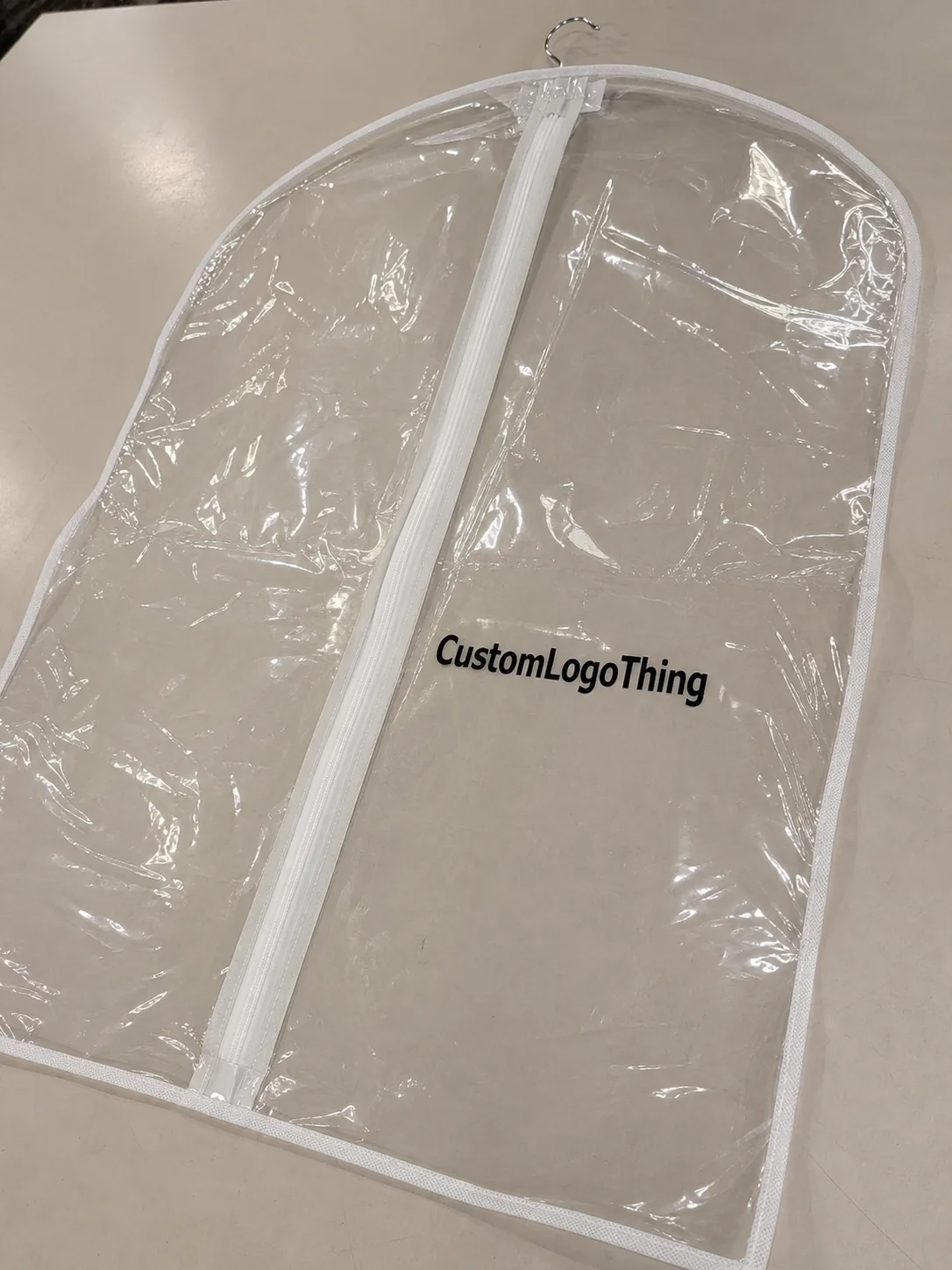
- Zipper, snap, or fold-over closures give the bag a more finished appearance and can help keep the top closed during carrying.
Handle design changes the experience as much as the film itself. Die-cut handles are common on lighter bags. Reinforced handles are the better choice when the bag will be lifted repeatedly by staff, runners, or customers. If the arrangement is tall, the handle position has to be checked against the finished height so the top does not press into the flowers.
Thickness is usually discussed in mils or microns depending on the factory. One mil equals 25.4 microns, so the terminology is not interchangeable, but the practical question is the same: does the film have enough body to resist creasing and flexing without becoming so rigid that it fights the arrangement? For florist packaging, a moderate increase in thickness often improves the look more than a glossy finish does.
Surface finish also matters. “Clear” can mean bright and retail-ready, or merely transparent enough to see through. A clean, glossy film reads differently under shop lighting than a softer finish. If the order is for luxury work, ask for the exact clarity standard and request photos under strong white light, not just studio lighting. Scuffs and haze show up there first.
Practical buyers also ask about seam geometry. Straight seams are cheaper, but reinforced corners and better heat sealing reduce the chance of splitting when the bag is lifted by the handle or set down with weight shifting inside. That difference is small on paper and obvious at the counter.
A bag can look acceptable on a sample table and still fail in a busy shop. The real test is whether it keeps its shape after repeated handling, not whether it looks clean in a single photo.
One more detail tends to separate good packaging from expensive frustration: how the bag behaves in weather. PVC can stiffen in colder storage and become less forgiving around folds. In hot conditions, some films show more odor or stick lightly to themselves. If your orders move through vans, flower coolers, or mixed freight, the supplier should say how the bag performs outside a controlled room.
Specifications to confirm before you request a quote
The cleanest order starts with a tight spec sheet. If a supplier has to guess at dimensions or print details, the quote will be less useful and the sample will be slower to approve. A proper request should include the bag dimensions, target thickness, closure type, handle style, finish, artwork, quantity, and delivery deadline. Anything missing creates room for a pricing surprise later.
Dimensions need to reflect the actual floral piece, not just the outer carton or vase. Measure the widest bloom line, the tallest finished point, and the depth created by bows, ribbon tails, water tubes, or box corners. A bouquet that seems narrow on the bench can become awkward once it is fully wrapped. That is how buyers end up with bags that technically fit but still crush the arrangement in transit.
Thickness should be tied to use, not habit. Lightweight retail handoffs can sometimes work with thinner film, while delivery runs and premium orders generally benefit from more body and better seam strength. There is a limit, though. If the film is too stiff, loading the arrangement becomes harder and the edges can mark the petals. The best spec is the one that survives handling without turning the packaging into a rigid shell.
Clarity and odor deserve separate questions. Some buyers assume “clear PVC” is a single category. It is not. There are grades that read bright and polished, and others that are technically transparent but look dull under store lights. Odor is another issue that often gets ignored until the first delivery. If the bags are meant for high-end gifting, ask how the film is stored, whether it has been aired before packing, and whether the supplier can provide lower-odor material.
Ask how the cartons are packed too. The outer bag can be correct while the shipment still arrives with scratches from poor stacking or loose inner packaging. Find out how many pieces go into a carton, whether the film is wrapped to protect the surface, and whether master cartons are reinforced for pallet movement. These are not cosmetic questions. They affect receiving time, damage rates, and how much labor the shop spends checking the delivery.
If branding is involved, request exact print placement and print method. A small logo near the top edge is a different production job from full-panel artwork. The latter usually needs more setup, more inspection, and more time to correct if the proof is off by even a little. Once the print is on, the room for adjustment narrows quickly.
For buyers who have to match multiple store formats, ask the supplier to quote the same design in two or three sizes rather than changing the structure each time. That keeps the comparison clean and often exposes where the real cost break is. A smaller size does not always produce the strongest savings if the cutting layout is inefficient.
Pricing, MOQ, and what drives the number
Price comparison only works when the specs are identical. Two quotes can look far apart while actually describing different film thicknesses, different closures, or different carton counts. That is why a serious PVC Garment Bags for florists order guide has to start with normalization. If the numbers are not based on the same spec, the cheapest quote is often just the least complete one.
In practice, five variables move cost the most: material thickness, bag size, closure hardware, print complexity, and packing configuration. Larger bags use more resin. Handles and zippers add labor. Printing adds setup and inspection time. Even carton count matters because denser packing changes shipping efficiency and can affect freight cost.
| Option | Typical MOQ | Indicative unit price | Best fit |
|---|---|---|---|
| Flat clear PVC sleeve, 6-8 mil, no print | 500-1,000 pcs | $0.55-$0.95 | Simple bouquet handoff and retail display |
| Gusseted bag, 8-10 mil, die-cut handles | 1,000-3,000 pcs | $0.85-$1.45 | Fuller arrangements, boxed stems, repeated handling |
| Printed logo, reinforced seams, zipper or snap closure | 2,000+ pcs | $1.20-$2.25 | Premium wedding, sympathy, and boutique orders |
Those figures are directional. They are useful for budgeting, not for final procurement. Small runs usually cost more per unit because setup, cutting waste, and labor are spread across fewer pieces. Once the order volume rises, the unit price often drops, but the breakpoint depends on the bag shape, the film width, and whether the supplier is using stock film or a custom run.
Minimum order quantities vary more than many buyers expect. A simple stock-style bag may start at a few hundred pieces. A printed design with custom dimensions may require a larger commitment, sometimes well above 1,000 or 2,000 pieces. That is not arbitrary. Factories need enough volume to justify cutting, heat sealing, print setup, and quality inspection. If the MOQ seems unusually low, check whether the price has quietly moved upward to cover the smaller run.
Sample fees are worth budgeting separately. A basic prototype can be modest, while a printed sample or a sample with custom hardware can cost more. A reasonable sample fee often lands around $40-$120 once material, labor, and courier cost are included. It is not wasted money if the sample catches a size error, a closure issue, or a poor print alignment before bulk production begins.
Tooling and setup charges need direct confirmation. Some suppliers fold them into the first order. Others itemize them and charge again on reorder if the artwork changes. The safest way to avoid confusion is to ask which costs are one-time, which are recurring, and which are tied to a specific print plate or cutting die.
Lead times can change the effective cost too. A lower unit price is less attractive if the bags arrive after the event date. Rush production often adds cost, and freight can erase apparent savings if the cartons are bulky. Buyers should ask for both ex-factory pricing and landed cost where possible, especially if the shipment will cross borders or move by mixed freight.
Sample approval, production, and shipping timelines
The workflow should be plain: inquiry, specification review, quotation, sample, approval, production, inspection, packing, shipment. A supplier that cannot explain those steps clearly is likely to create delays later. Good packaging programs are built on sequencing. Bad ones are built on guesswork and last-minute corrections.
Sampling is usually the fastest part, but it still depends on print complexity, size, and closure style. A clear unprinted bag may be turned around faster than a custom-printed version with reinforced handles. Once the sample is approved, the factory can schedule the production line around the final spec and reduce the chance of changes mid-run.
For many custom orders, sample approval takes roughly 5-10 business days and bulk production often takes 12-20 business days after sign-off. Thicker film, special printing, and larger quantities can stretch that window. Shipping adds its own time. Air freight moves faster but costs more. Ocean freight can be efficient on unit cost, but only if the buyer has enough buffer on the calendar.
The biggest cause of delay is not the machine. It is indecision. Final artwork that keeps changing, dimensions that are still being debated, or a sample that is approved verbally but not in writing can all slow the order. Clear sign-off cuts more time than most buyers realize. The best quote in the world does not help if the production team is still waiting on a final logo file.
Packing instructions should be agreed before the run starts. If cartons need store labels, event labels, or pallet marks, that should be part of the order sheet. The same goes for carton counts and master carton dimensions. These details matter at receiving, where labor is spent opening boxes and verifying quantities. A clean packing plan often saves more time than a slightly cheaper bag ever will.
Protect the delivery date before the sample is approved. Once the spec is locked and the proof is signed, the rest of the job becomes a logistics exercise instead of a series of corrections.
Quality checks that expose suppliers who will not hold up
Dependable suppliers talk about repeatability, not just appearance. They should be able to explain how thickness is controlled, how seams are tested, and how they keep one batch from drifting away from the last. For florist packaging, that consistency is the whole point. If one delivery looks premium and the next looks tired, the brand loses more than it saved.
Seam strength is the first thing to test. A bag that opens neatly but splits at the top fold under normal lift weight is a failure. Ask whether the supplier performs pull checks, visual seam inspections, or batch thickness checks. Some factories reference methods similar to ASTM D882-style tensile evaluation, though the exact test method may vary by facility. The label matters less than the habit of checking.
Clarity should be judged under real lighting. A sample that looks excellent on a white bench may show scratches once it is placed near a bright counter or window. That matters because florist bags are handled by staff, drivers, and customers, sometimes more than once. Surface drag, haze, and fingerprints become obvious quickly.
Odor is another practical filter. Strong plastic smell can distract from a premium arrangement, especially on sympathy work and higher-end gift orders. The issue is not just the film formula. Storage conditions matter, too. A supplier who stores film properly and airs it before packing usually understands that the end customer is going to smell the bag before they admire it.
Communication quality is part of quality control. A supplier that answers with exact dimensions, clear cost breakdowns, and realistic lead times is usually easier to work with than one that gives broad promises and vague timelines. That pattern shows up early. It is visible in the quote, before the order is placed.
Use the sample to check more than fit. Fold and reopen it. Lift it by the handle. Leave it under shop lighting for a while. If possible, put a finished bouquet inside and move it the way a real customer or runner would. The point is not to find a perfect bag. The point is to find the bag that will fail least often in the real workflow.
- Check seam strength and corner finish.
- Inspect clarity under bright retail lighting.
- Notice odor immediately and again after 24 hours.
- Test handle comfort and load feel with a filled arrangement.
- Verify print alignment if branding is included.
- See how the bag behaves after folding, reopening, and refilling.
Receiving checks matter too. Good cartons should be easy to count, easy to label, and resistant to crush damage. Inner packing should reduce surface marks. Carton labels should match the purchase order. Those are basic controls, but they are the controls that prevent an expensive hour at the warehouse when the shipment finally lands.
FAQ
What should I confirm before ordering PVC bags for florists in bulk?
Confirm dimensions, film thickness, closure type, handle style, and print requirements before requesting a quote. Ask for a sample so you can check clarity, seam strength, odor, and fit against the actual arrangement instead of a guess.
How do I choose the right size for a floral PVC bag?
Measure the widest part of the bouquet or arrangement, then measure the tallest finished point. Add room for ribbon, bows, water tubes, and any base packaging. If the fit is too tight, the bag can pinch petals or bend stems during transport.
What affects pricing most on custom clear florist bags?
Size, thickness, printing, hardware, and order quantity are the main drivers. A larger run usually lowers unit cost, while reinforced seams, special closures, and full-color branding add setup and inspection time.
What is a common MOQ for custom floral PVC packaging?
MOQ varies by factory and specification. Stock-style or simple unprinted bags may start lower, while printed custom sizes usually require a higher minimum. Ask for tiered pricing on the same spec so you can see where the unit savings actually begin.
How long does production take after the sample is approved?
Many custom orders move through sampling in about 5-10 business days and bulk production in about 12-20 business days after approval. Complex printing, thicker film, or larger quantities can extend that schedule, and freight time needs to be added separately.