Premium packaging has a short shelf life in streetwear. A hoodie in a thin, cloudy sleeve changes the feel of the product before anyone wears it. Wrinkles, poor fit, and inconsistent presentation across a drop make the brand look less controlled, even if the garment itself is strong. That is why the pvc garment Bags for Streetwear labels quote checklist has become a practical tool rather than a packaging afterthought.
The reason is not hard to see. Clear PVC protects graphic-heavy pieces, speeds up packing by making sizes visible, and gives buyers or retail staff a cleaner first read on the product. For labels selling $80 tees, $120 hoodies, or outerwear that sits much higher, the bag is part of the margin story. It affects how the garment is handled, how it is judged, and how often it needs to be repacked.
There is also a buying advantage. Once the quote inputs are controlled, pricing gets easier to compare. Without that discipline, one supplier may quote a basic sleeve while another prices a heavier gauge, zipper closure, printed logo, and retail-ready packing. The numbers look close until the spec sheet is read properly.
Why streetwear brands switch to PVC garment bags
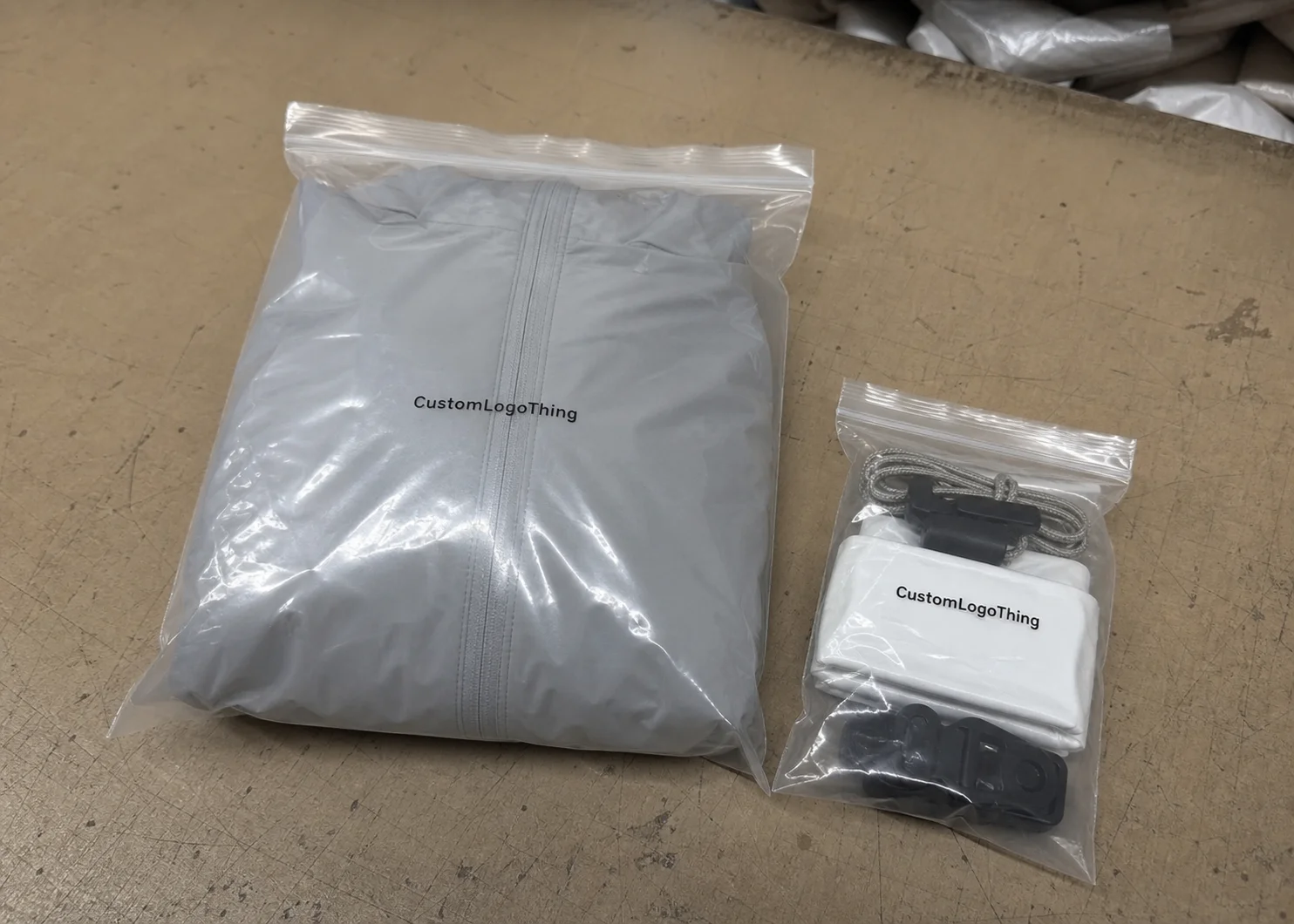
Most brands do not move to PVC because it is trendy. They move because other packaging stops matching the product. A poly mailer ships a tee well enough. A paper garment bag can look polished on a rack. Neither gives the same visibility, stiffness, or retail presence as clear PVC, especially when the garment itself carries the visual weight.
Visibility matters in fulfillment too. When orders contain multiple sizes, colorways, or capsule variants, a clear bag lets teams confirm the item without opening every unit. That saves labor, cuts down on mix-ups, and helps protect the garment from repeated handling. For small teams, a few minutes saved per carton compounds fast.
PVC also holds shape better than many soft alternatives. It resists scuffs during packing and transit, and it keeps the piece from looking folded into itself when it reaches a store or influencer package. It is not the right answer for every brand. It does solve a common problem: premium apparel should arrive looking deliberate, not improvised.
The cost comparison is useful. A $2.00 poly mailer may be enough for logistics. A garment bag priced anywhere from roughly $0.60 to $2.50, depending on size, thickness, print, and closure, starts to function as brand architecture. That is a different job, and it should be judged differently.
- Poly mailers: low cost, fast to use, limited presentation value.
- Paper garment bags: cleaner shelf appearance, less moisture resistance, less visibility.
- PVC garment bags: strong visibility, firmer structure, better for premium product presentation.
There is one more practical reason streetwear teams like them: the bag can support the product story without hiding it. If the design is the point, packaging should frame the garment rather than compete with it.
PVC garment bag formats, thickness, and closure options
Not all PVC Garment Bags behave the same on a packing table. The format changes cost, speed, shelf appearance, and how the bag survives repeated handling. A zipper bag feels more finished. A fold-over sleeve is faster to run. A hang-hole cover works better for showroom display. Choosing the wrong structure usually shows up later, once production is already moving.
Common formats include zippered bags, flap-top bags, hang-hole garment covers, and fold-over sleeves. Zippered styles are often used for jackets and higher-value sets because they open and close cleanly and can be reused. Flap-top versions are simpler and cheaper. Hang-hole covers are useful for retail display or showroom storage. Fold-over sleeves work well for tees, light knits, and stacked shipment of simple pieces.
Thickness is usually described in mil or microns, depending on the supplier. For streetwear packaging, buyers often look somewhere around 0.12 mm to 0.30 mm. The right choice depends on the garment weight, how much rigidity is needed, and how much cost the brand can absorb. Thicker material usually improves structure and tear resistance, but poor resin quality can make even a thicker bag look dull or brittle. More thickness does not automatically mean better packaging.
Closure choice changes both the quote and the user experience. A zipper adds convenience and a premium feel. Adhesive strips lower cost for simple applications. Heat-sealed edges are efficient for large runs, though they are less flexible if the team needs to reopen bags for returns, reclassification, or retail handling. Snaps appear less often, but some brands use them for reusable presentation bags.
Several optional details can shift the final look and the production cost:
- Frosted finish for a softer, less reflective visual effect
- Matte surface to reduce glare under store lighting
- Gussets for bulkier hoodies, jackets, or layered sets
- Printed logos for stronger brand recognition
- Insert cards or hang tags to support the collection story
If a brand ships tees, hoodies, and outerwear in the same season, it is smarter to define bag families instead of forcing one universal size. A jacket bag wastes material on a tee. A flat sleeve crushes a hoodie. Good packaging follows the garment, not the other way around.
Specification checklist for artwork, sizing, and compliance
This is the section where many quote requests become unusable. A supplier can only price what they can measure. If the garment size is vague, the print area is unclear, or the artwork file cannot be produced cleanly, the quote becomes a guess. That costs time on both sides and usually creates revisions that should have been avoided.
Start with the garment itself. The supplier needs to know the product type, whether it ships flat or on a hanger, and whether the piece includes inserts, tissue, or other packaging layers. A hoodie folded to a known size is a different case from a long coat hanging in a display sleeve. Ask for the usable internal dimensions, not only the outer size. Outer dimensions alone can be misleading once seam allowances and closure structure are added.
Artwork information is just as important. Specify logo placement, number of colors, print area, and whether the design must stay readable on a clear or frosted background. A white mark can disappear if the film is too glossy or the underlying garment is too busy. Confirm whether the print should be single-sided, double-sided, or repeated across the panel.
Vector files are the cleanest route. Common formats include AI, EPS, and PDF. Some suppliers can work from high-resolution PNG or PSD files, but only if the edges remain crisp and the image is prepared at final size. For raster artwork, 300 dpi at full scale is a reasonable baseline. Lower-resolution graphics often look soft on glossy PVC, and the flaw is obvious once the bag is lit in a warehouse or store.
Material questions belong in the checklist too. The answers affect appearance, odor, durability, and shipping performance.
- Is the PVC virgin, recycled, or blended?
- What clarity level is expected: crystal clear, semi-clear, or frosted?
- Does the film carry an odor that needs airing before packing?
- How does the material behave in cold storage or winter shipping lanes?
- Does the formulation become brittle at lower temperatures?
Compliance should be handled early, not after approval. Apparel packaging may need retail labeling, warning copy, or destination-specific language depending on where it ships. If the bags cross borders or enter stricter retail channels, ask which chemical disclosures, recycling statements, or caution text apply. For transport stress and package performance, references such as ISTA can help frame testing expectations beyond visual inspection.
One useful rule: the more specific the checklist, the fewer surprises later. Vague instructions produce vague quotes. Vague quotes usually become expensive revisions.
“The cheapest quote often hides the longest revision cycle. Clear specs save more money than aggressive negotiation.”
Cost, pricing, and MOQ factors that change the quote
Comparing quotes only by the final number is risky. One supplier may be quoting a 0.18 mm bag with a one-color print and basic polybag packing. Another may have priced a thicker gauge, zipper closure, gusset, and individual packaging. Those are not the same product, even if the invoice total looks close.
Several variables move the unit price. Size is the first. Thickness is the second. Print coverage matters more than many buyers expect, especially when the logo wraps wide or uses multiple colors. Closure style adds labor and hardware cost. Gussets increase material use and can require a different forming process. Even small changes in finish can shift the price if the film has to be handled differently.
MOQ has a direct effect on unit economics. A run of 1,000 pieces can be workable, but the per-unit cost usually drops at 3,000, 5,000, or 10,000 pieces because setup, test runs, and print calibration are spread across more bags. If a label expects repeat drops, it may make more commercial sense to order deeper and hold stock than to reorder in small batches every few weeks.
Before comparing suppliers, confirm the following items are quoted in the same way:
- Tooling or plate costs
- Print setup fees
- Sample charges
- Freight or delivery terms
- Rush production charges
- Packaging configuration, including individual polybags or master cartons
Here is a simple way to think about common PVC bag structures.
| Option | Typical use | Relative cost | Best for |
|---|---|---|---|
| Flat sleeve, 0.12-0.15 mm | Tees, lightweight tops | Lower | Fast-moving basics and higher MOQ runs |
| Zippered bag, 0.18-0.22 mm | Hoodies, sets, midweight apparel | Mid | Retail presentation and reusable handling |
| Gusseted cover, 0.22-0.30 mm | Jackets, outerwear, premium drops | Higher | Bulkier garments and stronger shelf impact |
For a proper quote comparison, every supplier should receive the same inputs. Same dimensions. Same closure. Same print method. Same ship-to address. Once those variables match, the pricing conversation becomes meaningful instead of noisy.
Production steps, lead time, and sample approval workflow
A typical production flow starts with RFQ, then spec review, artwork confirmation, sample mockup, pre-production sample, mass production, QC, packing, and shipment. If one stage gets rushed or skipped, the mistake usually turns up later in the run. Packaging defects are annoying in any category. In clear PVC, they are visible immediately.
Sampling matters because the bag is visual and tactile. Buyers need to check clarity, zipper function, seam alignment, print placement, and how the garment sits inside the bag. A pre-production sample is not a formal gesture. It is the last chance to catch an incorrect size, bad seal line, or logo that feels too faint before the full order is made.
Lead time depends on three main things: artwork readiness, sample approval speed, and order complexity. A straightforward order can move faster. Oversized bags, multi-color printing, custom closures, or a new mold will slow it down. As a planning range, sampling may take 5-10 business days, while production often lands around 12-20 business days after approval. Larger orders, seasonal congestion, or freight delays can push that out.
Delays usually come from a familiar set of problems:
- Missing or low-resolution art files
- Unclear dimensions or folding method
- Late feedback on proofs
- Changes after sample approval
- Freight booking left too late
Communication should be direct and specific. Ask who signs off on the final proof, when the sample will be shipped, and what the revision window looks like. A buyer who knows the approval deadline can keep the release calendar on track. A buyer who waits until the week of launch tends to create avoidable pressure.
There is also a quality-control point that often gets missed: a sample can look perfect on a desk and still fail in a real packing environment. If the bag clouds in cold weather, wrinkles badly when folded, or makes the logo unreadable under store lighting, fix it before mass production. Do not correct it after a full run has already been made.
For brands tracking materials or packaging documentation, it helps to keep internal notes on film type, gauge, and whether the design is meant for reuse or single-use display. Those records make reorders faster and reduce confusion when the product line changes later.
How to compare suppliers beyond the lowest price
Price matters, but a low number does not mean a good outcome. With clear packaging, defects are obvious. A crooked seal, cloudy film, weak zipper, or misaligned logo cannot hide inside the product. That makes supplier capability more important than the opening quote.
Ask for evidence of consistency. A good supplier should be able to share recent packaging photos, a clear spec sheet, and a defect policy. They should explain how they handle print misalignment, seal failures, and material variation. If those questions trigger evasive answers, the risk usually shifts to the buyer later.
Streetwear brands also benefit from suppliers who understand repeat drops and small revisions. Seasonal lines often need the same bag with a different colorway, updated logo line, or altered size split. A supplier that handles repeat work well can save a lot of time because the base spec already exists and only the changes need review.
Use the same standard you would use for labels, hang tags, or other trims. A packaging system should look coordinated, not assembled from unrelated parts. If your brand needs matching components, it can help to keep the trim source and bag source aligned so the visual language stays consistent across the line.
Ask these questions before choosing a vendor:
- Can they hold the same clarity and thickness across repeat orders?
- Do they confirm measurements in writing?
- How quickly do they respond to artwork revisions?
- What happens if a sample misses the spec?
- Can they show recent work for fashion or streetwear packaging?
A slightly higher quote with fewer errors is often the better business decision. Rework, repacking, and delayed launches are usually more expensive than the original price gap.
Next steps for a faster, cleaner quotation
If you want pricing that is actually comparable, send better inputs. That means dimensions, target quantity, artwork file, closure preference, finish, and delivery location. If you already have a current bag, send photos with measurements. If you are still early, a rough sketch is fine, but it should make the folding direction and access point clear.
Reference images help more than many buyers realize. A supplier can quote more accurately when they can see whether the target is clear, frosted, zipper-top, hang-hole, or gusseted. If the bag needs to be reusable, say that. If it is only for single-pass retail presentation, say that too. Those details affect both material and closure choices.
Ask for a line-item quote. That is the cleanest way to compare offers because it separates bag cost, sample cost, tooling, freight, and any rush fee. A bargain at the unit level can become expensive once the hidden pieces are added. Total landed cost is the number that matters.
Timing should drive the spec. If a drop is tied to a lookbook launch, trade show, or retail rollout, the approval window should be fixed before production starts. Packaging is not just a line item. It sits inside the same launch calendar as the garment itself. Miss that, and the bag becomes the delay instead of the support.
The practical takeaway is simple. Build the pvc garment Bags for Streetwear labels quote checklist once, fill it in cleanly, and use the same brief for every supplier. That is how buyers get quotes they can compare on the same basis instead of a pile of numbers that only look useful.
FAQ
What details should I include in a PVC garment bags for streetwear labels quote checklist?
Include size, thickness, closure type, print area, logo file, quantity, finish, and delivery location. Add the garment type and folding method so the supplier can confirm fit and packaging structure.
What is the usual MOQ for custom PVC garment bags?
MOQ depends on bag size, print method, and closure style. Custom packaging usually prices better at higher quantities because setup costs are spread across more units. Ask for tiered pricing so you can see where unit cost changes.
How long does production usually take for custom PVC garment bags?
Timing depends on artwork readiness, sample approval, order complexity, and factory load. A pre-production sample and fast proof approval help shorten the schedule, while oversized or multi-color orders take longer.
Can PVC garment bags be printed with a streetwear logo or drop name?
Yes. Most suppliers can print logos, wordmarks, and simple artwork on PVC bags. Vector files are best, and the supplier should confirm whether the print is single-color, multi-color, or needs transparency-safe contrast.
How do I compare quotes without missing hidden costs?
Compare the same specs across every quote: dimensions, thickness, closure, print details, packaging, and freight terms. Check whether sample fees, tooling, and rush charges are listed separately so the total landed cost is clear.


