Buyer Fit Snapshot
| Best fit | Recyclable Clothing Mailers with Logo projects where brand print, material claims, artwork control, MOQ, and repeat-order consistency need to be specified before quoting. |
|---|---|
| Quote inputs | Share finished size, material target, print colors, finish, packing count, annual reorder estimate, ship-to region, and any compliance wording. |
| Proofing check | Approve dieline scale, logo placement, barcode or warning zones, color tolerance, closure strength, and carton packing before bulk production. |
| Main risk | Vague material claims, crowded artwork, missing packing details, or unclear freight terms can make a low unit price expensive after revisions. |
Fast answer: Recyclable Clothing Mailers with Logo: Film, Print, MOQ, and Carton Packing should be specified like a repeatable production item. The safest quote records material, print method, finish, artwork proof, packing count, and reorder notes in one written spec.
Production checks before approval
Compare the actual filled-product size with the drawing, then confirm tolerance on folds, seals, hang holes, label areas, and retail display edges. Reserve space for logos, QR codes, warning copy, and material claims before decorative graphics fill the panel.
Quote comparison points
Review material grade, print process, finish, sampling route, tooling charges, carton quantity, and freight assumptions side by side. A quote is only useful when the supplier can repeat the same color, closure quality, and packing count on the next order.
Recyclable Clothing Mailers With Logo: A Practical Look
For apparel brands, recyclable clothing mailers with logo do more than move a folded garment from warehouse to doorstep. They set the tone before the customer even touches the product. That first physical impression can make a basic tee feel considered, premium, and worth remembering. The mailer has to do a few jobs at once: protect the garment, carry the brand, speed up packing, and make disposal obvious. That is a lot for one pouch to handle, so the details matter more than people like to admit.
That balance matters because recyclable clothing mailers with logo sit right between operations and branding. A good one keeps out scuffs, moisture, and the usual carrier chaos. A better one tells the customer who you are at a glance. The real trick is choosing a structure, print method, and size that fit the garment line instead of forcing every SKU into the same packaging answer. Easy on paper. Not always easy in the real world, obviously.
If the mailer feels flimsy, the garment starts at a disadvantage. If it feels thoughtful, the customer notices before the package is even open.
What Are Recyclable Clothing Mailers With Logo?
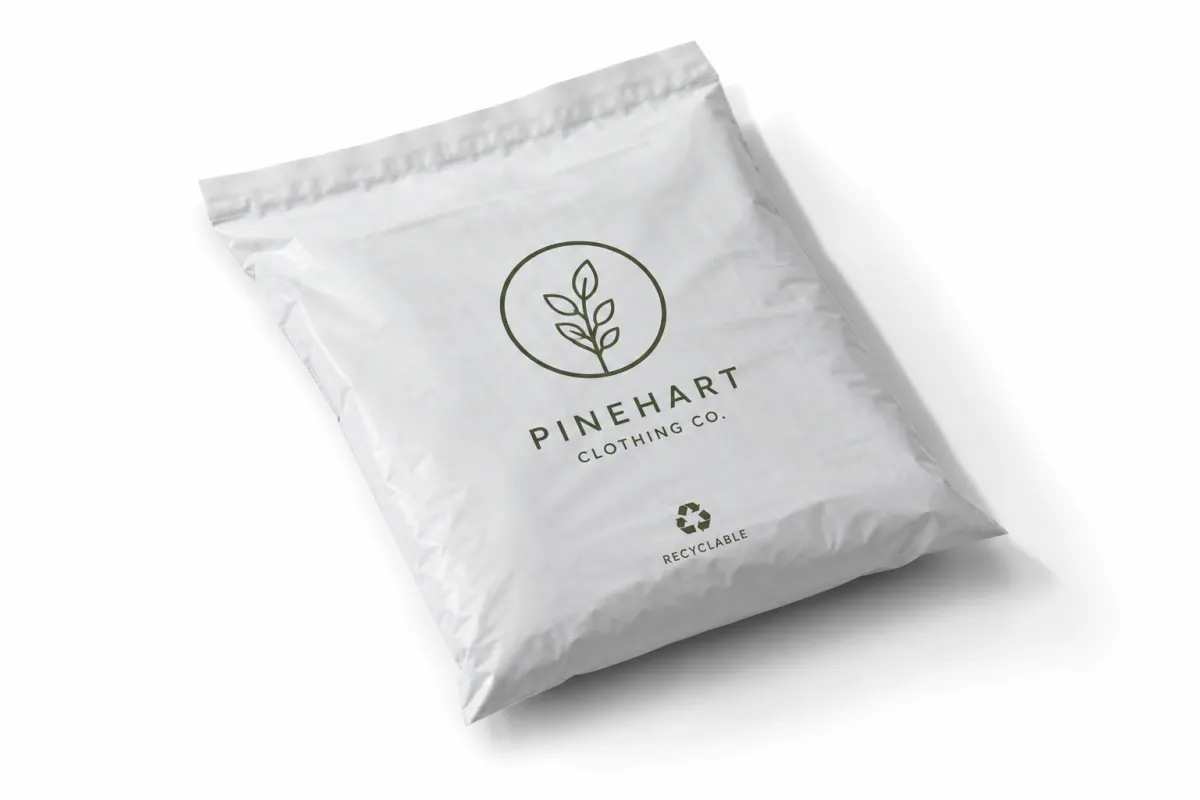
Recyclable clothing mailers with logo are shipping mailers made from recyclable materials and printed with a brand mark, pattern, message, or label-style graphic that reinforces the apparel identity. The good ones are not just plain shipping bags with a logo stamped on top. They are part of the product experience. That means the material, finish, closure, and print area all have to work together instead of fighting each other.
These mailers show up everywhere in apparel. Folded tees, leggings, swimwear, babywear, lightweight knits, and subscription boxes all fit well in this format. They are also a sensible choice for direct-to-consumer orders that are compact and low-bulk, especially when a rigid carton would add cost without adding much protection. For a lot of brands, recyclable clothing mailers with logo are the cleanest way to create a branded shipment without going all-in on a box program.
Recyclable does not mean the same thing in every place. A paper-based mailer may be recyclable in many paper recovery streams if it stays clean and dry. A mono-material poly mailer may need a film collection program, or it may only be accepted in certain regions. The EPA's recycling guidance is a useful reminder that local rules matter more than marketing copy, so the supplier should be able to tell you exactly what the mailer is made from and how it is meant to be recovered: EPA recycling guidance.
That part gets people into trouble. They ask for recyclable clothing mailers with logo because the sustainability angle sounds right, then they skip the actual structure. Is it paper, PE film, or a laminated hybrid? Does the print fit the recovery stream? Will the adhesive strip interfere with reuse or sorting? Those questions decide whether the sustainability claim is clean and usable or just loose language on a spec sheet.
From a packaging buyer's point of view, the best use cases are usually simple. A small apparel label might use one mailer size for most orders, print a one-color logo, and keep pack-out fast. A larger brand might pair recyclable clothing mailers with logo with different sizes for tees, hoodies, and mixed bundles so the presentation stays neat and shipping costs do not creep up because of empty space.
How Recyclable Clothing Mailers With Logo Work in Fulfillment
The workflow is basic, which is part of the appeal. The garment gets folded, sometimes bagged or wrapped in tissue, then inserted into the mailer, sealed, labeled, and shipped. On a good line, that process is fast enough to keep labor costs under control while still giving the customer a branded parcel that looks deliberate the moment it lands. Recyclable clothing mailers with logo fit well in that kind of operation because they do not ask for extra steps that slow the team down.
Logo application depends on the material and the run size. Flexographic print is common for longer runs because it gives strong repeatability and decent unit economics. Digital printing often makes more sense for shorter runs, multiple SKUs, or artwork that changes often. The print area also has to respect seal zones, tear strips, and any folds or gussets. A good logo that ends up under a closure flap is just expensive clutter. With recyclable clothing mailers with logo, print layout is production planning, not decoration.
Performance requirements shift fast once the shipment profile changes. A mailer carrying a pair of leggings in a dry climate has a different job than one carrying a heavier knit set through a humid lane with rough carrier handling. If the package needs to survive abrasion, compression, or moisture exposure, the structure needs to match the route. Some teams also want a return-friendly closure, which means the mailer must open cleanly and reseal without ripping itself apart.
Customers should not have to decode a recycling puzzle after delivery. If the mailer is paper-based, say so plainly and keep the disposal note short. If it is a film mailer, explain whether a store drop-off or a film stream is the right path. People are much more likely to keep a package in the right recovery stream when the message is direct. Recyclable clothing mailers with logo should support that clarity instead of hiding it under buzzwords.
For brands comparing packaging systems, it helps to look at the wider lineup too. Our Custom Packaging Products page is a useful starting point if you are trying to match apparel mailers with labels, inserts, or retail-ready packaging. If you already know a film-based format is the better fit, the Custom Poly Mailers page makes it easier to compare closure styles, thicknesses, and print options in a way that is easier to budget against.
Materials, Print Methods, and Cost Drivers
Most of the price swing in recyclable clothing mailers with logo comes down to six things: material grade, mailer size, thickness, print coverage, number of colors, adhesive or closure style, and order quantity. That sounds basic because it is. It is also where buying teams either protect margin or let it slip away. A small structural change can affect freight efficiency, pallet count, and how fast operators can pack each order.
Material choice is the first fork in the road. Paper-based recyclable mailers usually appeal to brands that want a tactile, natural feel and a recovery story that fits paper collection systems. Mono-material Recyclable Poly Mailers often make more sense for moisture resistance, lighter weight, and lower freight cost, especially when the apparel is compact. Neither option is automatically best. The right answer depends on product weight, shipping lane, and how the brand wants the package to feel in hand. That is why recyclable clothing mailers with logo should be evaluated as a system, not as a lonely bag on a table.
Logo complexity matters more than some buyers expect. A simple one-color mark on a clean panel is usually easier and cheaper to produce than full-coverage artwork, gradients, metallic effects, or multi-panel graphics. On paper, rich color coverage can increase ink usage and sometimes changes the visual texture enough to make the package feel busier than intended. On film, detailed artwork can still look sharp, but setup and color matching can push the price upward. If you want to keep recyclable clothing mailers with logo cost-controlled, simplify the art where possible and let the substrate do some of the work.
Here is a practical budgeting snapshot. These are broad planning ranges at 5,000 units or more, and actual quotes will vary by size, print coverage, and freight:
| Mailer Type | Typical Use | Indicative Unit Cost | Branding Notes | Recovery Consideration |
|---|---|---|---|---|
| Paper-based recyclable mailer | Tees, light knits, soft apparel | $0.18-$0.42 | Best with one or two colors and restrained layouts | Often suitable for paper streams if clean and dry |
| Mono-material PE mailer | Activewear, denser folded items, moisture-sensitive goods | $0.10-$0.28 | Crisp logo reproduction and strong barrier performance | May require film recovery options depending on locality |
| Reinforced paper mailer with tear strip | Premium apparel, returns-friendly shipments | $0.25-$0.55 | More structure, more tactile presence, more panel area | Construction details must be checked carefully |
Order quantity changes the economics fast. Lower minimums help when a brand is testing a new collection, but they usually carry a higher unit price because setup gets spread across fewer pieces. Larger runs tend to deliver better pricing when the same mailer size works across multiple SKUs or seasonal drops. That is one of the quiet advantages of recyclable clothing mailers with logo: if the brand can standardize around one or two sizes, the cost curve usually improves.
Think beyond print and material too. A stronger seal strip, a tear notch, a reseal feature, or a custom die-cut opening can change both usability and cost. Those features are not free, but they can reduce damage claims and make the package easier to open cleanly. For apparel brands, the right compromise is often a mailer that looks modest from the outside but performs very well in the hands of the picker, packer, and customer.
If you want to compare structure performance more formally, transit testing references such as ISTA testing standards are useful starting points. The goal is not to turn every mailer into a lab project. The goal is to verify that the chosen recyclable clothing mailers with logo can survive the handling reality they will actually face.
Step-by-Step Ordering Process and Timeline
The cleanest way to order recyclable clothing mailers with logo is to treat the project like a small packaging program, not a one-off print job. Start with garment dimensions, expected order volume, shipping destination, and brand artwork before asking for a quote. A vague brief usually creates vague pricing, and vague pricing tends to hide the real tradeoffs.
- Define the folded product size. Measure the folded garment, not just the flat garment spec, because the packed footprint determines the mailer dimensions.
- Choose the mailer structure. Decide whether paper, recyclable poly, or a reinforced format best matches the product and shipping lane.
- Confirm print assets. Provide vector artwork, brand colors, and any required text, especially recycling instructions or compliance copy.
- Review a spec sheet. Check dimensions, thickness or caliper, closure type, seal width, and whether the mailer can support a return label or reseal strip.
- Approve physical or digital samples. This is where print color, texture, opening behavior, and perceived quality are verified.
- Release to production. Once everything is approved, the factory run and freight planning begin.
Timing depends on how much is already known before the quote request lands. A straightforward repeat order can often move from proof approval to production in roughly 8-15 business days. A first-time custom job, especially one with new artwork or a new structure, may need 3-5 weeks or more once sampling, revisions, and freight are included. For recyclable clothing mailers with logo, the slowest step is often not the press. It is usually the decision loop around size, artwork, and recovery claims.
Sampling is worth the time. A physical sample can expose problems that look tiny on a screen and become expensive in a warehouse: the opening is awkward, the seal is too aggressive, the panel feels too thin, or the logo sits too close to a fold line. In a high-volume operation, those small problems multiply. If the packing team dislikes the mailer, speed drops. If customers struggle to open it, the brand experience drops. If the package fails in transit, everyone pays for it.
Plan for freight too. A sample that looks good on the bench does not tell you how it behaves after a rough ride, a hot trailer, or a week in transit. Many brands ask for a transit test or at least a controlled pack-and-ship check before they approve a full run. Recyclable clothing mailers with logo should be judged in the same conditions they will actually meet, not only under perfect desk-side lighting.
For teams building a fuller packaging calendar, it helps to align the mailer project with launch dates, photo shoots, and inventory arrival windows. If the apparel is already inbound and the packaging is still undecided, the process gets tight fast. A better move is to lock the mailer style early, even if the final print art is still being refined. That keeps production from becoming the thing holding a launch together.
How to Choose Size, Strength, and Sustainability Specs
Fit is the first spec to get right. A mailer should match the folded garment, not the loose garment dimensions. Leave enough room for a clean close, but do not build so much extra space that the package slumps, shifts, or ships with a lot of wasted air. A practical target is a small buffer around the pack-out footprint, usually about half an inch to an inch on key sides, though thicker items may need more. For recyclable clothing mailers with logo, a clean fit often looks better and performs better.
Strength is the second spec, and it is not just about thickness. Tear resistance, puncture resistance, seal integrity, and edge behavior all matter. On poly structures, buyers often ask for a thickness in mil or micron terms, plus a seal width that gives a comfortable margin under stress. On paper mailers, the more useful questions are about tear strength, burst resistance, and whether the closure strip or adhesive will hold up in real handling. The right recyclable clothing mailers with logo should be strong enough to survive the route but not so heavy that the packaging eats into the shipping budget.
Sustainability specs need careful wording. Recycled content is not the same thing as recyclability. A mailer can contain recycled fiber or recycled resin and still be hard to recover if the structure is mixed, coated, or contaminated. A mailer can also be recyclable in theory but not accepted in a given community or program. Buyers should ask for material composition, recycling guidance, and any certification that supports the claim. If the paper source matters to the brand, FSC chain-of-custody documentation is worth checking as well: FSC guidance.
Different apparel categories need different packaging specs, and a one-size-fits-all approach tends to fall apart quickly. Lightweight tees and socks can usually live happily in a slim mailer. Bulky hoodies, mixed bundles, and boxed gift sets often need a larger or stronger structure. Moisture-sensitive goods may push you toward a film mailer or a paper structure with a better barrier strategy. A smart program lets recyclable clothing mailers with logo change with the product line instead of forcing every item into the same container.
There is also a branding angle in the specs. A matte paper surface feels different from a glossy film. A simple recycled kraft tone reads differently than bright white stock. Those differences are not cosmetic trivia. They shape how customers judge value. Many apparel buyers discover that a restrained mailer with the right texture feels more premium than a loud one with more ink and more claims. That is one reason recyclable clothing mailers with logo work so well for direct-to-consumer apparel: the package can signal care without shouting.
For sourcing teams, the most useful question is not "Can you make it?" It is "Can you make it at the right size, with the right strength, and with a claim we can stand behind?" That question keeps the conversation practical. It also keeps the packaging aligned with the brand story instead of turning sustainability into a vague slogan.
Common Mistakes When Buying Recyclable Clothing Mailers With Logo
The biggest mistake is assuming every recyclable claim works the same way. It does not. A mailer may be recyclable only in specific collection systems, or only if the user removes labels, keeps it clean, and sorts it correctly. If the supplier cannot explain the material and the intended recovery path in plain language, the claim is too fuzzy for a serious buying decision. That is especially true for recyclable clothing mailers with logo, because branding copy tends to get more attention than material truth.
Another common problem is overdesign. Too many graphics can crowd the panel, bury the logo, or interfere with seals and edges. I have seen mailers where the marketing team wanted every panel filled, but the production team had to trim the usable area just to keep the closure reliable. A cleaner design usually prints better, packs faster, and feels more confident in hand. Recyclable clothing mailers with logo do not need to look busy to look strong.
Wrong sizing causes avoidable waste. Oversized mailers use more material, occupy more freight space, and can create a sloppy presentation. Undersized mailers stress the seams, distort the print, and may cause returns or damage if the garment is forced in. A spec that fits the product footprint and leaves just enough clearance is usually the sweet spot. Measuring folded dimensions before quoting is worth the extra few minutes.
Skipping sample approvals is another expensive habit. Colors can shift on recycled paper. White can read warmer or duller than expected. Seal strips can feel too aggressive or not aggressive enough. Print registration can drift. None of those issues are dramatic on a spec sheet, but they become very real when a warehouse team is packing hundreds of orders a day. For recyclable clothing mailers with logo, sample review is not a formality. It is the cheapest quality check you will get.
Some buyers also forget to ask about performance in moisture, heat, or long-haul conditions. A mailer that works beautifully for local shipping might not behave the same way after a longer route or a summer trailer. The safest move is to test the package in a real workflow, then adjust the construction if needed. That is far easier than discovering a weak point after thousands of units are already in circulation.
Expert Tips for Better Branding and Easier Recycling
If the goal is a package that feels premium and still recycles well, start with a clean logo layout. Strong contrast helps the branding read from the shelf, the doorstep, and a phone camera without extra visual clutter. A simple mark on a quiet surface often looks more intentional than a crowded design, especially on paper textures or light film stock. With recyclable clothing mailers with logo, clarity usually beats decoration.
Keep the recycling message short and specific. "Please flatten and recycle according to local guidelines" is more useful than a paragraph of generic sustainability language. If the material is paper-based, say that plainly. If it is mono-material poly, say that plainly too, while avoiding claims that sound broader than the actual recovery options. The most effective brand copy on recyclable clothing mailers with logo tends to be the copy that makes disposal easier, not more theatrical.
Pack-out consistency matters more than many teams realize. If one fulfillment partner folds tightly and another leaves air pockets, the same mailer can look like two different products. Standard fold dimensions, standard insertion orientation, and standard label placement all help the shipment feel polished. That matters even more for e-commerce brands where the mailer is the first physical proof of brand control. A well-run program makes recyclable clothing mailers with logo feel reliable from order to order.
Let the material tell part of the story. A restrained design on recycled kraft can communicate honesty and calm confidence. A smooth film mailer can communicate efficiency and protection. Neither needs to be loud. A lot of brands get better results when they stop treating the mailer like ad space and start treating it like a useful object that happens to carry the brand. That shift makes recyclable clothing mailers with logo feel more premium, not less.
A restrained mailer often feels more premium than a crowded one, because the texture, closure, and print quality have room to do their work.
Finally, use the package to support, not overpower, the garment. The apparel should still be the hero. The mailer should deliver it cleanly, protect it lightly, and set up the opening experience so the customer feels that the brand paid attention. That is the sweet spot for recyclable clothing mailers with logo: practical enough for operations, polished enough for marketing, and specific enough for the sustainability conversation to feel credible.
Next Steps for Recyclable Clothing Mailers With Logo
If you are ready to move, start with a short checklist. Measure the folded garments, decide whether paper or film better matches the product, choose the print style, and ask for samples before you place a full order. That one pass through the basics saves time later. It also keeps the discussion focused on the actual needs of recyclable clothing mailers with logo instead of drifting into vague preferences.
Ask suppliers for the details that matter most: exact dimensions, material composition, closure type, print method, lead time, and pricing breaks by quantity. If the vendor cannot explain the recovery guidance in clear terms, keep asking. If the product line includes multiple garment types, request pricing for a small size set rather than a single "one size fits all" answer. Good sourcing depends on comparing apples to apples, and recyclable clothing mailers with logo are no exception.
Before signing off, test the package in real life. Let the fulfillment team pack it. Let someone open it cold. Let it travel through the actual route if possible. Check seal strength, pack speed, print appearance, and how the mailer looks after transit. Small fixes are much easier before production than after a full pallet lands. The most dependable recyclable clothing mailers with logo are usually the ones validated in the same environment where they will actually be used.
If you want to build the packaging program a little further, browse our Custom Packaging Products selection to compare formats that can support labels, inserts, and apparel presentation across different channels. If the line needs a film structure, the Custom Poly Mailers page is a practical next stop for comparing thickness, closure options, and print coverage before you request quotes.
Done well, recyclable clothing mailers with logo do three jobs at once: they protect the product, support the sustainability story, and make every shipment feel deliberate. That combination is why they have become such a useful packaging choice for apparel brands that want to look organized without overbuilding the parcel. The smart move is simple: match the mailer to the garment, prove the recovery claim, and test it before you commit to a full run.
Are recyclable clothing mailers with logo actually recyclable everywhere?
Not always. Recyclability depends on the mailer material, how the package is constructed, and the local recycling program that receives it. A paper mailer may be accepted in many paper streams if it is clean and dry, while a film mailer may need a store drop-off or a specific film recovery option. If you are buying recyclable clothing mailers with logo, ask for clear material specifications so the claim is specific instead of vague.
What is the best logo style for recyclable clothing mailers with logo?
Simple artwork usually works best. One- or two-color logos often print more cleanly, cost less to run, and keep the design strong on lightweight mailers. High-contrast layouts also read better from a distance and on camera, which matters for social sharing and doorstep presentation. Leave room around seals, edges, and folds so the logo does not interfere with production on recyclable clothing mailers with logo.
How much do recyclable clothing mailers with logo cost?
Price depends on material, size, print coverage, color count, quantity, and any custom features such as tear strips or reseal closures. As a planning range, many buyers see paper-based options around $0.18-$0.42 per unit at 5,000 pieces, while mono-material poly options may land around $0.10-$0.28 depending on the build. The cleanest way to compare recyclable clothing mailers with logo is to request quotes using the same spec across suppliers.
How long does it take to produce recyclable clothing mailers with logo?
Most timelines include artwork approval, sampling, production, and shipping. Repeat jobs can move faster because setup is already complete, while first-time custom jobs often need more time for proofing and material sourcing. A practical planning window is often 8-15 business days after proof approval for straightforward runs, with extra time added for samples, revisions, or freight. If your launch date is fixed, build that margin in early for recyclable clothing mailers with logo.
What should I send a supplier when ordering recyclable clothing mailers with logo?
Send folded garment dimensions, estimated quantity, print artwork, preferred material, and any sustainability or recycling goals you want to meet. It also helps to note whether the mailer needs extra tear resistance, moisture protection, or a reseal feature. Ask for a sample or spec sheet before approval so you can confirm fit, feel, and print quality. That is the fastest way to avoid surprises with recyclable clothing mailers with logo.


