Buyer Fit Snapshot
| Best fit | Recyclable Mailer Boxes for Brands projects where brand print, material claims, artwork control, MOQ, and repeat-order consistency need to be specified before quoting. |
|---|---|
| Quote inputs | Share finished size, material target, print colors, finish, packing count, annual reorder estimate, ship-to region, and any compliance wording. |
| Proofing check | Approve dieline scale, logo placement, barcode or warning zones, color tolerance, closure strength, and carton packing before bulk production. |
| Main risk | Vague material claims, crowded artwork, missing packing details, or unclear freight terms can make a low unit price expensive after revisions. |
Fast answer: Recyclable Mailer Boxes for Brands: Film, Print, MOQ, and Carton Packing should be specified like a repeatable production item. The safest quote records material, print method, finish, artwork proof, packing count, and reorder notes in one written spec.
Production checks before approval
Compare the actual filled-product size with the drawing, then confirm tolerance on folds, seals, hang holes, label areas, and retail display edges. Reserve space for logos, QR codes, warning copy, and material claims before decorative graphics fill the panel.
Quote comparison points
Review material grade, print process, finish, sampling route, tooling charges, carton quantity, and freight assumptions side by side. A quote is only useful when the supplier can repeat the same color, closure quality, and packing count on the next order.
Recyclable mailer Boxes for Brands have a blunt kind of appeal. They protect the product, shape the first physical impression, and give customers a package they can flatten and sort without much drama. That matters more than it sounds. A box that looks polished but creates confusion at disposal is only half useful. A box that is recyclable on paper yet flimsy in transit can turn into damage, returns, and extra filler that eats up both money and materials.
Apparel labels, cosmetics lines, subscription kits, accessory brands, and direct-to-consumer shops keep circling back to this format for a reason. The box gives them a printable surface, a structure that most buyers immediately understand, and a paper-based build that can be engineered for stiffness, clean folding, and efficient packing. The hard part is not choosing a mailer box. The hard part is choosing one that does not become too heavy, too ornate, or too expensive to ship.
Comparing options means looking beyond the label itself. A recyclable mailer box may be a folding carton, a corrugated mailer with a tuck closure, or a paper-based rigid-style pack shaped for one product family. The goal is not to win a terminology contest. The goal is to pick a structure that survives parcel handling, supports the brand story, and fits the recycling systems real customers use.
A well-specified mailer box should feel almost invisible after the sale: it opens cleanly, protects the contents, and moves into the recycling stream without a second thought.
Why Recyclable Mailer Boxes for Brands Get Noticed Fast
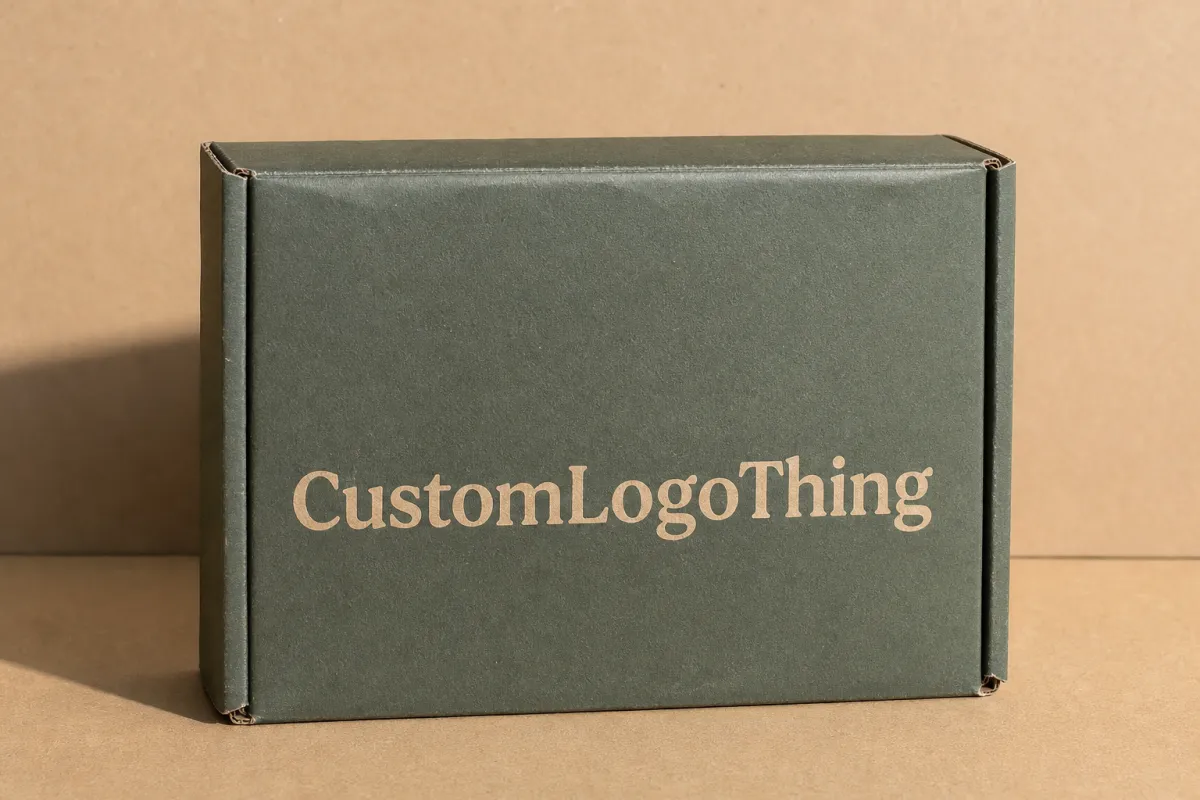
Packaging is often the first thing a customer touches from a brand. Before the shipping label, before the tape seam, before the product itself, there is the box. That is part of why recyclable mailer boxes for brands have become such a common choice for e-commerce teams that want a premium feel without drifting into waste-heavy formats. The box can be printed, branded, and shaped to feel deliberate while staying paper-based and easy to sort at the end of its life.
In practical terms, a recyclable mailer box is a paper-based shipping box designed so the main structure can enter paper recycling streams, as long as it is not burdened with hard-to-separate materials. Most versions are made from corrugated fiberboard or paperboard, then cut and folded into a style that opens and closes with tabs, tuck flaps, or locking panels. That lets the box ship flat, stay efficient in production, and still feel finished after assembly.
Brands keep choosing this format for very plain reasons. Apparel businesses want a presentation layer that feels more intentional than a poly mailer. Cosmetics and beauty brands need protection for bottles, jars, or palettes. Subscription programs want room for inserts, cards, and sets without building a nest of loose filler. Direct-to-consumer brands want a format that prints well, stacks neatly, and reduces product movement during parcel shipping.
The promise is straightforward: the right box should hold up in transit, look good enough to support the brand, and stay simple enough that the customer does not need disposal instructions. That balance is never automatic. It comes from the board grade, the fit, the print coverage, the closure style, and the number of extra components added inside the pack.
Brands comparing formats often benefit from looking sideways, not just forward. A custom box program may need inserts or a secondary shipper, and a broader packaging review can reveal whether a box, mailer, or hybrid format is the better answer. The product range at Custom Packaging Products is a practical place to start if you are sorting through those choices.
How Recyclable Mailer Boxes for Brands Work
The structure is simpler than the marketing language around it. A paper fiber board is cut into a dieline, scored, folded, and locked into shape. Strength comes from the fiber itself, the geometry of the panels, and the way the closure spreads stress across the box. Corrugated mailers are common because the fluted middle layer adds crush resistance and stacking strength without much extra weight. Paperboard folding cartons are lighter and can look refined, but they usually suit lighter products or shipping methods with more protection elsewhere in the chain.
Most mailer boxes include side walls, a top lid or tuck closure, a bottom lock, and sometimes an insert or retention feature that keeps the product from shifting. The interior fit matters as much as the outside finish. A box that is too loose lets the contents move during transit, which can cause abrasion, breakage, or a need for extra void fill. A box that is too tight can slow packing and create pressure points on fragile items or decorated surfaces.
What affects recyclability in practice
Recyclability is not only about the base board. It is about the finished package as a whole. Water-based inks usually create fewer concerns than heavier coating systems, but they are not a free pass if the package also includes non-fiber elements that complicate recovery. Pressure-sensitive labels, clear plastic windows, metallic foils, soft-touch films, and certain adhesives can all change how a package behaves in a recycling mill. A box that is mostly fiber but packed with mixed materials becomes harder to sort and harder to explain.
That does not mean every finish is off-limits. It means the package has to be designed with restraint. A minimal ink layout on kraft corrugated stock may be the better choice than a full-coverage laminated white board if the priority is cleaner recovery. For brands that want a public reference point on recycling guidance, the U.S. EPA recycling resources are useful for separating material recyclability from what local collection systems actually accept. The distinction matters because “technically recyclable” and “accepted in curbside programs” are not always the same thing.
The supplier conversation and the consumer reality are not the same thing. A box can be recyclable by material composition and still be rejected if it is contaminated, heavily coated, or mixed with attachments that local programs cannot process. That is why broad claims are risky. A package described honestly as paper-based and recyclable is stronger than one that oversells the story and leaves customers guessing.
Structure and recovery need to work together
From a buyer’s standpoint, the best mailer does not force a choice between appearance and performance. A sound board grade, a flute profile suited to the product, and a fit that matches the shipment can reduce damage and waste at the same time. A 6-ounce skincare set does not need the same board as a ceramic candle paired with a glass dropper bottle. The right spec depends on how the package travels, not only on how it looks in a mockup.
Brands that want proof on transit performance should ask about parcel testing methods tied to common industry practice, including ISTA testing guidance. Real shipping lanes are rougher than mockups suggest. Drop impacts, compression in sortation, and vibration in transit expose weak closures, poor fit, and board that is thinner than the product actually needs.
A recyclable mailer box earns its keep only when the material, closure, print finish, and internal fit are designed as one system.
Key Factors That Affect Performance and Appearance
The difference between an average mailer and a strong one usually comes down to a short list of measurable choices. Board selection, flute profile, caliper, fit, and finish all shape how the box feels in the hand and how it performs once it enters the shipping stream. For packaging buyers, these are not abstract specs. They influence cost, damage rates, assembly time, and the customer’s first impression.
Board selection and caliper
Corrugated board is measured by the liner and flute combination, while paperboard is usually discussed in terms of thickness or caliper. A higher caliper can feel sturdier, but more thickness is not automatically better if the product is light and the shipping route is short. For many e-commerce programs, E-flute or B-flute corrugated offers a useful mix of print quality, foldability, and crush resistance. Lightweight paperboard can work for accessory kits, but once the product has real mass, the box needs structure that can survive stacking and parcel handling.
Edge strength matters too. A mailer can look clean on a flat sample table and still fail under warehouse stacking because the board cannot hold its shape under pressure. That is one reason experienced buyers ask for material samples before approving a run. The box should be judged as a package, not as a graphic file.
Sizing strategy and shipping cost
Size the box around the product, not around a generic standard. Oversizing creates dead space, which usually means more filler, more movement, and higher dimensional shipping charges. Undersizing can force workers to bend items into place or compress them in ways that damage closures and presentation. In practice, a well-fitted box is one of the cheapest ways to improve the unboxing experience and shipping efficiency.
Assembly speed matters too. If a box saves 10 seconds per pack at the fulfillment line, that becomes real money over thousands of orders. If it cuts down on tissue, void fill, or double boxing, the savings stack up. Brands often notice the aesthetic change first, but labor and freight savings are what make the format easier to scale.
Print and finish choices
Printing should support the material, not fight it. Water-based or soy-based inks are often preferred for paper-based packaging because they usually sit more comfortably within fiber recovery goals than heavy plastic films. Spot color, line art, and restrained coverage can create a crisp premium look on kraft or coated stock. Embossing or debossing can add texture without introducing a separate material layer, and spot varnish can highlight a logo or pattern without wrapping the whole box in coating.
Finish choices still depend on the brand story and the product. A beauty brand may want a smoother, brighter surface for rich color reproduction. A natural personal care line may prefer an uncoated kraft look that feels grounded and tactile. Neither is universally better. The point is that the finish should match the message and stay compatible with the recycling story the brand wants to tell.
Product category differences
Apparel shipments are usually the simplest. Shirts, socks, and soft goods do not need much internal cushioning, so the box can focus on presentation and orderliness. Glass cosmetics and fragile gift sets need more structure, often with inserts or partitions that keep items from colliding. Kit packaging adds another layer of complexity because multiple small components can shift unless the cavity design is carefully planned.
One useful shortcut is to sort products into three buckets:
- Light and soft: apparel, folded textiles, and accessories that need presentation more than crush protection.
- Moderate and mixed: skincare sets, candles, and multi-item bundles that need a stable interior layout.
- Fragile or dense: glass, ceramics, and heavy kits that need board strength, inserts, and tested closure performance.
If your current ship format is a poly mailer and you are considering a move into a box, it helps to compare both side by side. The difference between Custom Poly Mailers and recyclable mailer boxes is usually about product sensitivity, presentation expectations, and whether rigid structure matters more than minimal ship weight.
The strongest box is usually the one that fits tightly, prints cleanly enough for the brand, and avoids materials that do not improve protection or presentation.
| Option | Typical Use | Relative Cost | Recyclability Consideration | Notes |
|---|---|---|---|---|
| Light paperboard mailer | Accessories, lightweight kits | Lower to moderate | Good if kept paper-based | Best for lighter items and polished print |
| E-flute corrugated mailer | Apparel, cosmetics, mixed bundles | Moderate | Strong when coatings stay minimal | Common balance of strength and appearance |
| B-flute corrugated mailer | Heavier or more fragile products | Moderate to higher | Usually favorable if materials stay simple | Better crush resistance and stacking performance |
| Mailer with inserts | Kits, glass items, premium sets | Higher | Depends on insert material and adhesive choices | Improves product stability, but adds complexity |
| Foil or laminated mailer | Specialty presentation packs | Higher | Less favorable for recycling clarity | Use only if the marketing need is worth the tradeoff |
Recyclable Mailer Box Cost, MOQ, and Quote Drivers
Cost is where many packaging projects become real. A good-looking prototype does not always translate into an efficient production run, and the gap between a workable spec and an expensive one often comes down to dimensions, board choice, and print method. For recyclable mailer boxes for brands, unit price usually moves with the same variables that affect performance: size, material, decoration, inserts, and quantity.
As a rough planning range, simple Custom Mailer Boxes in moderate quantities can land anywhere from about $0.35 to $1.10 per unit, depending on size, board grade, print coverage, and order volume. More complex builds with custom inserts, specialty finishes, or heavier board can push above that. At lower quantities, setup and waste weigh more heavily on the price. At higher volumes, unit cost usually drops, but only if the spec is stable enough to support the run.
What drives price the most
- Dimensions: bigger boxes use more board and often raise material and freight cost.
- Board grade: stronger or thicker board usually costs more but may reduce damage and filler.
- Print complexity: full-coverage graphics, multiple colors, and tight registration add labor and setup.
- Finish: coatings, soft-touch surfaces, embossing, and foils each add process steps.
- Inserts: paperboard or corrugated inserts can improve fit but raise material and tooling cost.
- Quantity: higher volume usually lowers unit price because setup is spread across more pieces.
MOQ expectations vary by supplier and by construction method. Some custom runs may start around 500 to 1,000 units, while others are more efficient at 3,000 or 5,000 pieces. Very small runs usually carry a higher per-unit price because press setup, cutting dies, and board waste are spread over fewer boxes. That is not always a reason to avoid a short run; it just means the order should be treated as a launch batch or test batch rather than a final scale purchase.
What to include in a quote request
A supplier can only price accurately if the request is detailed enough to reduce guesswork. A vague note like “need custom recyclable mailers” tends to produce assumptions, and assumptions create quote spread. A stronger brief should include outside dimensions, product weight, shipping method, the desired print area, whether inserts are needed, the finish preference, and any recycling language or sustainability claims that need review.
Practical targets help too. If the box must survive parcel shipping, say so. If the product needs a premium presentation for influencer kits or retail samples, say that. If the box needs to pack flat and assemble quickly at fulfillment, mention assembly speed. Those details matter because a good quote is not just a price. It is a recommendation that should fit the real use case.
A good packaging quote does more than fill in a number. It exposes the tradeoffs, so the price tells you whether the spec is smarter or simply weaker.
Short-run versus scale-order economics
Short runs are useful when a brand is still testing product-market fit, running a seasonal offer, or launching a limited edition. In those cases, flexibility matters more than the absolute lowest unit cost. Scale orders make sense once the size is stable, the artwork is approved, and the product has already proved itself in transit. That is the point where buying more can reduce landed cost without forcing a compromise on quality.
Think about timing honestly. If the size or branding may change in three months, a large order can become false economy. If the program is established and the box has already been validated in shipping, a larger commitment can make sense. The right buying decision matches the product’s stage, not just the spreadsheet.
For brands comparing packaging partners, case studies can make the tradeoffs easier to see. The examples at Case Studies are useful for understanding what changes once a box moves from concept to a live shipping program.
Ordering Process and Lead Time Planning
Packaging timelines often slip for reasons that are easy to avoid once the pressure points are clear. A custom mailer project starts with the brief, but it does not end at approval. Structure selection, artwork placement, proofing, sampling, production, and freight all need time. For many brands, packaging is the hidden dependency that decides whether a launch feels organized or rushed.
A typical sequence looks like this: discovery, dieline selection, artwork fit check, proofing, sample review, final approval, production, and shipment. Simple structures with ready artwork can move quickly. Custom shapes, dense print coverage, or multiple revision rounds stretch the lead time. Many buyers are surprised by how much time disappears not in manufacturing, but in waiting for internal approvals.
Common lead time risks
- Artwork revisions: small design changes can force new proofs or delay plate work.
- Sample cycles: one round is ideal, but product fit issues can trigger a second or third sample.
- Material sourcing: certain board grades, coatings, or specialty papers may need extra procurement time.
- Seasonal congestion: peak demand periods can extend production queues and freight scheduling.
- Internal review: waiting on brand, operations, and compliance approvals can take longer than expected.
Build more margin into the launch calendar than the team first thinks it needs. If the goal is a product drop, subscription cycle, or retail rollout, the packaging should be locked well before the last week. A practical buffer is often two to four weeks beyond the quoted production time, especially if samples or freight consolidation are involved. That margin is not wasted time. It is a buffer against the kind of delay that turns a clean launch into a scramble.
What first-time buyers should verify
First-time buyers should not rely on renders alone. A physical sample shows how the material feels, how the closure behaves, whether the print reads clearly, and whether the product moves inside the box. A print proof helps with alignment and artwork accuracy, but it cannot replace a real assembled sample. For shipping-critical products, a simple transit test is worth doing even if it is just an internal check rather than a formal lab program.
One useful habit is to inspect the box in three states: flat, assembled empty, and packed with product. That quick review catches most common issues. If the box is hard to fold, that matters. If the closure is too loose, that matters. If the pack looks good empty but loses shape once product is inside, that matters even more.
Careful planning reduces the odds of discovering fit or print problems after the production window has already opened.
Common Mistakes Brands Make With Recyclable Mailer Boxes
Some of the most expensive packaging mistakes are quiet. They do not announce themselves with a dramatic failure. They show up as a material choice that is more complex than necessary, a box that is larger than it needs to be, or a finish that looks attractive but weakens the recovery story. These errors are common because they seem harmless during design. The costs appear later in damage, freight, and customer confusion.
Too many materials in one pack
It is easy to overload a box with extras. A plastic window, a foil stamp, a laminated surface, a foam insert, a paper sleeve, and a separate sticker seal may each seem minor on their own. Together they create a mixed-material package that is harder to explain and, in some cases, harder to recycle. If recyclability is a central selling point, the package should stay as clean as possible. That does not mean plain. It means disciplined.
Paper-based inserts usually fit better than plastic ones if the goal is to keep the package in the fiber stream. Water-based adhesives and recyclable-friendly inks also help simplify the material mix. The less debate there is about what the box is made of, the easier it is for the customer to handle it correctly.
Overbuilding the structure
Another common mistake is specifying more board than the product needs. Brands often assume thicker always means better, but extra board can raise cost, add shipping weight, and create an unnecessarily stiff feel. For lightweight goods, that can even make the box less pleasant to open. A buyer should ask a simple question: what failure are we trying to prevent, and what is the lightest structure that still prevents it?
That question usually leads to a better design. A carton engineered around the product and route can outperform a heavier one chosen only because it felt safer on paper. Real protection comes from the right structure, not from assuming the thickest option is automatically the smartest one.
Using vague sustainability language
Calling a box recyclable without qualification can create more problems than it solves. If the design includes mixed materials, if the finish complicates recovery, or if the target market has limited access to paper recycling, the claim needs to be handled carefully. Honest language builds trust. Overstated language invites complaints later, especially from customers who care deeply about disposal and material stewardship.
That does not mean brands should avoid sustainability messaging. It means the message should be grounded in the actual spec. If the box is paper-based, say that. If the fiber is FSC-certified, the claim can be referenced responsibly, and the FSC website is a useful source for certification terms and chain-of-custody language. Precision makes the claim more credible.
Poor fit and excess void fill
Poor fit is expensive in three directions at once. First, the product can shift and get damaged. Second, packers may need to add tissue, inserts, or air cushions to stabilize it. Third, an oversized box can trigger higher dimensional shipping costs. A good fit reduces all three. It also gives the pack a calmer, more composed look, which matters in subscription and gift-style shipments.
Brands sometimes treat void fill as harmless because it is cheap per unit. In practice, the labor to add it, the storage space it occupies, and the visual clutter it creates can make it a poor tradeoff. A better-designed mailer often costs a little more up front and less overall once packing efficiency and damage rates are included.
The biggest packaging mistakes are rarely exotic. They are ordinary choices made without enough attention to fit, material mix, or end-of-life behavior.
Expert Tips and Next Steps for a Better Rollout
The cleanest packaging rollouts start with a simple audit. Measure what you ship now, note where damage occurs, and decide which features are truly necessary. A box does not need every premium detail to do its job well. In many cases, the best result comes from reducing complexity until the package does exactly what the product needs and nothing more.
Start with the product, not the graphic
It is tempting to begin with artwork because that is what everyone sees first. The product should set the spec. Measure the item with inserts, protective wraps, or cards included. Use the heaviest and most fragile version of the shipment, not only the average one. If the item has seasonal variations or bundle formats, make sure the mailer can handle the widest real-world configuration.
Once the dimensions are set, the artwork can be designed around the actual board size rather than guessed onto it. That reduces rework and makes the final result feel more considered. A good dieline is not a restriction. It is the frame that lets the design work in production.
Test fit early
Request a sample or dieline early enough that the team can test closure strength, insert behavior, and interior movement before artwork is frozen. A sample does not just answer whether the box looks good. It reveals whether the product rattles, whether the closure opens too easily, and whether the brand elements sit where they should on the finished structure. Those are the kinds of issues that are hard to catch in a digital proof.
If the pack is shipping nationally or internationally, do not skip transit validation. Even a simple internal test that simulates drop, compression, and vibration is better than nothing. If a stronger method is needed, ask about packaging test standards and how the product class maps to them. A small amount of validation now can prevent a large amount of damage later.
Use a supplier brief that removes guesswork
A practical brief usually includes product dimensions, weight, quantity range, shipping method, print area, finish preferences, insert needs, and any recycling language the brand wants reviewed. If the team has examples of packaging it likes, include those too. If there are current shipping pain points, spell them out. Supplier estimates improve when they are built on specifics instead of generic requests.
That brief can also include commercial priorities. If price matters most, say so. If presentation matters more than raw cost, say that. If the plan needs a balance between the two, make that plain. Good packaging partners can handle tradeoffs, but only if they know which ones are acceptable.
Roll out in a controlled way
The smartest launch path is often small and deliberate: test one SKU, compare two or three quotes, verify the sample in transit, then scale once the package proves itself. That approach keeps risk manageable and prevents the brand from committing too early to a spec that has not been field-tested. It also leaves room to refine the design after real customer feedback.
If you are deciding between packaging directions, the best next move is usually not the fanciest option. It is the one that survives shipping, fits the product cleanly, and keeps the disposal story straightforward. For a broader look at production options and related formats, the catalog at Custom Packaging Products can help the team compare structures before finalizing a direction.
A controlled rollout beats a rushed one because it gives you room to verify fit, cost, and performance before volume rises.
For brands building packaging confidence from the ground up, recyclable mailer boxes for brands are often a strong place to start. They combine structure, printability, and a clear disposal story. If the material is chosen carefully, the box is sized correctly, and the interior fit is tested before launch, the result usually feels cleaner for the customer and more efficient for the business.
The practical takeaway is simple: define the product, define the shipping conditions, and define the disposal claim before you ask for quotes. That order prevents most of the expensive mistakes. It also makes it far easier to choose a mailer that does the job without carrying unnecessary material, unnecessary cost, or unnecessary confusion.
Are recyclable mailer boxes for brands actually recyclable after printing?
Usually yes, if the box stays mostly paper-based and uses inks, coatings, and adhesives that do not interfere heavily with fiber recovery. The main caution is mixed-material decoration, such as plastic windows, heavy lamination, or non-paper inserts, because those features can make the package harder to process cleanly. Local recycling rules also matter, so the best answer is the one that matches the target market’s collection system, not only the supplier’s material description.
What material is best for recyclable mailer boxes for brands?
Most brands use corrugated fiberboard because it gives a strong mix of protection, shipping efficiency, and broad recycling acceptance. The best board depends on the product’s weight, fragility, route, and the unboxing feel you want to create. A light apparel shipment may be fine on a thinner structure, while a glass or multi-item kit usually needs a stronger flute and tighter fit.
How do I compare pricing for recyclable mailer boxes for brands?
Compare quotes using the same dimensions, board grade, print coverage, finish, insert style, and quantity. That keeps you from comparing a light, simple structure against a stronger or more decorated one and mistaking that difference for price variance alone. It also helps to include samples, tooling, freight, and any finishing steps that affect the landed cost, not just the box price on paper.
What lead time should brands expect for recyclable mailer boxes?
Lead time depends on artwork readiness, sample approvals, material availability, and the current production queue. A straightforward order can move faster, while custom shapes, special printing, or multiple proof rounds usually add time. The safest planning approach is to build buffer time into the launch calendar so packaging does not become the reason a product release slips.
Can recyclable mailer boxes replace poly mailers for e-commerce?
Yes, for many products that need more structure, better presentation, or stronger crush protection. They are especially useful for subscription kits, cosmetics, accessories, and premium apparel shipments. For very light or highly compressible items, a poly mailer may still be more efficient, so the product, shipping route, and brand experience should guide the choice rather than a blanket rule.


