Buyer Fit Snapshot
| Best fit | Recycled Content Poly Mailers Bulk projects where brand print, material claims, artwork control, MOQ, and repeat-order consistency need to be specified before quoting. |
|---|---|
| Quote inputs | Share finished size, material target, print colors, finish, packing count, annual reorder estimate, ship-to region, and any compliance wording. |
| Proofing check | Approve dieline scale, logo placement, barcode or warning zones, color tolerance, closure strength, and carton packing before bulk production. |
| Main risk | Vague material claims, crowded artwork, missing packing details, or unclear freight terms can make a low unit price expensive after revisions. |
Fast answer: Recycled Content Poly Mailers Bulk: Specs & Pricing should be specified like a repeatable production item. The safest quote records material, print method, finish, artwork proof, packing count, and reorder notes in one written spec.
Production checks before approval
Compare the actual filled-product size with the drawing, then confirm tolerance on folds, seals, hang holes, label areas, and retail display edges. Reserve space for logos, QR codes, warning copy, and material claims before decorative graphics fill the panel.
Quote comparison points
Review material grade, print process, finish, sampling route, tooling charges, carton quantity, and freight assumptions side by side. A quote is only useful when the supplier can repeat the same color, closure quality, and packing count on the next order.
Recycled Content Poly Mailers Bulk: Specs & Pricing
Teams that ship apparel, accessories, and soft goods by the thousands know that packaging decisions rarely stay small. A mailer that saves half a second at the packing bench, or avoids a single rework cycle, can change the economics of an entire month. Recycled content Poly Mailers Bulk solve that problem in a practical way. The mailer stays light, the pack line stays fast, and the parcel still reaches the customer with a clean retail look.
The appeal is broader than the sustainability label. Buyers choose recycled content poly mailers bulk because volume buying trims stockouts, keeps dimensions stable across reorders, and removes a surprising amount of guesswork from forecasting. I have watched fulfillment teams lose more time to inconsistent packaging supply than to actual packaging cost. A warehouse that ships 12,000 folded tees a week does not need another variable on the floor. It needs a mailer that arrives the same way, every time.
Procurement gets its own benefit. One spec sheet, one print standard, one carton count: that combination can save real labor over a month when seasonal launches and multi-SKU replenishment are both moving. Recycled content poly mailers bulk are often the unglamorous piece that keeps a packaging program steady. They are usually cheaper to ship than a box for the same soft product, easier to store in quantity, and less likely to create a bottleneck at the pack bench. The sections that follow cover construction, Specs, Pricing, Lead Times, and the order path that keeps the program from drifting off course.
Why recycled content poly mailers bulk orders make sense for busy shippers
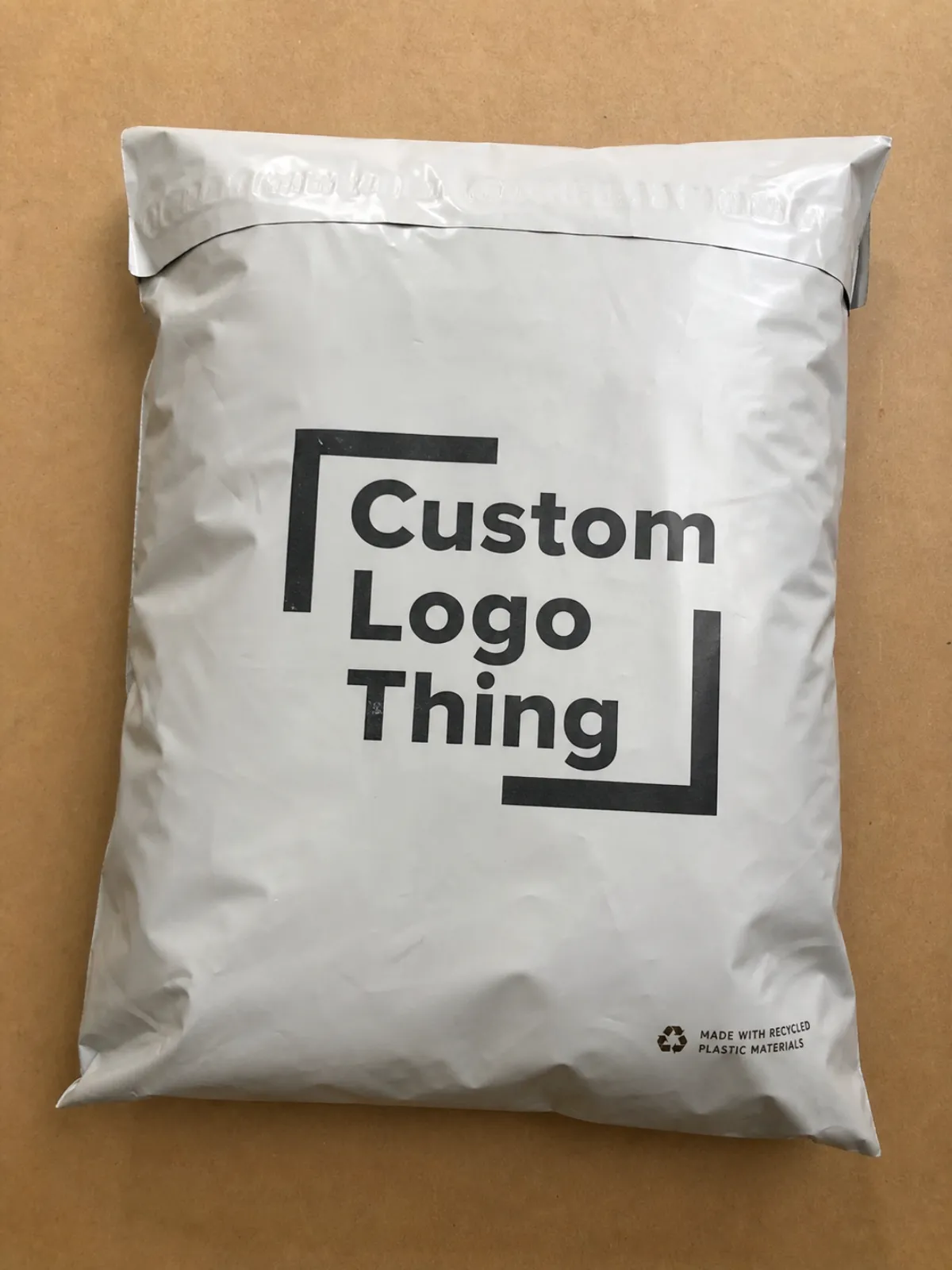
A recycled-content mailer can still look polished. It can still seal cleanly. It can still survive the scuffs of transit. The mistake many buyers make is assuming recycled film means a flimsy bag or a dull finish. In practice, film blend, thickness, seal integrity, and bag fit matter far more than the recycled-content label alone. A mailer that matches the product will outperform an overbuilt one chosen for optics rather than function.
Bulk format changes the math for the warehouse. A team packing from one consistent mailer size works faster than a team sorting through half-used stock. Reorder planning gets simpler. Damage complaints drop when the gauge is correct from the start. Compare that with a cheaper, inconsistent supply: the savings often disappear the first time a shipment arrives too thin, too narrow, or too late. Recycled content poly mailers bulk are usually the better control strategy because they reduce the number of ways fulfillment can go sideways.
Apparel is the obvious fit, but the category goes wider than that. Soft goods, flat promotional items, sample kits, accessories, folded textiles, and most e-commerce orders that do not need rigid corner protection belong on the list. Recycled content poly mailers bulk make sense when the product is light, flexible, and not likely to puncture the film from the inside. A pair of boots, a framed print, or anything with sharp edges pushes the order into box territory instead.
The brand story matters, though it should not lead the conversation. Customers can spot the difference between a mailer built for performance and one bought for a headline. Recycled content poly mailers bulk work best when the packing line comes first and the sustainability message follows closely behind. That order tends to produce fewer complaints, fewer returns, and a stronger program over time.
"From a buyer's point of view, bulk buying is less about chasing the cheapest bag and more about removing variables from the packing table."
Bulk purchases reduce the chance of running out during peak weeks, and they keep print consistent from one production run to the next. That matters more than many teams expect. One mailer size across a large catalog also keeps labels, barcodes, and brand colors aligned. If the real question is whether recycled content poly mailers bulk will make fulfillment steadier, the answer is usually yes for apparel and accessories, and often yes for other soft products too.
Product details: what recycled content poly mailers are made to do
A recycled-content mailer is still a shipping tool first. The outer film carries the print, shields the contents from dust, and holds up to minor moisture exposure. The recycled-content layer, whether post-consumer, post-industrial, or a blend, changes the sustainability profile and can also affect opacity, feel, and print response. The closure strip matters just as much. A strong bag with a weak seal is a weak mailer by another name. Anyone reviewing recycled content poly mailers bulk should look at the full build, not just the recycled-content number on the spec sheet.
In sourcing work, recycled content usually appears in a few practical forms. Some programs target a moderate blend that meets internal goals while keeping the film easy to run on common packing lines. Others ask for a higher recycled percentage because the brand wants a stronger environmental signal and is willing to accept tighter appearance tolerances. Recycled content poly mailers bulk can fit anywhere in that range. The right choice depends on the product, the artwork, and the amount of variation the brand can live with.
Finish changes the feel immediately. Matte film hides handling marks and reads a little more premium. Gloss can make branding pop harder, but it shows scuffs sooner. Opaque and semi-opaque styles affect privacy, which matters when the package goes straight into consumer transit. Apparel and accessory shipments usually benefit from enough opacity that the contents do not read through the film. For orders that will be touched multiple times during sorting and final-mile handling, opacity is not decoration; it is operational insurance.
Printed branding deserves the same attention. The surface has to support logo placement, barcode readability, and clear shipping instructions without turning into a blur when the bag flexes. Recycled content poly mailers bulk can carry crisp graphics, yet the artwork needs to be built for the film. Strong contrast helps. Clean shapes print better than fragile linework. Dark colors can shift depending on the blend, so proofing before production pays off quickly. If a barcode, return note, or handling mark is part of the layout, review it under real use conditions rather than trusting a screen mockup.
Product fit matters just as much as print. A mailer works beautifully for folded items that need a flexible outer shipper and some brand presence. It performs poorly for hard goods, fragile products, or anything with corners that can punch through the film. In those cases, a box or padded format is safer. For teams comparing packaging types, the broader range of Custom Packaging Products can help match the shipper to the product instead of forcing every item into the same bag.
Shipping standards can also be checked against recognized test methods. The resources at ISTA package testing resources help when a buyer wants evidence that a mailer choice can survive ordinary distribution handling. For sustainability language and recycled-content claims, the EPA guidance on sustainable materials gives a solid reference point, especially when internal review requires documented material use rather than marketing language.
Specifications that matter in recycled content poly mailers bulk
Before placing recycled content poly mailers bulk orders, buyers should lock down the specs that affect performance in real life. Size comes first. The bag should fit the packed product with enough clearance that the seams are not stressed. Too small and the mailer splits or looks overstuffed. Too large and the contents drift around, which makes the package look careless and adds unnecessary dimensional waste. The best fit usually comes from measuring the folded product carefully and leaving enough room for a flat insertion without forcing the seal.
Thickness matters, but it is not the whole story. A thicker film can help, yet film structure, seal integrity, and proportions all matter once the package moves through a real distribution network. Most apparel-focused recycled content poly mailers bulk programs sit in a practical thickness range that balances cost and durability, often around 2.0 to 3.0 mil for standard soft goods, with heavier shipments going above that when the load demands it. If the package will see fast conveyor systems or a lot of manual handling, a stronger construction can be worth the extra spend.
Here is the spec list I would ask for on any bulk quote:
- Dimensions: width and length, plus whether the size is laid-flat or gusseted.
- Film thickness: nominal gauge or mil thickness, with a note on whether the film is single-layer or multi-layer.
- Recycled content percentage: the exact target, not a vague sustainability statement.
- Seal style: peel-and-seal adhesive, tamper-evident strip, or another closure format.
- Print area: usable space for logos, barcodes, copy, and return information.
- Carton and pallet setup: units per carton, cartons per pallet, and storage footprint.
Those details matter because recycled content poly mailers bulk should make operations easier, not harder. A buyer who understands carton counts and palletization can plan warehouse space more accurately. A buyer who confirms storage conditions can avoid adhesive issues from heat or humidity. A buyer who knows whether the bags ship folded, gusseted, or loose can keep receiving, shelving, and packout aligned. In a busy fulfillment environment, a dozen small process decisions can save more time than a tiny price difference ever will.
Strength testing deserves attention too. Puncture resistance, seam strength, and tensile behavior tell a better story than a simple weight claim. If the mailer is going to ride a conveyor, land in bins, or pass through several hands before delivery, it needs to tolerate that handling without stretching open or tearing along the edge. Buyers comparing recycled content poly mailers bulk should ask whether the material has been evaluated for the kind of movement their packages actually see.
A standards mindset helps here. Recycled content poly mailers bulk do not need to be over-engineered, but they should be specified with repeatable criteria. If your team can compare one lot to the next by gauge, seal quality, print accuracy, and carton count, reorder risk drops quickly. That is the difference between a packaging item that stays in the supply chain and one that becomes a recurring exception.
Cost, pricing, and MOQ for recycled content poly mailers bulk
Pricing for recycled content poly mailers bulk comes down to a handful of variables buyers can actually control: bag size, thickness, recycled-content level, print coverage, color count, and total quantity. A small mailer with no print usually lands in a lower unit-cost band than a larger mailer with full branding coverage. The gap widens when custom sizing or a more demanding recycled-content blend enters the spec. Freight matters too, especially on palletized orders, so landed cost should be reviewed before the quote gets approved.
Minimum order quantity usually reflects setup efficiency rather than arbitrary policy. Printing screens, plate setup, film sourcing, and production scheduling all affect MOQ. For many custom recycled content poly mailers bulk programs, a practical starting point is often 5,000 units for standard sizes and higher for more complex print jobs or special dimensions. Some projects can begin lower, particularly if they are unprinted or use a stripped-down layout, but custom branding typically carries a real production minimum.
That tradeoff matters more than the quote sheet makes it look. A lower unit price can become expensive if the warehouse is carrying more stock than it can move before the next order cycle. A too-small order does the opposite: rush fees, uneven batches, and freight charges that erase the savings. Recycled content poly mailers bulk work best when order size matches actual consumption, then leaves enough cushion to absorb a seasonal spike. For many teams, the right number is not the largest number available. It is the number that keeps the operation calm for the longest useful stretch.
Here is a simple planning table that reflects common quote patterns. These are illustrative ranges, not fixed prices, because artwork, thickness, and freight can move the number up or down.
| Option | Typical MOQ | Typical Unit Range | Best Fit | Notes |
|---|---|---|---|---|
| Unprinted stock mailers | 5,000+ | $0.11-$0.19 | Testing, low-risk replenishment | Lowest setup burden, quickest path to launch |
| 1-color logo print | 5,000+ | $0.17-$0.29 | Apparel, accessories, branded e-commerce | Good balance of visibility and cost control |
| 2-color or fuller branding | 10,000+ | $0.22-$0.36 | Retail-ready presentation | Better for teams that want stronger shelf or unboxing impact |
| Large format or heavier gauge | 10,000+ | $0.25-$0.45 | Bulkier apparel, multi-item shipments | More material and higher freight weight |
When buyers request quotes for recycled content poly mailers bulk, they should ask for tiered pricing at several quantities. That shows the real break point between a 5,000-unit order and a deeper buy. It also makes freight comparisons easier, because one quote may look better until pallet count and destination charges are added. If the order includes print, confirm whether setup fees are separate or folded into the per-unit price.
Color coverage is another factor that gets overlooked. Light artwork on white or natural film is often economical. Full-coverage black or heavily inked designs can cost more because the print process uses more ink and sometimes more setup time. Recycled content poly mailers bulk do not have to become expensive just because they carry branding, but the spec needs to match the budget. A buyer who balances recycled-content goals with print simplicity usually gets the cleanest result.
Process, timeline, and lead time for recycled content poly mailers bulk
The strongest orders start with a complete brief. For recycled content poly mailers bulk, the quote process usually moves fastest when the buyer sends bag dimensions, recycled-content target, print artwork, quantity, destination, and needed delivery window at the same time. That lets the supplier match the film, estimate freight, and catch issues before the order slows down in revisions. If the project is still being refined, say so early. Surprises after proofing waste more time than a small delay in the first email.
A typical flow looks like this: inquiry, quote, artwork review, digital proof, sample or preproduction approval if needed, production, packing, and shipment. Each step is small by itself, but together they set the lead time. Recycled content poly mailers bulk can move quickly when the artwork is ready and the material spec is common. They slow down when the layout is complex, the print colors multiply, or the sourcing needs a special recycled-content blend. That is normal. The delays are easier to manage when the buyer knows where they usually come from.
Quote turnaround is often same day or within one business day once the specs are complete. Production after proof approval is frequently in the 12-15 business day range for straightforward custom jobs, though that can stretch when artwork changes, material availability, or more complex print requirements enter the picture. Shipping then adds its own timeline, especially for palletized bulk orders. Seasonal launches need the calendar built backward from the in-stock date, not from the day the quote request landed in someone's inbox.
Proofing deserves more respect than it often gets. A digital proof can show size, placement, and copy, but a physical sample is better when the bag is new to the team or the recycled-content blend has not been used before. It catches contrast issues, logo alignment problems, and a size that feels too tight once the product is folded into the mailer. A careful proof prevents expensive arguments later. In practice, that step often decides whether a bulk order stays calm or turns into a headache.
Inventory planning should reflect the production cycle. If shipping volume is seasonal, do not let the reorder point fall so low that the next shipment becomes a rush order. Recycled content poly mailers bulk work best when they are scheduled before the storage bin goes empty. Brands selling through multiple channels should also confirm whether the bulk order supports each channel's packing standards. A warehouse, a retail DC, and a subscription program may all use the same bag, but their timing and label needs are not identical.
For buyers who want a tighter sourcing routine, the best habit is simple: keep one approved spec sheet, one approved proof, and one reorder threshold. That cuts confusion and makes repeat orders predictable. Recycled content poly mailers bulk are not hard once the process is locked in, but the first order should be handled carefully so the second and third orders feel routine instead of risky.
Why choose us for recycled content poly mailers bulk
At Custom Logo Things, the point is not to oversell recycled content poly mailers bulk. The goal is to help buyers land on a spec that works on the warehouse floor and still looks right when the package lands with the customer. That means clear communication, practical artwork guidance, and straight answers on what a given film, finish, and closure style can do. A team that knows what it needs moves faster. A team still deciding benefits from spec support that keeps the project from drifting into guesswork.
Operations teams care about consistency, and for good reason. Recycled content poly mailers bulk should arrive with predictable sizing, repeatable print quality, and a closure that behaves the same way from carton to carton. Anyone who has dealt with inconsistent mailers knows the frustration of one lot folding differently or the adhesive strip failing in warm weather. Experience matters here because the order should be built for the actual packing line, not for a catalog description that looks good in theory.
Procurement also needs documentation that is easy to review. A clean quote, clear unit pricing, and straightforward production notes can cut a lot of back-and-forth. That helps especially when the team is comparing packaging formats. If you are still deciding where recycled content poly mailers bulk fit alongside other programs, the pages for Custom Poly Mailers and Wholesale Programs are useful reference points, and they can be checked alongside the wider Custom Packaging Products catalog when a buyer needs to compare options side by side.
Bulk customers stick with a supplier that responds well for a simple reason: reorder speed matters more than most teams expect. Once a mailer proves itself on the line, the next order should be easy. Recycled content poly mailers bulk work best in that kind of repeatable arrangement, where the buyer can ask for the same dimensions, the same print, and the same carton count without rebuilding the spec every time. That is the kind of sourcing relationship that saves time over the long haul.
If a packaging program has to be explained from scratch every time it is reordered, the program is not really under control yet.
That is where our approach fits. We focus on practical buying decisions, not fluff. If recycled content poly mailers bulk are the right fit, we help define the spec so the order can be placed with confidence. If a different thickness, closure, or mailer style makes more sense, we say that too. Buyers usually value that honesty more than a polished pitch.
Next steps to order recycled content poly mailers bulk
The easiest way to move forward is to gather the facts before the quote request. Measure the packed product, confirm monthly volume, decide how much recycled content you want, and collect the logo files or shipping copy that will appear on the bag. Recycled content poly mailers bulk become much easier to quote once the basic questions about size, finish, and quantity are answered. A complete brief also helps the supplier decide whether a stock format or a custom format is the better path.
If the design is new, ask for a sample or digital proof first. That helps especially when the order includes a custom print, a recycled-content blend the team has not used before, or a new size that needs to be tested on the packing bench. A small proofing step now can prevent a lot of wasted time later. For recycled content poly mailers bulk, that difference often decides whether the launch feels smooth or stalls because the bag feels wrong once product is inserted.
It also pays to check the warehouse side of the equation. Make sure the cartons fit the storage space, confirm how the bags will be received, and set a reorder point before the current stock gets low. Recycled content poly mailers bulk work best when they sit inside a predictable inventory rhythm rather than a last-minute scramble. If the purchase will be approved by multiple people, include the MOQ, landed Cost, and Production timing in the first review so the decision can move without delay.
- Measure the product in its folded shipping form.
- Choose the recycled-content target and finish.
- Prepare artwork, barcode needs, and return copy.
- Confirm MOQ, freight, and target delivery window.
- Request a spec sheet and quote for recycled content poly mailers bulk.
That is the shortest path to a useful order. Recycled content poly mailers bulk should not feel complicated, and they should not force the buyer to guess at pricing or lead time. When the dimensions, artwork, and delivery needs are ready, the next step is simple: request a spec sheet and a quote, then lock in the version that fits the product, the budget, and the packing line. Done well, recycled content poly mailers bulk become one of the easiest pieces of the packaging program to keep under control.
What recycled content percentage is typical for poly mailers bulk orders?
The percentage depends on the material blend and the performance target, so buyers should ask for the exact recycled-content specification rather than assuming one standard level. Many recycled content poly mailers bulk programs sit in a practical range that balances appearance, seal strength, and cost, and higher recycled-content blends can still perform well when the film gauge, seal, and bag size are chosen correctly.
Are recycled content poly mailers bulk strong enough for apparel shipments?
Yes, they are commonly used for apparel, soft goods, and other flexible products that do not need rigid corner protection. The key is matching thickness and seal strength to the item weight so recycled content poly mailers bulk hold up through handling and transit without overbuilding the mailer or paying for material you do not need.
What is the MOQ for recycled content poly mailers bulk with custom printing?
MOQ usually depends on print setup, size, and material sourcing, so it is best to request a quote with the exact dimensions and artwork. If volume is still being tested, ask about unprinted or lower-coverage options first, because recycled content poly mailers bulk can sometimes start with a lighter commitment before a larger branded run is approved.
How long does production usually take for recycled content poly mailers bulk?
Timeline depends on proof approval, artwork changes, material availability, and the complexity of the print job. The fastest recycled content poly mailers bulk orders are the ones that start with complete specs, ready artwork, and a clear delivery window, because that reduces revision time and keeps the production schedule moving.
Can I print a logo and shipping details on recycled content poly mailers bulk?
Yes, most bulk programs support custom logo printing, and many can also include handling marks, return information, or brand messaging. Print clarity improves when the artwork is simple, the contrast is strong, and the proof is reviewed before production begins, which is why recycled content poly mailers bulk are usually better when the design is built for the material instead of forcing a complex layout onto it.


