Buyer Fit Snapshot
| Best fit | Recycled Edge Protectors Wholesale for Safer Shipping projects where brand print, material claims, artwork control, MOQ, and repeat-order consistency need to be specified before quoting. |
|---|---|
| Quote inputs | Share finished size, material target, print colors, finish, packing count, annual reorder estimate, ship-to region, and any compliance wording. |
| Proofing check | Approve dieline scale, logo placement, barcode or warning zones, color tolerance, closure strength, and carton packing before bulk production. |
| Main risk | Vague material claims, crowded artwork, missing packing details, or unclear freight terms can make a low unit price expensive after revisions. |
Fast answer: Recycled Edge Protectors Wholesale for Safer Shipping should be specified like a repeatable production item. The safest quote records material, print method, finish, artwork proof, packing count, and reorder notes in one written spec.
Production checks before approval
Compare the actual filled-product size with the drawing, then confirm tolerance on folds, seals, hang holes, label areas, and retail display edges. Reserve space for logos, QR codes, warning copy, and material claims before decorative graphics fill the panel.
Quote comparison points
Review material grade, print process, finish, sampling route, tooling charges, carton quantity, and freight assumptions side by side. A quote is only useful when the supplier can repeat the same color, closure quality, and packing count on the next order.
Recycled Edge Protectors Wholesale is one of the most direct ways to keep a pallet from failing at the corners, where strap force, stacked weight, and wrap tension usually do the most harm. On a packing line, the weak point is often the fold of the carton or the edge of the load, not the center panel. A rigid recycled protector changes that equation. It spreads pressure, keeps bands from biting into the product, and helps the stack stay square through handling, storage, and transit.
For recurring shipments, the value shows up in the margins as much as the freight. One crushed pallet can erase the savings from several clean runs, and the damage rarely stops with the box itself. Repacking labor, replacement cartons, freight rework, and customer complaints all pull from the same budget line. If you are comparing options through our Wholesale Programs, the goal should stay practical: choose a protector that fits the load, holds up on the route, and keeps the product presentable when it reaches the dock.
That is the real appeal of recycled edge protectors wholesale. The part is simple, but the effect is structural. In a distribution center, simple parts tend to survive longer than complicated fixes.
Why Recycled Edge Protectors Wholesale Stops Damage Before It Starts
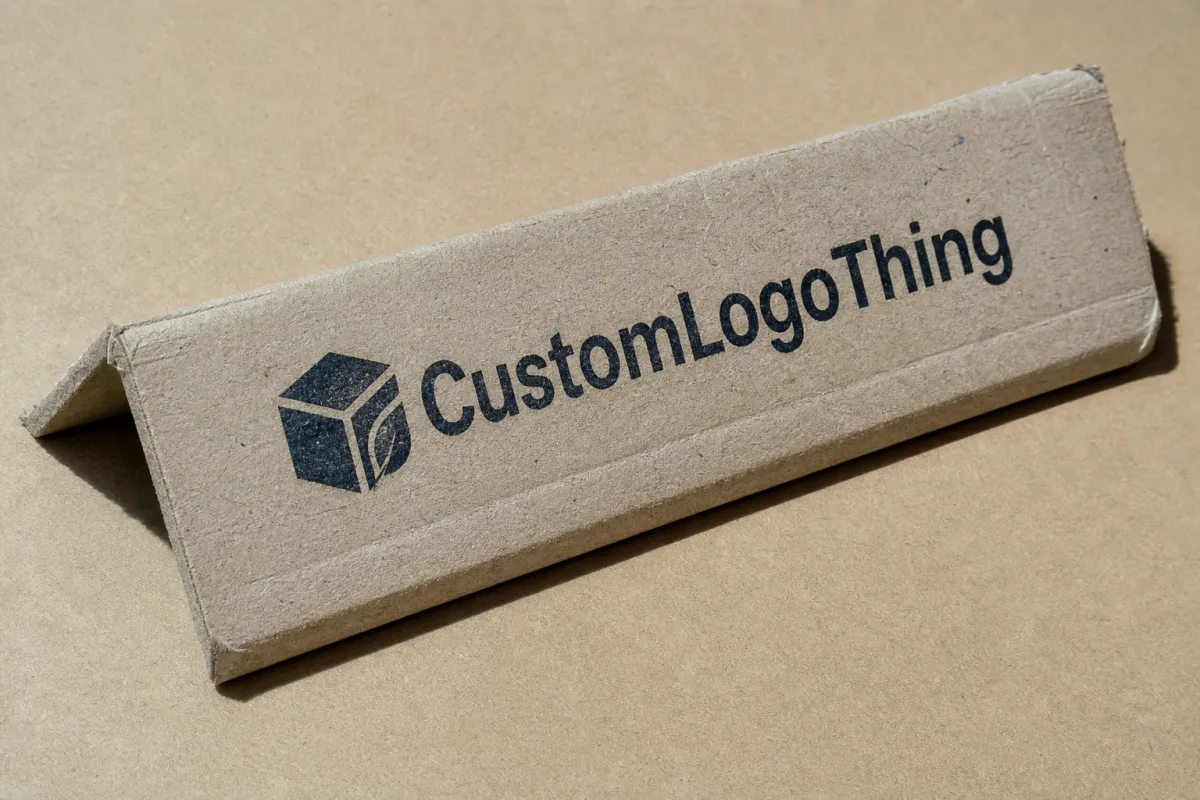
Most pallet damage begins long before a receiver signs for the load. A strap tightens a little too far and crushes the top tier. A corner carton absorbs the full impact from an uneven stack. Stretch wrap pulls inward, the outer boxes bow, and the face of the pallet starts to drift out of shape. By the time the freight arrives, the damage can look sudden. The cause was usually sitting there from the first wrap cycle. Recycled edge protectors wholesale gives procurement teams a direct way to reduce those failure points without reworking the whole packaging system.
The protector does several jobs at once. It spreads strap force across a wider surface, reinforces carton corners against crush, adds vertical stiffness to the pallet face, and helps stretch film sit flatter instead of digging into the edge. That is a small list with a large payoff. Pallets look cleaner, but the bigger gain is structural. Loads that stay square tend to move better in the warehouse, and square loads are easier to stack, scan, and store.
The cost argument is hard to ignore. Damage claims, replacement shipments, and labor tied to rework often stay hidden until a shipping pattern becomes regular enough to expose them. A company sending the same product every week has a strong reason to buy wholesale rather than solving edge damage piecemeal. In that setting, recycled edge protectors wholesale becomes a supply decision with operational weight, not just a materials purchase.
Packaging buyers usually see the strongest results on loads that are palletized every day, strapped firmly, or already have a history of corner crush. Cartons often perform well on the flat panels and fail at the folds. That is where an angle board helps most. It gives the weakest part of the box a better chance of surviving the trip from line to dock to customer.
The lowest unit price means very little if the pallet collapses before the shipment gets counted at receiving.
Scale changes the picture too. A single distribution center may use a few hundred pieces a month. A multi-site program may buy by the case, the pallet, or in truckload quantities. Consistent geometry matters more as volume rises because the same spec has to work across different crews, different equipment, and different handling habits.
A useful comparison is the shipping version of load-bearing trim in construction. It looks secondary, but the job is not decorative. It keeps pressure where it belongs.
Recycled Edge Protectors Wholesale: Materials, Profiles, and Uses
Most recycled edge protectors are made from recycled linerboard or paperboard that has been formed into a rigid angle. Layers of board are laminated, then cut and pressed into an L-shaped profile that resists bending under compression. Recycled content alone does not tell you much about performance. Fiber quality, adhesive strength, and how well the angle holds its shape during conversion matter more than the recycled label on its own.
Buyers usually see a few familiar profiles. Standard L-board is the everyday choice for carton corners and pallet edges. V-board creates a narrower angle and works well where space is tight or the contact area is smaller. Longer corner protectors extend farther down the pallet face, which helps on taller loads or shipments that need stronger vertical support. Some programs also use pre-cut sections for specific carton footprints, especially when multiple product families ship in similar but not identical dimensions.
The profile should follow the freight, not the catalog. A light carton with a short route may only need modest corner reinforcement. A tall pallet of bagged goods, appliance components, or boxed furniture usually needs a stiffer board and more coverage. Tight strap tension calls for better compression resistance. Heavy wrapping calls for a protector that helps the film stay flat instead of wrinkling or tearing under pressure.
Common uses include:
- Pallet corners on stacked cartons
- Furniture and flat-pack shipments
- Appliance cartons and inserts
- Sheet goods such as panels or boards
- Retail-ready bundled packs
- Export freight that needs additional edge stability
Fiber-based edge protection fits naturally into broader sustainable packaging programs, especially where recycled content and recovery goals already shape sourcing. The Packaging Institute has useful background on packaging practices, while ISTA testing resources help buyers judge how a package behaves in transit rather than only how it appears in a warehouse photo.
No single profile wins across every lane. The right choice depends on weight, stack height, strap tension, moisture exposure, and the kind of movement the freight sees. A short internal transfer, a mixed carrier lane, and a humid export dock all place different demands on the board. A buyer gets better results by matching the profile to the actual risk instead of picking from a name alone.
One practical way to think about it: a protector is not just a corner guard. It is a load-shaping tool.
Specifications That Matter: Strength, Dimensions, and Fit
Leg length is the first spec worth requesting. That number tells you how far the protector runs down each side of the corner and how much of the carton or pallet edge it shields. Thickness, board grade, overall length, and intended duty level should follow. A protector’s job sounds simple, but the spec has to be exact if you want repeatable results across production runs.
Fit causes more trouble than many buyers expect. A protector that runs too short leaves the strap on exposed cardboard. A protector that runs too long can interfere with wrapping or leave awkward gaps that snag during handling. A clean fit spreads load more evenly and gives stretch wrap a smoother surface. Small mismatches are how packaging problems start, especially in high-volume warehouses where speed tends to expose weak assumptions.
Compression performance matters as much as size. A good angle board should absorb strap force and stacking pressure without flattening immediately. Physics still wins, of course. A 40-inch-wide, 1,500-pound pallet asks more of the board than a 300-pound carton stack. Thickness, board grade, and angle shape work together. If one of those is weak, the whole edge becomes less trustworthy.
Here is a practical way to think about selection:
- Light cartons: Shorter leg lengths, lighter board, moderate strap pressure
- Mixed SKUs: Standard sizes with enough coverage for the tallest or most fragile load
- Heavy palletized freight: Thicker board, longer coverage, stronger compression resistance
- Export loads: Better moisture tolerance, secure bundling, and enough stiffness for longer handling cycles
Humidity and temperature also shape performance. Paperboard can soften in a damp dock environment, and cold storage can make some boards feel stiffer while becoming more brittle under impact. That is why it helps to ask where the shipment will sit before and after wrapping. A protector that performs well in a dry pick-and-pack area may need a stronger spec for cross-dock freight or outdoor staging.
For mixed shipments, standard sizing often works best when the carton footprint stays close from SKU to SKU. Custom sizing becomes the better option when product dimensions vary widely, strap positions stay fixed, or the pallet footprint is nonstandard. If there is uncertainty, request a spec check with the load dimensions and wrap pattern. A short review at the quote stage usually saves a longer correction later.
That kind of review is especially useful for buyers managing more than one warehouse. A spec that works in a clean, climate-controlled facility may fail in a dock area with temperature swings and higher moisture.
Cost, Pricing, and MOQ for Wholesale Orders
Wholesale pricing for recycled edge protectors usually turns on a few variables: board grade, thickness, cut length, custom dimensions, print or labeling, packing method, and freight distance. Standard profiles made in larger runs almost always cost less per unit than custom angles cut in small quantities. That is not a sales trick. The production line simply runs better when the setup stays stable and the material does not change for every order.
For reference, buyers often see pricing in the range of $0.18-$0.45 per piece for common wholesale quantities, though the final number can move lower or higher depending on thickness, length, and freight. Smaller orders, heavier board, and custom cutting usually push the unit price up. Larger repeat orders, standard lengths, and simple bundling usually bring it down.
MOQ follows the same logic. A standard size with an established line setup can support lower minimums. A custom-formed board or unusual dimension usually requires a larger run to keep the batch efficient. A bigger MOQ is not always a barrier. Sometimes it reflects the setup needed to keep the piece price sensible.
Comparing quotes on base price alone can lead to the wrong choice. A quote that looks low may hide high freight, a large pack count, or a longer lead time. Total delivered cost tells the fuller story. Ask how many pieces come in each bundle, how many bundles sit on a pallet, whether pallets are heat-treated for export if needed, and whether freight is dock-to-dock or residential. Those details shape landed cost more than most buyers expect.
| Option | Typical Use | Approx. Unit Price | MOQ Pattern | Best Fit |
|---|---|---|---|---|
| Standard recycled L-board | Common carton corners and pallet faces | $0.18-$0.28 | Lower minimums | Repeat shipments with steady sizing |
| Heavier-duty recycled angle board | Strapped pallets and taller stacks | $0.24-$0.38 | Moderate minimums | Higher weight and stronger compression needs |
| Custom-cut edge protectors | Nonstandard pallets or fixed strap positions | $0.30-$0.45+ | Higher minimums | Mixed SKUs or fragile loads |
One buying habit pays off quickly: request three volume tiers in the same quote. Entry volume, repeat volume, and full pallet or truckload pricing make the breakpoints obvious. That makes it easier for procurement to decide whether to stock lightly or commit to a larger blanket order.
Recycled fiber content can support sustainability targets without forcing a redesign of the packaging line. That matters in procurement meetings where finance wants fewer damage claims and operations wants a part that is easy to train on. If shipping stays steady, recycled edge protectors wholesale often gives a good balance of price, performance, and simplicity.
There is also a hidden cost to over-specifying. Extra board weight and oversized angles can protect a load, but they can also increase freight cost and create handling friction. The best spec is the one that solves the real failure point, not the one that looks strongest on paper.
Process and Lead Time: From Quote to Delivery
A clean order starts with clear load data. Before asking for a quote, gather pallet size, carton footprint, load height, total weight, strap method, wrap method, and destination ZIP code or country. If the shipment has hot spots where the strap always lands, include that detail too. The more exact the input, the more accurate the recommendation tends to be.
Samples or spec checks are worth the time, especially when the product is fragile or the damage history is uneven. A sample can confirm that the angle fits the pallet face and that the thickness holds under the expected strap pressure. Even a protector that looks right on paper can surprise you once it meets real cartons, corner crush, pallet overhang, and wrap tension.
The production flow is usually straightforward: material selection, cutting or converting, angle formation, quality checks, bundling, and freight preparation. Custom orders may include a pre-production approval step. That step does more than satisfy paperwork. It gives the buyer a chance to confirm dimensions before the full run begins, which reduces waste and prevents a run of the wrong size.
Lead time depends on whether the size is stock or custom. Standard runs usually move faster because the line needs less setup. Custom orders usually take longer, and shipping time sits on top of manufacturing time. A stock order may leave the plant quickly, yet freight distance can still stretch the total schedule. Treat lead time as two parts: production and transit.
A realistic planning window might look like this:
- Quote review: 1-2 business days after receiving dimensions and quantity
- Sample or spec confirmation: 2-5 business days, depending on the build
- Production: often 7-15 business days for standard or modestly custom runs
- Freight transit: varies by destination and carrier lane
Clear communication at the quote stage prevents most delays. Missing pallet dimensions trigger a second round of questions. Vague load weights can produce the wrong board grade. Unclear destination details create freight surprises. Buyers who prepare the core data up front usually keep recycled edge protectors wholesale orders moving and avoid the small mistakes that turn into expensive rework.
There is a practical rhythm to the process: measure first, quote second, sample third, then commit. That sequence takes less time than fixing a bad run after the fact.
Why Choose Us for Sustainable Packaging Supply
Buyers need more than a product. They need steady supply, steady dimensions, and steady performance from one order to the next. That matters most with shipping materials, where a slight drop in board quality can show up as crushed corners, torn wrap, or a pallet face that looks fine until the truck starts moving. A strong wholesale packaging partner offers reliability that can be measured, not just promises on a quote sheet.
At Custom Logo Things, the focus stays on practical packaging choices that work in a real warehouse. Recycled fiber content matters, but so do converting tolerances, pack counts, and the way the edge protector interacts with straps and wrap. A product that looks acceptable in a sample photo may behave very differently on a tall pallet in a humid dock environment, which is why the spec conversation has to stay grounded in shipping conditions.
Sustainable packaging still has to earn its place through performance. Recycled edge protectors can support waste reduction goals by helping reduce damaged goods, returned shipments, and unnecessary replacement packing. Where documentation matters, buyers may also look at FSC-related sourcing questions or recycled content statements for procurement records. The point is not to oversell the board. The point is to show that the packaging choice serves both operations and sustainability without forcing a tradeoff that hurts the shipping floor.
That kind of support helps when a buyer needs to compare several load types. A distribution center may use one spec for cartonized product, another for bundled goods, and another for export freight. In those cases, a supplier that understands edge geometry, board strength, and pallet handling can narrow the field quickly. A few well-chosen specs usually beat a long list of options nobody uses correctly.
For procurement teams, service matters as much as material. Fast responses, clear volume tiers, and support for custom sizing make it easier to move from evaluation to purchase without dragging the project through extra review cycles. Our Wholesale Programs are built for that kind of repeat ordering, with an eye toward keeping the spec simple while still matching the load requirements your team actually faces.
One more point deserves plain language. Good packaging guidance should not exaggerate. If a lighter protector is enough, that should be said directly. If the route calls for heavier board because the load is tall, strapped hard, or likely to be stacked in transit, that should be said with the same directness. Buyers usually appreciate that kind of advice because it cuts through noise and lowers the risk of ordering the wrong build.
That honesty matters because packaging failures are expensive in different ways. Some show up as damaged product. Others show up as extra labor, delayed receiving, or a customer who stops trusting the ship date.
Next Steps for Recycled Edge Protectors Wholesale Buyers
If you are ready to move ahead, start with the basics. Gather pallet dimensions, carton footprint, load height, quantity, destination, strap method, and whether the freight is domestic or export. Add any special handling notes, like cold storage, high humidity, or a history of corner crush. Those details help determine whether a standard angle will work or whether a custom cut makes more sense.
Then decide how uniform the order needs to be. Some buyers can use one standard size across several SKUs, which keeps inventory simple and pricing attractive. Others need multiple lengths because the cartons vary too much. Both approaches can work. The smarter choice is the one that fits the shipping pattern and reduces packing errors on the floor.
If the shipment is fragile or expensive, ask for a sample or spec sheet before committing to a full run. That step becomes especially useful when the carton wall is thin, the pallet is tight, or the strap tension is aggressive. Adjusting the spec after one sample is far easier than correcting a truckload after it has already shipped.
For purchasing, a simple process tends to work well:
- Collect the pallet and carton measurements
- Request a quote with three volume tiers
- Review freight separately from product cost
- Confirm lead time before approving the order
- Validate the fit with a sample when the load is sensitive
That workflow keeps the decision practical and avoids the common mistake of buying a protector by guesswork. It also gives procurement a cleaner way to compare suppliers, since the pricing is tied to the same dimensions and volumes across the board. For a recurring program, that consistency matters as much as the per-piece cost.
If you want a safer rollout, send the product dimensions, pallet size, approximate weight, and monthly quantity. A tailored quote can show where recycled edge protectors wholesale fits best in your shipping setup and where a standard size or custom profile will give the cleanest result. The right spec should make shipping easier, not more complicated, and that is exactly what a well-matched edge protector can do.
The clearest takeaway is simple: choose recycled edge protectors wholesale by load behavior, not by guesswork or price alone. Measure the pallet, understand the strap pressure, confirm the handling route, and then match the profile to the risk.
FAQs
What thickness is best for recycled edge protectors wholesale orders?
Match thickness to strap tension, stacking height, and the weight pressing on the pallet corners. Lighter cartons usually need less board mass, while tall or heavy pallets need a stiffer profile. Ask for compression guidance rather than guessing from thickness alone, because board grade and angle also affect performance.
Can recycled edge protectors wholesale orders be custom sized?
Yes, most wholesale programs can be cut to a specific leg length, span, or overall protector length. Custom sizing is useful when cartons vary by SKU, pallet footprints are nonstandard, or straps land in fixed positions. Provide exact dimensions and load details so the manufacturer can quote the right build the first time.
What MOQ is typical for recycled edge protectors wholesale?
MOQ usually depends on whether the size is standard or custom and how much setup is required on the line. Standard sizes often support smaller initial orders, while custom runs usually need a higher minimum to stay efficient. Ask for tiered pricing so you can compare the cost at entry volume, repeat volume, and full pallet or truckload volume.
Are recycled edge protectors suitable for export pallets?
They can be a strong choice for export loads when the shipment needs corner stability and strap protection. Confirm moisture conditions, transit time, and any destination requirements before selecting the board grade. For long-haul freight, use a size and strength level that can handle repeated handling and tighter wrap pressure.
How should recycled edge protectors be stored before use?
Store them flat, dry, and off the floor so moisture does not weaken the board edges. Keep them away from high humidity, standing water, and areas where forklifts or dock traffic can bend the corners. Rotate stock so the oldest cartons are used first and the protectors stay clean and ready for packing.


