Buyer Fit Snapshot
| Best fit | Recycled Luxury Rigid Boxes Supplier for Sustainable Brands projects where brand print, material claims, artwork control, MOQ, and repeat-order consistency need to be specified before quoting. |
|---|---|
| Quote inputs | Share finished size, material target, print colors, finish, packing count, annual reorder estimate, ship-to region, and any compliance wording. |
| Proofing check | Approve dieline scale, logo placement, barcode or warning zones, color tolerance, closure strength, and carton packing before bulk production. |
| Main risk | Vague material claims, crowded artwork, missing packing details, or unclear freight terms can make a low unit price expensive after revisions. |
Fast answer: Recycled Luxury Rigid Boxes Supplier for Sustainable Brands should be specified like a repeatable production item. The safest quote records material, print method, finish, artwork proof, packing count, and reorder notes in one written spec.
Production checks before approval
Compare the actual filled-product size with the drawing, then confirm tolerance on folds, seals, hang holes, label areas, and retail display edges. Reserve space for logos, QR codes, warning copy, and material claims before decorative graphics fill the panel.
Quote comparison points
Review material grade, print process, finish, sampling route, tooling charges, carton quantity, and freight assumptions side by side. A quote is only useful when the supplier can repeat the same color, closure quality, and packing count on the next order.
Recycled Luxury Rigid Boxes Supplier for Sustainable Brands
A box can look expensive on a shelf and still be awkward to recycle, expensive to ship, and heavier than the product inside really needs. That is why choosing a recycled Luxury Rigid Boxes supplier matters more than chasing a glossy finish alone. From a packaging buyer's point of view, the supplier is not just making a container; they are shaping how the box behaves on the line, in freight, during the unboxing moment, and after the customer is done with it.
The gap between appearance and performance is wider than many brands expect. A recycled luxury rigid boxes supplier has to balance recycled board content, premium construction, clean convertibility, and finish choices that do not undermine the sustainability story. If that balance slips, the box may still photograph beautifully, but the practical value drops quickly once the product is in production and moving through the supply chain.
There is also a trust issue here. A brand can say "recycled" and still ship a package that is built from a tangle of mixed materials, heavy lamination, magnets, plastic inserts, and decorative extras that make recovery messy. That kind of mismatch shows up fast once the packaging lands in real hands. I have seen teams fall in love with a sample, then spend the next round of review trying to undo the hidden complexity they did not ask about on day one.
Recycled Luxury Rigid Boxes Supplier: What It Really Means
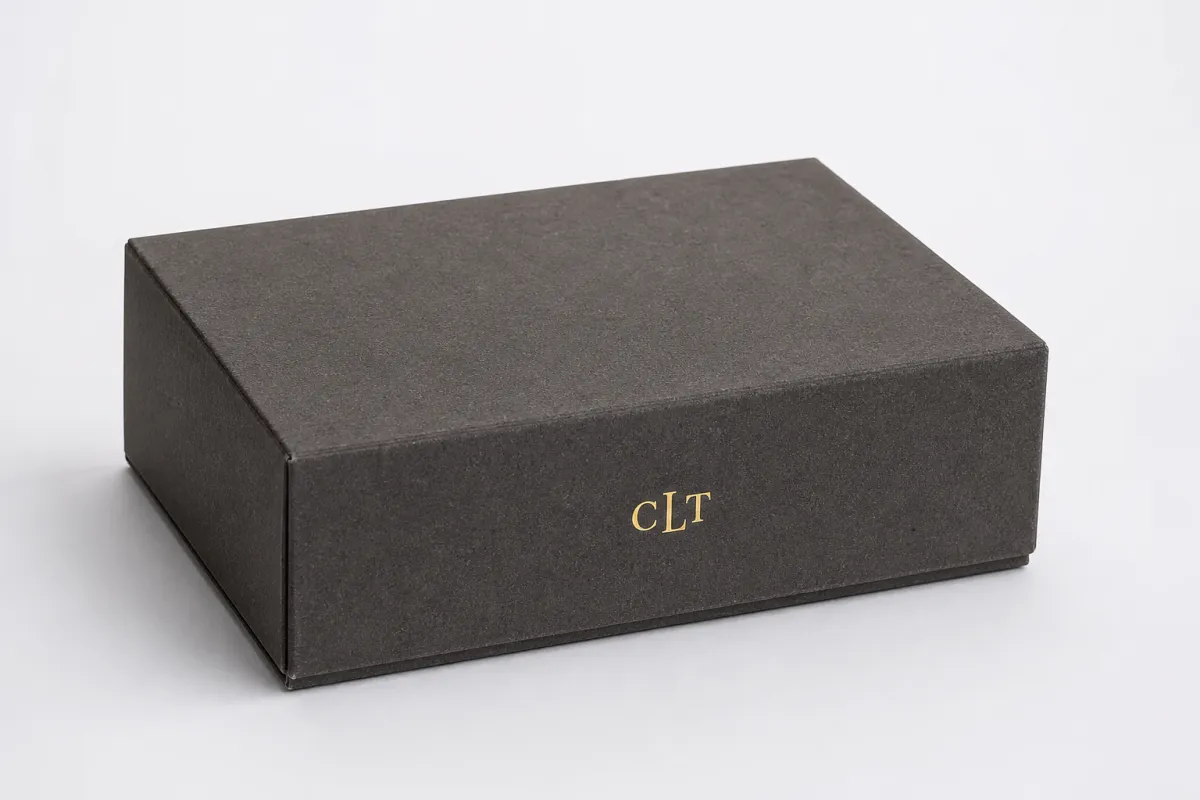
A recycled luxury rigid boxes supplier is not just a box maker using the word "recycled" in a quote. The difference begins with the board grade. Rigid boxes commonly use chipboard or paperboard in the 1.5 mm to 3.0 mm range, then wrap that core with printed paper, specialty paper, or another decorative layer. If the supplier cannot tell you the board thickness, recycled percentage, adhesive system, and wrap construction, the sustainability claim is too loose to trust.
That is where buyers get caught. A recycled luxury rigid boxes supplier may offer a box that looks clean and premium, while the actual material stack still includes laminated wraps, heavy foil coverage, magnetic closures, plastic trays, or ribbon pulls. Each detail changes recyclability. A box can be "recycled" in a marketing sense because the board content is recycled, while the full assembled box still creates sorting problems after use. Those are not the same thing, and the distinction matters once the packaging reaches the customer.
The best recycled luxury rigid boxes supplier will explain the stack-up clearly. They will say what percentage of the core is recycled, whether the wrap paper contains recycled fiber or FSC-certified fiber, whether the insert is paper-based or foam-based, and whether any decorative elements are removable. That level of detail matters because packaging buyers often have to translate brand language into operational reality. The box has to protect the product, fit the shipping plan, and stay true to the brand promise at the same time.
Luxury does not need to mean excess. In practice, some of the strongest premium boxes use restraint. Clean geometry, sharp folds, correct wall thickness, and a well-tuned print system can feel more elevated than a box crowded with foil, plastic, and mixed finishes. A recycled luxury rigid boxes supplier can create that effect through proportion, tactile paper choice, blind embossing, and disciplined color control. The box feels premium because it is precise, not because it is overloaded.
The practical question most brands should ask is simple: if the story is sustainability plus premium presentation, can the supplier prove both? A recycled luxury rigid boxes supplier should be able to answer with material specs, production samples, and a clear explanation of tradeoffs. If they cannot, the project may still look good on paper, but the real packaging outcome will be weaker than the pitch suggests.
"Premium does not have to mean material-heavy. It usually means the box opens with authority, closes square, and protects the product without looking busy."
That mindset changes the buying process. Instead of starting with decoration, start with structure, recovery, and protection. Then layer in the luxury cues that matter. A recycled luxury rigid boxes supplier who works that way is usually easier to trust, because the conversation begins with packaging performance rather than decoration for its own sake.
How a Recycled Luxury Rigid Boxes Supplier Builds Premium Boxes
A recycled luxury rigid boxes supplier usually starts with a rigid chipboard core, then wraps it with printed or specialty paper, then finishes the box so the seams, edges, and corners feel tight. That core gives the box its dense, protective feel. The wrap gives it brand character. The assembly makes the whole thing feel deliberate instead of flimsy. When those three elements work together, the box can feel more premium than a thicker-looking package that was poorly built.
The recycled content can show up in more than one layer. A recycled luxury rigid boxes supplier may use recycled board for the main structure, recycled-content paper for the wrap, and paperboard inserts instead of molded plastic or EVA foam. Some brands also prefer water-based adhesives because they are easier to justify from an environmental standpoint and do not create the same sensory issues as solvent-heavy systems. None of that guarantees perfect recyclability, but it does move the package in a cleaner direction.
Structure choice matters too. A recycled luxury rigid boxes supplier can build a lift-off lid box, a magnetic closure box, a drawer box, or a shoulder-neck style box. Lift-off lid formats tend to be simpler and easier to manufacture at scale. Drawer boxes feel more theatrical and can be very effective for cosmetics, fragrance, premium stationery, or gift sets. Shoulder-neck structures create a refined reveal because the inner tray sits lower than the outer walls, but they usually require more precise die-cutting and tighter assembly control.
Magnetic closure boxes are popular because they create that crisp snap-shut moment buyers like. The tradeoff is obvious: embedded magnets complicate end-of-life handling, and the supplier should not pretend otherwise. A recycled luxury rigid boxes supplier can still use magnets responsibly, but the brand should know that the design choice carries a cost. If the project is built around high recyclability, a paper-tension closure or a structure with fewer mixed materials may fit better.
Finishes drive perception more than many teams admit. Soft-touch coating, blind embossing, debossing, spot UV, and a restrained foil accent can make a recycled luxury rigid boxes supplier look far more premium than a box buried in graphics. Less can feel more, especially if the paper has a strong tactile quality and the print is accurate. A clean logo, a deep matte surface, and precise alignment often outperform a busy finish stack.
The temptation is to decorate every side. Resist that instinct. A recycled luxury rigid boxes supplier that overbuilds the unboxing experience can create a box that feels impressive in one moment and wasteful in the next. Better results usually come from disciplined choices: one focal print area, one tactile finish, and one structural detail that carries the reveal. That is how sustainable luxury usually wins in practice.
If you are comparing formats, it helps to look at the box as a system rather than a product shell. The core, the wrap, the insert, the closure, and the decoration all affect how the package performs. A good recycled luxury rigid boxes supplier can explain those relationships without hiding behind branding language. That is a sign you are talking to a packaging partner, not just a converter.
For teams building out a wider packaging program, it can help to review other Custom Packaging Products alongside rigid box options so the structure matches the product and the channel. A tray-style box for one line may not need the same build as a premium gift presentation for another.
Not every brand needs the same finish stack. Some need a quieter build that ships efficiently. Others need a box that carries a luxury cue on the shelf and in the hand. A recycled luxury rigid boxes supplier can support both, but only if the brief is specific enough to guide the structure.
One detail that gets missed a lot is fit. If the product rattles, even a beautiful box feels cheap. If the insert pinches the product too tightly, the packing team slows down and the customer may feel friction during unpacking. That middle ground is where a good recycled luxury rigid boxes supplier earns its keep.
Key Factors That Affect Cost, Pricing, and MOQ
Price is rarely about one thing. A recycled luxury rigid boxes supplier will usually price based on board thickness, recycled-content grade, print method, finish selection, structural complexity, insert design, and labor intensity. Size matters too. A larger box uses more board, more wrap material, and more freight cube. The difference can be surprising. Two boxes that look similar in a mockup can end up with very different unit economics once the die lines are finalized.
MOQ often rises as customization rises. A recycled luxury rigid boxes supplier may be comfortable with a lower quantity for a standard format, but once you add specialty paper, multiple print passes, custom tooling, or a complex insert, the minimum order tends to climb. That is not a tactic; it is basic production math. Setup cost needs to be spread over enough units to keep the project viable.
For a rough sense of pricing, here is a simple comparison based on 5,000 units and common premium packaging assumptions. These numbers are directional, not fixed quotes, because paper market conditions, print coverage, and labor rates can move the final number.
| Box Style | Typical Recycled Content | Visual Impact | Estimated Unit Price at 5,000 | MOQ Pressure | Best Fit |
|---|---|---|---|---|---|
| Lift-off lid rigid box | High recycled board core, paper wrap | Clean and premium | $1.10-$1.85 | Lower | Gift sets, apparel, accessory packaging |
| Magnetic closure rigid box | High recycled board core, mixed closure components | Strong presentation | $1.45-$2.60 | Medium | Beauty, fragrance, premium tech accessories |
| Drawer box with shoulder-neck detail | Recycled board core, specialty wrap, paper insert | Highest reveal value | $1.90-$3.40 | Higher | High-value gifting, collectibles, limited releases |
That table hides a few important details. The cheapest-looking option is not always the cheapest to land in your warehouse. A recycled luxury rigid boxes supplier may charge less for the unit but more for setup, proofing, or tooling. A more expensive unit can sometimes win if it simplifies assembly, reduces damage, or cuts freight by using a tighter footprint. Packaging buyers know this drill: the quote on the screen is only part of the total cost.
Hidden cost variables matter more than many teams expect. Prototype cycles can add time and money. Color matching can require extra press adjustment. If the design uses a high-gloss foil or a complex soft-touch system, the supplier may need more sample rounds to stabilize the result. Freight can also be painful because rigid boxes are bulky. Even a small increase in box depth can push shipping costs upward, especially if cartons are underfilled and the cube is inefficient.
If your team is building a budget, ask the recycled luxury rigid boxes supplier for an apples-to-apples comparison. The quote should specify the board thickness, wrap material, insert count, finish stack, print coverage, and pack-out assumptions. Without that, pricing comparisons are close to meaningless. One supplier may quote a bare structure; another may include a premium insert and a more complex closure. The unit numbers can look similar while the actual specs differ.
That is also where an internal sourcing conversation helps. If you already know the target design direction, reviewing Custom Packaging Products can help procurement and marketing speak the same language before RFQs go out. Otherwise, the team ends up comparing boxes that are not truly equivalent.
A recycled luxury rigid boxes supplier can also help buyers make strategic compromises. Maybe the box keeps the same core structure but drops one finish pass. Maybe the insert changes from molded foam to paperboard with a cutout. Maybe the outer wrap shifts from specialty paper to a high-quality printed sheet with a restrained coating. These are not always easy conversations, but they often separate a workable program from an overdesigned one.
Cost control is not about stripping the brand down to something ordinary. It is about spending where the customer can feel the difference and trimming the parts that only look impressive in a spec sheet. A recycled luxury rigid boxes supplier that understands that balance can save real money without making the packaging feel cheap.
And honestly, that balance is the whole job. You want the box to hold its shape, tell the right story, and still make sense in the freight budget. If any one of those three starts to dominate, the project gets lopsided fast.
Process and Timeline: From Quote to Finished Boxes
A recycled luxury rigid boxes supplier should walk you through the work in stages, not just promise a final date. The usual flow starts with a brief, then moves to material selection, structural dieline work, artwork prep, sampling, approval, mass production, quality control, and shipment. Each step has its own failure point. Good suppliers know that. Better suppliers say it out loud.
- Briefing: confirm dimensions, product weight, sales channel, finish goals, and budget range.
- Material selection: lock in board thickness, wrap paper, recycled-content expectations, and insert style.
- Dieline and structure: create or adjust the box template and check closure tolerances.
- Artwork prep: verify bleeds, foil plates, emboss depth, and color profiles.
- Sampling: review one or more prototypes, then revise if needed.
- Production: print, mount, die-cut, assemble, and inspect.
- Shipping: pack cartons, confirm pallet layout, and release freight.
Delays often appear in the sample stage. A recycled luxury rigid boxes supplier may be waiting on a specialty paper that is not stocked in large quantity. Or the client may need to see the logo in a different finish before signing off. Color approval can be another slow point, especially if the brand wants a very specific black, deep green, or off-white tone. Those shades are unforgiving. They show variation immediately.
Lead times depend on complexity, current factory load, and whether the project uses an existing structure or a new one. For a simpler recycled rigid box with standard materials, sampling might take about 5-8 business days and production about 12-18 business days after approval. More complex jobs can stretch to 20-30 business days or more before freight. If you add ocean transit, customs clearance, and final delivery, the real calendar can be much longer. A recycled luxury rigid boxes supplier should not hide that.
Planning backward from the launch date is the safest way to handle the schedule. If the product launch is tied to retail placement, a trade show, or a seasonal selling window, build buffer time for first articles, packaging tests, and any artwork corrections. I have seen small approval delays turn into large commercial problems because nobody owned the calendar early enough. The box itself was fine. The process around it was not.
Pack-out and transit planning deserve more attention than they usually get. A recycled luxury rigid boxes supplier may build a beautiful box, but if it arrives crushed, scuffed, or flattened during shipment, the value disappears. For that reason, shipping tests matter. Many teams reference ISTA methods for distribution simulation, and ASTM D4169 is another useful benchmark for package performance. Those standards do not solve everything, but they give teams a disciplined way to check whether the design survives real handling.
One more practical point: a reliable recycled luxury rigid boxes supplier should tell you where the schedule risk lives. Maybe the risk is tooling. Maybe it is specialty paper sourcing. Maybe it is a finish that requires more drying time. That honesty is often the best signal that the factory understands how to manage a production run, not just how to sell it.
If your launch is close, ask for a stage-by-stage timeline rather than a single lead-time number. That one move reveals a lot. A recycled luxury rigid boxes supplier that can show the path from dieline to delivery usually understands the actual work better than one that gives a vague promise and hopes the job stays simple.
Build a little time for human reality too. Approvals get delayed when three departments all want the last word. It happens. A supplier who has seen enough packaging programs will usually flag that early instead of pretending the calendar is perfectly controlled.
How to Evaluate Materials, Structures, and Sustainability Claims
Recycled content claims should be verified, not guessed. A recycled luxury rigid boxes supplier should be able to tell you the board specification, the recycled percentage range, and whether the wrap paper, insert, and closure components follow the same logic. If the answer is just "eco-friendly" or "recycled," keep asking. Specifics matter because one layer can be highly recycled while another layer is not.
Ask about certification too. A recycled luxury rigid boxes supplier may be able to provide FSC documentation for the paper supply chain, which helps if your brand needs a stronger paper stewardship story. The FSC site explains the scope of certification and labeling rules at fsc.org. That does not automatically make a box fully circular, but it does help you understand the sourcing language.
Some materials are easier to recover than others. Paper-only structures with water-based adhesives are generally simpler than boxes that mix paper, plastic windows, heavy foil, magnets, or multi-layer lamination. That does not mean every decorative finish is bad. It means the buyer needs to know the end-of-life consequence before approving the design. A recycled luxury rigid boxes supplier should be honest about where the finish stack helps and where it hurts.
Structural design can lower environmental impact without making the box look plain. A right-sized box reduces empty space. A better insert can reduce movement and damage without adding unnecessary bulk. A more efficient wall thickness can cut material weight while keeping the premium feel. A recycled luxury rigid boxes supplier should be able to show those choices on the dieline, not just describe them in words.
Durability still matters. A box that recycles well but crushes in shipping is not a win. A recycled luxury rigid boxes supplier must balance sustainability with the ordinary demands of stacking, handling, and storage. For e-commerce especially, the package may move through multiple hands before the customer sees it. That means compression resistance, corner integrity, and surface scuff performance all matter. Luxury is irrelevant if the package arrives damaged.
There is also a visual test that many teams ignore. Put the box next to the product and ask whether it feels like the right level of protection. Too small, and the product looks cramped. Too large, and the presentation feels wasteful. A good recycled luxury rigid boxes supplier helps the brand land in the middle. That middle usually feels more credible than a box that tries too hard to signal status.
Do not overlook the impact of inserts and secondary components. A paperboard insert can support a bottle or device cleanly. A molded pulp insert may improve sustainability credentials and still keep the product secure. Foam may be necessary in some cases, but it should be a deliberate decision rather than the default. A recycled luxury rigid boxes supplier should explain the options in context: product fragility, channel, shipping distance, and whether the box will be reused by the customer.
For brands trying to connect packaging strategy with product assortment, it may help to compare the rigid box direction with other Custom Packaging Products so the sustainability story stays consistent across lines. A premium outer box and a weak internal pack-out send mixed signals quickly.
Packaging claims are easiest to trust when they are specific and boring. Board spec, adhesive type, certification scope, and finish stack. Those four things tell you more than a glossy brochure ever will. A recycled luxury rigid boxes supplier that shares them early is usually easier to work with later.
One more thing: ask for production samples, not just presentation samples, if you can get them. A sample built to win a meeting can hide problems that show up once the line starts moving. Real buyers get burned by that more often than they like to admit.
Common Mistakes When Choosing a Recycled Luxury Rigid Boxes Supplier
The first mistake is assuming that any box with "recycled" in the pitch is automatically sustainable. It is not. A recycled luxury rigid boxes supplier can still use mixed materials that complicate disposal, or overbuild the box so heavily that the environmental benefit is diluted. The real question is not whether recycled material appears somewhere in the structure. The real question is whether the whole package stack makes sense.
The second mistake is overdesign. Too many finishes, too many inserts, and too many material layers can erase the environmental advantage and push the cost far beyond what the product needs. A recycled luxury rigid boxes supplier may be able to build a dramatic box, but drama is not always the right answer. Sometimes a sharp print layout, a strong tactile wrap, and a precise fit do more for the brand than one more decorative feature.
The third mistake is approving artwork before the commercial terms are clear. A recycled luxury rigid boxes supplier needs confirmed MOQ, sample fee terms, rework rules, and print tolerances before the design gets locked. Otherwise, the project can get stuck in endless revision cycles while procurement and marketing debate what the quote actually included. That is an avoidable failure.
The fourth mistake is ignoring freight and warehouse realities. Rigid boxes are bulky. They create cube pressure in transit and storage. If the project includes a large box with high wall thickness, the supply chain may feel the cost long before the customer sees the product. A recycled luxury rigid boxes supplier should be able to estimate carton count, pallet configuration, and approximate shipping impact so the team can budget honestly.
The fifth mistake is letting the approval chain get messy. Marketing wants the box to look perfect. Operations wants the box to ship without issues. Procurement wants the best unit price. Those goals are not identical, and if nobody defines the priority order early, the timeline slips. A recycled luxury rigid boxes supplier can only move as fast as the slowest internal decision-maker. That is the part many teams learn too late.
Another common problem is that buyers compare samples instead of final specs. A beautiful prototype can hide a different board grade or a more generous finish application than the mass production version. A recycled luxury rigid boxes supplier should give you production-representative samples wherever possible, or at least make the differences obvious. If not, the approval process becomes a guessing game.
There is a quieter mistake too: not asking how the box will be packed for shipment. A rigid box that ships nested one way may work fine; the same box shipped another way can arrive with crushed corners or rubbed surfaces. That part is easy to miss if nobody on the team has lived through a bad freight season.
The smartest buyers keep a short checklist before they sign off:
- Is the recycled content documented for board, wrap, and insert separately?
- Does the final material stack still support the recycling story?
- Have MOQ, sample fees, and rework rules been confirmed in writing?
- Will the box survive shipping, stacking, and retail handling?
- Does the finish stack justify the cost and the environmental tradeoff?
That list is simple, but it saves a lot of trouble. A recycled luxury rigid boxes supplier can build a beautiful package, yet the project only works if the commercial details and the sustainability details are both clear. In packaging, vague confidence causes more problems than caution ever does.
Expert Tips and Next Steps for Sourcing the Right Partner
Start with a short supplier scorecard. A recycled luxury rigid boxes supplier should be evaluated on recycled content, structural options, decoration limits, MOQ, turnaround, QC process, and communication clarity. Those are the variables that affect the final result. A polished sample matters, but it is not the whole story.
It also helps to request two prototypes: one simplified and one premium. A recycled luxury rigid boxes supplier can then show how the box changes when you remove one finish, change one insert, or adjust the closure style. That side-by-side comparison is often more useful than a single beauty sample, because it shows what the customer will actually pay for and what the brand will actually gain.
Ask for a recommendation based on product fragility, sales channel, and shipping method. Do not lead with aesthetics alone. A recycled luxury rigid boxes supplier should be able to say whether the project is better suited to a lift-off lid, a magnetic box, a drawer system, or a smaller format altogether. If they jump straight to decoration without discussing the use case, they may be selling appearance rather than packaging strategy.
Build a one-page spec sheet before you request quotes. Include target dimensions, recycled-material expectations, required finishes, launch date, rough volume, and acceptable cost range. Add any retail display requirements and any e-commerce constraints. A recycled luxury rigid boxes supplier can work much faster when the brief is concrete. So can procurement. So can marketing. Clarity at the start removes friction later.
For brands that are still shaping the packaging direction, reviewing Custom Packaging Products can help the team narrow the options before deeper sampling begins. That is often the difference between a focused project and a long, muddy approval cycle.
If you want the packaging to support both brand image and operational sanity, treat the supplier as part of the product development process. A recycled luxury rigid boxes supplier should help you think through presentation, shipping, recoverability, and cost together. That is the real job. Not just making a nice-looking sample.
The strongest projects are usually the ones where the team resists a flashy first draft and asks better questions instead. What is the recycled content? What does the box cost at scale? What breaks in transit? What can customers easily dispose of? Those questions are practical, but they also sharpen the brand story. A recycled luxury rigid boxes supplier who answers them well becomes a long-term asset, not just a line item on a PO.
My practical advice is to keep the first round brutally specific. Ask for the board spec, the wrap spec, the insert spec, the finish stack, the MOQ, and a production-representative sample. If the supplier cannot answer those without hand-waving, that tells you plenty. If they can, you are probably talking to someone who understands the work, not just the sales pitch.
In the end, a recycled luxury rigid boxes supplier should help you align design, sustainability, and operations early enough that none of them has to be sacrificed later. The most useful takeaway is simple: do not approve a premium rigid box until the material stack, production spec, and end-of-life story all line up in writing. That is the standard worth holding, and it keeps the packaging honest.
What should I ask a recycled luxury rigid boxes supplier about recycled content?
Ask for the recycled percentage in the board, wrap, and insert materials separately. Confirm whether any coatings, foils, or laminations change recyclability or disposal behavior. Request written material specs instead of relying on marketing language alone.
How do I compare pricing between recycled luxury rigid boxes suppliers?
Compare quotes using the same box size, structure, print method, finish stack, and insert design. Check whether tooling, sampling, freight, and packaging fees are included or billed separately. Ask for a unit-cost breakdown at different quantities so MOQ effects are visible.
What is a realistic lead time for recycled luxury rigid boxes?
Simple builds can move faster, but custom structures and specialty materials usually add time. Sampling, artwork approvals, and color correction often create the biggest schedule shifts. Build extra buffer if the boxes are needed for a launch, trade show, or retail rollout.
Can recycled rigid boxes still look premium?
Yes, premium feel often comes from structure, print discipline, and tactile paper choices rather than heavy decoration. Embossing, restrained foil, and precise fit can create luxury without excessive material layering. A skilled supplier will balance visual impact with end-of-life practicality.
What MOQ is typical for a custom recycled luxury rigid box order?
MOQ varies by structure, print complexity, and whether new tooling is required. Higher decoration complexity usually pushes quantities up because setup costs need to be spread across more units. Ask for alternate MOQ scenarios so you can see how cost changes at different order sizes.