A recycled Paper Bags Reorder plan keeps inventory stable, protects lead time, and avoids emergency buys when bags run low. The bag itself is simple; the risk comes from treating each repeat order like a brand-new project instead of a known spec. For bulk buyers, a recycled paper bags reorder plan for bulk buyers today should connect purchasing, storage, artwork control, and usage data in one repeatable file.
The first order should teach the team what size, construction, print, and pack-out actually work. The next order should preserve that decision unless there is a clear reason to change it. That is how buyers keep cost, timing, and quality predictable through 2026, even as recycled paper availability and freight costs continue to shift by region.
For procurement teams, the real value is not just avoiding a stockout. It is reducing the number of decisions that can go wrong: dimensions, artwork, material claims, carton counts, freight mode, and inspection standards. A good reorder file turns the bag into a repeatable item number, not a project that has to be re-explained every quarter.
Why a recycled paper bags reorder plan prevents stockouts
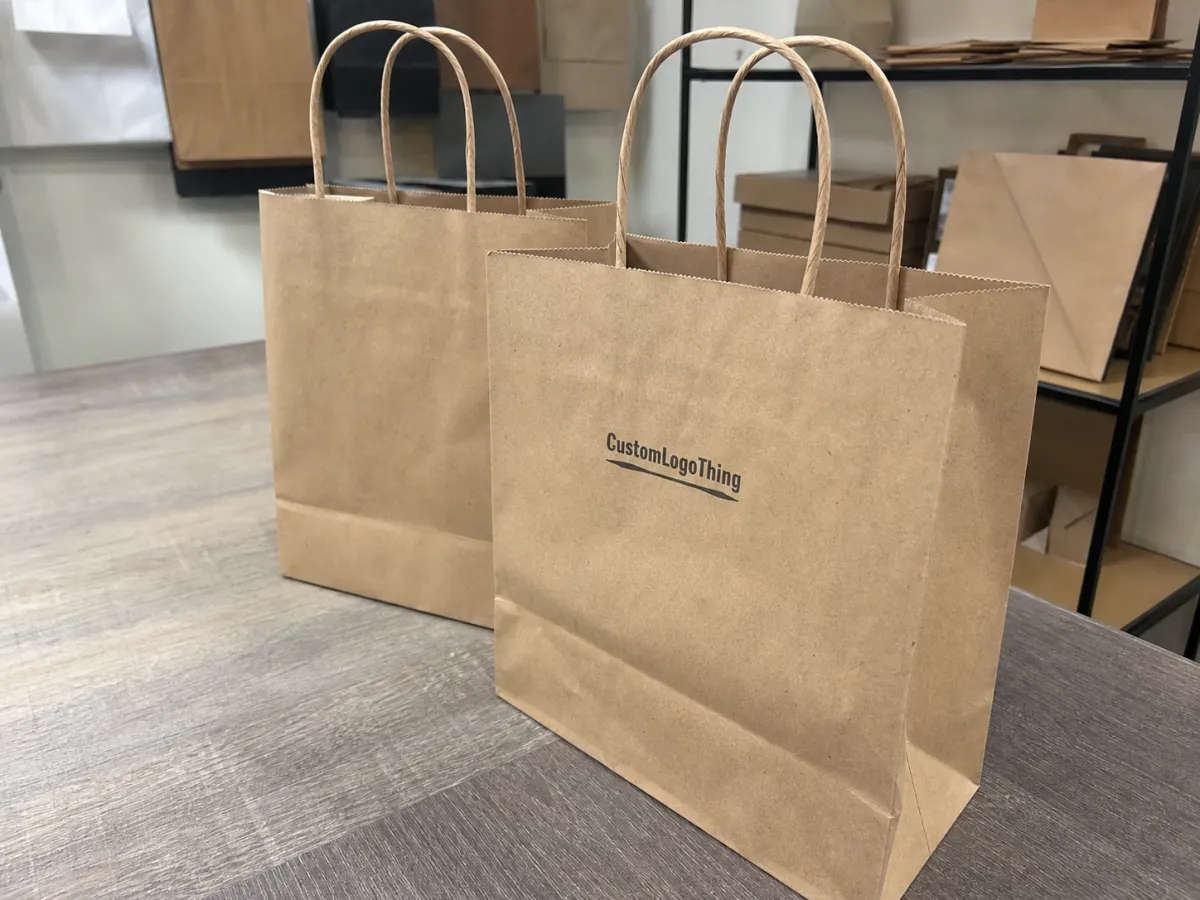
Paper bag shortages usually start quietly. One location burns through stock faster than expected, the next shipment slips, and the team begins substituting sizes or double-bagging to get through the week. That raises labor cost, weakens presentation, and makes stores or fulfillment teams improvise with packaging that was never meant for the order.
A reorder plan prevents that by using actual usage, supplier lead time, and transit time to set a reorder point. If a program uses 2,000 bags a week and the full cycle takes three weeks, the trigger has to leave enough cushion for receiving delays and inspection. Waiting until the last carton is open is already late.
The plan also reduces price risk. Rush orders, split shipments, and changed freight terms can erase any savings from a lower quote. When the next order is based on the same part number, the buyer can compare prices more accurately and avoid last-minute compromises. A practical recycled paper bags reorder plan for bulk buyers today should show the reorder trigger, preferred quantity, backup quantity, and approved delivery window.
Bag formats, sizes, and print details to lock in
Start by locking the format. A handled retail tote, SOS bag, bakery carryout bag, paper mailer, and euro-style bag all behave differently in production and use. If the current version works, the safest move is usually to repeat it rather than redesign the shape.
Write the dimensions in production terms: flat width, gusset, height, handle style, and any room needed for inserts or corners. A one-inch change can alter fit, fill appearance, carton count, pallet pattern, and packing speed. The spec should make that impossible to miss.
Artwork needs the same discipline. Record the number of ink colors, approved logo position, bleed limits, and whether the design wraps the gusset. If the file is already approved, the reorder should reuse that file instead of rebuilding it from memory. For buyers comparing decoration styles, the custom paper shopping bags with logo guide can help teams decide whether to keep the same imprint or update the brand treatment before the next run.
Pack-out details matter as much as the bag. Keep case count, carton style, pallet pattern, and any humidity protection in the file. If the bag has to fit a warehouse rack, store backroom, or fulfillment station, those handling details are part of the spec, not an afterthought.
Material and construction specs that stay fixed
Paper weight, recycled content percentage, handle type, bottom structure, and seam design all affect performance. If the current bag holds weight and survives transit, those elements should stay fixed. Any change to them should be treated as a revised version, quoted separately, and tested before the old version is replaced.
Recycled-content claims need to be specific. Post-consumer recycled content, post-industrial recycled content, and blended stock are not the same thing. If FSC documentation is required, verify that the certificate matches the supplier and the order path; FSC maintains public certification information at fsc.org.
Construction details should also be documented clearly. Twisted paper handles, flat handles, glued reinforcement, and bottom seam design all change strength and feel. Uncoated recycled kraft prints differently from coated stock, and natural kraft can mute some colors more than bleached stock. If a brand needs a cleaner color match, ask whether white recycled paper, higher-brightness kraft, or a flood-print panel would be more reliable than changing inks repeatedly.
Ask for tolerances instead of general assurances. A supplier should be able to state acceptable variance for dimensions, handle placement, seam strength, and print registration. If the bags travel through distribution or sit in cartons before use, transit testing aligned with ISTA procedures can be useful; more at ista.org.
Humidity and storage conditions should not be ignored. Paper can wrinkle, lose stiffness, or curl at the edges if it sits in damp receiving areas. Keep carton and pallet handling notes with the reorder file so the next batch arrives in the same condition as the approved sample.
Cost, pricing, and MOQ for repeat paper bag orders
Pricing depends on the full system: dimensions, paper grade, print coverage, handle style, carton pack, and freight. A larger handled bag with multiple inks and reinforcement will cost more than a plain kraft SOS bag, but the gap is often smaller when the spec is stable and the quantity is healthy.
MOQ should match actual use, not just look efficient on paper. A lower MOQ usually carries a higher unit price because setup costs are spread across fewer bags. A higher MOQ lowers the unit rate, but only makes sense if the buyer can store the stock and use it before the program changes.
For repeat orders, ask for unit cost, total order cost, and landed cost per case or per 1,000 bags. That makes quotes easier to compare. A low unit price can still be a bad value if carton counts are awkward, packing is expensive, or freight is inflated by distance. In 2026 quote reviews, I am seeing buyers get the cleanest comparisons when they request the same three quantities from every supplier, such as 5,000, 10,000, and 25,000 pieces, instead of asking each vendor to suggest its own breakpoints.
| Order option | Typical 2026 unit range | Best fit | Watch-outs |
|---|---|---|---|
| Small repeat run, 1,000-3,000 pieces | $0.26-$0.46 | Testing, seasonal promotions, low-volume stores | Higher setup impact, fewer price breaks |
| Mid-size reorder, 5,000-10,000 pieces | $0.17-$0.33 | Stable retail programs and regular fulfillment | Need accurate forecasting to avoid overstock |
| Higher-volume run, 20,000+ pieces | $0.12-$0.27 | Multi-location chains and recurring campaigns | Storage space, lead-time planning, cash flow |
Hidden costs can matter more than the headline price. Plate changes, proof revisions, special packing, split shipments, and short-notice storage fees all move the final cost. If the previous tooling and artwork can be reused exactly, that should be confirmed early.
Freight should be quoted separately from the bag whenever possible. Domestic trucking, parcel, and imported raw material all behave differently. For buyers comparing larger programs, the Wholesale Programs page can help clarify tier pricing, and the FAQ should answer basic logistics before the order is released.
2026 trends for bulk recycled paper bag buyers
Three changes are shaping repeat recycled paper bag programs in 2026. First, buyers are asking for clearer recycled-content documentation because sustainability claims are being reviewed more closely by internal compliance teams and retail partners. Vague language such as “eco-friendly” is being replaced by measurable claims, including post-consumer percentage, paper weight, and certification status.
Second, more buyers are splitting annual demand into scheduled releases instead of placing one oversized order. This protects cash flow and warehouse space while still giving the supplier a reliable forecast. A supplier may hold pricing more effectively if the buyer can share a 6- or 12-month usage plan, even when shipments release monthly or quarterly.
Third, private-label and multi-location brands are simplifying artwork. One-color kraft printing, water-based inks, and fewer bag sizes are gaining favor because they reduce proofing time and make repeat production easier. A recycled paper bags reorder plan for bulk buyers today should account for these options before a reorder is due, not after inventory is already low.
For teams still choosing between kraft, white recycled stock, and premium retail finishes, the custom kraft paper bags wholesale guide can help compare material direction before the reorder file is locked.
Process and timeline for a fast reorder
A repeat order moves fastest when the workflow is already defined: confirm the spec, approve the proof, run production, inspect, pack, and ship. Delays usually come from missing measurements, outdated artwork, or a spec that lives only in someone’s inbox.
Lead time depends on quantity, print complexity, and paper availability, but repeat orders are usually quicker than first runs. Many 2026 programs land in the 12-18 business day range after proof approval, though specialty handles, large quantities, or imported material can stretch that timeline. Buyers with store openings, holiday promotions, or subscription-kit drops should add a buffer rather than building the schedule around the fastest possible ship date.
The cleanest reorder files are simple. They include a master spec sheet, an approved sample, final artwork, prior invoice or quote, carton count, and the current delivery need. If nothing has changed, the supplier should not have to rebuild the order from scratch.
“The best reorder is the one that feels boring: same spec, same approved sample, same route through production, no surprise on receiving.”
Quality controls that keep every batch consistent
Consistency should be measured, not assumed. Incoming material checks, print registration checks, dimension sampling, and carton inspection are the baseline controls that keep one off-spec pallet from becoming a receiving problem.
A retained sample is one of the most useful tools in the file. Compare the next batch against the approved sample for color, texture, weight, handle placement, and fold quality. That makes it much easier to spot a change before bags are distributed.
Inspection depth should match the risk. Low-value bags may only need spot checks, while high-value retail bags or foodservice bags with presentation requirements deserve more detail. A print rub test can catch smudging, a handle pull check can reveal weak adhesion, and a seam or bottom check can show where the bag may fail in use.
Color consistency on recycled stock needs extra care. Natural variation is part of the material, especially on uncoated kraft. Buyers who need tight brand control should accept that the substrate may not match a glossy commercial print standard and should set the spec accordingly.
Keep recycled-content claims, FSC documentation, and internal compliance notes attached to the file. That way the next reorder begins with known requirements instead of a document hunt. This documentation is especially useful for a recycled paper bags reorder plan for bulk buyers today because the same file can support purchasing, marketing, and sustainability reporting.
Supplier proof points to compare before you reorder
A repeat order shows whether the supplier can support a packaging program or only quote one. The most useful test is simple: can the supplier retrieve the prior spec, proof, and sample references quickly enough to remove friction from the next order?
Response speed matters, but only if it is accurate. Strong suppliers keep archived art files, stable order history, and a clear contact path for reorders. That is especially useful for multi-location buyers and seasonal programs.
Documentation is another good signal. Recycled-content claims, compliance paperwork, and packaging notes should be easy to produce. If the supplier cannot support the paperwork, the lowest quote can become the most expensive choice.
- Prior spec access: Can the supplier retrieve the exact prior order without rebuilding it?
- Proof retention: Are approved artwork files and master samples stored for reuse?
- Documentation: Are recycled-content and compliance records easy to provide?
- Repeat accuracy: Does the supplier show consistent dimensions, print placement, and construction?
- Order support: Is there a clear contact for reorder questions and exception handling?
If two quotes are close, the safer choice is often the one that lowers risk through better file retention, cleaner labeling, and faster proof turnaround. One misprint or delayed delivery usually costs more than the small difference between suppliers.
Next steps to launch your next reorder without delays
Gather the approved sample, prior quote, artwork files, and forecast quantity before requesting the next run. That gives the supplier enough detail to confirm the order quickly and quote it accurately. If the physical sample is missing, clear photos and measurements can still keep the file grounded.
Separate intentional changes from accidental ones. A change in paper weight, handle style, print coverage, or finish can affect pricing and lead time. If the goal is to keep the same bag, say so plainly; if the goal is to improve load capacity or refresh branding, treat it as a revised spec.
The most reliable programs tie reorder timing to usage, not memory. That is the practical core of a recycled paper bags reorder plan for bulk buyers today: one master spec, one approved sample, one inventory threshold, and one purchasing path that does not need to be rebuilt every time stock gets low.
How do I build a recycled paper bags reorder plan?
Start with the approved sample, exact dimensions, paper grade, handle style, carton pack, and print files. Set a reorder trigger based on weekly usage, current stock, and supplier lead time so the next order begins before inventory becomes urgent.
What specs should stay unchanged on a repeat paper bag order?
Hold the bag size, paper weight, recycled-content percentage, handle construction, print colors, and artwork placement steady. Keep the same carton count and label format if the bags need to fit an established warehouse or store process.
How does MOQ affect a recycled paper bags reorder?
A higher MOQ usually lowers unit cost because setup expenses are spread across more bags. A lower MOQ can work for testing or seasonal needs, but it often raises the per-bag price and reduces pricing flexibility.
What lead time should I expect for a repeat paper bag order in 2026?
Repeat orders are often faster than first runs because the proof and specs are already approved. A practical planning window for many repeat orders is about 12-18 business days after proof approval, with longer timelines for specialty requests, larger runs, or material changes.
What should I send to get an accurate quote fast?
Send the bag dimensions, quantity, recycled-content target, print colors, handle type, carton pack, and delivery destination. Include a photo or PDF of the approved sample so the supplier can verify construction details.
What should a recycled paper bags reorder plan for bulk buyers today include?
A recycled paper bags reorder plan for bulk buyers today should include the approved spec, reorder trigger, preferred quantity, backup quantity, artwork file, compliance documents, landed cost target, and receiving requirements.

