Buyer Fit Snapshot
| Best fit | Recycled Paper Labels Wholesale projects where brand print, material claims, artwork control, MOQ, and repeat-order consistency need to be specified before quoting. |
|---|---|
| Quote inputs | Share finished size, material target, print colors, finish, packing count, annual reorder estimate, ship-to region, and any compliance wording. |
| Proofing check | Approve dieline scale, logo placement, barcode or warning zones, color tolerance, closure strength, and carton packing before bulk production. |
| Main risk | Vague material claims, crowded artwork, missing packing details, or unclear freight terms can make a low unit price expensive after revisions. |
Fast answer: Recycled Paper Labels Wholesale: Specs, Pricing, MOQ should be specified like a repeatable production item. The safest quote records material, print method, finish, artwork proof, packing count, and reorder notes in one written spec.
Production checks before approval
Compare the actual filled-product size with the drawing, then confirm tolerance on folds, seals, hang holes, label areas, and retail display edges. Reserve space for logos, QR codes, warning copy, and material claims before decorative graphics fill the panel.
Quote comparison points
Review material grade, print process, finish, sampling route, tooling charges, carton quantity, and freight assumptions side by side. A quote is only useful when the supplier can repeat the same color, closure quality, and packing count on the next order.
Buying recycled paper labels wholesale is not about settling for a label that looks tired and apologetic. It is about getting a paper face stock that prints cleanly, holds detail, and still makes the packaging look intentional. Sustainability matters. So does the part where the label actually sticks, reads, and survives the trip through production without acting like a drama queen.
For packaging buyers, recycled paper labels wholesale is rarely just a paper decision. Face stock, adhesive, liner, print method, finish, and application method all affect the final result. Miss one detail and the label can curl at the edge, blur a barcode, or look slightly different across SKUs. That "slightly different" is how teams end up redoing a run after someone has already approved the proof and gone home.
Bulk ordering also has to be repeatable. If a SKU is reordered next month, the color should stay close, the die cut should still line up, and the rolls or sheets should arrive in the format your team uses every day. That consistency is part of the value. So is keeping unit cost in check without making the package look cheap.
At Custom Logo Things, the goal is simple: make recycled paper labels wholesale easier to spec, compare, and order without the usual guesswork. The sections below cover material choices, the specs that matter, pricing drivers, minimums, and the production steps that decide whether an order moves cleanly or turns into a round of revisions nobody wants to own.
Recycled Paper Labels Wholesale: What Buyers Notice First
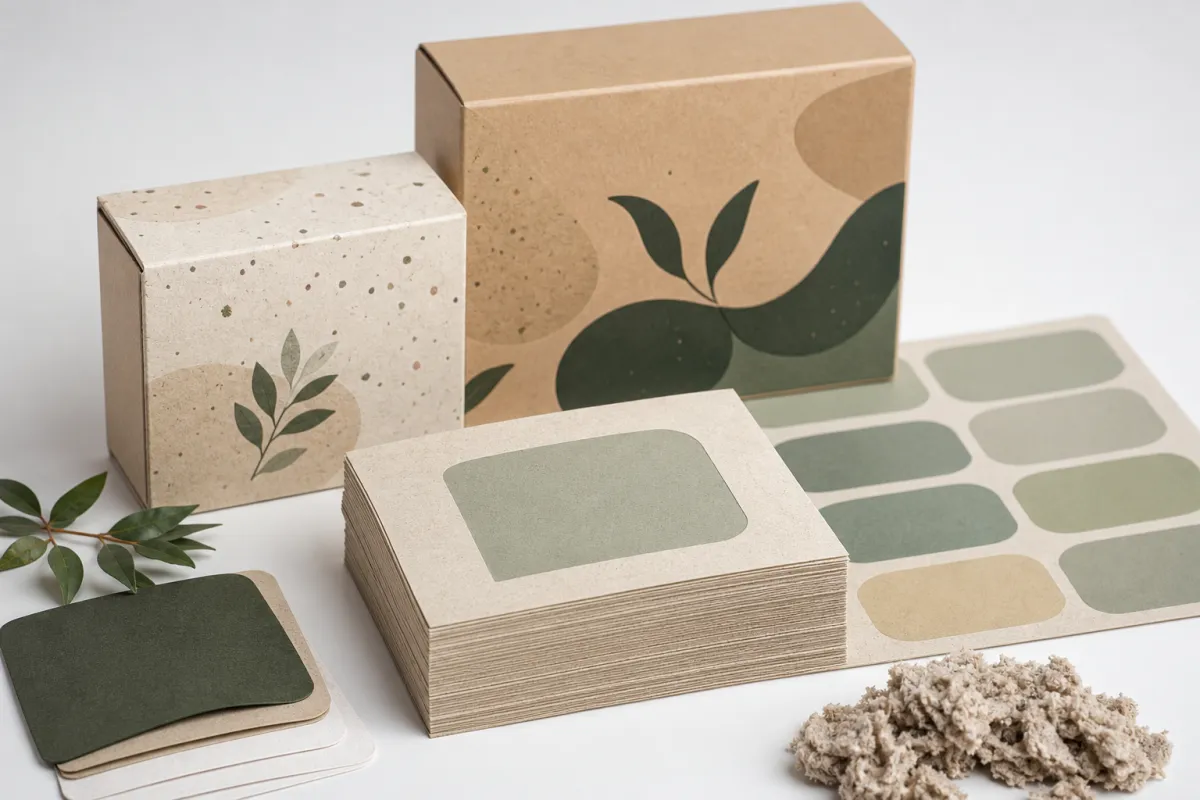
The first thing most buyers notice about recycled paper labels wholesale is the look, not the recycled-content line on the spec sheet. A good recycled face stock can carry sharp type, solid fills, and readable barcodes if the print method and paper are matched well. That catches people off guard because a lot of them still picture recycled paper as rough, gray, and a little sad. The better stocks are none of those things.
That visual piece matters because packaging gets judged fast. A label has to support the brand story, fit the container, and hold up under normal handling. Buyers usually ask the same three things first: does it look right on shelf, will it apply cleanly, and does it stay inside budget at wholesale volume? If one of those answers is shaky, the material choice gets harder to defend.
Recycled paper labels wholesale also Works for Brands that want a sustainability message they can explain plainly. Buyers want to know whether the stock truly supports recycled-content language, whether the surface still feels natural, and whether the finish keeps the label polished enough for retail. Fair questions. Vague green claims are cheap. Real specs are better.
Wholesale also means repeatability, not just a lower price. A small custom order can be fine once and never again. Recycled paper labels wholesale is more useful when you need multiple SKUs, consistent roll counts, and steady replenishment. The supplier should be able to reproduce the same size, same die line, same material, and close color across reorders so the production line does not need a babysitter every time stock arrives.
That gets even more important for teams managing several product families at once. A soap brand might need one label for glass bottles, another for kraft cartons, and a third for mailer sleeves. In that setup, recycled paper labels wholesale is part of production planning, not just packaging preference. The buying decision gets easier when the structure stays stable and only the parts that need to change actually change.
Application method matters too. Hand-applied labels can tolerate a different roll format than machine-dispensed ones, and a dry shelf carton has different needs than a refrigerated bottle. Buyers who think through those conditions early avoid the expensive surprise of a label that looks fine in proofs and misbehaves in the real world.
"A recycled label should do more than sound responsible. It should run cleanly, stick the way it should, and stay readable through handling, shipping, and storage."
For a better read on material choices and environmental claims, the EPA recycling guidance and the FSC system for responsible fiber sourcing are useful references. They will not replace a spec sheet, obviously. They do help buyers ask sharper questions before approving a run.
Recycled Paper Labels Wholesale Materials and Construction
People comparing recycled paper labels wholesale options often fixate on the face stock and ignore the rest of the build. Easy mistake. The label is really a three-part system: face stock, adhesive, and liner. Print method and finishing sit on top of that and decide how the label looks and how long it keeps looking that way. Mismatch any one of them and the result starts to wobble.
The face stock sets the tone. Textured uncoated recycled papers give a softer, more natural feel and fit dry goods, wellness products, and minimal packaging well. Smoother recycled stocks usually print cleaner fine type and sharper barcodes. If the label needs ingredient blocks, QR codes, or tight compliance copy, smooth stock can be the smarter pick even if the brand still wants a recycled look.
Recycled paper labels wholesale buyers should pay close attention to adhesive type too. Permanent adhesive is the usual choice for retail packaging because it is built to stay put once applied. Removable adhesive suits short promos, sample packs, and containers that need a clean peel later. Freezer and high-tack adhesives show up when the surface is cold, damp, or otherwise annoying, which, in packaging, happens more often than anyone likes.
That adhesive choice should match the actual package surface. Glass, coated paperboard, corrugated cartons, and plastic containers all behave differently. Surface energy, moisture, chill time, and handling all affect bond performance. A label that behaves on a dry carton can fail on a chilled bottle or a curved plastic jar if the adhesive was picked by wishful thinking instead of the real use case.
Finish matters as well. A varnish protects print without changing the feel too much, while lamination adds more resistance to scuffing and moisture but can reduce the raw paper character some brands want. Die-cut shape also affects both shelf appearance and application. Rounded corners help edges stay cleaner. Specialty shapes can make a label stand out, as long as the artwork and the application process can support them.
For buyers working through recycled paper labels wholesale sourcing, the best way to compare options is to match the build to the product. Dry pantry goods have different needs than refrigerated beverage packaging. A shipping label that gets handled once is not the same animal as a retail label that gets touched by customers, staff, and the occasional distracted person dragging a box across the floor.
Here is a practical comparison of common build choices:
| Option | Best Use | Typical Strength | Tradeoff |
|---|---|---|---|
| Textured recycled uncoated paper | Natural-looking retail packaging, dry goods, artisan products | Warm finish, strong tactile appeal, good sustainability story | Less ideal for very small type or heavy abrasion |
| Smooth recycled paper | Barcodes, small copy, multi-SKU label systems | Cleaner print detail and more readable variable data | Less visible texture for brands that want a rustic feel |
| Permanent adhesive build | Most retail and shipping applications | Reliable bond on properly prepared surfaces | Not designed for clean removal |
| Removable adhesive build | Samples, limited campaigns, temporary containers | Peels more cleanly when specified correctly | Usually less aggressive in demanding environments |
| Varnished or laminated finish | Higher handling, minor moisture exposure, better scuff resistance | Improved protection for print and surface wear | Can reduce the raw paper character some brands want |
That table matters because it shows a truth buyers learn after a few production runs: recycled paper labels wholesale is not one material category. It is a set of decisions that should fit how the package behaves in the real world. A decent supplier will ask about storage, application, and shelf life before recommending a build. The good ones ask before they quote. The mediocre ones ask after you have already called twice.
There is a standards side to this too. Labels that need to survive distribution may be judged against the same kind of transport and handling thinking used across packaging. For teams shipping sensitive products, the broader test framework used by organizations such as ISTA is worth a look. It does not choose the label for you. It does help frame what the package will face after it leaves the plant.
Recycled Paper Labels Wholesale Specifications That Affect Fit
The fastest way to slow down a recycled paper labels wholesale quote is to send a vague request. The fastest way to get a useful quote is to give the essentials up front: label size, shape, quantity, application surface, and whether the labels should ship on rolls or sheets. Those five details cut out a lot of back-and-forth and make the price feel less like a guess.
Size and shape come first. A 2 inch by 3 inch rectangle is a different production job from a rounded die cut or a circle. Even if the design looks similar, the tooling, waste pattern, and layout efficiency can shift the final cost. For recycled paper labels wholesale, that matters because a multi-SKU program often depends on using the right size decisions early instead of paying extra for a shape that looks nice and does nothing for the budget.
Roll format is another decision that gets underestimated. Hand application usually works well with rolls that peel easily and feed cleanly. Automated dispensing needs the right core size, roll direction, and outer diameter. If the labels will go through a machine, the roll spec is part of the function, not a packing preference. A technically correct label loaded wrong can wreck a line in short order.
Artwork affects the spec too. Minimum font size, barcode contrast, bleed, and quiet space for variable data all matter more than people expect. If the label includes lot codes, serial numbers, or dates, the printable area has to make room from the start. With recycled paper labels wholesale, design for the real copy length, not the fantasy version. Regulatory changes and operations updates love to add a few characters later.
Surface conditions need to be spelled out plainly. Is the label going on matte paperboard, glossy plastic, chilled glass, or a slightly curved jar? Is the container dry at application or covered in condensation? Does the label need to survive refrigeration, transport, or repeat handling? Those details shape adhesive choice and tell you whether a test proof should happen before the full run gets the green light.
One useful rule: the tougher the surface or environment, the more important it is to test adhesion and edge lift before approval. That is not caution for its own sake. It is how you avoid returns, stoppages, and relabeling costs after finished goods are already packed. In wholesale buying, a short test is cheaper than a long cleanup.
When teams compare recycled paper labels wholesale vendors, a clean spec sheet shortens the sales cycle fast. It should include:
- Label dimensions and corner style
- Material preference or finish preference
- Adhesive type
- Application surface and environment
- Print quantity by SKU
- Roll or sheet format
- Any barcode, lot code, or compliance requirements
That list looks basic because it is basic. It is also exactly what keeps the process efficient. Wholesale orders usually involve more than one product line, and a detailed spec sheet reduces revision cycles while keeping the label build aligned with how the packaging team actually works.
If you are still deciding how much customization you need, the Custom Labels & Tags page is a useful starting point, especially if the order needs special shape work, multiple print versions, or different application formats across SKUs.
Recycled Paper Labels Wholesale Pricing, MOQ, and Lead Time
Pricing for recycled paper labels wholesale comes down to a few concrete variables: face stock selection, adhesive choice, print colors, finishing, format, quantity per SKU, and whether the order is a repeat or a fresh setup. Buyers sometimes assume the paper itself drives the price. Not quite. The whole structure usually matters more. A simple single-color run on a standard recycled stock can price very differently from a multi-color order with a special finish and a pile of die-cut versions.
Wholesale pricing generally improves as run size grows because setup costs spread across more pieces and material waste becomes a smaller share of the total. That does not mean the biggest order is always the smartest buy. It means the buyer should compare unit cost across quantity tiers before committing. With recycled paper labels wholesale, a larger run can bring the per-label price down enough to justify inventory, but only if storage and reorder timing make sense.
The MOQ usually follows production efficiency rather than a random number pulled out of a hat. Digital printing may allow lower minimums, which helps when you have several SKUs or a short launch run. Flexographic or converted wholesale jobs often make more sense at higher volumes because the setup gets spread out more efficiently. If the project may grow, ask for tiered pricing before deciding. The first quote is not always the best business choice.
Here is a practical pricing model buyers can use when comparing recycled paper labels wholesale options:
| Run Size | Best For | Unit Cost Trend | What to Watch |
|---|---|---|---|
| Short run | New product launches, sample packs, limited tests | Higher unit cost | Useful when artwork or packaging may still change |
| Mid volume | Established SKUs with moderate reorder cadence | Balanced cost and inventory risk | Often the best middle ground for growing brands |
| High volume | Stable products, multiple retail channels, steady consumption | Lower unit cost | Requires planning for storage and reorder timing |
Lead time has stages, and each stage can add or save days. Proofing comes first, then prepress approval, then material sourcing, then production, finishing, and packing. If the job uses an uncommon recycled stock or a special adhesive, sourcing can become the slowest step. If the artwork is still changing, proofing becomes the bottleneck. If the quantity is large and the order has multiple versions, production time stretches.
For many custom orders, 12-15 business days from proof approval is a reasonable expectation, though that depends on the material, print method, and production queue. Simple repeat orders can move faster. Custom sizes, specialty adhesives, and complex multi-SKU jobs move slower. That is why buyers who want recycled paper labels wholesale on schedule usually approve artwork quickly and send complete specs the first time.
One budgeting habit I recommend is asking for two or three quantity tiers. A quote for 5,000 pieces, 10,000 pieces, and 25,000 pieces tells a much clearer story than a single number. You can compare unit cost against inventory carrying cost, not just the headline price. Sometimes the cheapest label is the one that costs less per piece and still does not bury the warehouse in extra stock.
Another point worth keeping on the table is consistency across reorders. If you expect to repeat the job, ask whether the same material and adhesive can be reserved for future runs. That is one of the quieter advantages of well-managed recycled paper labels wholesale buying: fewer surprises, less reformulation, and cleaner packaging continuity over time.
How the Recycled Paper Labels Wholesale Process Works
The process for recycled paper labels wholesale usually follows the same path: inquiry, spec review, quotation, proofing, production, and shipment. If the buyer brings the right information, the process moves quickly. If the details are thin, the job still gets done, but the schedule stretches and the quote gets less exact than anyone wants.
The initial inquiry should include dimensions, quantity, application surface, preferred format, and any print or sustainability requirements. If the labels need to match brand guidelines, say that early. If the label will carry regulatory copy, barcode data, or lot code fields, include that up front. A complete brief leads to better recommendations for recycled paper labels wholesale production.
Proofing is not paperwork for the sake of paperwork. It is the control point. Color expectations, text placement, die-line alignment, and barcode legibility can all be checked before the job is locked in. A digital proof handles layout well, but if the packaging is sensitive to appearance or the label includes variable data, a physical sample is worth considering. In wholesale orders, early corrections cost less than a reprint. Shocking, I know.
On the production side, simple repeats with stable artwork and known material selections move the fastest. A custom build with special adhesives, a new die cut, or several label versions for multiple SKUs takes longer because every variable adds setup and verification time. That is normal. Buyers who expect it usually plan better and avoid rush charges or missed launch dates.
Recycled paper labels wholesale works best when procurement, design, and operations stay in the same conversation. If the design team changes copy length after quoting, the die line may need adjustment. If operations changes the application method, the roll direction may need to change. If marketing wants a different finish after proof approval, the print schedule may move. None of that is a crisis if it happens early. It becomes a mess when it shows up after production has started.
There are a few ways to keep the schedule tight:
- Approve artwork in one round when possible.
- Send final dielines, not rough sketches.
- Confirm the application surface before choosing adhesive.
- Ask for a sample if the label will face moisture or abrasion.
- Consolidate questions before production begins.
That last one sounds small. It is not. Every time a project pauses for a tiny clarification, it loses momentum. In a wholesale setting, moving cleanly from proof to press is often the difference between a normal lead time and a compressed one.
If your team is comparing broader buying options, the Wholesale Programs page can help frame how larger runs, repeat orders, and package-specific sourcing are handled across product categories.
Why Choose Us for Recycled Paper Labels Wholesale
Wholesale buyers do not need a sales speech with confetti on top. They want a label partner who understands specs, catches problems early, and delivers the same result on the next order. That is the real value behind recycled paper labels wholesale: fewer surprises, clearer quotes, and a label build that behaves the way it should on the package.
Our approach is practical. We look at the package first, then the artwork, then the label structure. That order matters because a label that sounds good on paper may not be the right fit for a curved bottle, a matte carton, or a chilled container. The goal is to choose a recycled build that suits the application, not force the package to bend around the label.
For buying teams, consistency matters just as much as the first run. If the label color shifts too much between reorders, if the die cut drifts, or if the roll format changes without warning, the production team feels it first. That is why recycled paper labels wholesale should be backed by careful prepress review, controlled production, and clear communication about every spec that affects application.
We also take sustainability claims seriously. No one should get handed vague "eco-friendly" language and be expected to nod along. If the paper is recycled-content paper, that should be clear. If a finish changes end-use performance, that should be explained. If a specific adhesive makes the label less removable, that belongs in the decision, not in the complaint pile after delivery.
That kind of honesty helps procurement teams compare options faster. You can review the material choices, compare pricing, request samples, and decide whether the label construction fits the packaging line. In a wholesale setting, that clarity saves time and lowers risk. The spreadsheet alone does not do that.
Recycled paper labels wholesale also makes sense when you manage multiple SKUs or a brand family that needs a consistent look. We can keep the structure aligned while adjusting dimensions, artwork, and format as needed. That matters for bottles, jars, cartons, pouches, and shipping packs where the label plays a different role but the brand still needs the same visual thread running through it.
For teams that want a label supplier who talks plainly about production realities, that is where we focus. We are not trying to dress up paper as magic. We are matching material and process to the job so the labels arrive ready to use, look right on shelf, and stay consistent through repeat orders.
Next Steps for Recycled Paper Labels Wholesale Orders
If you are preparing a recycled paper labels wholesale request, start with the four essentials: label dimensions, application surface, quantity, and whether the labels should ship on rolls or sheets. Those four items shape the quote more than anything else. Once they are clear, the rest of the specification becomes much easier to build out.
Next, decide how the label will live in the real world. Will it face moisture, refrigeration, abrasion, or repeated handling? Will it be applied by hand or by machine? Does it need a natural texture, or does the design call for sharper type and barcode clarity? Those answers narrow the material and adhesive choices before a proof ever gets issued.
It also helps to prepare artwork in a clean, production-ready format. Use final copy, a clear dieline, and barcode data that has already been checked. If there is variable information such as batch codes or dates, flag it early. In recycled paper labels wholesale buying, small changes late in the process can affect both timing and cost, so the cleaner path is the one with fewer surprises.
For pricing, request more than one quantity tier. A quote at a single volume tells you the cost, but not always the best buying decision. Comparing smaller and larger tiers shows where the unit price drops enough to justify more inventory. That is often the most sensible way to buy wholesale without overfilling storage.
Finally, ask for samples or a test proof when the application is demanding. A recycled stock that performs beautifully on a dry carton may not be right for a chilled bottle or a container that will be handled often. Testing early protects the run. In packaging, that is usually the cheapest place to solve a problem.
When the specs are final and the use case is clear, recycled paper labels wholesale becomes a direct buying decision instead of a guessing game. That is the point where procurement can move with confidence, production can plan correctly, and the label can do the job it was chosen to do.
What should I know before ordering recycled paper labels wholesale?
Confirm label size, application surface, and whether the labels need to ship on rolls or sheets. Choose a face stock and adhesive based on moisture, refrigeration, or handling demands, and have artwork, quantity, and finish preferences ready before requesting a quote. If the package gets cold, damp, or handled a lot, say so early.
Are recycled paper labels wholesale options durable enough for retail packaging?
Yes, when the face stock and adhesive are matched to the package surface and environment. Uncoated recycled papers work well for dry, low-abrasion products, while smoother stocks suit finer print detail. A sample test is the best way to confirm adhesion and appearance before a full run. Nobody wants to find out after 20,000 labels are already packed.
What is a typical MOQ for recycled paper labels wholesale orders?
MOQ depends on print method, material selection, and whether the order is a new custom run or a repeat job. Digital jobs often allow lower minimums, while higher-volume converted runs can improve unit pricing. Request tiered quotes so you can compare minimum order cost against long-term inventory needs.
How long does a recycled paper labels wholesale order usually take?
Timeline depends on proof approval, material availability, production load, and finishing requirements. Simple repeat orders move faster than custom sizes, special adhesives, or multi-SKU projects. Fast approval of artwork and specs is the easiest way to shorten the schedule.
Can I get custom shapes and finishes with recycled paper labels wholesale?
Yes, Custom Die Cuts are common, and many orders can also include varnish or other finish options. The shape should support both application speed and shelf presentation, especially on crowded retail packaging. Finish choices should be based on durability needs, not just appearance.
Is recycled paper labels wholesale a good fit for multiple SKUs?
It often is, especially when the brand wants a consistent look across product families. The key is to keep the core build stable while adjusting size, artwork, and format only where needed. That approach helps maintain visual continuity and keeps reorder planning simpler.
If you are ready to move forward, recycled paper labels wholesale is easiest to buy when the spec is final, the application is clear, and the artwork is prepared for production. Start with the four essentials, test anything that will see moisture or abrasion, and compare at least two quantity tiers before you place the order. That is the practical way to keep cost, timing, and performance lined up without making the process harder than it needs to be.


