Buyer Fit Snapshot
| Best fit | Recycled Paper Stickers with Logo projects where brand print, material claims, artwork control, MOQ, and repeat-order consistency need to be specified before quoting. |
|---|---|
| Quote inputs | Share finished size, material target, print colors, finish, packing count, annual reorder estimate, ship-to region, and any compliance wording. |
| Proofing check | Approve dieline scale, logo placement, barcode or warning zones, color tolerance, closure strength, and carton packing before bulk production. |
| Main risk | Vague material claims, crowded artwork, missing packing details, or unclear freight terms can make a low unit price expensive after revisions. |
Fast answer: Recycled Paper Stickers with Logo: Specs, Costs, Uses should be specified like a repeatable production item. The safest quote records material, print method, finish, artwork proof, packing count, and reorder notes in one written spec.
Production checks before approval
Compare the actual filled-product size with the drawing, then confirm tolerance on folds, seals, hang holes, label areas, and retail display edges. Reserve space for logos, QR codes, warning copy, and material claims before decorative graphics fill the panel.
Quote comparison points
Review material grade, print process, finish, sampling route, tooling charges, carton quantity, and freight assumptions side by side. A quote is only useful when the supplier can repeat the same color, closure quality, and packing count on the next order.
Recycled paper Stickers with Logo can look like an easy sustainability win, yet the reality is more complicated. A label can read as eco-friendly and still fail recycling checks because of the adhesive, liner, or coating beneath the surface. Packaging buyers miss that detail often. They also miss a second one: recycled paper stickers with logo are not just paper with print on top. They are a system of materials, and each layer changes how the sticker behaves on a carton, mailer, jar, or bag.
Brands that want a softer matte look and less plastic presence often find recycled paper stickers with logo to be a smart fit. They appear on folding cartons, subscription boxes, tissue wraps, retail bags, and product seals where the packaging stays indoors, ships dry, and needs only moderate durability. That is where this material earns its place. It gives you branding, a tactile paper feel, and a cleaner visual story without forcing the package into a glossy, synthetic finish.
Expectations still matter. recycled paper stickers with logo usually perform best in dry, indoor, short-to-medium life applications. A package that sees freezer temperatures, heavy abrasion, condensation, or oily hands needs a careful adhesive and stock selection. The wrong choice can curl at the corners in a day. The right one can move through distribution, sit on a shelf, and survive unboxing without trouble.
Recycled Paper Stickers with Logo: The Hidden Sustainability Test
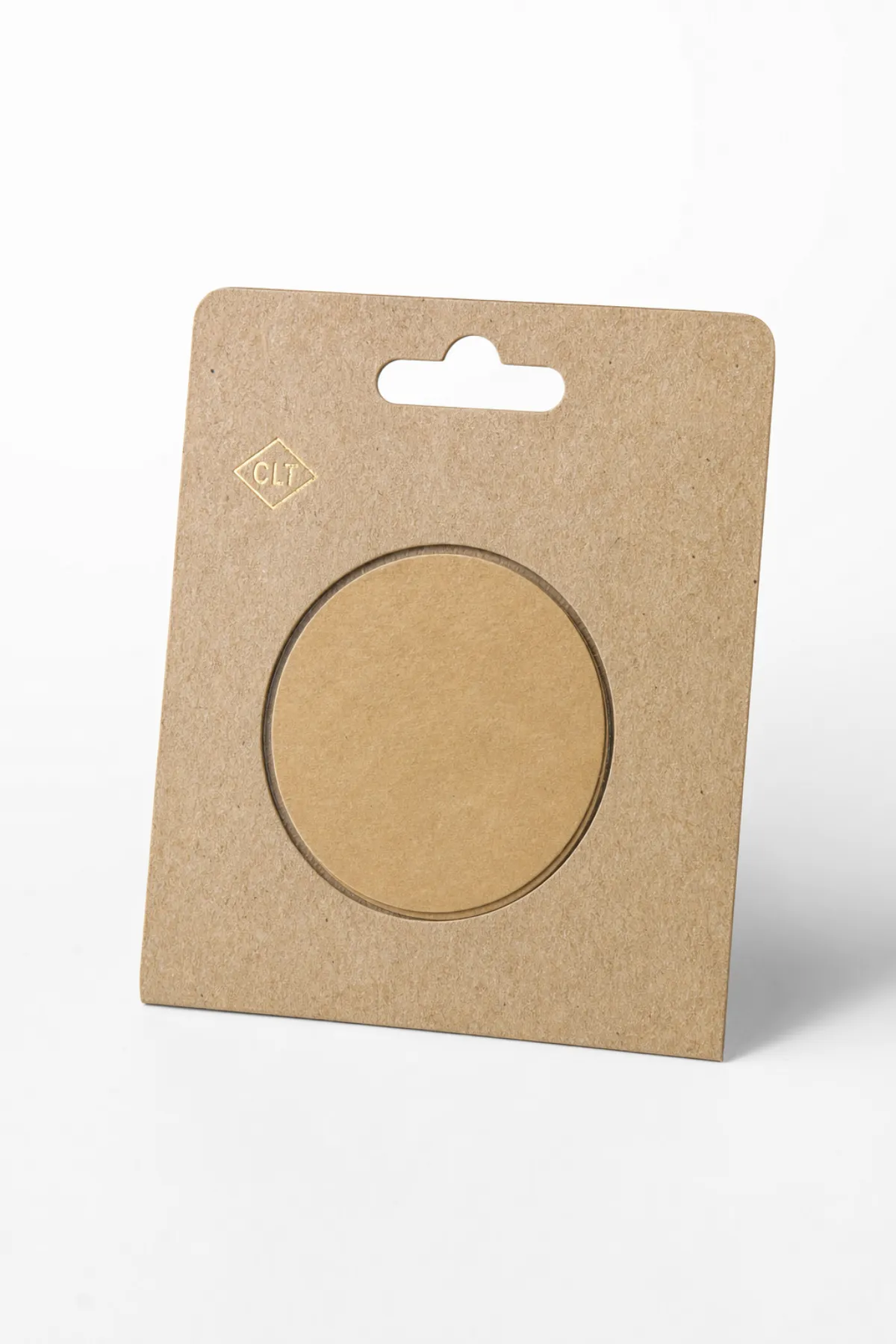
Here is the twist: a sticker that looks recycled can still be the wrong sustainability choice. Brands often stare at the paper face because it is the part they can see, but recycled paper stickers with logo are judged by much more than appearance. The adhesive must release in the right way for recycling systems, the liner affects waste volume, and coating or lamination can alter end-of-life behavior. A label spec sheet matters as much as the artwork.
recycled paper stickers with logo are usually made from recycled-fiber paper stock, printed with a logo, die cut, and paired with a pressure-sensitive adhesive. The stock may contain post-consumer fiber, mixed recycled fiber, or a recycled-content blend documented by the supplier. If your brand makes environmental claims, the paperwork has to match the message. A vague "eco label" claim is weak. A documented recycled-content claim with clear material specs carries far more weight.
Where do these labels fit best? Folding cartons, mailers, tissue wraps, product seals, subscription boxes, and retail bags are common uses. The paper texture feels natural in the hand, and the matte finish pairs well with kraft board, uncoated cartons, and restrained brand systems. That is why recycled paper stickers with logo show up so often in cosmetics, specialty food, wellness, and craft packaging. The pack still looks branded, but it does not look overworked.
Many brands choose recycled paper stickers with logo for a practical reason before a marketing reason: they want the pack to feel honest. Not flashy. Not synthetic. Just grounded. That effect matters on shelf, especially when the rest of the packaging uses kraft board, paper tape, or fiber-based inserts.
In audits I have done for food and wellness brands, the label was often the first place teams tried to save money and the last place they tested. That is backwards. The sticker is small, yes, but it sits right at the point where the package is touched, scanned, handled, and judged.
A sticker can be "paper-based" and still miss the recycling test if the adhesive chemistry, coating, or contamination level is wrong. Sustainability lives in the full construction, not just the face stock.
If your team is comparing label families, it helps to examine the entire packaging system instead of one component in isolation. Our Custom Labels & Tags category is a useful reference point when you want to compare paper stocks, shapes, and finishing choices side by side.
One practical reminder: recycled paper labels are not a cure-all. They suit packages that need visual branding, modest durability, and a paper-forward look. They are not the first pick for long wet cycles, constant rubbing, or deep freezer storage. That distinction saves money and avoids reprint headaches.
How Recycled Paper Stickers with Logo Work on Packaging
recycled paper stickers with logo work because the face stock, adhesive, and liner are built as one system. The face stock is the printed paper layer you see. The adhesive is what bonds the label to the package. The liner is the backing that protects the adhesive until application. If any layer is mismatched, the result can be edge lift, tunneling, weak tack, or a label that peels after a temperature swing.
Recycled fibers also alter the visual result. Compared with a coated gloss label, recycled paper stickers with logo often have a slightly textured surface and softer color reproduction. Deep blacks may soften. Fine gradients may look less crisp than on coated stock. For many brands, that is not a flaw; it is part of the appeal. The logo feels more grounded, less synthetic, and more tactile.
Printing method matters too. Digital printing is usually the fastest route for short runs and proof-heavy projects because changes are easier to make and setup costs stay lower. Flexographic printing often suits larger volumes, especially when repeatability matters and the artwork is stable. Offset printing can work well when color consistency is critical and the label format matches the press. In all three cases, recycled paper stickers with logo should be tested on the actual package before approval, not only viewed on a screen.
Substrate fit creates more problems than many buyers expect. The same adhesive can behave differently on corrugated kraft, clay-coated cartons, glass jars, or PE-coated mailers. A label that grips a carton perfectly may struggle on a slick pouch or a curved jar shoulder. That is why recycled paper stickers with logo should always be sampled on the real substrate. A one-day rest period after application helps, since some adhesive failures show up only after the label settles.
A simple test protocol works well: apply the label to the real package, press it down with even hand pressure, then check for corner lift after 30 minutes, 24 hours, and after light rubbing. If the package ships, simulate handling in a carton or mailer. If it sits in a chilled room, place it there for a day and check again. Small test, big savings.
Production Process and Timeline for Recycled Paper Stickers with Logo
The production path for recycled paper stickers with logo usually follows a clear sequence: brief, material selection, artwork review, proofing, die cutting, printing, finishing, and shipment. That sounds neat on paper. It rarely feels neat in practice. Most delays happen before the press even starts, because the artwork, dieline, or material choice needs correction.
Prepress checks are worth every minute. The logo should be high resolution, ideally vector, and the dieline should match the intended shape exactly. Bleed must be built in, especially for full-coverage backgrounds. Color targets should be named clearly, either in CMYK or Pantone terms. If you want a white underprint or a custom background tone, say so early. Those small choices change how recycled paper stickers with logo look once they hit the package.
Simple shapes on standard recycled papers can move quickly. A straightforward square or circle on a stock face with standard adhesive might be proofed in 1-3 days and produced in several more business days after approval. Custom cuts, multiple SKUs, specialty adhesives, or layered finishes add time. If the order needs split shipments, the schedule stretches again. Press time is usually not the bottleneck; proof revisions are, and they are gonna cost you if the artwork is still moving.
As a rough guide, simple recycled paper stickers with logo projects can often move from proof approval to production in about 5-10 business days, while more customized runs can take 10-15 business days or longer. Freight adds its own window. If the order is crossing regions or needs exact delivery timing, ask for the production lead time and the transit time separately. That detail matters when a launch date is fixed.
Rush orders are possible in some cases, but they usually bring tradeoffs. A rushed job compresses proofing, which increases the risk of a cut error or color mismatch. Seasonal demand can also add pressure. Holiday packaging programs, Q4 promotions, and new product launches all compete for press time. If your team knows the label will matter, build the schedule early.
One practical move is to treat the first order as a pilot, even if the final run will be much larger. With recycled paper stickers with logo, a pilot run reveals whether the adhesive grabs fast enough, whether the paper tone suits the brand, and whether the shape is easy to apply by hand or by machine. That is cheaper to learn on 1,000 pieces than on 50,000.
Key Factors That Affect Recycled Paper Sticker Performance
recycled paper stickers with logo respond to more variables than most buyers expect. Recycled content is one of them, but it is only a starting point. A paper with post-consumer fiber may align better with brand claims, yet it still needs the right adhesive, the right release liner, and the right finish for the package environment. A sustainability story that ignores performance tends to fall apart under shipping stress.
Finish is a major decision. Uncoated stock gives the most natural feel and usually shows the recycled texture best. Matte stock can make the logo feel cleaner without looking glossy. Light varnish can improve scuff resistance, which helps if the packaging is handled often. Heavy coating can make the sticker appear smoother, but it may also reduce the raw paper character. For many brands, the best middle ground is a matte or lightly varnished finish that preserves the look while protecting the print.
recycled paper stickers with logo also behave differently across environments. Humidity can weaken the bond and make edges curl. Cold storage can slow adhesive tack. Shipping friction can abrade print on high-contact corners. Hand oils can affect the edges of product seals, especially on smaller labels. If the package is curved, the corners matter even more because they are the first place a label tries to lift.
Size and shape influence both cost and performance. Larger labels use more material, create more waste on the liner, and may need stronger adhesion at the corners. Odd shapes can look distinctive, but they also require more die-cut precision and can raise tooling cost. A logo sticker that looks elegant in a mockup may be wasteful in production if the die shape is too decorative for the actual application. A cleaner outline is sometimes the smarter move.
Testing should match the application. For shipping durability, an ISTA distribution test can serve as a useful benchmark, and ISTA publishes guidance for package testing on its site at ista.org. For fiber claims, documentation from the Forest Stewardship Council is relevant when recycled or certified paper sourcing is part of the brand story; see fsc.org. Those references do not replace supplier testing, but they give the conversation a concrete frame instead of a marketing haze.
Cost, Pricing, and MOQ for Recycled Paper Stickers with Logo
Pricing for recycled paper stickers with logo usually depends on six things: quantity, size, shape complexity, number of print colors, finish, and adhesive choice. Rush timing and split shipments can add more. If you want an exact price, ask for line-item quoting. A useful quote separates setup fees, die charges, unit pricing, and freight, because those items shift differently as volume changes.
At small quantities, setup costs matter more. At larger quantities, the unit price starts to fall. That is the basic MOQ tradeoff. You may see a minimum order quantity of 250-500 pieces for very simple digital jobs, while more typical production runs start at 1,000 or 2,500 pieces depending on format. recycled paper stickers with logo often become financially sensible earlier than buyers expect because the material itself is not always the expensive part; custom tooling and press setup are where the cost hides.
Here is a realistic pricing frame for a common 2 x 3 inch label with standard artwork in the U.S. market. These are not quotes, but they help with planning.
| Option | Typical MOQ | Approx. unit cost | Best fit |
|---|---|---|---|
| Digital recycled paper label | 250-1,000 | $0.22-$0.45 | Proofs, small launches, multiple SKUs |
| Flexo recycled paper label | 2,500-10,000 | $0.06-$0.18 | Steady replenishment, stable artwork |
| Recycled paper label with light varnish | 1,000-5,000 | $0.10-$0.28 | More handling, better scuff resistance |
Those ranges move with print coverage. Heavy ink coverage costs more than a simple one-color logo. Special adhesives can raise the quote as well. If you need freezer performance, stronger tack, or a liner built for machine application, the price changes. That is why recycled paper stickers with logo should be compared on total landed cost, not just the sticker price alone.
There are good ways to lower cost without making the label look cheap. Standard shapes reduce die expense. Fewer ink colors simplify the press run. Consolidating SKUs lowers per-unit setup burden. Choosing a stock that prints well without special finishes keeps the quote cleaner. If your brand has a seasonal pack and a core pack, it can also make sense to order both through the same spec family so the supplier does not need to rebuild the job from scratch.
One mistake many buyers make is comparing only unit price. A label that is two cents cheaper but causes 5% rework is not cheaper. On a 50,000-piece run, that is 2,500 problem labels, plus the labor to catch them. If the adhesive fails on 1 in 20 packages, the hidden cost is far greater than the label savings. From a packaging buyer's point of view, recycled paper stickers with logo should be priced against waste, labor, and brand risk, not only against the invoice.
Step-by-Step Ordering Guide for Recycled Paper Stickers with Logo
Start with the use case. Is the label sealing a box, identifying the brand on a mailer, or decorating a retail bag? Does it need to survive touch, moisture, or refrigeration? Those questions determine the stock and adhesive before artwork even enters the discussion. recycled paper stickers with logo are often chosen too early for appearance and too late for performance. The best orders reverse that sequence.
Match the sticker to the package material next. A corrugated kraft carton, a coated paperboard box, and a glass jar all behave differently. If you are unsure, request a sample on the actual substrate. That small test prevents a larger mistake. For broader packaging systems, it can help to compare the sticker with other components in your lineup, including Custom Labels & Tags, so the final pack feels coordinated rather than patched together.
Artwork prep is where many delays begin. Send vector files when possible. Confirm dimensions, bleed, and cut lines. If the recycled paper tone is warm or gray, do not assume the logo color will behave exactly as it does on coated stock. Small type can lose clarity on textured paper, so keep fine text readable and avoid delicate linework unless the printer confirms it will hold. recycled paper stickers with logo usually look best when the design is pared back a little, not overloaded with detail.
Proof review should be deliberate. Check placement, cut accuracy, color expectation, and edge margin. If a white ink layer is involved, confirm that the printer understands how it affects contrast. If the artwork is supposed to feel natural and understated, say so directly. That kind of instruction is more useful than a generic "make it premium" note. Premium means different things on different substrates.
Approve a pilot run before scaling. Inspect adhesion after 24 hours, rub resistance after handling, and performance in the real storage environment. If the package may face cold chain conditions, run that test too. A small issue caught in a pilot is a useful finding. A small issue discovered after a full production run is a budget problem. recycled paper stickers with logo reward teams that test before they commit.
If your company works across multiple packaging formats, it can also help to set one label standard for size families and one for finishing. That keeps procurement easier and makes reorders faster. You do not need six different definitions of "natural paper look" to sell the same brand story.
Common Mistakes to Avoid with Recycled Paper Stickers with Logo
The biggest mistake is assuming recycled paper automatically means recyclable in every local system. It does not. The adhesive, liner, coating, and contamination level all matter. A sticker on a greasy food box is not the same as a sticker on a clean paper mailer. If you want to make end-of-life claims, get the claim language checked against the full label construction. recycled paper stickers with logo deserve the same scrutiny as any other packaging component.
Another common error is choosing a finish by appearance alone. A matte recycled label may look beautiful on a render and then fail on a curved, humid, or oily surface. That is a real production issue, not a theoretical one. The same goes for labels that are too glossy for the brand story. If the packaging is meant to feel low-impact and fiber-based, a high-shine finish can break the illusion immediately.
Low-contrast artwork causes trouble often. Thin lines, pale text, and small legal copy can disappear on textured recycled paper. What looks elegant in a design file may print muddy in practice. A logo with strong contrast tends to travel better across recycled stock. recycled paper stickers with logo do not need to shout, but they do need to stay legible.
Skipping substrate tests gets expensive fast. I have seen labels that were flawless on a sample sheet and failed on the actual package because the board coating was different. I have also seen otherwise excellent labels curl in cold storage after one night. The right sample on the wrong surface is still the wrong sample. A real-world test protocol matters more than a PDF proof.
Finally, buying only on unit price can erase the savings. A cheaper label that causes reprints, slows packing, or damages the package surface is not cheaper. The better comparison is total cost of ownership: material, application speed, waste, defects, and customer perception. When those factors are measured together, recycled paper stickers with logo often look strongest when they are chosen for the actual use case, not the lowest headline number.
Expert Tips and Next Steps for Recycled Paper Stickers with Logo
Ask for the material spec sheet before you compare quotes. You want to know the recycled content claim, the adhesive type, the liner type, and whether the supplier can document the paper source. If those details are fuzzy, the comparison is weak. recycled paper stickers with logo are easier to buy well when the spec language is precise.
Order two finishes side by side if you are unsure. One matte, one lightly varnished. Put both on the real package and look at them under store lighting, desk lighting, and shipping conditions. The finish that looks best on a design monitor is not always the one that feels best in hand. Texture, contrast, and edge visibility all change once the label is applied.
Test the conditions that matter most to your product. If the package ships through abrasion, rub it. If it lives in humidity, expose it to humidity. If it goes chilled, place it in a cold room. A quick 24-hour adhesion test is the minimum. If the packaging must survive a distribution journey, consider a simple ISTA-style check as well. Those tests do not need to be elaborate to be useful.
Align the label with the rest of the pack system. Recycled paper labels look best when the box, tape, inserts, and outer shipper tell the same story. If the label looks handmade but the carton is coated and glossy, the design language breaks. If the whole pack uses fiber-based materials, recycled paper stickers with logo feel intentional rather than symbolic.
For buyers managing multiple SKUs, consistency is a hidden advantage. Use one dieline family where possible. Standardize the logo placement. Keep a record of the approved stock code, adhesive, and finish. That way, the next reorder is not a new project. It is a repeat of a spec that already proved itself.
My practical shortlist stays simple: compare two vendors, request line-item pricing, test the actual package, and place a pilot order before scaling. If your packaging program includes other branded paper items, keep the family aligned so the shelf presentation looks deliberate. And if you need a broader label mix, our Custom Labels & Tags page can help you compare formats before you commit.
Frequently Asked Questions
Are recycled paper stickers with logo actually recyclable?
Sometimes, but not always. The paper face is only one part of the answer, because the adhesive, liner, and any coating also affect recyclability. If the label is laminated, heavily inked, or applied to a contaminated package, the answer can change again. Check local recycling rules and ask the supplier for construction details before making a claim.
What finish works best for recycled paper stickers with logo?
Matte or uncoated finishes usually show the recycled texture best and support a natural-looking brand presentation. If the label needs more abrasion resistance during shipping, a lightly varnished option can help. The best finish depends on the package surface and the handling conditions, so test both the look and the performance.
How much do recycled paper stickers with logo cost?
Price depends on size, quantity, shape, print colors, finish, adhesive, and whether you need a rush order. Smaller runs usually carry a higher per-piece price because setup is spread across fewer units. Ask for a line-item quote so you can see setup, tooling, and freight separately.
What file format should I send for recycled paper stickers with logo?
Vector artwork is best because it keeps the logo sharp at any size. Include dielines, bleed, and final dimensions so the printer can place the cut accurately. If color matters, send Pantone references or clear CMYK targets and request a proof before production.
Can recycled paper stickers with logo handle shipping or refrigeration?
They can, but only if the adhesive and stock are selected for that environment. Cold, moisture, and abrasion can weaken performance, so testing is essential before full production. For chilled or high-friction applications, ask for a sample that matches the exact package and storage conditions.
Used well, recycled paper stickers with logo give brands a practical way to show material restraint without sacrificing identity. The best results come from matching the sticker to the substrate, testing it under real conditions, and treating the label as part of the packaging system rather than a decorative afterthought. If you need one rule to keep, make it this: ask for the full spec sheet, sample on the real package, and run a 24-hour test before you approve volume. That is the part most teams kinda miss.

