Buyer Fit Snapshot
| Best fit | Recycled Product Boxes Supplier projects where brand print, material claims, artwork control, MOQ, and repeat-order consistency need to be specified before quoting. |
|---|---|
| Quote inputs | Share finished size, material target, print colors, finish, packing count, annual reorder estimate, ship-to region, and any compliance wording. |
| Proofing check | Approve dieline scale, logo placement, barcode or warning zones, color tolerance, closure strength, and carton packing before bulk production. |
| Main risk | Vague material claims, crowded artwork, missing packing details, or unclear freight terms can make a low unit price expensive after revisions. |
Fast answer: Recycled Product Boxes Supplier: Board, Finish, Dieline, and Unit Cost should be specified like a repeatable production item. The safest quote records material, print method, finish, artwork proof, packing count, and reorder notes in one written spec.
Production checks before approval
Compare the actual filled-product size with the drawing, then confirm tolerance on folds, seals, hang holes, label areas, and retail display edges. Reserve space for logos, QR codes, warning copy, and material claims before decorative graphics fill the panel.
Quote comparison points
Review material grade, print process, finish, sampling route, tooling charges, carton quantity, and freight assumptions side by side. A quote is only useful when the supplier can repeat the same color, closure quality, and packing count on the next order.
Choosing a Recycled Product Boxes supplier is not a box-ticking exercise with a green sticker slapped on top. It is a material decision, a print decision, and a shipping decision all at once. The right partner knows how to balance recycled fiber content, print quality, structural strength, and budget without pretending every carton is magically planet-saving. A good recycled product boxes supplier should help you protect the product, keep the brand looking sharp, and spell out what the recycled content claim actually means.
That part matters more than buyers usually expect. One box can contain recycled fiber. Another can be recyclable after use. A third can use post-consumer recycled content, which is a much more specific claim and usually a more useful one. If quotes from a recycled product boxes supplier stay fuzzy, you are being asked to buy on vibes instead of specs. That is a dumb way to buy packaging, whether you need e-commerce mailers, folding cartons, or custom printed boxes from Custom Packaging Products.
A recycled box that looks good on a mockup but fails in transit is not sustainability. It is just waste with better branding.
What a Recycled Product Boxes Supplier Actually Does
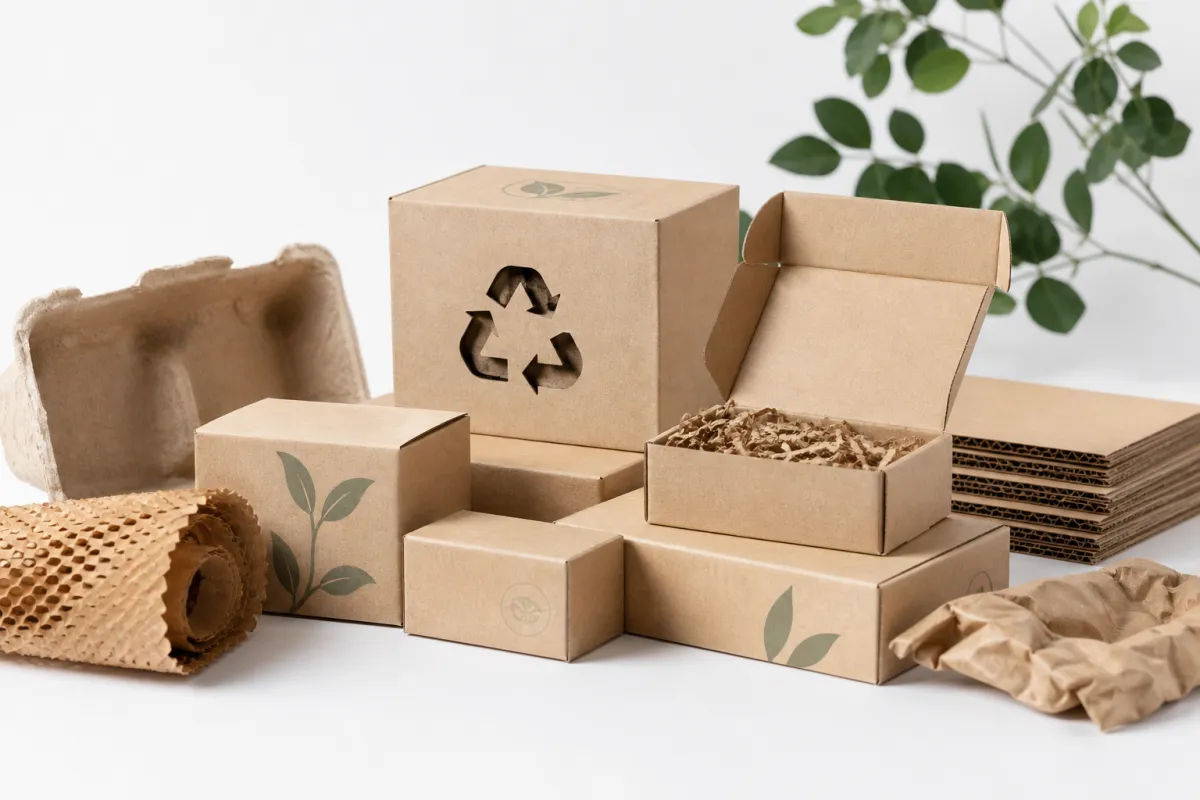
At a basic level, a recycled product boxes supplier sources board or paperboard with recycled fiber content, converts it into the right box structure, prints and finishes it, then checks that the final packaging matches the approved size and quality. Simple enough on paper. The real work sits underneath that sentence. The supplier may use recycled kraft liner, coated recycled paperboard, unbleached stock, or a duplex board that blends recovered fiber with virgin fiber, depending on the look and performance you need.
From a buyer’s perspective, the role of a recycled product boxes supplier is part material guide, part production manager, and part quality filter. They need to know whether the box is carrying a lightweight accessory, a glass cosmetic jar, a supplement bottle, or a retail product that has to survive pallet stacking and parcel abuse. They also need to understand how the recycled board behaves with the chosen print method, because recycled surfaces can vary more in smoothness, brightness, and ink holdout than most people expect.
The confusion usually starts with the language. Recycled content means the material includes fiber recovered from a previous use stream. Recyclable design means the box can usually be recovered again in the right local system. Post-consumer recycled fiber is the material that has already gone through consumer use, which is a narrower and often more meaningful claim than generic recycled content. A serious recycled product boxes supplier should explain those differences without hiding behind marketing fog.
Good suppliers also talk plainly about the trade-offs. Recycled board can show more natural tone variation, may not deliver ultra-bright whites the same way coated virgin stock does, and sometimes needs more care in die-cutting or folding to avoid cracking on sharp scores. That does not make it worse. It just means the design has to suit the material instead of pretending material limits do not exist. When the box is engineered properly, a recycled product boxes supplier can deliver packaging that feels deliberate, looks polished, and supports a credible sustainability story without inflating it.
Sustainability should be measured through material choice and process discipline, not vague promises. A supplier may improve outcomes by reducing trim waste, tightening carton layouts, choosing water-based inks where appropriate, or helping the buyer avoid oversized boxes that waste board and freight space. The U.S. EPA has a useful overview of paper and paperboard materials here: EPA paper and paperboard guidance. A thoughtful recycled product boxes supplier talks in that same grounded way, with real material facts instead of soft language.
How a Recycled Product Boxes Supplier Works
The workflow usually starts with recovered fiber or recycled paperboard being processed into sheet stock. From there, a recycled product boxes supplier moves the material through printing, die-cutting, scoring, gluing, folding, and packing, with checkpoints at each stage so the final box matches the approved design. If the order is a corrugated mailer, the structure may come from recycled liner and recycled medium. If it is a folding carton, the supplier might use a coated recycled board that supports cleaner graphics and tighter folds.
The structure you choose changes how well recycled material can be used. A simple tuck-end carton gives a supplier more flexibility than a rigid box with magnetic closures or some awkward wrap style nobody asked for. Heavy print coverage, soft-touch coatings, foil effects, embossing, and multiple spot colors all change how a recycled product boxes supplier approaches the job, because each finish adds cost, setup time, or a risk to recyclability. The more elaborate the package, the more tightly the material and finish choices need to match.
Quality control is where the practical difference shows up. A good recycled product boxes supplier checks dimensional accuracy, score depth, glue bond, print registration, bar code legibility, and compression strength when the box has to survive shipping or warehouse stacking. For transit-sensitive packaging, many buyers also ask about test methods aligned with ISTA procedures or relevant ASTM methods such as compression testing. A supplier that can discuss those checks without stumbling is usually easier to work with than one that only talks about looks.
The communication chain usually runs through a brand owner, packaging buyer, prepress team, and production crew. The buyer defines the product size, weight, display needs, and shipping environment. The prepress team checks artwork, bleeds, overprints, and dieline alignment. Production confirms whether the selected stock and structure are realistic at the required volume. When that chain is clean, a recycled product boxes supplier can keep the project moving instead of turning every small question into a fresh crisis.
There is a stubborn myth that sustainable packaging is one-size-fits-all. It is not. A box for a dry retail item that sits on a shelf has different demands than a box for a product shipped in a parcel with void fill, stacking pressure, and temperature swings. From an operations angle, a recycled product boxes supplier should ask about the product’s weight, shipping method, storage conditions, and whether the package is meant mainly for protection, presentation, or both. Those questions save time later because they guide material selection before the order is locked in.
I have seen buyers skip that part and then act surprised when a pretty carton crushes under parcel handling. The supplier did not invent physics. The box just met reality.
Key Factors to Compare in a Recycled Product Boxes Supplier
When buyers compare one recycled product boxes supplier with another, the fastest mistake is to stare only at the lowest number on the quote sheet. Price matters, sure. So do recycled content claims, print quality, material availability, structural performance, and customer support. If a supplier cannot explain what board grade they are quoting, what recycled content level it carries, or how the box behaves under load, the quote is incomplete even when the price looks tempting.
Documentation matters too. A reliable recycled product boxes supplier should be able to provide recycled content details, relevant certification references, and chain-of-custody information when requested. If your brand needs FSC claims, the supplier should know whether the material and the process support that claim. For companies that care about verified sourcing, FSC explains responsible forest management and chain-of-custody expectations at fsc.org. The point is not paperwork for its own sake. The point is making sure the sustainability message is real.
Minimum order quantity is another filter that matters in the real world. Some buyers need a pilot run of 500 or 1,000 boxes to confirm fit. Others need 10,000 or more pieces for an ongoing program. A flexible recycled product boxes supplier will explain whether short runs are workable, whether tooling charges are one-time or repeated, and how custom sizing affects the economics. The same logic applies to finishing. Some vendors are happy with basic kraft and one-color print, while others can handle intricate custom printed boxes, but the Price and Lead time will shift with that choice.
It helps to compare samples side by side instead of reading only spec sheets. A sample tells you things a quote cannot, like how crisp the corners feel, whether the flap closes cleanly, how the ink sits on the recycled surface, and whether the board has enough stiffness for your product. A strong recycled product boxes supplier should encourage that comparison because samples reduce guesswork and expose the real value, not the polished sales pitch.
- Material evidence: recycled content percentage, grade name, and any certification notes.
- Structural fit: box style, board thickness, and how the package protects the product.
- Print capability: number of colors, image clarity, and finish compatibility.
- Production flexibility: short-run support, repeat ordering, and custom sizing limits.
- Support quality: sample handling, prepress review, and response speed.
One easy way to narrow the field is to ask each recycled product boxes supplier to walk through a sample pack with you. That conversation usually tells you more than any glossy sales sheet. You can see how the board folds, smell whether the coating is heavy or light, and feel whether the package signals value or just low cost. Packaging is physical. Recycled board especially should be judged with your hands, not only your eyes.
Recycled Product Boxes Supplier Pricing: What Drives Cost
Pricing from a recycled product boxes supplier is usually shaped by a handful of variables working together: board grade, box size, print method, coatings, tooling, order volume, and shipping distance. Change any one of them and the unit price can move more than a buyer expects. A larger box uses more board. A high-color design slows production and can need extra setup. A specialty finish may add cost and lead time. Freight can quietly become a major part of landed cost if boxes are shipping across the country instead of coming from a regional plant.
Recycled material can be priced competitively, but that does not mean every recycled box is cheap. A recycled product boxes supplier may quote a very fair unit rate for a plain two-color carton, then watch the cost climb once the buyer asks for heavy coverage, a custom insert, a complex die line, or a premium finish like soft-touch lamination. The material itself is only one piece of the total. Box architecture and branding choices often drive the final number more than the recycled content claim does.
First-time buyers should keep an eye on setup costs. A custom dieline, print plates, cutting dies, and prepress work can create an upfront charge that makes a short run look expensive on a per-unit basis. That is normal. A good recycled product boxes supplier will separate one-time charges from repeatable unit cost so you know what carries forward and what does not. If a supplier bundles everything into one line, the quote gets harder to compare and easier to misread.
There are also simple ways to cut cost without weakening the package. Standardizing dimensions, reducing the number of ink colors, using a more common board grade, and placing a larger order can all improve efficiency. The smartest savings usually come from simplifying the structure rather than stripping away performance. For a recycled product boxes supplier, a cleaner design often means fewer production headaches, less waste, and better repeatability on reorders.
Compare landed cost, not just the box price. Freight, packaging setup, storage, and the chance of damaged product can change the real budget fast. A carton that costs a few cents less but crushes in transit is not a bargain. A disciplined recycled product boxes supplier should help you look at the whole picture so the quote supports the business, not just the purchase order.
| Box Style | Common Material | Typical Use | Indicative Unit Range | Cost Drivers |
|---|---|---|---|---|
| Simple tuck carton | Recycled folding carton board | Light retail goods, cosmetics, accessories | $0.18-$0.45 at 5,000 pcs | Print coverage, board caliper, dieline complexity |
| Mailer box | Recycled corrugated board | E-commerce shipping and subscription packs | $0.35-$0.90 at 5,000 pcs | Board strength, custom sizing, color count, freight |
| Two-piece rigid box | Wrapped recycled paperboard | Premium presentation packaging | $1.10-$2.80 at 5,000 pcs | Wrapping labor, inserts, finish, assembly time |
Those numbers are directional, not gospel, but they help buyers ask sharper questions. If one recycled product boxes supplier comes in far below the range, check what is missing. If another sits well above it, ask whether the higher price reflects stronger board, better print fidelity, or added finishing that your product actually needs. The right answer is rarely the cheapest quote by itself; it is the quote that fits the use case and keeps the package performing after shipment.
Process and Timeline From Quote to Delivery
A well-run order with a recycled product boxes supplier usually follows a clear sequence: brief, quote, sample approval, artwork review, production, finishing, packing, and shipment. When each step has an owner, the process feels organized instead of mysterious. The buyer should start with the product dimensions, target box style, quantity, brand assets, and any sustainability requirements that matter, such as FSC, recycled content documentation, or recyclable design goals.
The quote stage is where a lot of confusion can be avoided. A good recycled product boxes supplier will tell you which assumptions are baked into the price, such as board grade, print method, and shipping location. If exact artwork or a finished dieline is required before pricing, that should be stated early. If the order is part of a custom packaging program, it can help to reference other formats from Custom Packaging Products so the team can align the cost model with the product family instead of treating every box as a one-off job.
Sample approval often becomes the schedule bottleneck. A client may approve the wrong size on the first attempt, discover an insert clearance issue, or request a small artwork change after seeing the proof. Each revision costs time. A good recycled product boxes supplier should flag likely delays early, especially if the project needs structural samples, printed samples, or a second proof after color correction. That kind of honesty is more useful than polished optimism that collapses on contact with reality.
Lead time depends on more than the calendar. Box complexity, print method, stock availability, and shipping route all matter. A simple recycled mailer may move faster than a detailed retail carton with multiple finishes. If the supplier is busy, or if the board has to be sourced in a specific grade, the schedule stretches. A professional recycled product boxes supplier should be able to explain those timing pressure points before you commit to a launch date.
For buyers managing seasonal launches or replenishment orders, it helps to think in milestones rather than a single delivery date. One week for quoting and structural alignment. One week for proofing. A few business days for production preparation. Then the print and conversion window. Then freight. Not every order follows that exact rhythm, but it gives you a useful planning framework. If a recycled product boxes supplier can provide a milestone schedule in writing, you can line up inventory, marketing, and warehouse receiving with far less stress.
That schedule does not need to be perfect. It just needs to be honest. A supplier who tells you where the project can slip is usually worth more than one who smiles through the handoff and disappears the minute a proof comes back wrong.
Common Mistakes When Choosing a Recycled Product Boxes Supplier
The most common mistake is chasing the lowest quote without checking what material and structure sit behind it. A recycled product boxes supplier can be inexpensive for good reasons, but very often a low quote means a thinner board, fewer finishing options, limited support, or a production assumption that does not match your actual product. A carton that underperforms in transit costs more later than a smarter package would have cost upfront. Cheap is not clever when replacements eat the savings.
Another frequent problem is assuming all recycled claims mean the same thing. They do not. One supplier may use recycled content in the board. Another may focus on recyclability after use. Another may have stronger documentation around post-consumer fiber. If the buyer does not ask, the claims can sound interchangeable even when they are not. A careful recycled product boxes supplier should be willing to define the language and show supporting documentation instead of letting the buyer guess.
Artwork prep causes trouble more often than it should. If the dieline is unverified, if the bleed is missing, or if the logo sits too close to a score line, the final package can come out off-center, hard to fold, or visually awkward. A good recycled product boxes supplier can catch many of these issues, but the buyer still needs to provide clean files and accurate dimensions. Packaging rework is slow, and every correction adds avoidable waste.
Another miss is forgetting the end use. A box meant for shipping needs different board strength than a box meant for shelf display. A package that works beautifully in a retail setting may fail in e-commerce if it is not built for handling, stacking, and parcel shocks. If your supplier does not ask about the use case, that is a warning sign. A serious recycled product boxes supplier will ask about the route the product travels, not just how it looks when it sits on a table.
Finishing compatibility is easy to overlook as well. Some coatings, varnishes, foil effects, and specialty inks behave differently on recycled surfaces. If you approve a design before confirming those limits, the result can be dull graphics, poor adhesion, or a package that no longer supports the sustainability story you wanted to tell. A good recycled product boxes supplier will speak plainly about where the print and finish boundaries are so you do not discover them after production starts.
- Do not approve a box size from memory; confirm the finished dimensions with the actual product sample.
- Do not assume a recycled claim covers the same fiber percentage from one quote to the next.
- Do not treat print gloss, coatings, and recyclability as separate decisions; they affect each other.
- Do not skip shipping tests if the box will travel through parcel networks or warehouse stacking.
- Do not compare only the unit price when freight and setup fees may change the real budget.
The fix is not complicated. Ask the questions, request the sample, confirm the use case, and read the quote line by line. A dependable recycled product boxes supplier should welcome that process because it reduces surprises on both sides and leads to a cleaner production run.
Expert Tips and Next Steps With a Recycled Product Boxes Supplier
If you want a cleaner buying process, start by requesting a sample pack and a written explanation of the board grade. That one step tells you a lot about whether the recycled product boxes supplier understands the material or just sells it. Ask for recycled-content documentation, confirm what the supplier can support on print and finish, and verify that the box will perform in transit before you place a larger volume order. A short pilot run is often far cheaper than fixing a full shipment of boxes that missed the mark.
I also recommend using a simple vendor scorecard. Put pricing, sustainability proof, turnaround, communication quality, and structural support side by side. A recycled product boxes supplier that is slightly higher in price may still be the better choice if they are faster with revisions, clearer about material limits, and more consistent on samples. Packaging buying is rarely about one number. It is about the total reliability of the supply chain, which is less glamorous and more useful.
For brands with more than one SKU, it often makes sense to start with one hero product. Validate the box style, verify the recycled board, test the graphics, and confirm the unboxing experience. Then expand the program. That approach gives a recycled product boxes supplier a clean reference point and lets your team learn what works before scaling into a full packaging system. It starts slower, which is usually the point.
Before you request quotes, gather the basics: finished product dimensions, product weight, any inserts or internal protection, the expected shipping method, the desired print coverage, and any compliance or certification needs. Then decide what matters most: lower cost, stronger transit performance, premium presentation, or a specific sustainability claim. A good recycled product boxes supplier can work from that brief and turn it into packaging that does the job instead of forcing you to guess between options.
Honestly, the best suppliers make the process easier to understand. They explain why one recycled board is better for your application than another, where the trade-offs sit, and how to keep the package practical without flattening the brand feel. When that happens, the recycled product boxes supplier stops being just a vendor and becomes part of the packaging decision process in a way that saves time, cuts waste, and usually improves the end result.
So here’s the practical move: define your product specs, ask for proof of recycled content, test one sample against real shipping conditions, and only then place the order. That is the boring answer. It also works.
Common Questions
What should I ask a recycled product boxes supplier before I order?
Start with the basics: recycled content percentage, board grade, minimum order quantity, sample availability, lead time, and whether the supplier can document any sustainability claims. You should also ask about print options, coatings, freight, and whether the quote includes setup costs. A reliable recycled product boxes supplier will answer those questions clearly and will not act like they are bizarre.
How do I know if a recycled product box is strong enough for shipping?
Ask about the structure, board thickness, and how the box is expected to perform under stacking or parcel transit. If the product is heavy, brittle, or traveling long distances, request sample testing guidance or a performance recommendation. A practical recycled product boxes supplier should be able to explain whether the box is meant for retail display only or for actual shipping loads.
Why do recycled product boxes supplier prices vary so much?
Price changes with size, material grade, print complexity, finish, tooling, order quantity, and freight. A simple box with light print may be affordable, while a custom shape with multiple colors or special coating can rise quickly. Compare full landed quotes, not just the box price, because a recycled product boxes supplier can look inexpensive on paper and still be expensive once shipping and setup are included.
Can a recycled product boxes supplier still do custom printing?
Yes. Most can print logos, product details, and brand graphics, but the print method and finish choices will affect cost, appearance, and sometimes recyclability. It is smart to ask which print methods work best with the recycled board they use. A good recycled product boxes supplier will help you choose artwork that looks sharp without adding avoidable waste or production risk.
How long does it take to get custom recycled product boxes made?
Timeline depends on artwork approval, sample revisions, stock availability, production load, and shipping distance. A straightforward order may move faster than a complex custom project, but only if the files are clean and the structure is settled early. The best recycled product boxes supplier is the one that gives you a realistic schedule up front and keeps you informed if the timing changes.
When you are comparing options, the goal is not just to buy a box. It is to choose a recycled product boxes supplier that can support the product, the brand, and the schedule with enough clarity that the whole job feels manageable from quote to delivery.


