A skincare Frosted Plastic Bags supplier quote is not just a price for a bag. It is a summary of the choices that shape appearance, loading, print quality, seal performance, and shipment risk. Frost level is only one variable. Film grade, thickness, closure type, artwork coverage, and tolerance control can move the unit cost as much as the finish itself.
That matters because Beauty Packaging Buyers are not only buying containment. They are buying how the pack reads in store, in transit, and on a customer’s unboxing table. A frosted bag softens glare, reduces visual clutter, and gives a more controlled presentation than a clear pouch, while avoiding the cost and weight of a rigid carton.
Clear film shows everything, including wrinkles, insert edges, and handling marks. Frosted film hides some of that noise without fully blocking the product. For skincare sets, that balance is often useful because the contents stay identifiable while the pack feels more deliberate.
For a broader look at material behavior and packaging terminology, the technical resources from packaging.org are useful. The practical point is simple: the bag has to support the brand and survive the supply chain, not just look good in a mockup.
Why frosted bags change the shelf test for skincare packaging
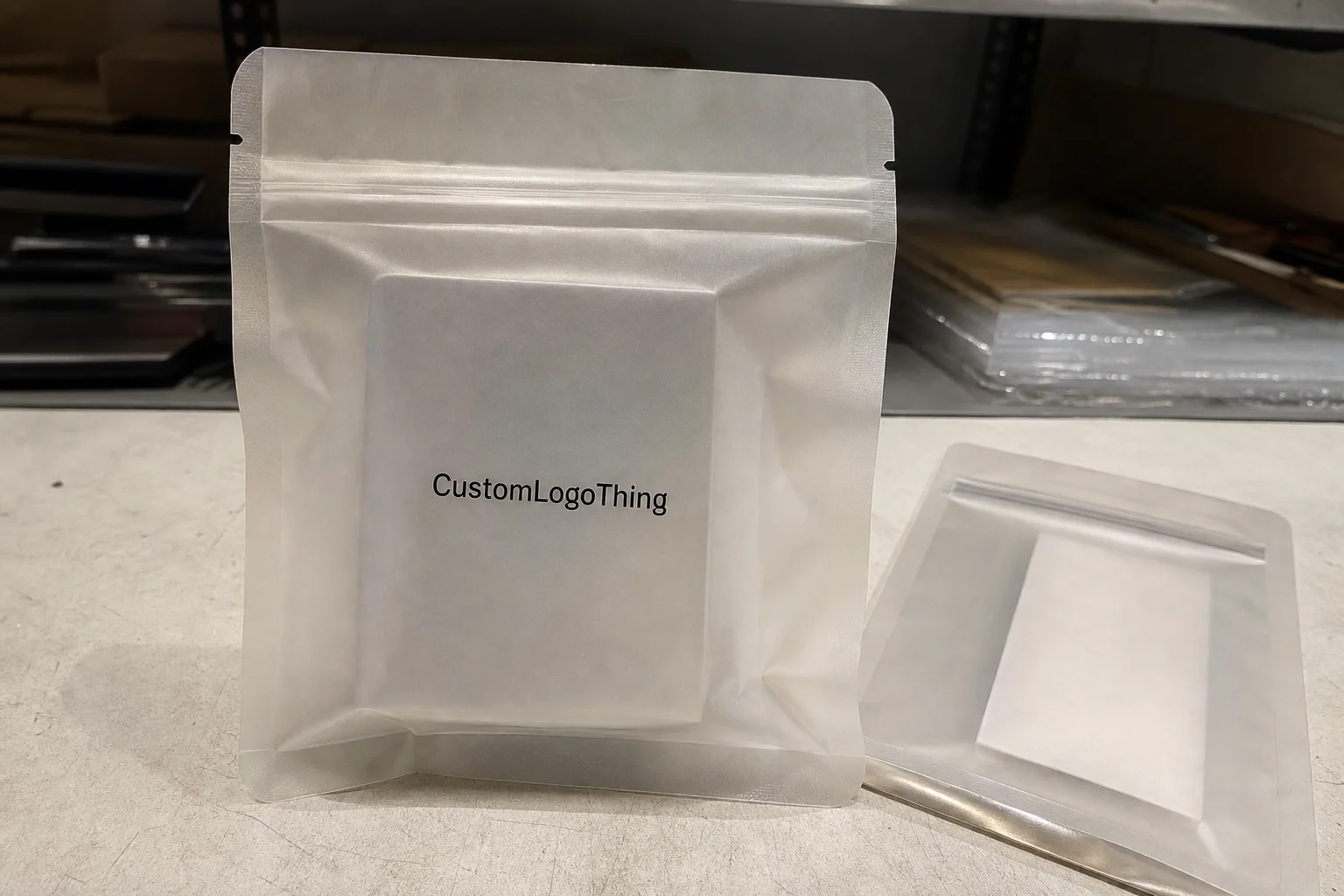
Frosted plastic changes how a package reads before it changes anything else. Under store lighting, a clear bag can look busy because it exposes every seam and internal component. Frosted film filters that view enough to make the logo, product name, and core message easier to read. That small visual shift can make a simple pack look more intentional.
Skincare teams use these bags for sample sets, retail gift bundles, subscription inserts, and promotional kits. Each use case needs a different balance of visibility, protection, and presentation. Frosted film is useful because it can work across those formats without forcing the brand into a heavier structure.
Compared with clear film, frosted bags trade some visibility for better control over the overall look. That trade is valuable when the contents vary, the insert is printed, or the kit contains multiple pieces that would otherwise look cluttered.
The value is not in the frost alone. It comes from the way finish, thickness, and print treatment work together to support the brand story.
The perception effect is easy to underestimate. A bag can be structurally similar to a cheaper one and still feel different because of finish. Buyers notice that immediately, and consumers usually feel it before they can name it. In packaging, that is often enough.
For kits that will be shipped or inserted into larger cartons, transport stress matters too. If the pack may face compression or vibration, the profiles used by ISTA are a sensible reference point. The bag may not be the fragile item, but it still has to survive the same logistics path as the products inside it.
Material options, finish levels, and print methods that affect appearance
The base film matters as much as the finish. LDPE is common because it is flexible, soft in hand, and usually easier to price. HDPE has a crisper feel and can hold shape better, which some brands prefer when they want a neater silhouette. Blended films are used when the buyer needs a compromise between cost, strength, and appearance.
Frost level changes the result more than many mockups suggest. Light frost keeps the bag close to transparent and works when the contents should still be seen clearly. Medium frost diffuses the view and usually gives the most balanced premium effect. Heavy frost creates more privacy and a stronger matte look, but it also hides fine interior details.
Print method has a direct impact on the final look. One-color flexographic printing is often the most efficient choice for simple logos, product names, or short brand marks. Multi-color decoration creates more room for branding, but it adds setup complexity and cost. Fine lines, pale colors, and low-contrast type can disappear faster on frosted film than on clear film.
Surface treatment also matters. Corona treatment or an equivalent prep step can improve ink adhesion and reduce scuffing. If the artwork includes tight registration or small type, that should be addressed in the quote stage rather than after approval.
Closure style affects both function and cost. Heat-sealed bags are simple and inexpensive, but they are not reusable. Zip closures add convenience and a more complete feel for travel sets or products that may be opened more than once. Die-cut handles, hang holes, and euro slots all add small amounts of tooling or forming complexity that matter in a quote.
Film clarity, haze, and odor should also be discussed. A bag that smells sharp on opening can undermine the perceived quality of a skincare set even if the print and structure are correct. If the bag will sit near creams, serums, or retail testers, ask about odor control and storage conditions.
For durability screening on shipped kits, a buyer can also reference the handling logic behind standard transit testing. The bag should be considered part of the logistics system, not just a presentation layer.
Specifications buyers should lock before requesting samples
The best sample request starts with a locked spec sheet, not a vague idea. If the width is still changing, the closure is undecided, and the print area is approximate, the sample will answer the wrong question. It might look good while still failing the pack-out line.
Size should be based on the actual contents, including any insert card or divider. A serum bottle is not just a bottle; it has a cap, a label, and enough clearance to avoid rubbing the film. A bundled set with tubes, sachets, or a folding leaflet needs internal space planning that accounts for hand loading or machine loading. A few millimeters can change the result from tidy to cramped.
Thickness deserves close attention. Thin bags reduce cost, but they stretch more easily, wrinkle under load, and can feel flimsy in hand. Heavier gauges add body and usually improve puncture resistance. For skincare uses, common ranges are often around 60 to 120 microns, depending on the size of the bag, the contents, and whether the pack is disposable or meant to be reopened.
Before sampling, buyers should confirm the following:
- Bag dimensions: final or near-final measurements with tolerance allowances.
- Film choice: LDPE, HDPE, or blended film based on feel and load requirements.
- Frost level: light, medium, or heavy, depending on visibility and privacy needs.
- Print plan: number of colors, artwork placement, and any special effects.
- Closure type: heat seal, zipper, adhesive strip, or other fastening method.
- Use case: sample kit, retail gift set, subscription insert, or promotional pack.
Compliance and handling questions belong in the first conversation. Ask about ink safety, odor control, storage conditions, and whether the supplier has experience with cosmetic-adjacent packaging requirements. If the bag will sit near formulas or directly around product containers, scuff resistance matters as well.
Tolerance control is another detail that separates a serious quote from a casual one. If the bag has to fit a carton, insert, or hanger system, say so explicitly. Suppliers can quote more accurately when they know the acceptable variance. If they do not know the tolerance, they are guessing.
The goal is to make the supplier quote the actual packaging job, not their interpretation of it. The more precise the brief, the more useful the pricing and the sample feedback.
Pricing, MOQ, and quote variables that move unit cost
The main price drivers are predictable once you have seen a few quotes. Bag size, film grade, thickness, print coverage, color count, closure type, and special forming features all add cost in different ways. Some are material costs. Some are setup costs. Some are labor.
MOQ is usually tied to setup economics. A factory has to absorb plate creation, proofing, changeover time, and waste. Smaller orders do not spread those costs very far, so the unit price rises. Larger orders lower the unit cost, sometimes sharply. What often surprises buyers is how much the price changes when they move from a simple one-color logo to a full-coverage decorative print.
| Option | Typical MOQ | Indicative unit price | Best for | Notes |
|---|---|---|---|---|
| LDPE frosted bag, one-color print | 3,000-5,000 pcs | $0.11-$0.18 | Launch kits, sampling programs | Good balance of cost and presentation |
| HDPE frosted bag, simple branding | 5,000-10,000 pcs | $0.13-$0.22 | Light retail use | Crisper hand feel, less soft than LDPE |
| Thicker frosted bag with zipper | 5,000 pcs and up | $0.18-$0.32 | Reusable kits, premium sets | More structure and a more complete user experience |
| Multi-color custom print | 10,000 pcs and up | $0.24-$0.38 | Brand-led retail programs | Higher setup cost and tighter artwork control needed |
Those numbers are indicative, not fixed. A larger format, a heavier print area, or a custom zipper can move the quote quickly. Freight terms matter too, and buyers often compare factory pricing with landed pricing as if they were the same thing. They are not.
Ask for a line-by-line quote. Tooling fees, plate charges, sample charges, packing standards, and shipping terms should all be visible. If a supplier quote looks unusually low, check what is missing. Inspection, color matching, or export packing are often hidden. A low number without those details is not savings.
If you need to compare multiple suppliers, send identical specs and ask for identical quote formats. Once one vendor quietly adjusts thickness, another lowers print coverage, and a third excludes freight, the numbers stop meaning the same thing.
Process and timeline from artwork approval to shipment
The production sequence is usually straightforward: brief intake, spec confirmation, artwork review, proof approval, material preparation, printing, curing or drying, bag forming, inspection, and shipment. The delays come from missing information, slow artwork approvals, and late changes to size or finish.
Sampling and mass production are separate stages. A clean sample does not shorten the manufacturing clock unless the factory already has the right materials and tooling in place. Most delays happen early. A dieline might not match the target bag size. A logo file might need rebuilding. The frost level might still be undecided.
For a simple frosted bag with limited print, a common production window after proof approval is roughly 12 to 18 business days. More complex work, especially with multiple colors or custom closures, can take longer. Sampling often adds 5 to 7 business days before the order moves into full production.
Inspection is not a formality. It is where color drift, seal weakness, registration errors, and inconsistent frost treatment are caught before the shipment leaves. A supplier should be able to explain what is checked in process and what is checked at final pack-out.
Rush orders are possible in some cases, but they narrow the room for corrections. The more demanding the timeline, the more the spec has to be finalized before production begins. In practice, that means fewer artwork changes, less back-and-forth on samples, and no ambiguity about thickness or closure type.
For ecommerce or retail chain distribution, shipping stress is part of the equation. A bag that looks acceptable on a desk can still fail after compression, vibration, or repeated handling. That is why the bag should be treated as a component of the logistics system, not just the brand layer on top of it.
How to request a skincare frosted plastic bags supplier quote that gets answered fast
If the goal is a useful quote, send a complete brief the first time. Include the final or target dimensions, estimated order quantity, print colors, closure type, target frost level, and shipping destination. If the bag is for retail, say that. If it is for a sampler kit or subscription insert, say that too.
Reference images help because they reduce translation loss. A supplier can interpret the finish level, color density, and general presentation direction faster when they can see an example. That does not mean copying another brand. It means converting a visual target into a manufacturable spec.
The best buyer briefs also force internal alignment. Marketing may want a more polished finish. Operations may need a bag that loads faster on the line. Finance may want a lower MOQ. A good quote does not erase those tensions; it makes the tradeoffs visible so the team can decide where to spend and where to simplify.
Here is the short checklist that tends to produce the cleanest response:
- Final bag dimensions or a target item list for sizing
- Estimated quantity and expected reorder volume
- Film preference, thickness target, and frost level
- Print colors, artwork files, and format requirements
- Seal type, handle style, and any closure requirement
- Target launch date and shipping destination
With those details in hand, a supplier can quote the right structure instead of guessing. That makes it easier to see who is actually pricing the same build and who is quietly changing the spec to hit a lower number. If one quote looks better than the others, the first question should always be: what changed?
The strongest skincare frosted plastic bags supplier quote is the one that matches the actual packaging job, not the one with the lowest line item. Packaging usually fails through omissions, not intent. A complete brief is how you avoid that.
FAQ
What details should I include in a skincare frosted plastic bags supplier quote request?
Include bag dimensions, thickness, quantity, print colors, closure style, handle style, frost level, and shipping destination. If the bag has to fit a carton, insert card, or retail hanger, include those dimensions too.
What MOQ is typical for frosted plastic bags for skincare?
MOQ depends on size, print count, and whether the bag needs custom tooling. Smaller runs are possible, but the unit cost is usually higher. Many buyers get better pricing once the order moves into the mid-thousands.
How long does production usually take after artwork approval?
For a simple order, the window after proof approval is often around 12 to 18 business days. Sampling can add another 5 to 7 business days before production starts. Complex prints, custom closures, or late revisions extend the timeline.
Can frosted bags carry detailed skincare branding?
Yes, but detailed artwork needs more care on frosted film than on clear film. Thin lines, pale colors, and low-contrast type may need adjustment. If the logo is delicate, ask for a physical sample before mass production.
How do I compare two supplier quotes accurately?
Compare the full spec, not just the total price. Look at material grade, bag size, print method, MOQ, sample cost, lead time, and shipping terms. If one quote omits setup, inspection, or freight, the comparison is not clean.


