What a Restaurant Trucker Caps Factory Quote Should Prove
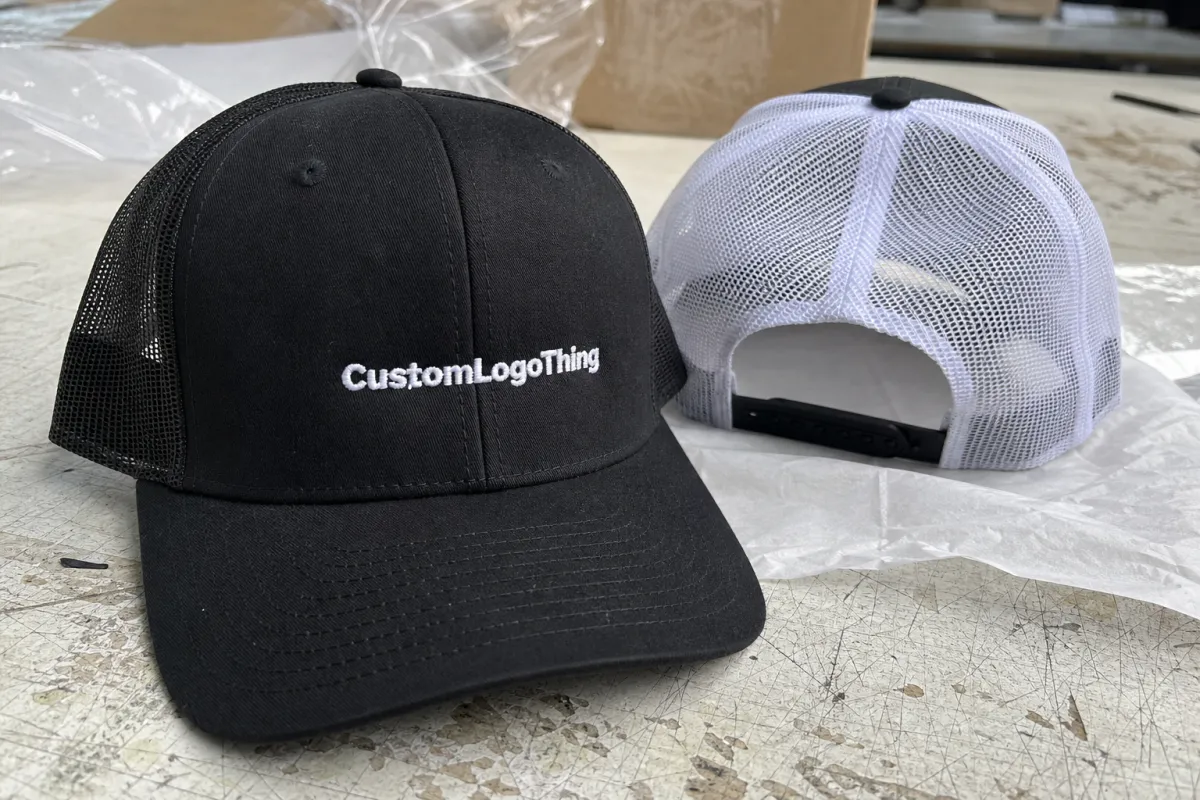
Five locations. One opening weekend. Eighty-seven staff members, plus managers, kitchen floaters, delivery drivers, and a few extra caps for hires who appear after the uniform count has already been approved. Buyers searching for a restaurant trucker Caps Factory Quote are usually not browsing for a casual hat; they are trying to lock cost, timing, and brand consistency before a small uniform item becomes visible at every counter, pickup window, and customer photo.
A vague cap quote can look harmless at first: “custom trucker hat with logo, $4.20 each.” Then the exclusions show up. Embroidery digitizing is extra. Freight is not included. The logo was priced as one color, although the artwork has two. Rush production depends on blank cap availability. The front panel cannot hold the logo height shown in the mockup. That is not a dependable quote; it is a placeholder with a price attached.
Restaurant trucker caps carry more visual weight than their size suggests. They sit at eye level during a lunch rush, move through dining rooms and patios, appear in handoff photos, and often remain in use for months. A printed takeout bag may be handled for 15 minutes. A menu insert may last until the next price update. A staff cap can reinforce the same logo shift after shift, provided the cap looks clean, fits properly, and survives normal restaurant handling.
A useful factory quote should confirm the cap style, front panel material, mesh type, crown structure, decoration method, color matching approach, MOQ, sample policy, production lead time, packing method, and freight terms. If those items are missing, the price cannot be compared fairly against another supplier.
Buyer rule: if two quotes do not define the same cap construction, decoration method, packing format, and delivery point, the lower unit price may not be lower at all.
The goal is not to bury a buyer in technical language. It is to remove the soft spots that create later cost: unclear logo execution, surprise add-ons, crushed crowns in transit, and delivery assumptions that fail one week before launch. For restaurant buyers, those details are often where the real savings sit.
Cap Styles That Fit Restaurant Staff, Merch, and Promotions
Restaurant caps do not all solve the same problem. A food truck crew working in summer heat needs airflow and easy cleaning expectations. A coffee shop selling merch at the register may want a softer, cleaner fit that feels closer to retail apparel. A franchise group preparing opening kits needs repeatability: same shade, same front shape, same logo size, and the same packing logic across multiple stores.
The main use cases are employee uniforms, limited merch drops, opening kits, loyalty giveaways, catering teams, and food truck crews. Each one changes the specification. A giveaway cap can often use a simpler foam front and a one-color print. A daily front-of-house uniform cap usually needs a better sweatband, a structured crown, and decoration that stands up to repeated handling.
| Cap Type | Best Restaurant Use | Typical Advantages | Cost Position |
|---|---|---|---|
| Foam trucker cap | Food trucks, diners, promos, event giveaways | Retro look, light weight, strong base for bold printed logos | Often lower cost for larger promo runs |
| Cotton-front mesh cap | Daily staff uniforms and casual merch | Breathable mesh with a more retail-ready front panel | Moderate, depending on fabric and embroidery |
| Performance mesh cap | Patio staff, catering crews, outdoor service | Better moisture management and airflow | Moderate to higher |
| Premium structured cap | Front-of-house teams and upscale merch | Sharper shape, cleaner logo presentation, stronger perceived value | Higher, especially with patches or private labeling |
Closure choice deserves more attention than it usually receives. Snapbacks reduce sizing complexity and work well for restaurants with seasonal turnover. Hook-and-loop closures adjust quickly, though they can collect lint and hair. Fitted caps look cleaner, but they create allocation problems unless the restaurant has stable staff and accurate size data. Metal buckle closures can feel more polished for merch, yet they are slower for high-turnover uniform programs.
Brand tone should guide the cap before price does. Retro foam fronts fit diners, taco trucks, and burger concepts. Washed cotton fronts suit bakeries, cafes, and farm-driven restaurants. Bold two-tone caps work for sports bars and quick-service brands that want high contrast from 20 feet away. Minimalist caps feel more natural for coffee shops, wine bars, and modern casual dining.
There is a practical test: match the cap to average ticket, service style, and dress code. A $48-per-person restaurant may not want the same cap as a $9 sandwich counter. Not always, but often enough that the cheapest blank can quietly cheapen the room.
Decoration Options: Embroidery, Patches, Printing, and Labeling
Decoration is where many cap quotes start to wobble. The cap body may be simple. The logo is not. A good restaurant trucker caps factory quote explains how the logo will be applied, what that method can handle, and whether decoration is included in the unit price.
Flat embroidery is the reliable workhorse for clean restaurant marks. It suits simple typography, icons, and one-to-three-color logos. 3D puff embroidery adds height and visibility, but it needs bold shapes with enough spacing between letters. Tiny text collapses quickly. A 5 mm letter may look crisp on screen and muddy in thread, especially on a curved front panel.
Woven patches handle small details better than direct embroidery because the design is woven into the patch surface before attachment. Leatherette patches create a warmer, more premium look for smokehouse, coffee, steakhouse, and bakery branding, but they should be reviewed carefully for heat exposure and cleaning expectations. Rubber patches work for bolder streetwear-style merch. Sublimated patches can reproduce gradients, mascot art, and multi-color illustrations that would be expensive or impossible to stitch cleanly.
Printing has a place, particularly on foam fronts. Screen printing can be cost-efficient for simple runs with bold artwork. Heat transfer can reproduce detail, although the hand feel, edge durability, and long-term appearance should be checked if the cap is intended for daily staff use rather than a short promotion.
Logo Placement Choices
Front center is the default because it reads quickly across a counter. Side panel logos add a secondary brand cue without competing with the main mark. Back arch embroidery can carry a website, city name, or short slogan. Closure tab branding and interior labels matter more for retail merch than staff uniforms, but they can help if the restaurant plans to sell caps at $18 to $32 each.
Restaurant conditions are not gentle. Sauce splashes, grease vapor, humid kitchens, outdoor service, and fast employee handling all affect thread choice, patch backing, edge finish, and placement. A cap worn on a patio in July has different demands than one sold as merchandise and worn twice a month.
Common quote variables include stitch count, patch size, number of colors, thread type, backing material, merrowed or heat-cut edges, and whether the decoration charge is built into the unit price. Ask for a digital proof at minimum. For larger rollouts, a physical pre-production sample is the safer route because logo scale, thread color, patch position, and crown shape can be judged before bulk production starts.
If you are comparing decoration options before approving a run, send the artwork and target quantity through Contact Us. A brief production review can keep a $0.40 savings from turning into a full-order rework.
Specifications Buyers Should Confirm Before Approving a Cap Order
A cap specification should be boring in the best possible way: clear, measurable, and repeatable. The buyer should know the panel count, crown height, brim shape, front fabric, mesh material, sweatband quality, closure type, interior taping, and approximate cap weight before approving the order.
Structured versus unstructured is a practical decision, not a style debate. Structured caps hold their shape better, which helps logos stay visible in customer-facing roles. Unstructured caps feel softer and more relaxed, which may suit cafes, breweries, or staff merch. A high-profile structured trucker cap can make a logo appear larger and sharper. A low-profile unstructured cap may feel more wearable, but it gives the logo less presence.
Color matching needs discipline. Standard stock colors are faster and usually cheaper. Custom-dyed fabric or mesh can be useful for strict franchise branding, but it often requires higher minimums and more lead time. If the restaurant uses a defined color system, provide Pantone references. If not, approve a physical color reference instead of relying only on a screen image.
Durability checks should cover seam strength, brim recovery, mesh tension, sweatband comfort, decoration adhesion, and packing method. Crushed crowns are common when caps are packed too tightly or cartons are poorly chosen. For multi-location restaurant orders, carton integrity matters almost as much as decoration quality because damaged caps can delay store allocation even when the product itself was made correctly.
- Front panel: foam, cotton twill, polyester, canvas, or performance fabric.
- Mesh: standard polyester mesh, softer mesh, or performance mesh with better airflow.
- Sweatband: basic cotton, moisture-wicking, or upgraded comfort band.
- Closure: snapback, hook-and-loop, metal buckle, or fitted sizing.
- Packing: bulk packed, individual polybagged, or location-sorted cartons.
Restaurants also need comfort and compliance thinking. Caps may support hair restraint policies, but they do not replace every food safety requirement. Local rules and role-specific policies still matter. For packaging and handling teams, standards such as ISTA transport testing are a useful reminder: products can fail in distribution even after they pass production checks.
The cleanest move is a one-page spec sheet. Put the assumptions in writing. Then every competing quote can be measured against the same cap, the same logo, the same packing method, and the same delivery expectation.
Pricing, MOQ, and Unit Cost Variables for Custom Trucker Caps
Price is not one number. It is a stack of order quantity, cap construction, decoration method, logo complexity, color customization, sample needs, packing, freight, and deadline pressure.
For stock-style decorated caps, buyers may see lower starting quantities because the blank cap already exists. Fully custom builds, custom mesh colors, private labels, special patches, and custom sweatbands usually push the MOQ higher. That is normal factory logic: material purchasing, setup time, and production scheduling need enough volume to make sense.
A transparent restaurant trucker caps factory quote should break out setup or digitizing, sample fee, unit price, decoration cost, packaging, inland freight, international freight, duties if applicable, and rush charges. If the supplier gives only a single number, ask what is inside it. Ask what is outside it as well.
| Cost Driver | What Changes the Price | Buyer Control |
|---|---|---|
| Order quantity | Higher quantities spread setup and production overhead | Request 3 to 4 quantity breaks |
| Decoration | Stitch count, patch mold, number of colors, placement count | Simplify small text and reduce extra locations |
| Cap construction | Foam front, cotton twill, performance fabric, structured crown | Choose stock styles where brand rules allow |
| Packing | Bulk cartons, individual bags, location sorting, carton labels | Use location sorting only where it saves labor |
| Timeline | Rush production and faster freight raise total landed cost | Approve specs early and avoid late artwork changes |
Typical decorated stock cap pricing varies widely. A simple one-color embroidered trucker cap at a moderate quantity may sit in a very different range than a premium structured cap with a woven patch, custom inside label, and location-sorted packing. The honest answer is that the number depends on the build. A realistic factory quote makes that dependency visible instead of hiding it behind a neat unit price.
The cheapest quote often excludes the expensive details: embroidery setup, patch molds, carton labeling, split shipments, or delivery to five restaurant locations instead of one receiving point. A complete quote may look higher on the first line and lower after accounting for rework, freight corrections, and staff time.
Restaurants can lower unit cost responsibly by consolidating location orders, using stock colors, reducing logo complexity, and planning ahead. If the staff-only order is 120 caps, ask for pricing at 150, 250, and 500. The step from uniform inventory to staff-plus-merch may improve the economics enough to justify a small retail program, but only if the cap quality supports the resale price.
Process and Timeline From Artwork Review to Delivery
A factory order has a rhythm: inquiry, artwork review, quote, material confirmation, digital proof, sample approval, bulk production, quality inspection, packing, freight, and delivery. Skip a step and the risk does not disappear. It usually moves closer to the deadline.
Before requesting a restaurant trucker caps factory quote, prepare the vector logo, Pantone colors if available, target quantity, cap style preference, delivery address, required arrival date, and any franchise brand rules. A logo pulled from a social media profile may be enough for a rough discussion, but it is not production artwork. Clean embroidery and patch production need proper files.
Stock cap decoration is usually the fastest path because blanks are already made. Semi-custom caps may adjust colors, labels, or decoration details while keeping the core cap style stable. Fully custom manufacturing takes longer because materials, panels, closures, decoration, samples, and production slots all need coordination.
Approval bottlenecks are predictable. Someone cannot find the Pantone reference. The logo file has gradients that do not translate into thread. The restaurant changes from 200 caps to 420 after the first quote. A regional manager adds two ship-to addresses late. Each change may be small, but together they create avoidable delay.
Digital proofs move quickly and are useful for checking placement, approximate scale, and logo interpretation. Physical samples reduce risk for premium merch, franchise rollouts, or high-visibility openings. Pre-production samples are the safest option when the same cap will be reordered later and brand consistency matters.
Timeline planning is cost control. Rush freight can erase the savings from a low unit price. Rework is worse. If a cap order is tied to a grand opening, catering contract, or seasonal uniform change, build in review time before the production clock starts.
Factory Controls That Reduce Restaurant Uniform Risk
Trust claims are easy to make. Controls are more useful. A factory should use artwork checks, material confirmation, decoration testing, size and placement tolerances, in-line inspection, final random inspection, and clear carton labeling. These steps are not glamorous, but they prevent visible problems.
Restaurants with multiple locations need consistency across reorder cycles. A group opening three stores over six months cannot have one batch of caps with a tall crown, the next with a softer front, and a third with a noticeably different red thread. Color drift happens. Material substitutions happen. Documented specifications reduce the damage.
Approved samples, thread references, Pantone targets, patch dimensions, and logo placement measurements give the next order a baseline. Without that baseline, every reorder becomes a fresh interpretation of the brand. That is risky for restaurant groups that depend on a uniform look across locations.
Distribution details also deserve attention. Individual polybagging can keep caps cleaner during store allocation. Adjustable closures simplify size-free distribution. Location-based carton marks help managers receive the right quantities without opening every box. Packing lists matter when one order ships to a headquarters, three restaurants, and a pop-up event.
Factory-direct communication can reduce handoffs and shorten clarification loops on artwork, material choices, sample comments, and deadline pressure. It does not guarantee perfection. Nothing does. It does improve accountability because the specification and the production answer stay closer together.
Custom Logo Things supports restaurant buyers with quote clarity, production documentation, and decoration recommendations based on the job the cap needs to do. If a foam cap print is smarter than a complicated patch for a giveaway, that should be said early. If embroidery will flatten a mascot logo, that should be said before the sample is made. Practical limits are not obstacles; they are how a better order gets built.
For broader sourcing discipline, restaurant buyers can borrow thinking from responsible material programs such as FSC certification: document the requirement, verify the claim, and keep records that support the next order. Caps are not paperboard cartons, but the procurement habit is similar.
Next Steps Before You Request Your Factory Cap Quote
Start with the use case. Are the caps primarily uniform pieces, customer-facing merchandise, launch giveaways, or a mix of all three? That answer changes the cap body, decoration method, packing plan, and acceptable unit cost.
Build a simple quantity model before asking for pricing. Count current staff by location. Add spare inventory for lost or damaged caps. Include a new-hire buffer. Add event allocation if the restaurant has catering teams, pop-ups, or opening parties. If caps will be sold, separate resale quantity from staff quantity so margin can be evaluated cleanly.
- Choose the main use case: staff uniform, merch, giveaway, or mixed program.
- Estimate quantity by location, then add a practical buffer of spare caps.
- Select a preferred cap style, such as foam trucker, cotton-front mesh, or premium structured.
- Gather vector artwork and Pantone references if brand colors are controlled.
- Define the target arrival date and shipping destination.
- Decide whether a digital proof is enough or a physical sample is required.
Reference photos are useful, but they are not specifications. A photo may show the mood: retro diner, clean coffee shop, bold sports bar, polished franchise. It does not confirm crown height, mesh weight, sweatband construction, thread color, patch backing, or carton packing. The factory still needs to translate the reference into production details.
For the fastest response from Custom Logo Things, submit vector artwork, quantity, cap style, logo placement, target arrival date, shipping destination, and any brand standards through Contact Us. If the order serves multiple locations, include the location count and whether cartons need separate labels.
A strong restaurant trucker caps factory quote should help a restaurant make a buying decision, not force the team to decode missing assumptions. Ask for line-item pricing, production lead time, sample options, decoration details, MOQ, packing method, and freight assumptions in the same response. That is how restaurant teams avoid the expensive kind of cheap.
Frequently Asked Questions
What should be included in a restaurant trucker caps factory quote?
A complete restaurant trucker caps factory quote should list cap style, material, decoration method, quantity, MOQ, unit cost, setup fees, sample cost, production lead time, packing, freight, and delivery assumptions. It should also confirm whether embroidery digitizing, patch molds, carton labeling, and proofing are included or charged separately.
What is the typical MOQ for custom restaurant trucker hats?
MOQ depends on whether the restaurant chooses stock caps with decoration or fully custom manufactured caps. Stock decorated caps usually support lower quantities, while custom fabrics, custom colors, patches, labels, and private-label builds typically require higher minimums because more material and setup work is involved.
Which logo method is best for restaurant trucker caps?
Embroidery works well for clean, simple restaurant logos and durable daily staff use. Woven, rubber, leatherette, or sublimated patches are better when the logo has small details, gradients, mascot artwork, or a premium merch look. Foam cap printing is strongest for bold one-color designs.
How long does production take after approving a factory quote?
The timeline depends on cap availability, decoration method, sample approval, order quantity, and freight method. Buyers should allow extra time for artwork fixes, physical sample review, custom color matching, and delivery to multiple restaurant locations, especially if the caps are needed for an opening or event date.
How can restaurants reduce the unit cost of custom trucker caps?
Restaurants can lower unit cost by ordering at higher quantity breaks, using stock cap colors, simplifying logo decoration, consolidating location orders, and avoiding rush timelines. The best comparison comes from requesting several quantity tiers with the same specifications from the same supplier.