Why Embroidered Beanies Hold Value in Retail Merch
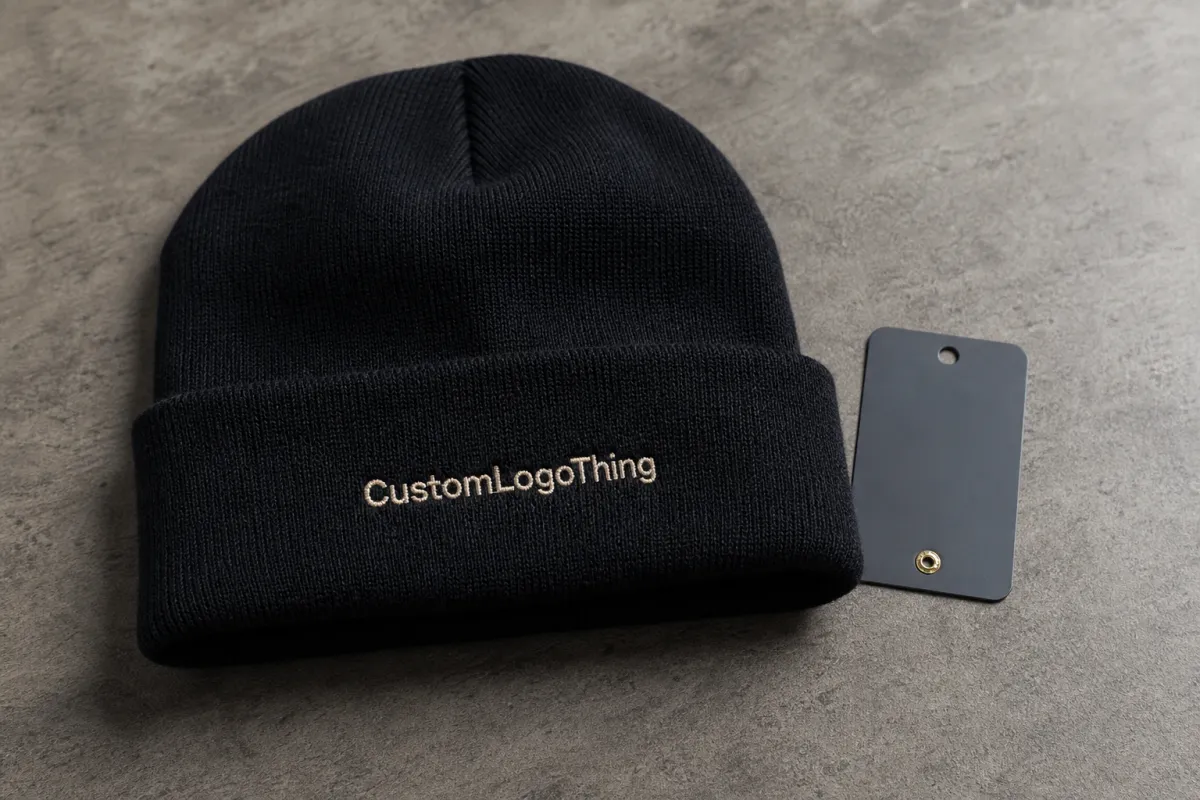
Embroidery tends to read as more premium because the logo sits into the knit instead of sitting on top of it. That matters for retail merch. A beanie gets worn hard, stuffed in bags, and seen from a distance. If the decoration looks cheap on day one, it will not magically improve after a few weeks on shelf.
Beanies also do a rare job in merchandising: they work for staff uniforms, fan drops, holiday bundles, and low-risk retail tests without feeling like a throwaway item. They are compact, easy to ship, and simple to size. That makes them useful for brands that need one product body to serve several channels. A good cuffed beanie can cover a value program. A denser rib knit with cleaner embroidery can sit comfortably in a more polished assortment.
The blank matters more than many buyers expect. Knit density, yarn quality, cuff structure, and crown shape all affect how clean the logo looks. A loose or fuzzy blank can make a sharp digitized file look sloppy. A tighter knit usually gives the embroidery a better edge and keeps the whole piece looking more intentional.
That is the real balancing act: not just picking a logo, but choosing a blank that supports the logo, the budget, and the sales plan.
Beanie Styles, Yarn Options, and Decoration Placements Buyers Actually Compare
Most buyers narrow the field quickly once they compare the main constructions. A cuffed rib knit is the safest starting point. It has a stable decoration zone, a familiar shape, and broad appeal. The cuff gives the embroidery a flatter surface, which usually means cleaner placement and better legibility.
Slouch beanies push the look more fashion-forward, but the drape changes where the logo lands. That can create a cool silhouette or a frustrating approval cycle. Fisherman profiles are short and punchy, which works well for small marks and streetwear programs. They do not give you much vertical space, so oversized artwork usually looks forced. Heavier gauge winter caps add warmth and a more substantial hand feel, though they can cost more and feel bulkier in packaging.
Yarn choice changes both comfort and price. Acrylic is common because it is predictable, cost-effective, and easy to source in volume. Acrylic blends can soften the hand feel or reduce itch. Cotton blends are more breathable, but they are less common for colder retail programs. Wool blends bring a stronger premium signal, yet they usually raise cost and can require tighter sourcing and labeling discipline.
Decoration placement changes the whole read. Center-front cuff embroidery is still the standard because it is visible, easy to produce, and easy to approve. Side placement feels quieter and can suit brands that do not want a loud logo. Patch applications help when the art is too detailed for thread or needs a crisp edge. Small marks often age better than huge ones on knits. The beanie moves. The logo moves with it.
| Beanie Style | Retail Look | Embroidery Fit | Typical Planning Cost per Piece |
|---|---|---|---|
| Cuffed rib knit | Classic, easy to merchandise | Best for center-front or side logo | $3.25-$6.50 at mid-volume |
| Slouch knit | Relaxed, fashion-led | Works best with moderate-size artwork | $4.50-$8.00 at mid-volume |
| Fisherman profile | Compact, premium streetwear feel | Limited vertical space, good for small marks | $4.00-$7.25 at mid-volume |
| Wool blend | Warmer, more elevated hand feel | Usually supports clean, simple logos | $5.50-$10.00 at mid-volume |
If the artwork is dense, a woven patch or a simplified embroidery version is often the smarter move. Forcing tiny type or hairline detail into a knit usually creates more problems than it solves. The product can still look premium. It just needs the art to respect the surface.
Spec Sheet Basics: Size, Gauge, Thread Count, and Artwork Prep
A clean spec sheet saves time, and it saves back-and-forth that no one needs. Before asking for pricing, confirm body width, crown depth, cuff height, knit gauge, stretch tolerance, and whether the beanie needs folding, tagging, or bagging. Those details sound minor. They are not. They decide whether the order feels retail-ready or just shipped.
Artwork prep matters just as much. Vector files in AI, EPS, or a clean PDF give the digitizer a usable starting point. Strong line weights help. Fine lines, tiny counters, and delicate scripts often disappear or distort once they hit thread. A logo that looks elegant on screen may need simplification to survive on a knit surface.
Thread count and stitch density affect both finish and cost. Dense logos usually look cleaner on beanies because the thread fills the shape without drifting across the knit. Oversized art can work, but it often needs fewer tiny details and a bit more breathing room so the fabric does not pucker. That is not a defect. It is the material talking back.
- Confirm placement: center-front, side, or back of cuff.
- Set the size early: a 2.5 inch logo and a 3.5 inch logo are different jobs.
- Share color references: use PMS values where brand matching matters.
- Choose the finish: direct embroidery, patch, or woven label accent.
Color matching deserves a realistic conversation. Knit yarn and embroidery thread do not always match a brand standard exactly, even in a careful production run. Close is often good enough on textured goods. Exact matching is sometimes possible, but it can raise cost or extend lead time. Buyers who expect a flat, perfect swatch match on a knit surface usually end up disappointed.
Gauge matters too. A tighter gauge can support cleaner edges and smaller type. A looser gauge may feel softer, but the logo needs more care. If the beanie fabric has visible stretch or uneven texture, the design has to be built with that in mind.
Retail Merch Beanies Embroidery Cost Guide: Pricing, MOQ, and Quote Drivers
This is the part most buyers want first: what actually drives the price. A useful Retail Merch Beanies embroidery cost guide breaks the quote into parts instead of hiding everything in one unit number. The main buckets are the blank beanie, digitizing or setup, embroidery labor, packing, and any retail labeling or special presentation requirements.
For direct embroidery, a one-time digitizing charge is common. It often lands somewhere around $25-$120, depending on complexity and how much cleanup the logo needs. A simple one-color mark is cheap to digitize. A detailed logo with small copy, outlines, and multiple elements takes more time. If the decoration shifts to a woven patch, molded emblem, or custom packaging component, expect additional setup or tooling fees.
Quantity changes the math fast. A 100-piece order carries a much heavier share of setup cost than a 1,000-piece order with the same artwork. That is why small test runs look expensive. The machine time, proofing, and production management still have to happen either way. There is no magical shortcut hiding in the background.
MOQ is not fixed across every beanie body. It changes with blank availability, yarn type, color selection, and decoration method. A supplier may accept a lower minimum for a stock acrylic cuffed beanie and a higher one for a wool blend or a custom patch program. The right minimum is the one that matches the sell-through plan, not the one that looks best in a headline.
The lowest quote can become the most expensive order if the beanie pills early, loses shape, or makes the logo look tired after one season.
| Order Size | Typical Setup Impact | Common Cost Per Piece | What Usually Changes |
|---|---|---|---|
| 100-150 pcs | High setup spread | $5.50-$10.50 | Digitizing, packing, and low-volume labor |
| 250-500 pcs | Moderate setup spread | $3.75-$7.25 | Better bulk pricing and more efficient production |
| 1,000+ pcs | Low setup spread | $2.75-$5.50 | Lower unit cost, but tighter art and packout control |
Simple logos with one to three thread colors usually stay easier to price and easier to repeat. More thread changes, larger coverage areas, and specialty placements push the quote up because they take more machine time and more inspection. That is the basic shape of the pricing. The blank is only the starting point.
Packaging can surprise buyers. A polybag, size sticker, barcode label, hang tag, or shelf-ready fold may only add a little to the unit price, but together they change labor and packout enough to matter. If the beanie needs to land retail-ready, build that into the quote from the start.
Embroidery Process and Timeline From Art Approval to Delivery
The production path is usually straightforward. The timeline is what gets messy. It starts with the quote request, then art review, digitizing, proof approval, sample or pre-production check, bulk embroidery, quality inspection, packing, and shipment. Each step adds control. Each step also creates a chance for delay if approvals stall.
For standard retail beanies with stock blanks already on hand, a typical timeline is often 12-15 business days after proof approval. If the order needs custom labeling, special folding, or an exact carton count, add time. If the blank color has to be sourced, add more. Rush orders can happen, but they usually cost extra because they compress inspection time and interrupt planned production.
The biggest delays are usually simple: missing artwork, unclear placement, late color approval, or a change after the proof is already signed off. Buyers sometimes assume a small tweak will not matter. It often does. Even a minor shift can force a new stitch file and a new review. A clean first submission saves more than a fast apology later.
If the launch date is tied to a retail floor set, event, or online drop, say so early. Clear deadlines help the supplier decide whether the job fits standard production, needs a faster lane, or should move to a different blank that is already in stock. For shipping plans, carton handling, and multi-stop distribution, it is smart to reference ISTA test methods when the order will move through several hands before reaching shelves.
If the program includes paper hang tags or inserts, FSC-certified material is an easy sourcing choice that keeps the retail story cleaner. It will not change the embroidery itself, but it does make the packaging side easier to defend.
One practical point: deadlines should include proof approval time on the buyer side. A supplier cannot control a design team that takes three days to answer a simple thread question. That lost time still counts.
Quality Control Checks That Protect Retail Orders
Retail beanie orders live or die on consistency. Stitch coverage should be full without turning the knit into a stiff block of thread. Tension needs to stay even so the logo does not pull the cuff out of shape or leave visible puckering. Placement should stay centered across size variation, because a design that looks fine on one cap can drift on another if the blank tolerance is loose.
A pre-production sample matters because it shows how the blank and the stitch file behave together in real life. That is especially true for retail programs, where a small placement error or color shift can affect the whole run. Buyers sometimes treat samples like delay. They are insurance. Cheap insurance, compared with redoing hundreds of units.
There are a few checks that should never be skipped. Confirm thread colors against approved references. Review the trim so loose threads do not sit on the product. Check fold consistency so the beanie presents the same way across the pack. Verify carton counts and barcode placement before shipment. If the retailer has a packaging spec, keep it with the purchase order so nobody is guessing later.
Good defect prevention is mostly discipline. Request photos during production if the order is large. Approve the actual decoration location, not just the digital mockup. If the product needs to arrive shelf-ready, packing is part of the product. It is not an afterthought. A beautiful logo in a badly packed carton still creates problems for the buyer.
The best retail runs usually look boring on the quality sheet. That is the point.
Next Steps for a Faster, Cleaner Beanie Quote
If you want a cleaner quote, send the essentials together: target quantity, logo file, preferred beanie style, thread colors, placement, packout needs, and delivery date. That one step removes a lot of guessing. It also helps the quote reflect the actual job instead of a placeholder version of it.
Ask for two options if possible. A value-driven version and a more premium version make the tradeoff visible. Sometimes the better-looking beanie only adds a small amount to the landed cost, which can make sense for retail-facing merch. Other times the lower-cost option protects margin without hurting presentation. The right answer depends on the channel, not on a generic budget target.
Confirm the retail constraints up front. Barcode labels, assortment splits, folded presentation, bagged units, and shelf-ready carton counts should all be discussed before production starts. If those details show up later, the order can still move forward, but the unit cost and timeline usually shift with them.
That is the practical version of a Retail Merch Beanies embroidery cost guide: know the blank, know the decoration, know the packout, and know the deadline. Send the specs, art, and quantity together, and the quote gets sharper. The production plan gets easier. The final beanie has a better shot at selling through without drama.
Frequently Asked Questions
What affects retail merch beanies embroidery cost the most?
Stitch count, logo size, and the number of thread color changes usually have the biggest impact on price. The blank beanie style, order quantity, and any retail packaging requirements can also move the quote up or down. A clean vector logo with a simple placement is usually the easiest way to control cost.
What MOQ should I expect for embroidered retail beanies?
MOQ depends on the beanie style, color, and decoration setup, so there is not one fixed number for every order. Custom embroidery usually carries a higher minimum than a blank beanie order because setup and labor need to be spread across units. If you are testing a new retail program, ask for quantity breakpoints so you can see where the unit cost improves.
How long does the embroidery process usually take for beanies?
The timeline depends on art approval speed, whether digitizing is needed, and whether inventory is already on hand. Simple orders move faster than complex designs with special labeling or packaging. If the delivery date is tied to a launch or event, share it early so the production plan can match the deadline.
How many thread colors can I use before the price changes?
More thread colors can increase setup time and make the embroidery process more complex. The impact depends on whether the design needs frequent color changes or only a few clean accents. A simplified color plan often keeps the logo readable and the quote more efficient.
What file do you need for a retail merch beanies embroidery quote?
A vector file is best, such as AI, EPS, or PDF with clean outlines. Include the approximate logo size, placement, color references, and target quantity so the quote is accurate. If the art is not finalized, a rough file still helps the team estimate stitch count and pricing.

