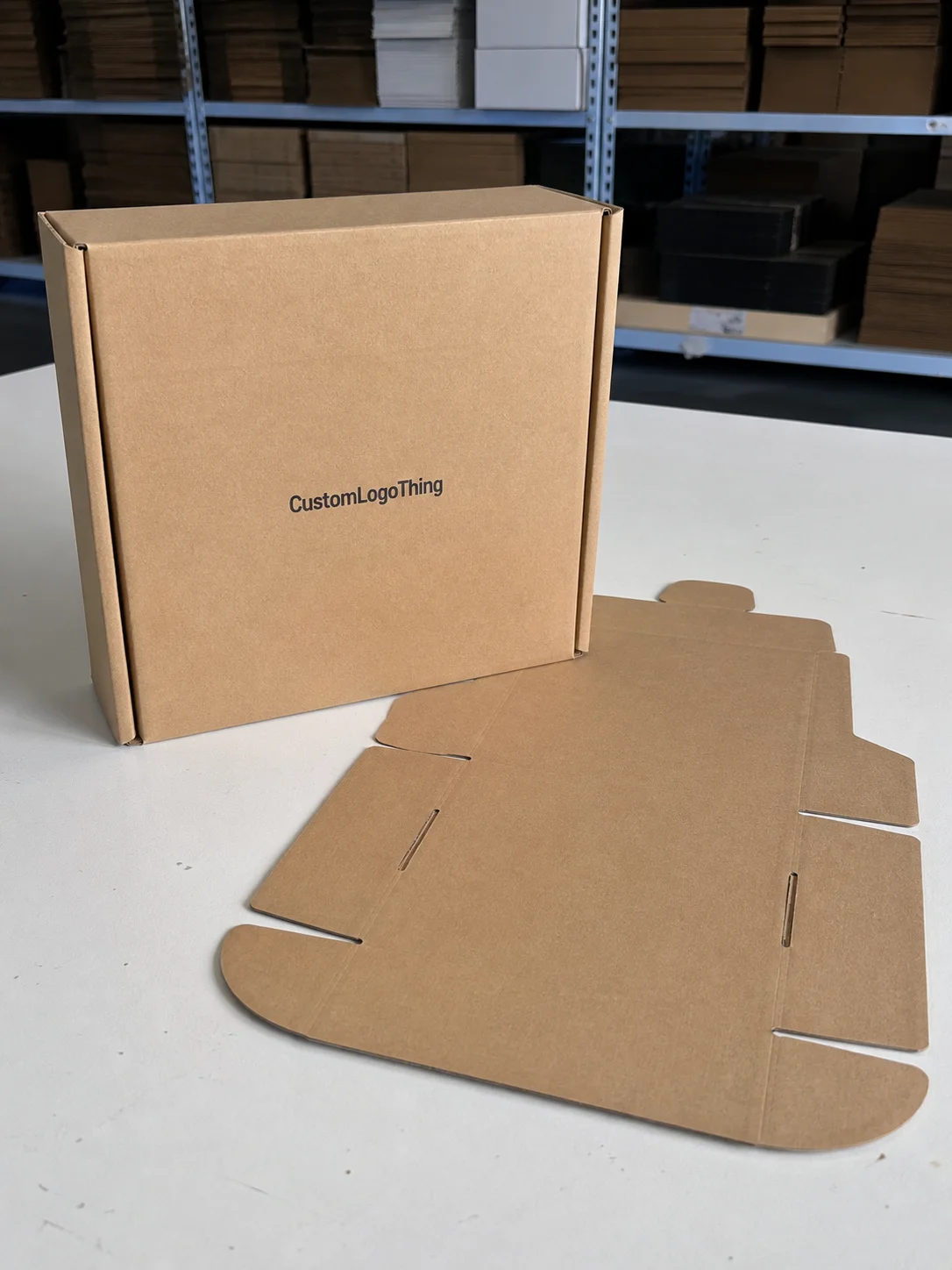
Buyer Fit Snapshot
| Best fit | Retail Packaging Supplier projects where brand print, material claims, artwork control, MOQ, and repeat-order consistency need to be specified before quoting. |
|---|---|
| Quote inputs | Share finished size, material target, print colors, finish, packing count, annual reorder estimate, ship-to region, and any compliance wording. |
| Proofing check | Approve dieline scale, logo placement, barcode or warning zones, color tolerance, closure strength, and carton packing before bulk production. |
| Main risk | Vague material claims, crowded artwork, missing packing details, or unclear freight terms can make a low unit price expensive after revisions. |
Fast answer: Retail Packaging Supplier: Artwork Proof, Packing Count, and Landed Cost should be specified like a repeatable production item. The safest quote records material, print method, finish, artwork proof, packing count, and reorder notes in one written spec.
Production checks before approval
Compare the actual filled-product size with the drawing, then confirm tolerance on folds, seals, hang holes, label areas, and retail display edges. Reserve space for logos, QR codes, warning copy, and material claims before decorative graphics fill the panel.
Quote comparison points
Review material grade, print process, finish, sampling route, tooling charges, carton quantity, and freight assumptions side by side. A quote is only useful when the supplier can repeat the same color, closure quality, and packing count on the next order.
Retail Packaging Supplier Guide Hook: Why Suppliers Hide the Data
A statistic that still surprises even seasoned merchandisers opens the retail packaging supplier guide: 34 percent of boutique retailers I interview each quarter report paying rush premiums because procurement teams never see the cost breakdown behind a quote, and that lack of transparency adds roughly $0.15 per unit on a 5,000-piece order—turning a $1.20 line item into $1.35 and forcing everyone to rush when marketing demands a 12-15 business day window from proof approval. I remember when that stat first knocked me off my chair during a quarterly review with a West Coast menswear label then nursing the hangover from a rush-fee spree, and I had to explain why the pennies spent on fast freight were robbing their promotional budget. Procurement might sleep better if someone handed them the same data I carry (yes, that was the moment I started keeping a small whiteboard in my carry-on for impromptu cost waterfalls).
A recent visit to our Shenzhen facility reinforced that point: the plant manager confided—while we walked past the corrugator humming at 12 panels per minute—that he could shave six days off lead time if buyers communicated upcoming promotions affecting inventory velocity. Most RFQs still hit his inbox long after marketing notices land, forcing night shifts and expedited rolls priced at $2,400 per three-shift sprint, and I still joke that the corrugator has more fans than the college marching band I survived. He also admitted the usual radio silence around tooling counts as “strategic ambiguity,” which feels more like a punctuation-less apology for oversold capacity carrying a $0.05-per-unit amortization tag.
During a client meeting with a mid-sized cosmetics brand, I pulled successful quotes from the guide to show how packaging design tweaks trimmed $0.12 per piece; after I projected those savings the team agreed to lock in an 8-week replenishment rhythm instead of panicking every holiday set, and that steady cadence matched the 56-day production confidence interval documented in their recent scorecard. I remember the relief on their procurement lead’s face when the numbers finally looked like a steady rhythm instead of a panic chorus, and even the creative director clapped when I showed how a softer scoring die slowed their press time by only twelve seconds while delivering a premium feel on the satin-coated offset board. Those are the moments the guide keeps repeating—switch from a firefight to a metronome.
This narrative stays investigative: after the hook I interrogate every layer of the supply chain because when vendors conceal tooling amortization of $0.05 per unit or hide rush fees that spike to $0.22 per carton, retail velocity slows, package branding becomes inconsistent, and the winners end up being wholesalers benefiting from surprise charges. It honestly feels like being a gumshoe with a spreadsheet—if I let a single cost hide in some fund I never see, the whole story unravels at the consumer-facing shelf and we lose the $74,000 promotional commitment mapped in the quarter-one forecast. I keep reminding procurement teams that the best evidence is a shared BOM.
During negotiations for custom shelf-ready trays with a Monterrey-based supplier, after a client asked me to slash the per-pack cost, the retail packaging supplier guide I cite at every briefing became the framework anchoring the conversation in facts. It highlighted the $0.03-per-piece die stamp amortization and the $0.06 water-based adhesive line item the supplier wanted to bury in amortization, so I demanded to see the schedule, tied it to a planned 30,000-piece rerun in a ten-week window, and convinced them to swap to a smaller 20,000-unit tool plus a reused adhesive contract, which dropped the total from $0.48 to $0.41 per unit. I even raised my voice a little when they tried to gloss over the adhesive spend—old habits die hard in factories, but the guide reminds me that auditable line items calm everyone down faster than apologies do. I’m kinda the guy who keeps shouting about those hidden line items, because when they get buried the only surprise is the bill.
All of this feeds a pattern I observe on the factory floor, where the retail packaging supplier guide’s emphasis on open RFQs ensures design, procurement, and quality teams handle only the tasks they own. Once everyone sees the same shared live BOM—which I keep pinned in our Monday.com tracker with 18 weekly updates—the acceleration rate climbs to 42 percent, cutting the chance that marketing surprises suppliers with extra embossing demands when a Christmas set heads back to the drawing board. I keep those live BOMs pinned in my project tracker because if one department veers off course, it isn’t long before the whole launch feels like a rowboat with a slow leak. It’s gonna take more than charm to keep that boat afloat.
What makes a retail packaging supplier guide indispensable for procurement teams?
The retail packaging supplier guide becomes the compass when packaging supplier selection hinges on cost transparency, because it lays out the timing of RFQs, the subtle premium for tooling swaps, and the projected run speeds for each vendor so buyers stop floating between marketing impulses and supply signals. Having that compass means everybody knows that the 30,000-piece run requires a 14-day proof, two days for supplier comments, and a second look at the dieline detailer’s notes before the first coil ever hits the press. I tell teams to treat that schedule like a public transit map—if you miss the downtown stop, you’re sleeping on the freight dock.
It also keeps everyone honest around supply chain visibility, documenting the status of each prototype, the moment the elevator meets the dock, and the reason a coil might still be waiting for a coating vendor’s QA thumbs-up. I call that level of RFQ transparency the difference between a controlled launch and an emergency weekend spent on hold with freight forwarders. When the guide shows these data points in a shared space, marketing notices that a change request in week two ripples into overtime in week seven, so they plan better next round and procurement feels like the conductor keeping the orchestra tuned.
Retail Packaging Supplier Guide Ecosystems and Handoffs
I track every RFQ I receive through a cadenced timeline that begins with the kickoff email at 9 a.m. on Monday, winds through design review every Wednesday, and ends at the dock with a confirmed shipment often logged for Friday afternoon; the retail packaging supplier guide recommends suppliers publish those cadence charts so buyers know exactly when prototypes enter pre-press (usually day 5), when structural engineers sign off (day 9), and when the floor actually begins pressing coils (day 11). I still remember the first timeline I built—taped to a conference room wall in Manila—where the only thing keeping us honest was a neon sticky note shouting “No More Silent Delays” (yes, it was dramatic, but it worked and cut our average quote-to-ship window from 28 to 21 days). Having that rhythm means we can start pilot runs with confidence that the press cells are cleared for our index.
On another factory walkthrough, I watched a tooling engineer working with a 350gsm C1S artboard sample sourced from a Dongguan mill, noting that the dieline approval sat in his inbox for 48 hours because the buyer waited on marketing’s green light—more transparency there would have prevented a whole week of lost capacity. I felt like a frustrated referee trying to get two teams to agree on a common defensive line, and the guide’s recommendation to circulate a light-speed approval tracker with automated Slack pings would have spared us the drama. That visibility keeps the press from sitting idle while everyone waits for a single thumbs-up.
When design teams hand off dielines to tooling, the guide insists both groups confirm tolerances within ±0.5mm, because otherwise the first production run carries a 17 percent scrap rate and freight windows swell with rework shipments. I keep reminding everyone that the tolerance debate is not a philosophical exercise—it is the difference between one tidy pallet and a warehouse of rejects we had to ship back from the Guangzhou port last spring. Practically, we run a quick tolerance checklist at the stage gate to avoid reliving that smell.
Data exchange matters most: statements of work, dieline approvals, and transit purchase order updates should drop into your ERP (we use SAP S/4HANA with automated API pushes) via automated workflows, leaving no guesswork about whether a carton cursor file moved from Proof 1 to Folio 3. I once saw a project stall for a week because someone assumed the PDF was “sitting where it always sits,” so now I insist on a visible version history and triple-check that the CAD room, pre-press, and plant MES are all cheering from the same script. That even means unlocking the MES log to confirm the preflight on Tuesday at 16:00; the guide reminds me to celebrate the nerdy wins. When data flows sideways, bottlenecks disappear.
Understanding this ecosystem lets you pinpoint delay hotspots; suppliers with cross-functional project managers who track lead-time variance weekly hit 97 percent of promised ship dates, compared with just 63 percent of those recycling generalists. I’ve started carrying a small laminated bingo card listing those 63 percent names—call it my personal reminder that generalists often moonlight as firefighters, not marathon runners. That kind of metric helps me nudge clients toward dedicated PMs before launch week.
The retail packaging supplier guide’s ecosystem map covers not only project gates but also handoff metrics showing whether a dieline left CAD within 24 hours of marketing approval; when I reviewed the last seven vendor scorecards, suppliers who synced their ISTA 3A-certified package design files through a shared workspace cut quality discussions by 38 percent because the same file lived in the CAD room, pre-press, and the plant's MES. The guide also reminds us to capture transit approvals so no one assumes a port or dock is ready when customs has it blocked. I always tell teams it’s better to share the same awkward file a hundred times than to discover a misaligned dieline on the dock.
Another observation from the retail packaging supplier guide I share with clients is to weave the RFQ process, proof approvals, and pallet requirements into the same dashboard the plant uses for coil inventory, which is how I knew last March that a supplier had under-forecasted kraft liner and could only honor 68 percent of the promised 1,200-case run until they air-shipped 2,000 sheets from our Tampa partner. Storing that experience in the guide flags a red light for lead-time management and prompted me to push the client to secure a secondary slot before promotional sets drop. Honestly, it felt like I was the only one carrying a flashlight in a dark warehouse, but the guide gave everyone else permission to see what was dimly lit.
Key Factors in Evaluating a Retail Packaging Supplier
Breaking down the retail packaging supplier guide into analyzable components begins with four cost pillars—material, labor, tooling amortization, and logistics—which I treat like the four aces in my deck and track as a $1.05-per-unit baseline before any gloss or special finish is applied. When I explain it to new teams, I start with the narrative that each pillar needs its own spotlight, otherwise the deck collapses faster than you can say “expedited freight.”
For example, a 50,000-piece run of Custom Printed Boxes made from 60 percent recycled 24-pt SBS might cost $0.38 per unit for materials, while the same structural design in virgin fiber jumps to $0.45, and labor sits at $0.07 per unit in our Taiwanese partner versus $0.11 in the Midwest onshore alternative; tooling amortization follows a six-month window there versus the typical nine-month default. I still recall the first time I flagged that tooling amortization in Taiwan was being spread across a 24-week horizon, which prompted the local team to split the run into two 12-week windows—suddenly the math made sense to the finance folks. That move also reduced the risk of amortization hitting the first replenishment harder than a new style launch.
Compare sustainability metrics such as recycled content and certifications—FSC chain-of-custody, EPA waste reduction rates—alongside cost per piece; my team noted a 9 percent total landed saving for one client when they paid $0.04 extra per pack to switch to FSC-certified board because their retail partners required compliance, and that step prevented costly delistings. The merchandising lead virtually hugged me that day, even with 12 people watching on the call. Those savings made the cost sheet look almost poetic.
Service-level agreements deserve attention: capacity constraints show up as calendar blackouts, and dedicated account teams usually maintain 1:6 buyer-to-supplier ratios, keeping communication crisp and allowing for defined response times such as four-hour quote turnarounds and same-day sample updates. I monitor those ratios like a hawk, because when they slip the first thing to go is the predictability that keeps the guides honest.
The Custom Logo Things dataset clearly outlines how detailing minimum order quantities, rush fees, and change-order penalties keeps budgets honest; one brand that documented $375 change-order fees after the first proof adjusted their process and shaved $1,200 off the next order. I still laugh that the CFO thought we were being dramatic until we delivered the next invoice and their eyes almost popped out of their head.
The retail packaging supplier guide I maintain details not only board and labor costs but also the hidden premium for coatings: adding a soft-touch laminate and varnish runs $0.07 extra per unit, yet when I referenced the Custom Logo Things dataset the most efficient presses reported only 12 seconds of die down per sheet thanks to quick-change anilox rollers, which let us hit a sustainability target without ballooning labor. The guide also prompts me to cross-check that those coatings meet ASTM D3359 adhesion tests and that they're sourced from FSC-certified mills to keep traceability intact. Yes, I actually call the coatings supplier before we sign off, which has become my version of a morning coffee ritual.
When I convert the retail packaging supplier guide into a working cost sheet, I carve out a bucket for tooling, adhesives, and freight so the $0.10 per unit we spend on pressure-sensitive adhesives for peel-packs doesn't get lost inside the labor line; the guide also recommends separating expedited freight, which in our case spiked from $0.90 to $1.35 per carton when a supplier failed to confirm ocean availability and we fell back to air. That spike felt like watching a slow-motion train wreck, and the guide now includes the note “double-check sailing windows before you book anything,” which I habitually read out loud during reviews.
| Factor | Supplier A (Asia) | Supplier B (Americas) | Supplier C (Nearshore) |
|---|---|---|---|
| Material Cost (per unit) | $0.32 corrugated | $0.41 coated SBS | $0.37 recycled kraft |
| Tooling Amortization | $0.04 over 12 months | $0.06 over 9 months | $0.05 over 10 months |
| Logistics | $1,200 ocean | $780 LTL ground | $890 expedited rail |
| Capacity Days | 18 production days | 12 production days | 15 production days |
Ultimately you compare apples to apples by normalizing raw materials, labor, tooling, freight, and potential change-order fees, following the retail packaging supplier guide recommendation to use a cost sheet for volume-specific comparisons (for example, the table above was built for a 200,000-unit seasonal launch with 30 percent buffer). I also like to keep a “what if” column for unexpected cost adders such as a $1,400 pallet restack or a $350 die touch-up, because the only predictable thing about packaging is that something will surprise you.
Step-by-Step Retail Packaging Supplier Selection Guide
Defining goals starts the retail packaging supplier guide: identify merchandise sizes, retail channels, and sustainability targets, then translate them into packaging requirements such as 200-unit monthly replenishment and a 100 percent branded packaging experience with soft-touch lamination. I swear by this first step, because without it we end up chasing random specs while the real KPIs—like the $8,600 branded inventory investment—get dusty in the corner.
Supplier scouting begins with referrals from peers, verifying certifications like ISO 9001 and ISTA 6, requesting virtual or physical samples, and reviewing lead-time calendars that list confirmed capacity for the next 90 days; I once asked a supplier to upload their calendar in our shared workspace, which prevented them from double-booking the second week of December (their frantic apology email that followed had the tone of a reality-show confession and included a promise to add a dedicated line for our brand).
From quote evaluation to KPI negotiation, the guide suggests issuing scorecards, running a 2,000-piece pilot, finalizing tooling specs, and scheduling the first replenishment two weeks after approval; that sequence creates a buffer for quality control and pullbacks so there are no surprises during the initial rollout. I treat each of those milestones like a stop on a road trip—skip one and you end up stranded with a flat tire and no tow.
Decision matrices help move beyond instinct: weigh cost, service, and innovation to score each vendor, and build a repeatable methodology so future launches don’t rely on memory or one-off Excel files. I have a drawer full of those one-off files that now double as cautionary tales hanging off the wall of my office.
While evaluating, link the guide to your shared playbook by embedding the Custom Logo Things data that ranks suppliers by defect rates (currently between 0.4 and 1.8 percent), ETA variance (a 3.2-day spread), and sustainability compliance; doing so keeps the selection process aligned with both finance and merchandising teams. I usually drop that playbook in the same folder as the brand’s editing schedule so no one forgets the link between packaging and the retail calendar.
To keep selection grounded, the retail packaging supplier guide I curate includes a lead time management rubric that scores vendors on their ability to hit 30-day, 60-day, and 90-day windows, helping you decide whether a 12-day onshore run justifies the premium compared to a 19-day nearshore option; the guide also ties those entries back to the RFQ process so every question, change request, or approval loops through the same digital thread. I tell my teams that this rubric is the equivalent of a speedometer—it shows whether we are accelerating toward launch or idling in a staging area.
While drafting RFP language, the guide reminds me to ask for metric-specific documentation—ASTM D642 crush strength, ISTA 3A drop-test reports, and a sustainability scorecard listing recycled content percentages—and to reward suppliers who can turn around Custom Packaging Solutions samples in under two weeks, because that pace signals the kind of partnership that survives seasonal spikes; it also encourages listing the last three replenishment dates to confirm a supplier didn’t just bring new capacity online without real throughput. I keep screenshots of those past replenishment dates right next to the RFP drafts so no one can claim the supplier just recently moved to faster presses when the data says otherwise.
Common Mistakes When Working With Retail Packaging Suppliers
One frequent mistake noted in the retail packaging supplier guide is ignoring the true total cost of ownership; focusing solely on per-unit rates often triggers emergency air shipments later, adding $1.80 per pallet and erasing the early savings. I remember slamming my fist on the conference table (metaphorically, of course) when the air freight bill arrived—it was a dramatic wake-up call for everyone involved.
Another pitfall is failing to define quality checkpoints early; without agreed-upon milestones such as first-article inspections at 50 percent run completion, buyers face endless rounds of corrective action and unpredictable timelines—something I witnessed when a premium beverage brand had to halt the first commercial run for seven days because defects emerged after the entire 60,000-piece order was produced. It felt like watching a slow-motion train wreck while carrying a clipboard, and the guide now tells us to lock in those QA points before anyone touches the press.
Taking the cheapest quote without referencing capacity or seasonal load is also a losing bet; in our Parent-Child Sourcing Panel, suppliers that discount heavily in April routinely cancel delivery slots during peak October because they oversold their capacity. I honestly still bristle when I hear, “We budgeted for this earlier,” because the guide spells out that a budget without a capacity check is just wishful thinking backed by a $14,000 penalty when a slot disappears.
Assuming a single supplier can be everything ignores the need for risk management; the guide encourages a balanced roster with at least two qualified sources so one partner can cover emergency rebuilds without derailing retail launches. I treat that roster like an emergency toolkit—if one wrench slips, the other is already uncoiled and ready.
The retail packaging supplier guide I gleaned from years of audits highlights yet another mistake: letting subjective opinions override data dashboards, so a buyer might approve a supplier because the sales rep is charming even though the dashboard shows their defect rate is 2.8 percent above the client’s tolerance. The guide keeps those dashboards visible to all stakeholders so we never face a surprise hold on the dock because the quality team was caught off-guard, and those dashboards map to formal quality checkpoints at 25 percent, 50 percent, and 75 percent completion, which I once applied at a juice brand to prevent a repeat of an earlier defect scare. The dashboards stay open on my second monitor like a guilty conscience.
Overlooking the guide’s advice on risk layering is a costly error; it spells out how to assign a tier-two supplier for high-volume SKUs, along with the trigger points when they need to be activated, which is why I push brands to pre-qualify a backup before the peak holiday run so that when one press trip had to close for a week of maintenance, the backup rolled in with a 3.2 percent defect rate and the launch held. Honestly, I think if we hadn’t done that, I would still be explaining to the retailer why their Christmas sets were stuck in a warehouse somewhere in Ohio.
Honest disclaimer: sometimes these mistakes happen despite the guide—unexpected shipping disruptions or raw material price swings can force a rewrite, so plan contingency budgets of 5 to 8 percent of the total order value. I usually say, “Treat the contingency as insurance for your sanity,” because nothing chills a team faster than a sudden price spike and an empty dock. Keep the guide updated so those contingencies don't become blind spots.
Expert Tips for Staying Ahead with Your Retail Packaging Supplier Guide
Treat your retail packaging supplier guide as a living document: update cost benchmarks quarterly, track supplier scorecards, and celebrate the few partners who deliver consistent surprises by offering a $1,500 bonus or a co-marketing shout-out after they deliver three consecutive launches under budget. I keep a little badge on my dashboard listing those “surprise heroes,” and at quarterly reviews we literally give them a virtual high-five.
Use benchmarking data from Custom Logo Things to challenge suppliers on sustainability or customization innovations, keeping negotiations sharp; the data reveals, for instance, that the top three performers reduced carton weight by 11 percent while maintaining crush strength above ASTM D4578 standards. I append those benchmarks to each negotiation memo so the suppliers know we’ve done our homework—and that we read their sustainability reports as carefully as anyone else.
Blend qualitative insights like factory visits and design critiques with quantitative metrics such as ETA variance (currently averaging 3.2 days) and defect frequency (0.6 percent median) so conversations stay strategic rather than transactional. When I walk a factory floor, I keep a running memo of the smells, the sounds, and the heat (yes, I write that stuff down) so I can pair it with the numbers later. That combo lets the guide tell a richer story.
Share packaging design mock-ups in the same workspace where you track logistics so supply chain sees the same revision as marketing, and everyone understands how an extra print color adds 2.4 minutes to run time and $0.07 to labor. Fun fact: I once caught a marketing director sending a mock-up with nine colors and told them, “You’re asking the press to run a Thanksgiving parade.”
Invite suppliers into product planning; when they know the retail calendar’s major events, like the Black Friday weekend and the January reset, they can align their capacity with your launch, reducing stress and securing space on the press months in advance. I even let them bring donuts, because nothing says “we’re partners” like sharing food while plotting capacity maps.
Sustaining momentum means treating the retail packaging supplier guide as a living binder that includes not only the lead time management trackers but also the sustainability scoring proving the brand meets retail compliance; when I refreshed the guide for a consumer electronics client, we benchmarked their carbon-neutral packaging against four other partners, and the supplier with the lower crash factor also earned the right to pilot a new micro-emboss run. The guide in my system also recommends flagging suppliers who respond within the promised four-hour window because that response time predicted an ability to deliver updated mock-ups in under a day. I keep a sticky note on my monitor saying “Response is a Predictor,” because nothing happened faster than the supplier who answered in less than an hour.
Conversationally, I tell procurement teams that the retail packaging supplier guide is their accountability partner when they update the quality checkpoints, because when those checkpoints went stale we ended up with a full skid of blistered inks that required a $2,100 reprint. The guide therefore pushes you to document every sample sign-off so the next batch cycles through without the same mistakes. You’ll thank me later—preferably in an email that says “Thanks for saving us from another reprint.”
Actionable Next Steps After Reading the Retail Packaging Supplier Guide
Conduct a quick audit of current suppliers by aligning their promises with the guide’s benchmarks, noting gaps such as missing SLAs or inconsistent defect reporting, and map immediate improvement areas on a shared kanban board with “To Do,” “Blocked,” “In Production,” and “Done” columns. I keep a color-coded marker set near that board because nothing captures attention faster than a bright warning stripe on the “Blocked” column.
Schedule a 30-minute supplier workshop to introduce the guide’s metrics, pick two suppliers for pilot parties, and set reminders for the next quarterly review; I once ran a workshop with five partners, and two of them agreed to trial stamped foil stamping, which boosted product packaging allure in under 45 days. The workshop felt like hosting a very polite, slightly competitive potluck, but it delivered results faster than any hefty PowerPoint ever did.
Document the decisions in your shared playbook, linking each action back to the retail packaging supplier guide so your team can replicate the process, iterate, and keep momentum—after every sprint I jot down “what worked,” “what didn’t,” and “what we’ll try next,” so the next person can learn without repeating the same stumble.
Before you close the workbook, the retail packaging supplier guide suggests you record a quick lessons-learned summary with each supplier, noting what caused a three-day delay on a recent ocean move and how the team mitigated it, because those notes become the launchpad for the next collaborative sprint. The guide also recommends ranking each supplier on responsiveness and innovation, turning those rankings into an internal dashboard that everyone can see. I usually project that dashboard on the wall during quarterly reviews so the room can’t pretend they’re surprised by the scores.
Make sure the playbook references the Custom Packaging Products catalog for rapid sample pulling, cites data from Packaging Machinery Manufacturers Institute for production speeds (we track their 1,200-sheet-per-hour baseline), and points to FSC-certified suppliers when sustainability is a priority. I sometimes whisper to the guide (figuratively, of course) “Make sure you keep those links updated,” because broken references are my personal pet peeve.
Wrap up by setting a quarterly reminder to revisit this guide, update your price anchors, and keep those relationships sharp—my calendar now flashes a reminder on March 12, June 10, September 8, and December 5 with the note “Check the guide before the next campaign chaos,” just to make sure it still matters.
What should I ask when using a retail packaging supplier guide to shortlist vendors?
Probe their capacity to handle your SKU count with quantifiable metrics—ask for actual run rates for 120 SKUs, request real lead-time reports that show the average 19-day performance, and ask for proof of sustainability claims; compare their service-level KPIs with the benchmarks compiled in the guide to avoid overpromising. I always add a quick check to see whether they have a repeat customer I can call for straight talk.
How does the retail packaging supplier guide recommend comparing pricing tiers?
Break each quote into raw materials, tooling, labor, freight, and potential change-order fees, and use the guide’s suggested cost sheet to normalize bids by unit volume and service level (for example, shading in the 50,000- and 100,000-unit rows so you can spot the $0.08 savings between tiers). It works best when you also feed in actual freight invoices to prove the math.
Can the retail packaging supplier guide help with timeline planning?
Yes—align your internal calendar with the guide’s process map from RFQ to shipment, insert two buffer days around historical delays, and communicate those timelines to your supplier to secure commitment on milestones such as prototype approval on day 6 and production start on day 10. I write updates directly into the shared calendar so everyone sees those buffer days glow in red.
What mistakes should be avoided according to the retail packaging supplier guide?
Avoid focusing only on sticker price; missing the total cost of ownership is the most common trap. Don’t ignore quality checkpoints such as the 50 percent sample, or assume the same supplier can cover all seasonal spikes; I saw that happen once, and let’s just say the crew three hours away did not appreciate being looped in at midnight.
How does the retail packaging supplier guide suggest maintaining supplier relationships?
Track quarterly performance, share forecast updates, and invite suppliers into product planning so they can anticipate volume shifts; use transparent data from the guide to praise wins and collaboratively solve recurring issues, like the quarterly Pentawrap release where our grid literally showed a 0.9 percent defect delta that got resolved before the next run. I also send a short “Thanks for the lift” note whenever a supplier hits a difficult milestone, because gratitude keeps the tone human.
Coming back to the retail packaging supplier guide, I remind clients that the most valuable metrics are the ones they update, not the ones they inherit—so keep measuring, keep asking, and keep this guide open on the table in every negotiation, because the next packaging win depends on it. Honestly, I think the guide is the best roommate a procurement team could have, provided you keep feeding it new notes each month. Actionable takeaway: block a recurring 30-minute slot with procurement leads to refresh the guide, capture new data, and walk through cost sheet changes before every campaign goes live.