For apparel brands, an apparel retailers Recycled Poly Mailers Print Proof checklist is the practical line between approving packaging with confidence and finding, too late, that a logo prints muddy, a barcode sits under the shipping label, or a suffocation warning drifts into the seal area. A screen proof can look tidy and still miss the details that matter on press, because recycled polyethylene, ink coverage, folding, sealing, and converting tolerances all affect the finished mailer.
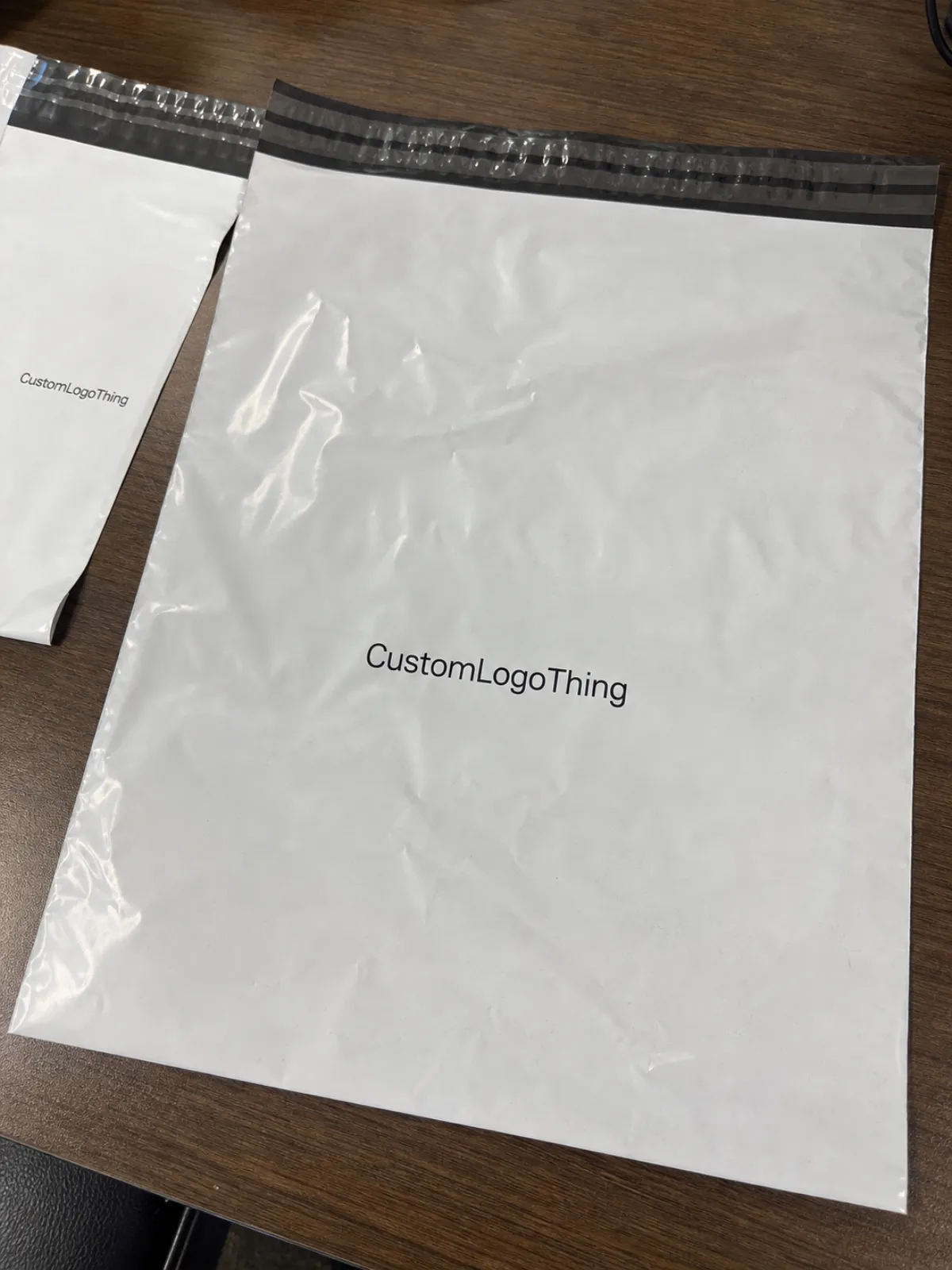
Recycled Poly Mailers are lightweight polyethylene shipping bags made with post-consumer recycled content, post-industrial recycled content, or a blend of recycled and virgin resin. They are common for T-shirts, leggings, socks, accessories, kidswear, and other soft goods that do not need the crush protection of a box. The proofing conversation changes when recycled film is involved, because the base film may be grayer, less bright, slightly more translucent, or less visually uniform than a white virgin film. That does not make it inferior; it simply means color, contrast, and compliance placement need a sharper review before production starts.
For buyers, ecommerce teams, design leads, and operations staff, the aim is straightforward: confirm the artwork, construction, material, compliance text, scan performance, and cost before anyone commits film, plates, ink, press time, and freight.
Why a Print Proof Can Save a Recycled Poly Mailer Run
Most packaging failures are not dramatic at first glance. They are small errors that become expensive only after thousands of bags are printed. A logo placed too low can land across the side seal. A QR code that scanned on a laptop proof can lose contrast once printed over a darker recycled film. A short warning line can look harmless in a PDF and still sit too close to a trim edge after the bag is converted.
That is why proofing matters on custom recycled mailers. The proof is usually the final point where the buyer can still correct a problem without paying for a rerun. Once the job is released, the printer may have already reserved production time, prepared plates or digital setup, allocated material, and scheduled converting. A late correction is not just an artwork issue at that stage; it can become a production and inventory issue.
Recycled content is also a material variable, not only a sustainability claim. Depending on the resin blend, recycled polyethylene may print slightly darker, slightly less opaque, or with more visible variation than the film a team used on a prior order. That affects spot color appearance, white ink coverage, fine type, and how cleanly small artwork holds after print finishing and handling.
Different proof types answer different questions. A digital PDF proof confirms placement, text, color callouts, and basic dieline alignment. A dieline proof confirms panel structure, flap orientation, seal zones, and safe margins. A color proof or ink drawdown gives a better read on how the ink behaves on the selected substrate. A production sample is closest to the finished package, although it may still vary slightly from the full run if the final production setup is not identical.
A proof should answer one plain question: will this mailer still work and still look like the brand once it is printed, sealed, labeled, packed, and shipped?
That “labeled and packed” part is where many proof reviews fall short. Apparel mailers are not flat advertising panels; they are shipping tools. The proof needs to account for the shipping label, the folded garment, the adhesive closure, possible return use, and the way a filled bag bends during transit.
How Recycled Poly Mailers Are Printed and Proofed
The production flow usually begins with film selection and bag sizing. Then the artwork is placed on a dieline or template. The printer reviews the file for print area, color count, bleed, safe margins, barcode placement, white ink requirements, and compliance language. After proof approval, the job moves into production, where plates, cylinders, or digital setup are prepared, the film is printed, the bags are converted, and the finished mailers are packed for shipment.
For larger orders, flexographic printing is common because it handles repeat runs efficiently and keeps unit costs under control after setup. Flexo can work well for one- to four-color designs, repeated branding patterns, and high-volume mailer programs, but plate cost and setup time make revisions more consequential. For shorter runs or designs that change often, digital printing can be a practical option, especially for testing a launch design before committing to higher quantities. In broader packaging conversations, offset printing often comes up, but polyethylene mailers are more commonly evaluated through the lens of flexo versus digital because the substrate and converting process differ from folding cartons, paperboard sleeves, or labels.
Artwork is reviewed flat, while the finished mailer is a formed bag. That difference matters. Fold lines, side seals, adhesive strips, tear notches, and return-strip features all change where art lands once the mailer is made and filled. A design that appears centered on a flat mockup may feel low, high, or crooked after the bag is folded around a hoodie. The dieline is not just a technical drawing; it is the map for how the mailer behaves in use.
Polyethylene does not absorb ink like paper. Ink sits on the surface, so film treatment and ink compatibility are essential. If the surface energy is wrong or the ink system does not match the film, the print can scuff, smear, block, or lose adhesion during packing and carrier handling. For a retailer shipping hundreds or thousands of orders per day, that is a durability concern as much as a cosmetic one.
On gray, off-white, or natural-looking recycled film, white ink often becomes a structural part of the design. A white underbase can help logos, fine type, QR codes, and bright brand colors stay visible. Without it, reds, greens, pastels, and light neutrals may look muted because the recycled base tone shows through. White ink adds cost and may count as an additional print color, but it can prevent a brand-critical design from looking dull or hard to read.
A reliable proof should show finished size, flap position, seal zones, print area, bleed if needed, color callouts, PMS references, recycled content language, suffocation warning, barcode or QR code placement, and panel orientation. It should also label the front and back panels clearly. If anyone has to guess which side opens or which way the bag will face during packing, the proof is not clear enough.
For performance expectations beyond the artwork file, resources such as ISTA and EPA packaging guidance can be useful references. They are not custom mailer spec sheets, but they reinforce a basic packaging principle: the finished package has to survive handling, distribution, and customer use, not simply look good as a flat layout.
Apparel Retailers Recycled Poly Mailers Print Proof Checklist
Start with the items that can break the order. Size, orientation, material, and seal position come before fine color judgment. Once those are correct, move into compliance, branding, barcode performance, and cost alignment. That order keeps the review grounded in real production risk instead of letting the team spend twenty minutes debating ink sheen on a proof that has the wrong flap direction.
- Finished size: confirm outside dimensions and usable interior space, not just the bag size name.
- Fit test: check the largest normal garment bundle with tissue, insert, packing slip, or return paperwork included.
- Film gauge: match thickness to garment weight, shipping distance, handling risk, and return expectations.
- Recycled content: verify whether the film uses post-consumer recycled content, post-industrial recycled content, or a blend.
- Material color and opacity: confirm whether the film is white, gray, black, natural, or tinted, and whether contents may show through.
- Flap and seal position: keep artwork clear of adhesive zones, opening edges, tear strips, and return strips.
- Front and back panels: make sure the proof labels each panel and shows the correct reading direction.
- Safe margins: keep type, logos, QR codes, and fine graphics away from folds, seams, trim, and converting variation.
- Color references: verify PMS values, CMYK builds, spot colors, and any accepted tolerance before approval.
- White ink: confirm whether the artwork needs a white underbase on recycled film.
- Compliance text: review suffocation warnings, recycling language, country-specific requirements, and claim wording.
- Scan test: check barcode or QR code size, contrast, quiet space, and label interference.
- Quote match: confirm the proof matches the quoted size, gauge, print sides, color count, adhesive style, and quantity.
Size deserves extra attention because apparel buyers often think in product units, while packaging suppliers work from dimensions, film allowances, and conversion limits. A sweatshirt may fit in one mailer when folded tightly, but not after fulfillment adds tissue, a return insert, a postcard, or a branded sticker. If the proof is approved around an ideal fold that the warehouse will not use, the bag may be technically correct and operationally wrong.
Film gauge is another practical decision. Thinner gauges can reduce material use and unit cost, but they may not perform well with bulky knits, denim, shoes, or multi-item orders. Heavier gauges cost more, yet they can improve puncture resistance, opacity, and perceived quality. The right choice depends on product weight, route length, carrier handling, and whether the mailer needs to survive a return trip.
Color review requires a realistic eye. If the brand depends on a precise blue, red, or fluorescent accent, CMYK on recycled film may not behave the way it does on coated paper, labels, or bright white virgin poly. A pale mailer can support delicate color more easily, while a darker recycled substrate may hide scuffs and shipping marks better. Neither is automatically better. The proof should show which tradeoff the team is accepting.
Here is a practical way to separate proof types:
| Proof Type | What It Confirms | Typical Use | What It Does Not Confirm |
|---|---|---|---|
| Digital PDF proof | Artwork placement, text, dieline marks, panel orientation, color callouts | Most standard approval steps | Exact printed color, film texture, ink adhesion, final opacity |
| Color proof or drawdown | How selected ink appears on the chosen substrate | Brand-critical colors, new materials, recycled film changes | Final conversion behavior, seal strength, mass-production consistency |
| Production sample | Near-final size, print, sealing, flap behavior, and handling feel | High-visibility launches, new bag sizes, return-strip testing | Every tolerance in the full run unless the final production setup is locked |
For teams comparing formats across a packaging line, it helps to keep the product family straight. A recycled poly mailer does not use the same production logic as a folding carton, paper bag, rigid mailer, or pressure-sensitive label. The broader Custom Packaging Products page can help with format comparison, while teams focused specifically on shipping bags can review Custom Poly Mailers.
Pricing, MOQ, and Unit Cost Factors in Proof Decisions
Proof decisions affect price more than many buyers expect. A small artwork adjustment can trigger another prepress round, new plates, a revised proof, or a delayed production slot. If the job has already moved forward, a correction can become a rerun rather than a revision. The proof and quote should be reviewed together, because the approved artwork is only useful if it still matches the costed specification.
The main price drivers are usually bag size, film gauge, recycled content percentage, print color count, ink coverage, one-side or two-side printing, adhesive style, tear strip or return strip, order quantity, and packing requirements. A large two-color mailer with a return strip will not price like a small one-color standard-seal bag. The difference reflects material usage, setup, labor, production speed, and any added converting steps.
MOQ can help or hurt depending on buying patterns. Higher quantities usually reduce unit cost because setup is spread across more bags. But if artwork changes seasonally, brand marks are being updated, or compliance language may shift, buying too much can lock cash into packaging inventory that ages poorly. Apparel retailers feel that pressure when collections, promotions, or size curves change every few months.
Typical cost ranges vary widely by size, gauge, print method, recycled content, and region, so any number should be treated as a starting point rather than a promise. As a broad planning range, simple custom poly mailers may land in the low cents per unit at higher volumes, while lower-quantity, multi-color, recycled-content, or return-strip mailers can move meaningfully higher. Physical samples, ink drawdowns, rush proofing, and late-stage revisions usually add separate prepress or sampling charges.
A standard digital proof is often part of the normal prepress workflow. A physical sample, drawdown, or press proof usually costs more because it uses material, ink, setup time, and handling outside the simplest approval path. That extra cost is sometimes unnecessary for a routine reorder, but it can be a wise spend for a new recycled film, a strict brand color, or a packaging launch that will be photographed heavily.
| Option | What It Usually Includes | Cost Impact | Best Fit |
|---|---|---|---|
| Standard digital proof | File review, layout confirmation, dieline approval | Lowest | Routine runs with stable artwork and familiar material |
| Physical sample | Printed or converted sample bag for size, handling, and visual review | Moderate | New bag sizes, new materials, fit testing, customer-facing launches |
| Press proof or color drawdown | Ink and substrate evaluation before the full run | Highest | Strict color expectations, new recycled blends, high-coverage graphics |
Separate fixed specifications from flexible preferences before requesting a quote. If the recycled content level, mailer size, return strip, and brand colors are fixed, say so. If matte versus gloss, exact opacity, or a secondary print color is negotiable, make that clear as well. Suppliers can price more accurately when they know where the job has room to move.
Approve a costed specification sheet at the same time as the artwork proof. It should list size, gauge, film type, recycled content claim, print method, color count, adhesive style, quantity, carton pack, and any sampling requirements. That simple cross-check prevents a clean-looking proof from drifting away from the actual quoted construction.
Proofing Process, Timeline, and Production Steps
The cleanest proofing process starts with complete information. The buyer sends vector artwork, bag size, material request, target gauge, print colors, compliance text, barcode or QR files, and any required sustainability language. The supplier provides a dieline or template. Artwork is placed, checked, marked up, and returned for approval or revision. After final approval, the job moves into scheduling, production, converting, packing, and freight.
Several issues slow the process: missing vector files, low-resolution logos, vague PMS references, incomplete dimensions, late QR code changes, conflicting reviewer comments, and old proof versions circulating by email. The last problem is common. One reviewer asks for a larger logo, another moves the warning, and a third approves an older proof before the barcode was corrected. The result is not faster approval; it is avoidable confusion.
Assign review responsibilities before the proof arrives. Design should check brand appearance, type, color, and logo use. Operations should confirm fit, sealing behavior, label placement, and return use. Ecommerce should test barcodes, QR codes, and shipping label interaction. Compliance should review warnings and claims. Purchasing should confirm that the proof matches the quote. One person should collect all comments and send one clean revision list.
Version control matters. Every proof should carry a date, revision number, finished size, material note, film gauge, print color list, and approval status. If the final PDF is named vaguely, somebody will eventually approve the wrong file or send production a stale attachment. Good labeling is not glamorous, but it is one of the cheapest quality-control steps available.
Lead time depends on recycled material availability, order size, print complexity, plate needs, proofing rounds, production queue, and freight method. A simple reorder with ready art can move far faster than a new custom mailer with a special recycled blend, two-sided printing, a return strip, and physical sampling. Build buffer time before launches, holiday campaigns, subscription drops, or warehouse transitions. Packaging must arrive before fulfillment starts, not on the same day the first orders need to ship.
Mailer timing also has to fit the wider package system. If the team is changing shipping labels, inserts, tissue, cartons, or return instructions at the same time, manage the launch as a sequence. One delayed proof can hold up receiving, packing tests, photography, and the first shipment wave.
Common Proofing Mistakes That Cause Reprints or Delays
The most common mistake is approving too quickly. The logo looks right, the color seems close, and everyone wants the order in production. Then someone notices the barcode sits too near a seam or the warning text is inside a trimmed area. Slow review saves money here.
Reviewing only on a phone screen is another bad habit. Small type, quiet space around codes, seam clearance, and subtle color differences are hard to judge on a small display. A desktop view is better, and a full-size printout can help the team catch scale issues before they become production issues.
Artwork errors are often mechanical rather than creative. A raster logo may soften. Thin lines may fill in. Fonts may not be outlined. Knockout type may be too small. Artwork may be flipped for the wrong panel. Dark recycled film may swallow low-contrast graphics. These are ordinary prepress risks, and they are much easier to fix before approval.
Material assumptions cause their own problems. A recycled mailer may not print like a bright white virgin poly mailer. It can be more translucent, slightly textured, or less visually uniform. A thinner gauge may look attractive on a spreadsheet but struggle with bulky orders or rough handling. The cheapest film is not always the cheapest finished package if it creates returns, damage, or customer complaints.
Compliance mistakes deserve special caution. Do not use recycled content claims, recycling symbols, or broad sustainability language unless material documentation supports them. Do not place suffocation warnings where trimming, folding, sealing, or a shipping label may hide them. Avoid absolute claims if the mailer is only partially recycled or if recyclability depends on local collection programs. Packaging claims should be accurate, plain, and defensible.
Operational errors often sit outside the art file. The QR code may fall under the carrier label. The adhesive closure may cover a message printed on the flap. A resealable return strip may interfere with the original seal. The approved size may fit a single folded tee but not a tee plus a return insert and tissue wrap. A pretty proof that ignores fulfillment behavior is not finished.
The least expensive error is the one caught while the proof is still only a file.
Next Steps: Build a Proof Checklist Your Team Can Use
The best internal approval system is one people will actually use. Keep it short enough to move quickly, but detailed enough to catch the risks that lead to reprints, missed launch dates, or unusable inventory. For apparel retailers, that usually means grouping the review into specs, artwork, color, compliance, function, quote match, and final signoff.
Under specs, confirm finished size, usable interior space, film gauge, recycled content type, adhesive style, tear strip or return strip, finish, and carton count. Under artwork, check logo placement, scale, orientation, safe margins, front and back panel labels, white ink needs, and dieline alignment. Under color, confirm PMS references, accepted tolerance, substrate color, and whether the team expects a digital proof, drawdown, or physical sample.
For function, pack the largest common garment bundle, seal the mailer, apply the shipping label, scan the code, and, if the bag is resealable, simulate a return. This step quickly shows whether the package works as a shipping tool rather than only as a design file. It also exposes simple conflicts, such as artwork hidden by labels or a return strip placed where warehouse staff naturally grips the bag.
Then assign one approval owner. That person gathers comments, resolves conflicts, approves the final proof, saves the approved PDF, and confirms that purchasing, design, compliance, and fulfillment all signed off on the same version. It is a small discipline, but it prevents the mismatches that create expensive surprises later.
Use the apparel retailers recycled poly Mailers Print Proof Checklist as a final quality gate before production release. Done well, it protects brand appearance, keeps the mailer functional, reduces avoidable revisions, and gives the production team a clearer path to deliver packaging on time. In custom packaging, that kind of plain, careful review is often what keeps the whole program steady.
FAQs
What should apparel retailers check first on a recycled poly mailer print proof?
Check finished size, flap orientation, print placement, seal area, and usable interior space before reviewing color details. Those items determine whether the mailer actually works. After that, confirm the proof matches the quoted material, recycled content, gauge, print colors, adhesive style, and order quantity.
Does recycled content change how poly mailers print?
Yes. Recycled polyethylene can have a different base tone, opacity, or surface appearance than virgin film. Brand colors may look darker or less bright on gray or natural recycled film, especially without a white ink underbase.
How long does recycled poly mailer proofing usually take?
Timing depends on artwork readiness, revision rounds, print complexity, material availability, sampling needs, and how quickly the review team responds. Clean vector art, confirmed dimensions, approved compliance text, and one consolidated revision list usually shorten the process.
What proof details affect the unit cost of custom recycled poly mailers?
Size, gauge, recycled content level, print color count, ink coverage, two-sided printing, return-strip features, adhesive style, and order quantity all affect unit cost. Physical samples, press proofs, drawdowns, rush handling, and late artwork changes can add cost beyond a standard digital proof.
Can QR codes and barcodes print reliably on recycled poly mailers?
They can, as long as the code has enough size, contrast, quiet space, and distance from folds, seams, adhesive areas, and shipping labels. Test the code from the proof, and avoid placing it over dark film, heavy wrinkles, or areas that may be covered during fulfillment.