Buyer Fit Snapshot
| Best fit | Shipping Carton Cost Comparison projects where brand print, material claims, artwork control, MOQ, and repeat-order consistency need to be specified before quoting. |
|---|---|
| Quote inputs | Share finished size, material target, print colors, finish, packing count, annual reorder estimate, ship-to region, and any compliance wording. |
| Proofing check | Approve dieline scale, logo placement, barcode or warning zones, color tolerance, closure strength, and carton packing before bulk production. |
| Main risk | Vague material claims, crowded artwork, missing packing details, or unclear freight terms can make a low unit price expensive after revisions. |
Fast answer: Shipping Carton Cost Comparison: Prices, Specs, MOQ should be specified like a repeatable production item. The safest quote records material, print method, finish, artwork proof, packing count, and reorder notes in one written spec.
Production checks before approval
Compare the actual filled-product size with the drawing, then confirm tolerance on folds, seals, hang holes, label areas, and retail display edges. Reserve space for logos, QR codes, warning copy, and material claims before decorative graphics fill the panel.
Quote comparison points
Review material grade, print process, finish, sampling route, tooling charges, carton quantity, and freight assumptions side by side. A quote is only useful when the supplier can repeat the same color, closure quality, and packing count on the next order.
The cheapest bid can look brilliant on a spreadsheet. It can also hide costs that arrive later, after the cartons have been printed, packed, stacked, and blamed for a problem they did not create. I have seen buyers save a few cents per unit and lose it back in freight, rework, and damage claims. That is the trap in a Shipping Carton Cost comparison: the invoice is only the first page.
One packaging manager I spoke with got a quote that was $0.12 lower per carton than the rest. The buyer celebrated. Then freight landed, the cartons rode badly on the pallet, and the team spent two weeks chasing avoidable damage claims. A small unit saving turned into a much larger supply chain loss. In practice, a Shipping Carton Cost comparison that ignores transit impact is usually just a price hunt wearing a cleaner shirt.
What that team eventually adopted was not a better argument. It was a better method. Each bid became a case file, not a winner badge. That change sounds small. It is not. The conversation moved from opinion to pattern, from negotiation theater to operations reality.
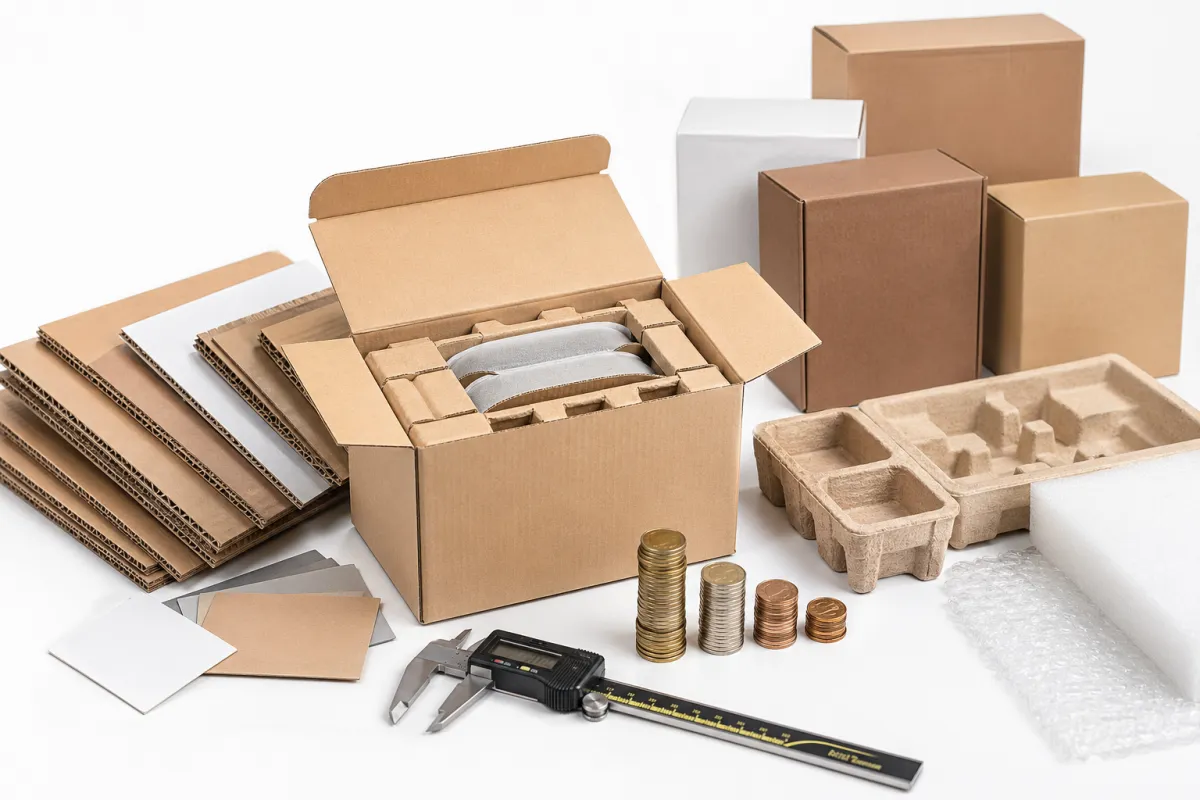
Shipping Carton Cost Comparison: The Real Cost Drivers
Why the cheapest quote can still fail
Take two proposals for the same order and strip away the sales language. Option A costs $0.42 per unit. Option B costs $0.34. On 10,000 boxes, the second option appears to save $800. That number feels crisp, almost persuasive.
Then freight enters the picture. Option A ships in a compact cube with little or no filler. Option B uses a taller box, pushes dimensional weight upward, and adds more air to the truck. If that adds just $0.18 per unit in freight, the lower-priced carton now costs $1,800 more to move. The shipping carton cost comparison has flipped direction.
Procurement teams often stop at the quote PDF: material, print, freight. That is not a full accounting. A serious shipping carton cost comparison includes rejection rates, storage space, production scrap, line labor, and the cost of handling a damaged return. On a busy ecommerce shipping program, one broken carton can trigger labor, credit, customer service work, and replacement product. The box is never the whole story, and the carton is never the only actor.
Who needs this tool, and why
Operations planners need it because pack-out speed changes with carton fit. A box that is awkward to load slows the line, creates extra void fill, and turns a neat workstation into a bottleneck. Finance teams need it because every inch of pallet footprint affects landed cost and storage density. Procurement leaders need it because they are measured on margin, not just on purchase price.
The real value of a shipping carton cost comparison is that it turns opinion into evidence. One spec can be quoted against another on the same terms. Standard cartons and custom cartons can be scored side by side. The decision becomes visible, defensible, and a lot less theatrical in supplier review meetings.
Buyers who handle packaging day after day usually want the same three things: control over size, control over protection, and control over timing. If the goal is faster order fulfillment and fewer transit claims, the comparison should show whether a carton reduces damage and speeds packing, or merely looks cleaner in a quote sheet.
That is why teams now treat a shipping carton cost comparison like a carton cost breakdown model with explicit trade-offs: purchase price, freight drag, labor drag, and rework drag all in one view.
Core decision frame
Start with four inputs: carton dimensions, product weight, shipping route, and reorder pattern. Ask every supplier for the same quoting fields. Once that discipline is in place, the shipping carton cost comparison stops being a negotiation trick and becomes a decision model. A useful model should include:
- Unit cost after setup, if setup applies.
- Freight terms and dimensional weight assumptions.
- MOQ and payment milestones.
- Expected damage claims based on historical transit packaging risk.
- Average storage turn time in days before the next order.
That framework looks plain. It also saves money. The plainest worksheet is often the one that prevents the most expensive mistake. A disciplined shipping carton cost comparison should be boring in exactly that way.
How Much Can a Shipping Carton Cost Comparison Change Your Order Strategy?
More than teams expect, and less than the people with a spreadsheet-first mindset usually predict. A strong shipping carton cost comparison can force one of two outcomes: either a smaller, simpler carton becomes the default, or a controlled premium structure is justified because it cuts total cost across handling and returns. Most teams discover both outcomes in one cycle, depending on route and product mix.
In other words, this is not a cost exercise. It is a shipping carton cost comparison for execution risk. A difference of $0.10 in unit cost can be dwarfed by a slower put-away rhythm, a weak closure choice, or an avoidable moisture failure in humid lanes. That is where the method earns credibility.
Think of it as packaging procurement modeling with a freight-aware lens. You are not just buying a carton; you are choosing an operating system for warehousing throughput, returns behavior, and the final customer impression.
Product Details: Standard Cartons vs Custom Cartons
Stock cartons: fast answer for stable products
Standard shipping cartons make sense for stable SKUs, tight launch schedules, and products that fit common size bands without much extra air. You avoid tooling delays. You avoid long design loops. You usually get faster availability. For moderate volume launches, that speed can matter more than a fancy structure.
Cheap to buy does not always mean cheap to use. A stock carton that is a little too large for the product is kinda expensive in disguise. It can leave 30 to 40 percent void, and that void usually gets filled with cushioning, wrap, or labor. The shipping carton cost comparison shifts the moment filler, freight, and handling are included. A standard carton can still win, but only when the fit is close enough to keep total cost under control.
In a practical shipping carton cost comparison, standard cartons get tested against corrugated board performance realities, not brand-level aesthetics. If an off-the-shelf carton handles normal stack pressures and corner stresses, it can be the right answer and often the safest first pass.
Custom cartons: when fit pays for itself
Custom cartons become interesting when the product shape refuses to behave, or when transit damage has already proven expensive. A well-designed custom box can reduce void, lower freight, and cut claims. In some launches, that reduction reaches 20 percent or more across the full packaging spend. The savings do not show up in one place. They appear in several lines of the ledger.
A practical shipping carton cost comparison should measure packing time as carefully as board cost. If operators spend 6 seconds stuffing and sealing a custom carton but 9 seconds handling a stock carton with extra fill, that three-second gap compounds quickly. At 20,000 cartons, it becomes more than 16 hours of labor. That is not a rounding error. It is a shift in staffing and throughput.
Many buyers assume custom always costs more. The opposite can happen when the current design relies on expensive cushioning or when damage above 0.5 percent drives remakes and return handling. A slightly higher carton price can cut enough waste to lower the total bill in a shipping carton cost comparison.
When a custom style works, the shipping carton cost comparison usually reveals a different benefit too: better freight cube utilization and better shelf stability under vibration. That is not magic; it is geometry and force distribution doing what they should.
Carton styles and performance tradeoffs
Three styles dominate most programs: regular slotted cartons, die-cut mailers, and heavy-duty double-wall options.
Regular slotted cartons are the most adaptable. With the right board grade, they handle most non-flat items well and stay efficient for top-to-side loading. They fit a wide range of ship-from environments, which is part of why they remain common.
Die-cut mailers and mailer boxes make sense when visual presentation matters and the product size is predictable. They create a tidy unboxing experience. They also demand tighter engineering, because a weak insert or sloppy fit can erase the advantage quickly.
Double-wall cartons are built for dense electronics, batteries, industrial parts, and products that punish weak corners. They cost more material and can slow packing, yet they often reduce damage enough to justify the upgrade. That trade is easy to miss if the comparison stops at the quote screen.
Print, closures, and inserts are where spend starts to climb. Full-bleed offset print may add 8 to 15 percent versus unprinted stock. Matte lamination, water-based windows, or specialty closures can add another 10 to 25 percent depending on the build. In a shipping carton cost comparison, the right question is not whether those upgrades cost more. The useful question is whether they raise first-pass yield and reduce returns enough to pay for themselves.
In the end, this is also a shipping materials quote conversation. A premium finish might be a cost sink, or it might replace costly reships, especially in fragile product families.
Specifications That Change Your Shipping Carton Cost Comparison
Dimensions and structure that control the whole equation
Length, width, and depth are the first numbers that move a shipping carton cost comparison off course. A 2 mm change in one dimension can reduce waste, improve fit, and alter pallet efficiency in ways that are easy to miss in a first-round design review. Carriers do not treat dimensional weight as a suggestion. They treat it as a billable fact.
Picture a box that grows from 14 x 10 x 8 in to 15 x 11 x 9 in. That change lifts carton volume by nearly 23 percent. If the weight and cube per carton rise at the same time, the shipment can move into a higher dim-weight tier. Freight rises before print, before labor, before any problem appears in the warehouse.
Flute profile matters next. E-flute is common for light to medium packages and gives a smooth print surface. B-flute has stronger crush resistance for edge loads. C-flute sits in the middle and adds more cushioning. A quote is not a fair quote unless flute type and the equivalent burst and edge crush values are fixed.
Ask for an edge crush test, or ECT, range and burst strength on every proposal. There is no universal floor that fits every lane, but many parcel programs use 32 ECT for lighter loads and 44 ECT or higher for heavier or stack-sensitive cartons. For corrugated board, burst strength above 130 psi can be a useful reference point for smaller parcels, while larger or fragile products may need more. Those numbers do not make the carton elegant. They make it survivable.
That same logic is why this is a shipping carton cost comparison with freight-cube analysis built in, not an isolated packaging note.
Board grade, moisture resistance, and coatings
Board grade controls stiffness, but not in isolation. Higher gram basis and stronger layer builds reduce deformation at load points and improve how the carton behaves on a stacked pallet. Dock conditions matter too. If cartons leave humid shipping areas or pass through damp receiving zones, moisture resistance can protect the edges from softening and collapse. That protection costs money, and the added spend should be counted, not hidden.
Surface finish changes both appearance and performance. Kraft versus white interior is not only a brand choice. White can improve print contrast and lower rejection risk in color-sensitive work. White kraft also tends to cost more and can add a quality-control burden if the color remains inconsistent from run to run. Varnishes, moisture barrier coatings, and anti-fray tape may look optional on paper. In some programs, they add 5 to 12 percent per order. The comparison should show whether the extra finish reduces failures enough to justify itself.
In one high-velocity channel, humidity and temperature swings were pushing cartons toward edge deformation at destination. The team introduced one moisture-adjusted board option in their shipping carton cost comparison; unit price rose, but transit rejections dropped enough to change the total cost trajectory in under a month.
Sustainability claims add another layer of scrutiny. Buyers now ask where the fiber came from, who handled it, and which standards back the paperwork. That is why documentation such as FSC can matter in procurement, not just in marketing decks. A carton with the right claim and the wrong paper trail is trouble in disguise.
Finish, construction, and apples-to-apples comparisons
The comparison format can create the wrong decision before a supplier has even started quoting. A useful shipping carton cost comparison forces equality across every response:
- Same carton profile (E-flute vs B-flute etc.)
- Same board basis and ECT minimum
- Same print method, colors, and coverage percentage
- Same closure method (tape vs hot-melt vs auto-lock)
- Same test protocol and same sample count
Leave those variables open and you are not comparing cartons. You are comparing assumptions, then pretending the result is a procurement decision. That is how teams buy the wrong packaging and spend months defending it. A disciplined shipping carton cost comparison checklist avoids the trap.
For transport durability, reference recognized methods such as ISTA standards that match your route profile. A supplier who cannot align test expectations to a known method is selling uncertainty, not protection.
In these sessions, teams often use this as a carton quote benchmarking pass, because once the variables are equalized, differences become much harder to fake.
Recommended specification sheet for every bid
Use one sheet. One version. One set of numbers. Include these line items before sending any request for quote:
- Inner dimensions after final flap allowance
- Material stack build (flute, liner weights, ECT, burst)
- Print file requirements and color profile
- Sealing and closure method
- Pallet load pattern assumptions
- Moisture and rough handling tolerance
This keeps procurement, warehouse, and warehouse management teams aligned. A real shipping carton cost comparison does not depend on clarification emails after the fact.
Run these fields as part of a recurring shipping carton cost comparison template, and your next quote review will feel less like a gamble and more like a decision under control.
Pricing & MOQ: How to Read a Shipping Carton Cost Comparison Quote
Break the quote into real cost buckets
Every quote has a headline number. The useful numbers sit below it. Separate the total into manufacturing unit cost, setup, freight, reorder conditions, and charges that appear after delivery. If any of those are missing, the quote is incomplete.
Compare the same fields every time:
- Unit cost at declared quantity
- Plate/setup charges if die-cut or foil print applies
- Sample and proof costs
- Freight term and carrier assumptions
- Storage handling if split shipment is included or excluded
- Reorder and lead-time impact after first run
That is the backbone of a mature shipping carton cost comparison: no magic lines, no omitted risk. In many teams, this becomes a direct Packaging Cost Analysis tool for monthly reviews.
Concrete example with a comparison table
To keep the comparison honest, the totals below assume the same lane, the same product, and no tax, duty, or special handling. They are directional, not universal, because freight rates and damage behavior change by route.
| Option | Quoted Unit Cost | Setup & Tooling | Freight (10,000 pcs) | Total Landed Cost / 10,000 | Primary Risk |
|---|---|---|---|---|---|
| Stock 1-wall kraft, no print | $0.28 | $120 | $1,300 | $4,220 | High void fill, average damage 0.8% |
| Custom 1-wall with 1-color print | $0.41 | $420 | $1,050 | $5,570 | Higher design lead time |
| Custom 2-wall + reinforced corner | $0.67 | $650 | $860 | $8,210 | May exceed needed strength for stable items |
Stock looks cheapest on paper. That conclusion can be false if the product is fragile or if damage sends product back through the warehouse. At 1% damage on 10,000 units with a $4.50 replacement cost, stock adds $450 in replacements alone. Add handling labor, credit processing, and customer service time, and the cost rises again. A shipping carton cost comparison is really a retention comparison, because a broken package often creates a lost customer as well as a lost carton.
This is where the phrase shipping carton cost comparison becomes a forecast signal. You are not checking whether a unit is cheaper. You are checking whether your network can support the quote without a silent tax in fulfillment.
MOQ: the hidden capital decision
MOQ can be a useful discount trigger. It can also trap cash. Higher MOQ spreads fixed costs across more cartons and often lowers unit cost. A 2,000 MOQ with light setup may land at $0.36 each, while 500 units comes in at $0.49. That difference looks appealing until the warehouse fills with cartons that will not be used for months.
Carrying cost is not theory. If carrying cost is estimated at 1.2 percent per month, holding 2,000 extra cartons for four months creates real overhead. Short-life product lines make the problem worse. Packaging can age out before it is used, especially if graphics, compliance text, or size specs change between campaigns.
Use a simple rule: if MOQ savings do not beat the annual holding cost or if the volume lock reduces reorder flexibility too much, push back on the quantity break. That is a practical shipping carton cost comparison decision, not a slogan.
In a cash-sensitive operation, this shipping carton cost comparison lens often changes the accepted tier from “cheapest possible” to “least risky over the reorder horizon.”
Short-run versus high-volume economics
Short-run economics reward speed, lower setup, and fast reaction to change. Stock cartons and digital print often win at 300 to 500 units because the fixed costs stay low. The goal is not elegance. The goal is a usable carton in a useful timeframe.
High-volume economics reward tooling amortization, stable schedules, and fewer changeovers. Once a program stays above 5,000 units and the route stays predictable, custom quotes deserve a harder look. In those cases, the savings may come from less void, less shipping materials waste, and better pallet density. If the product mix shifts every quarter, the savings can disappear into stranded inventory and obsolete specs.
For high-volume teams, a shipping carton cost comparison is also a capacity planning tool. More cartons at a slightly higher unit cost can still be worse than fewer cartons with a smoother line rhythm if labor and dock time are already stretched.
What a quote checklist should look like
Before approval, ask each supplier for the same set of answers:
- Unit cost at your base quantity and at the next quantity tier.
- Total order cost including packaging, packaging materials, and freight.
- Lead time in working days, split by proof approval and production.
- Payment terms, return policy, and short-fall penalty terms.
- Reorder price and surcharge rules after the first run.
Then run the same shipping carton cost comparison model that finance and fulfillment already trust. If the numbers do not align, the mismatch usually comes from assumptions about freight, damage, or schedule, not from the carton alone.
That is why teams now treat quote review as a shipping carton cost comparison governance step, not a weekly email thread.
Process & Timeline: From Spec Sheet to First Delivery
From needs assessment to approved spec
The first step is not sample ordering. The first step is deciding what the carton must survive. Ask procurement, operations, design, and finance to define the box from their angle. If two of them are optimizing for different outcomes, the quotes will not be comparable.
Define maximum carton tolerances, maximum load, shipping routes, and the kind of handling the carton will face. Include product dimensions with tolerance, expected fill weight, orientation, and drop risk. If the route includes long-haul trucking followed by parcel handoffs, add corner protection requirements. A shipping carton cost comparison becomes predictive only after those constraints are clear.
That is the moment the process shifts from intuition to structured shipping carton cost comparison governance across teams.
Realistic timeline by order type
For standard cartons with no structural changes, the timeline often looks like this:
- 1-2 business days: spec confirmation and sample request
- 2-4 business days: digital proof and approval cycle
- 3-7 business days: production and finishing
- 1-2 business days: QA and dispatch
Custom cartons with print, structural changes, or a new dieline usually need more time. Add one or two review cycles and sometimes 7 to 10 extra days. Custom double-wall cartons or moisture-resistant builds can stretch toward a 15 to 20 business-day window depending on paper grade, queue time, and plant load.
One team tracked this and found that a disciplined shipping carton cost comparison reduced timeline uncertainty by setting explicit acceptance criteria for sampling and approval.
Approval bottlenecks that delay everything
Delays are usually human, not mechanical. Three patterns show up repeatedly:
1. Dieline sign-off: A small flap error can alter fold behavior at production speed.
2. Proof confirmation: Color shifts, registration errors, and artwork version conflicts slow the process when suppliers work across time zones.
3. Sample testing: If corner crush and drop performance are not checked early, rework begins too late to protect the launch.
One lost day can push the first delivery past a retail window or a customer promise date. Build backward from the ship date, not forward from the supplier’s best-case estimate. A practical shipping carton cost comparison should include schedule risk as a cost, because the wrong arrival date creates its own bill.
Plan backward from fulfillment reality
Packaging decisions only become real when cartons hit the receiving dock. Stock needs to arrive in the right place, at the right time, for the right operator. If cartons show up after a weekend peak, throughput drops, labor shifts, and service levels take the hit. The cost is no longer packaging alone. It becomes labor, delay, and missed promise dates.
Block the timeline with a launch date, warehouse receiving window, line setup lead time, QA window, and reorder trigger date. The winning shipping carton cost comparison supports that chain without forcing extra expediting or overtime.
In this phase, teams also compare not just raw price, but shipping carton cost comparison impact on line efficiency. A line that runs cleaner often beats a 5% line-cost advantage on paper when the shipment clock is tight.
“A supplier who can explain the schedule impact of one flap change is worth more than a supplier who wins on the first number on the quote.”
Why Choose Us for Shipping Carton Orders
What a good supplier does, beyond price
The best sourcing result rarely comes from the lowest quote alone. It comes from clear communication, honest specs, and steady execution. A strong partner will tell you where the shipping carton cost comparison is overstated on unit cost and understated on storage loss or freight drag.
Custom Logo Things focuses on practical outcomes: consistent manufacturing, clear material specifications, and shipment-oriented guidance. Buyers are not left to guess whether burst strength is enough for the route. They get a comparison framework that can survive a team review.
That matters when the carton serves two jobs at once. It protects the product, and it carries the brand. A box moving through distribution is not just a container. It is a transport asset with marketing on its surface. Those two roles should be designed together, not handed to separate departments that never meet.
Across many programs, teams use this as a recurring shipping carton cost comparison partnership: supplier and buyer sharing assumptions before commitment, then revisiting after reorders and route changes.
How the right team reduces hidden costs
Good execution tends to produce the same three results:
- Right-sizing that lowers dimensional weight and improves pallet density.
- Better closure and structure guidance that cuts handling damage.
- Packaging sequence recommendations that reduce packing time per carton.
If a brand needs consistent visuals at scale, cartons should not be treated like a generic commodity. Shipping cartons are branding surfaces and logistics tools at the same time. A partner who understands both can reduce trial cycles, especially in regular ecommerce shipping and direct-to-consumer work.
Our teams also track shipping carton cost comparison checkpoints after launch. If a design works in week one but fails at volume ten, the model is updated before the next reorder.
Explore the wider catalog through Custom Packaging Products, or review dedicated programs under Custom Shipping Boxes and Custom Poly Mailers. These are practical starting points while you build your next shipping carton cost comparison.
Support from quote to re-order
Cost comparisons do not stop at the first purchase. They continue into replenishment. A supplier with weak repeat-order visibility creates avoidable price surprises and extra approvals. A supplier with clear reorder visibility makes next quarter easier to forecast and keeps packaging spend steadier.
In a mature program, the supplier helps update the shipping carton cost comparison each season. Board pricing shifts. Freight moves. Packaging policies change. None of that is unusual. The value lies in seeing the change early enough to respond without panic.
The cleanest operations result comes when shipping carton cost comparison is viewed as a shared control system, not a procurement email attachment.
Next Steps: Build a Practical Comparison Before You Order
Gather the three essentials before requesting quotes
Start with three inputs and nothing more. Exact dimensions. Shipping mode and route profile. Order quantity and reorder cadence. Those three details support a first-round shipping carton cost comparison better than a stack of vague brand notes or subjective preferences.
- Product dimensions, exact and with tolerance.
- Expected shipping mode and route profile.
- Target order quantity and probable reorder cadence.
Anything else can be layered in later as a second pass. If these first inputs are weak, a shipping carton cost comparison will be a beautiful exercise in approximation.
Some teams also log the current shipping carton cost comparison assumptions in a single source of truth, then use that file as the starting point for any future supplier discussion. The effect is simple: less ambiguity, fewer debates, faster approvals.
Request the same quote format from every supplier
Do not accept a different format from each vendor. Demand the same fields. Put them into one sheet. That single decision removes the most common error in packaging procurement: comparing unlike proposals as if they were the same thing. Your request should include:
- Unit cost and total cost
- Freight term and dimensional weight method
- Payment term and tooling amortization
- MOQ and estimated reorder price at two additional tiers
- Proof, sample, and correction cycle policy
Once the supplier responses match, apply a scoring matrix based on total landed cost, delivery reliability, and package protection performance. That is the point where the shipping carton cost comparison becomes a decision document rather than a pile of quotes.
In this stage, many teams run a second-pass shipping carton cost comparison on packaging claims like moisture resistance, stack stability, and print tolerance to catch mismatches before commitment.
Validate before committing to volume
Ask for a short test run or sample batch before you buy at scale. Weak bids tend to fall apart here. Check fit, corner compression, seal strength, and packing speed at line speed. If a carton adds 4 seconds per pack on a 4,000-unit campaign, the lost time adds up to more than 4.4 labor-hours.
Watch the first 1,000 shipments closely. If damage claims run above target, adjust before the larger run goes out. Strong teams treat the pilot as a controlled test, not a rescue operation after launch.
That final validation is where the shipping carton cost comparison earns its keep: the model survives reality, not just quote spreadsheets.
Conclusion
If the next shipping carton cost comparison is built as a decision model instead of a price hunt, the result changes. Dimensions, strength, freight assumptions, MOQ, packing speed, and cycle time belong in the same frame. The smallest unit cost is not always the smartest choice. The better carton is the one that supports fast, reliable order fulfillment, controlled inventory, and a predictable packaging bill.
Here is the actionable takeaway: before approving any carton order, price the box, freight, labor, damage risk, and reorder behavior in one sheet, then test the winner against a real pack-out. If the lower sticker price does not improve the total landed cost or the line rhythm, walk away from it. That discipline is what turns a shipping carton cost comparison into savings you can actually keep.
FAQ
What should I compare first in a shipping carton cost comparison?
Start with dimensions, board grade, and total landed cost. Unit cost alone can mislead. A carton that looks cheaper may create higher freight, worse pallet efficiency, or more damage. Compare freight assumptions, MOQ impact, and setup charges before making a choice.
How do shipping carton sizes affect my comparison pricing?
Size affects more than board usage. Larger cartons raise dimensional weight on many lanes and reduce how many cartons fit per pallet layer. Even one inch of extra height can move freight into a different bracket. A shipping carton cost comparison that ignores size is missing the biggest cost lever.
Does MOQ make a big difference in shipping carton cost comparison?
Yes. A higher MOQ can reduce unit cost by spreading setup and tooling over more cartons, but it also increases carrying cost and storage exposure. Balance the discount against replenishment timing and warehouse capacity. If demand is uncertain, a moderate MOQ with faster reorder cycles may be the safer choice.
Can custom shipping cartons lower total packaging cost?
They can, especially when a custom fit cuts void fill and reduces returns from handling damage. They may also improve stacking and loading efficiency, which helps freight. The strongest cases happen when product dimensions stay stable and shipment volumes are predictable enough to justify the initial tooling work.
What quote details should I ask for before ordering shipping cartons?
Ask for unit price, total order cost, freight terms, lead time, MOQ tiers, and payment terms. Require exact material specs and clear print details. Confirm whether samples are included, whether proofs can be reused for reorders, and what reorder pricing looks like across one- and two-year purchase windows.

