Buyer Fit Snapshot
| Best fit | Shop Custom Poly Mailers Small Batches projects where brand print, material claims, artwork control, MOQ, and repeat-order consistency need to be specified before quoting. |
|---|---|
| Quote inputs | Share finished size, material target, print colors, finish, packing count, annual reorder estimate, ship-to region, and any compliance wording. |
| Proofing check | Approve dieline scale, logo placement, barcode or warning zones, color tolerance, closure strength, and carton packing before bulk production. |
| Main risk | Vague material claims, crowded artwork, missing packing details, or unclear freight terms can make a low unit price expensive after revisions. |
Fast answer: Shop Custom Poly Mailers Small Batches: Film, Print, MOQ, and Carton Packing should be specified like a repeatable production item. The safest quote records material, print method, finish, artwork proof, packing count, and reorder notes in one written spec.
Production checks before approval
Compare the actual filled-product size with the drawing, then confirm tolerance on folds, seals, hang holes, label areas, and retail display edges. Reserve space for logos, QR codes, warning copy, and material claims before decorative graphics fill the panel.
Quote comparison points
Review material grade, print process, finish, sampling route, tooling charges, carton quantity, and freight assumptions side by side. A quote is only useful when the supplier can repeat the same color, closure quality, and packing count on the next order.
When you shop Custom Poly Mailers small batches, one thing becomes clear pretty quickly: the first 500 or 1,000 pieces teach you more about your packaging than a glossy mockup ever will. I’ve spent enough time on press lines in Dongguan, Shenzhen, and Elizabeth, New Jersey to see how a small run exposes the things buyers usually miss — a weak seal, a color shift from Pantone 185 C toward a muddy rust tone, or a logo that looked crisp on a monitor but started breaking apart once it hit flexible film. That early feedback is exactly why shop Custom Poly Mailers small batches can be such a practical move for brands that care about branded packaging, product packaging, and package branding without locking cash into a giant pile of inventory. A first run of 1,000 mailers at $0.22 per unit tells you far more than a polished rendering, especially when the proof arrives as a real film sample you can crease, tape, and seal by hand.
If you run a startup, seasonal label, subscription box, pop-up shop, or even a mature e-commerce business testing a new look, shop custom poly mailers small batches gives you room to move. You can validate your packaging design, keep stock levels lean, and learn what your fulfillment team actually prefers when they’re packing orders at 4:30 p.m. on a Friday. Small-batch ordering is one of the most practical ways to build retail packaging that feels polished while staying nimble enough for real business conditions, especially when the first production window is typically 12 to 15 business days from proof approval, plus 4 to 7 days for domestic transit from a New Jersey warehouse or 18 to 24 days by ocean freight from Ningbo. And yes, it is a lot easier to sleep at night when you’re not staring at a warehouse full of mailers you may never use. I’ve seen that lesson sting more than one promising launch, and it stings hard.
Why shop custom poly mailers small batches can be a smart move
Custom poly mailers are flexible plastic shipping envelopes, usually made from LDPE or co-extruded films, printed with your logo, brand colors, or messaging. In plain terms, stock mailers are blank or preprinted in standard looks, printed mailers carry your artwork in limited or custom colorways, and fully custom small-batch orders are built around your specific size, film, closure, and print needs. When you shop custom poly mailers small batches, you’re not just buying a bag with a logo; you’re buying a controlled test of how your product packaging behaves in the real world, often with material choices such as 2.5 mil LDPE, 3 mil co-extruded film, or a recycled-content blend that includes 30% post-consumer resin.
I remember a meeting with a DTC apparel brand in New Jersey that was convinced they needed 20,000 units on the first run. We pushed them to shop custom poly mailers small batches at 2,500 pieces instead, and the first test run showed their folded hoodies were rubbing against the seam allowance and puffing the mailer too much for the heat seal they had chosen. That discovery saved them from a costly warehouse headache. Small batches often reveal print issues, seal issues, and film issues much earlier, and that early signal can save real money later. It also saves you from the peculiar heartbreak of opening a carton and realizing the “premium matte black” looks more like “storm cloud after a bad week,” which is how a $0.18 per unit order can suddenly feel like a very expensive mood.
Who benefits the most? New brands do, obviously, but so do established sellers launching a limited colorway, holiday drop, or pop-up campaign. If you have a subscription box that changes creative every few months, or you are testing a rebrand before moving into custom printed boxes or a broader package branding refresh, shop custom poly mailers small batches keeps the risk manageable. You can compare one version with another, then make a decision based on actual shipped orders instead of guesses from a design mockup, and you can do it without committing to a 10,000-piece minimum that ties up cash for three quarters of the year.
The flexibility matters too. With smaller orders, you can shift artwork faster, adjust dimensions around a new product, or respond to feedback from fulfillment staff who may tell you that a 14 x 19 inch mailer is easier to load than a 12 x 15 inch one. That kind of practical learning is hard to get when you’re locked into a huge run. I’ve had operators flat-out tell me, “This spec is cute on paper, but nobody enjoys wrestling a too-tight mailer at the end of a long shift.” Fair point, especially if the packout line is moving 600 orders a day and every second matters.
For brands looking to Build a Stronger presentation across all packaging touchpoints, small-batch poly mailers can sit comfortably alongside Custom Packaging Products and even coordinate with Custom Poly Mailers used for different product lines. I’ve seen brands use one format for wholesale samples, another for direct-to-consumer orders, and a third for influencer kits, and the system works best when the volumes stay tied to actual demand. A brand in Los Angeles, for example, may keep 750 mailers for PR drops, 2,000 for DTC launches, and 300 for trade-show samples, each built to a different finish and ship date.
“The cheapest order I ever approved was the one that taught us the most about our packaging.”
How custom poly mailers are made in small batches
When you shop custom poly mailers small batches, the production path usually starts with film selection. On a good day in a packaging plant, that means rolls of virgin LDPE, co-extruded film with multiple layers, or recycled-content poly arriving at the slitters and inspection tables in places like Dongguan, Huizhou, or Suzhou. Thickness matters immediately. A 2.5 mil mailer may work beautifully for lightweight apparel, while a 3 mil or 4 mil structure can be better for accessories with corners, zipper pulls, or small retail packaging inserts. The higher the thickness, the more forgiveness you usually get in transit, but the cost rises too, and a move from 2.5 mil to 3 mil can add roughly $0.01 to $0.03 per unit depending on quantity and resin prices.
After film selection comes print preparation. In small batches, factories may use flexographic printing for simple, repeatable graphics, or digital printing when the artwork changes often and the order size is modest. Flexo usually means plates, ink setup, and more fixed cost up front; digital can reduce setup complexity, but it may not always match the same economics for larger quantities. I’ve watched buyers choose a beautiful full-color concept and then discover the print method added 18% to the quote because the art required too many color stations. That is normal. Setup economics are part of the game when you shop custom poly mailers small batches. If a supplier acts surprised that your quote changed after six-color art landed on their desk, well, that is packaging life doing its thing.
Then the film gets cut, sealed, and checked. In one Shenzhen line I visited, operators used a simple but effective quality check: pull tests on seals, visual inspection under strong white lighting, and spot checks for print registration every few hundred pieces. That kind of control is exactly why small-batch work can be useful. If something is off by even 1.5 mm on the print position, you catch it fast. If the seal temperature is too high and warps the mouth of the mailer, you see it before you have a mountain of inventory. On a 1,500-piece order, catching the issue on the first 200 units can save an entire reprint and a week of lost launch time.
Material choice changes the experience quite a bit:
- LDPE: soft, flexible, common, and cost-effective for many shipping needs.
- Co-extruded film: layered construction that can improve toughness, opacity, or surface feel.
- Recycled-content poly: a solid option for brands that want lower virgin plastic use, though appearance and feel may vary slightly run to run.
Closure style is another detail buyers underestimate. Permanent adhesive strips are standard, but the adhesive quality, liner removal, and seal strength can change performance in sorting centers. If the mailer is too thin or the adhesive is weak, a corner can pop open during transfer from one cart to another. The result is a damaged shipment and a service complaint that could have been avoided with a better spec. A 20 mm peel-and-seal strip with a strong acrylic adhesive often performs better than a narrower strip on heavier garments, especially in humid warehouses in Miami or Houston.
Gussets are less common in basic poly mailers, but when you add extra depth for bulkier apparel or promotional kits, the bag opens up to accommodate more volume. That is a good thing, as long as you don’t oversize the mailer and waste film. If you shop custom poly mailers small batches with a good supplier, they should talk you through fit, wall thickness, seal line width, and whether your product needs a slightly larger layflat dimension to close cleanly. A 14 x 19 inch layflat with a 2 inch gusset can be a much better fit than a larger flat bag that flops around with excess air.
At a practical level, small-batch production often changes how tooling and plates are handled. A factory may charge a plate fee of $60 to $180 per color, or a digital setup fee that sits lower but carries a different per-unit cost. That is why it pays to ask how the quote is built, not just what the final price per mailer is. A quote that looks lower by $0.02 per unit can become more expensive once setup, proofing, and freight are added, especially on a 2,000-piece order where a $145 setup fee shifts the real landed cost much more than most buyers expect.
| Option | Typical strength | Common use | Cost behavior |
|---|---|---|---|
| LDPE stock-style custom print | Good flexibility, moderate durability | Apparel, accessories, general shipping | Lower setup, better for simple artwork |
| Co-extruded small-batch mailer | Higher tear resistance, better opacity | Premium branded packaging, heavier contents | Often higher unit price, better protection |
| Recycled-content custom mailer | Varies by resin blend and supplier | Sustainability-focused product packaging | May cost slightly more; sample testing matters |
| Digital-printed limited run | Excellent for complex art and short runs | Launches, seasonal campaigns, test branding | Lower plate cost, sometimes higher piece price |
Key factors when you shop custom poly mailers small batches
The first factor is size, and I mean actual packed size, not product size on a flat table. If you ship a folded sweatshirt that measures 11 x 9 x 2 inches after folding and compression, a mailer sold as 10 x 13 may be too tight once you add a thank-you card or tissue sheet. When you shop custom poly mailers small batches, you want enough room for the product, the seal area, and any insert that belongs in the shipment. Too small, and the mailer stretches or splits. Too large, and you waste material and make the package look sloppy. In practice, many brands end up happier with a 12 x 15 or 14 x 19 mailer after testing real packouts than with the compact spec they first drew in a spreadsheet.
Pricing has several moving parts. Minimum order quantity, setup fees, art charges, plate costs, unit price, and freight all affect the final number. I’ve seen a buyer celebrate a $0.14 unit price only to discover freight from the factory added $380 to a 2,000-piece order. Once that landed in their warehouse, the true landed cost was closer to $0.33 per mailer. That is still workable for some businesses, but you need the full picture before you commit. If you shop custom poly mailers small batches from multiple suppliers, ask for quotes in the same format so you can compare them fairly. Otherwise you end up comparing apples to oranges, which is how bad decisions sneak in wearing a friendly smile.
Branding choices matter just as much as cost. Logo placement, ink count, matte versus glossy finish, and Pantone matching all shape how the mailer feels in hand. A matte finish can make a brand look quieter and more premium, while a glossy surface can pop under retail lights and in unboxing videos. On a flexible film, though, fine lines and tiny type can break down if the contrast is weak or the design is too busy. The best package branding usually comes from simpler artwork with sharper hierarchy. A clean logo, one accent color, and good spacing often beat a crowded, overdesigned composition, especially when the print is going onto a 75-micron or 3 mil film surface that does not forgive clutter.
Functional specs deserve equal attention. Tear resistance affects how the mailer survives conveyor belts and sorting bins. Opacity affects privacy, especially for apparel or intimate items. Seal strength determines whether the closure holds after repeated handling. Water resistance matters when a courier leaves parcels at a wet doorstep, and tamper evidence matters for customer trust. If you are comparing options, ask whether the film has been tested to common shipping expectations or if any internal protocol resembles standards used in packaging testing such as those discussed by organizations like ISTA. A good supplier in Guangdong or Ohio should be able to explain seal testing in plain language, not just industry shorthand.
Sustainability deserves a straightforward look, not a marketing gloss. Recycled content is good, but recycled film can vary in texture, color consistency, and opacity. Some brands want source transparency or FSC-aligned paper inserts inside the shipment, while others care more about reducing packaging weight and right-sizing the mailer. If you are working on a broader packaging design refresh, think about the whole system, not just the bag. A mailer that eliminates excess void fill can lower waste just as effectively as a more complicated material claim, and a well-fit recycled-content mailer from a factory in Ningbo can still outperform a heavier virgin-poly option from a nearby vendor if the specification is right.
When I help a buyer shop custom poly mailers small batches, I usually ask four questions right away: What are you shipping? How heavy is it? How is it packed? How fast do you need the first order? Those answers narrow the spec faster than any mood board can. You can build a nice-looking retail packaging story later; first, the mailer has to survive the route. A 0.5 lb accessory shipment has very different needs from a 2.2 lb hoodie packout, and the difference often shows up in the first sample, not the final invoice.
For brands balancing sustainability and compliance, I also like to point people toward general materials guidance from the EPA and recycling information where relevant, such as EPA recycling resources. That does not answer every packaging question, but it helps ground the conversation in actual waste handling rather than assumptions. It also gives you a more realistic baseline when you are deciding whether a recycled-content film, a lighter gauge, or a narrower bag makes the most sense for your order.
Shop custom poly mailers small batches: a step-by-step ordering process
The best way to shop custom poly mailers small batches is to start from the shipment, not the artwork. Measure the finished product, note whether it ships flat or folded, and write down the packing method used by your fulfillment team. If the item goes into a poly bag first, then a mailer, that changes the spec. If it ships with a promotional insert or return card, that changes the thickness requirement. Good packaging design always begins with a real packing scenario, whether that scenario is a 9 oz garment, a boxed accessory, or a sample kit assembled in a Brooklyn warehouse on a Tuesday afternoon.
Step one is requesting quotes with the right inputs. Send dimensions, material preference if you already have one, artwork files, expected quantity, and delivery date. If your logo is available only as a low-resolution PNG, say so immediately, because the supplier may need a vector file before they can prepare a press proof. The more complete your first request is, the fewer revisions you will need later. That matters when you shop custom poly mailers small batches, because every extra round of proofing can add days to the schedule. I’d rather spend ten extra minutes gathering files than three extra days doing the “where did the source art go?” dance, especially when a factory in Hangzhou is waiting on a clean EPS or AI file before it can start platemaking.
Step two is comparing proofs. A proof should show size, print area, color placement, and sometimes carton packing counts. I always tell buyers to read proofs like a factory manager would: check the dieline or spec drawing, confirm whether the logo sits 20 mm from the edge or 35 mm from the seal zone, and verify whether the supplier is quoting 100 pieces per carton or 200. Those details sound small, but they affect storage and fulfillment. A carton count of 100 per box can save labor in a 3,000-piece rollout, while 200 per carton may make more sense for warehouse space if your team has room on the shelves.
Step three is approval. Before production begins, confirm the following:
- Size and layflat dimensions.
- Film thickness in microns or mils.
- Color count and Pantone references.
- Artwork version and file format.
- Pack count per carton.
- Delivery timeline and shipping method.
Once approval is complete, production moves through sourcing, scheduling, printing, curing, cutting, sealing, inspection, packing, and freight booking. For a straightforward one- or two-color run, 12 to 15 business days from proof approval is a common production window, though this depends on factory load and material availability. If the order needs special film or a multi-color setup, it can take longer. That is why I always advise buyers who want to shop custom poly mailers small batches to build a buffer of at least 5 business days around any launch date, and ideally 7 to 10 business days if the shipment has to cross an ocean from Shenzhen to Los Angeles.
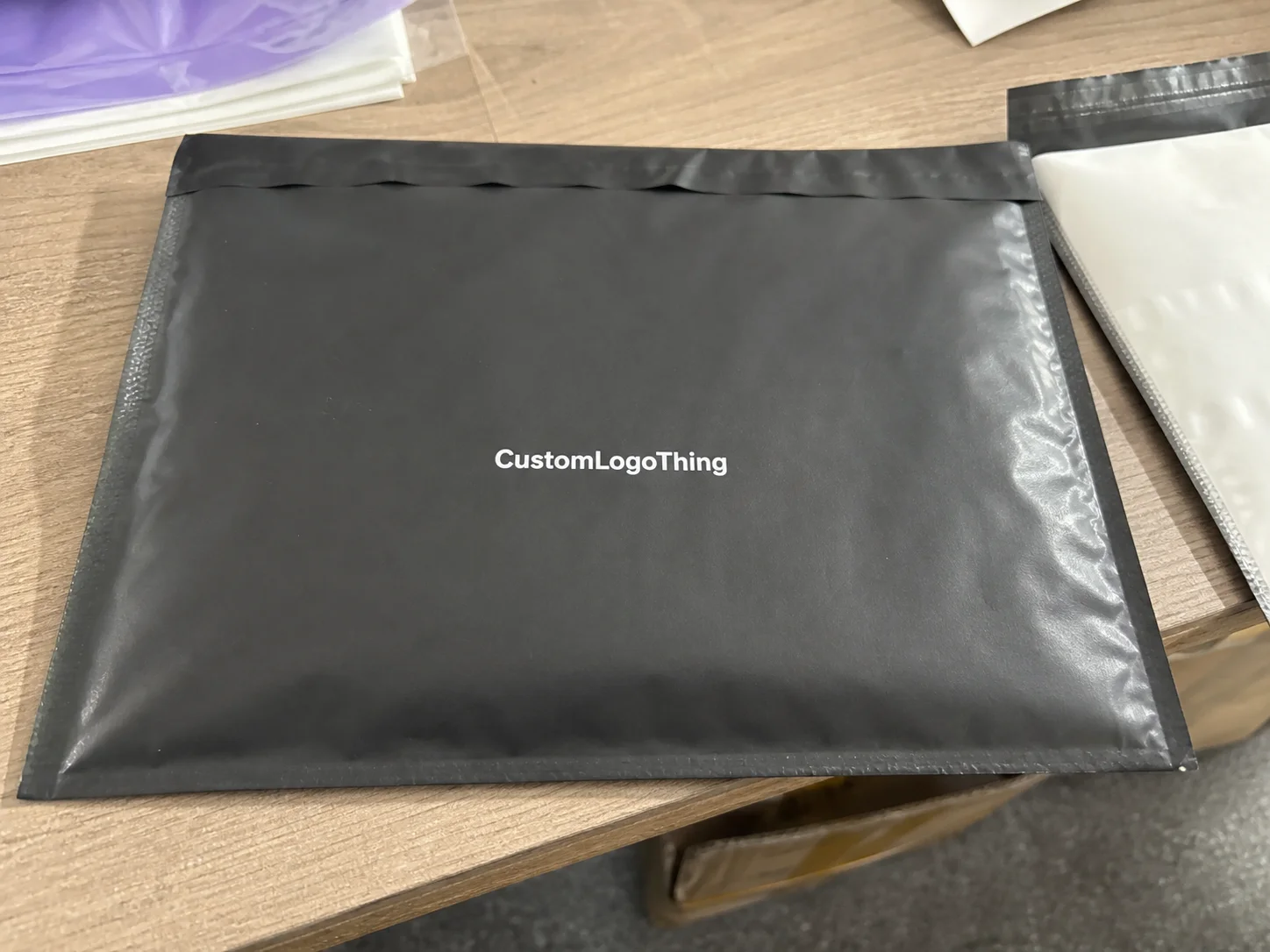
One apparel client I worked with in Los Angeles had a release party tied to influencer posts and could not afford delays. They wanted a black mailer with silver ink, but they approved the art with tiny script font that looked elegant on screen and nearly disappeared on press proof. We changed the font weight, simplified the bottom line, and the run still hit the event date. That is the kind of small decision that separates a polished package from a pretty but impractical one. Also, silver ink on black film is gorgeous until it isn’t, which is how I learned to keep a very calm face while internally panicking over tiny typography and a hard 5 p.m. courier cutoff.
What should you prepare in advance? A vector logo file, Pantone references if color matters, your target quantity, your delivery date, and a realistic tolerance for one or two proof revisions. If you’re ordering a brand-new format for the first time, test the sample pack with actual product and insert combinations. That single step catches more issues than most spec sheets do. When you shop custom poly mailers small batches, the sample is your insurance policy, and the cost of a test pack at $15 to $40 is usually tiny compared with the cost of a bad first production run.
Common mistakes when you shop custom poly mailers small batches
The first mistake is guessing the size. I’ve seen buyers measure one shirt, ignore the seam fold, and then wonder why the mailer bulges at the closure. That is avoidable. Measure the finished packed item and test it with whatever inserts you actually ship. If you shop custom poly mailers small batches using product dimensions alone, you risk paying for a spec that looks good on paper but fails in the carton line. A 10 x 13 bag may sound fine until a folded hoodie, a tissue sheet, and a return insert turn it into a tight fit that slows packing by 12 seconds per order.
The second mistake is chasing the lowest price without checking film quality. A mailer that is $0.03 cheaper per unit can become expensive if the seal peels open, the print looks fuzzy, or the film punctures on a corner. Weak seals and thin gauges are the classic false economy in packaging. I would rather see a buyer spend a little more on a 2.75 mil or 3 mil structure than re-ship 2% of orders because the mailers could not handle normal carrier abuse. That “savings” evaporates real fast once customer service starts lighting up your inbox and your replacement costs climb above the original quote.
The third mistake is poor artwork preparation. Low-resolution art, too much detail, and weak contrast are the fastest ways to make a custom mailer look unfinished. Flexible film is not a premium paper label. Tiny text, hairline rules, and intricate gradients often reproduce poorly, especially on glossy surfaces. If you want strong branded packaging, simplify the design and make the logo readable from three feet away. A 300 dpi raster file can work for some simple graphics, but a vector file is still the cleaner choice for repeatable production.
The fourth mistake is timeline optimism. Buyers often expect instant turnaround on specialty materials, custom sizes, or multi-color printing. Factories need time for plates, material allocation, press setup, drying or curing, inspection, and freight booking. If you are launching a campaign on a fixed date, tell the supplier early and confirm each milestone. When people shop custom poly mailers small batches with no buffer, they sometimes end up paying expedited freight, which can add $120 to $450 on a modest order, or accepting a weaker spec just to stay on schedule.
The fifth mistake is under-ordering. Small batches should be controlled, not reckless. If your test run is 1,000 mailers and you know your monthly need is 700, you probably want enough units to cover a reprint or two, especially if the design is tied to a seasonal campaign. Inventory shortages can force emergency substitutions that break package branding continuity. That can matter more than most people realize, especially when the mailer is part of a broader retail packaging story and your reprint lead time is still sitting at 12 to 15 business days.
One supplier negotiation still sticks with me. A brand insisted on a tight minimum to protect cash flow, then called two months later because the launch outperformed their forecast and they had 150 mailers left. The reorder took longer than planned because their artwork needed a small correction and their original file package was incomplete. That sort of headache is exactly why I tell clients to document everything once they shop custom poly mailers small batches. Your future self will thank you, preferably with fewer migraines and no emergency overnight shipping from a warehouse in Secaucus.
Expert tips to get better results from small-batch mailers
If you can get a physical sample, do it. A sample lets you judge color, hand feel, opacity, and closure strength in a way a screen never can. I like to see buyers put a sample through their actual packing station, then carry it through a normal shipping path. If the product shifts, if the seal line feels too narrow, or if the finish fingerprints too easily, you will know before production begins. That is especially useful when you shop custom poly mailers small batches for premium product packaging or a holiday drop, because the first 50 mailed pieces often become the first 50 customer impressions.
Simplify the artwork when possible. A strong logo lockup, one accent color, and a clear website or social handle often print better and age better than a full collage of graphics. On flexible poly film, fewer elements usually mean better consistency from piece to piece. I’ve seen a simple one-color design outperform a busy four-color concept because customers could actually read it, and fulfillment staff could spot it instantly in a crowded bin. Also, nobody has ever said, “I wish there were more tiny details on a mailer that gets tossed in a minute,” especially not after a 700-piece packing shift in a humid warehouse.
Ask for quote breakdowns line by line. A good supplier should separate setup, decoration, material, proofing, packaging, and shipping. That way you can see whether the low headline price hides a higher freight bill or extra art charge. When you shop custom poly mailers small batches, quote transparency matters more than shaving a penny off the piece price. A clear quote of $0.16 per unit for 5,000 pieces means something; a vague quote without freight, cartons, or plate fees often means the final invoice will be a surprise.
Choose a slightly larger mailer if your product has corners, inserts, or irregular edges. This is one of those factory-floor lessons that sounds simple but saves people often. A mailer with a little extra room can seal cleaner and survive handling better than a size that is packed to the edge. That doesn’t mean overdo it. Too much slack looks unprofessional. But a modest increase in layflat width can make a real difference, especially if your product includes a zipper, rigid tag, or folded cardboard insert that creates pressure at the seam.
Plan for the next order while you approve the first one. Save the final artwork files, the approved Pantone references, the exact size, the film thickness, the closure style, and the supplier’s carton count. That documentation makes future reorders smoother and keeps your package branding consistent. If you are also building out custom printed boxes for other lines, keeping the specs organized helps the whole program stay aligned, and it makes the next quote cycle much faster because your supplier can reuse the exact 14 x 19 inch spec and print notes without starting from zero.
“The best small batch is the one you can reorder without rethinking everything.”
And yes, sustainability can fit into that plan too. If recycled-content film is part of your brand story, test it carefully, because recycled blends can vary a bit in feel and opacity. Check whether the supplier can explain the source of the material and whether the final mailer still meets your transit needs. A sustainability claim only helps if the package actually performs in shipping, whether the run comes from a plant in Jiangsu or a converter in North Carolina.
Next steps after you shop custom poly mailers small batches
Before you place an order, build a short checklist and keep it in one place. Measure your product, define your quantity, choose a material, gather your artwork, and set a realistic budget range. If you’re unsure about the best fit, test one sample pack with the real contents you ship every day. That one move can tell you more than a dozen sales emails. When you shop custom poly mailers small batches, precision upfront is what keeps the run economical later, and it also makes the reorder far easier if you land on a winning spec like a 3 mil co-extruded black mailer with a 25 mm adhesive strip.
Then compare suppliers the right way. Ask about minimums, proofing, lead time, print method, and shipping origin. If one supplier is quoting from a domestic warehouse and another from an overseas plant, the freight and timing picture will be very different. Don’t compare them as if they were identical. I’ve watched buyers get confused because the per-unit price looked similar, but the landed cost and delivery window were not even close. A quote from Dallas at $0.29 per unit for 1,000 pieces may beat a quote from Qingdao at $0.19 once you factor in air freight, duties, and the calendar.
Once you receive samples or proofs, check them in real use. Put actual inventory inside. Tape, seal, and stack them. Hand one to your fulfillment team and ask whether it speeds them up or slows them down. That kind of testing is particularly valuable if your business handles variable-size shipments or seasonal promotions. It also helps you decide whether to pair the mailer with another element of branded packaging, such as stickers, tissue, or inserts, especially if you are building a launch kit that has to fit into a 9 x 12 x 2 inch packout window.
After approval, document the final spec in a simple file: size, film, finish, print method, artwork version, proof date, and supplier contact. I can’t overstate how much time this saves later. The next time you shop custom poly mailers small batches, you’ll have a clean baseline instead of starting from scratch, and your rep can quote a new 2,500-piece reorder in minutes instead of sorting through old emails and half-finished PDFs.
If you want the cleanest possible first run, my practical advice is simple: collect specs, request quotes, review proofs, test one sample pack, and place a controlled batch once everything checks out. That is how you get professional results without overcommitting cash or warehouse space. And if the run performs well, you already have the data to scale the next order with confidence, whether the next step is 5,000 pieces at a lower unit cost or a second colorway timed to a spring launch.
Can I shop custom poly mailers small batches without paying huge setup fees?
Yes, but pricing depends on print method, color count, and whether the job needs plates or digital setup. Ask for an itemized quote so you can see setup, decoration, and freight separately. If the artwork is simple and the quantity is modest, shop custom poly mailers small batches programs can be cost-effective, especially when you keep the design to one or two colors and stay near a 1,000 to 2,500 piece run where setup costs are easier to absorb.
What is the best size when I shop custom poly mailers small batches?
Choose based on the finished dimensions of the packed product, not the product alone. Leave room for folds, inserts, and the seal area so the mailer closes cleanly without stretching. Testing one sample with actual contents is the safest way to confirm fit before you commit to a full shop custom poly mailers small batches order, and a 12 x 15 or 14 x 19 mailer often fits better than the first guess.
How long does it take to shop custom poly mailers small batches and receive them?
Timeline usually includes quote review, artwork approval, production, and freight transit. Simple jobs move faster than multi-color or special-material runs. Build in extra time for proof changes and shipping delays if you have a launch date, because small-batch orders still need proper scheduling when you shop custom poly mailers small batches. A typical window is 12 to 15 business days from proof approval, plus transit time based on where the factory is located.
What artwork works best for small-batch custom poly mailers?
Bold logos, high-contrast shapes, and fewer fine details usually print more cleanly on flexible film. Low-resolution images and tiny text often look weaker once applied to a glossy or matte mailer surface. Vector files are typically best for clarity and consistency, especially if you plan to reorder after you shop custom poly mailers small batches the first time. A single Pantone match, such as Pantone 286 C or 185 C, usually prints more predictably than a crowded gradient.
Are recycled mailers a good choice when I shop custom poly mailers small batches?
They can be a strong option if you want sustainability without giving up basic shipping performance. Check the recycled content level, opacity, and seal strength before ordering. A sample test is especially important because recycled films can vary slightly in texture and appearance, which matters when you shop custom poly mailers small batches for a branded program. Some recycled blends are excellent at 3 mil thickness, while others are better suited to lighter apparel orders.
If you are ready to shop custom poly mailers small batches, start with your measurements, ask for a clear quote, and treat the first run like a learning tool as much as a branding piece. That is how strong packaging programs get built on the factory floor, one careful batch at a time, whether the order is 500 pieces from a California distributor or 2,000 pieces from a plant in Shenzhen.