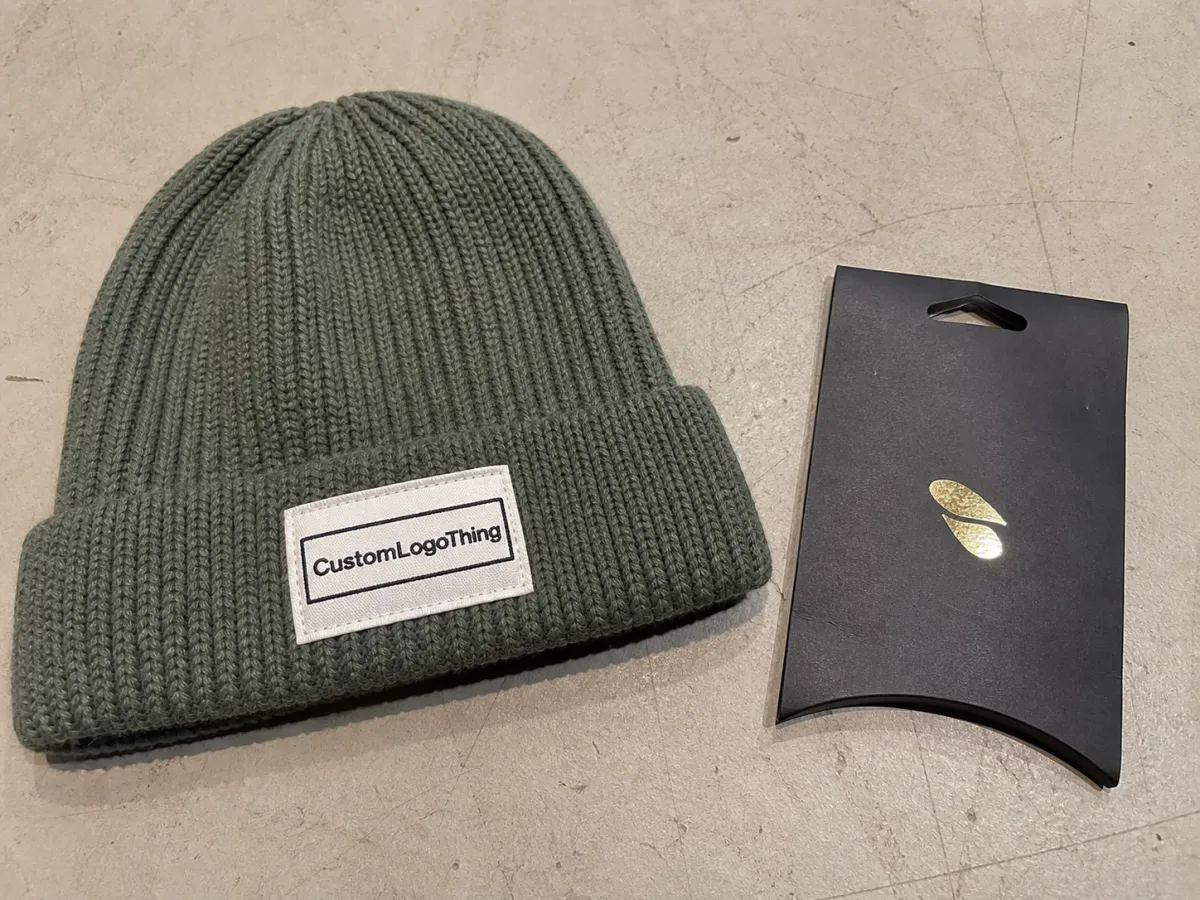
A cuffed beanie usually feels heavier at the band than at the crown. Double the cuff to 7-9 cm and the lower edge starts to carry more weight, even if the body is only 7-gauge or 12-gauge. That is why thickness matters before anyone approves artwork, packaging, or a bulk order. The cuff can make a piece seem denser than it really is, and a soft crown can hide stretch problems that only show up after wear, steaming, or packing.
For skincare and beauty brands, thickness affects fit, product photos, logo sharpness, and how the beanie settles into a gift box. The thickest option is usually not the right one. The better pick is the version that keeps its shape, feels comfortable, and holds decoration cleanly without taking over the rest of the kit. For a typical private-label run, a midweight cuffed beanie often lands around 90-130 g finished weight, with blank pricing commonly in the $2.50-4.00 per unit range at 500 MOQ and lower costs at 1,000+ units depending on yarn, gauge, and embroidery.
Thickness is a production decision, not a mood.
Skincare Cuffed Knit Beanies Material Thickness Guide
The first trap is judging thickness by touch alone. A dense cuff can feel substantial while the crown is lighter and more open than you expected. On paper, those two things can still describe the same beanie. Trusting a quick squeeze over the spec sheet is a bad bet. Good sourcing starts with numbers, not a vague sense of quality. Ask for yarn count, gauge, finished weight, relaxed circumference, and stretch recovery so you can compare options on the same scale.
Think of thickness in four parts: yarn gauge, stitch density, cuff depth, and recovery after stretch. Gauge tells you how fine or coarse the knit looks. Stitch density shows how much air the fabric holds. Cuff depth changes how much material sits at the band. Recovery tells you whether the beanie snaps back or stays loose after wear. In factory terms, most cuffed beanies are made on computerized flat knitting machines in 7-gauge, 9-gauge, or 12-gauge setups, then linked, steam blocked, and finished with trim attachment or embroidery.
For skincare programs, this matters because the beanie usually sits beside serums, masks, candles, and other giftable products where presentation counts. A soft beanie that still holds a clean shape makes the whole kit feel thought through. Too much bulk can crush badly in packaging or crowd the rest of the set. If your brand wants sustainability claims, ask for GOTS on organic cotton styles, OEKO-TEX Standard 100 for yarn and dye safety, or GRS if recycled polyester or recycled acrylic is part of the build.
- Premium look: even loops, a clean face knit, and no lump at the cuff.
- Comfort: enough stretch for different head sizes without digging into the forehead.
- Decoration surface: stable enough for embroidery, woven labels, or patches.
How Knit Gauge and Yarn Weight Change the Feel
Finer gauge knits usually give you a smoother face and a more polished retail look. That works well when the beanie needs to sit next to premium packaging or minimal branding. Heavier gauge constructions add visible structure and more warmth, but they can also make the surface look chunkier than some skincare buyers want. A 12-gauge beanie often feels cleaner and more compact, while a 7-gauge style reads thicker and more winter-forward.
Gauge changes the mood fast.
Yarn choice changes the result just as much as gauge. Acrylic is common because it gives consistent color, good bulk, and predictable cost control, with many factories quoting $2.50-3.20 per unit at 500 MOQ for a basic cuffed style. Cotton blends usually breathe better and feel less fuzzy, though they can lose some spring compared with synthetics. Wool blends bring insulation and natural stretch, but they can create itch complaints if the blend is not balanced well. For a softer hand-feel, look for 100% acrylic, 70/30 acrylic-wool, 50/50 cotton-acrylic, or recycled polyester blends with OEKO-TEX Standard 100-certified yarns.
The cuff changes the feel again. Because cuffed constructions double the fabric at the band, the wearer feels more pressure at the forehead even when the crown is not especially heavy. That helps when the logo needs a firm platform, but it can also make the size feel tighter than expected. For decorated pieces, a stable cuff usually gives better logo placement and cleaner embroidery, especially when the artwork is small or detailed. A 6-8 cm cuff is a common sweet spot for embroidery that needs enough flat space without warping the opening.
- Acrylic: steady, cost-friendly, and easy to match across large runs.
- Cotton blends: softer, more breathable, and usually better for indoor wear.
- Wool blends: warmer and more resilient, but they need a comfort check.
Key Factors That Determine the Right Thickness
The right thickness is the one that matches the use case. Spa kits, salon retail, wellness promos, and winter giveaways do not need the same beanie. A spa bundle that ships with face oils and body care may do better with a midweight knit that folds neatly and feels soft. A cold-weather campaign can justify a denser piece with more body and structure. Why push a winter-weight build into a spa kit? If the beanie will sit inside a rigid gift box, keep the finished height and bulk low enough to avoid crushing the rest of the set.
Choose the decoration method early. Embroidery needs enough stability to avoid puckering, and most suppliers will ask for the final stitch count before they confirm pricing. Woven labels work on many knits, but placement still needs to be clean. Heat transfers can struggle on textured or very stretchy surfaces. A simple logo can handle more variation than a detailed mark, but small type and thin linework need a calmer knit face. If you want a retail finish, ask for an embroidered strike-off and a woven label mockup before bulk.
Fit is the other non-negotiable. Thicker yarn can make the opening feel smaller, so check whether the cuff depth balances that out or whether the head opening needs more stretch. That matters most for unisex gift sets, where one size has to work across a wider range of wearers. For most skincare programs, a midweight knit usually lands in a safer place than the heaviest option on the supplier sheet. A practical target is a relaxed circumference around 46-50 cm, with 20-30% stretch recovery after a 30-minute hold test.
Fit can wreck an otherwise good run.
Useful spec checks: relaxed circumference, cuff height, stretch recovery, itch factor, logo clarity, and how the beanie looks after it comes out of the box and goes back on the head. Add yarn lot, color code, stitch density, and finishing method so the production team can repeat the approved sample without drifting.
Step-By-Step Spec Checklist Before You Sample
Before you request swatches or a finished sample, define the wearer, season, and climate. A kit sold in a mild climate can use a lighter hand, while a winter promotion may need more body in the knit. If the beanie will be worn indoors at events, breathability matters more than maximum insulation. Share your target price too, because a $2.50-4.00 target at 500 MOQ usually points to a simpler yarn, a single-color knit, and one embroidery position rather than multiple trims.
- Step 1: define the intended wearer, season, and climate.
- Step 2: choose a target hand-feel, such as soft and lightweight, medium and structured, or warm and substantial.