Slider Lock Bags vs zipper pouches sounds like a tiny packaging decision until customers start using the bag. Then the closure gets very loud. A pouch can look sharp on a sample table and still annoy people after filling, shipping, shelf stocking, and three normal uses at home.
The usual problems are not glamorous. Powder gets packed into the zipper track. A full bag needs two hands to close. A slider catches near the corner. The top edge bends in the carton. Someone pinches the closure once, assumes it is shut, and later finds crumbs in the cabinet. Packaging failure rarely arrives with drama. It usually arrives as a small daily irritation.
Quick Answer: Slider Lock Bags vs Zipper Pouches
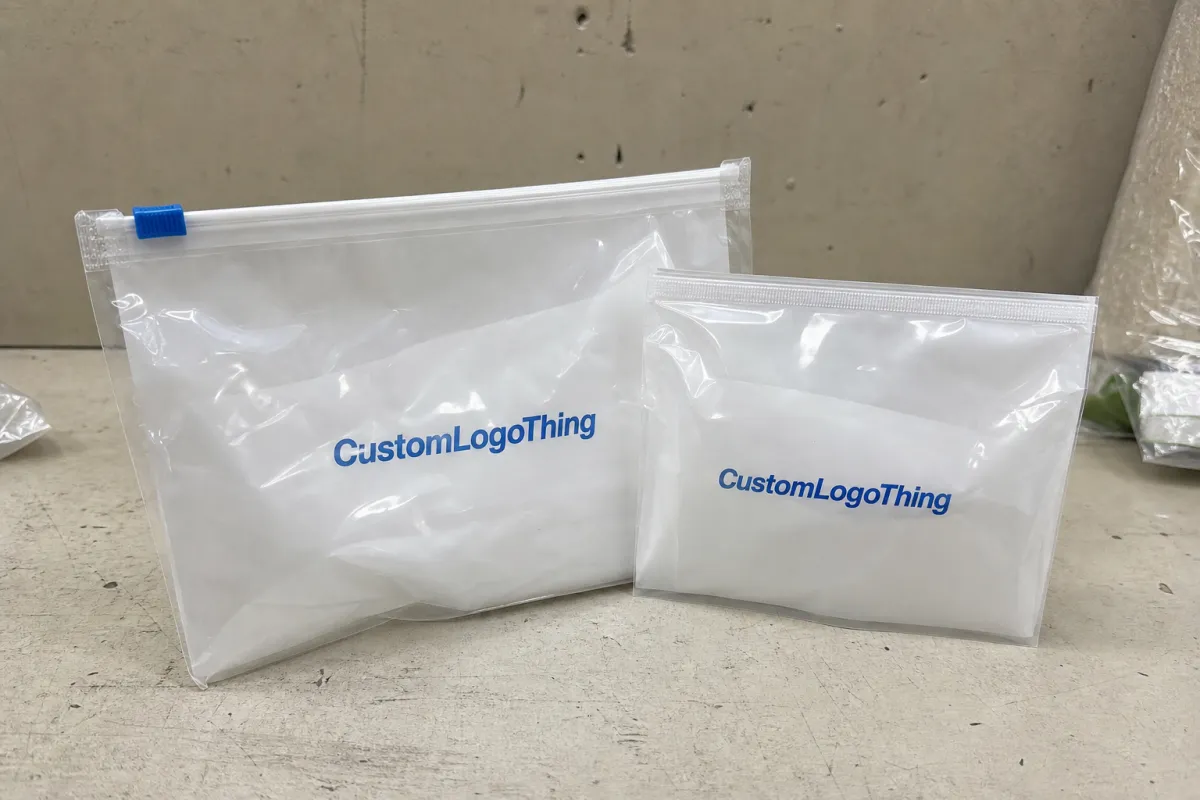
Here is the short version. Slider Lock Bags are usually better when easy, repeatable opening and closing matter most. Press-to-close zipper pouches are usually better when cost, compact packing, mailer fit, and a clean retail face matter most.
Neither option is automatically more premium. That is the lazy answer, and it causes expensive mistakes. The better closure depends on the product, fill weight, material structure, filling method, sales channel, and how the buyer will actually use the pack after purchase.
An empty slider bag often feels more reassuring because the tab gives the user a clear grip point and a visible travel path. An empty zipper pouch can feel less exciting. Then you fill both with 8 oz of granola, 2 lb of pet treats, protein powder, frozen product, or a kit of small metal parts, and the answer may change.
Closure performance depends on film gauge, zipper profile, slider track quality, heat-seal consistency, fill weight, headspace, and product behavior. Powder, oil, sharp edges, frozen moisture, and parcel handling all punish packaging differently. A closure that works on dry candy may be a poor fit for oily treats or fine supplement powder.
The test should not be a gentle squeeze of an empty sample. Fill the pouch to the expected net weight. Squeeze the body. Invert it. Open and close it 20 times. Pack it in the planned shipper. Let someone handle it who is not trying to protect your feelings.
Buyer rule: do not pay for the closure that feels nicest empty. Pay for the closure that still works after filling, shipping, shelving, and repeated use.
A 4 mil PE utility bag, a 5 mil reusable bag, a PET/PE printed stand-up pouch, and a metallized barrier pouch do not behave the same near the closure. The material matters. So does the way the bag is converted. So does the amount of space left above the product. Ignore those details and the closure comparison turns into guesswork with prettier words.
Top Options Compared for Retail, Food, Parts, and Samples
Most buyers are not choosing between only two bags. They are choosing among several resealable formats that sit close together on a quote sheet: standard zipper stand-up pouches, slider lock stand-up pouches, lay-flat slider bags, tamper-evident zipper pouches, child-resistant zipper formats, and heavy-gauge reusable bags.
| Format | Best-fit uses | Shelf feel | Typical material direction | Buyer watchout |
|---|---|---|---|---|
| Press-to-close zipper pouch | Snacks, supplements, coffee, pet treats, refill packs, samples | Clean front panel, familiar opening, efficient retail look | PET/PE, BOPP/PE, kraft-look laminate, metallized PET/PE | Fine zipper tracks can clog with powders or fail if overfilled |
| Slider lock stand-up pouch | Family-size food, hobby kits, travel goods, bulky refills | Obvious handling cue, more reusable feel in the hand | Heavier PE structures or laminated retail films with slider track | Bulkier top edge can interfere with tight case packing |
| Lay-flat slider bag | Apparel accessories, hardware kits, industrial parts, subscription box components | Functional, practical, easy to open repeatedly | LDPE or LLDPE, often 2-6 mil depending on load | Less shelf structure than a gusseted stand-up pouch |
| Child-resistant zipper pouch | Regulated goods, certain supplements, cannabis-adjacent packaging where allowed | More deliberate opening, compliance-forward feel | Certified child-resistant laminated structures | Testing, labeling, and local rules must be confirmed before ordering |
| Tamper-evident zipper pouch | Food, wellness products, powders, retail refill packs | Trust-building first-open cue with reseal after opening | Printed laminate with tear notch, header seal, or perforated feature | Artwork must avoid tear lines, seals, and notch zones |
| Heavy-gauge reusable bag | Parts kits, tools, craft supplies, durable storage | Rugged, less delicate than thin retail film | Thicker PE, reinforced seals, sometimes slider closure | Higher freight cube and higher per-unit material cost |
For printed retail pouches, PET/PE and BOPP/PE structures are common because they print cleanly and protect graphics under the outer layer. For barrier needs, metallized film or foil-based laminates can help with moisture, oxygen, aroma, and light exposure. For utility bags, LDPE and LLDPE still make sense because they flex well and have a familiar soft hand.
Paper-look packaging needs a separate conversation. A kraft appearance does not automatically mean a pouch is paper, recyclable, compostable, or certified. If a buyer wants FSC-related claims, ask for documentation and chain-of-custody support. The Forest Stewardship Council is a useful reference point for certified fiber claims, but a brown pouch is not proof of anything. Shocking, I know.
Fit issues deserve attention early. Sliders can rub or catch when cartons have little head clearance. Small pouches may not have enough top area for a smooth slider, especially if the brand also wants a hang hole, tear notch, and large logo. Lightweight zipper pouches can frustrate users if the zipper track is too fine for the fill weight or if powder settles into the profile after each scoop.
- Choose slider for accessibility, repeated use, and products that must be resealed correctly every time.
- Choose zipper for economical retail presentation, compact storage, strong print area, and efficient quoting.
- Choose specialty closures only when compliance, tamper evidence, child resistance, or product protection requires them.
Detailed Reviews: What Each Closure Feels Like After Real Handling
Slider Lock Bags earn their reputation through clarity. The user can see where the closure starts, move the tab across the track, and feel a more obvious end point. That matters for customers with wet hands, gloves, limited dexterity, or a kitchen routine where the bag is opened every day.
A slider can also reduce partial closures. With press-to-close zippers, some users pinch the center and miss a corner. With a good slider, the tab encourages a full pass across the opening. For family-size food, hobby kits, travel accessories, craft supplies, and refill packs, that little mechanical cue can improve the user experience.
There are tradeoffs. The added slider component raises cost, creates a bulkier top edge, and can become the weak point if the track is not matched to the film thickness or fill weight. I get cautious with small bags under about 4 inches wide, overfilled pouches, and packs that must stack tightly in master cartons. A slider that feels fine on a loose sample can drag after the top seal is distorted by pressure, temperature, or poor case packing.
Zipper pouches deserve equal respect. A good press-to-close zipper is clean, compact, widely available, and easy to print around. Shoppers understand it. Designers like the uninterrupted front panel because matte films, spot gloss, clear windows, kraft-look finishes, and full-bleed graphics have more room to work.
For food, supplements, cosmetic samples, pet treats, and refill products, the standard zipper pouch is often the most commercially sensible baseline. It offers broad material options, decent reclose performance, and better packing efficiency than most slider formats. It also tends to quote faster because suppliers usually have more tooling, film structures, and size options already in rotation.
The failures are familiar. Powder can lodge in the zipper track. Oil migration can affect grip. Overfilled bags can push the zipper open from inside the pouch, especially when there is not enough headspace above the product. Operators can seal too close to the closure during hand filling or semi-automatic filling, creating warping, wrinkles, or uneven engagement.
Test samples like you mean it. Fill them to expected weight, squeeze the body, turn them upside down, and open and close them at least 20 times. Look across the top seal for waviness. Check whether the corners near the closure are fully engaged. If the product is a powder, shake the pouch and reseal it after the powder has touched the track. If the product is oily, let the sample sit several days and try again.
Line fit matters too. A pouch can pass a desk review and fail in production because the fill mouth is too narrow, the film surface is too slippery, or the closure slows an operator by 3 seconds per bag. On a 5,000-piece hand-fill run, that tiny delay becomes more than four extra labor hours before cartons, labels, or palletizing enter the conversation.
Cost, Pricing, MOQ, and Unit Cost Differences
Slider Lock Bags usually cost more per unit because they add a separate slider component, more closure material, and tighter converting controls. Zipper pouches benefit from mature tooling, broad material availability, and high-volume standard structures. That does not make sliders overpriced. It means the added function has to earn its place.
Real quotes are driven by more than closure style. Size, film type, thickness, barrier layer, bottom gusset, window shape, print coverage, number of colors, matte or gloss finish, digital versus plate-based printing, packing format, and order quantity all move the price.
For planning only, a small digitally printed zipper pouch may land around $0.18-$0.35 per unit at moderate quantities. A larger custom slider format can sit much higher depending on width, film gauge, closure supply, and whether the slider color or track profile is standard. These ranges shift with freight, resin pricing, decoration method, spoilage allowance, and market conditions. Treat them as budget markers, not promises carved into plastic.
MOQ varies the same way. Stock zipper pouches may be available in smaller runs, especially if decoration is a label or simple one-color print. Custom printed zipper pouches often need moderate quantities to absorb setup, plates if used, artwork handling, and material costs. Custom slider formats can require higher minimums if the size, component color, track profile, or film structure is not already in the supplier’s normal program.
The lowest unit price is not always the lowest landed cost. A cheaper pouch can lose money through returns, repacking labor, leaking product, damaged cartons, slow filling, or customer complaints about resealability. If a closure adds $0.06 per unit but prevents a 2% return problem on a higher-value kit, the math may favor the more expensive bag. Numbers are annoying that way. They like context.
Ask for at least two quantities and one alternate film structure. Request 5,000 and 10,000 pieces, then ask whether PET/PE, metallized PET/PE, or a heavier PE option changes the unit cost meaningfully. Good quoting should show where the price break appears instead of forcing you to guess from one sample and a vague “bulk discount” line.
If budget is tight and the product is light, dry, and easy to close, zipper pouches are usually the smarter buy. If repeated access drives customer satisfaction, slider lock bags can justify the premium, especially for products that stay in use for several weeks.
Process, Timeline, and Production Steps Before You Approve
A practical buying process starts with the product, not the artwork. Define product weight, fill volume, fill method, expected shelf life, and shipping path. Then choose film and closure, confirm pouch dimensions, review artwork, receive samples or a prototype, approve proofing, move into production, inspect finished bags, and ship.
That order matters. If the pouch size is chosen after the artwork, someone ends up squeezing barcodes near gussets or moving required copy into a seal zone. If film is chosen after the design is approved, colors, windows, finish, and barrier may all need adjustment. Packaging can be creative. It is still manufacturing.
Timelines differ by format. A stock zipper pouch project can move quickly when decoration is simple and the bag size already exists. Custom printed pouches require artwork setup, material procurement, printing, laminating when needed, curing, slitting, pouch converting, inspection, and packing. A typical custom flexible packaging run may need several weeks after proof approval. Specialty film, slider components, compliance features, or overseas freight can add more time.
Slider formats add specific checks. The closure track and slider must move smoothly across the finished width. The top seal must not distort the mechanism. The bag mouth needs enough usable space for filling before final sealing. If the opening is too tight, the operator may spill product, contaminate the seal area, or slow down enough to change the real cost of the project.
Before production, approve outside dimensions, usable fill height, bottom gusset depth, hang hole placement, tear notch location, closure position, print orientation, barcode readability, case pack count, and carton size. Barcodes should be checked at final scale, not just on a PDF. Retailers may also have requirements for hang holes, shelf-ready cartons, warning copy, tamper evidence, or minimum font sizes.
Several timeline risks are in the buyer’s control: late artwork, missing dielines, changing film after proof approval, underestimating fill volume, skipping product compatibility testing, and waiting until inventory is nearly gone before reordering. Reorders often move faster than first runs, but slider components and special films still need planning time.
For performance testing, allow enough time to pack real product, store samples in the expected environment, perform drop or shipping checks, and have actual staff open, fill, seal, and carton the bags. The International Safe Transit Association provides widely used package testing guidance, and ASTM standards are often referenced for film, seal, and material testing methods. Not every launch needs lab testing. Every launch does need a test plan that reflects actual handling.
How to Choose by Product Weight, Barrier, Branding, and Filling Method
Start with the product. Powders, granules, sticky products, frozen goods, oily items, sharp parts, and bulky soft goods all stress the reseal feature differently. A dried fruit pouch does not behave like a frozen smoothie pack. A brass fastener kit does not behave like a cosmetic sample bundle.
Weight and volume create the first fork. Heavier products need stronger film, wider seals, and sometimes a more substantial zipper profile. A 12 oz snack pouch may work beautifully with a standard zipper, while a 3 lb refill pack may need heavier film, more headspace, or a slider that helps users close the bag without fighting the product mass. Lightweight samples may not need a slider at all, even if the feature looks appealing in a showroom.
Barrier needs add another layer. Dry snacks often need moisture resistance. Coffee, supplements, and aroma-sensitive products may need oxygen and odor control. Apparel accessories usually need clarity, scuff resistance, and puncture resistance more than oxygen barrier. Metal parts may need thicker PE-based structures, corrosion considerations, and stronger seals because sharp edges punish thin laminate.
Branding matters too. Zipper pouches give the front panel a cleaner uninterrupted look, especially for full-color graphics, windows, matte varnish, or a centered logo. Slider lock bags create a more functional and reusable impression, but they need design clearance near the closure hardware. If the brand relies on a high-end retail face, protect that front panel. If the brand promise is daily convenience, let the closure be visible and useful.
Filling method can decide the issue before marketing gets a vote. Hand-fill teams may need a wide, stable mouth. Semi-automatic fillers need consistent pouch opening and enough seal clearance. Higher-speed operations need closure placement that does not fight equipment, sensors, or heat-seal jaws. If operators are scooping powder, placing hardware, or loading bulky soft goods, test the real motion before approving the run.
Use a simple shortcut. If the package is meant to be opened daily, handled by a broad age range, or used beyond the first purchase, test slider first. If the package is a retail pouch where cost, graphics, flat packing, and shelf blocking carry the sale, test zipper first. That keeps the closure choice tied to actual use instead of preference.
Recommendation for a Better Quote
For most custom packaging buyers, start with a quality zipper pouch as the baseline. It is cost-efficient, familiar, printable, compact, and available in many film structures. Then move to a slider lock format only when the customer experience, product weight, accessibility need, or repeated access clearly earns the added cost.
Slider locks make more sense for family-size food packs, reusable storage bags, accessibility-sensitive products, craft or hobby kits, bulky refill packs, and items where the consumer must reseal the bag correctly every time. A slider can also help when the product is used by children, older adults, gloved users, or anyone who benefits from a clear mechanical closing cue.
A zipper pouch remains the stronger commercial choice for single-flavor snack lines, small sample programs, flat retail displays, mailer-friendly packaging, budget-sensitive launches, and products where a clean printed face matters more than one-handed closure. It is also the safer first quoting path if the launch quantity is modest and the brand is still testing demand.
For a useful quote, gather product dimensions or fill weight, expected order quantity, artwork files or logo assets, preferred finish, shelf-life needs, filling method, target launch date, and any compliance or retailer packaging requirements. If the carton size is already known, include it. A pouch can look perfect alone and still waste space or deform after 50 units are packed into a tight case.
Request one slider sample and one zipper sample side by side before approving a full run. Fill both with the actual product. Close them repeatedly. Put them in the planned carton. Let packing staff handle them. If the product is food, confirm food-contact suitability and barrier needs before artwork approval. If the product makes environmental claims, ask for documentation instead of trusting a leaf icon. Leaf icons have been doing too much work for too long.
The smartest slider lock bags vs zipper pouches decision matches closure feel, film structure, pricing, production timing, and real handling before purchase orders are placed.
FAQ
Are slider lock bags better than zipper pouches for heavy products?
Slider lock bags can be easier to close on heavier fill weights, but they are not automatically stronger. Film thickness, seal width, closure profile, pouch size, and headspace matter just as much. For dense powders, hardware, pet treats, or refill packs, test filled samples upright, upside down, and after repeated openings. If the product pushes hard against the top of the bag, a stronger zipper pouch with more headspace may outperform a poorly sized slider bag.
Do zipper pouches cost less than slider lock bags?
In most custom packaging quotes, zipper pouches cost less because the closure is simpler, more common, and easier to run in many pouch formats. Slider lock bags usually add component cost and may require more careful converting, which can raise unit cost and MOQ. The fair comparison is landed cost, not just unit price, because leakage, slow packing, or customer frustration can erase a cheaper pouch’s savings.
Which is better for food packaging, slider lock bags or resealable zipper pouches?
Resealable zipper pouches are often the better starting point for food because they offer a clean retail face, broad material options, and efficient pricing. Slider lock bags become more attractive for family-size packs, frozen items, products opened often, or anything where shoppers need an easier closure. Food-contact compliance, barrier structure, aroma control, and seal integrity should be confirmed before deciding on either closure.
Can slider lock bags and zipper pouches both be custom printed?
Yes, both can be custom printed, but artwork layout must account for closure location, seal areas, gussets, tear notches, hang holes, and any clear windows. Zipper pouches usually give designers a smoother uninterrupted front panel, while slider lock bags need extra clearance near the top edge. Ask for a dieline before finalizing artwork so logos, nutrition panels, barcodes, and legal copy do not land in sealed or folded areas.
What samples should I request before ordering slider lock bags vs zipper pouches?
Request samples in the actual size range, film thickness, closure type, and gusset style you are considering, not just a generic pouch from a sample bin. Fill samples with real product, close them repeatedly, pack them into cartons, and check whether the closure stays aligned after shipping-style handling. If timing allows, compare one economical zipper pouch against one slider option so the final choice is based on handling, Cost, and Production fit.

