An ecommerce Slider Lock Bags material sample guide helps you avoid approving packaging that looks right on paper but fails in use. Two bags can match on size, print area, and nominal thickness and still behave very differently once they are filled, stacked, shipped, and reopened. The sample is where those differences show up.
Samples are not a formality. They are the fastest way to confirm whether the film, seal, and slider work together under real load. Buyers do not need a sales pitch here. They need proof that the bag closes cleanly, holds up in transit, and fits the product without making it feel cheap or hard to use.
That matters for returns as well as presentation. A bag that is cloudy, noisy, stiff, or flimsy can undercut an otherwise solid product. A sample lets you judge the packaging against the item's price point before the order is locked.
What the sample actually checks
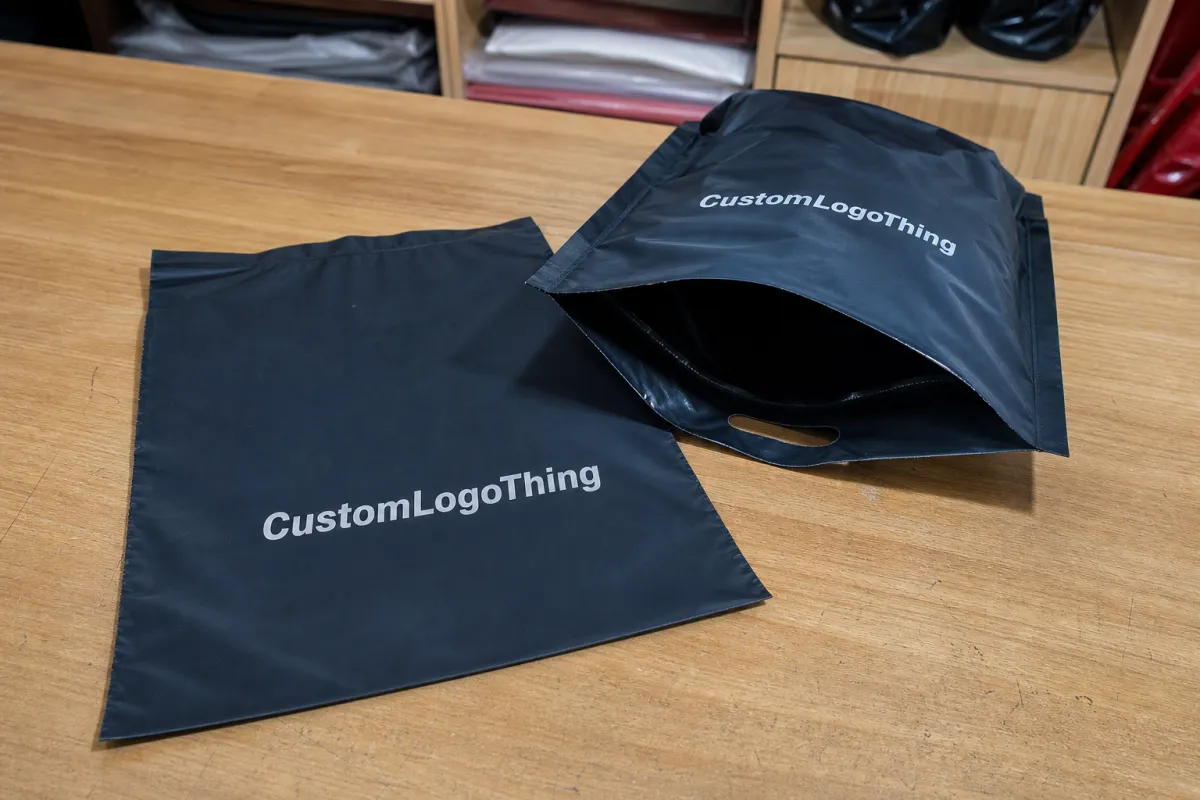
The sample's job is to confirm that the build you approved still works in the hand. That includes film structure, seal strength, slider track, closure force, clarity, and how the bag behaves after repeated opening and closing.
Size alone is not enough. A lighter film may look fine but split at a seam when the contents shift in shipping. A heavier film may survive abuse but feel too stiff or cloudy for retail presentation. The sample is where that tradeoff becomes visible.
Printing can change the outcome too. A plain unprinted sample shows the base material, but not always the final feel after ink coverage or heat. If artwork sits close to the closure, ask for that exact layout. Check finished outer dimensions, usable interior space, seal width, and any gusset behavior on the sample rather than guessing from a drawing.
Ask how the supplier checks the seal line. Peel data, burst data, or a documented in-process inspection method is useful. If that is not available, the hand test needs to be stricter: the closure should move evenly end to end, and the seam should not show weak spots, waviness, or dust contamination.
For heavier or sharper products, test the bag under tension, not just empty. A slider that feels smooth when unfilled can bind once the film stretches. A seal that looks clean can still creep open after vibration, compression, or repeated use. That is a performance risk, not a cosmetic one.
A good sample does not just prove that the bag exists. It proves that the bag survives actual use.
If you want a reference point for testing discipline, common transport and package methods such as ISTA transport test procedures and ASTM material methods are useful. You do not need a lab project. You do need a process more honest than "looks fine to me."
Sample process and timeline
The sample process should follow a clean sequence: request specs, confirm dimensions, build the sample, ship it, test it, revise if needed, then approve. It moves fastest when the buyer side gives complete information up front. The main delays come from vague briefs, missing artwork, or product details arriving in pieces.
Basic unprinted samples are usually faster than printed ones. A plain bag with standard film and standard slider hardware can often move through sampling in about 5 to 8 business days before shipping, depending on the supplier's queue. Printed samples, special slider colors, or revised dimensions usually add several more business days. International freight can add another week or more.
The common delays are predictable: low-resolution artwork, unclear finished dimensions, no product weight, and slow feedback after the first sample arrives. Version control matters too. Label each sample with the revision, date, intended SKU, and approved target dimensions so the team is not comparing near-identical bags later.
Once the sample is approved, it should become the control point. Procurement uses it to compare quotes, QC uses it to inspect incoming production, and receiving can measure against it if the shipment drifts in size or finish. A good supplier will treat the approved sample as the target, not a loose suggestion.
Material, thickness, and seal factors that change performance
The main material decision is not "strong or weak." It is how the film behaves around your product. For ecommerce use, buyers usually compare clarity, softness, stiffness, puncture resistance, and how the bag feels after repeated handling.
Thickness is the easiest place to overbuy. Heavier gauge film can improve durability for sharper or denser products, but it also raises cost and can make the bag feel bulky. A 4 mil bag may be enough for light accessories. A heavier build may be smarter for metal parts, premium sets, or products with edges that can stress the film. The right answer is product-specific, not category-specific.
Thickness alone does not tell the full story. Two bags with the same nominal mil count can feel different because resin blend, additives, and film orientation change stiffness and clarity. Many slider bags sit somewhere between the softness of LDPE and the toughness of LLDPE. If the supplier offers a mono-material recyclable build, ask how the change affects seal behavior and optical clarity.
The seal and slider are where most failures hide. A slider that feels smooth on the first pass can still bind after the bag is packed and tension is applied. A seal that looks clean can still creep open after vibration or repeated use. If the closure does not hold with the same force from end to end, it should not pass approval.
Surface finish changes perception too. Crystal-clear film feels more retail-ready than matte or frosted film. Frosted film hides scratches and fingerprints better. Clear film helps buyers inspect the product quickly. The choice should match the brand and the item inside the bag.
Inner behavior matters as well. A smoother interior can reduce scuffing on printed parts or polished surfaces. A slightly more textured finish can help keep the product from sliding around. Neither is always better. The right choice depends on the product and the presentation.
If sustainability is part of the brief, ask for the exact material story. Recycled content, post-consumer waste percentage, and FSC-certified outer cartons are all reasonable points to confirm. Do not confuse a plastic slider bag with biodegradable packaging unless the claim is backed by the right certification and material formulation.
Packaging around the bag matters too. A good bag can arrive scuffed if it is tossed loose into a rough shipper. Proper carton sizing, inserts, and wrap help protect the finish during transit and internal handling.
If you need sourcing references, FSC and packaging groups publish useful material on responsible sourcing and chain-of-custody basics: FSC certification guidance and packaging industry resources.
Cost, pricing, MOQ, and quote drivers
Sample pricing changes with bag size, film type, slider hardware, print method, freight, and revision count. Ask for the sample fee, shipping method, setup charges, print plate cost if applicable, and revision lead time so you are comparing complete quotes instead of half-quotes.
MOQ follows the same logic. Every custom choice pushes the minimum up. A simple unprinted bag may allow lower volumes. Custom print, special finishes, thicker film, or custom slider colors usually need more units to make the job economical. If the run is short, keep the construction simple and put the money into film quality, closure performance, and print accuracy.
Tooling and procurement setup also affect the quote. Some suppliers can use existing film and closure inventory quickly. Others need to source a slider color, reorder resin, or set up a print run before production can start. That does not mean the supplier is bad; it means the lead time and price should reflect the real work.
| Option | Typical sample cost | Typical unit cost at 5,000 pcs | Best for |
|---|---|---|---|
| Plain unprinted slider bag | $35-$80 plus freight | $0.12-$0.28 | Testing fit, closure feel, and basic durability |
| Printed bag with standard film | $60-$140 plus freight | $0.22-$0.48 | Branded ecommerce packaging with moderate volume |
| Heavier film or special finish | $80-$180 plus freight | $0.35-$0.70 | Premium products, sharp-edged items, or higher return risk |
Those ranges are not universal. Resin markets move, print coverage changes the math, and slider style changes it again. They are still useful for spotting a quote that is strangely low because it quietly cuts thickness or swaps in a weaker closure.
Compare landed cost, not just unit cost. A bag that is 3 cents cheaper but creates more returns or requires extra inspection is not a savings. Freight, customs, duties, and rework belong in the real number.
Some suppliers credit sample fees against the first production order and some do not. Ask before assuming. The same is true for revision charges. One extra sample may be cheap; three revisions can turn a tidy sourcing project into a slow one.
Field-testing the sample
The sample test should start empty, but it cannot end there. First check dimensions, print placement, seal width, clarity, and whether the slider tracks cleanly. Then fill it with the real product, close it, reopen it, and close it again. Ecommerce packaging needs to handle repeated use, not just a single desk test.
Use the same conditions the bag will face in shipping. Put it in a corrugated shipper with the actual inserts or packaging materials. Add the same wrap, tissue, or accessory bundle if those are part of the pack-out. Shake the box lightly, stack a few units, and see whether the film scuffs, the seal shifts, or the slider becomes harder to operate.
If the item will sit in storage, leave the sample under modest compression for a period and reopen it later. That catches issues that only appear after holding pressure, not during a quick check. Temperature swings matter too. Some films get stiffer in cool storage; others soften under heat and pressure. If the fulfillment center is not climate controlled, test that condition.
Have more than one person test the sample. One person may care most about appearance, another may feel the closure drag, and a third may notice the product sits too high and stresses the seam. That small bit of redundancy catches issues before the order turns into inventory.
Record the results in a simple control sheet:
- Finished dimensions and seal width.
- Film thickness and material structure.
- Slider feel, closure force, and reopening ease.
- Visible defects, haze, edge curling, or print drift.
- Pass/fail notes after fill, shake, compression, and repeat-use tests.
Photos help more than memory. A photo beside a ruler, a photo of the closure after repeated use, and a photo of any weak seam are all useful if there is a dispute later. A retained note about what was acceptable and what was rejected is just as valuable.
Common mistakes and control points
The most common mistake is approving by touch alone. Soft film can still fail under load, and stiff film can still crack at the seal. Another mistake is trusting the empty bag. An empty bag tells you very little about what happens once product weight stretches the seams and stresses the closure.
One sample is not enough for every SKU. If the line includes different weights or shapes, each version needs its own check. A slim accessory and a dense kit do not place the same demand on the film or slider. Treating them as the same is how teams end up with one size that passes and another that causes returns.
Watch the quiet failure points: dimensional drift, artwork creeping too close to the seal, slider hardware arriving a shade off, or a seal weakening when line speed changes. None of those problems looks dramatic in a quote. All of them matter in production.
Retention samples help more than people admit. Keep one approved piece in receiving, one in QC, and one with procurement if the project is large enough. Label them clearly so there is no argument later about what was actually signed off.
Before releasing the PO, make sure the approved sample is tied to the order in writing. If the product is heavy, sharp-edged, or likely to be returned when packaging fails, request another sample or a confirmation run before full production. The point of an ecommerce Slider Lock Bags material sample guide is not paperwork. It is to confirm the build, approve the price with your eyes open, and release the order only after the sample survives the real test.
What should I ask for in an ecommerce slider lock bag material sample?
Ask for the exact film structure, thickness, slider style, finished dimensions, and seal width so you are testing the real build, not a rough guess. Request the same closure style and the same print layout you plan to order in bulk. If possible, ask for one sample packed with a product weight close to your actual SKU, because an empty bag can hide closure problems.
How many samples do I need before approving ecommerce slider lock bags?
One basic sample can be enough for a simple product, but two samples help when size, weight, or product shape varies. If the bag has to survive shipping abuse, test a normal sample and a worst-case filled sample. Multiple SKUs usually need multiple checks, because one size does not prove the whole range.
How long does the sample and approval process usually take?
Basic unprinted samples are often faster, while printed or revised samples usually take longer. Most delays come from missing specs, slow feedback, or changes after the first sample is built. If your team needs internal testing, add time for that before you sign off, because a rushed approval usually creates more work later.
What drives the price of an ecommerce slider lock bag sample or short run?
Price usually moves with bag size, film thickness, print colors, slider hardware, and shipping method. Low MOQ requests can cost more per unit because setup is spread across fewer bags. Special finishes, tighter tolerances, and extra revisions also push the quote higher.
Can I change the design after the sample is approved?
Yes, but even small changes can reopen the quote and extend the timeline. If the change affects size, film, print, or closure performance, request a new sample. Treat the approved sample as the baseline, not a loose reference.
What if the sample looks fine but the dimensions are slightly off?
Check the tolerance against your product and pack-out method before approving. A small change can matter if the product is tight in the bag, if the closure sits near the top edge, or if the bag is meant to fit inside another package. If the drift affects fit, stackability, or seal placement, do not treat it as cosmetic.


