A label roll can leave the press looking flawless and arrive at the packing bench with scuffed edges, dust on the adhesive side, or a curled liner because the bag failed first. That is the quiet risk behind custom Slider Lock Bags for labels: they are not merely storage bags. They are a handling system for printed inventory that may pass through printers, warehouse racks, kitting tables, fulfillment carts, and return bins before anyone applies the first label.
Labels look inexpensive because the unit price is often measured in cents. The risk is rarely one label, though. It is the roll. A 1,000-count roll of shipping labels, compliance decals, or retail stickers can stop a packing line if it arrives contaminated, crushed, or mixed with an older revision.
One damaged roll can create rework, relabeling, missed ship windows, and launch delays that cost far more than the bag. The closure is small. The exposure is not.
Custom Slider Lock Bags for Labels: The Small Closure That Prevents Big Losses
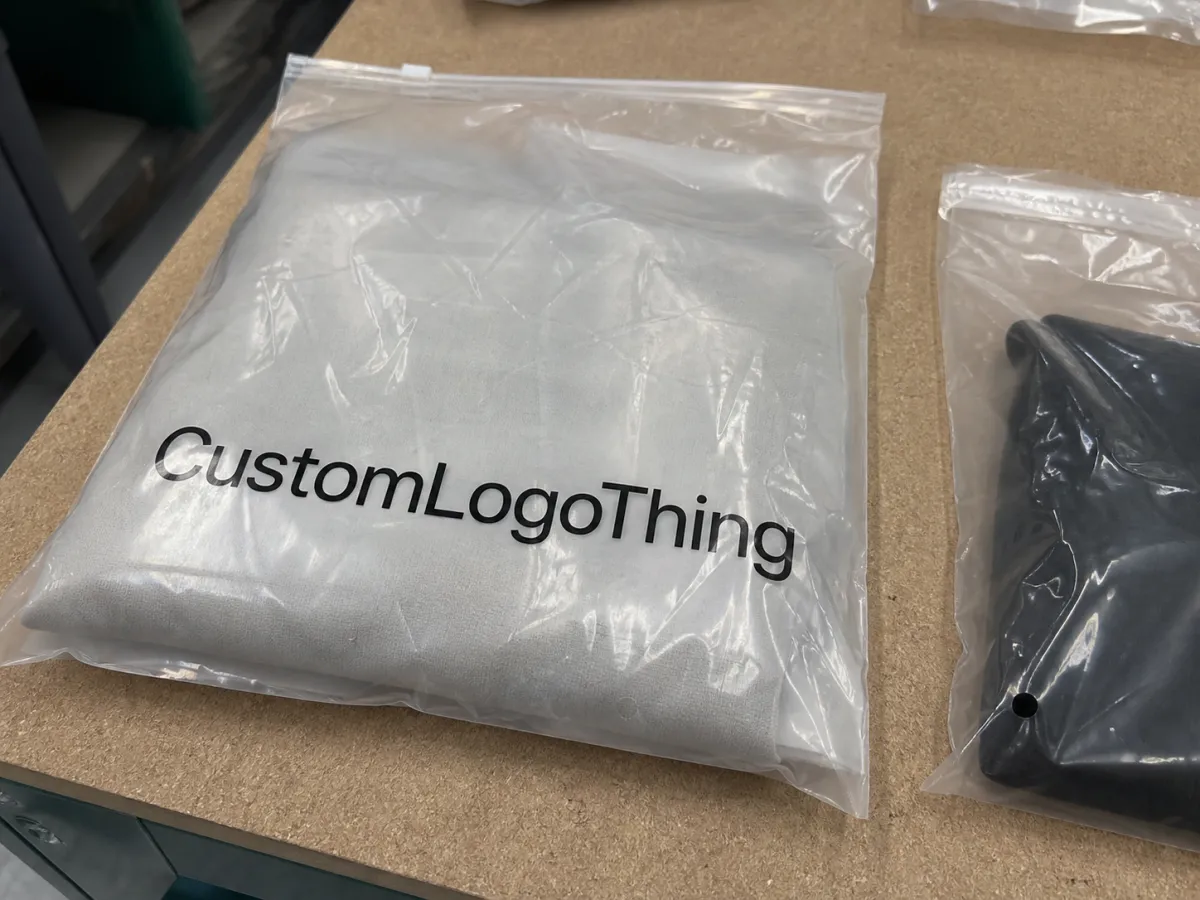
Buyers are usually ordering flexible plastic bags with a mechanical slider closure, sized and printed for label rolls, sheet stacks, sample packs, or mixed SKU label kits. The slider rides along a plastic track, so the user does not have to press the entire zipper line shut by hand.
That sounds minor. It is not.
Closures tend to fail during partial use, second-shift picking, or rushed changeovers where three label versions look almost identical. A press-to-close zipper can work well for small, light, single-use packs. It is cheaper, familiar, and widely available. But for larger bags or repeat-access label programs, a slider is easier for gloved hands, temporary labor, and warehouse teams opening bags 20 or 50 times per shift.
The useful buying question is not, “Which bag is cheapest?” It is, “Which bag keeps the label usable until application?” That changes the conversation. Protection, loading speed, film gauge, closure reliability, print placement, minimum order quantity, and lead time all begin to matter.
Buyer reality: a label bag is a low-visibility component that protects high-control inventory. That mismatch is why it is under-specified so often.
Label bags can also support package branding without becoming decorative waste. A one-color logo, barcode window, writable SKU block, and clear product view may do more operational work than a full-coverage print. Custom Logo Things offers related Custom Labels & Tags and Custom Packaging Products, so it helps to treat the bag, label, and outer carton as one product packaging workflow rather than three unrelated purchases.
How Slider Closures Protect Label Rolls, Sheets, and Kits
A slider closure uses a plastic track and moving tab. Push the tab in one direction, and the interlocking profile closes. Pull it back, and the bag opens. The advantage is repeatability. Users do not need even finger pressure across the full width of the zipper, which is where standard closures often get left partly open.
For labels, the protection jobs are specific. Dust control matters because loose paper fiber and warehouse grit can interfere with adhesive performance. Moisture resistance matters because many face stocks curl or soften when humidity swings hard. Edge protection matters because roll sides can dent, telescope, or abrade against corrugate during transit.
Not all bags are waterproof. Not all are puncture-proof. That misunderstanding causes trouble in this category. Performance depends on film type, thickness, seal quality, slider construction, and how the labels are packed inside the bag. A 2 mil LDPE bag and a 4 mil LDPE bag may look similar in a product photo, yet behave very differently after a roll is dropped into a bin with metal tools, cornered cartons, or loose cores.
Label rolls have their own weak points. Adhesive can pick up contamination along exposed edges. Face stock can rub against the inside of the bag if the roll shifts. Liner overhang can crease. Static can pull dust onto film and labels. Ink rub can appear during shipping if a printed label surface is pressed against rough or dirty material for hours.
- E-commerce roll labels: need fast access, clean storage, and reliable SKU separation for fulfillment teams.
- Sheeted event labels: need corner protection and a bag size that avoids bending the stack during insertion.
- Compliance labels: need version control, especially where batch codes, warnings, or regulatory artwork changes.
- Sales sample kits: need clean presentation, resealability, and clear viewing zones for quick identification.
Slider bags add value beyond physical protection. They reduce open bags sitting on shelves. They make returns easier to inspect. They help teams distinguish similar versions. On a busy packing bench, that can matter as much as film thickness.
Key Specs to Decide Before You Request a Bag Quote
Start with measurements. Not estimates. A supplier needs the finished label roll diameter, label width, core size, sheet dimensions, stack height, and the number of label units per bag. If the roll is 4 inches wide on a 3-inch core with a 6.5-inch outside diameter, state it that way. If the liner overhangs the label by 1/8 inch on each side, include that too.
Small errors multiply. A quarter-inch mismatch sounds harmless until 20,000 bags arrive and packers have to force every roll into place. Add 8 seconds of extra handling per bag, and the labor penalty becomes visible fast. At 20,000 units, that is more than 44 labor hours spent on friction that could have been designed out.
Film choice should be explained in working language, not resin jargon. LDPE is soft, flexible, and common for slider bags. HDPE is stiffer and can be economical, though it usually feels crinklier. Polypropylene offers high clarity and a crisp retail packaging look, but it may not suit every slider construction. Recycled-content blends may be available, depending on clarity requirements, food-contact needs, print demands, and supplier capability.
Gauge is the next fork. Thinner film lowers unit cost and shipping weight. Thicker film improves puncture resistance and perceived quality. For light label sheet packs, buyers often review options around 2 mil to 2.5 mil. For heavier rolls or repeat-use warehouse handling, 3 mil to 4 mil is more realistic. The right number depends on roll weight, carton packing, shelf conditions, and how often the bag gets reopened.
| Spec Choice | Typical Use | Cost Impact | Buyer Watchout |
|---|---|---|---|
| 2 mil LDPE | Light sheet stacks or small sample kits | Lower | May tear if rolls are heavy or handled repeatedly |
| 3 mil LDPE | Common roll-label storage and warehouse use | Medium | Needs accurate sizing to avoid loose shifting |
| 4 mil LDPE | Heavier rolls, repeated access, rough bins | Higher | Adds material cost and carton weight |
| Clear polypropylene | High-clarity sample packs or presentation kits | Medium to higher | Check slider compatibility and cracking resistance |
Orientation matters. Top-loading bags work for many rolls. Side-loading may be faster when the roll diameter is large or the user needs to slide the roll in without fighting the closure. Hang holes help retail or sample displays. Header space can carry a barcode, warning, or brand mark without covering the label view. The slider should usually sit above the roll diameter rather than rubbing against the roll edge.
Print decisions should start with operations. One-color warnings, brand logos, SKU blocks, barcode windows, opaque panels, writable areas, and clear viewing zones all have a place. If teams must identify remaining roll quantity at a glance, do not cover the full front with ink. Good packaging protects the product and tells the worker what to do next.
Pricing, MOQ, and Unit Cost: What Actually Moves the Number
Material volume drives much of the baseline price. Bag size, film gauge, resin type, and slider style determine how much plastic, converting time, and closure hardware go into each unit. A larger bag in 4 mil film can use roughly twice the material of a similar bag in 2 mil film before ink or setup enters the calculation.
Customization adds its own stack: printing plates or setup, ink coverage, number of colors, specialty additives, perforations, hang holes, custom sizing, and unusual slider colors. A simple one-color logo with a barcode panel may be efficient. A four-color flood print on both sides will not price like the same bag with modest branding.
For custom Slider Lock Bags for labels, minimum order quantity is not arbitrary supplier theater. Factories need enough volume to justify extrusion or film sourcing, converting setup, slider components, print setup, press washups, and quality checks. A small run may be possible, but the unit price can look uncomfortable because fixed costs have nowhere to spread.
As a planning range, a plain or lightly printed custom slider bag for label rolls might land around $0.18-$0.45 per unit at mid-volume, depending heavily on size, gauge, print coverage, and closure. Larger, heavier, multi-color bags can move above that. At 5,000 pieces, setup can dominate the math. At 25,000 or 50,000 pieces, the same setup becomes less painful per unit.
Stock slider bags may be faster and cheaper. They can be a smart bridge for urgent runs or uncertain demand. The tradeoff is fit. Stock sizes can create wasted space, loose rolls, and extra carton volume. A custom size can reduce shifting, improve pack speed, and lower damage rates. That saving rarely appears on the quote sheet, but it shows up on a packing bench.
The cheapest unit price can mislead. If the bag causes relabeling, crushed rolls, mispicks, or returns, the actual cost is the invoice plus labor plus disruption. Ask suppliers for tiered quotes at 5,000, 10,000, 25,000, and 50,000 pieces if those quantities match your usage. The price break curve will show whether buying more is financially sensible or just inventory hoarding.
Investigative tip: compare cost per protected roll, not only cost per bag. A bag that prevents one damaged production roll can pay for a surprising quantity of better packaging.
Process and Timeline: From Sample Bag to Finished Shipment
The order process usually follows a predictable sequence: spec review, artwork check, material recommendation, quote, proof, sample or pre-production approval, manufacturing, quality control, and shipping. Each step removes a different risk. Skip one, and the risk does not vanish. It moves downstream.
Lead time varies because custom slider bags are not just flat plastic sleeves. Printed film, nonstandard gauges, specialty resins, custom slider components, high ink coverage, and peak factory schedules can all extend production. A straightforward repeat order may move quickly. A new custom printed run with a physical sample and revised artwork usually needs more time.
A realistic planning window is often 12-15 business days from proof approval for simpler custom runs, with longer timelines for complex specifications or freight constraints. That is a planning estimate, not a rule. Suppliers differ, and imported components, resin availability, freight congestion, or artwork corrections can change the calendar. If a launch date is fixed, disclose it before the quote is built.
Buyers can shorten the timeline by sending exact dimensions, print-ready artwork, target quantity, packing method, and delivery deadline upfront. Photos help. A roll beside a ruler, a sheet stack inside its current bag, and a carton photo can reveal clearance problems faster than a paragraph of description.
Proofing deserves respect. A digital proof confirms artwork placement, logo size, barcode position, warning copy, and print zones. It does not prove that a 6.5-inch roll loads easily into a bag with a 6.75-inch internal width. Physical samples reveal fit, slider feel, clarity, thickness, and loading speed. For a new custom slider bag order, a fit test with the actual roll is the cheapest insurance in the process.
Quality checks should match the failure modes. Ask about seal integrity, slider movement, print registration, bag opening consistency, carton count accuracy, and whether samples are pulled during production. If you use barcodes on the bag, scan them from finished printed samples, not only from the artwork file.
Rushing proof approval may save two or three days. One wrong bag dimension can cost two or three weeks. That trade looks worse once finished labels are waiting for packaging.
Common Buying Mistakes That Make Label Bags Fail
The first mistake is under-measuring. Buyers measure the label, not the finished roll. They forget the core, curl, liner overhang, unwind direction, and hand clearance needed for packing. A roll that technically fits may still be slow to load if the operator has to compress the film or angle the roll around the slider track.
The second mistake is choosing film by price alone. Thin bags can look acceptable in a quote and even pass a quick desk review. Then they tear during repeated access, catch on roll edges, or stretch in bins. If the bag will be reopened daily, test it like a daily-use part.
The third mistake is printing over visibility zones. Warehouse teams often need to identify label versions, batch codes, remaining roll quantity, or whether a kit is complete. Heavy ink coverage may look better as branded packaging, but it can make the bag worse at its main job. Leave a clear window unless there is a strong reason not to.
Closure mismatch is another common miss. A slider may be unnecessary for single-use sample mailers, especially if the bag is opened once and discarded. A press-close zipper may frustrate teams that reopen bags constantly. Neither closure is automatically superior. The right choice depends on frequency, bag size, worker conditions, and the value of the contents.
Over-customization can also backfire. Too many colors, special finishes, odd dimensions, or unusual resins can push cost and lead time beyond what the label program needs. For many label operations, a clear 3 mil bag with a one-color logo, SKU block, and slider closure is more effective than a visually dense premium concept.
The overlooked logistics mistake is failing to test packed bags inside cartons, bins, or kitting stations before approving full production. A bag can fit the label roll and still fail the system if it bulges in the carton, stacks poorly, blocks scanner access, or does not fit the shelf slot.
Industry standards can help frame these questions. Distribution testing methods from ISTA are useful when packaging must survive defined shipping hazards. Material and sustainability claims should also be checked carefully; the EPA recycling guidance is a good starting point for understanding how recyclability claims become more complicated once closures, labels, inks, and mixed materials enter the pack.
Build a Spec Sheet Before You Order
Before asking for a quote, build a simple spec sheet. It does not need polish. It needs accuracy. Measure the label product, photograph the current packing method, count expected monthly usage, and identify how often the bag will be reopened.
Include the bag dimensions, film preference, gauge target, closure type, print colors, artwork files, quantity tiers, and delivery date. If sustainability matters to the program, note whether recycled content, downgauging, carton efficiency, or reduced damage is the main objective. Those are different goals, and they can point to different materials.
- Measure the actual roll diameter, width, core, liner overhang, and sheet stack height.
- Photograph the label product beside a ruler and inside its current packaging.
- Estimate monthly usage and reorder frequency so MOQ does not create dead inventory.
- Choose two or three options: economy, standard, and premium.
- Run a fit test with the real roll or sheet stack before approving production.
- Collect feedback from packers, warehouse staff, and end users after the sample test.
Comparing three options is usually more useful than requesting one “best” bag. An economy version may use thinner film and minimal print. A standard version may use 3 mil LDPE, a slider, one-color branding, and a clear viewing zone. A premium version may add heavier film, higher clarity, an opaque write-on panel, or retail-ready presentation. The comparison reveals where performance gains justify the cost.
Do not ignore the people touching the bag. Packers will notice if the opening is too tight. Warehouse staff will notice if the slider jams. Sales teams will notice if sample kits look cloudy or wrinkled. Purchasing may own the quote, but usability is shared across the operation.
Custom Logo Things can help align the bag with related package branding, label presentation, and custom printed boxes if the label program sits inside a larger retail or fulfillment system. The strongest orders are rarely built from assumptions. Custom Slider Lock Bags for labels work best when the order starts with real dimensions, real handling conditions, and a clear cost target.
FAQ
What are custom slider lock bags for labels used for?
Custom Slider Lock bags for labels are used to store, ship, organize, and repeatedly access label rolls, sheets, sample kits, and SKU-specific label sets while reducing dust, abrasion, edge damage, and mix-ups. They are especially useful when labels move through several teams before application, such as printers, warehouse staff, fulfillment crews, sales reps, or retail kit builders.
Are slider lock bags better than regular zipper bags for label rolls?
Slider Lock Bags are usually easier to open and close repeatedly, especially for larger bags, gloved hands, or fast warehouse workflows. Regular zipper bags may cost less and can work well for lightweight, single-use, or rarely reopened label packaging. The better choice depends on handling frequency, roll weight, bag size, and how much trouble a half-closed bag would cause.
What information do I need to quote custom slider bags for labels?
Provide bag dimensions, label roll or sheet size, quantity, film type, gauge, closure preference, print colors, artwork, packing method, and delivery deadline. If dimensions are uncertain, send photos of the label product beside a ruler or inside its current packaging so the supplier can spot fit issues early.
How much do custom slider lock bags for printed labels cost?
Cost depends on bag size, film thickness, resin type, slider closure, print coverage, number of colors, order quantity, and added features such as hang holes or writable panels. As a rough planning range, simple mid-volume custom bags may sit around $0.18-$0.45 per unit, but large formats, heavy gauges, or multi-color printing can cost more. Ask for tiered pricing because unit cost often drops once setup and production time are spread over higher quantities.
How can I reduce lead time for custom label slider bags?
Approve dimensions early, submit clean artwork, avoid unnecessary specialty materials, and request a physical sample before full production if fit is critical. Standard construction, proven materials, and clear print zones usually move faster than unusual film, complex printing, or custom slider components.
