Caps & Hats

Snapback Caps MOQ Guide: Order Smarter, Cut Waste

✍️ Marcus Rivera 📅 May 12, 2026 📖 15 min read 📊 2,938 words
Snapback Caps MOQ Guide: Order Smarter, Cut Waste

A cap quote looks simple until the first revision lands in your inbox. The number on the page is only the start; the real cost lives in setup, decoration, color matching, and how many steps the factory needs to repeat without slowing the line. That is why a snapback caps moq guide works best as a buying tool, not a price-chasing exercise.

MOQ usually reflects production efficiency more than any single raw material cost. A blank cap body may be easy to source, but once the order includes embroidery, patches, private-label trims, or multiple colorways, the minimum begins to move. A smaller run can still be the right choice for a launch, but it rarely wins on unit price alone.

Buyers often compare two quotes that look close and assume the cheapest one is the better deal. Then the hidden pieces show up: digitizing, sample charges, patch tooling, extra thread colors, carton marks, or packaging changes. The better question is not just what does each cap cost, but what does the order cost after the factory has done all the work required to ship it cleanly.

What the Snapback Caps MOQ Guide Reveals Up Front
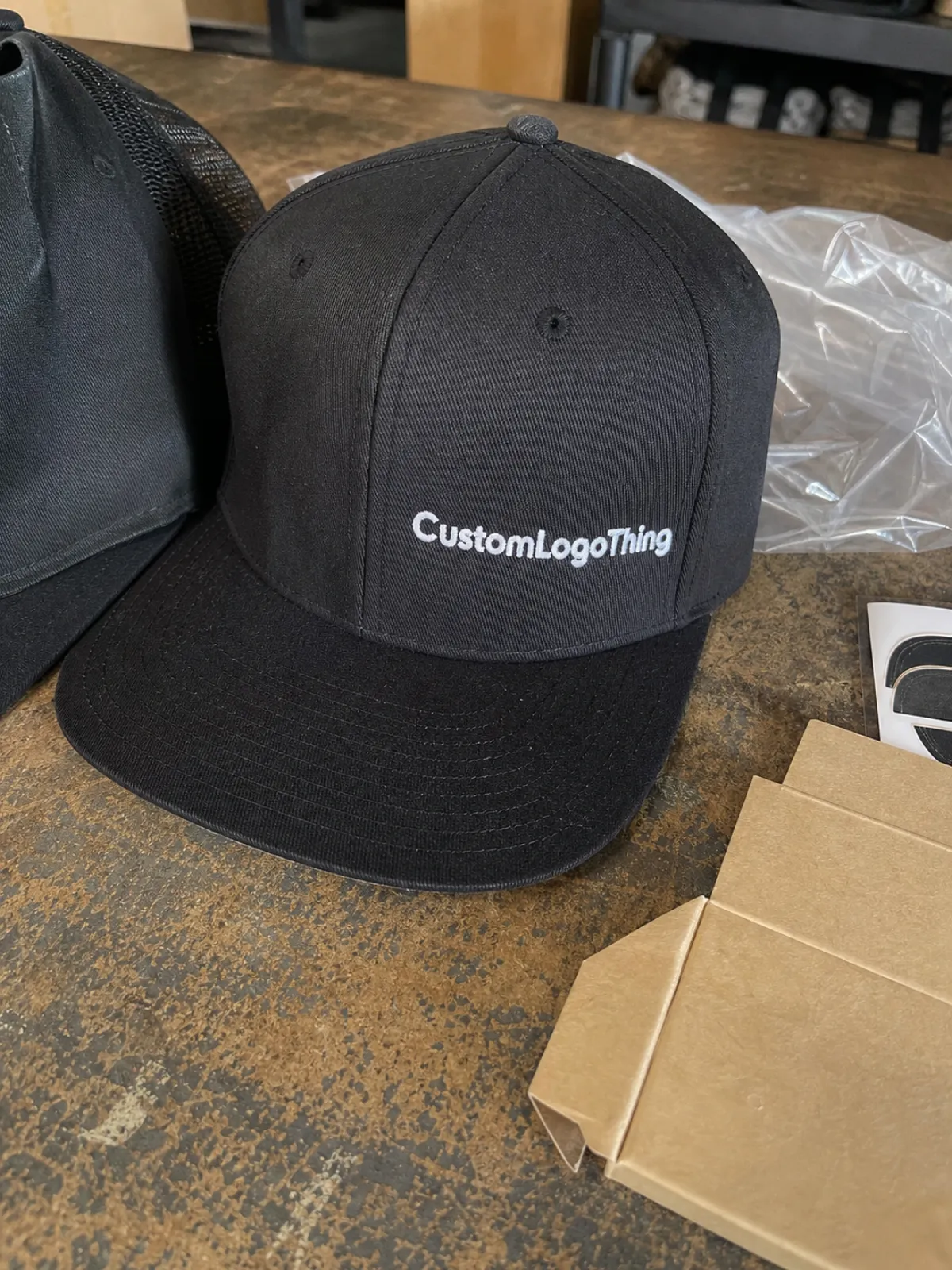
What the Snapback Caps MOQ Guide Reveals Up Front - CustomLogoThing packaging example

MOQ is rarely a single threshold. It can be the minimum for the cap body, the minimum for the decoration method, and sometimes a separate floor for packaging if the order includes inserts, hang tags, or custom polybags. A supplier who quotes only the headline number may be leaving out the parts that actually shape the order.

That matters because the same 300-piece order can behave very differently depending on the build. A simple blank cap with a woven side label may move through production quickly. A 300-piece run with front embroidery, back embroidery, under-visor print, and a custom closure can require more setup than a larger, simpler order. In other words, quantity is only one side of the equation.

There is also a difference between a low MOQ that is technically possible and one that is commercially sensible. Some factories will accept smaller orders to keep a relationship alive, fill a production gap, or support a test launch. That does not mean the economics are friendly. The unit price can rise sharply when setup costs are spread across too few pieces, and the buyer is left paying for flexibility.

The cleanest quote is usually the one built from a tight spec, not the one built from a vague idea and a hopeful minimum.

For a first run, think in terms of decision quality. Are you testing the market, building retail display stock, or creating a one-off event item? If the answer is yes, a lower MOQ may be worth the premium. If the cap will be reordered often, the math changes. A larger initial run can reduce per-piece cost, but only if the design is stable enough to justify holding inventory.

The fastest way to reduce friction is to answer the obvious questions before asking for numbers: what style of snapback, what decoration method, which placements, how many colors, and where the goods are shipping. Once those basics are fixed, the quote becomes more useful and less speculative.

Snapback Cap Construction, Panels, and Decoration Options

A snapback is a familiar product, but the construction choices are where margins and minimums start to shift. The crown can be structured or soft, six-panel or five-panel, flat-brimmed or lightly curved. The closure may be a standard plastic snap or a color-matched version that looks better on a retail peg. These details sound minor until they affect stitching time or material sourcing.

Panel count changes the fit and the visual balance of the logo. Six-panel caps tend to give the front more symmetry, which helps with centered embroidery. Five-panel caps often present a broader front panel, a useful surface for larger artwork or a cleaner streetwear look. If the design relies on bold graphics, the wrong panel shape can force the artwork to shrink or stretch in a way that weakens the final result.

Decoration choice is even more consequential. Flat embroidery is usually the most efficient route and works well for logos with clear lines and limited detail. 3D embroidery adds foam underfill and gives the front panel depth, but it also demands a sturdier cap body and a design that can hold its shape. Woven patches are useful when fine detail would be lost in stitches. Leather patches can add a premium finish, though they are less forgiving if the brand wants subtle color changes or highly detailed art.

Extra placements should be treated carefully. A front logo plus a side hit plus a back mark sounds efficient on a mockup, yet each placement adds handling. The factory has to hoop, stitch, trim, inspect, and sometimes re-hoop. That means more labor and more opportunities for variation. Many clean-looking caps succeed because they are restrained, not crowded.

Common add-ons deserve early decisions because they affect both quote and approval:

  • Woven labels sewn into the sweatband or seam
  • Inside seam taping for a more finished interior
  • Custom under-visor print or sublimation
  • Special snap colors or embossed closure details
  • Hang tags, barcode stickers, and retail-ready packaging

There is a practical reason experienced buyers keep the design simple. Caps are worn close to the face, so small imperfections show quickly. If the crown is too soft for dense embroidery, stitches can pucker. If the patch is too stiff for the front panel, the cap may lose shape in wear. The best spec is the one that makes production repeatable, not the one that tries to show every possible option at once.

For shipping and packaging, transit stress matters more than many teams expect. Brims can warp, cartons can crush, and insert cards can shift if the pack-out is inconsistent. Standards such as those from ISTA are useful references when the order must survive distribution without cosmetic damage.

Material and Size Specs That Change the Quote

Material choice affects more than the look of the cap. It changes hand feel, stitch behavior, color consistency, and often how forgiving the order is in production. Cotton twill is common because it feels familiar and handles embroidery well, but it can show lot-to-lot shade differences. Polyester tends to hold shape better and may be a stronger fit for sport or promo programs. Wool blends and mixed fabrics can deliver a richer retail appearance, although they may require tighter color control and more careful sourcing.

The fit spec deserves the same attention as the fabric. Crown height, front panel stiffness, visor insert, sweatband thickness, eyelet style, and closure positions all influence how the cap sits on the head. Two caps can look nearly identical in photos and feel completely different in hand. One may sit high and crisp; the other may collapse at the front or feel too deep for everyday wear.

That is why a useful spec sheet should remove guesswork before the first quote goes out. At minimum, send:

  • Cap style, panel count, and visor shape
  • Fabric type, color target, and any PMS references
  • Vector artwork for the logo or patch
  • Decoration method and exact placement
  • Packaging requirements, including labels and carton marks
  • Target delivery date and shipping destination

One overlooked detail is receiving location. A cap order going to a warehouse, retail distribution center, or trade show venue may need different pack-out or freight assumptions. If that is not stated up front, the quote can miss a cost that appears later as a correction. It is a small omission with a large habit of becoming expensive.

For repeat programs, a one-page internal template prevents drift. Keep the base cap details in one place, artwork notes in another, and pack-out instructions separately. Then each reorder can update quantity and timing without rebuilding the whole brief. That kind of discipline keeps a snapback caps moq guide useful after the first purchase order has already shipped.

Snapback Caps Cost, MOQ, and Unit Price Tradeoffs

MOQ conversations often sound like inventory planning, but they are really about manufacturing economics. The factory needs enough volume to cover setup, labor, and waste while still making the run worthwhile. If the order requires custom color matching, patch tooling, special closures, or multiple decoration steps, the minimum usually rises to protect that efficiency.

The cost drivers are fairly consistent across suppliers. Digitizing converts artwork into stitch data for embroidery and often appears as a one-time setup fee. Patch production introduces tooling or separate manufacturing steps. More thread colors increase machine changes and operator attention. Multiple placements raise inspection time and labor. A cap with front embroidery only will almost always be easier to price than one with front, side, and back decoration in different techniques.

There is a useful comparison here with print production. A postcard order and a hardcover catalog may share the same logo, but they do not share the same setup burden. Caps work the same way. The logo may be the same, but the production path changes dramatically depending on how that logo is applied.

A few ways to keep unit cost from climbing unnecessarily:

  • Use one standard cap body where possible
  • Keep the number of logo versions to a minimum
  • Choose one main decoration position if the design allows it
  • Avoid custom under-visor print unless it adds clear value
  • Keep packaging simple unless retail presentation requires more

When comparing quotes, ask for the full landed picture. A low factory price is not always the low final price. Sample charges, digitizing, tooling, freight, carton requirements, and any fees tied to special packaging can change the math quickly. If one supplier includes certain prep work and another separates it out, the quotes are not truly comparable yet.

A helpful way to review options is to look at the run through three lenses: setup cost, repeatability, and sales value. A blank cap with a label may have the cleanest economics, but it may not sell the way a raised logo or patch does. A premium patch may look stronger on a shelf, but if the design is unlikely to reorder, the extra minimum may never pay back. The right choice depends on how the cap will be used, not on decoration alone.

Option MOQ Pressure Cost Impact Best Use Case
Blank cap with simple label Low Lowest unit cost Promotions, testing a new shape, fast-turn stock
Front flat embroidery Moderate Low to moderate setup Brand merch, retail basics, repeat programs
3D embroidery with side hit Moderate to high Higher labor and digitizing Streetwear pieces with more visual presence
Woven or leather patch with custom trim Higher Tooling and patch production cost Premium collections and longer shelf-life designs

Ask for price breaks at common thresholds such as 500, 1,000, and 3,000 pieces. Those tiers reveal more than a single quote does. If the jump from 300 to 500 pieces barely changes unit cost, the supplier may already have absorbed most of the setup burden. If the unit price falls sharply at 1,000, the order may be sitting below the efficient production floor.

That is the real lesson hidden inside a snapback caps moq guide: the lowest MOQ is not always the smartest spend, and the highest MOQ is not always the cheapest path. The right answer is usually the one that matches the product’s life cycle. Short-run campaigns deserve different math from evergreen retail items.

Production Process, Timeline, and Lead Time Milestones

A realistic production timeline follows a fairly predictable sequence: inquiry, quote, artwork review, proof approval, sampling or pre-production, bulk run, inspection, packing, and shipment. If any of those steps are unclear, the schedule slips. The sewing line is rarely the only bottleneck; approvals and revisions usually take more time than the machine work itself.

Lead time depends on three main variables: how fast the buyer approves, whether materials are already in stock, and how busy the supplier is when the order lands. A standard cap body with one embroidery placement can move faster than a run that needs custom patches, exact color matching, or multiple decoration methods. In busy seasons, even a straightforward order may wait for its slot.

For many straightforward custom runs, 12-15 business days after proof approval is a reasonable working range. Sampling can add 5-10 business days depending on whether the cap is being built from stock components or from a custom specification. Freight should be treated as its own stage, because air, ocean, and domestic parcel move at very different speeds and cost levels.

The approval chain is where projects often slow down. If three people are checking the proof independently, a small cap detail can sit untouched for days. A cleaner path is to decide in advance who approves the artwork, who signs off on color, and who gives the final production green light. That prevents the common situation where everyone has an opinion and nobody has the final decision.

Before cutting starts, confirm any details that are easy to overlook in email but hard to change on the floor: sweatband print, inside label, carton marks, snap color, and package count. These are the kinds of small decisions that can create rework if they are discovered late. The cost of changing them after production begins is usually higher than the cost of deciding them early.

There is also a quality-control angle to timing. A rushed order is more likely to miss color drift, loose threads, uneven stitching, or crooked patch placement unless inspection is built in. Reasonable lead time is not just about convenience. It gives the factory enough room to correct problems before cartons are sealed.

For reorder programs, save the approved sample, final artwork, and fabrication notes in one place. Include the closure type, thread colors, and packaging details. That way the next run does not rely on memory or a long email chain. Repeatability is one of the few real advantages in cap production, and it disappears quickly when records are incomplete.

Why Spec-First Buyers Get Cleaner Orders and What to Send Next

Buyers who start with a spec sheet tend to get cleaner quotes and fewer surprises in production. That is not because they are asking for more detail in some abstract sense. It is because they are eliminating the hidden assumptions that usually distort MOQ, Pricing, and Lead time. The factory can quote what it can actually make, not what it has to guess at.

If you want quotes that are easier to compare, send these items together:

  • Quantity by color and by logo version
  • Vector artwork with placement notes
  • Preferred decoration method
  • Target delivery date and shipping address
  • Packaging instructions, including labels and carton marks
  • PMS targets or finish requirements, if relevant

Once the quotes come back, compare more than the headline price. Check the sample charge, digitizing fee, tooling fee, freight terms, and the price breaks at higher quantities. Then confirm the proof before asking for a sample or moving into bulk. That order of operations saves time and avoids paying for revisions that should have been resolved on paper.

The most practical way to think about a cap order is simple. Use a standard base if you can. Keep the artwork legible at production scale. Decide whether the product truly needs patches or multiple placements. If it does, budget for the added handling. If it does not, simplify the build and let the order move through the line with fewer variables.

That is the core value of a snapback caps moq guide. It helps buyers treat MOQ as part of a larger production equation, not as a standalone number. It also makes it easier to compare supplier quotes, avoid unnecessary revisions, and keep the final cap close to the original intent.

What is a realistic MOQ for custom snapback caps?

The minimum depends on the cap body, decoration method, and whether the factory stocks the base style you want. Simple embroidery on a standard cap usually carries a lower threshold than patch work or multi-placement decoration because the setup burden is lighter.

Can I split a snapback cap order across multiple colors or logos?

Sometimes yes, but each colorway or artwork version may count toward the minimum or trigger an additional setup charge. Ask whether the supplier allows mixed colors under one total MOQ or requires each color and logo version to meet its own threshold.

What files do I need for an accurate snapback cap quote?

Send vector artwork, target quantity, preferred cap style, decoration placement, and any PMS color targets. Include the shipping destination and delivery timing so the supplier can factor in both production and freight.

How long does snapback cap production usually take after approval?

For straightforward orders, 12-15 business days after proof approval is a workable reference point, though sampling and freight add time. Custom materials, patch production, and busy-season backlog can extend the schedule.

What helps lower unit cost without hurting quality?

Use a standard cap body, limit decoration to one main placement if possible, and keep the artwork version consistent. Clear packaging instructions and fast proof approval also reduce avoidable handling and rework.

What quality checks matter most on snapback caps?

Check logo placement, stitch density, color matching, crown shape, snap closure function, and trim consistency. For retail orders, inspect carton packing and ensure the caps hold shape after packing and transit.

Get Your Quote in 24 Hours
Contact Us Free Consultation

Warning: file_put_contents(/www/wwwroot/customlogothing.com/storage/cache/blog/9a58c8f853fc66c35efc9e6e6d287c97.html): Failed to open stream: Permission denied in /www/wwwroot/customlogothing.com/inc/blog/PageCache.php on line 20

