Custom Logo Things
Snapbacks for Ecommerce Brands: How to Source Smarter
Snapbacks for ecommerce brands behave differently from tees, hoodies, and almost every other common merch item. The size risk is lower, the front panel carries the branding, and a single clean cap can lift the perceived value of an entire drop without a huge materials bill. That sounds simple until you start comparing samples, checking photo quality, and pricing freight. The gap between a cap that feels premium and one that gets ignored usually comes down to sourcing discipline, decoration choices, and how well the hat survives packing and transit.
What Snapbacks Need to Convert
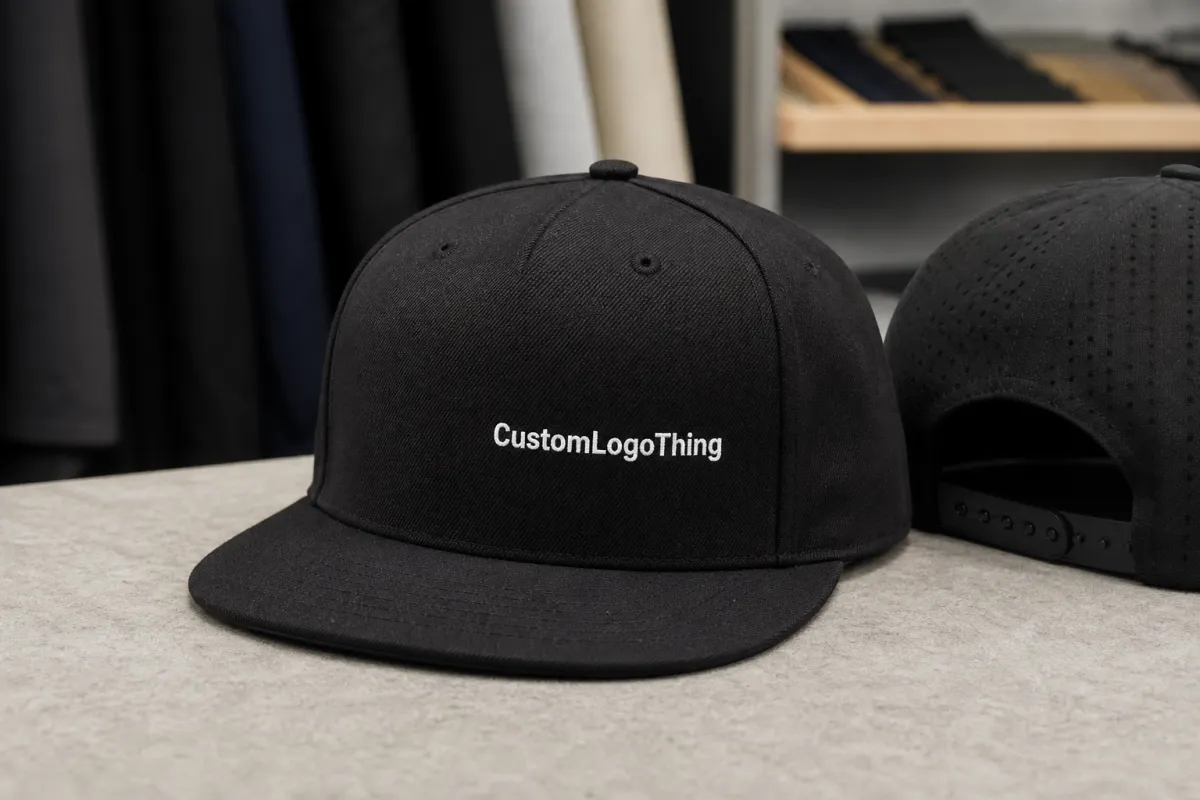
There is a practical reason snapbacks for ecommerce brands often sell more cleanly than apparel: they remove the biggest friction point in online clothing purchases, which is fit uncertainty. A customer does not need to choose between sizes or wonder whether the item will shrink, stretch, or hang oddly on their frame. They need confidence that the cap looks right, feels wearable, and arrives with the brand identity intact. That is a much simpler decision path.
A snapback is usually a structured cap with an adjustable plastic snap closure, most often chosen for streetwear, creator merch, team drops, and brand collabs. The silhouette matters more than many first-time buyers expect. On a tee, a weaker graphic can still survive because the garment has more visual space. On a cap, every stitch is compressed into a small field of view. If the crown sits too high, the logo is too small, or the brim shape feels awkward, the whole product looks off.
That small surface area is both an advantage and a constraint. It gives the product a focused, premium appearance, but it also means the design has to be disciplined. A snapback can photograph like a much more expensive retail item when the crown is crisp, the front decoration is balanced, and the materials feel intentional. If the fabric, closure, or embroidery look cheap, the problem shows immediately.
For ecommerce teams, the question is not whether hats are easy to sell. It is whether the version you source is strong enough to hold up across product photos, fulfillment, and repeat orders. The best custom snapbacks are usually not the most complicated ones. They are the ones that match the brand, survive shipping, and still make sense after freight, duties, and fulfillment are added in.
A cap can look clean in a mockup and still fail in a carton. That gap is where a lot of ecommerce margin disappears.
Production Process and Lead Time
Custom headwear usually moves through the same sequence: artwork review, sample development, revisions, bulk production, inspection, packing, and shipping. The order is predictable, but the timing is not. Small decisions at the beginning can add days later, especially when the logo is too detailed for embroidery or the decoration placement has not been thought through at full size.
The first delay often starts with the artwork file. Fine lines, tiny text, gradients, and closely spaced shapes are usually the first things a factory flags. A front panel only gives you so much room, and embroidery needs breathing space. If the logo is not adapted for the crown, the sample round becomes a translation exercise instead of a clean approval step. That is why a simple, readable mark usually performs better than a design that tries to do too much.
Fabric choice also affects both appearance and timing. Polyester twill is common because it holds color well and stays consistent across runs. Cotton twill feels a little softer and can work well for lifestyle brands, but it may show wear more quickly if the cap is heavily washed or packed poorly. Wool-blend and acrylic-wool caps are still used for a classic structured look, though they can cost more and may not be the best fit for every target price point.
After artwork comes sampling. This is where changes to crown height, brim curve, patch size, or label placement can stretch the schedule. One sample round is common. Two is not unusual. Three is usually a sign that the brief was too loose, the decoration was too ambitious, or the target price did not match the spec. For a straightforward decorated cap, a realistic timeline often sits around 12-18 business days after proof approval. Add custom patch construction, specialty labeling, or packaging changes, and the schedule can move toward 20-35 business days before shipping.
That timeline matters because ecommerce launches tend to fail when the content plan runs ahead of the product. If photos are shot, ads are scheduled, and the storefront is ready but stock is still in production, momentum gets wasted. A hat drop should be planned backward from the in-hand date, not forward from the first quote request.
For teams comparing multiple builds, it helps to look at how different specs affect the process in practice. Our Case Studies page can be useful for that kind of comparison, especially when a clean design still required several rounds of correction before bulk production could begin.
Pricing, MOQ, and Unit Cost Drivers
Unit cost for snapbacks for ecommerce brands comes down to a short list of variables: fabric quality, crown structure, decoration method, order volume, packaging, and shipping method. A five-panel foam trucker with a printed front can cost very differently from a fully structured six-panel cap with dense embroidery and custom inside labeling. That spread is large enough to change retail math by several dollars per unit.
MOQ behavior matters just as much. Lower minimums are useful for testing demand, but they usually raise unit cost because setup work, digitizing, trimming, and packing are spread across fewer units. Higher quantities can improve pricing, though they also raise cash exposure and inventory risk. The real question is not whether the first quote is cheap. It is whether the product can sell through fast enough to justify the stock position.
There is also a difference between factory price and landed cost. Factory price is only the start. Landed cost includes sampling, freight, customs, duties, packaging, and the cost of getting the cap into a fulfillment center or ready for self-ship. If those pieces are missing from the model, the margin forecast can look healthy on paper and thin in reality.
For a rough planning framework, the table below shows how build choices affect cost and positioning.
| Build Type | Typical Unit Cost | Best Use | Tradeoff |
|---|---|---|---|
| Basic structured cap with flat embroidery | $3.80-$6.00 at 500-1,000 units | Testing demand, creator merch, lower-risk drops | Less premium feel, fewer detail options |
| Structured cap with woven or embroidered patch | $5.50-$8.50 at 1,000-3,000 units | Brand launches, evergreen store add-ons | Higher setup cost, slower sample approval |
| Premium cap with custom labels, specialty trim, and upgraded packaging | $7.50-$12.00+ at 2,500+ units | High-AOV drops, collabs, retail-ready programs | Higher MOQ and more QC pressure |
Budget-friendly does not have to mean cheap-looking. Cost can be controlled by reducing stitch count, keeping one strong front-panel decoration, and avoiding unnecessary extras. A clean embroidered patch often photographs better than a crowded design that tries to say too much. If the cap needs to feel premium, spend on structure, fabric, and finish before spending on decoration complexity.
Shipping protection is part of pricing too. Caps are small, but they do not tolerate being crushed. Simple transit testing using common package handling standards such as ISTA protocols can be worth the effort if the product will include inserts, stickers, or shaped packaging. If you are using paper inserts or hang tags, FSC-certified materials from FSC can support a cleaner sourcing story without changing the cap itself.
Design Specs That Hold Up in Online Photos and Shipping
For snapbacks for ecommerce brands, the details that matter most are the ones the customer can see in a thumbnail and feel after unboxing: crown height, brim shape, fabric weight, panel structure, closure quality, and stitch density. A hat that looks balanced on a product page usually has a disciplined silhouette. A hat that photographs badly often has a crown that sits too tall, a brim that bends awkwardly, or branding that disappears at mobile size.
That is why photo-ready details should be treated as product details. The buyer is not touching the cap before purchase. They are making a judgment from a screen, usually in a few seconds, and that means visual clarity is part of the spec. If the front logo is too small, too low, or too close to the panel seam, it may still look acceptable in a file preview but fail in a real product image.
Decoration method changes both appearance and durability. Flat embroidery looks classic and is usually durable. It works well when the brand mark is bold and does not rely on tiny interior shapes. Woven patches handle finer detail better and can look more refined on a structured crown. Leather patches add texture and warmth, though they can crease if the cap is packed too tightly or if the artwork needs tight corners. Silicone patches create a sharper, more dimensional look, but they need restraint; too much gloss can make a cap look promotional instead of premium.
Material behavior matters on camera as much as it does in hand. A matte finish usually reads more premium than a shiny synthetic surface under bright studio lighting. Dark colors can hide stitching flaws better, but they also show lint and dust more easily. Light colors photograph cleanly, though they can reveal sweatband contrast, thread shifts, and minor shade variation from one lot to the next.
Packaging and transit deserve the same attention as the cap build. If the brim arrives crushed or the front panel loses shape, returns rise even when the factory work was fine. Many brands use a simple polybag plus carton system, but a molded insert, a more structured fold, or a slightly larger master carton can reduce damage. That extra fraction of a dollar is often cheaper than replacing spoiled inventory.
Quality control should go beyond a quick visual check. Put the cap on a head. Photograph it in natural light and under store lighting. Check the closure, sweatband, and stitching under mild tension. Review the profile from the side and front. A lot of problems do not show up until the hat is worn or packed.
Step-by-Step Launch Plan for a First Drop
The cleanest way to launch snapbacks for ecommerce brands is to treat the first run like a controlled test, not a throwaway experiment. Start with the audience and the use case. Is this a merch drop tied to a creator? A product extension for an existing apparel line? A collab item meant to drive social content? Or an evergreen add-on that sits beside tees, hoodies, and accessories in the store?
Once that is clear, build a one-page spec sheet before requesting quotes. Include cap style, color, panel count, closure, artwork placement, decoration method, label or sweatband details, target retail price, and the expected quantity. Consistent inputs produce useful quotes. Vague requests create noisy pricing, and noisy pricing makes it hard to compare suppliers on equal terms.
Then ask for a sample or mockup and review it against three questions: Does the cap fit the brand visually? Does it fit the head comfortably? Does it fit the margin plan? That third question gets skipped too often. If the sample looks good but the landed cost leaves no room for ads or fulfillment, the product is not ready yet.
For a practical launch sequence, use this order:
- Define the target customer and retail range.
- Lock the spec sheet before quoting.
- Review digital mockups for logo scale and placement.
- Approve a sample only after photo and wear testing.
- Set inventory, launch, and reorder triggers before bulk production starts.
It also helps to define success before the product goes live. Set a sell-through target, a return ceiling, and a reorder threshold in advance. If the first run clears 70-80 percent of inventory in a reasonable window, that is usually enough signal to refine and repeat. If it stalls, the issue might be the design, the retail price, or the channel mix. You need the numbers to separate those problems.
Another useful habit is to match the hat with the rest of the cart. A cap that sits well beside hoodies and tees can boost average order value, while a hat that feels disconnected from the rest of the line tends to underperform. The product should look like it belongs in the brand, not like it was added because headwear seemed easy.
Common Mistakes That Hurt Margin, Reviews, and Reorders
The first mistake is underestimating landed cost. A unit that looks attractive at the factory can become a weak-margin product after freight, duties, packaging, and fulfillment. That gap is especially painful for smaller ecommerce operators because hats often appear simpler than apparel. They are not simpler. They are just easier to misprice.
The second mistake is weak artwork files and vague specs. A front panel only gives you so much room, and small production errors are obvious in photos. If the logo is off-center by a few millimeters, the issue may not stand out on a spreadsheet, but it will stand out on the product page. For custom hats, precision is not optional.
The third mistake is overcomplicating the build. Extra trims, multiple patches, custom lining, and layered embellishments can look exciting in a concept deck. They also raise minimums, slow sampling, and add QC risk. In practice, the cleanest-selling cap is often the one that does one thing well: it shows the brand clearly and wears comfortably.
The fourth mistake is forgetting about reorder potential. A one-off hat may create a short burst of content, but a repeatable program builds more value. If the cap can be reordered with consistent color, stable fit, and predictable decoration, it becomes part of the store architecture rather than a one-time promo item. That matters more than most first-time buyers expect.
Packaging errors can hurt review quality too. If customers receive bent brims, crushed crowns, or loose inserts, they blame the brand, not the carton. This is where simple transit discipline pays off. In a category where the product is small and visual, damage reads as quality failure. A cap does not need luxury packaging to perform well, but it does need packaging that protects shape.
One final caution: do not assume a sample that looks good in isolation will scale cleanly. Thread tension, patch placement, and shade consistency can drift across a bulk run if the spec is loose. The sample is a checkpoint, not a guarantee. The closer the production file is to the approved sample, the more predictable the run.
Expert Next Steps for a Repeatable Hat Program
If you want snapbacks for ecommerce brands to become a real sales line instead of a one-off novelty, start with one page of specifications and three comparable quotes. Same fabric, same decoration, same quantity, same packaging assumptions. Without that discipline, you are not comparing suppliers; you are comparing different products.
After that, order a sample or pre-production proof before committing to bulk. This is especially smart if the cap is tied to a larger merch campaign, a seasonal launch, or a creator collab where timing is tight. The sample is cheap insurance. The wrong bulk run is expensive inventory.
Then track performance with the numbers that matter: sell-through, return rate, margin, and reorder speed. A hat that sells out once but cannot be repeated is less useful than a cap that can be reordered in controlled quantities with consistent quality. The strongest programs are usually the least dramatic. They repeat, they hold shape, and they stay within the margin band you planned for.
For brands building out custom headwear, the winning formula is usually straightforward: a disciplined spec, a clean logo treatment, packaging that protects the brim, and a price that still works after hidden costs are counted. That is why snapbacks for ecommerce brands can be such a strong category. They are small, visible, and commercially forgiving if you source them with care.
Build the first one well, document what worked, and use that data on the next run. That is how a hat program moves from an experiment to a reliable margin line.
Are snapbacks for ecommerce brands worth the MOQ?
Yes, if the design can sell at a premium or support repeat drops. Compare MOQ pricing against expected sell-through and margin, not just the first invoice. If demand is still uncertain, keep the first run simple and add complexity only after the product proves itself.
How long do custom snapbacks usually take to produce?
Simple builds can move faster, but sample approval and decoration choices drive most of the schedule. Expect lead time to stretch when you need custom patches, special labeling, or multiple revision rounds. Build the launch plan backward from the delivery date so ads, photos, and storefront setup are ready.
What is the best decoration method for ecommerce snapbacks?
Embroidery is strong for classic branding and usually photographs well. Woven or leather patches can create a more premium look if the artwork and budget support them. The best choice is the one that matches the brand story and the target retail price, not just the lowest quote.
How do I estimate the real cost of snapbacks for ecommerce sales?
Add unit price, sampling, freight, duties, packaging, and fulfillment before you set retail price. Use landed cost to calculate margin, because factory price alone can be misleading. If the margin looks thin before launch, simplify the build or raise the retail price.
What should I check before approving a sample cap?
Verify color accuracy, logo placement, crown shape, brim stiffness, and closure quality. Check how the hat looks in product photos and on a real head, not just on a spec sheet. Ask whether any detail could create scale issues, especially stitching, patch alignment, or packaging crush.


