For soap brands, Soap Brand Poly Mailers sample approval is the moment a concept turns into a packaging choice. A flat proof can make a mailer look balanced and premium, but a physical sample shows the details that matter in sourcing: how the color behaves in neutral light, how the film feels in hand, whether the flap closes cleanly, and whether the artwork still reads once the bag is filled and shipped. For a typical custom LDPE or LLDPE mailer with 1-2 color flexographic print, buyers often see sample pricing around $2.50-$4.00 per unit at 500 MOQ, with setup, plates, and freight quoted separately.
That is where assumptions get expensive.
Soap packaging brings its own problems. Fragrance residue can transfer during packing. Cartons or inserts can scuff the inner surface of the mailer. A soft-touch finish may look refined, but it can show handling marks sooner than expected.
Gloss can brighten print, but it can also expose scratches and fingerprints faster. The sample needs to show those tradeoffs before production locks them in, especially if the final build uses a 2.5-4.0 mil co-extruded PE film, a hot-melt adhesive strip, or recycled content backed by GRS documentation.
A sample that looks good empty can still fail once it is loaded, stacked, rubbed, and sent through fulfillment. Approval should test the package under those conditions, not under ideal ones. That is where supplier documentation matters: for recycled resin claims, ask for GRS records; for factory social compliance, WRAP or BSCI audit status matters; and if the packaging includes textile accessories or inserts, OEKO-TEX Standard 100 or GOTS can apply to those components rather than to the poly film itself.
Soap Brand Poly Mailers Sample Approval: What to Check First
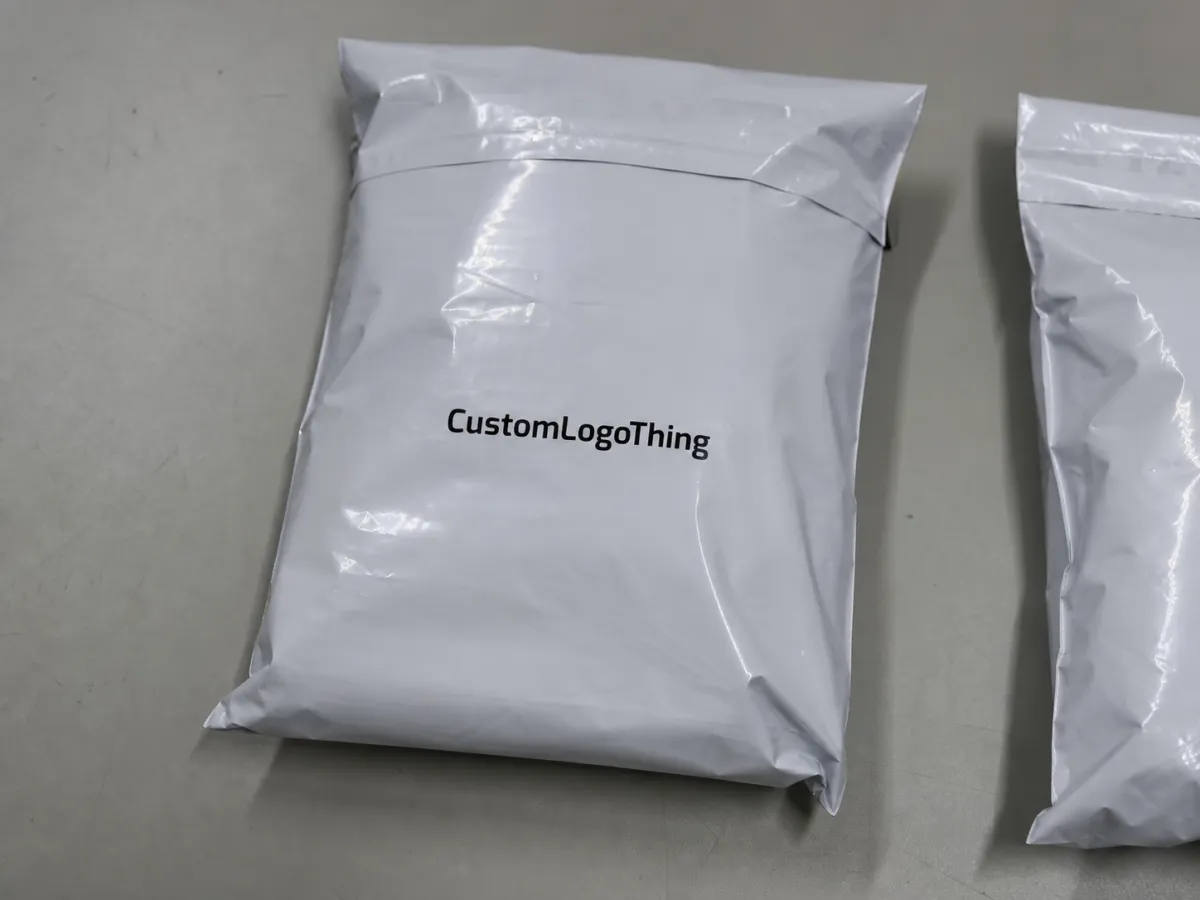
The first pass should be broad, not microscopic. Open the bag, hold it under bright neutral light, and judge the overall impression the way a retailer or customer would. Does the finish look intentional? Does the color feel rich or thin?
The package should read as soap-brand quality, not generic shipping film with a logo slapped on top. On a well-run line, this is usually produced on a co-extrusion blown-film machine, then printed on a 6-8 color flexographic press before being converted on an automatic bag-making machine.
That first look often catches problems a screen proof misses. Deep colors can print flatter than expected on thin film. Pastels may shift warmer or cooler than the brand palette. Artwork that looked spacious on a monitor can feel crowded once the mailer is folded, filled, and sealed. If the supplier is using matte PE, soft-touch coating, or a recycled blend, ask for a printed sample on the exact substrate rather than a generic stock film.
Then move from appearance to handling. Rub the surface lightly. Bend the sample. Check whether the print cracks, scuffs, or blurs at the edges. If the product will move through warehouses or retail back rooms, ask whether the material looks durable enough for repeated touchpoints. A package can look elegant in a still photo and weak in the hand. A practical check is a 50-100 cycle rub test plus a simple drop test with a filled soap carton to see whether the seal holds and the print stays legible.
Soap brands should also look at the bag as part of the unboxing sequence, not just a shipping shell. A mailer that opens awkwardly, seals unevenly, or looks wrinkled after filling can lower perceived value. In a category where fragrance, texture, and artisanal cues matter, the outer pack has a real job to do. Check the seal width, flap alignment, and tear behavior before you approve the run, and make sure the finished dimensions match the packed bar, insert, or carton rather than an estimated size from the first spec sheet.
Measure the filled mailer, not the empty one.
Production Timeline: From Art Proof to Final Approval
The process usually starts with an art proof, then a dieline review, then a physical sample, then buyer comments, and finally sign-off. Clean timelines depend on clean ownership. One person should gather the feedback, and one version should stay the source of truth. If marketing, operations, and sales all send separate notes, the schedule stretches fast. For most custom poly mailer projects, a realistic end-to-end window is 18-22 business days after artwork approval, assuming the sample is a standard build and not a multi-round prototype.
For simple stock-material samples, a supplier may turn around a proof or basic sample in a few business days. Fully custom print usually takes longer, and specialty finishes can add another round. Shipping time matters too. A sample that leaves the factory quickly can still arrive late if international freight or courier delays are not built into the calendar. In practice, plan for 2-4 business days for proofing, 5-7 business days for sample fabrication, and another 5-10 business days for transit depending on the lane and service level.
Most delays happen inside the buyer’s own process. Teams wait to compare the sample against the actual soap product, then discover the mailer needs a tighter fit or a different flap closure. That is a valid reason to pause. It is also why sample approval should be tied to the final product dimensions, not an estimated pack size from an early spec sheet. A small change in gusset, bag length, or adhesive strip placement can affect the close rate and the packing speed on the line.
Approvals move faster when the review criteria are set before the sample arrives. Decide whether the sample is being judged for color only, or for color, structure, closure, and shipping behavior. A sample that works on one criterion may still be wrong for another, especially when the buyer and the supplier are not working from the same priorities. The fastest approvals usually come from a documented sample flow: PDF proof, dieline sign-off, printed pre-production sample, fill test with the actual soap SKU, annotated photos, and final written approval.
Film, Seal, and Print Specs That Change the Outcome
Film thickness changes the feel of the mailer. Common poly mailers sit in a range of roughly 2.5 to 4 mil, though the right number depends on the product and shipping route. Thinner film cuts cost, but it can feel flimsy, crinkle more, and show handling marks sooner. Heavier film usually reads as more protective and more premium, which helps with artisan soap, gift sets, or subscription orders. If you need a recycled structure, a 30%-100% post-consumer recycled PE blend is common, but the supplier should confirm the actual resin content with test paperwork, not a marketing claim.
Finish matters just as much. Gloss can make colors pop and help darker artwork look more saturated. Matte or satin can soften the look, reduce glare, and hide scuffs better. Soft-touch finishes often feel expensive, but they need to be checked carefully because some coatings show rub marks faster than buyers expect. The cleaner choice is not always the more attractive one on a sample table.
Ask whether the finish was applied inline or as a post-print lamination. That choice can change both the feel and the scratch resistance.
Seal performance deserves real scrutiny. A weak adhesive or inconsistent heat seal may not fail during a quick hand test, but it can open up under pressure, heat, or repeated handling. Look at the seal edge to edge. Watch for curling, lifting, or thin spots. On production samples, a good supplier should be able to show seal-width consistency, usually around 8-12 mm on many mailer builds, plus a simple peel check that does not tear unevenly or leave gaps.
Print quality needs the same discipline. Check registration, ink density, and white underbase coverage. Fine type can disappear on dark film. Narrow linework can blur if the art was not built for the actual print method. QR codes and barcodes should


