For soap brands, a soft-touch poly mailer has two jobs: protect the product and make the unboxing feel more deliberate. In soap soft touch poly mailers bulk order planning for buyers, those goals only work if the spec is tight. A pretty sample is not enough if the bag slows packing, wastes film, or fails in transit.
The practical decision usually comes down to fit, closure strength, print method, and total landed cost. Get those right and the mailer stays simple. Miss them and the order turns into repacking, damage claims, and avoidable freight spend.
I have seen this firsthand while reviewing custom mailer projects for small ecommerce brands: the best-looking sample is not always the best production choice. One soap client improved packing speed just by reducing excess bag length and switching to a wider adhesive flap. The design barely changed, but the line ran faster and the parcels looked cleaner.
Soap Soft Touch Poly Mailers Bulk Order Planning Starts With Lower Waste
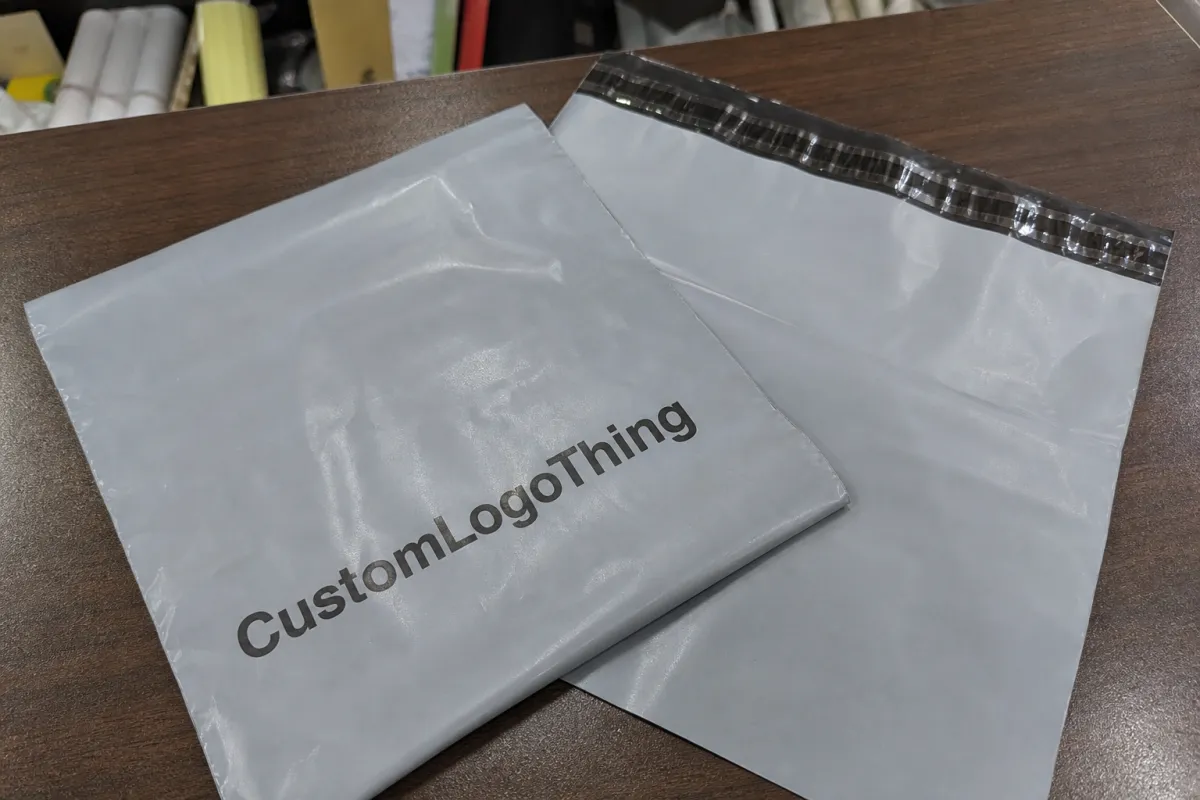
Most buyers start with color and branding, but fit is the first real decision. If the soap slides around, the packer spends extra time adjusting it, the bag needs more slack, and the contents are more likely to crease or press against the seal zone.
A correctly sized soft-touch mailer keeps the pack stable and speeds up the line. That matters because smaller, cleaner parcels also help control dimensional weight. The savings may look small on one order, but they build quickly across a full run or subscription program.
The soft-touch finish changes the feel, not the core job of the bag. The film still has to resist puncture, scuffing, and seal failure. Matte or velvety surfaces simply read as more premium than glossy shipping film, which is why they remain popular for soap subscriptions, gift sets, and direct-to-consumer orders in 2026.
For that reason, soap soft touch poly mailers bulk order planning for buyers should be treated as a packaging spec, not a visual afterthought. A mailer that fits the product and moves cleanly through packing will usually outperform a more decorative option that creates waste or slows fulfillment.
Measure the packed unit, not the bare soap. If the product ships with a carton, tissue, card, or insert, include it in the dimensions. Even a small sizing miss can create a bag that is hard to seal or loose enough to shift during transit.
The best mailer is the one that moves through packing quickly, protects the product, and never forces a second pass.
For buyers comparing formats, the broader Custom Packaging Products range and the dedicated Custom Poly Mailers options are useful references before requesting a quote.
Soft-Touch Film Options, Seal Strength, and Print Methods
Soft-touch usually means a matte or velvety surface treatment on a polyethylene mailer. The finish matters for appearance, but the structure underneath matters more. Film thickness, seam width, adhesive quality, and print coverage all affect whether the bag survives real handling.
For soap shipments, typical builds often fall around 2.5-4 mil. Lighter gauges can work for flat single bars, while boxed soap, bundles, or products with corners usually need more structure. The right gauge depends on the load and transit condition, not on a generic recommendation.
Seal strength deserves close attention. A pressure-sensitive flap that looks fine in a mockup can still fail if the adhesive is inconsistent, the flap is too short, or the packing area is dusty. Seams work the same way: a neat sample does not guarantee performance in sorting, stacking, or warmer warehouse conditions.
| Build option | Typical spec | Best use | Quote impact |
|---|---|---|---|
| Standard soft-touch poly mailer | 2.5-3 mil film, matte finish, one-color logo | Flat soap bars and lightweight single units | Lowest setup and material cost |
| Reinforced soft-touch mailer | 3-4 mil film, stronger seams, improved puncture resistance | Boxed soap, bundles, or mixed kits | Higher unit cost, better protection |
| Premium branded mailer | Soft-touch surface with fuller coverage graphics | Retail-led ecommerce orders | More proofing, longer lead time, higher price |
| Recycled-content soft-touch mailer | Matte finish with verified post-consumer resin blend | Brands with sustainability goals and clear claims | Moderate premium depending on resin mix and availability |
Print method changes cost and timing more than many buyers expect. A one-color logo is usually the simplest and most efficient path. Flexographic and gravure printing are common for higher-volume work, while digital printing can make sense for smaller launches if the converter supports it.
Full-coverage graphics add variables. Tight registration, edge-to-edge ink, and detailed artwork increase the chance of proof corrections or delays. Soft-touch surfaces also affect how color reads; matte film often deepens dark tones and softens lighter ones. If a specific shade matters, the proof stage should not be rushed.
Always ask for a sample that matches the final seal type, film weight, and print coverage. A lookalike sample is not useful. For performance testing guidance, ISTA is a helpful reference. Buyers reviewing print options may also want to compare related formats on cosmetic soft-touch poly mailer planning pages if their soap line overlaps with skincare kits.
Size, Gauge, and Load Specification Checklist
The quickest way to derail a quote is to guess at size. A converter needs finished dimensions, pack count, total quantity, artwork details, and the actual shipping condition. Soap bars, sample sets, and bundled kits all behave differently inside the same bag.
Measure the packed item, not the theoretical product. If the soap ships inside a carton or with inserts, include those pieces. A bag that fits the bare bar may be too tight once the full packout is added.
Width and length are only part of the picture. The adhesive flap needs room to close without crushing the contents, and the interior needs enough margin to avoid corner pressure. Irregular soaps and wrapped sets need extra care because they can stress the seam or distort the print zone.
A simple checklist helps keep the order honest:
- Soap dimensions: finished length, width, and thickness of the packed unit.
- Pack count: one bar, two bars, sample set, or bundled retail kit.
- Target gauge: the film thickness range the product can safely use.
- Closure type: adhesive strip, tamper evidence, or reusable seal.
- Artwork area: logo placement, bleed, and safe zone limits.
- Transit check: drop, squeeze, and seal test before final approval.
The transit check is the step teams often skip. It does not need a lab. A few packed samples, a realistic drop height, and a quick seal inspection can expose most fit issues before production starts.
If the soap is oily, scented, or wrapped in a finish that can transfer, the inner surface and ink choice also matter. The bag should not pick up marks during storage or shipment. That becomes a warehouse issue long before it becomes a customer issue.
For common ordering questions, the general FAQ page is a useful reference before the spec is locked. Brands shipping gift sets may also find ideas in custom gift mailer packaging options if the order includes inserts or seasonal bundles.
Cost, Pricing, and MOQ Factors That Change the Quote
Pricing for soft-touch mailers is driven by a few predictable variables: film weight, bag dimensions, print coverage, color count, surface treatment, seal design, and packaging format. Stronger seams, wider adhesive strips, or more controlled print processes raise the price for obvious reasons.
As a current 2026 planning range, a simple branded run at 5,000 pieces may land around $0.14-$0.24 per unit, while larger or more complex builds can move closer to $0.20-$0.42 per unit or more. Digital short runs, recycled-content blends, and premium full-coverage graphics can push pricing higher. This is still a planning range, not a quote. Freight, samples, tooling, and setup fees can shift landed cost more than the unit price alone.
MOQ usually follows production efficiency. A converter needs enough volume to justify setup time, material handling, and press calibration. On many jobs, minimums sit between 3,000 and 10,000 pieces, though the exact break depends on print method, bag size, and how custom the order is.
Lower MOQs are useful for launches and seasonal soap lines. Higher MOQs improve price, but they also tie up cash and storage. The cheapest per-unit option is not always the best buy if it creates inventory pressure later.
The cleanest way to compare quotes is to separate the real cost drivers:
- Unit price: ask for the price at the exact quantity break you plan to buy.
- Setup fees: confirm plates, cylinders, and prepress charges in writing.
- Sample cost: include prototypes or preproduction samples.
- Freight: keep shipping separate so comparisons stay fair.
- Rush premium: confirm whether faster turnaround changes the price.
- Split shipment cost: ask if staggered delivery adds handling charges.
For recurring programs, a wholesale structure can stabilize pricing and reduce repeat admin work. That is where Wholesale Programs are useful when the same soap line will reorder on a regular cycle.
If sustainability claims matter, confirm the recycled-content percentage and ask how the mailer should be handled in the local recovery stream. The EPA recycling guidance is a practical reference for broader recycling basics.
New 2026 Trends in Soap Soft Touch Poly Mailers Bulk Order Planning for Buyers
One of the biggest changes in soap soft touch poly mailers bulk order planning for buyers is the shift toward more deliberate material sourcing. More brands now ask for documented recycled content, clearer resin disclosures, and packaging specs that support internal ESG reporting. That does not mean every soap mailer needs the highest recycled-content blend available. It means buyers are under more pressure to match performance claims with written supplier documentation.
Another 2026 trend is shorter, more frequent ordering cycles. Instead of committing to a very large annual run, many small and mid-sized soap brands are splitting demand into quarterly buys. This reduces storage pressure, lowers the risk of artwork becoming outdated, and gives teams more flexibility around seasonal scents or limited-edition launches. The tradeoff is that smaller runs may come with a slightly higher unit cost.
Digital printing has also improved for select mailer programs. For lower-volume branded orders, it can reduce setup complexity and make versioned graphics more realistic. That is useful for soap brands that run holiday packaging, influencer kits, or subscription drops with changing artwork. Buyers should still confirm color consistency and scuff resistance on the final soft-touch surface, since premium finishes can expose print weaknesses faster than standard gloss film.
On the operations side, more fulfillment teams are asking for easier-open tear notches, double adhesive strips for returns, and carton pack counts that fit faster pick-and-pack workflows. These are small changes, but they can improve labor efficiency. In practical soap soft touch poly mailers bulk order planning for buyers, those operational details often matter more than adding another graphic element.
Process and Timeline From Proof Approval to Ship Date
The clean production path is usually the boring one: quote, spec confirmation, artwork proof, sample or preproduction approval, production, inspection, and shipment. Boring is good because it means fewer surprises.
A soft-touch finish can expose small mistakes more clearly than a plain shipping bag. Slight alignment issues, weak seal lines, or color that misses the brand standard may not look serious on screen, but they are harder to ignore on the finished mailer.
Typical timing for a straightforward branded run often looks like this in 2026:
- Days 1-2: inquiry, dimensions, quantity, and print needs confirmed.
- Days 3-5: artwork proof issued and reviewed.
- Days 6-8: sample or preproduction approval, if needed.
- Days 9-18: production, inspection, and packing.
- Transit: depends on freight method and destination.
That range changes quickly if the artwork is complex or the order is large enough to require a longer press run. Color matching can also add time, especially when the brand needs a specific tone on matte film.
Late artwork changes are the most common reason schedules slip. Vague dimensions are close behind. One clean file and one clear approval path save more time than a rushed follow-up ever will.
The safest sequence is simple: lock the spec first, approve the artwork second, and confirm the production slot and transit method before you promise stock to sales or operations.
For buyers comparing product formats before sending an RFQ, the broader Custom Packaging Products page is a practical starting point. For transit-performance references, ISTA is worth reviewing before approval, not after a claim shows up.
Good mailer planning is not about pushing the printer harder. It is about removing uncertainty before the run starts.
What a Reliable Packaging Partner Should Verify Before Production
A reliable supplier does not just send a price and hope for the best. They verify the structure in writing. That means confirming thickness, seal type, print placement, case count, carton configuration, and the approved artwork version before production begins.
Quality control should cover more than the print. A good partner will check seam integrity, adhesive consistency, registration, and color across the run. They should also confirm that the sample reflects the same film and finish the production order will use.
Warehouse planning matters too. Bulk mailers can look inexpensive and still cause problems if the carton count is awkward, the pallet height is too tall, or the reorder plan ignores storage space. Someone needs to ask how the bags will be stored, how they will move into the pack area, and how often they will be reordered.
Before release, the buyer should know:
- What exact thickness, seal type, and print method will be used?
- How many units are packed per case and how many cases per pallet?
- Are the proofs based on the final artwork file and final dimensions?
- What happens if the packout or delivery window changes?
- Will reorder pricing stay consistent on the next run?
If a supplier cannot answer those questions clearly, that is a warning sign. Speed is not valuable if it comes from skipping the part where the order is actually defined.
For repeat orders, Wholesale Programs can simplify the reorder rhythm, and the dedicated FAQ page can reduce back-and-forth on standard details. Neither replaces a clear spec sheet.
One final check that often gets ignored: confirm the exact artwork version that will go to press and who signs off on the final proof. A missing approval chain causes more delays than a press ever does.
How do I choose the right MOQ for soap soft touch poly mailer bulk orders?
Start with realistic monthly or quarterly usage, then add room for samples, spoilage, and reorder timing. The right MOQ keeps unit cost reasonable without tying up too much inventory or cash. In soap soft touch poly mailers bulk order planning for buyers, reorder rhythm matters almost as much as price.
What thickness works best for soap soft touch poly mailers?
Match thickness to soap shape, pack count, and shipping method. Flat bars often work in lighter gauges, while boxed or bundled sets usually need more structure. Test seal strength and puncture resistance before approving the run.
Can soap soft touch poly mailers include custom printing and logos?
Yes. Most bulk orders can carry a logo, pattern, product name, or short message. Vector artwork usually shortens proofing and helps the print stay sharp on the matte surface.
What should I send for an accurate quote on bulk mailers?
Send finished dimensions, target thickness, quantity, print colors, artwork files, and delivery location. If you need samples, split shipments, or a firm arrival date, include those as well.
How long does production usually take after artwork approval?
Lead time depends on order size, print complexity, and current production capacity. Simple runs usually move faster than full-color branded bags. After proof approval, the remaining time is mostly production, inspection, and transit.


