Stationery Soft Touch Poly Mailers Bulk Order Planning
Stationery Soft Touch Poly Mailers Bulk order planning starts with one unglamorous truth: a low quote is not a good quote if the mailer fits poorly, prints badly, or arrives late enough to blow up the launch. That sounds obvious. It still gets missed all the time. For stationery brands, invitation sellers, and subscription kits, the mailer is part protection, part branding, and part first impression. If it feels cheap, the customer assumes the rest of the package followed the same budget.
A matte soft-touch finish helps because it hides scuffs better than gloss and gives the package a more deliberate feel. That matters for flat cards, notebooks, inserts, swatch sets, and giftable paper goods. It also matters for the pack-out team. A mailer that opens cleanly, seals consistently, and holds shape under pressure is easier to live with than one that looks good only in a mockup.
The practical order of operations is simple: define the finished pack, choose the film structure, verify print and seal options, compare pricing tiers, then lock the production calendar. That sequence saves more money than chasing a fractional unit-cost drop. If you are still sorting formats, start with Custom Packaging Products. If the mailer format is already decided, review Custom Poly Mailers and treat the quote like a spec sheet, not a guess.
“A quarter inch sounds small on paper. In production, it can mean a seal under stress, a bent insert, or a stack that no longer packs the way the sample did.”
Stationery Soft Touch Poly Mailers Bulk Order Planning That Prevents Rework
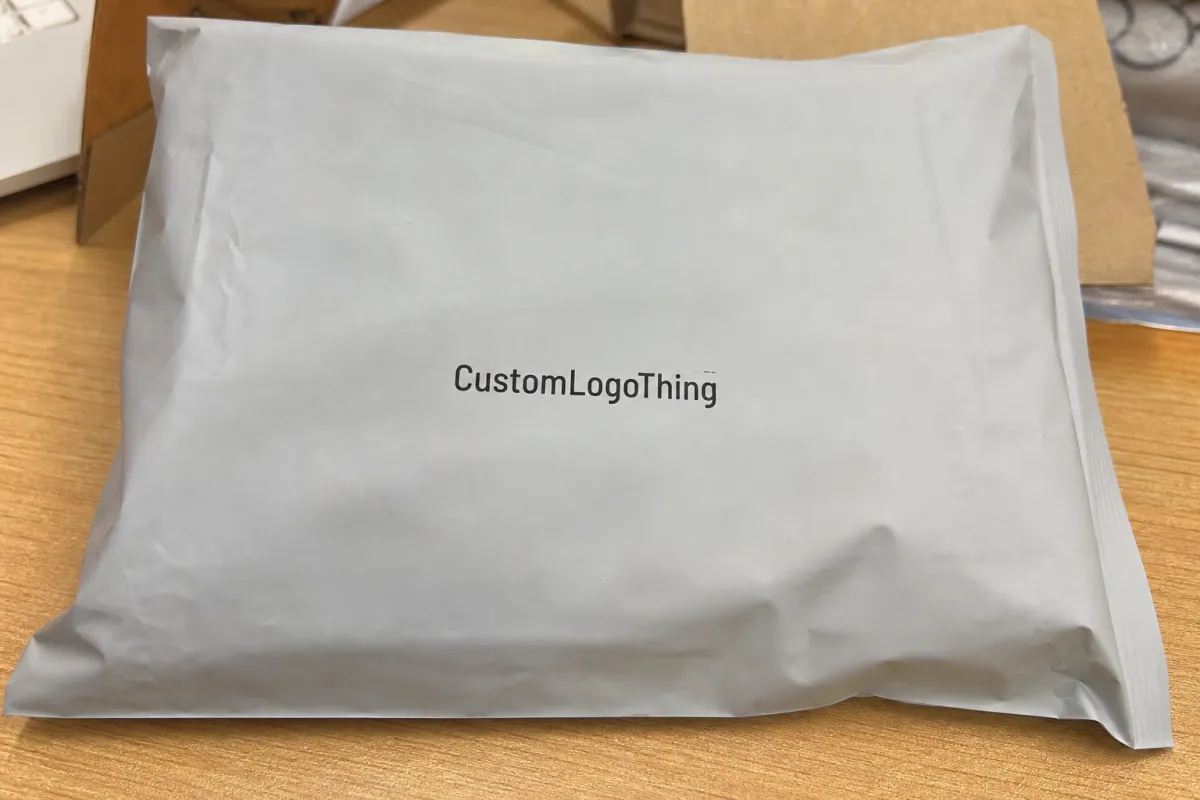
The cheapest soft-touch mailer is often the one that has to be remade. That is why stationery soft touch poly mailers Bulk Order Planning should begin with fit, finish, and use case before anyone asks for a rate. The package has to do more than look nice in a render. It needs to survive handling, fit the real contents, and stay presentable when it reaches the customer.
Soft-touch poly mailers are popular for a reason. The finish reduces visible rub marks, the matte surface makes artwork look more controlled, and the overall feel reads premium without moving to a rigid carton. That is a useful middle ground for wedding invitations, art prints, stationery kits, and small branded bundles. It is not luxury theater. It is a smarter presentation for lightweight goods.
The hidden costs are where programs get messy. Reprints wipe out savings. Rush freight does the same. So do proofs that stall because the file was not final, or carton counts that do not match the pack-out. If the order is built around a single flat item, the plan still has to account for inserts, backing boards, belly bands, return cards, and any seasonal extras. The mailer should be sized to the full stack, not the easiest version of it.
There is also a difference between buying a mailer and buying a system. A stationery kit often changes over the year. Holiday inserts add thickness. Wedding suites use heavier stocks. Promotional bundles shift from one color to another. The best spec is the one that covers the heaviest configuration first, because lighter packs usually fit inside that envelope with room to spare. The reverse is where rework starts.
Three checks usually prevent the most painful mistakes:
- Confirm the full pack-out, not just the product sheet size.
- Choose the film and seal strength around the heaviest version of the kit.
- Verify the artwork on the real surface, not only on a screen.
If your broader packaging program includes sustainability requirements, keep those in the same conversation. Transit testing standards such as the ISTA framework help evaluate how the mailer behaves under vibration, compression, and drops. If you also source paper inserts, wraps, or cartons, FSC sourcing can keep the rest of the pack aligned with the brand story. That does not make the mailer itself sustainable by magic. It just makes the program less contradictory.
Soft-Touch Mailer Construction: Film, Seal, and Print Options
Film thickness changes the whole buying decision. For a flat invitation set or a thin card assortment, a 2.5 to 3 mil build may be enough. Once the pack includes rigid inserts, sample books, or small boxed items, a 3.5 to 4 mil film is usually safer. That extra structure does not just improve puncture resistance. It also helps the mailer keep its shape when the pack-out line is moving fast.
Matte soft-touch film usually ages better in transit than gloss. Gloss can look bright on a shelf, but it shows fingerprints, wrinkles, and scuffing faster. Soft-touch finishes are more forgiving when a package is handled at the packing bench, tossed into courier tubs, or stacked with other parcels. A premium feel is tactile as much as visual. Customers notice that immediately, even if they never say it out loud.
Seal design deserves the same attention as the artwork. A standard adhesive strip is fine for single-use shipments. Tamper-evident closures make more sense for gift-ready stationery or anything that needs a cleaner security signal. Double-seal styles can help if the same body is used for returns, relabeling, or multi-stage fulfillment. If the mailer has to support multiple SKUs, choose the closure for the hardest use case. Not the easiest one. That mistake is common and expensive.
Print options are where many buyers overestimate what a design can survive. One-color branding keeps cost down and usually prints cleanly. Full-coverage artwork creates a stronger unboxing moment, but it increases setup risk and can expose weak files. White ink on darker films improves contrast, though it also changes proof expectations. Matte finishes tend to soften very thin lines and low-contrast gradients, so artwork should be built with clear typography, stable color blocks, and enough negative space to breathe.
Ink behavior varies by substrate. A proof on one surface is not proof of how every surface will behave. That is why sample approval is useful even for a straightforward order. It shows how the artwork sits on the film, how the finish reflects light, and whether the package still reads clearly once it is in hand. The computer screen never had to survive shipping.
Size, Thickness, and Branding Specs to Lock Before You Quote
Dimensions are where order planning gets expensive. Internal size should be based on the full stack of contents, not just the main item. A set of stationery cards, a printed insert, and a backing board needs enough room to slide in without bowing the top edge or stressing the seal. If the pack has to be forced into place, the mailer is too small. That is not a style issue. It is a production issue.
Gusset depth, seal width, and film gauge all matter when the contents are more than a single sheet. A mailer that works for postcards can struggle with journals, catalogs, swatch packs, or bundled stationery kits. For uncertain packs, test the heaviest configuration first. If that version fits properly, the lighter versions are usually fine. The opposite is where teams get stuck with expensive overcorrections.
Good quotes depend on clean inputs. The minimum spec should include the following:
- Finished mailer size and usable internal dimensions.
- Film preference and approximate thickness.
- Print area, color count, and bleed requirements.
- Artwork file format and whether white ink is needed.
- Finish, closure type, and pack-out notes.
For brands managing multiple stationery assortments, standardizing around one mailer body can reduce errors and speed up reorders. That only works if the body size is truly right. A common SKU that fits badly is just a common mistake. Document the approved pack-out, label placement, carton count, and insertion method so the next buyer is not forced to reverse-engineer the old decision from a dusty file thread.
If the order is part of a recurring wholesale program, note what stays fixed and what changes. Some teams keep the same structure and only swap artwork. Others change inserts for seasonal campaigns or event launches. Both can work. The problem comes when the spec depends on someone remembering a detail that never made it into the record. That is how repeat orders become new projects.
For teams comparing programs, Wholesale Programs can help frame the difference between repeatable volume and one-off custom runs. The important part is still the same: the quote should reflect the actual pack, not an idealized version of it.
Pricing, MOQ, and Unit-Cost Breakpoints
Three things drive price: film thickness, print complexity, and quantity tier. Thicker film raises material cost. More colors or full-coverage artwork increases press setup and run time. Larger quantities usually lower the unit number, but only up to the point where storage and freight start eating the savings. Buying more than you need can be its own kind of waste.
MOQ changes with the build. Custom plates, specialty finishes, multiple artwork versions, and wider size ranges usually push the minimum higher. That is not a sales trick. It is setup math. Ask for tiered pricing so you can see the jump between a test run and a true bulk order. The breakpoint matters more than the headline price.
Landed cost is the number that matters. That includes freight, cartons, overage, and any handling charges. A lower unit price can still be the worse deal if the boxes are oversized or the shipping lane is expensive. If the stationery program ships into multiple warehouses, that freight profile needs to be part of the decision early, not after the PO is already moving.
| Build option | Typical use | Common MOQ range | Directional unit cost | Notes |
|---|---|---|---|---|
| 2.5-3 mil matte soft-touch | Flat stationery, cards, light inserts | 1,000-3,000 pcs | $0.16-$0.24 | Works well for lighter pack-outs and simpler print coverage. |
| 3.5 mil matte soft-touch | Invitation suites, journals, bundled sets | 2,500-5,000 pcs | $0.20-$0.31 | Good balance of feel, durability, and print flexibility. |
| 4 mil reinforced soft-touch | Heavier kits, promo bundles, sample packs | 5,000 pcs and up | $0.26-$0.42 | Higher cost, but more forgiving during shipping and storage. |
Those numbers are directional, not universal. A smaller mailer with one-color branding will usually sit lower than a larger size with full-coverage art and white ink. Still, the table gives a practical starting point for stationery soft touch poly mailers Bulk Order Planning. If a supplier will not show the breakpoint structure, ask again. A real quote should show where the cost shifts, not just the prettiest total.
It also helps to think about overage differently. A modest allowance is not automatic waste. It can cover spoilage, print variation, future sample runs, or a seasonal extension of the campaign. The choice is usually between a little extra inventory now or a second setup later at a higher cost. In many programs, the first option is cheaper and far less annoying.
Process and Lead Time: From Proof to Production Ship Date
The workflow is usually the same every time: quote request, spec review, proofing, approval, production, quality check, packing, freight booking. The process is not complicated. What slows it down is missing information. The fastest orders usually come from buyers who send exact dimensions, final artwork, and a real ship date before the first proof is issued.
Lead time gets longer the moment the spec starts moving. Artwork revisions add days. Color changes add more. A matte finish can also shift the way inks read compared with a glossy sample, so custom color expectations need to be checked early. A good plan leaves room for one normal revision cycle before production starts. That buffer is not waste. It is insurance against avoidable delay.
Most schedule problems show up in the same places: incomplete dielines, late file corrections, last-minute color swaps, and transit booked too late. A buyer who needs a fixed launch date should build backward from the customer deadline, not from the date the plant says the order will be ready. Production on time is only half the job. The cartons still need to arrive.
For standard custom runs, many programs land around 12-15 business days after proof approval. Specialty finishes, larger quantities, or multiple artwork versions can stretch that longer. That range is only useful if the approval is actually final. If the file changes after signoff, the clock resets. Packaging has no interest in politics. It only responds to physics and paperwork.
If a shipment needs extra validation, transit testing is worth the effort. The ISTA framework helps teams think through vibration, compression, and drop conditions instead of assuming the mailer will behave because the sample looked nice. Premium stationery does not get a free pass from gravity.
How to Reduce Defects and Reorders on Stationery Programs
Most defects start with assumptions. A flat sample looks perfect, then the real bundle arrives with a thicker insert or a heavier board, and the seal suddenly works harder than it should. The fix is simple: test the full pack-out before approval. Not a single sheet. Not a swatch on its own. The actual set.
A basic incoming QC checklist catches most problems early:
- Check seal strength on sample units.
- Inspect the surface for scuffs, wrinkles, or pressure marks.
- Verify print alignment and color consistency.
- Count cartons and compare them against the PO.
- Confirm labels, pallet wrap, and master carton condition.
Palletization matters more than many stationery buyers expect. Soft-touch surfaces can show edge pressure if cartons sit under too much load or if the wrap is too tight. Clean pallet boards, dry storage, and reasonable stack height all help protect the finish. A premium mailer should still look premium after a few weeks in inventory. If it does not, the problem is usually in the handling plan.
Reorder timing needs the same discipline. Seasonal launches, wedding schedules, subscription growth, and event calendars can drain stock faster than expected. If the mailer is part of a recurring stationery kit, set reorder triggers before inventory gets thin. A consistent base spec lowers error rates because the structure stays fixed and only the artwork changes. That is one of the quiet advantages of good stationery soft touch poly mailers Bulk Order Planning: fewer moving parts, fewer surprises.
Keep a simple version history for recurring jobs. Save the approved spec, finish, artwork file name, carton count, and any fit notes from the first run. That file does not need to be dramatic. It just needs to exist. The next order becomes much cleaner when the team can see what actually worked instead of guessing from memory and hoping for the best.
Next Steps to Turn Specs Into an Order-Ready Quote
The last step is to gather the real inputs in one place and remove the guesswork. Finished size. Material preference. Soft-touch finish. Print colors. Quantity. Destination. Ship date. If sample approval is needed, say so now. Quotes move faster when the buyer sends one complete package instead of a chain of half-answered messages.
Ask for a sample or a digital proof before approval. A sample confirms fit, surface feel, and how the artwork behaves on the actual mailer. A digital proof is still useful for checking copy and layout, but it cannot show how the film reacts in hand. It cannot reveal whether the matte finish softens fine type too much. That is the part people try to skip, then regret later.
Before the PO goes out, confirm payment terms, packaging configuration, and any split-ship needs. That matters when one order has to reach multiple warehouses or when a launch date is fixed. If the program will repeat, write down what changed and what stayed locked. The second order should be easier than the first. If it is not, the process was too loose.
Wholesale volume and direct custom ordering solve different problems. Wholesale rewards stable specs and repeatable volume. Custom runs give tighter control over brand details. Either way, the paperwork should describe the actual pack-out, not the nicest version of it. Good stationery packaging is not complicated. It just asks for discipline.
Once the spec is tight and the timeline is realistic, stationery soft touch poly mailers bulk order planning becomes a straightforward production exercise: define the product, price the tiers, verify the proof, and release the order with enough lead time to protect the launch. Nothing fancy. Just fewer surprises and better margins.
What MOQ should I expect for stationery soft touch poly mailers bulk orders?
MOQ usually depends on print setup, film choice, and whether the order uses standard or fully custom artwork. Many programs land between 1,000 and 5,000 pieces, with higher minimums for specialty finishes or multiple versions. Tiered pricing helps show the real jump between a test order and a bulk run.
How do I choose the right thickness for stationery soft touch poly mailers?
Base the gauge on the full pack-out, including inserts, boards, cards, and any small extras. Lighter stationery can often use a thinner build, while heavier kits usually need a stronger film and a wider seal area. If the bundle feels tight during sample packing, move up a step.
How long does production take after proof approval?
Lead time depends on artwork complexity, quantity, and whether special finishes or custom colors are involved. Standard custom runs often land around 12-15 business days after approval, but revisions and freight booking can add time. The fastest orders are the ones with final files and shipping details confirmed early.
Can I see a sample before placing a full stationery soft touch poly mailers order?
Yes, and it is smart to do so for premium stationery or gift-ready packs. A sample helps confirm fit, print appearance, and how the soft-touch surface handles repeated contact. If the artwork is detailed, the sample stage is where contrast issues usually show up first.
What do you need for an accurate quote on soft touch poly mailers?
Provide dimensions, quantity, finish, print count, artwork files, and the shipping destination. If you want a faster quote, include the target launch date, sample needs, and any reorder expectations. That gives the supplier enough detail to price the job as a real production run instead of a rough estimate.
For custom logo buyers, the best result usually comes from one discipline: treat stationery soft touch poly mailers bulk order planning like a production schedule, not a shopping cart. Lock the spec, confirm the proof, and leave enough time for shipping to do its part.


